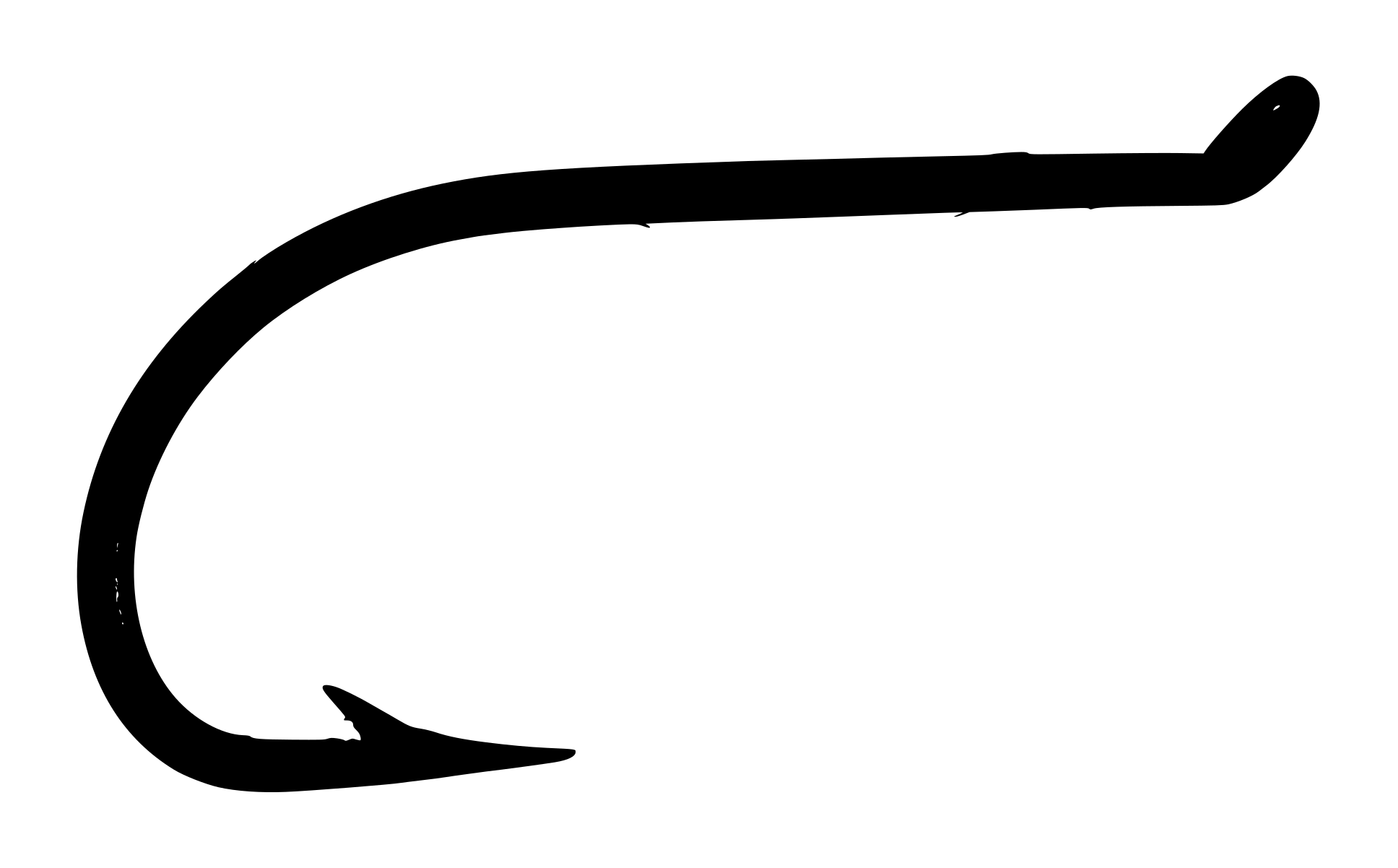
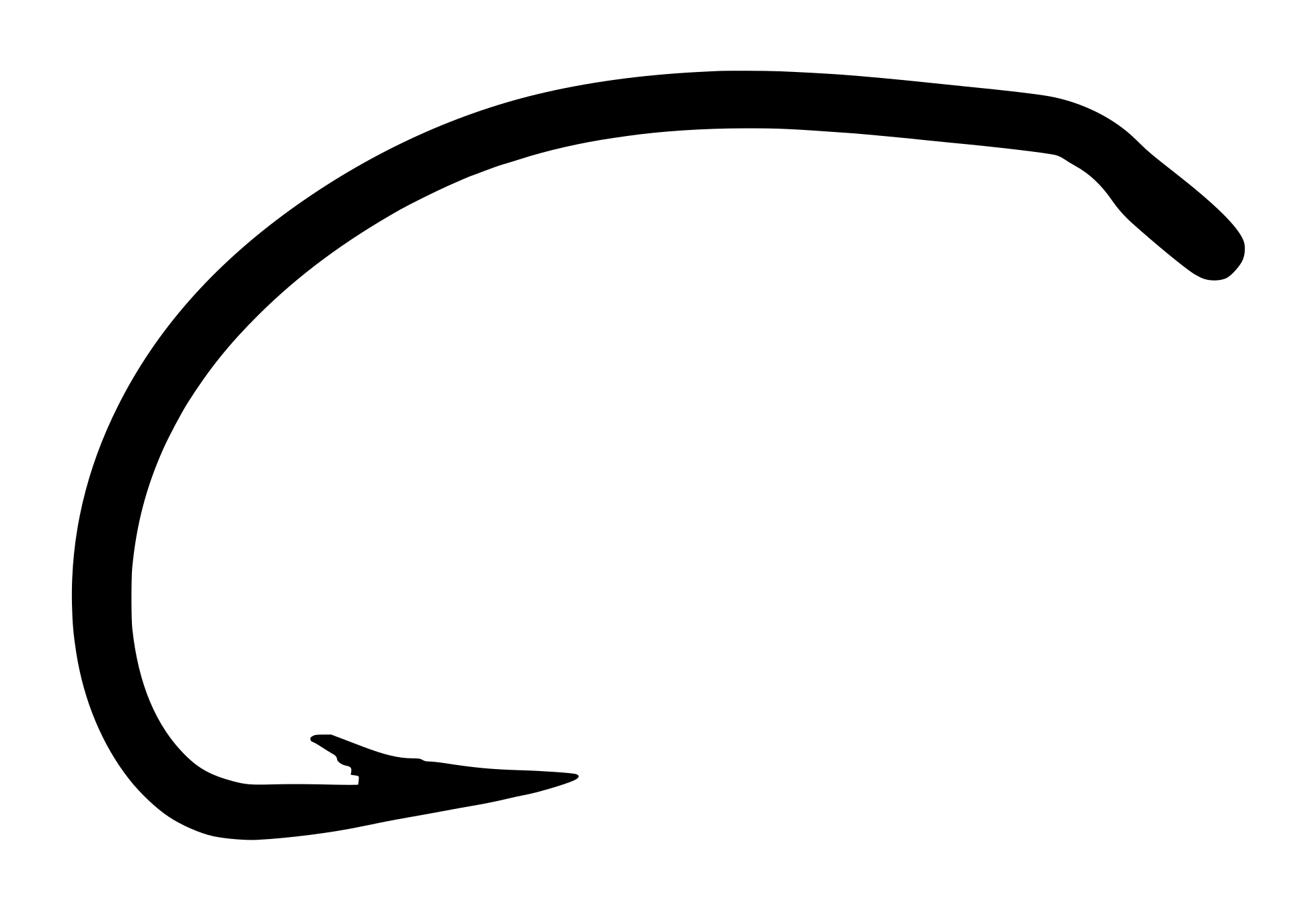
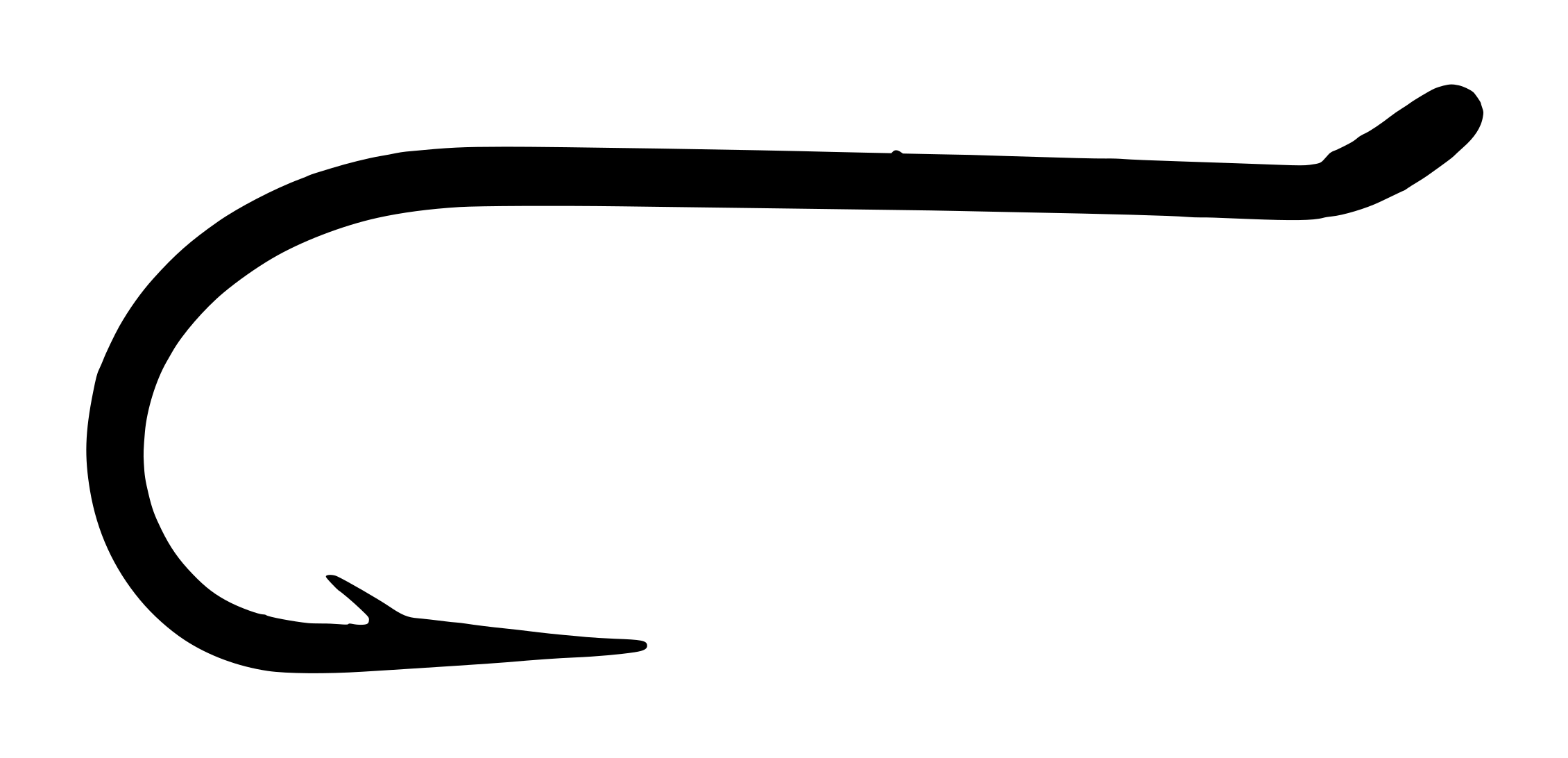
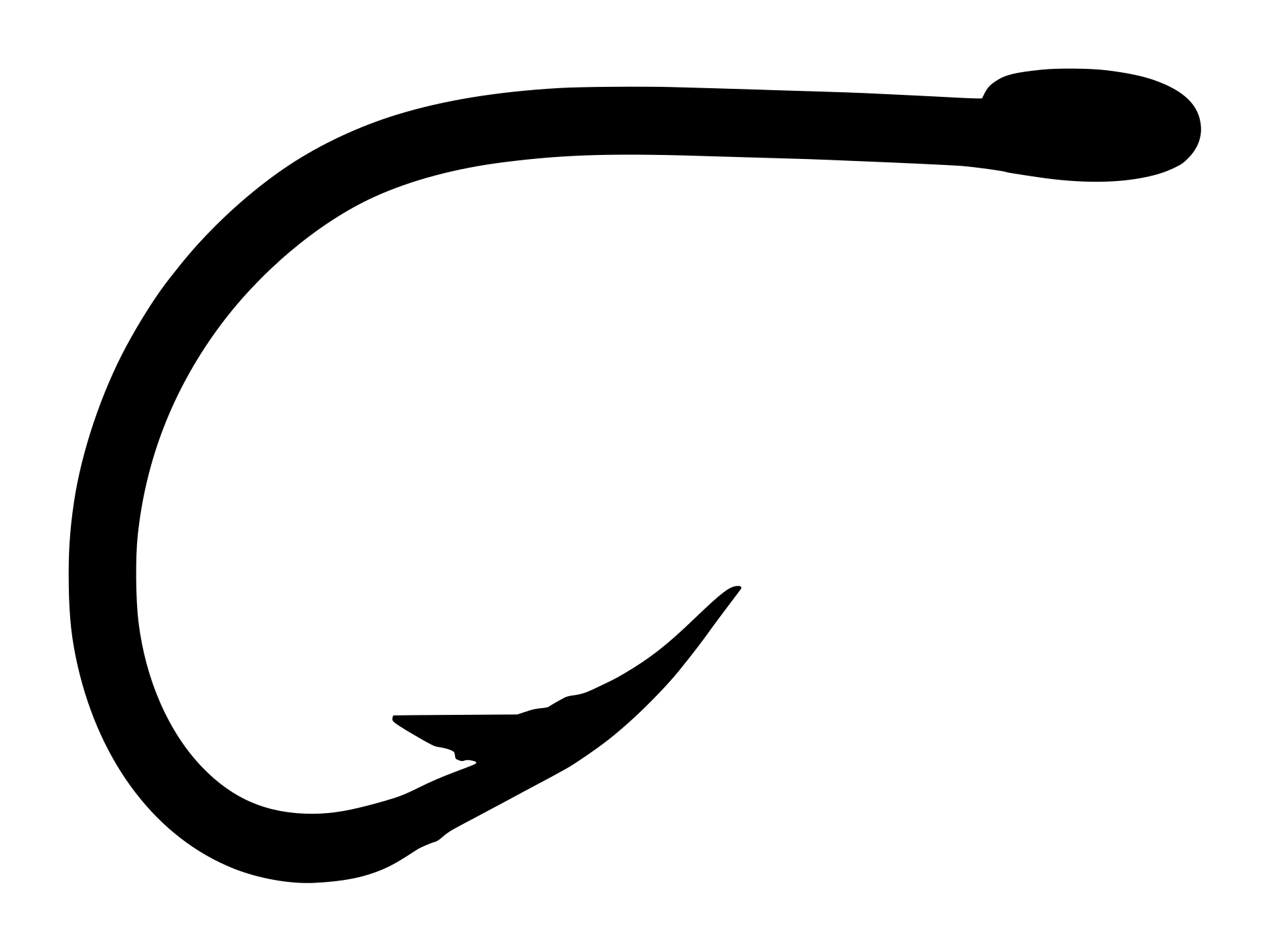
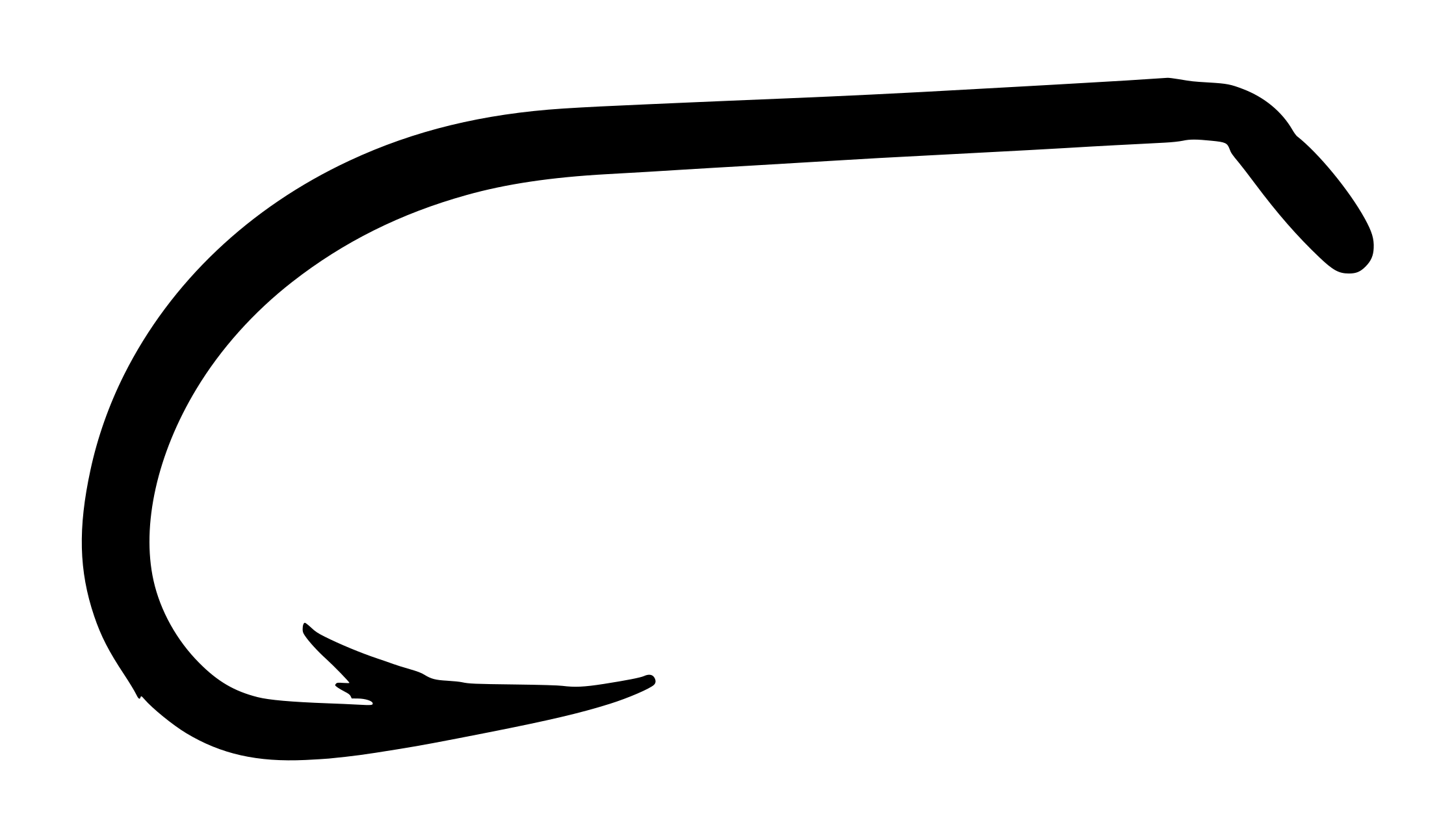
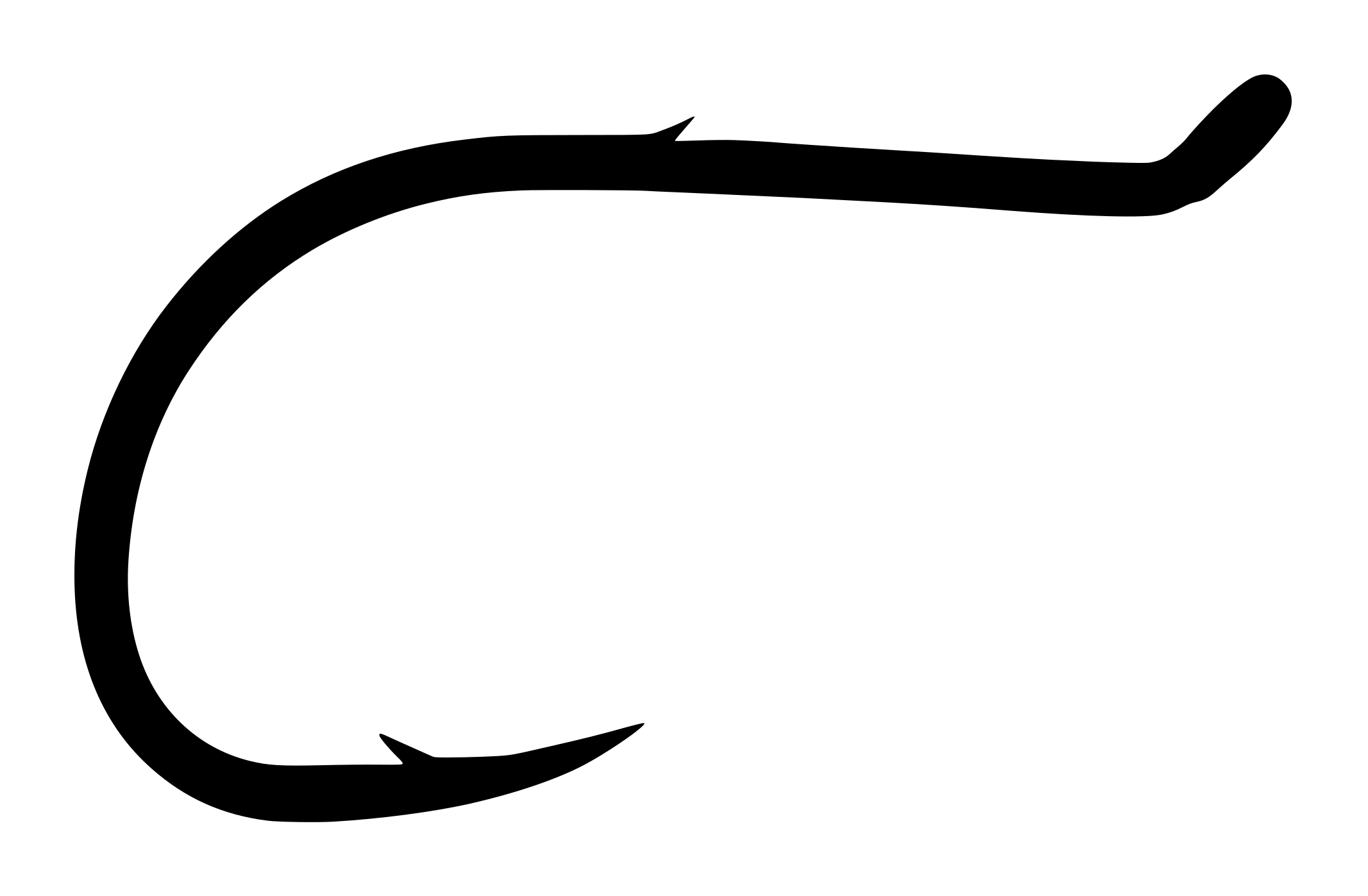
The Edgar Sealey S1938 is a premium dry fly hook manufactured by Edgar Sealey & Sons Ltd., a respected Redditch specialist firm. This Size 7 specimen exemplifies mid-20th century British hookmaking quality, featuring a turned-up loop eye, fine round wire, and a balanced Sproat bend designed specifically for dry fly presentation.
The kelly green label with decorative checkerboard border and octopus seal reflects Edgar Sealey’s branding during the 1930s–1960s period. The model designation ‘S1938’ likely indicates the design’s introduction year, and the ‘Extra Quality’ designation suggests additional manufacturing refinement or steel selection. As a product of Redditch, England — the historic epicenter of fishhook manufacturing — this hook represents the technical standards and craftsmanship that made British hooks the global benchmark before Asian production dominated the market in the 1970s.
The turned-up eye design was specifically engineered for dry fly fishing, where the upward angle helped maintain proper hook orientation when tied with traditional leader configurations. The fine wire gauge reduced weight for superior surface presentation on small streams while maintaining adequate strength for trout. This Size 7 is less common than smaller dry fly sizes, particularly in complete original packaging, making it a notable example of secondary-tier Redditch quality manufacturing.
Original packaging label for Edgar Sealey S1938 Extra Quality Turned-up Eye hooks. The distinctive kelly green label with octopus seal and black letterpress printing is characteristic of mid-20th century British hook packaging.
Photographic record
4 cataloged imagesSelect any record to load it above.
4 images shown
Edgar Sealey S1938 Box Label Size 7Original packaging label for Edgar Sealey S1938 Extra Quality Turned-up Eye hooks. The distinctive kelly green label with octopus seal and black letterpress printing is characteristic of mid-20th century British hook packaging.Open originalEdgar Sealey S1938 Hook Point Detail Size 7Close-up of the hook point and barb, showing the fine spear-point geometry, short close-cut barb, and bronzed finish characteristic of mid-century Redditch manufacture.Open originalEdgar Sealey S1938 Hook Profile Size 7Side profile showing the complete hook geometry: turned-up loop eye, straight shank, balanced Sproat bend, and fine point. This perspective clearly shows the fine wire gauge and eye-to-point alignment.Open originalEdgar Sealey S1938 Multiple Hooks Size 7Two hook specimens displayed side-by-side, demonstrating manufacturing consistency across the card and showing the hook geometry from slightly different angles.Open original
Technical profile
Turned-Up Loop Eye • Sproat Bend • Standard Shank • Fine Round Wire • Spear Point • Bronzed Finish (P)
Eye
Tapered Eye, Turned UpTurned-up loop eye construction is distinctive — formed by wire looping back and secured alongside shank. Eye sits at slight upward angle, typical of dry fly designs intended to maintain leader alignment. P
Wire
Standard, Round
Shank
Short (1X–2X Short) — Plain
Bend
Beak / Reversed Point, Standard gapSproat bend shows moderate depth with rounded bottom taper. Bend is symmetrical without kirb or reverse offset. P
Point
Standard / SpearShort, close-cut barb positioned at lower inner curve of hook point. Barb angle appears approximately 30–40 degrees from shank axis, providing secure hold without excessive cutting on delicate tippet. E
Finish
Bronzed — Inferred (photographically likely)Bronze-tone finish with warm golden undertone, characteristic of bronzed ('japanned') steel typical of mid-century British hooks. Finish shows light patina consistent with age; no corrosion visible on specimen hooks. Tone consistent with period bronzed rather than modern nickelled finish. P
Hooks on card show bright, uncorroded condition. No surface pitting or rust stains. Card label shows expected light toning and minor edge wear; no tears, soiling, or significant damage to label. Original tissue wrapping appears to be missing. All 100 hooks appear to be present and in original arrangement on card.
The fine wire gauge (1X Fine) is the defining engineering choice for this model. Fine wire reduces overall weight and stiffness, crucial for dry fly fishing where the hook must float naturally with minimal leader impedance. The trade-off — reduced strength — was acceptable for the target audience of trout fishers using fine tippets on chalk streams.
The Sproat bend’s rounded bottom geometry provides good hooking leverage while maintaining a moderate gap. The turned-up eye positions the leader in line with the shank, reducing sideways loading forces during strikes — a significant advantage over turned-down eyes for dry fly work.
The ‘Extra Quality’ designation likely referred to additional quality control inspections or use of higher-grade steel, though Edgar Sealey never achieved the material specification fame of Hardy Brothers or Allcock. The bronzed finish provides moderate corrosion resistance and a warm aesthetic preferred by British fly fishers of the era.
We don't have measured sizes for this hook yet. Own one? Submit calipered measurements and we'll review and add them. Thank you!
Historical context
edgar
Edgar Sealey & Sons Ltd. operated in Redditch, Worcestershire from the late 19th century through approximately the 1960s–1970s. Like many Redditch firms, the company benefited from the town’s centuries-old needle and fishhook manufacturing expertise, including access to skilled wire workers and specialized drawing and tempering equipment.
Edgar Sealey positioned itself as a quality manufacturer serving both domestic and export markets, with particular strength in trout fishing hooks. The octopus seal logo and decorative branding suggest a company with aspirations to premium positioning, though the firm never achieved the prestige or scale of Hardy Brothers or Allcock. Production appears to have focused on traditional dry fly and wet fly patterns for the British market, with emphasis on fine wire gauges and specialized eye constructions.
The firm appears to have ceased independent operations during the 1960s–1970s industry consolidation, likely absorbed by larger manufacturers. No detailed archival records documenting the company’s closure or acquisition have been located, and Edgar Sealey hooks are not prominently featured in modern tackle collector references, suggesting the brand lost market prominence by the 1980s.
Series History
The S1938 model designation suggests this was a designed product line introduced (or internally cataloged) in 1938. The ‘Extra Quality’ descriptor and specific emphasis on ‘Turned-up-Eyes’ indicate this was a premium offering within Edgar Sealey’s broader hook range, positioned above generic dry fly patterns but below Hardy’s premium lines.
No documented catalog variants of the S1938 have been located, but the size range (evidenced by this Size 7 specimen and the 100-count packaging standard) likely extended across typical dry fly sizes (approximately No. 12 through No. 2). The turned-up eye design was standard across the line; variations in wire gauge (fine, standard, heavy) were typical across size ranges to maintain proportional strength.
This represents a complete product line with no broader family name beyond the manufacturer brand. The S1938 was discontinued by the 1970s as Edgar Sealey ceased operations, and the design has not been revived under any successor brand or re-branded line.
Era and Packaging Dating
Model designation 'S1938' suggests design introduction in 1938. Green label with letterpress printing typical of British packaging 1930s-1960s. No barcode present — strong pre-1974 indicator. Typography and layout consistent with mid-century British manufacturing. Checkerboard border design and octopus seal motif typical of Edgar Sealey branding from this era. 'REDDITCH ENG.' abbreviation format common on British hooks through 1960s. No phone number, no postal code — consistent with pre-1970s packaging standards. Card construction and paper stock consistent with wartime and immediate postwar British production. Best estimate: design introduced 1938, production continued through 1960s.
The Redditch Octopus
The octopus logo on Edgar Sealey cards is a distinctive branding quirk with uncertain origins. The octopus appeared on several Redditch hook manufacturers' packaging during the 1930s–1960s, possibly referencing the creature's multi-armed versatility — a metaphor for the manufacturer's diverse hook offerings. Some hook historians speculate the octopus motif was adopted from Victorian-era advertising imagery, when exotic creatures were popular decorative elements in British packaging. The Edgar Sealey octopus seal is rendered in fine letterpress detail, suggesting the company invested in custom printing plates — a sign of manufacturing pride and scale.
Design lineage and influence
The turned-up loop eye for dry fly hooks originated in British tradition, with antecedents dating to the 19th century. Allcock and S. Allcock & Co. pioneered standardized turned-up eye designs, and Edgar Sealey’s S1938 represents the mid-century refinement of this tradition.
Competing designs of the 1930s–1960s period included Allcock’s Premium Dry Fly hooks (also turned-up eye), Partridge’s dry fly patterns (which favored turned-down eyes for certain applications), and Hardy Brothers’ premium dry fly range. The Edgar Sealey S1938’s fine wire gauge positioned it in direct competition with Allcock’s lighter gauges and Hardy’s entry-level dry fly offerings.
Modern descendants of the turned-up eye tradition include Mustad 94842 (slightly different wire profile and bend shape) and Daiichi 1310 (modern TUE design with different metallurgy). The fine wire approach has influenced contemporary dry fly hook designs, though modern forged construction and coatings have largely superseded the bronzed finish.
Best matchRelated by Attribute
Computed automatically from catalog data — updated as new hooks are added.
Matches: Bend, Shank, Gap, Eye, Point +3 moreDiffers: Wire: Standard vs Fine (1X Fine); Eye Orient.: Turned Up vs Turned Down; Application: Dry Fly, Wet Fly vs Dry Fly, Wet Fly, Nymph +2 more
Matches: Bend, Shank, Gap, Finish, Forging +2 moreDiffers: Wire: Standard vs Heavy (1X Heavy); Eye: Tapered Eye vs Ball Eye; Eye Orient.: Turned Up vs Straight / Inline +2 more
Matches: Bend, Shank, Gap, Eye, Shank Feat. +1 moreDiffers: Wire: Standard vs Heavy (1X Heavy); Eye Orient.: Turned Up vs Turned Down; Point: Standard / Spear vs Hollow Point +3 more
Designed specifically for dry fly fishing on small trout streams in the British tradition. The turned-up eye alignment and fine wire gauge optimized dry fly presentation — maintaining proper leader angle and reducing water surface disturbance. Size 7 suitable for small to medium-sized dry patterns on chalk streams and northern English chalk streams. The fine wire gauge and Sproat bend geometry balanced strength with delicacy, allowing the hook to handle leader tippets as fine as 6X without excessive mass or hinge-point stress.
Classic Fly Patterns
Generic dry fly patterns for Size 7 — March Brown, Olive patterns (Greenwells Glory type), Iron Blue Dun, small Caddis imitations, Pale Evening Dun variants. No specifically named Edgar Sealey pattern documented.
Modern Equivalents
Hook
Match Quality
Notes
Mustad 94842
Good
Modern TUE dry fly design with similar fine wire and Sproat-like bend geometry. Slightly different wire diameter and finish (nickelled vs bronzed). Good functional equivalent for tying traditional dry fly patterns.
Daiichi 1310
Moderate
Contemporary TUE dry fly hook with different bend profile and wire metallurgy. Larger barb and slightly heavier wire than S1938. Functional equivalent but geometry differs noticeably.
Tiemco 101
Moderate
Modern fine-wire dry fly hook, but features turned-down eye rather than turned-up. Different functional approach to dry fly presentation, though wire gauge and bend family similar.
Collector notes
Rated 5.0/10 — Uncommon but not scarce. Edgar Sealey was a respected secondary Redditch manufacturer, and complete original packaging adds significant premium value. Size 7 is less desirable than smaller dry fly sizes (No. 14–16), which limits collector demand. Complete 100-count cards command moderate interest among Redditch specialists but lack the prestige of Hardy or Allcock equivalents.
Reference value
$15 – $35 USD estimate
Packaging condition
Good — moderate wear, legibleRecorded specimen
Packaging format
ES-E-01Catalog code
Positive Factors: Genuine Redditch manufacture from the golden age of British hookmaking. Edgar Sealey was a recognized quality maker, though secondary-tier compared to Hardy Brothers and Allcock. Complete original 100-count packaging is rare — most surviving examples are loose hooks or partial cards. The distinctive octopus seal logo and kelly green label are visually distinctive and immediately recognizable. The ‘Extra Quality’ designation and turned-up eye design are specific to premium product positioning. Bronzed finish is warm and aesthetically appealing to vintage tackle collectors.
Limiting Factors: Size 7 is not a premium size for dry fly collectors; smaller sizes (No. 14–16) command higher premiums. Edgar Sealey lacked the prestige of Hardy Brothers or Allcock — collector demand skews toward these premier makers. The S1938 is not rare — Edgar Sealey produced these hooks in quantity throughout the 1940s–1960s. Modern fly tying does not favor bronzed finishes, limiting utility demand. Card shows age-appropriate wear and patina; truly mint sealed examples are exceptionally rare.
Most Desirable Variants: Complete 100-count cards in very good or better condition command premium pricing. Smaller sizes (No. 10–12) within this model are more desirable than Size 7. Original tissue wrapping intact would add 10–15% premium. Early production examples with earlier label typography variations (if they exist) would command additional interest. Partial cards with 75+ hooks present are still collectable but valued 30–40% below complete examples.
Condition Impact: Missing hooks severely limit value — each missing hook reduces card value by approximately 1–2%. Label condition (legibility, toning, tears) is critical; heavily faded or damaged labels reduce value by 20–30%. Original cardboard box (if one exists) would command 2–3x the card-alone value. Corrosion or rust on any hooks eliminates collectability for display purposes.
Packaging
Folding paper card format, 3.5" x 2.25" (approximately), printed on cream stock. Bright kelly green label panel with black letterpress printing. Decorative black checkerboard border pattern along all four edges. Central company seal: circular octopus logo with 'OCTOPUS' text and company initials within circle. Printed text arrangement: 'Sole Makers: EDGAR SEALEY & SONS, LTD., REDDITCH ENG.' in large serif font. Model designation 'S1938' and 'Extra Quality' printed below. Large heading 'DRY FLY' with 'Turned-up-Eyes' specification line. Size notation 'No.' with '7' printed. Bottom left corner shows '100' (hook count). All printing appears to be letterpress, typical of 1930s-1960s British hook packaging. No barcode, no phone number, no postal code visible. Label shows light toning consistent with age; cardstock edge shows brown oxidation.
Market Value Notes
Low ($15): Good condition — opened card, all or nearly all hooks present (95–100 count), light label toning, minor card edge wear.<br />
High ($35): Excellent condition — complete 100-count card, minimal label wear, intact original cardboard box if present, hooks bright and uncorroded, original tissue wrapping if present.<br />
Premium factors: Complete hook count, original packaging condition, presence of original cardboard box, early production variants, Size 12 or smaller preferred over Size 7.<br />
Platforms: eBay UK (primary market for British vintage tackle), specialist UK tackle dealers, regional UK fishing collectible auctions.<br />
Confidence: E estimated — limited comparable sale data specifically for Edgar Sealey S1938. Estimate derived from general Redditch secondary-maker price patterns and typical dry fly hook card valuations. Size 7 trades at lower end of Redditch range; smaller sizes within same model would command 25–50% premium.
Where to Find
eBay UK (search: 'Edgar Sealey' or 'S1938'); UK vintage tackle dealers specializing in Redditch hooks; occasional appearances at UK regional fishing collectibles fairs and auctions; less common on eBay US or general antique marketplaces. Dedicated Redditch hook collector networks and forums may have periodic listings.
Collector's Identification Tips
Identify Edgar Sealey S1938 hooks by: (1) Distinctive kelly green label with black checkerboard border, (2) Octopus seal in circle with company initials, (3) ‘S1938’ model designation printed clearly below company name, (4) ‘Extra Quality’ descriptor on label, (5) ‘Turned-up-Eyes’ specification, (6) 100-count standard packaging, (7) Letterpress printing typical of 1930s–1960s (not offset), (8) ‘REDDITCH ENG.’ abbreviation format (not full ‘England’), (9) No barcode or modern postal codes. Verify hook specifications: Size 7 overall length ~0.59″, gap width ~0.25″, fine round wire, turned-up loop eye, Sproat bend, spear point, bronzed finish.
Preservation
Storage and Preservation
Store the card in a cool, dry location away from direct sunlight and moisture. The bronzed finish is susceptible to patina development with humidity exposure — light patina is generally considered desirable by collectors and indicates age authenticity. Avoid placing the card in plastic sleeves or sealed containers, which trap moisture and accelerate oxidation.
Protect the packaging from handling by storing in a flat position on a shelf or in an archival-quality storage box. Avoid touching the printed label directly, as skin oils and perspiration accelerate wear. Keep the original cardboard box (if present) intact — do not remove or flatten it, as box integrity is critical to preservation and value.
Inspect periodically for signs of insect damage (silverfish, woodlice) and environmental stress (mold, water staining). If storage conditions become very humid (above 55% relative humidity), consider using acid-free desiccant packets placed near the package. Do not attempt to clean the hooks or label — patina and toning are evidence of age and authenticity.
If the card contains loose or unraveling hooks, do not attempt repairs. Contact a textile or paper conservator for professional guidance on stabilization. Original tissue wrapping (if present) should never be removed or washed — it is fragile and contributes to both preservation and value.
Primary Source
Packaging Text and Label Analysis
Source: Edgar Sealey S1938 Label — green paper label with black letterpress printing, photographed on measurement grid
The green label contains several specific printed claims that merit documentation: ‘Sole Makers: EDGAR SEALEY, & SONS, LTD., REDDITCH ENG.’ establishes Edgar Sealey’s sole manufacturing status — a claim of vertical integration and full production control. The phrase ‘Sole Makers’ (not merely ‘Makers’) implies competitive differentiation and suggests confidence in the product’s origin and quality.
The designation ‘Extra Quality’ lacks specific definition on the label but likely referred to enhanced quality control measures (individual inspection, higher-grade steel, or additional tempering cycles) that distinguished this line from Edgar Sealey’s standard dry fly offerings. This descriptor was common among mid-tier British hook manufacturers attempting to position products between mass-produced and premium ranges.
‘Turned-up-Eyes’ is stated as a specification feature, not merely as a descriptive detail, indicating that eye orientation was considered a primary selling point. For dry fly fishing, this positioning was technically justified and differentiated the S1938 from turned-down eye patterns marketed for other applications.
The model number ‘S1938’ appears prominently, suggesting Edgar Sealey used an internal catalog system where ‘S’ = Sealey and ‘1938’ likely indicates the design year or product line introduction. This systematic naming practice indicates a degree of manufacturing sophistication and organization.
‘DRY FLY’ and ‘No. 7’ clearly state the hook’s application and size, leaving no ambiguity about intended use. The ‘100’ notation (lower left) refers to the standard quantity per card, a common unit for British hook packaging of the era.
The octopus seal logo and letterpress printing style are consistent with 1930s–1960s British industrial packaging aesthetics. The absence of a phone number, postal code, barcode, or modern design elements confirms this predates significant packaging standardization circa 1970s.
Marking Analysis
Handwritten Marks and Annotations
No handwritten marks, codes, or annotations are visible on the label, card, or packaging in the photograph provided. The label appears to be entirely printed via letterpress with no manuscript additions. If handwritten marks are present on the cardboard box exterior or interior surfaces, they were not visible in the images supplied and should be documented separately.
The absence of handwritten pricing, collector notations, or store inventory marks is consistent with this being a well-preserved collector’s specimen rather than a card that circulated through retail or amateur collections. Original, unmarked packaging is generally more desirable among vintage tackle collectors.
Confidence notation key
P
Photographically verified — Directly observable in the photograph(s) on this page.
V
Verified by documentation — Confirmed by manufacturer catalog, spec sheet, or published reference.
I
Inferred — A logical deduction from observable or documented evidence, not directly stated.
E
Estimated — An approximation based on visual comparison, proportional analysis, or limited data.
S
Speculative — A reasoned hypothesis that cannot be confirmed from available evidence.
Claims with no notation are confirmed by multiple independent sources. All photographs on garrenwood.com are taken on a measurement grid where each square equals 1/10 inch (0.1″ / 2.54 mm).