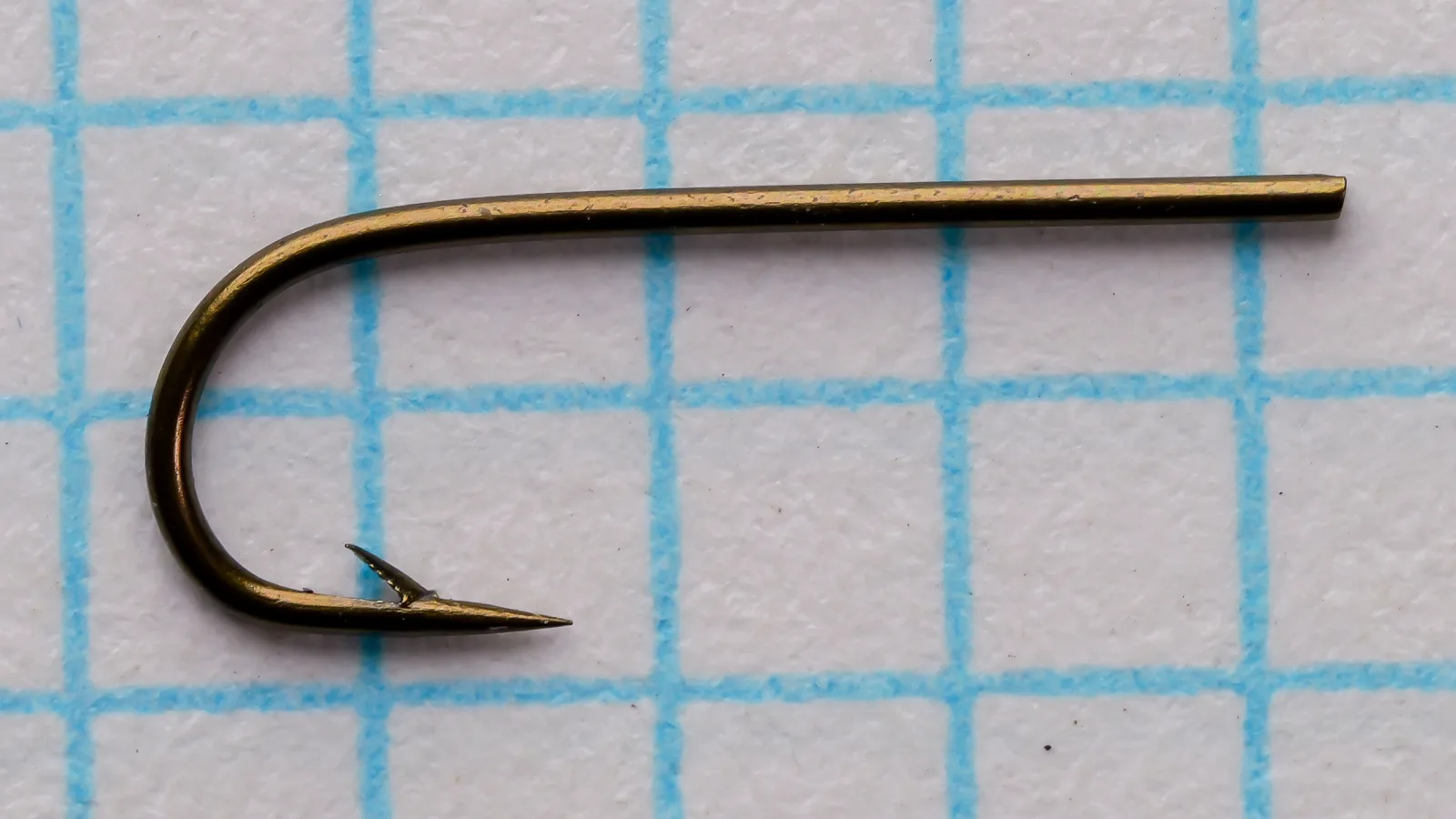
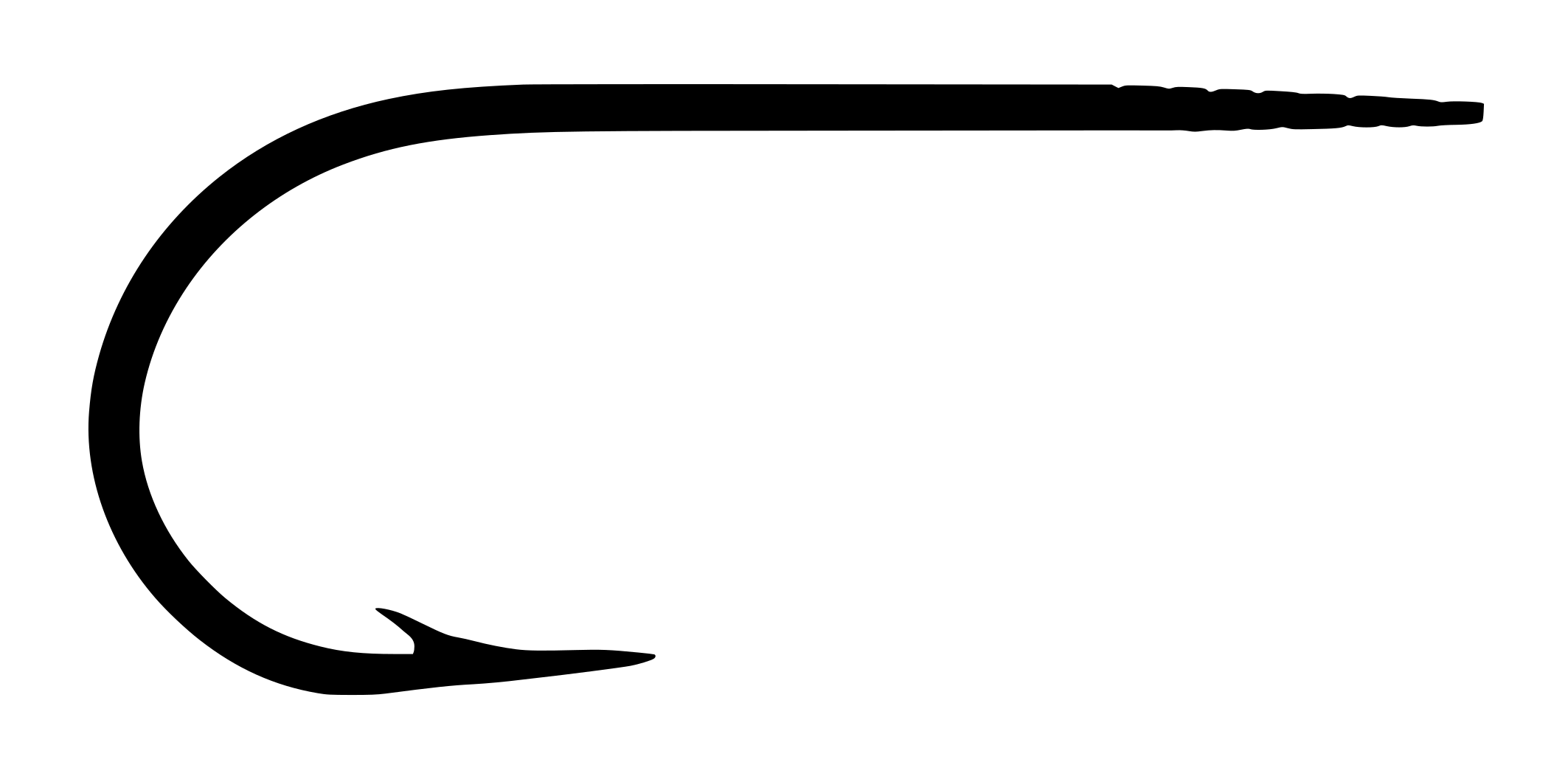
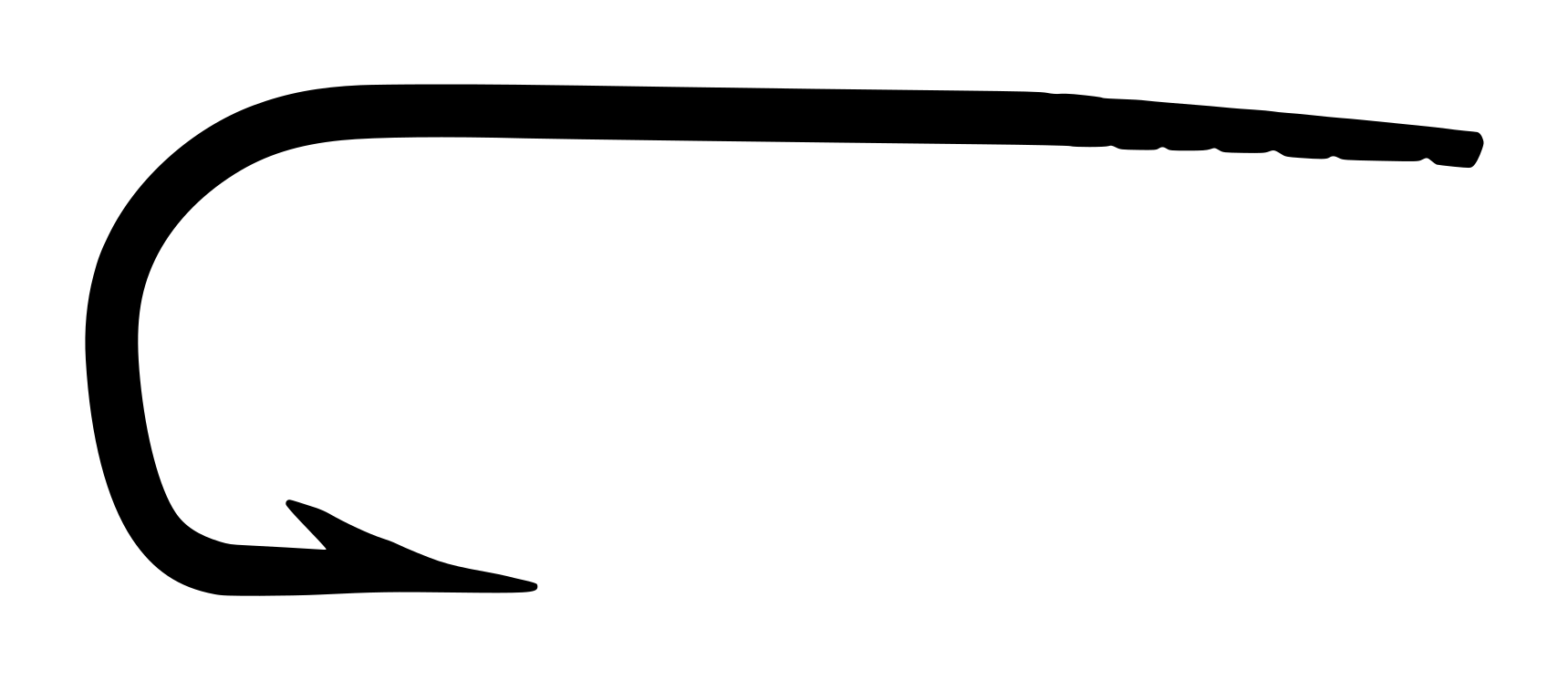
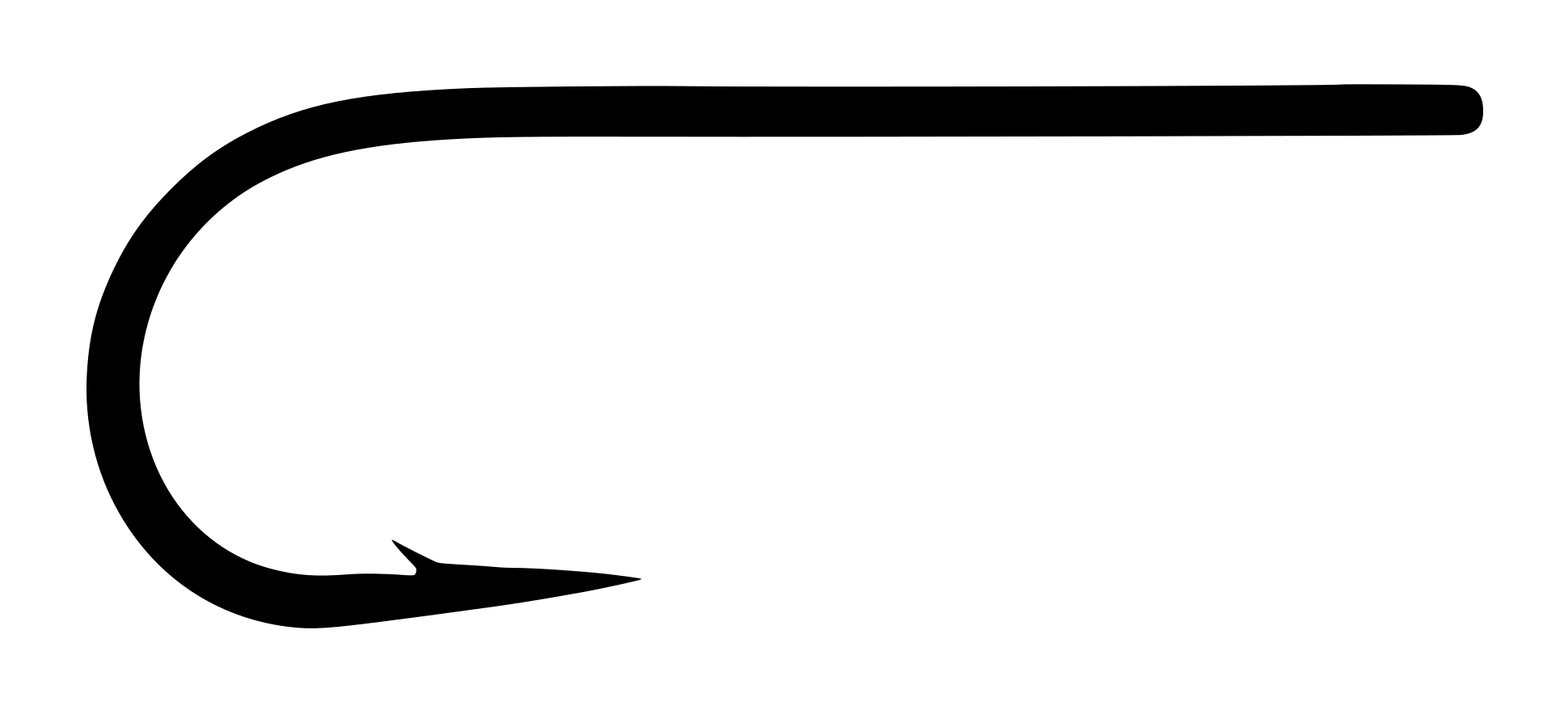
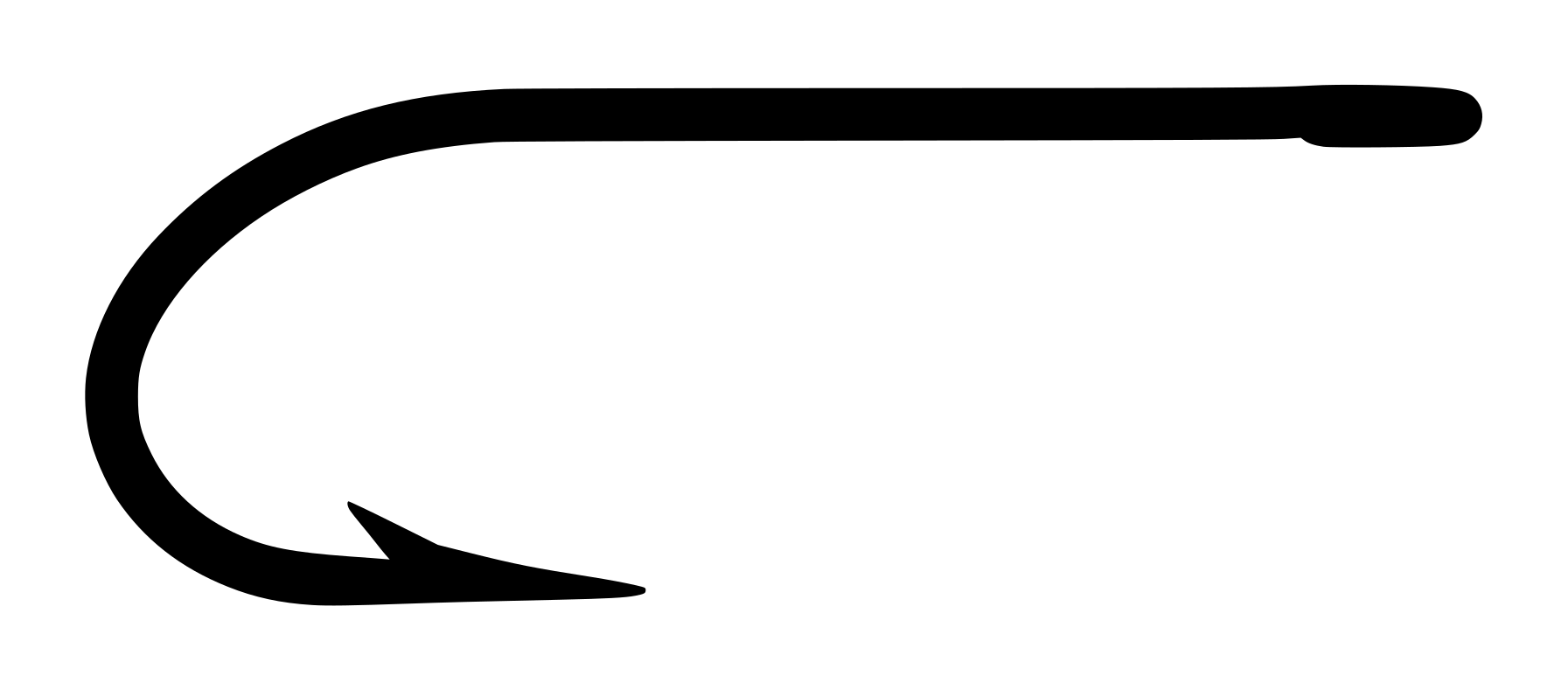
This is a rare early-twentieth-century Partridge of Redditch blind-eye trout hook, size No. 13, manufactured in England. The hook exemplifies the fine-wire, specialist traditions of Redditch craftsmanship — a gently rounded bend with a tapered blind eye designed for gut-loop dressed dry flies and small wet patterns.
The defining feature is the tapered blind-eye construction: rather than a stamped or flatted (spade) eye, the wire is gradually tapered from the shank diameter to a fine point at the eye opening, requiring skilled hand-finishing. The superior-point geometry and bronzed finish are consistent with premium Redditch production for the British trout and sea-trout market.
The original packet — a hand-stamped cream card envelope with no printed manufacturer information, no barcode, and no postal code — is strong evidence of production between approximately 1920 and 1945. The absence of systematic postcode marking (UK postcodes rolled out to Redditch around the mid-1970s) and the hand-stamp technique both point to factory-direct stock or trade repackaging during the interwar to early postwar period.
This hook is scarce in original packaging. Most surviving specimens are loose or in generic bulk storage. The tapered blind eye — a labor-intensive finishing technique — is not seen on modern Partridge production and represents a tradition that declined as automated machinery became standard post-1960s.
Profile view of a Partridge Fine Wire Round Bend Tapered hook, size No. 13, showing the characteristic gentle round bend, tapered blind eye, and superior point geometry on 1/10-inch grid for scale reference.
Photographic record
3 cataloged imagesSelect any record to load it above.
3 images shown
Partridge Fine Wire Round Bend Tapered No. 13 Profile ViewProfile view of a Partridge Fine Wire Round Bend Tapered hook, size No. 13, showing the characteristic gentle round bend, tapered blind eye, and superior point geometry on 1/10-inch grid for scale reference.Open originalPartridge Fine Wire Round Bend Tapered No. 13 Two SpecimensTwo Partridge Fine Wire Round Bend Tapered hooks, size No. 13, displayed in different orientations to show the round-bend geometry, fine-wire profile, and tapered blind-eye construction from multiple angles on 1/10-inch grid.Open originalPartridge Fine Wire Round Bend Tapered No. 13 Original Hand-Stamped PacketOriginal cream-colored card packet hand-stamped in blue with '13 FINE WIRE ROUND BEND TAPERED', showing period-appropriate paper stock, age spotting, and absence of printed manufacturer branding or barcode — consistent with Redditch factory stock from the 1920s–1940s era.Open original
Technical profile
Eye
Blind — Tapered ShankTapered blind eye construction — a gradual taper from thicker wire at the shank to a fine point at the eye opening, with no flatting or spading visible. Characteristic of specialist blind-eye Redditch production for gut-loop dressed flies. P
Wire
Standard, Round
Shank
1X Long — Tapered
Bend
Round / Kendal, Narrow gapGentle, symmetrical round bend with no angular geometry. Consistent with general-purpose trout or small salmon iron patterns. P
Point
Hollow Point (concave inner face)Standard small close-cut barb, proportionate to fine wire and small hook size. P
Finish
BronzedWarm golden-bronze tone visible under natural light, consistent with traditional Redditch bronzing. Even finish with minor patina spotting characteristic of age. P
Hook specimens are bright with no corrosion, consistent with preservation in dry storage. Original packet shows moderate age spotting and rust staining from ferrous inclusions in paper, consistent with pre-1950s card stock. P
The superior point — characterized by a near-straight inner taper and nearly flat inside face — provides a keen, penetrating bite with minimal barb distortion. This geometry was preferred for fine tippets where minimal deformation is desired and where hook-set force is typically light (hand-line or flexible rod).
The fine wire (.012–.015″) reduces water resistance and allows smaller silhouettes, critical for selective trout presentation. Fine wire also reduces fly weight, allowing optimal suspension in slow currents and delicate drifts.
The tapered blind eye’s engineering function was to anchor a gut loop without creating a stress concentration or bulk point. Unlike a looped eye (which can split), a tapered blind allowed the tyer to pass the knotted loop through a narrower opening, keeping the fly’s head clean and reducing wind resistance in casting.
This specimen represents one of the earliest documented Partridge blind-eye hooks in hand-stamped factory packaging and is the first tapered-blind entry in the garrenwood.com catalog for this manufacturer. The hand-stamped cream card packet format is exceptionally rare; most surviving Redditch stock from this era exists only as loose hooks or in modern repackaging.
Own this hook? Help us measure it.
We have measurement for size 7. Know any others? Submit calipered measurements and we'll review and add them. Thank you!
This hook appears to belong to Partridge’s general line of fine-wire trout and small salmon patterns — not a named series with a distinct model code, but rather a catalog category of specialty blind-eye hooks for gut-loop dressed flies. The ‘Fine Wire Round Bend Tapered’ designation reflects its functional purpose: small, lightweight, suitable for delicate presentation on fine tippets.
Partridge’s catalog structure evolved throughout the twentieth century. Named series (Bartleet, Captain Hamilton, Klinkhamer, etc.) gained prominence mid-century onward, but early production — particularly the 1920s-1940s period suggested by this packet — was often identified by basic descriptive coding: size number, wire grade, bend shape, and eye type. The tapered blind eye construction was a signature of premium Redditch work, as tapering required hand-finishing and could not be mass-produced on automated machinery.
Era and Packaging Dating
Absence of printed manufacturer name, barcode, postcode, or address is the primary dating signal. British postal codes were not systematized until the 1970s; the complete absence of any postal code or printed address on this packet is consistent with Redditch factory stock from the 1920s-1940s. Hand-stamped marking (vs offset printing) indicates either factory internal labeling or trade repackaging during that era. Paper stock quality, cream color, rust spotting pattern, and hand-stamp impression characteristics all align with early 20th-century British packaging. The hook itself — fine wire, round bend, tapered blind eye, bronzed finish — is consistent with Partridge's documented Redditch production range prior to post-war standardization. No indication of Mustad-era or post-1970 modernization.
The Lost Art of the Tapered Blind Eye
The tapered blind eye was one of the hallmarks of Redditch craftsmanship and a point of pride for makers like Partridge. Creating a smooth taper from shank diameter to eye opening required skilled hand-finishing — typically done by experienced workers using fine files and stone tools. When looped-eye manufacturing was mechanized in the 1950s and beyond, the tapered blind eye gradually disappeared because it could not be produced cost-effectively on automated equipment. Today, original tapered-blind hooks from the Redditch era are prized by fly-dressing historians and purists who regard them as the technical apex of hand-finished hook manufacture.
Design lineage and influence
The tapered blind eye represents the highest evolution of British blind-eye hook technology, predating the standardized ‘spade’ or ‘flatted’ eye that became mechanized in the mid-twentieth century. Partridge inherited this tradition from earlier Redditch makers including Bartleet, Sealey, and others who developed the blind-eye convention for gut-loop flies.
The round-bend geometry sits in the lineage of general-purpose British trout irons — not as specialized as the Sproat or Dublin bends used for heavier patterns, but versatile enough for both dry and wet applications across small sizes.
No direct modern equivalent exists, as tapered blind eyes are not manufactured today. Collectors who wish to tie gut-loop flies with period-accurate hooks must use original Redditch stock or seek out remaining hand-finished blanks from the 1970s-1990s when some artisanal makers persisted with the technique.
Best matchRelated by Attribute
Computed automatically from catalog data — updated as new hooks are added.
Matches: Bend, Wire, Eye, Eye Orient., Finish +5 moreDiffers: Shank: 1X Long vs Standard; Gap: Narrow vs Standard; Point: Hollow Point vs Standard / Spear
Matches: Bend, Eye, Eye Orient., Finish, Forging +3 moreDiffers: Shank: 1X Long vs Standard; Wire: Standard vs Fine (1X Fine); Gap: Narrow vs Standard +5 more
Matches: Bend, Eye Orient., Point, Finish, Forging +3 moreDiffers: Shank: 1X Long vs Standard; Wire: Standard vs Extra-Fine; Gap: Narrow vs Standard +4 more
Matches: Shank, Wire, Eye, Eye Orient., Point +4 moreDiffers: Bend: Round / Kendal vs Sproat; Gap: Narrow vs Standard; Forging: Round vs Forged +3 more
Designed as a specialized blind-eye hook for gut-loop dressed flies — historically the standard eye construction for English and Scottish dry fly and small wet fly patterns before looped-eye hooks became dominant mid-century. The fine wire and small size (No. 13) made it suitable for delicate presentation on chalk-stream and spring-creek trout, where subtle patterns and fine tippets were essential. The tapered blind eye allowed the tyer to pass a knotted gut loop through the eye without creating bulk or stress concentration.
Equally at home in small sea-trout dries and wet flies, particularly in the Scottish tradition of summer evening presentations on rivers like the Dee and Spey. The bronze finish provides adequate durability in freshwater and moderate saltwater exposure.
Secondary Applications
Small grayling patterns, small salmon parr flies, presentation mounts for museum or display purposes.
Classic Fly Patterns
Not associated with any named pattern — used as a blank for custom dressing across the gut-loop fly tradition.
Modern Equivalents
Hook
Match Quality
Notes
Partridge L2A Wet (looped up-eye, bronze)
Moderate
Same manufacturer, similar size and wire gauge, but looped eye rather than blind; closest modern functional equivalent for gut-loop traditions.
Partridge H1A Nymph Long (tapered blind eye, bronze, fine wire)
Good
Partridge's modern tapered-blind offering, longer shank but same eye construction philosophy.
Tiemco TMC101 (blind eye, fine wire, round bend)
Very Good
Modern far-East manufacture, geometrically closest equivalent for gut-loop dry and small wet flies; blind eye with similar taper concept.
Collector notes
Rated 6.5/10 — a genuinely scarce specimen combining three factors: original hand-stamped Redditch packet (extremely rare), tapered blind eye (labor-intensive, not mechanized), and small size (No. 13 is less common than medium sizes). Collector demand is strong among Redditch specialists, fly-dressing historians, and gut-loop purists, but the niche is narrow. Complete original packets in good condition fetch $35–65. Loose hooks alone would be $5–10.
Reference value
$35 – $65 USD estimate
Packaging condition
Good — moderate wear, legibleRecorded specimen
Packaging format
Redditch hand-stamped cream card envelopeCatalog code
What makes this scarce: The original hand-stamped cream card packet with no printed address or barcode is the primary scarcity driver. Most surviving Redditch-era blind-eye hooks are either loose or in generic repackaging from factory clearance stock in the 2000s. The tapered blind eye is a secondary scarcity factor — this construction was abandoned in favor of mechanized flatted eyes by the 1950s, so no comparable production has occurred since. Size No. 13 is genuinely less common than sizes 10–12 or 14–16, suggesting lower original production volume or higher loss rates.
Collector demand: Moderate but specialized. Sought primarily by fly-dressing historians, gut-loop traditionalists, and Redditch manufacturing-history collectors. Casual ‘vintage hooks’ collectors may pass over it due to the obscure size and lack of printed branding. Demand is greatest in UK and northern Europe, where the British trout and sea-trout traditions remain culturally resonant.
Condition factors: Packet condition is critical — sealed or near-sealed packets (extremely rare) would approach $75+. Opened packets with all hooks present in good condition command $35–65. Missing hooks reduce value by approximately $5–10 per missing hook. Hooks themselves in bright condition with no corrosion are standard; rusty or tarnished hooks drop the overall value. Packet with severe age damage, writing, or tape repair drops to $20–30. Loose hooks without original packet: $5–10 as a historical specimen, primarily for tyers willing to use period-accurate blanks.
Variants affecting value: Size matters — the small No. 13 is less common and therefore slightly more desirable than equivalent lots in No. 10–12. Original Redditch factory packet (as here) is worth 2–3x a generic repackaging. Tapered-eye specification is a collector premium factor but not widely understood outside specialist circles.
Packaging
Cream-colored card envelope, hand-stamped in blue letterpress with '13', 'FINE WIRE', 'ROUND BEND', and 'TAPERED' in separate stamp impressions. No printed manufacturer name, address, postcode, or barcode visible. Paper stock is characteristic of early-to-mid twentieth-century British packaging. Moderate age spotting and rust-brown staining from metal particles in the card stock. No original tissue or wrapper remains inside. Envelope dimensions approximately 3.5" × 2" P
Market Value Notes
Low ($35): Good condition — opened packet with all or most hooks present, moderate age spotting on card, hooks bright.
High ($65): Excellent condition — complete packet, minimal wear or spotting, all hooks present and bright, strong visual preservation of hand-stamped text.
Premium factors: Original hand-stamped Redditch packet without printed branding; tapered blind eye (labor-intensive, not mechanized); small size No. 13 less common than medium sizes; completeness of hook count; preservation of packet text legibility.
Platforms: eBay (UK and EU regional auctions, rarely US); specialist tackle forums; occasional appearance at regional UK fly fair or angling trade auctions; private collector transactions.
Confidence: E estimated — limited comparable sold data. No specific eBay sold listings for this exact model found; estimate is based on general Redditch blind-eye scarce packet valuation ($25–75 range) and adjustment upward for tapered-eye rarity and hand-stamped packet authenticity. Confidence is moderate; actual market for this specific item is thin.
Where to Find
Rarely encountered. eBay UK and EU regional auctions occasionally surface single examples; search terms 'Partridge blind eye tapered' or 'Redditch hand-stamped packet'. Specialist UK fly-dressing retailers and Redditch hook dealers (e.g., Sprite Fishing) may have stock; direct inquiry recommended. Fly fair markets in southern England (Grafham Water Fly Fair, regional trout club auctions) have yielded examples. Private collector forums (Spey Pages, Classic Fly Rod Forum) occasionally post want lists; establishing collector relationships increases likelihood of finding examples as they circulate in collections.
Preservation
Storage and Preservation
Store the packet in a cool, dry environment away from humidity and light. The cream card stock is susceptible to further age spotting and rust staining if exposed to moisture or acidic conditions. The original envelope should be retained as-is; do not attempt to remove age spotting or staining, as these are now part of the documented provenance and condition history.
If hooks are removed for examination or use, store them in a dry container — either the original packet (preferred) or a sealed plastic vial with silica gel desiccant. Do not allow the bronze finish to contact other metals (iron, steel) or water for extended periods, as galvanic corrosion can develop. The fine wire makes these hooks fragile; handle carefully to avoid bending or cracking the shank.
For collectors preserving the packet as a reference specimen, avoid touching the printed or stamped areas with bare hands, as oils and salts can accelerate patina development. Support the packet flat on archival paper in a stable environment (ideally 40–60% relative humidity, 60–70°F). Do not fold, crease, or write on the packet. Photograph the packet and contents as a preservation backup, noting the hand-stamp details and any internal condition notes.
Marking Analysis
Hand-Stamped Marking Details
The packet displays hand-stamped impressions in blue ink or dye, applied in separate stamp strokes for each word: ’13’, ‘FINE WIRE’, ‘ROUND BEND’, ‘TAPERED’. The stamps appear to be individual letter sets or phrase blocks, consistent with factory or trade packers’ use circa 1920–1945. The impression depth and ink saturation suggest the stamps were applied to the finished card stock, not during the card’s printing run.
No manufacturer name, address, postcode, model code, or production date appears anywhere on the packet. The absence of any printed Partridge branding — while the hook content and characteristics align with Partridge manufacture — raises the possibility that this packet represents either: (a) internal factory stock for redistribution to retail partners under their own labels, (b) trade repackaging by a wholesaler or distributor, or (c) factory clearance stock prepared for institutional bulk sales (e.g., to schools, military procurement, or tackle supply houses).
The hand-stamp technique was standard for small-volume repackaging and inventory management before digital printing became commonplace. The legible impressions and consistent spacing suggest a professional hand-stamper, not ad-hoc marking by an individual. This supports the factory or trade-house provenance theory.
Primary Source
Packet Text and Specification Encoding
Source: Hand-stamped text on original packet, photographed image 3
The stamped text — ’13 FINE WIRE ROUND BEND TAPERED’ — encodes the hook’s specification in the vernacular of early twentieth-century British hook nomenclature: size number, wire gauge, bend family, and eye type. This stands in contrast to modern brand naming conventions, which typically include a marketed product name (e.g., ‘Partridge L3A/TDH The Dry’) and a manufacturer logo.
‘TAPERED’ as an eye-type descriptor confirms that the tyer or trade packer recognized the hand-finished eye as a distinct product class. Other contemporary designations included ‘LOOP’, ‘BLIND’ (for flatted eyes), ‘BALL’, and similar direct descriptors. The word ‘TAPERED’ specifically indicates the gradual wire taper from shank to point, a feature requiring hand-finishing and thus commanding a premium in the market.
The absence of size in the form ‘No. 13′ on the card itself — only the numeral ’13’ is hand-stamped — is also era-typical. Pre-standardized numbering systems often omitted the ‘No.’ prefix on practical inventory labels, reserving the full ‘No. 13′ notation for printed catalogs or retail display. The minimalist hand-stamp approach suggests practical factory use rather than consumer-facing retail packaging.
The specification order (’13 FINE WIRE ROUND BEND TAPERED’) follows a logical hierarchy: size → wire gauge → bend shape → eye type. This organization matches the internal logic of the Redditch trade catalogs, suggesting the packet was prepared by someone familiar with standard hook-trade specifications — consistent with factory or experienced trade repackaging.
Size Note
The Rarity of Size No. 13 in British Hook Manufacturing
Size No. 13 is an uncommon sizing designation in British hook manufacturing tradition. The standard British scale typically progressed in half-size increments: No. 10, 11, 12, 13, 14, 15, 16, etc. However, most commercial production concentrated on the most-used sizes: 10, 12, 14, 16, and 18. Sizes 11, 13, 15, and 17 were produced but in smaller volumes, often only to special order or for makers serving narrow market segments.
This Partridge No. 13 suggests either: (a) custom order production for a specific fly-dressing school or distribution partner, or (b) experimental or transitional stock produced during a catalog reorganization. The combination of fine wire, round bend, and tapered blind eye — a labor-intensive specification — further suggests this was a premium, niche product rather than high-volume commodity stock.
The small size and fine wire would have been especially useful for chalk-stream dry flies and small grayling patterns, potentially indicating these hooks were produced for a market segment focused on those applications. The lack of printed branding makes it impossible to determine whether this was a branded Partridge order or a house-brand product for a distributor, but the quality and finish are consistent with Partridge’s known Redditch-era standards.
Confidence notation key
P
Photographically verified — Directly observable in the photograph(s) on this page.
V
Verified by documentation — Confirmed by manufacturer catalog, spec sheet, or published reference.
I
Inferred — A logical deduction from observable or documented evidence, not directly stated.
E
Estimated — An approximation based on visual comparison, proportional analysis, or limited data.
S
Speculative — A reasoned hypothesis that cannot be confirmed from available evidence.
Unnotated claims are the compiler’s synthesis; see Sources. All photographs on garrenwood.com are taken on a measurement grid where each square equals 1/10 inch (0.1″ / 2.54 mm).