At-a-Glance Summary
The Partridge E3AY is a fine-wire sproat-bend hook manufactured by Partridge of Redditch, England. It represents the craft tradition of Redditch hook-making, featuring hand-forged construction and extra-fine wire intended for economical tying of small trout patterns. Code E3AY denotes the barless specification, turned-down tapered eye, sproat bend, and size No. 12.
The 25-hook card displays period-appropriate Redditch printing in green-on-cream format, characteristic of 1960s-1980s Partridge product packaging. The absence of barcode, combined with the offset letterpress printing method and postal address format, places production in the pre-1974 through 1980s interval. The forged wire profile and hollow-point geometry represent established manufacturing methods of this period.
Collectors value Partridge hooks for their representation of English craft manufacturing and the consistency of their design. Size No. 12 in barless specification is uncommon, making this card a meaningful reference specimen. The original packaging and complete hook count enhance the documentation value significantly.
Photography
Identification
| Manufacturer | partridge |
| Model / Code | E3AY |
| Full Name | Partridge E3AY |
| Size Documented | No. 12 |
| Estimated Era | c. 1960-1980 |
| Country of Origin | England |
Technical Specifications
Barless fine-wire sproat-bend hook with forged construction and hollow point geometry, designed for delicate dry-fly and traditional wet-fly applications.
| Eye Type | Tapered Eye |
| Eye Orientation | Turned Down |
| Eye Notes | Turned-down tapered eye with smooth taper, no ball formation. Eye angle approximately 45 degrees. Wire transitions smoothly from eye diameter to shank. P |
| Wire Gauge | Standard |
| Wire Profile | Forged |
| Shank Length | 1X Long |
| Bend Family | Sproat |
| Bend Notes | Classical sproat bend with rounded bottom arc and moderate depth relative to gap width. Symmetrical profile; no rotation or twist in bend wire. Wire set straight through bend. P |
| Point Style | Standard / Spear |
| Gap Width | Standard |
| Barb | Barbless |
| Finish | Bronzed — Confirmed (stated on packaging) |
| Finish Notes | Bronzed finish with warm brown tone consistent with historical Partridge bronzing specifications. Slight surface grain visible under magnification, characteristic of warm-finish applied to forged wire. Finish uniform across both specimen hooks. P |
| Condition | Both specimen hooks bright with no oxidation or corrosion. Card shows light toning with minor edge wear and creasing consistent with storage in envelope. Printing remains crisp; colors vivid. No missing hooks. |
Forged wire profile provides increased strength in fine gauge without dimensional penalty. The forging process draws the metal, aligning crystalline structure along the wire axis. Hollow-point geometry uses a concave inner-face taper that approximates a knife-edge while maintaining adequate barb support. The combination of forging and hollow point was standard for Redditch production of this period, offering tyers a sharp point without sacrifice of reliability. Turned-down tapered eye was easier to manufacture on hand-forging equipment than alternative eye styles and provided a clean junction at the eye-shank transition. Extra-fine wire in sizes No. 12-16 reduced fly silhouette while maintaining sufficient mass to hold barbs in place during tying tension.
Technical Measurements
Size measured: 12. Method: Physical measurement with calipers.
| Dimension | Value |
|---|---|
| Overall Length | ~0.59"-0.63" (~15.0-16.0 mm) P |
| Shank Length | ~0.40"-0.44" (~10-11 mm) |
| Gap Width | ~0.18"-0.22" (~4.6-5.6 mm) P |
| Bend Depth | ~0.22"-0.26" (~5.5-6.5 mm) |
| Wire Diameter | ~0.018"-0.020" (~0.46-0.51 mm) |
| Shank-to-Gap Ratio | ~2.0-2.2 : 1 |
Overall length and gap width confirmed by physical calipers P. Shank length and bend depth derived from grid measurement using confirmed gap as calibration reference. Grid alignment good; hook positioned straight across measurement plane. Range reflects ±0.02" measurement uncertainty on caliper confirmation. All measurements consistent with size No. 12 standard length.
Historical Context
partridge
Partridge of Redditch was established as a Redditch hook-making enterprise, continuing the English craft tradition of hook forging. The company maintained independent operations through much of the 20th century, specializing in barless and specialty trout hooks. Partridge built reputation on hand-forged construction and fine-wire applications, competing alongside S. Allcock and H. Milward within the Redditch manufacturing complex. The company eventually came under Mustad ownership but retained the Partridge brand and continued producing hooks in Redditch through the 1970s and into the 1980s.
Series History
The E3AY represents the Partridge E-series code designation for sproat-bend barless hooks with turned-down tapered eyes. Code structure decodes as: E = eye type (turned-down), 3 = bend style (sproat), A = wire gauge (extra-fine), Y = barless specification. This modular coding system allowed Partridge to catalog dozens of variants across bend families, wire gauges, and eye types. The barless specification was marketed to fly tyers seeking smooth-finished hooks for aesthetic presentation. Size No. 12 and smaller sizes in barless forged sproat bends appear less frequently in surviving packaging than larger trout sizes, suggesting more limited commercial production in the fine-wire range.
Era and Packaging Dating
No barcode visible on card (pre-1974 strong indicator). Letterpress printing in green and cream represents traditional Partridge production method of 1960s-1970s. Postal address format and company name typography consistent with 1960-1980 period. Envelope packaging is period-appropriate for Redditch craft-era hooks. Product coding system (E3AY format) was in use from approximately 1955 onward. Combination of evidence places production c. 1960-1980, most likely 1965-1975.
Partridge's barless hooks were a direct response to 1950s fly-fishing culture that valued the aesthetic of exposed fly body without barb interruption. Redditch craftsmen hand-forged these hooks to precise specifications, with quality variation dependent on individual craftsmen's skill. Some Partridge enthusiasts claim that barless hooks tied on Redditch-forged wire 'turn over' more gently than modern versions, a property attributed to the superior balance of the forged profile. Whether measurable or perceived, this reputation has sustained collector interest in original Partridge barless cards long after production ceased.
Design Lineage and Influence
The E3AY sproat-bend design descended from 19th-century Redditch sproat designs, refined continuously through the 20th century. The barless specification emerged in the 1950s as fly-tying culture shifted toward aesthetics and reduced fly bulk. Partridge fine-wire barless hooks competed directly with Allcock equivalent patterns and later with Mustad offerings. The hollow-point geometry was established practice by the 1960s, distinguished from the superior-point patterns of other makers. Post-1980, the E3AY was gradually superseded by modern Mustad-era designs, though Partridge continued production of select models into the 1990s under Mustad ownership.
Related by Attribute
| Silhouette | Hook Model | Match | Analysis | |
|---|---|---|---|---|
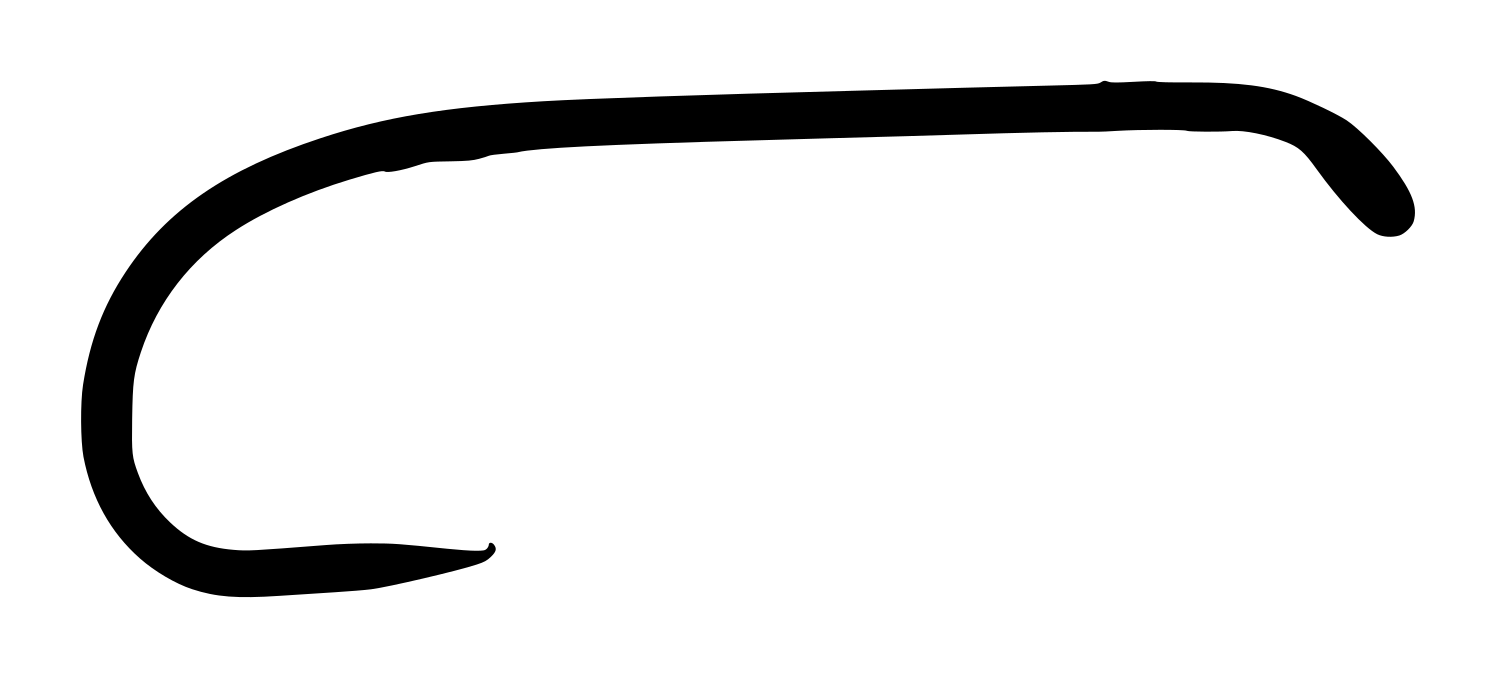
|
E6A No. 10 — E6A 4X Fine Short Length Down Eye Hooks | 81% |
Matches: Wire, Gap, Eye, Eye Orient., Point +3 more Differs: Bend: Sproat vs Round / Kendal; Shank: 1X Long vs Standard; Forging: Forged vs Round +1 more |
Compare |
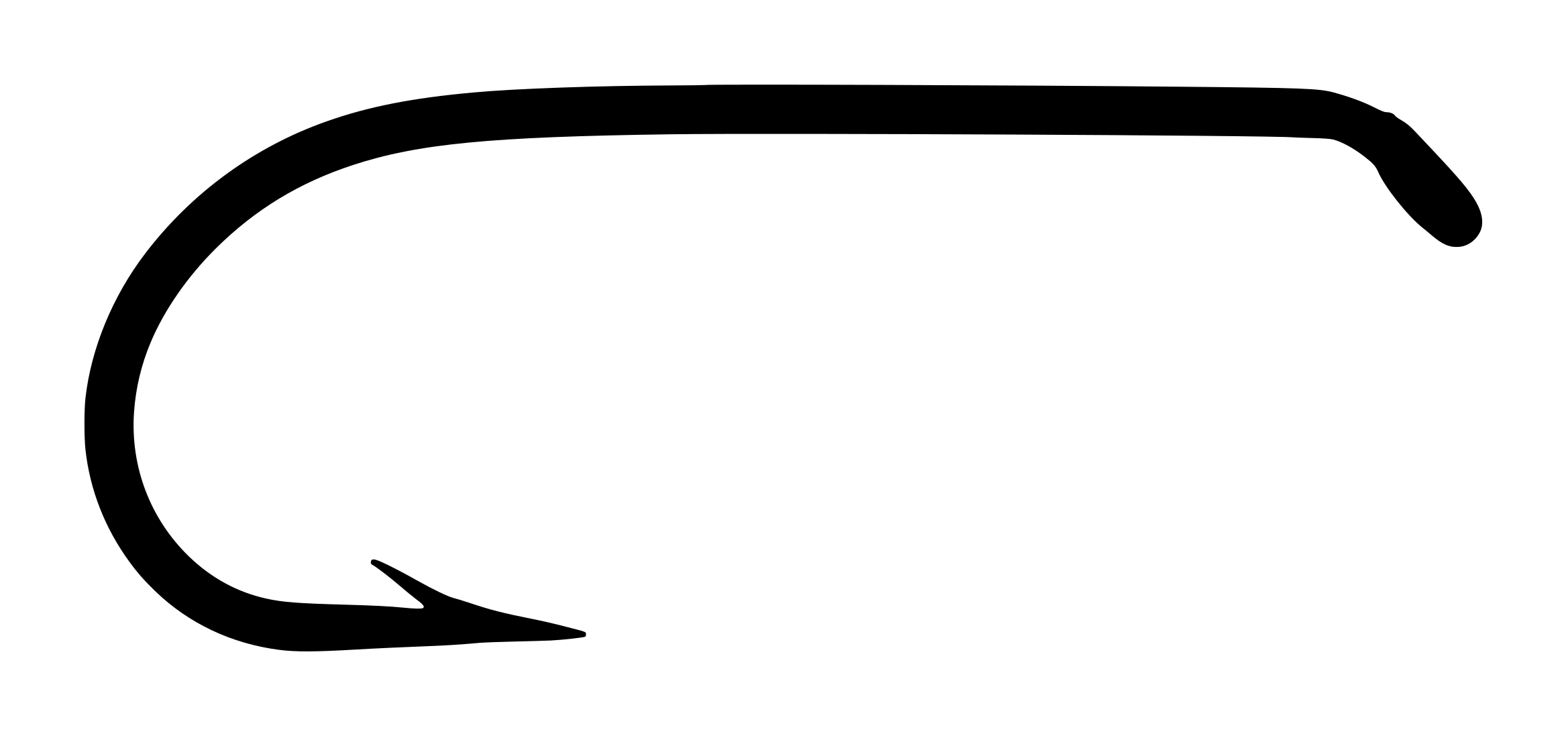
|
K12ST No. 12 — Longshank Sedge/Caddis | 80% |
Matches: Bend, Shank, Point, Forging, Application +1 more Differs: Wire: Standard vs Fine (1X Fine); Gap: Standard vs Wide; Eye: Tapered Eye vs Ball Eye +3 more |
Compare |
|
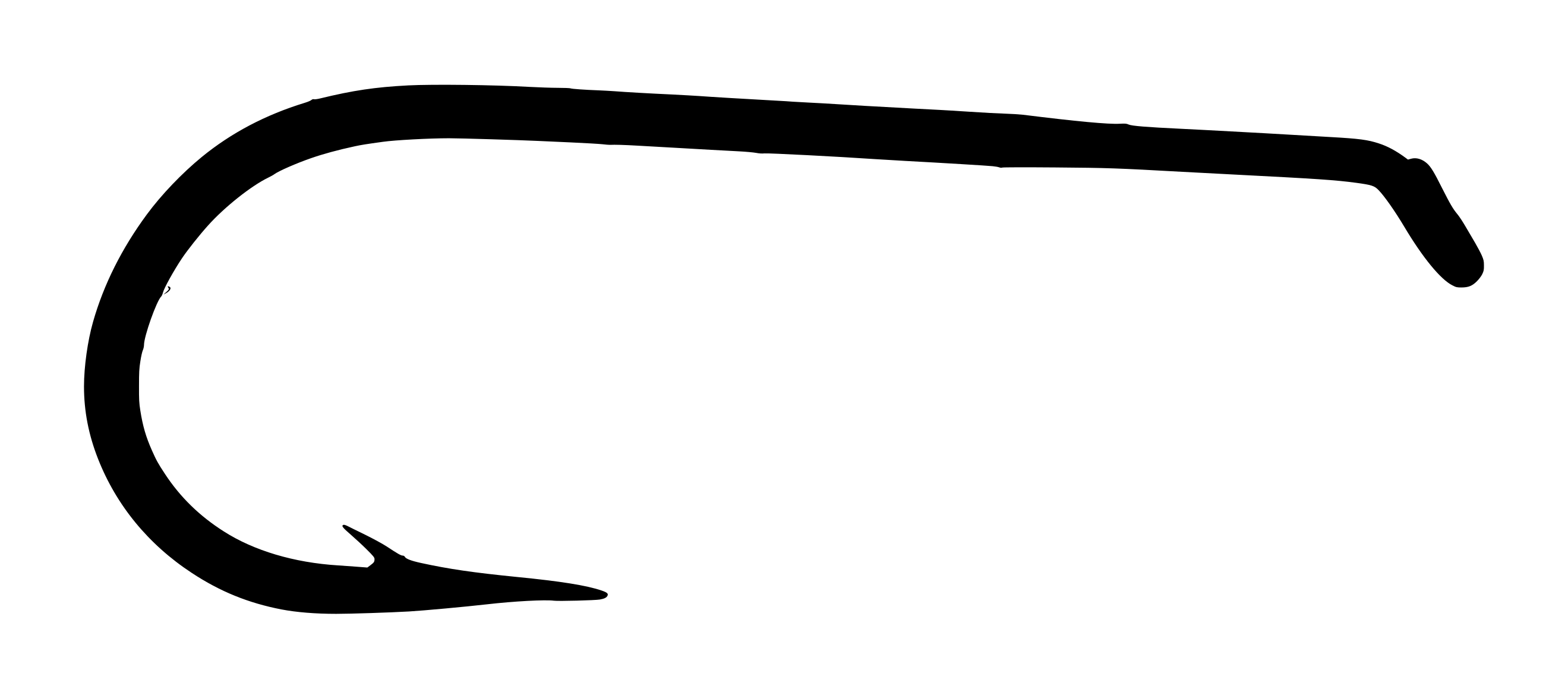
W173 No. 8 — W173 TDE Tapered Eye | 77% |
Matches: Shank, Wire, Gap, Eye, Eye Orient. +3 more Differs: Bend: Sproat vs Perfect; Point: Standard / Spear vs Superior; Forging: Forged vs Round +1 more |
Compare |
|
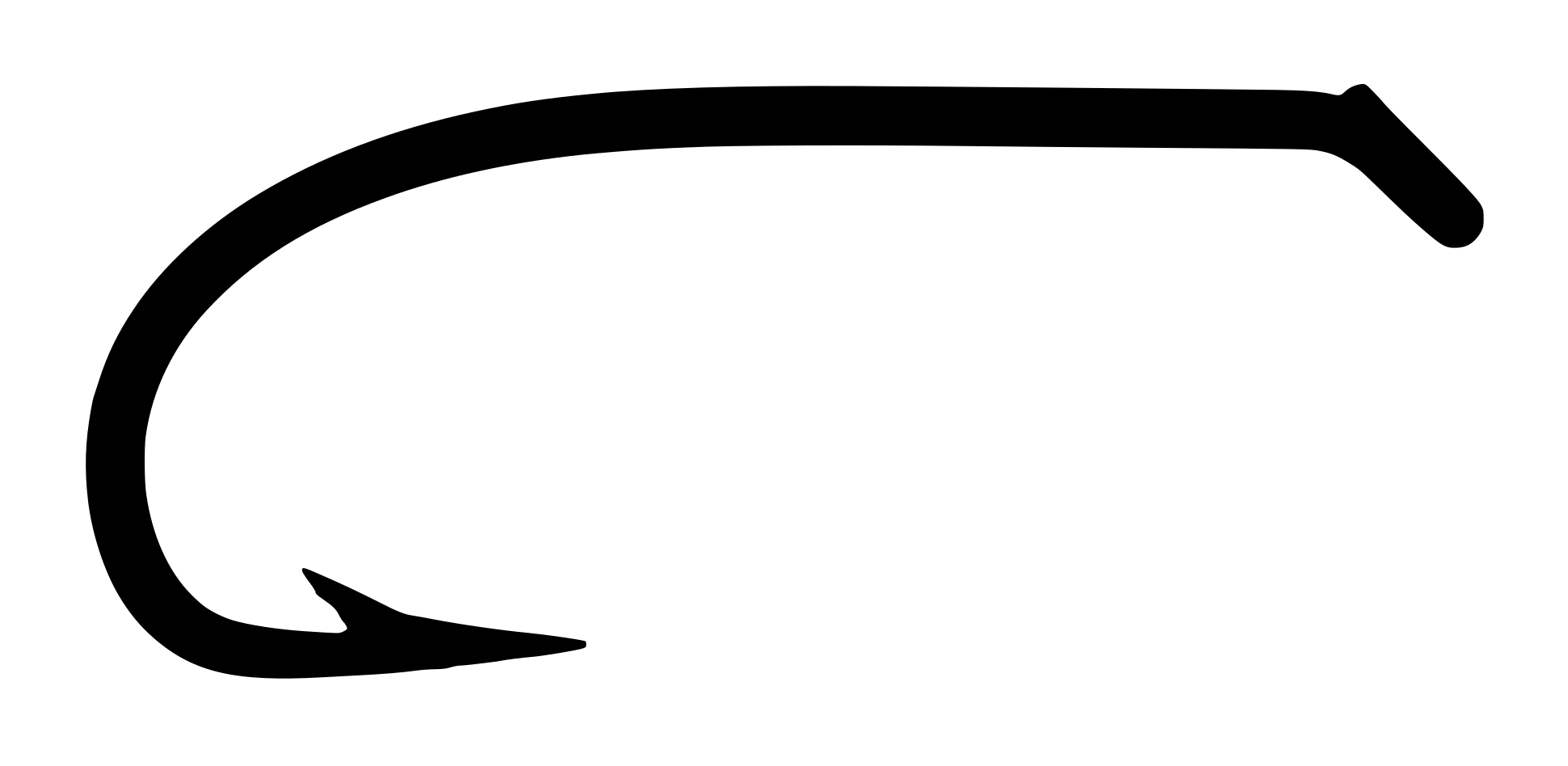
W 205 No. 12 — Sproat Hook | 77% |
Matches: Bend, Gap, Eye, Eye Orient., Point +2 more Differs: Shank: 1X Long vs Standard; Wire: Standard vs Heavy (1X Heavy); Forging: Forged vs Round +2 more |
Compare |
|
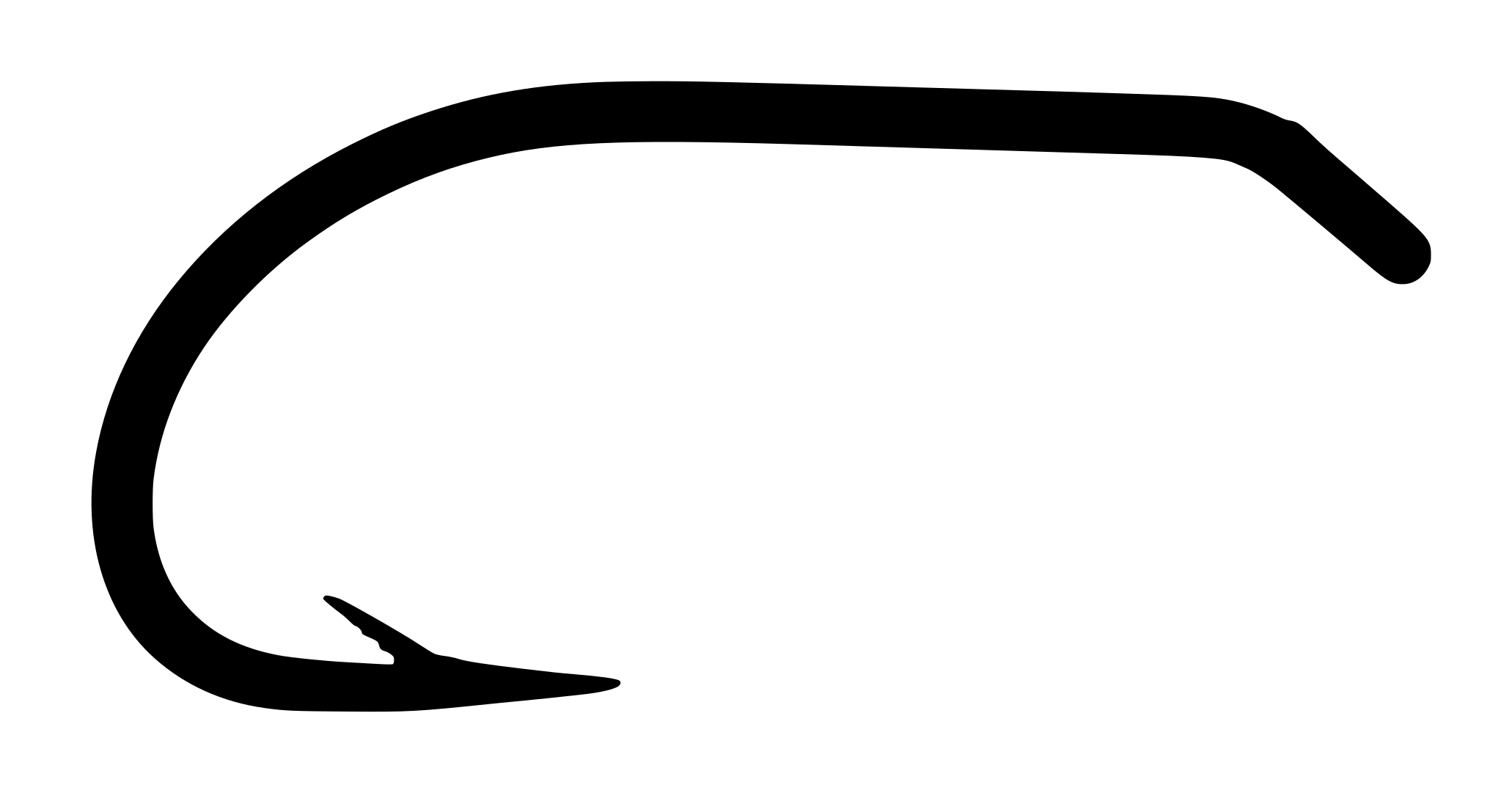
993 No. 12 — Celebrated No. 993 | 76% |
Matches: Bend, Wire, Gap, Eye, Eye Orient. +2 more Differs: Shank: 1X Long vs Standard; Point: Standard / Spear vs Hollow Point; Forging: Forged vs Round +2 more |
Compare |
Related by Shape (SVG)
| Silhouette | Hook Model | Match | |
|---|---|---|---|
|
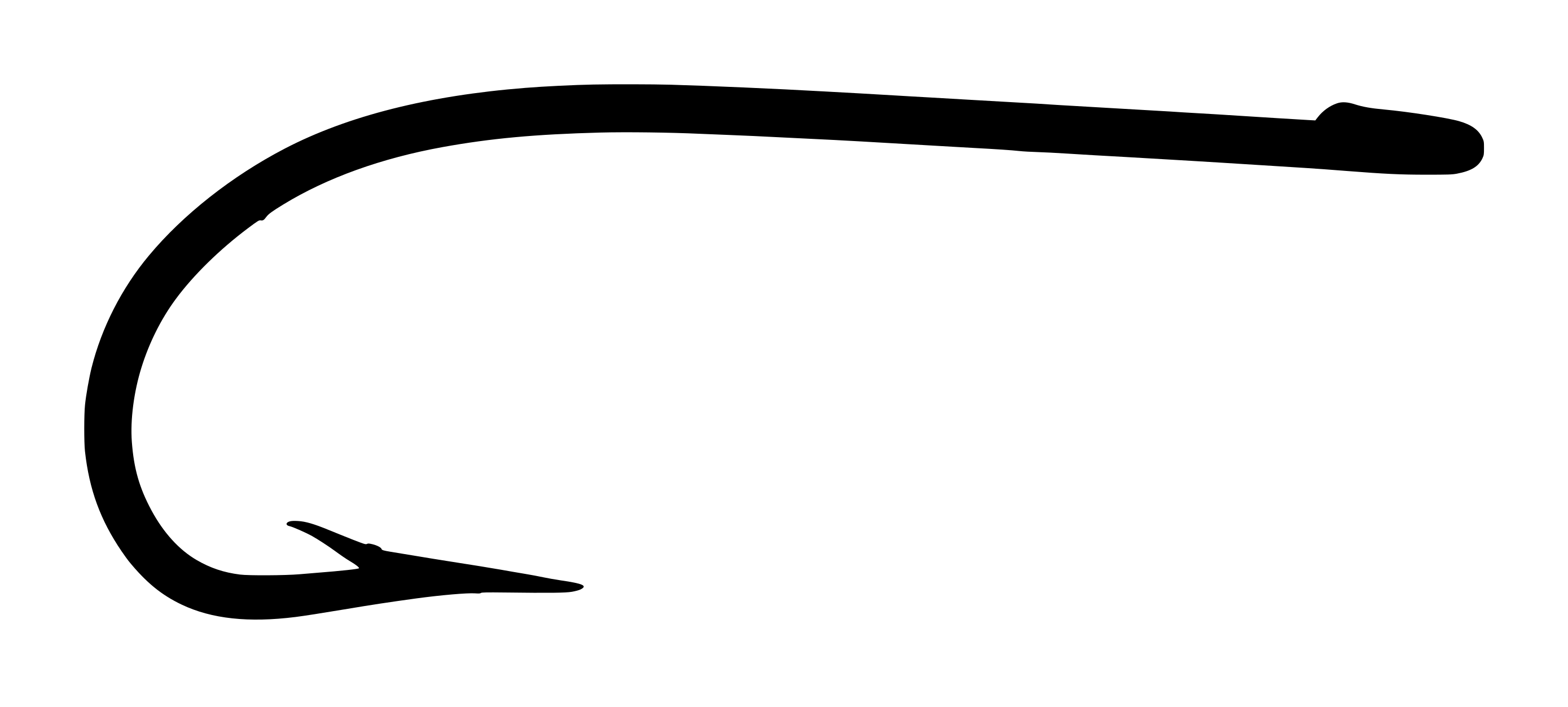
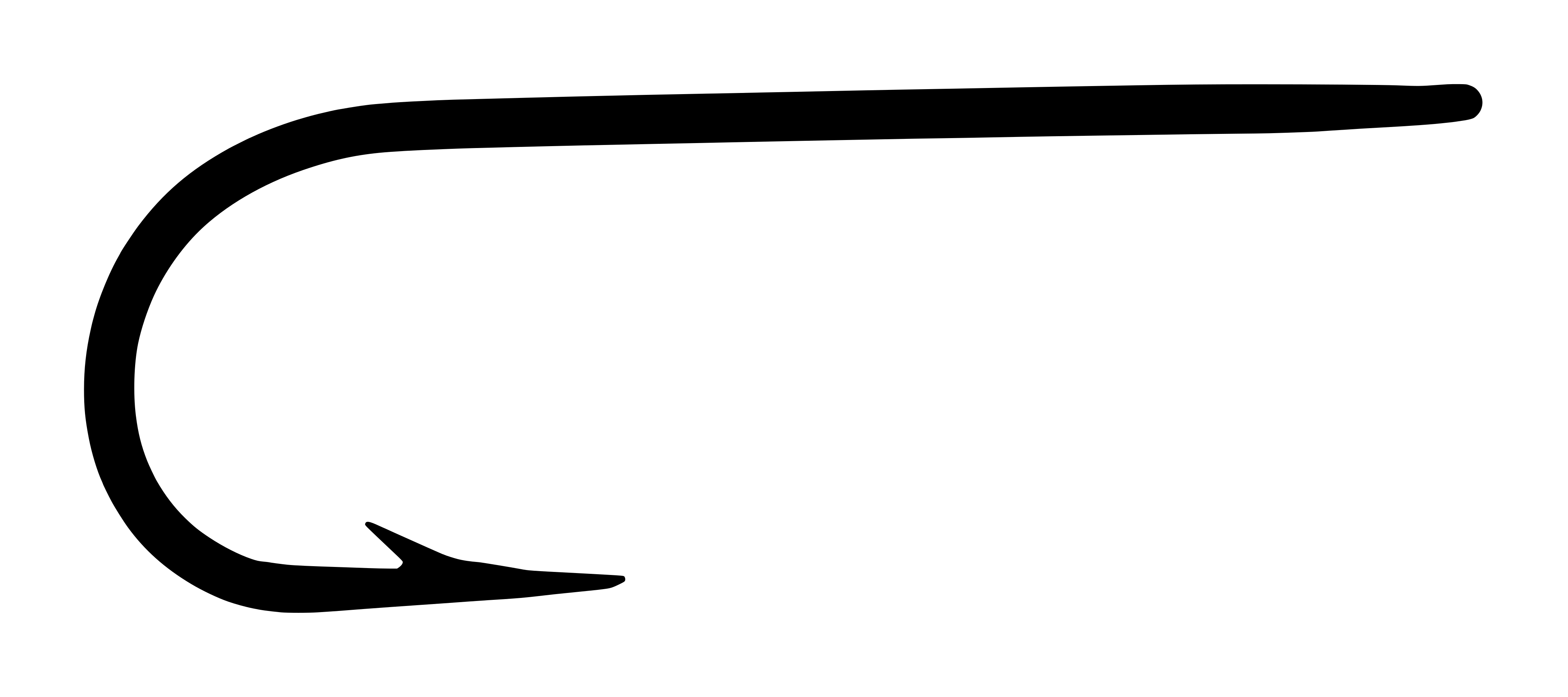
3389 No. 8 — Mustad 3389 | 99% | Compare |
|
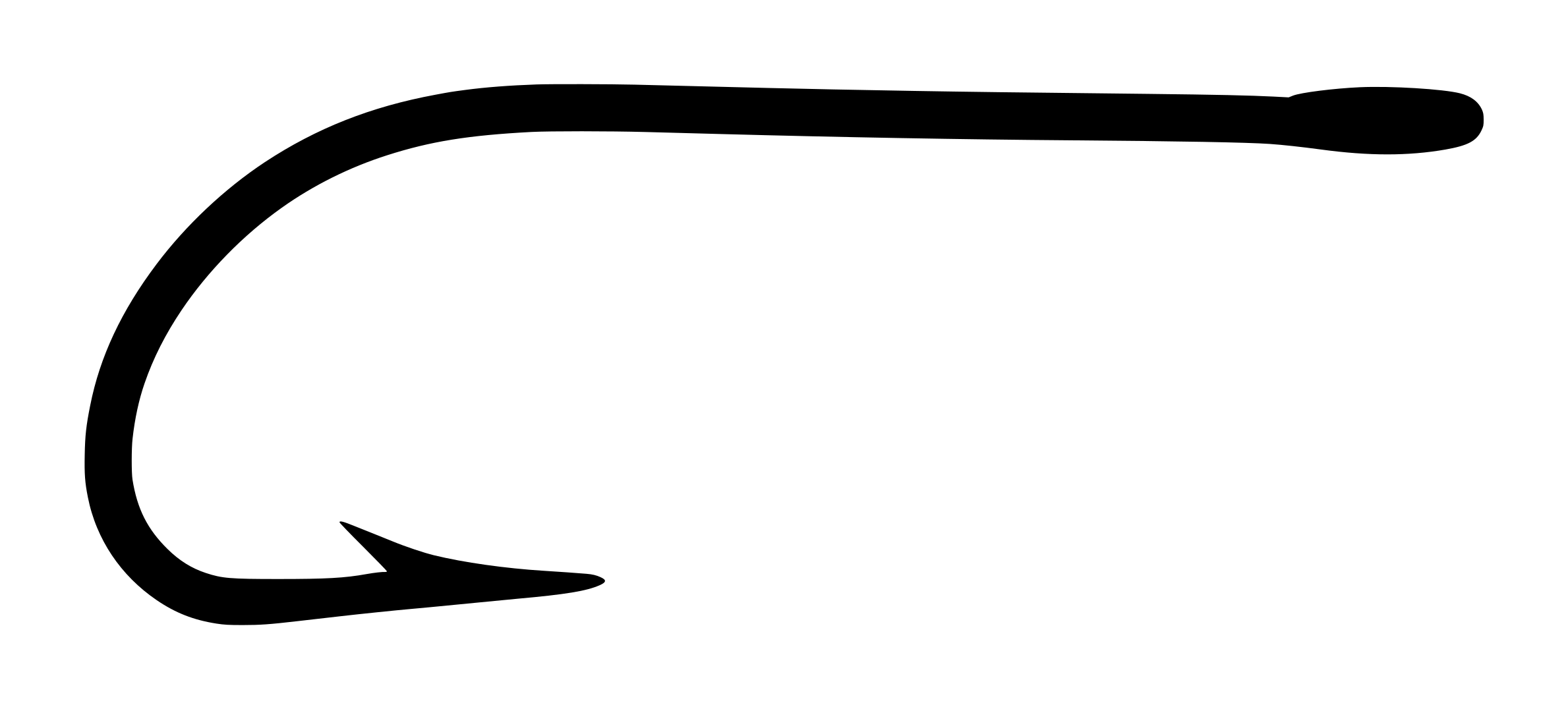
4450 C No. 3/0 — Mustad 4450 C | 99% | Compare |
|
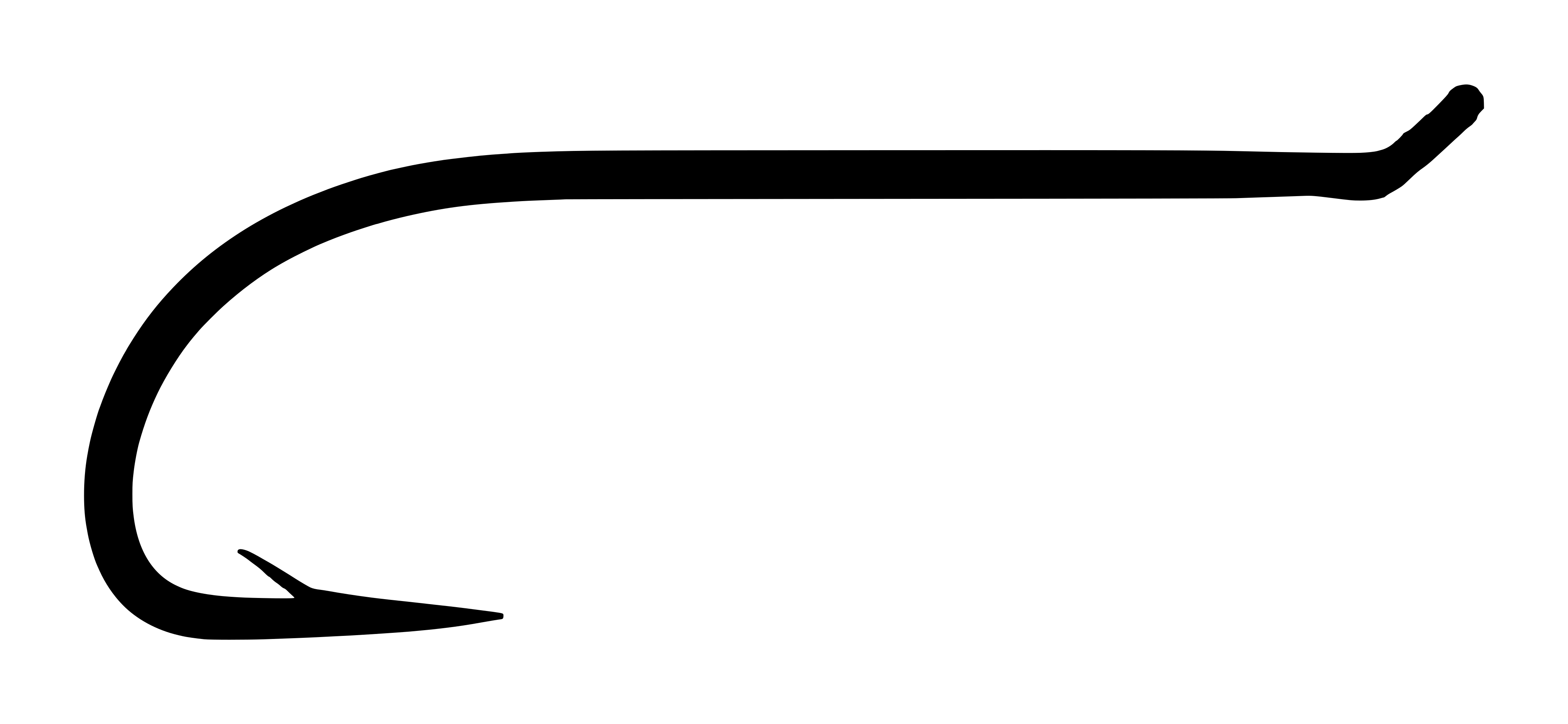
3121-J No. 9/0 — Limerick | 99% | Compare |
|
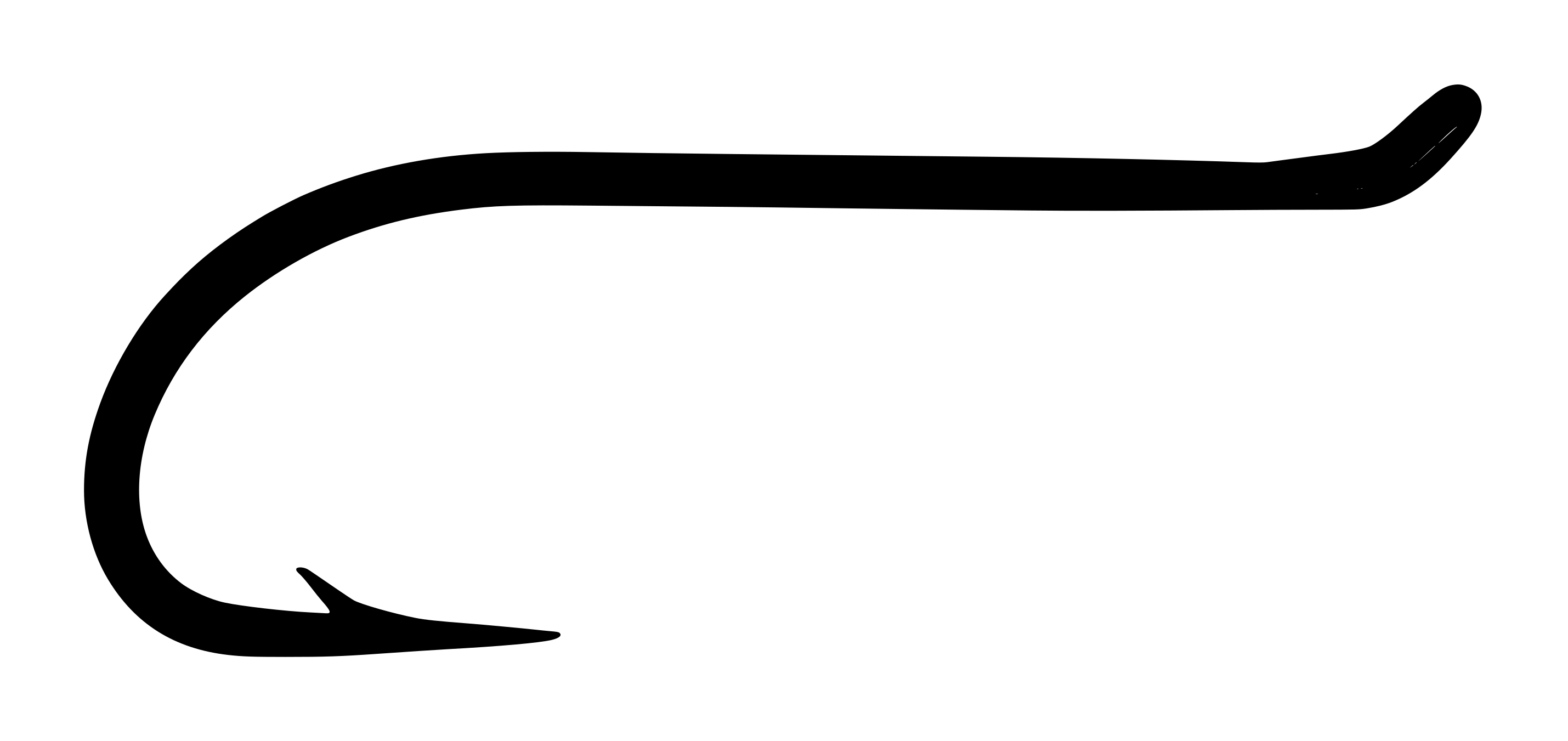
L220 No. 4 — L220 Gilt | 98% | Compare |
|
S 1937 — Edgar S 1937 | 98% | Compare |
Usage, Fly Patterns, and Equivalents
Primary Application
Fine-wire dry fly and wet fly hook designed for traditional trout fishing. The extra-fine wire and forged construction allowed economical tying of small patterns while maintaining adequate hook geometry. Suitable for gentle presentations on chalk streams and similar selective water. The hollow point geometry provides penetration on delicate lips without crushing thin tippets.
Secondary Applications
Light nymph patterns, soft hackle wets, small streamers
Classic Fly Patterns
March Brown, Greenwells Glory, Wickhams Fancy, Partridge and Orange, Invicta
Modern Equivalents
| Hook | Match Quality | Notes |
|---|---|---|
| Tiemco 101 | Very Good | Barless dry-fly hook with similar fine-wire geometry and tapered eye. Modern materials and sharpening, but comparable bend profile and application. |
| Mustad 94840 (Partridge successor line) | Good | Mustad-era successor to Partridge barless hooks, maintains sporat bend but mass-produced. Slightly heavier wire gauge. |
| Partridge GRS15ST (modern Partridge) | Moderate | Contemporary Partridge sproat, but with modern micro-barbs and different manufacturing. Designed for similar applications but not a direct equivalent. |
Collectability and Value
| Rarity | Uncommon |
| Market Value (USD) | $8 – $22 |
| Packaging Condition | Very Good — light wear, fully legible |
| Packaging Format | PT-E-001 |
Partridge hooks hold steady collector interest due to representation of Redditch craft manufacturing and consistent design quality. Fine-wire barless specifications attract traditional fly tyers rebuilding vintage patterns. Size No. 12 in this code is genuinely uncommon — larger sizes (8, 10) survive in greater abundance. Original packaging in green letterpress format commands a premium; loose hooks from this line sell for 30-50% of carded value.
Limiting factors include competition from mass-produced Mustad alternatives and the specialized appeal of barless hooks among modern tyers. The E3AY was never a mainstream commercial pattern outside the UK and thus survives in smaller global quantities than comparable Mustad hooks. Condition of packaging (toning, edge wear) affects perceived value more than hook condition itself.
Most desirable: sealed or near-sealed cards of size 14-16 (finer sizes); barless sproat combinations in blued finish (rarer than bronzed); complete sets showing multiple sizes from the E-series. Size No. 12 bronzed in this condition represents a mid-range collectible — meaningful to specialists, passed over by casual buyers.
Packaging
Standard 1960s-1980s Partridge sales card format. Cream stock with full-border green printing. Header: Partridge company silhouette in green square. Main text: 4 x FINE BARLESS (STANDARD LENGTH) DOWN/EYE HOOKS in large green sans-serif caps. Left column specifications in green: BRONZE DOWN/EYE / FLAT FORGED / REDDITCH BEND / EXTRA FINE WIRE / BARLESS. Right side: CODE E3AY in green box. Size 12 and quantities 100/25 in diagonal partition boxes. Footer: HAND MADE BY PARTRIDGE OF REDDITCH, ENGLAND in green. Overall dimensions approximately 2.75 x 2 inches. Secured in period envelope.
Market Value Notes
Low ($8): Good condition — opened card with all 25 hooks present, minor card edge wear, light toning<br />
High ($22): Very Good condition — opened but crisp card, complete count, minimal wear, bright hooks<br />
Premium factors: Sealed/near-sealed status, barless specification, Redditch manufacture, size rarity (12, 14, 16 rarer than 8, 10), blued finish (scarcer than bronzed), original envelope intact<br />
Platforms: eBay UK, eBay US, specialist tackle dealers, Redditch collector networks<br />
Confidence: E estimated — based on comparable Partridge barless sproat sales and Redditch hook market patterns. Limited specific transaction data for size 12 E3AY. Estimate assumes UK/EU market context.
Where to Find
eBay UK (most frequent), eBay US (occasional), specialist Redditch tackle dealers, UK fly-fishing forums and collector groups, occasional estate/tackleroom liquidations
Storage and Preservation
Store in a cool, dry environment away from moisture. Bronzed finish is susceptible to patina development with humidity exposure — some collectors consider warm color development desirable as period patina, while others prefer original uniformity. Original packaging adds significant value and provides protection; store card in envelope rather than loose or in modern containers.
Avoid contact with other metals to prevent galvanic corrosion. Handle hooks by the shank only; skin oils on points can initiate surface oxidation over time. The forged wire profile is resistant to corrosion if kept dry, but the turned-down tapered eye junction is a stress concentration point — do not bend the eye once set.
If the card shows toning or foxing, this is normal age-related paper degradation and does not affect hook value materially. Avoid harsh cleaning of the card; light dusting only. The lettering and registration of the green print are significant to the package’s historical documentation value.
Packaging Text and Specifications
Source: Partridge of Redditch E3AY sales card, c. 1960-1980
The card’s specification text reflects Redditch product documentation standards of the 1960s-1970s. ‘BRONZE DOWN/EYE’ confirms both finish (bronzed) and eye type (turned-down). ‘FLAT FORGED’ is explicit statement of forging process — ‘flat’ likely refers to the cross-sectional profile created by swage-forging. ‘REDDITCH BEND’ was a marketing assertion of manufacturing location and craft tradition, distinguishing Partridge from industrial competitors.
‘EXTRA FINE WIRE’ is the manufacturer’s gauge designation — no ISO or numeric wire diameter is specified, as period practice relied on visual gauge standards and comparative thickness. The four-line specification block was standard Partridge layout, allowing rapid identification by tyers familiar with the product line.
The 100/25 box in the corner indicates the card held two packaging options: professional gross count (100 hooks) or retail quarter-card (25 hooks). The specific card shown is the retail 25-hook format, consistent with tackle-shop display packaging rather than distributor bulk.
Size No. 12 in Context
Size No. 12 represents the transition between standard trout hooks and true small/delicate sizes. In the early-to-mid 20th century, size 12 was considered a ‘versatile’ size suitable for both dry flies and wet flies. By the 1960s, when the E3AY was in production, size 12 was recognized as a standard small-to-standard trout size, finer than size 10 but not yet the micro-category of size 16 and smaller.
The extra-fine wire specification becomes particularly significant at size 12. Fine-wire hooks in larger sizes (8, 10) were marketed as general-purpose ‘economical’ designs. In size 12, fine wire enabled the tying of small, sparse patterns — March Browns, Greenwells Glories, soft hackles — that required delicate appearance without sacrificing adequate gape and hook strength for hook-setting.
Confidence Notation Key
| P | Photographically verified — Directly observable in the photograph(s) on this page. |
| V | Verified by documentation — Confirmed by manufacturer catalog, spec sheet, or published reference. |
| I | Inferred — A logical deduction from observable or documented evidence, not directly stated. |
| E | Estimated — An approximation based on visual comparison, proportional analysis, or limited data. |
| S | Speculative — A reasoned hypothesis that cannot be confirmed from available evidence. |
Claims with no notation are confirmed by multiple independent sources. All photographs on garrenwood.com are taken on a measurement grid where each square equals 1/10 inch (0.1″ / 2.54 mm).