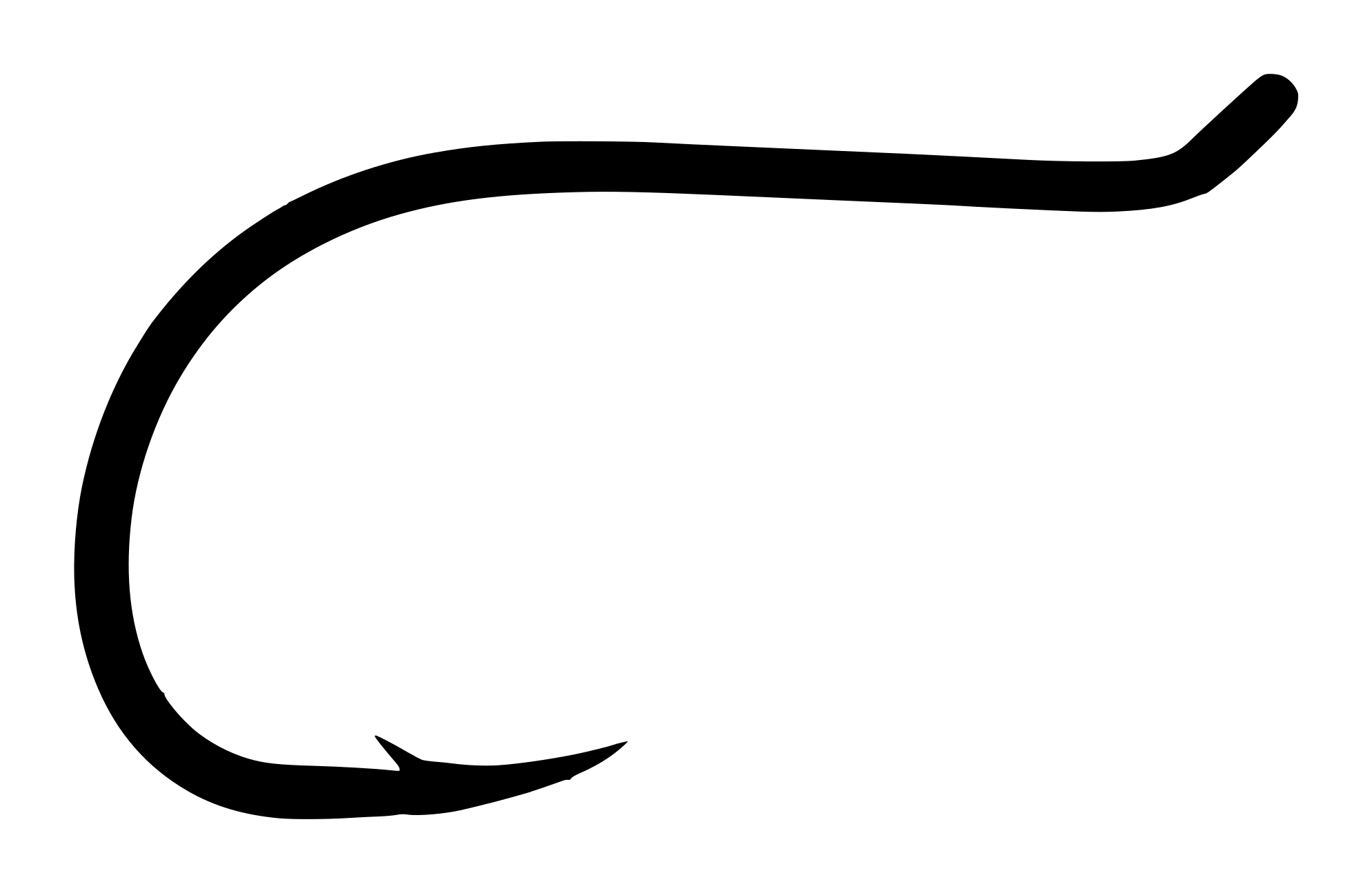
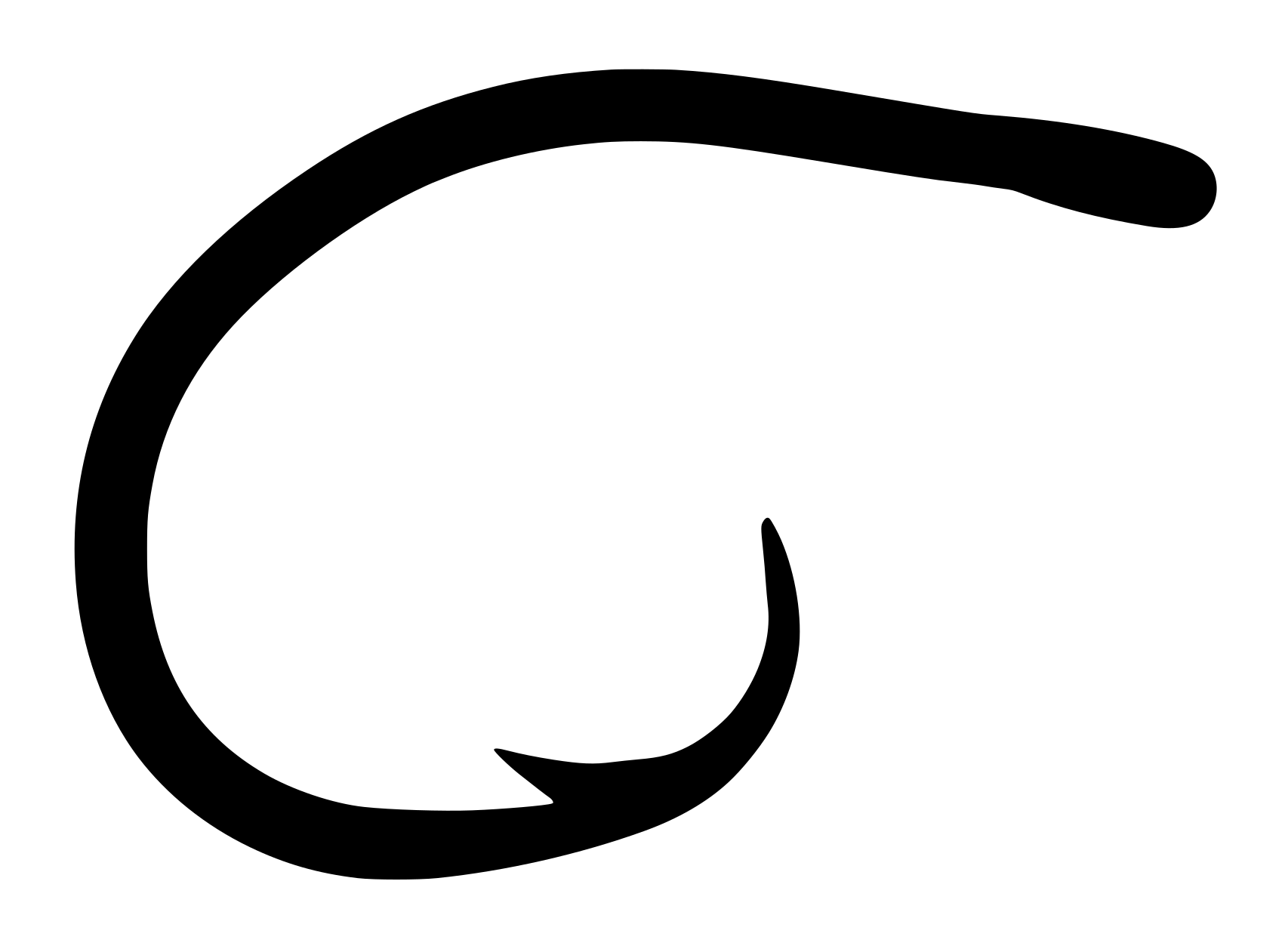
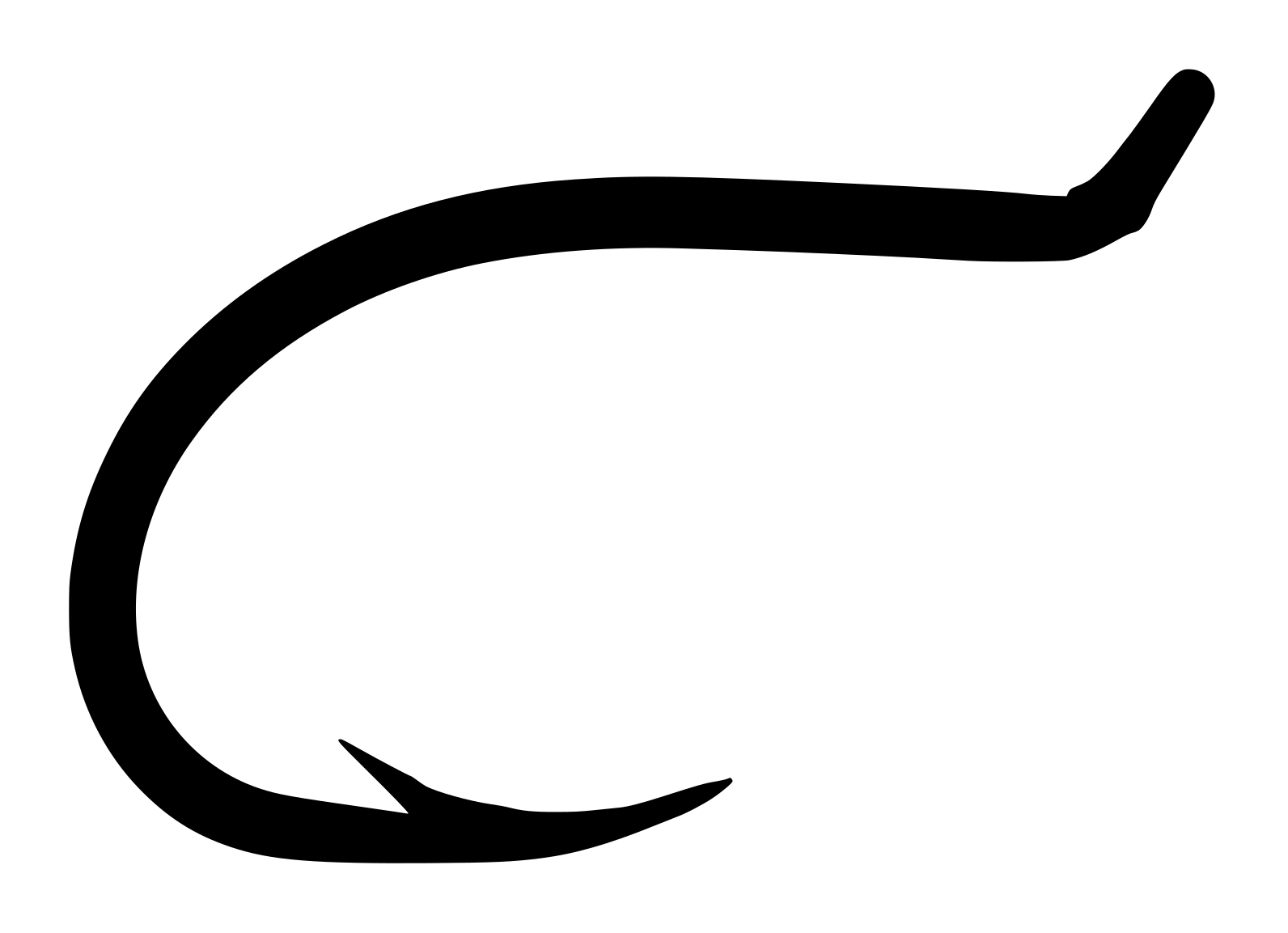
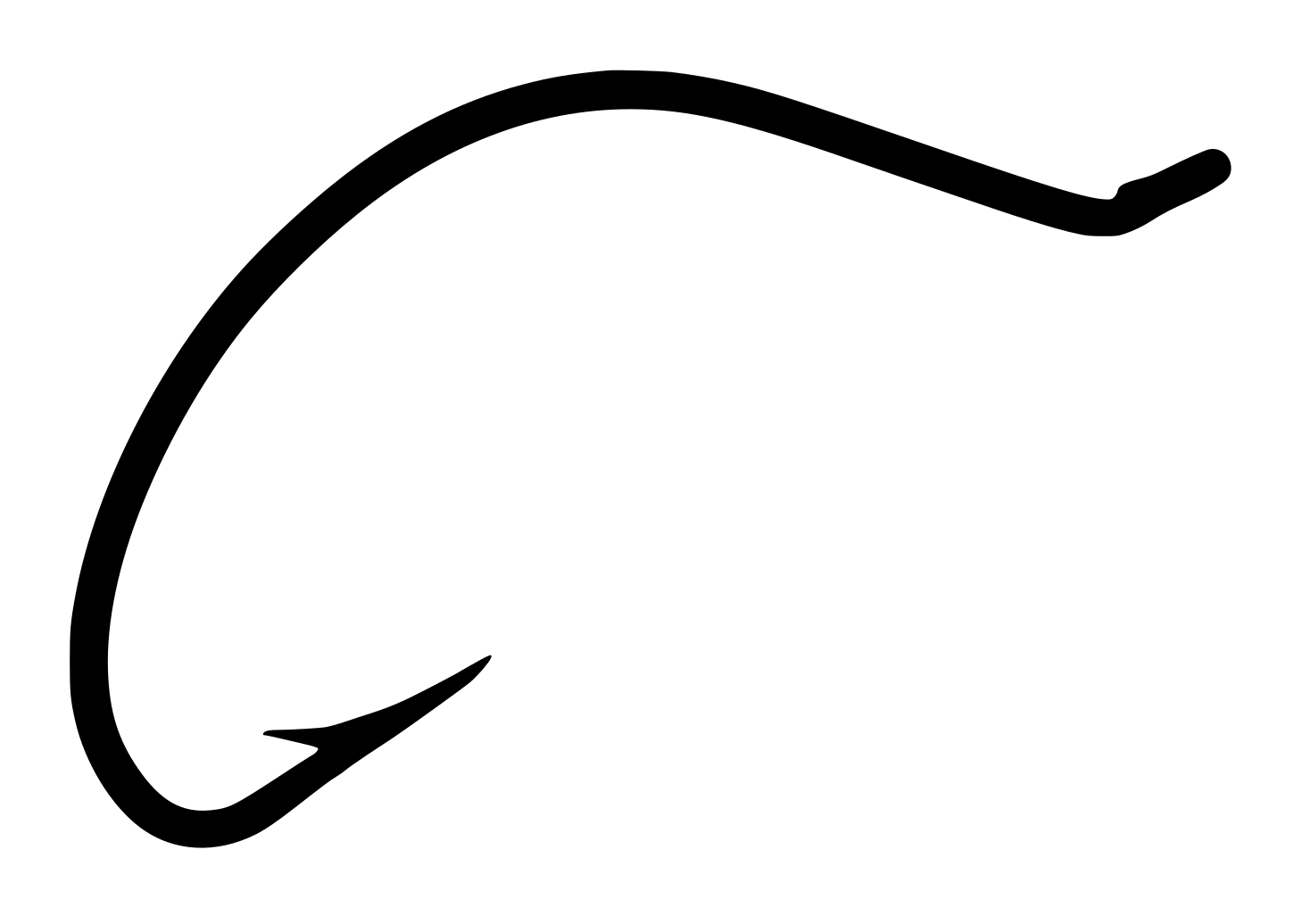
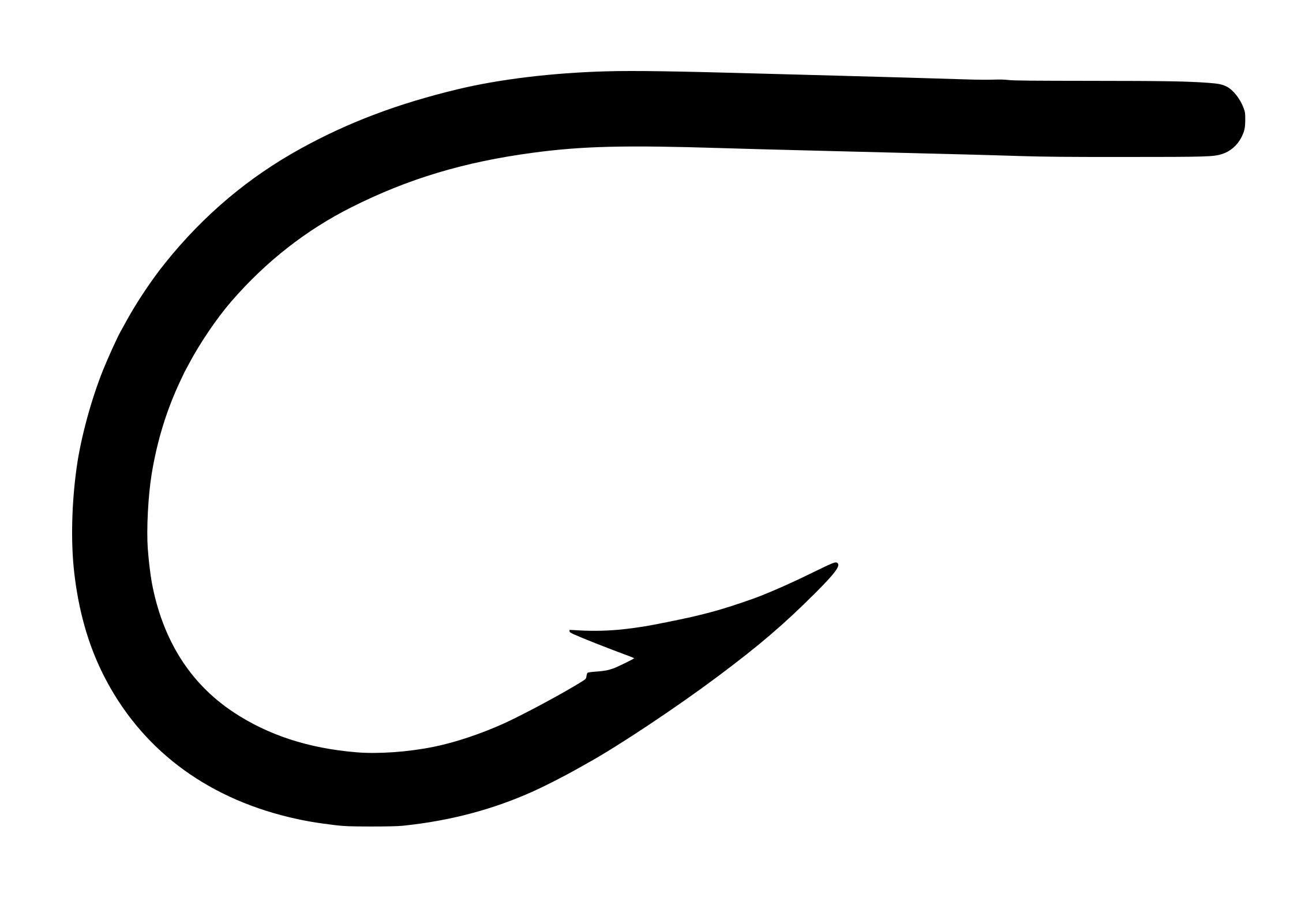
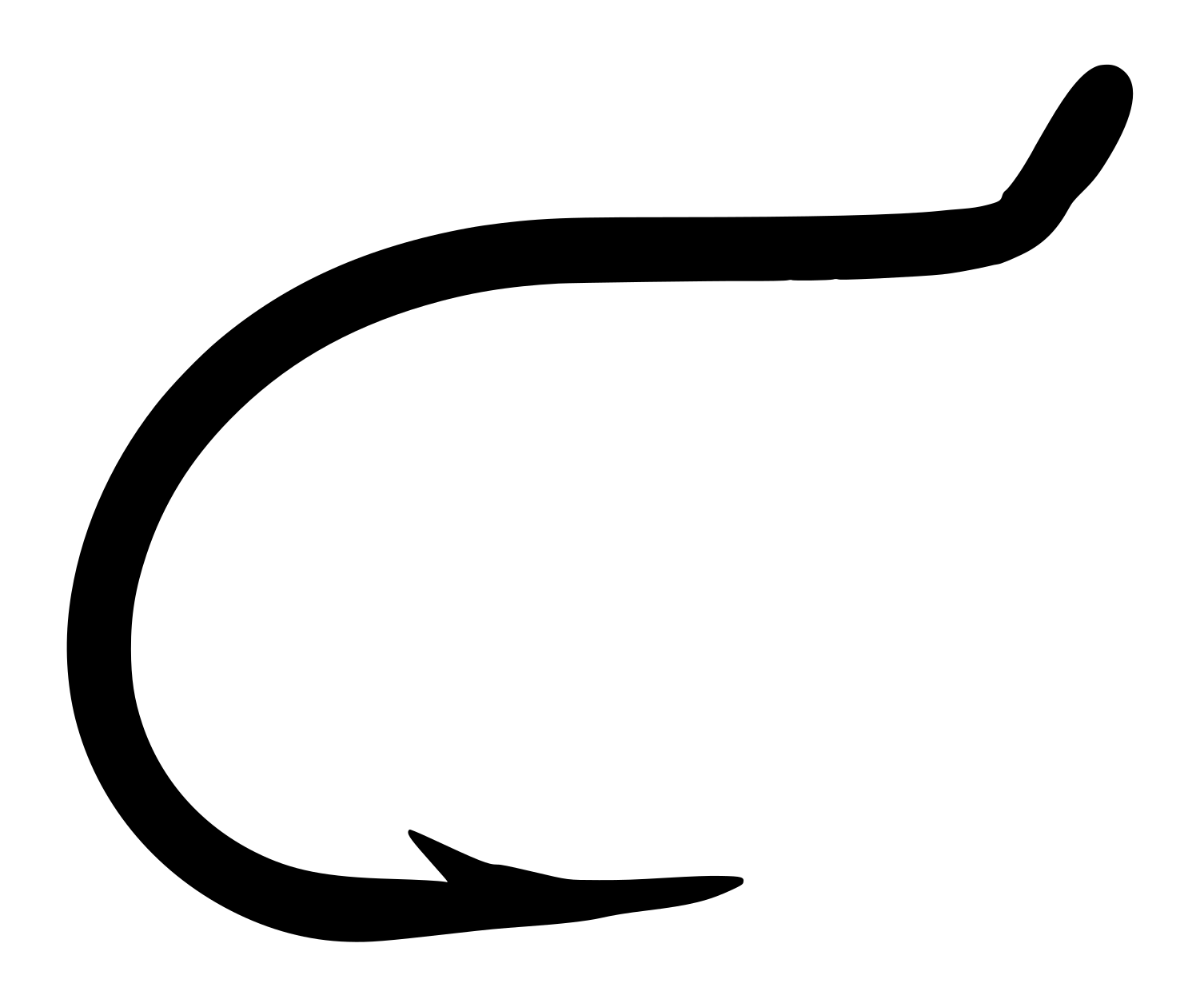
Mustad model 92700, Round (Kendal bend) hook, size 10. Fine forged wire, short shank, wide gap. Turned-up ball eye with tapered wire taper. Superior point geometry. Nickelled finish. 100 hooks per box.
A sea trout and bait hook from Mustad’s Superior product line, manufactured in Gjovik, Norway. The Kendal round bend with superior point was favored for live bait presentation and soft offerings on the sea trout coast of the British Isles. The short shank and wide gap accommodate natural baits without fouling.
Packaging evidence — letterpress printing, cream-stock box, no barcode — dates this to the mid-to-late 1950s or early 1960s. The handwritten size notation suggests retail inventory tracking from that era. Original manufacturer box in good condition is a significant collectibility factor; most surviving examples are loose or in damaged packaging.
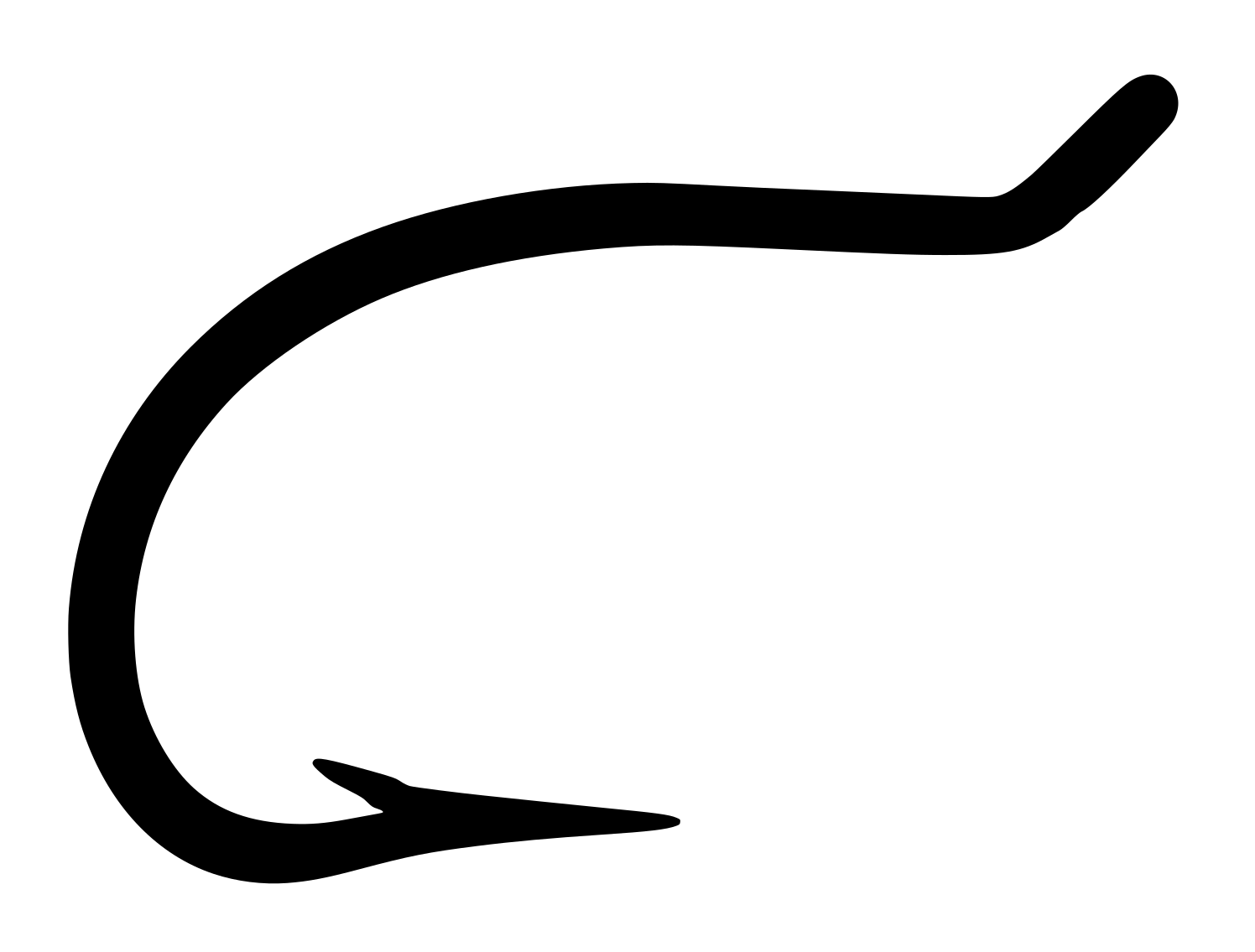
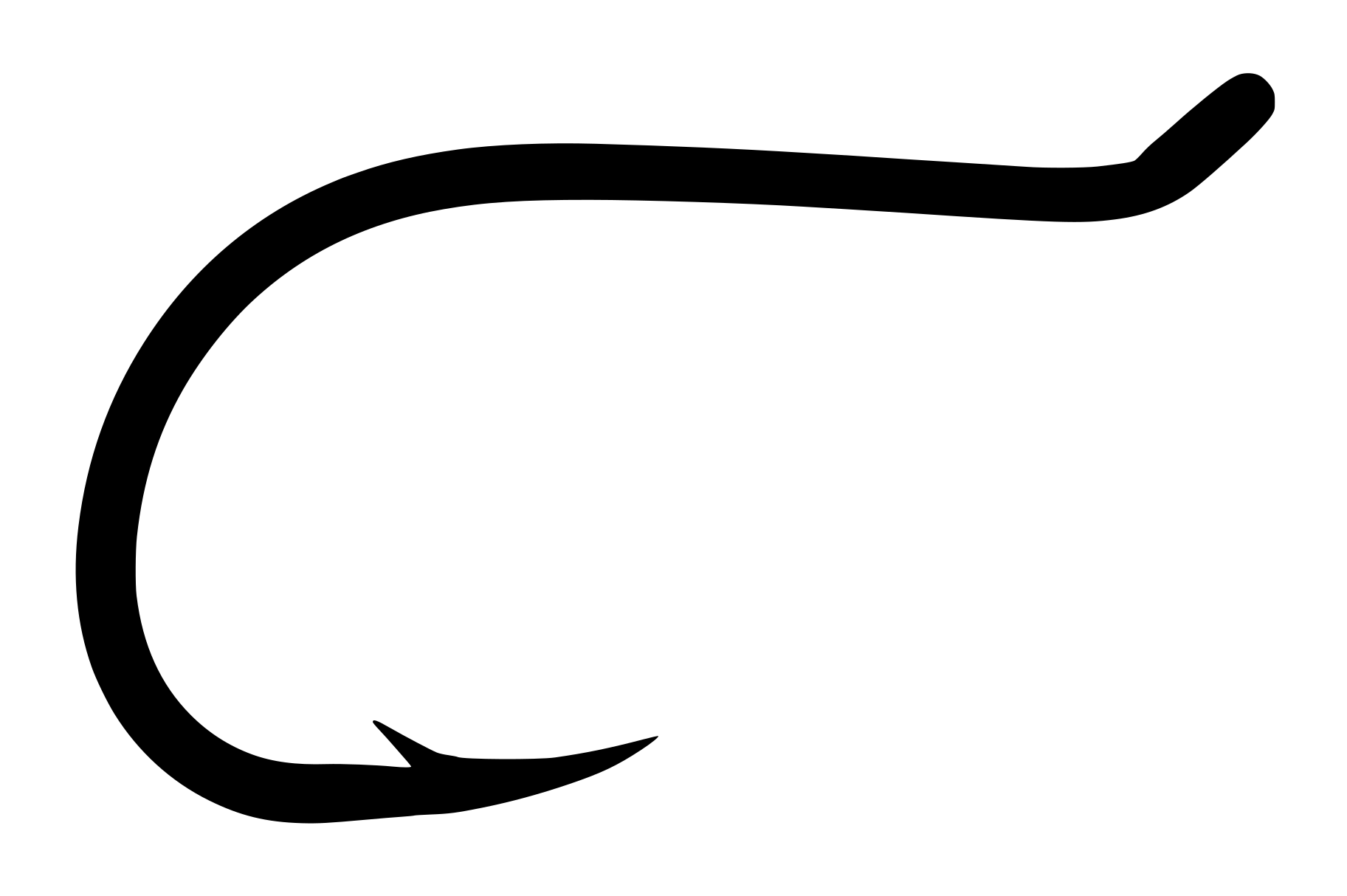
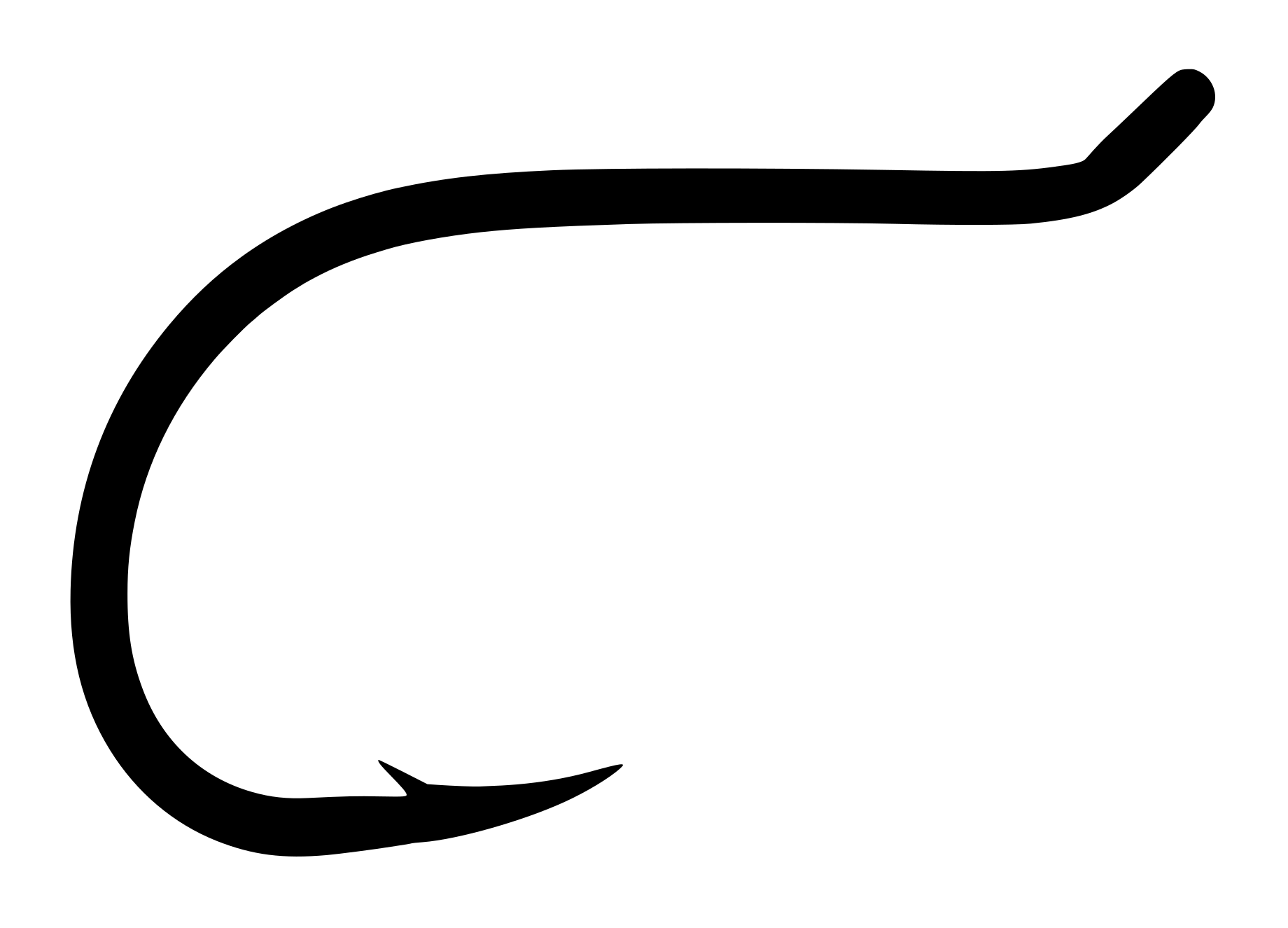
Profile view of the Mustad 92700 Round in nickelled finish, showing the round bend and tapered loop eye.
Photographic record
3 cataloged imagesSelect any record to load it above.
3 images shown
Mustad 92700 Round Hook Side ProfileProfile view of the Mustad 92700 Round in nickelled finish, showing the round bend and tapered loop eye.Open originalMustad 92700 Round Hook Front ViewFront view of the 92700 Round displaying the full arc of the round bend and reversed point offset.Open originalMustad 92700 Round Hooks Original Package LabelOriginal packaging label for Mustad 92700 Round hooks. Text states: forged, reversed, tapered eye, nickelplated, Made in Norway, Superior quality line.Open original
Technical profile
Turned Up Ball Eye | Round / Kendal | Short (1X–2X Short) | Fine (1X Fine) Wire | Superior Point | Nickelled / Nickel-plated
Eye
Ball Eye, Turned UpBall eye with uniform diameter loop, wire end butted to shank. The eye sits at an upward angle (turned-up), typical for sea trout and bait hooks of the period. Eye wire is tapered (progressively narrower toward the eye itself), reducing bulk and improving thread-wrapping characteristics. Wire taper is visible in the side-profile photograph. P
Wire
Fine (1X Fine), Forged
Shank
Short (1X–2X Short) — Plain
Bend
Round / Kendal, Wide gap, Offset / kirbedRound / Kendal bend with smooth, nearly circular arc from eye to bend apex. Wire set is even and symmetrical; no pronounced offset. The wide gap and short shank create a characteristic bait hook proportion — ample space for hook gape without excessive shank length. Point is kirbed (offset left, viewed from above), as noted on packaging ("reversed" in Mustad's terminology of the period, meaning offset to the right when viewed eye-down shank — a source of historical inconsistency in terminology). P
Point
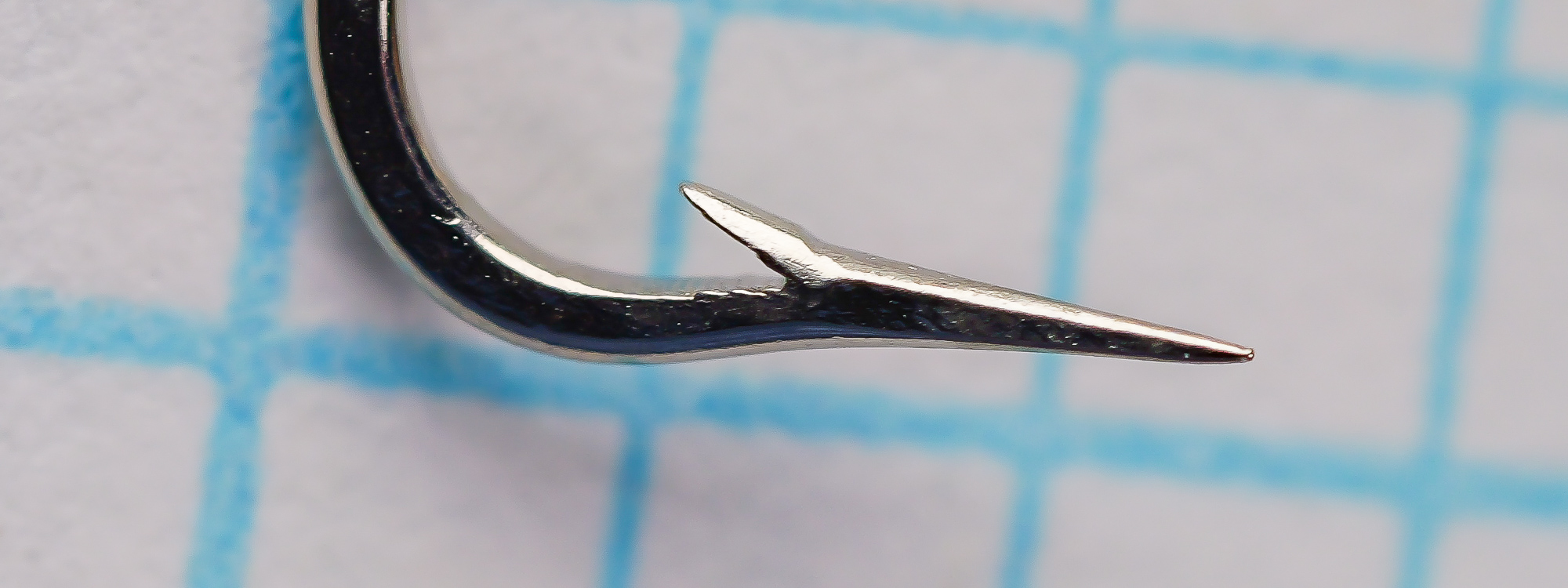
Superior (near-straight inner taper)Standard barbed hook. Barb is small and closely cut, positioned at a modest angle just behind the point. Consistent with forged wire construction — the barb is formed as part of the forging process rather than cut. P
Finish
Nickelled / Nickel-Plated — Confirmed (stated on packaging)Nickelled finish showing cool silver-grey tone consistent with nickel plating. Confirmed on original packaging: "nickelplated" V. Specimen shows bright, reflective finish with no corrosion or patina development visible. Nickel finish is less susceptible to rust than bronzed hooks but can develop dull grey patina with extended exposure to damp conditions. P
Manufacturer box in good condition. Wrapper shows light cream toning and minor creasing consistent with mid-twentieth century storage; letterpress printing remains legible throughout. No significant damage to box structure. Size number "10" handwritten in purple ink on wrapper, indicating original retail marking or inventory code. Hooks themselves bright nickel finish with no corrosion visible in photograph.
The Superior point is a near-straight inner face taper from barb to tip, producing a keen edge with minimal concavity — less aggressive than a hollow point but sharper than a curved-in geometry. The result is a point that enters soft baits readily without the knife-edge fragility of true hollow points.
Forged wire construction creates a flattened or oval cross-section through the working portion of the hook, providing strength and durability for live or tough baits. The fine gauge (1X Fine) balances bait-holding integrity with minimal damage to soft offerings.
The short shank and wide gap create a compact profile optimized for natural bait presentation — the bend occupies proportionally more of the hook, creating a pronounced gape for effective hook-sets in soft-mouthed species. The turned-up eye accommodates traditional gut or horsehair leaders with a natural angle of approach.
This pattern was made in sizes 2-16 (I). We have measurement for size 10. Know the others? Submit calipered measurements and we'll review and add them. Thank you!
Historical context
mustad
O. Mustad & Søn was founded in 1877 by Jens H. Mustad in Oslo, Norway, and relocated to the Gjovik factory in Oppland County by the early twentieth century. Gjovik became one of Europe’s largest hook manufacturing centers, rivaling Redditch, England in production capacity. The factory employed advanced machinery for forging, pointing, and finishing operations, allowing Mustad to produce high-volume specialty hooks at competitive prices.
Post-war Mustad (1945 onward) expanded export distribution aggressively to Britain, Scandinavia, and North America. The company established distinct product lines — Super, Superior, Viking, and others — to segment market positioning and appeal to different angling traditions. The Superior line targeted the British sea trout and bait-fishing market, combining Norwegian manufacturing efficiency with British hook geometry standards.
Series History
The Mustad Superior product line encompasses a range of round-bend hooks optimized for sea trout and bait fishing. The Superior brand designation on Mustad packaging of the 1950s–1960s identifies a sub-range focused on fine-wire, tapered-eye construction for light tackle applications. The 92700 Round was manufactured alongside companion sea trout models (notably the 92620 Beak for more aggressive takes) as part of Mustad’s broader sea trout portfolio marketed to British and Scandinavian tackle dealers.
The round bend with superior point was standard British practice for live-bait sea trout rigs, and Mustad’s Norwegian production could undersell the Redditch makers (Allcock, Partridge, Edgar Sealey) on labor cost while maintaining comparable quality. The 92700 continued in production at least through the 1960s, though documentation of discontinuation is not readily available.
Era and Packaging Dating
No printed barcode present — pre-1974 indicator V. Letterpress printing method typical of 1950s–early 1960s Mustad packaging; later cards and boxes employ offset lithography. Paper stock and cream color consistent with period. "OSLO - NORWAY" printed address and manufacturing location notation typical of Mustad's immediate post-war export marketing (1950s–1960s). "Turned up tapered eye" specification matches Mustad's mid-century terminology for turned-up tapered-eye sea trout and bait hooks. Handwritten size notation in purple ink suggests retail stock marking from that era. Overall evidence points to mid-to-late 1950s or early 1960s production.
The Norwegian Challenge to Redditch
By the 1950s, Mustad's Gjovik factory had become the largest fishhook manufacturer in the world by volume, producing more hooks annually than all of Redditch combined. Yet British sea trout anglers proved fiercely loyal to English makers like Allcock and Partridge, viewing Norwegian hooks with initial skepticism. Mustad's response was to adopt the exact British geometries — the Round, Limerick, Sproat, and others — and market them under British-sounding product lines like Superior, targeting price-conscious dealers and professional gillies. By the late 1950s, Mustad hooks were standard in Scottish tackle shops, often under-stamped with dealer names to disguise their Norwegian origin. This commercial pragmatism — manufacturing to order rather than insisting on Norwegian design — proved more successful than Mustad's earlier attempts to establish proprietary Norwegian patterns.
Design lineage and influence
The Round / Kendal bend is a traditional British sea trout pattern with roots in nineteenth-century Redditch craft tradition. The design favors a smooth, nearly circular arc from eye to point, maximizing internal volume and gape relative to shank length — ideal for accommodating live baits without impaling the bait excessively. The superior point geometry is Mustad’s interpretation of the optimal balance between penetration sharpness and point durability when used with natural baits.
Competing designs from the period include the Allcock Pennell (featuring blind-eye attachment for gut loops), the Partridge GS/O (a fine-wire sea trout hook with slight beak geometry), and the Edgar Sealey S4324 (which retained traditional Redditch blind-eye construction longer than some contemporaries). Mustad’s eye-up variant positioned the hook toward lighter tackle and tyer-friendly applications, while the Redditch makers retained blind-eye models for longer.
Best matchRelated by Attribute
Computed automatically from catalog data — updated as new hooks are added.
Matches: Bend, Shank, Wire, Gap, Eye Orient. +2 moreDiffers: Eye: Ball Eye vs Tapered Eye; Point: Superior vs Beak / Reversed; Finish: Nickelled vs Other +2 more
Sea trout and estuary bait hook, primarily for live sand eels, small fish, or soft crustaceans. The short shank and wide gap are designed for minimal bait damage and efficient hook-up on soft-jawed or delicate-mouthed species. Typical application was live-bait fishing on the sea trout coast of Scotland, England, and Ireland during the 1950s–1960s, where light tackle and sensitive baits were preferred over heavy spinning or trolling rigs.
Classic Fly Patterns
Not typically used for fly tying.
Modern Equivalents
Hook
Match Quality
Notes
Mustad 38941 (Sproat)
Good
Modern round-bend sea trout hook with similar wire gauge, contemporary production
Tiemco TMC 100BL
Good
Contemporary turned-up eye bait hook with fine wire and round bend
Daiichi 1180 (O'Shaughnessy)
Moderate
Modern bait hook with fine wire but more angular bend geometry
Collector notes
Rated 4.5 / 10. Original manufacturer box in good condition is the primary collectibility driver; most survivors are loose hooks or incomplete card packaging. Size 10 is typical and widely available, but the combination of early Superior-line box, letterpress printing, and complete 100-count package creates moderate demand among Mustad historians and sea trout specialists. Scarcity is regional — more common in Scandinavian and British collections, rarer in North America.
Reference value
$8 – $22 USD estimate
Packaging condition
Good — moderate wear, legibleRecorded specimen
Packaging format
mustad-box-vintageCatalog code
Positive factors: Original manufacturer box is a significant premium over loose hooks or cards. Letterpress printing and cream-stock wrapper date the specimen clearly to the 1950s–early 1960s, appealing to period specialists. Complete 100-count package in good condition is rare — most boxes found are opened and depleted. Handwritten size notation adds provenance character. Superior-line designation appeals to Mustad researchers.
Limiting factors: Size 10 is common; sizes 4–8 and 12–16 generate more collector interest. Nickelled finish is less prized than bronzed or blued among some collectors, though sea trout specialists prefer nickel for coastal corrosion resistance. Mustad industrial production numbers mean no true rarity — these hooks are not difficult to find, only uncommon in original packaging. The round bend, while traditional, lacks the distinctive geometry of Sproat or Limerick patterns. No named designer credit or unique technical feature distinguishes this from contemporaries.
Most desirable variants: Sizes 4, 6, 8 in complete original boxes. Sealed boxes with unbroken tape are exceptionally rare. Boxes with printed (rather than handwritten) size notation suggest earlier production and are slightly more desirable.
Packaging
Rigid cardboard box with separate lid. Cream/off-white printed wrapper. Black letterpress text and decorative border of repeated asterisk motif. Printed text states: "Key / O. MUSTAD & SÖN / Manufacturers / OSLO - NORWAY / Qual 92700 / Brand / Superior / Mustad-Round Hooks / Forged, reversed, / t. up tapered eye, nickelplated / 100 / No [purple handwritten] 10 / Made in Norway". Box construction and letterpress printing consistent with late 1950s–early 1960s production. No printed barcode visible. Light toning of wrapper from age and storage.
Market Value Notes
Low ($8): Good condition — opened box, original wrapper with minor toning, approximately 80–100 hooks present, no corrosion. High ($22): Excellent condition — original box sealed or near-sealed, all 100 hooks accounted for, minimal wrapper wear, size notation legible. Premium factors: Complete original manufacturer box adds 3–4x the value of loose hooks. Letterpress printing and cream-stock wrapper date the specimen clearly and appeal to period collectors. Sealed or near-sealed condition commands a 30–40% premium. Larger sizes (4–8) and smaller sizes (14–16) sell higher than size 10. Platforms: eBay UK and European auctions; specialist tackle dealers; Scandinavian collector forums. Confidence: E estimated — limited comparable sales data for this specific box; based on extrapolation from Mustad card values ($3–8 each) and box premium multiples observed for 1950s–1960s English makers.
Where to Find
eBay (primarily UK and European listings). Specialist Scandinavian tackle dealers. British sea trout tackle auctions. Occasional appearance at regional tackle fairs in Scotland and England. Rarer in North American markets unless part of estate or collector dispersals.
Collector's Identification Tips
Size is marked in purple handwriting on the box wrapper, a common retail practice ca. 1950s–1960s. The letterpress-printed text “Qual 92700” provides the model code; later Mustad boxes use offset-printed codes. The cream paper stock and asterisk-motif border are distinctive of early Mustad Superior-line packaging — later variants shifted to white or manila stock. The hook ply is single (confirm visually: one shank, one bend, one point). Turned-up eye is visible in side profile. Superior point has a nearly straight inner taper, distinguishing it from the more concave hollow-point geometry used on some Mustad models.
Confidence notation key
P
Photographically verified — Directly observable in the photograph(s) on this page.
V
Verified by documentation — Confirmed by manufacturer catalog, spec sheet, or published reference.
I
Inferred — A logical deduction from observable or documented evidence, not directly stated.
E
Estimated — An approximation based on visual comparison, proportional analysis, or limited data.
S
Speculative — A reasoned hypothesis that cannot be confirmed from available evidence.
Claims with no notation are confirmed by multiple independent sources. All photographs on garrenwood.com are taken on a measurement grid where each square equals 1/10 inch (0.1″ / 2.54 mm).