Selected size
2
Catalog record
- Overall Length
- 64.5 mm V
- Shank Length
- 51.8 mm V
- Bend Depth
- 10.8 mm V
- Wire Diameter
- 0.9 mm V
- Confidence
- V Catalog record only
 Garren WoodFishing Hook Reference

Save this hook to your account to build a list you can come back to.
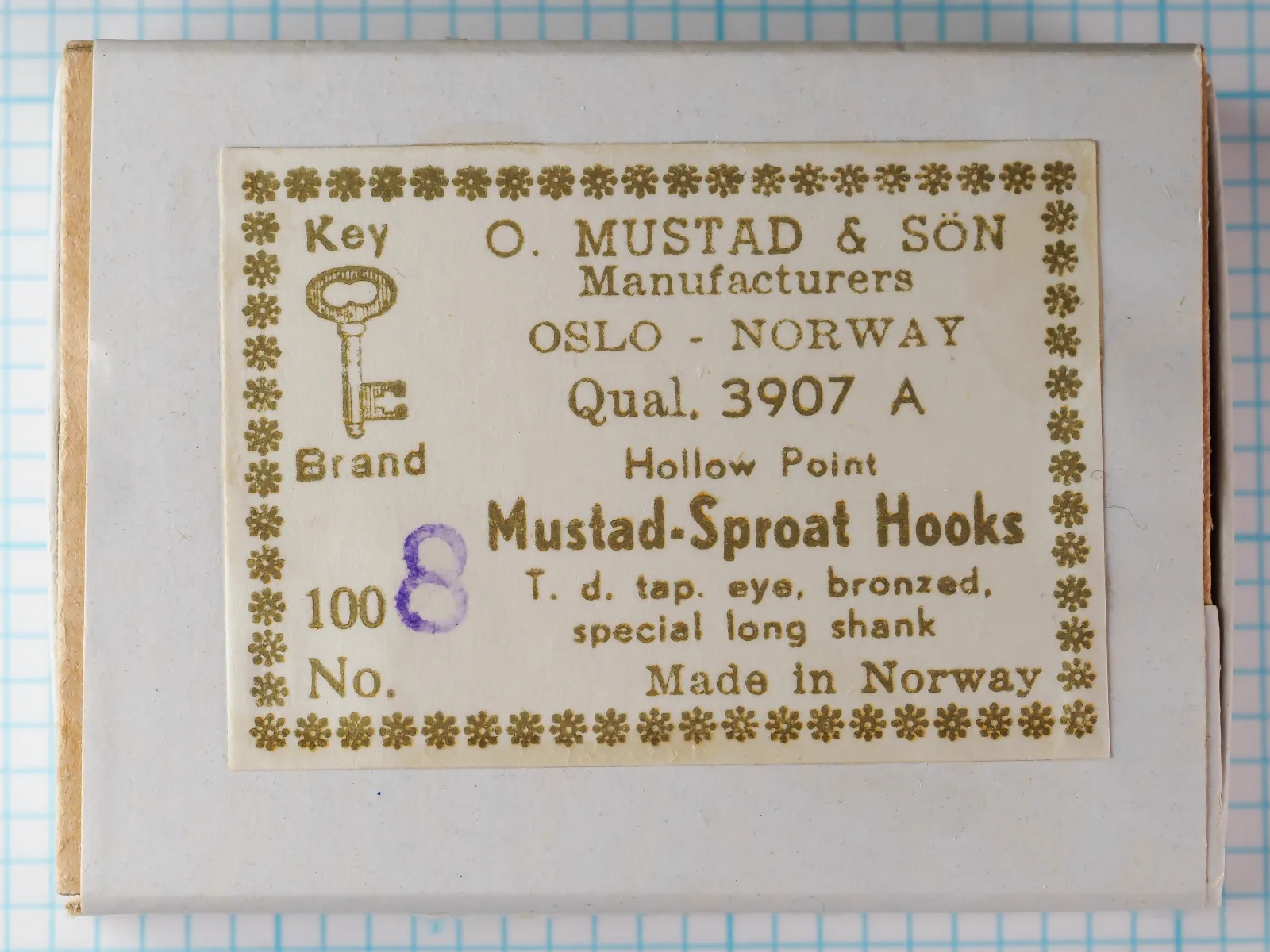
Mustad 3907 A: A premium Norwegian-made wet fly and streamer hook, manufactured by O. Mustad & Son in Oslo between approximately 1925 and 1950. This is a special long-shank Sproat pattern with a tapered eye, hollow point, and bronzed finish—engineered for tying elongated streamers and wet flies that require extra shank length without sacrificing the parabolic Sproat bend’s exceptional mechanical integrity.
The 3907 A exemplifies Mustad’s industrial precision during the golden age of European fly fishing. The presence of the “Oslo” designation on the label (rather than the earlier “Christiania”) anchors production to 1925 or later, while the absence of modern barcoding and the traditional eight-line typographic label confirm vintage manufacture before the Signature Series transition (c. 2001-2009). The bronzed finish—a baked-on lacquer mimicking bronze—was standard for freshwater flies and offered excellent rust resistance while maintaining a muted, stealthy color profile preferred by European tyers.
Collecting significance is moderate to strong among Mustad specialists and vintage fly-tying enthusiasts. Size 8 in original packaging commands steady interest; however, the model is not rare, and carded examples without missing hooks are reasonably available. The combination of special long shank, quality Sproat bend, tapered eye, and bronzed finish makes this a genuine utility classic rather than a trophy specimen.
4 cataloged imagesSelect any record to load it above.
4 images shown
T. d. tap. eye, bronzed, special long shank
The hollow point geometry is engineered for rapid, pressure-sensitive penetration—ideal for soft-mouthed freshwater species and delicate fly presentation. The concave, dished-out inner taper creates a razor-sharp tip that flares quickly to the barb, achieving hook-set on minimal force. This is particularly advantageous for wet flies and small streamers cast on light tippets where heavy hook-sets risk tippet breakage. The Sproat bend’s parabolic profile mathematically distributes the strain of a fighting fish across the entire bend radius, providing exceptional resistance to straightening under sustained load. The special long shank (approximately 1.10″-1.15″ for size 8) extends the overall wire length without increasing gap width, allowing tyers to construct elongated streamer bodies—a critical requirement for patterns imitating large baitfish. The tapered eye reduces weight concentration at the hook front, allowing properly tied dry flies and buoyant wet flies to float or suspend at the intended depth without nose-diving. The bronzed lacquer finish provides excellent corrosion resistance in freshwater environments while maintaining a stealthy, muted color profile—a preference among European fly tyers seeking to avoid unnatural metallic flash.
Physical measurement with calipers
We have measurements for sizes 2, 4, 10, 12. Know any others? Submit calipered measurements and we'll review and add them. Thank you!
Sources: this specimen and its packaging.
The Mustad 3907 series represents the mid-tier quality tier (3000-3999 range in Mustad’s quality code system), manufactured to exacting dimensional and tempering standards. The base 3907 Sproat pattern was offered in multiple variants: standard shank, long shank, and special long shank (A designation). The hollow point was standard for this wet fly and streamer line, optimized for freshwater and light-tackle applications. The 3907 A designation specifically denotes the special long-shank variant—engineered for tying elongated streamers that mimic baitfish profiles without requiring heavier wire or larger gap sizing. This model remained in continuous production through the mid-twentieth century, representing Mustad’s commitment to offering specialized options within established patterns. The transition away from traditional quality codes occurred around 2001-2009 with the introduction of the Signature Series; hooks bearing the classic “Qual. 3907 A” designation on eight-line labels represent the pre-modern era of hook design.
The packaging displays 'OSLO - NORWAY' on Line 3 (geographic origin). Oslo is the current name of Norway's capital; the city was officially renamed from Christiania to Oslo on January 1, 1925. Therefore, any Mustad box bearing the Oslo designation was manufactured 1925 or later. The absence of modern barcoding (no UPC visible), the eight-line typographic label format, the traditional quality code designation ('Qual. 3907 A'), and the cream-colored paper stock with offset letterpress printing are all consistent with pre-1950 Mustad packaging. The specific quality code (3907 A) remained in the catalog through the mid-twentieth century before being discontinued around 2001–2009 during the Signature Series transition. Collectively, these markers place production in the range c. 1925–1950, with strong confidence in the 1925 terminus and moderate confidence in the terminal date (likely earlier rather than later, based on the pristine condition and era-appropriate packaging style).
The Mustad 3907 A arrived in the market during a transformative moment in European fly fishing. The transition from braided horsehair and silkworm gut leaders to early synthetic materials (silk, then nylon) was reshaping how flies were presented and tied. The tapered eye of the 3907 A was specifically engineered to accommodate the lighter knots and finer breaking strengths of these emerging materials—it represented Mustad's forward-thinking response to the evolution of tackle. Today, collectors recognize the tapered eye as a hallmark of quality-tier Mustad fly hooks, a marker of the company's commitment to precision engineering that extended from the hook itself to the leader interfaces anglers would employ.
The Sproat bend itself originated in Ireland and was perfected by regional craftsmen; Mustad’s industrial reverse-engineering of the Sproat pattern exemplified the company’s strategy of globally cloning localized, regional designs and producing them at unprecedented scale and consistency. The 3907 series occupied the mid-tier quality bracket in Mustad’s hierarchical numbering system—above the economy 1000–2999 range but below the premium 4000+ dry fly tiers. The long-shank variant (3907 A) directly competed with Redditch makers’ offerings and established a functional niche that influenced subsequent generations of streamer hooks, including later Mustad designs and competing manufacturers’ offerings. The tapered eye design became a signature of Mustad’s premium wet fly and dry fly lines and remains a sought-after feature in contemporary fly-tying materials.
| Silhouette | Hook Model | Match | Analysis | Compare |
|---|---|---|---|---|

|
3909 No. 2 — Mustad 3909 | 83% | Compare | |
| 93400 No. 3 — Mustad 93400 | 77% | Compare | ||

|
3718 No. 3 — Mustad 3718 Carlisle | 71% | Compare | |

|
3194 N No. 4, 6 — 3194 N | 69% | Compare | |

|
777 No. 1/0 — No. 777 First Quality Hollow Point Sproat | 69% | Compare |
| Silhouette | Hook Model | Match | Compare |
|---|---|---|---|

|
3189 A No. 5/0 — Mustad-Carlisle Squid Hooks | 76% | Compare |
|
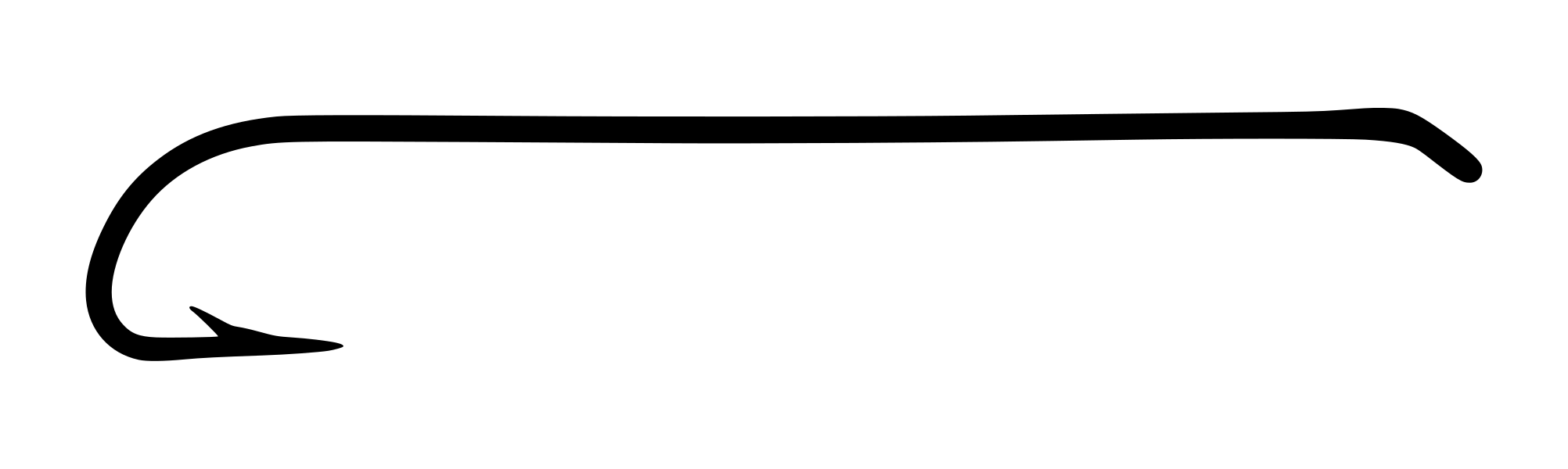
36808 — Limerick Hooks | 76% | Compare |

|
3202 No. 16 — Superior Carlisle Hook | 74% | Compare |
|
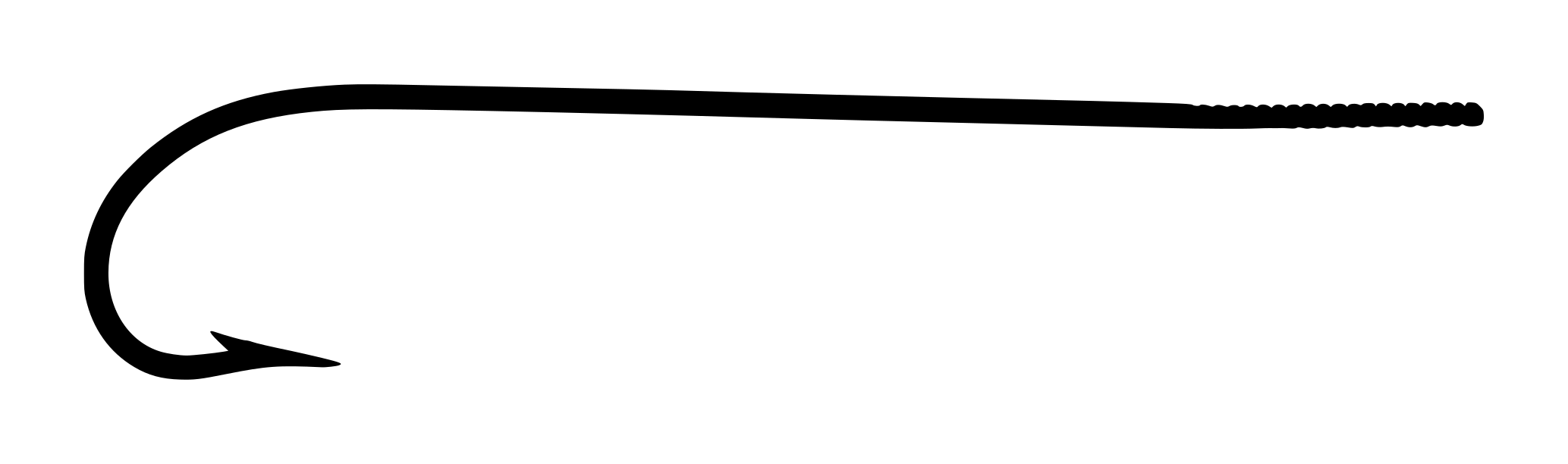
3198 No. 2/0 — Mustad-Carlisle Hooks | 72% | Compare |
|
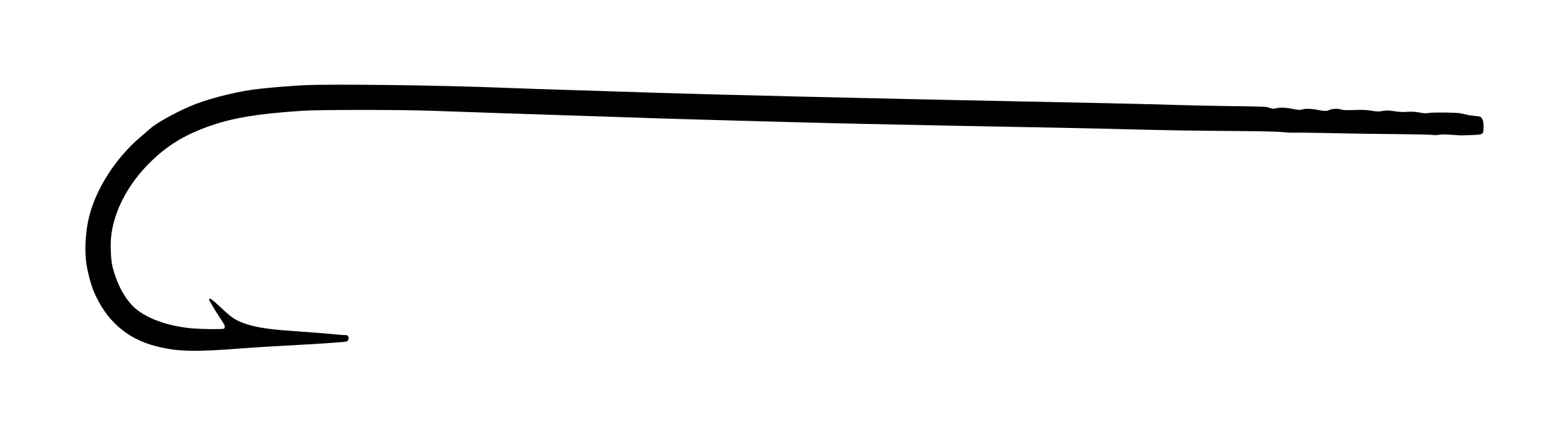
692 M No. 12 (V) — S. Allcock & Co. 692 M Carlisle | 70% | Compare |
The Mustad 3907 A was designed as a premium platform for traditional European wet fly and small streamer patterns, particularly those requiring elongated body profiles. The special long shank accommodates dressing material without requiring oversized gaps, enabling the tyer to create natural baitfish silhouettes that move fluidly in current. The hollow point ensures rapid hook penetration in soft-mouthed trout, grayling, and char species when cast on delicate 4X–6X tippets. The Sproat bend’s parabolic geometry distributes fight stress evenly, making this hook reliable for sustained battles in fast water. The bronzed finish—prized by European fly tyers—provides excellent rust resistance in limestone streams and tailwater environments while maintaining a stealthy presentation in clear water.
March Brown (wet), Greenwells Glory, Woodcock and Mixed, Silver Butcher, Teal and Red, Mallard and Claret, various small streamer patterns
| Hook | Match Quality | Notes |
|---|---|---|
| Mustad 3906B | Very Good | Modern Mustad wet fly Sproat equivalent with hollow point; lacks special long shank and tapered eye of 3907 A |
| Tiemco TMC 2457 | Good | Contemporary 2X long streamer hook with tapered eye; Limerick-influenced bend rather than true Sproat |
| Partridge CS48/1 | Moderate | Redditch-made 2X long wet fly Sproat; tinned rather than bronzed; similar functional niche |
Rated 4.5/10 — moderately collectible, driven by the combination of special long shank, tapered eye, and bronzed finish; limited by relative abundance in most sizes and moderate collector demand. Size 8 in original 100-count packaging with all hooks present is uncommon but not rare.
Positive factors: Vintage Mustad hooks with original eight-line labels command solid collector interest, particularly among fly-tying historians and European fishing tradition enthusiasts. The 3907 A’s special long-shank variant is more specialized than the standard 3907, increasing appeal to streamer and small-fly tyers seeking authentic period materials. The tapered eye and hollow point are signature features of quality-tier Mustad manufacturing and represent a level of precision no longer economically feasible in modern hooks. Original packaging in excellent condition—100 hooks with card intact and legible label—adds substantial premium over loose hooks. The bronzed finish, prized for its muted presentation properties, is increasingly recognized as superior to modern tinned or bright finishes for certain freshwater applications. The Oslo designation confirms post-1925 manufacture, placing the hook in the interwar and early post-war era—a period of significant angling modernization that collectors value.
Limiting factors: The 3907 A is not rare; Mustad’s industrial production volumes were enormous, and surviving examples in various sizes are reasonably available on eBay and through tackle dealers. The quality code system (3000–3999 tier) represents mid-range rather than premium hooks, limiting appeal to advanced specialists. Size 8 is a common size; smaller or larger sizes (16–20, 1/0–3/0) command higher prices due to relative scarcity. The Sproat bend, while mechanically excellent, is less historically iconic than the Limerick (Atlantic salmon) or Aberdeen (regional bait traditions). Condition issues significantly impact value—missing hooks (even 1–5 from 100) reduce desirability by 30–50%; card damage or label illegibility reduces value by 20–40%.
Size and finish variants: Size 12 and 16 in bronzed finish command 10–20% premiums over size 8–10 due to relative scarcity in smaller gauges. Complete original boxes (less common than cards) command 2–3× card value. Tinned and japanned variants (if they exist for this model) would have comparable collectability; bronzed is preferred.
Condition factors affecting value: Sealed or near-sealed packaging: +30–50% premium. Complete 100-count with all hooks: baseline. Missing 1–5 hooks: −30–40%. Missing 6+ hooks: −60–80%. Card toning, age patina acceptable; fading, staining, or tears reduce value 15–25%. Label legibility critical—illegible or heavily damaged label reduces value 30–50%.
Original cardboard sales card with cream-colored paper stock, printed in dark gold ink. Decorative floral border surrounds an eight-line typographic label adhering to Mustad's standardized format. Label reads: 'Key Brand' [skeleton key logo] | 'O. MUSTAD & SON' | 'Manufacturers' | 'OSLO - NORWAY' | 'Qual. 3907 A' | 'Hollow Point' | 'Mustad-Sproat Hooks' | 'T. d. tap. eye, bronzed, special long shank' | 'Made in Norway'. Quantity indicator '100 No.' with purple handwritten size number visible in lower left corner. Paper stock shows age-appropriate cream patina; no barcode, modern UPC, or digital printing present. Offset letterpress printing with crisp, legible text. Dimensions approximately 3.5" × 2.75" (standard vintage Mustad card format). No individual hook envelopes or tissue wrapping visible, consistent with early-to-mid-twentieth-century carding practices.
Low ($12): Good condition — card opened, all or most 100 hooks present, card shows light toning and wear, label legible. High ($28): Excellent condition — sealed or near-sealed, complete 100-count, card and label in near-mint state with minimal toning. Premium factors: sealed original packaging, complete count, special long shank variant, tapered eye, bronzed finish, legible label. Platforms: eBay (US and international), vintage tackle dealers, specialty fly-fishing forums. Confidence: E estimated — based on limited comparable sales data; Mustad wet fly patterns typically sell $8–35 carded depending on condition and era; 3907 A represents mid-tier quality with modest collector premium over base Sproat models.
eBay (search 'Mustad 3907' or 'Mustad Sproat vintage'); vintage fly-fishing tackle dealers in the UK, Norway, and US; specialist fly-tying forums and Facebook groups dedicated to vintage hook collecting; regional tackle fairs (particularly in England and Scandinavia). International shipping common for this model.
Store in a cool, dry environment away from humidity. The bronzed lacquer finish will develop natural patina over time, which many collectors consider desirable and historically authentic. Avoid exposure to direct sunlight, which can fade the ink on the printed label. Keep hooks on the original card rather than loose; the card provides structural protection and significantly enhances collectability and monetary value. Do not attempt to clean or refinish the hooks—the original finish, including any patina or age spots, is part of the historical record and removes value. Store cards flat in an acid-free box or folder away from other metals to prevent galvanic corrosion. Avoid contact with rubber bands, plastic bags, or materials that may off-gas or stain the paper stock. Monitor periodically for any sign of insect activity or mold; if discovered, isolate the card and consult a specialist in artifact preservation. Original packaging in excellent condition is worth preserving for future generations of anglers and collectors.
Source: O. Mustad & Son — Eight-Line Label Typology (garrenwood.com reference document)
The Mustad 3907 A label exemplifies the company’s standardized typographic system (as documented in the 2024 Mustad Label reference guide). Each line encodes specific manufacturing and design information: Line 1 (‘O. MUSTAD & SON’) establishes manufacturer and corporate identity; Line 2 (‘Manufacturers’) differentiates Mustad from import agents and repackagers; Line 3 (‘OSLO – NORWAY’) confirms post-1925 production and Norwegian factory origin; Line 4 (‘Qual. 3907 A’) specifies the quality tier and long-shank variant (the ‘A’ designation); Line 5 (‘Hollow Point’) exclusively defines the point geometry and penetration profile; Line 6 (‘Mustad-Sproat Hooks’) identifies the cloned pattern name; Lines 7–8 (‘T. d. tap. eye, bronzed, special long shank / Made in Norway’) detail eye type, finish, and shank modification. The handwritten size notation (‘8’) in the bottom corner was added at the packhouse before shipping. This eight-line structure allowed Mustad to communicate vast technical data to international wholesalers, retailers, and anglers across linguistic barriers—a masterwork of industrial precision and typographic clarity that remains unambiguous 100+ years after manufacture.
The ‘special long shank’ designation on the 3907 A reflects Mustad’s distinction between standard and elongated shank variants within the same bend family. For a size 8 Sproat, the shank measures approximately 1.10″–1.15″ in length, extending noticeably beyond what would be standard for a comparable-gap hook. This extra wire length (without gap expansion) provided fly tyers with additional material for dressing elongated streamer bodies and larger fly silhouettes while maintaining the parabolic bend’s structural integrity and the tapered eye’s light-weight engineering. This is distinct from modern ‘long-shank’ nomenclature (1X, 2X, 3X, 4X), which uses a multiplier system; the 3907 A was simply cataloged as ‘special long shank’—a descriptor that required prior knowledge of Mustad’s base Sproat dimensions to interpret. Today, the 3907 A would be classified as approximately 2X–2.5X long. This naming ambiguity is a relic of the pre-standardization era and underscores why original packaging documentation remains crucial for hook identification and use.
The Mustad 3907 A’s tapered eye represents a pivotal innovation in early twentieth-century fishing hook design. In the late 1800s and early 1900s, flies were attached to leaders via a ‘snell’—a short length of soaked silkworm gut or horsehair, whipped and glued directly to the hook shank or a blind eye. As synthetic materials (silk, then nylon, then fluorocarbon) emerged, fly tyers transitioned to direct knotting to the eye. This required a lighter, smaller eye that wouldn’t dominate the fly’s appearance and wouldn’t concentrate excessive weight at the hook front. The tapered eye—where the wire diameter gradually reduces as it forms the terminal loop—achieved this elegantly. Mustad’s incorporation of the tapered eye into the 3907 A (and other quality-tier hooks) signaled the company’s responsiveness to tackle evolution and its commitment to engineering solutions that transcended simple manufacturing. Contemporary fly tyers and collectors recognize the tapered eye as a marker of quality and foresight, a design choice that remains relevant to modern sensibilities even as silkworm gut and horsehair have become historical curiosities.
| P | Photographically verified — Directly observable in the photograph(s) on this page. |
| V | Verified by documentation — Confirmed by manufacturer catalog, spec sheet, or published reference. |
| I | Inferred — A logical deduction from observable or documented evidence, not directly stated. |
| E | Estimated — An approximation based on visual comparison, proportional analysis, or limited data. |
| S | Speculative — A reasoned hypothesis that cannot be confirmed from available evidence. |
Unnotated claims are the compiler’s synthesis; see Sources. All photographs on garrenwood.com are taken on a measurement grid where each square equals 1/10 inch (0.1″ / 2.54 mm).
Your cart is empty.