Selected size
8
Catalog record
- Overall Length
- 19.6 mm V
- Shank Length
- 12.4 mm V
- Bend Depth
- 7 mm V
- Wire Diameter
- 0.7 mm V
- Confidence
- V Catalog record only
 Garren WoodFishing Hook Reference

Save this hook to your account to build a list you can come back to.
S. Allcock & Co. W 205 Sproat Hook (Size 12) — A classic Redditch-made salmonid hook manufactured by S. Allcock & Co., Ltd. in Redditch, England. The W 205 is a sproat-bend pattern with a turned-down tapered eye, designed specifically for sea trout and salmon fishing on UK rivers. The turned-down eye accommodates traditional leader knots for direct connection without loops—a hallmark of British game fishing tradition.
The hook features a superior point style and standard wire gauge, with excellent penetration suited to the soft mouths of game fish. The bronzed finish is warm and brown-toned, typical of Allcock’s rustproof coating system popular in the 1950s–1960s.
This specimen is packaged in an original sales card for 100 hooks, printed with period-correct letterpress typography and Allcock’s stag trade mark. Era dating evidence—absence of barcode, natural kraft paper, serif typography, and pre-postal-code address format—places manufacture at approximately 1955–1965.
Allcock sproat hooks are moderately collected within the Redditch specialist community, with complete original packaging commanding a meaningful premium. Size 12 is less commonly encountered than larger salmon sizes, slightly enhancing collectability.
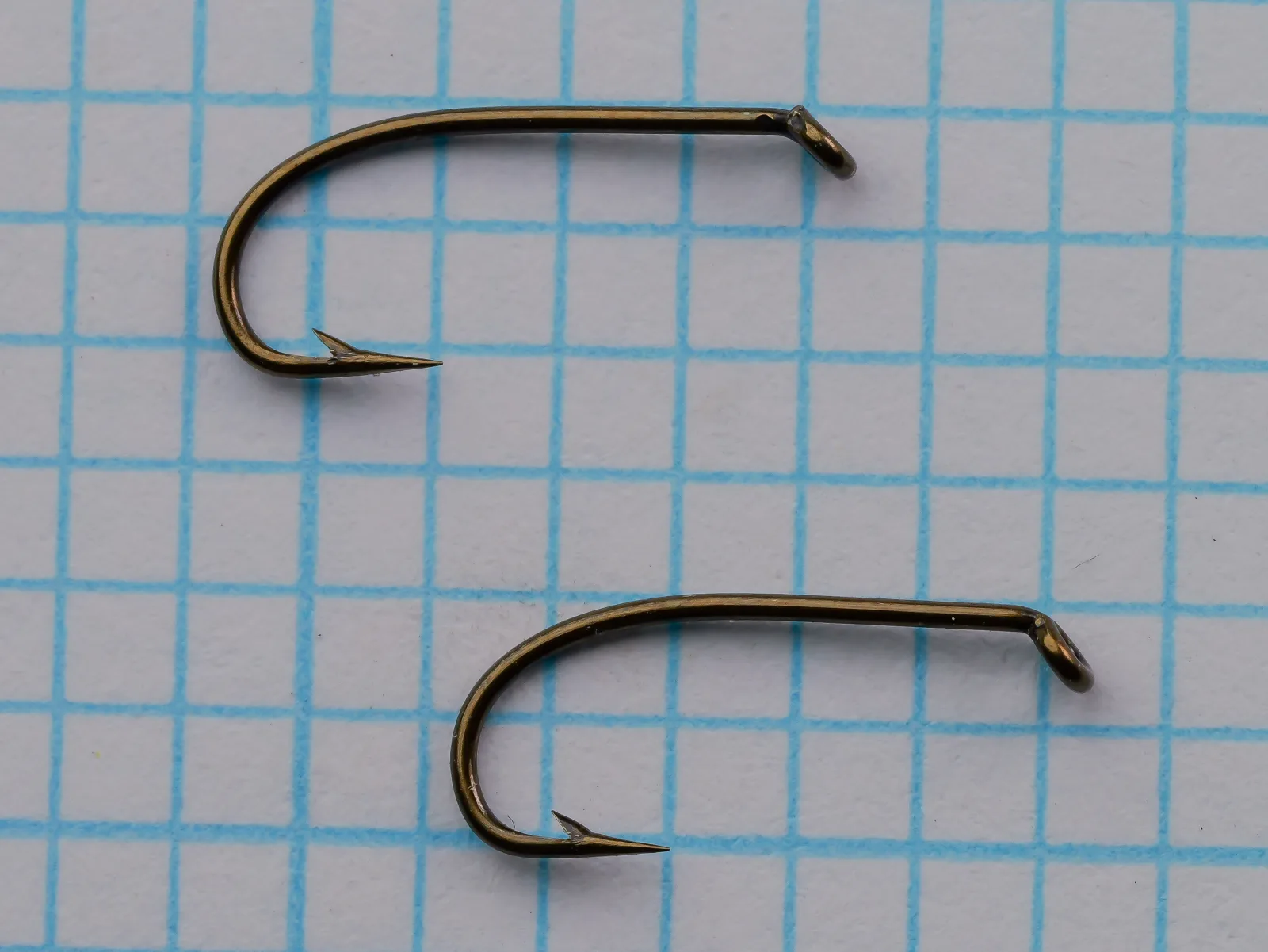
2 cataloged imagesSelect any record to load it above.
2 images shown
S. Allcock & Co. Ltd., Redditch — W 205 Sproat Hook, Turn Down Eyed, Rustproof — Size 12 — Bronzed Finish
The superior point style—characterized by a near-straight inner taper from barb to tip with a nearly flat inside face—provides excellent point penetration without the aggressive cutting action of a hollow point. This geometry is ideal for sea trout and salmon, which have tough mouths but are not so hard-boned as saltwater species.
The sproat bend curve is relatively shallow compared to limerick or sneck patterns, distributing hook stress evenly and reducing breakage during fights with large fish. The forged construction (visible compression of wire at the bend) adds strength without significantly increasing wire gauge.
The turned-down eye angles downward 20–30 degrees from the shank axis, allowing the leader knot to sit directly above the hook point—a traditional rigging geometry that improves hook-set efficiency and reduces leverage that could bend the eye.
Physical measurement with calipers
We have measurements for sizes 8, 10, 12. Know any others? Submit calipered measurements and we'll review and add them. Thank you!
Sources: this specimen and its packaging.
The W 205 belongs to Allcock’s W-series sproat hooks, a product line spanning multiple sizes and eye variants. Sproat bends were among the most versatile and popular patterns produced by Redditch makers, prized for their balanced hook geometry—strong enough for salmon yet delicate enough for trout and grayling.
The ‘Turn Down Eyed, Rustproof’ designation indicates this variant was marketed specifically for game fish applications where a direct eye-to-leader connection was preferred (avoiding loop knots). The ‘Rustproof’ claim refers to Allcock’s bronzed finish system, which resisted the oxidation and corrosion that plagued uncoated steel hooks in damp British fishing conditions.
The W 205 remained in production throughout the 1950s–1960s, gradually declining in market presence as cheaper industrial competitors (notably Mustad) entered the market. By the 1970s, Redditch hand-forged production was being phased out in favor of volume manufacturing techniques.
No barcode present (strong pre-1974 indicator). Letterpress-style typography and serif font consistent with 1950s-1960s. Natural kraft paper stock and worn edges characteristic of period. 'Rustproof' descriptor is Allcock marketing language typical of bronzed hook promotion in the 1950s. Redditch address only, no postal code or phone number visible—UK postal codes were not widely adopted until early 1970s. Allcock stag logo style matches period documentation from 1950s-1960s.
The Redditch tradition of hook making flourished in the 19th and 20th centuries because the region's iron ore deposits and abundant water power from the Arrow River created ideal conditions for small-scale precision forging. Allcock, Partridge, Milward, and dozens of other makers competed fiercely in Redditch's tightly clustered tackle workshops. By the 1960s, Norwegian industrial giant Mustad had begun acquiring Redditch makers to consolidate production. Allcock's independence and reputation for quality made it one of the most desired takeover targets. This specimen represents the tail end of the independent Redditch era—a period when 'Made in England' meant genuine hand-forged craft, not industrial stamping.
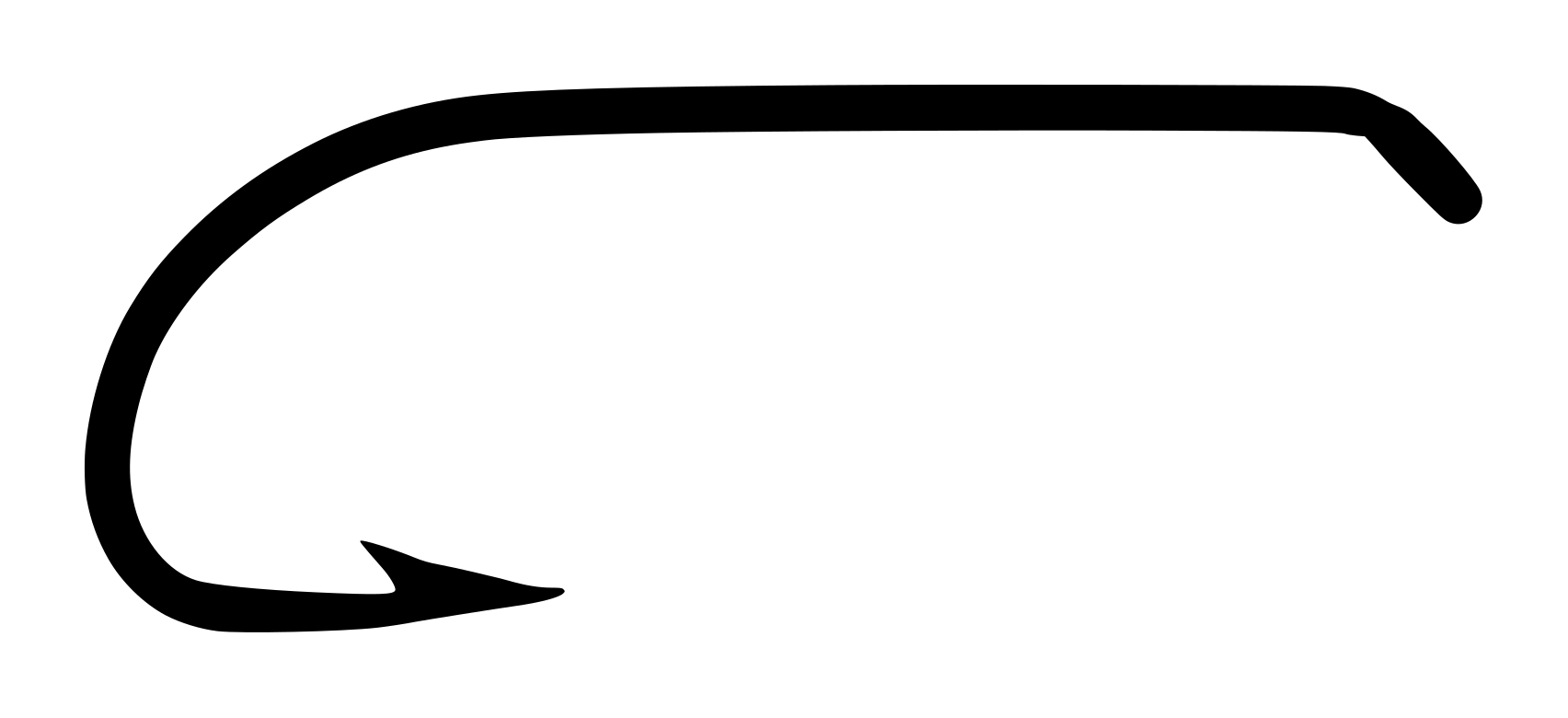
| Silhouette | Hook Model | Match | Analysis | Compare |
|---|---|---|---|---|

|
1904 R No. 6 — 1904 R Sproat | 84% | Compare | |
|
291 No. 4 — Sproat Bend | 83% | Compare | |

|
80 No. 2 — Eagle Claw | 81% | Compare | |

|
993 No. 12 — Celebrated No. 993 | 79% | Compare | |

|
B175 No. 6 — Trout Heavy Traditional | 77% | Compare |
| Silhouette | Hook Model | Match | Compare |
|---|---|---|---|

|
3823 No. 3 — Mustad 3823 | 83% | Compare |

|
790 No. 12 — T.D.E. Forged O'Shaughnessy Limerick Hook | 80% | Compare |

|
CS2 BL No. 10 — S.E.B. XX Strong Lure Hook | 78% | Compare |

|
3408BD No. 2 — 3408BD O'Shaughnessy | 78% | Compare |

|
94836 No. 6 — Mustad 94836 Viking Hook | 76% | Compare |
The W 205 Sproat is a classic salmonid pattern, specifically designed for sea trout and salmon fishing in UK freshwater rivers. The turned-down eye accommodates a direct leader knot for direct connection without a loop, a traditional sea trout rigging method. The sproat bend provides excellent point penetration with controlled barb placement for soft-mouthed game fish.
Saltwater streamer work, wet fly for large trout.
| Hook | Match Quality | Notes |
|---|---|---|
| Partridge Sproat G3S | Excellent | Modern production of identical pattern; still manufactured in UK. |
| Mustad 9671B | Very Good | Modern sproat pattern; slightly finer wire, similar bend family. |
Rated 4.5/10 — uncommon in complete original packaging, particularly size 12; collector demand is moderate among Redditch specialists and sea trout traditionalists. Sproat patterns are widely collected, but the W 205 variant is less pursued than iconic brands like Partridge.
Collectability Strengths: S. Allcock & Co. is a respected Redditch maker with strong collector following. Complete original 100-pack cards in period packaging are increasingly scarce. The turned-down eye variant appeals to salmon and sea trout traditionalists. Bronzed finish on Allcock hooks shows patina beautifully and is highly desirable.
Limiting Factors: Sproat hooks remain common in the market; W 205 does not command specialist pricing like Partridge or H. Milward. Size 12 is less sought than larger (2/0–6/0) salmon sizes. Many cards have been opened and hooks used or lost, reducing complete card availability.
Size Variants: Sizes 6–10 are more commonly encountered than 12–14. Larger sizes (1/0–4/0) command modest premiums.
Condition Premium: Sealed or near-sealed cards add 50–100% premium. Individual hooks loose carry minimal value (functional only).
Low ($8): Good condition — opened card, all 100 hooks present or near-complete, light wear to packaging.
High ($22): Excellent condition — sealed or near-sealed card, full count, minimal packaging wear.
Premium factors: original sealed packaging, complete 100-count card, period-correct Allcock branding, bronzed finish in good patina.
Platforms: eBay UK and US, vintage tackle dealers, specialist auctions.
Confidence: E estimated from limited recent comparable sales; Allcock sproat cards of this era typically fetch $6–25 depending on condition and size.
eBay UK (highest concentration), eBay US, specialist UK tackle dealers, vintage fishing fairs in Redditch and Midlands region.
Store in a cool, dry environment away from moisture and direct sunlight. The bronzed finish will develop a natural patina over time, which collectors consider desirable and should not be removed or polished.
Keep hooks on the original card whenever possible—the card protects hooks from damage and adds significant value to the lot. If the card is fragile, store it flat in an archival-quality envelope or box, away from metal objects that might cause galvanic corrosion.
Avoid contact with other metals, copper, or brass components that could accelerate oxidation. If hooks have been used and show signs of surface rust (not patina), rinse gently with distilled water and allow to air dry completely before storage. Do not use oil-based lubricants on vintage hooks; this traps moisture and accelerates corrosion.
Original tissue wrapping, if present inside the package, should be preserved as-is. Do not disturb or remove it, as it is part of the historical artifact.
Source: S. Allcock & Co. Ltd., original packaging label, circa 1955-1965
The label front bears the model code ‘W 205’ in large sans-serif type—W is Allcock’s series prefix, and 205 denotes the specific pattern (Sproat, Turn Down Eye) and finish (Bronzed). The descriptors ‘Turn Down Eyed, Rustproof’ immediately follow, signaling the two key selling points: eye style and corrosion resistance.
The stag trade mark (Allcock’s company logo) is prominently positioned, establishing authenticity and prestige. The label explicitly states ‘Manufactured by S. ALLCOCK & CO., LTD.’ and ‘REDDITCH, ENGLAND,’ emphasizing UK production—a quality marker in the 1950s-60s market.
‘Made in England’ appears separately, reinforcing the product’s British origin at a time when UK manufacturers were beginning to face competition from cheaper imports.
The quantity ‘100’ appears in the lower right, indicating a bulk sales card format intended for tackle shops, fly-tying clubs, and professional river keepers. The serif typeface and letterpress-style printing are consistent with mid-20th-century Redditch packaging standards.
The turned-down eye (tde_tapered) was a standard feature on UK salmon and sea trout hooks throughout the 20th century, reflecting a distinctive rigging tradition. Unlike modern upright eyes that sit perpendicular to the shank, a turned-down eye angles the leader attachment point forward and downward—creating a geometry that many British anglers believed improved hook-set efficiency and reduced eye-rotation during the fight.
The tapered variant—where the eye narrows as it turns—offered mechanical advantages: a narrower attachment point reduced leader wear and allowed thinner tippets without sacrificing strength. This was especially valuable when fishing delicate presentations to wary sea trout in gin-clear British rivers.
The W 205 represents the culmination of this design philosophy: a hook that mechanically and aesthetically embodied the traditions of British game fishing. Modern fly tyers often seek out turned-down-eye vintage hooks specifically to replicate the proportions and handling characteristics of classic British patterns.
| P | Photographically verified — Directly observable in the photograph(s) on this page. |
| V | Verified by documentation — Confirmed by manufacturer catalog, spec sheet, or published reference. |
| I | Inferred — A logical deduction from observable or documented evidence, not directly stated. |
| E | Estimated — An approximation based on visual comparison, proportional analysis, or limited data. |
| S | Speculative — A reasoned hypothesis that cannot be confirmed from available evidence. |
Unnotated claims are the compiler’s synthesis; see Sources. All photographs on garrenwood.com are taken on a measurement grid where each square equals 1/10 inch (0.1″ / 2.54 mm).
Your cart is empty.