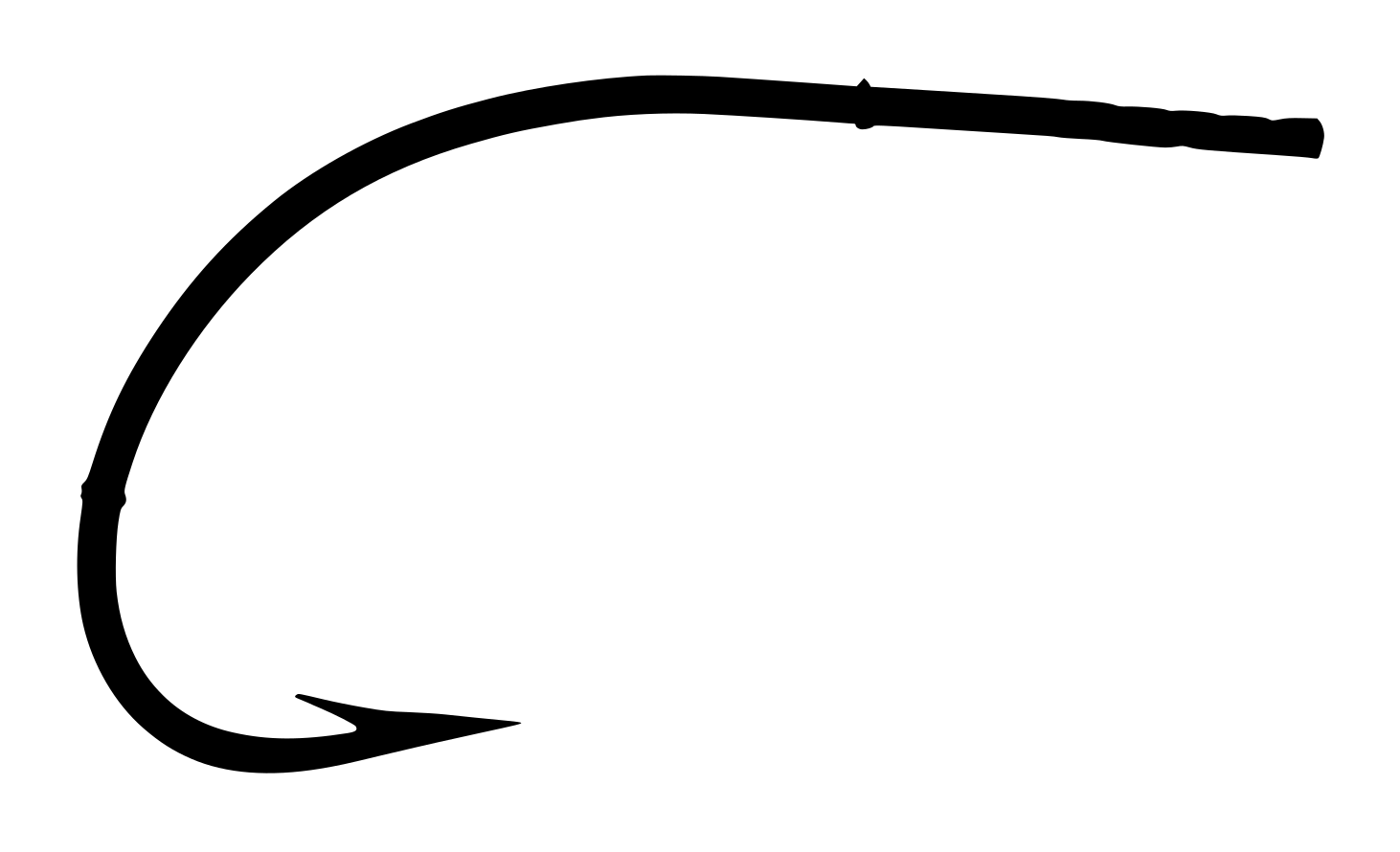
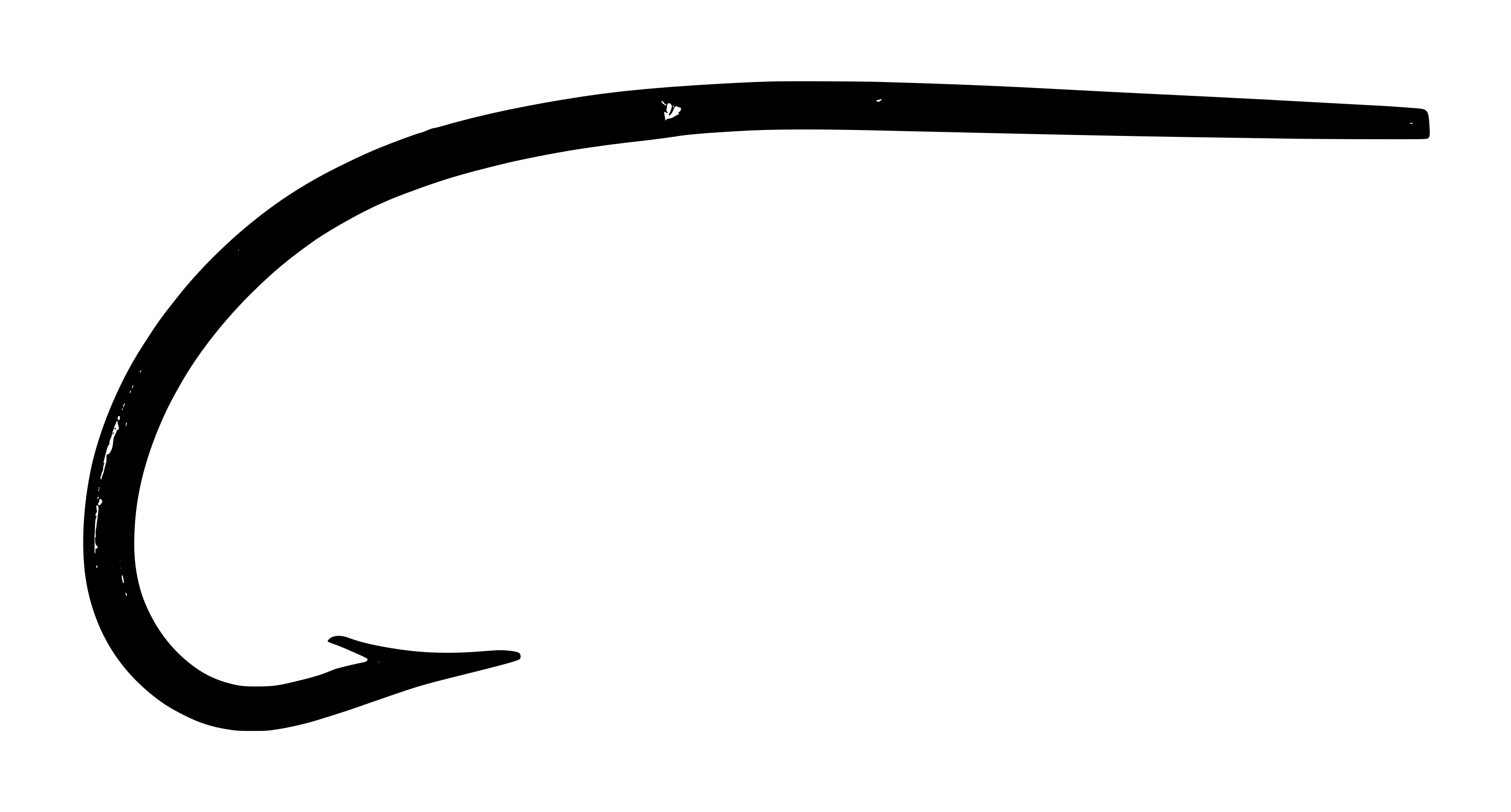
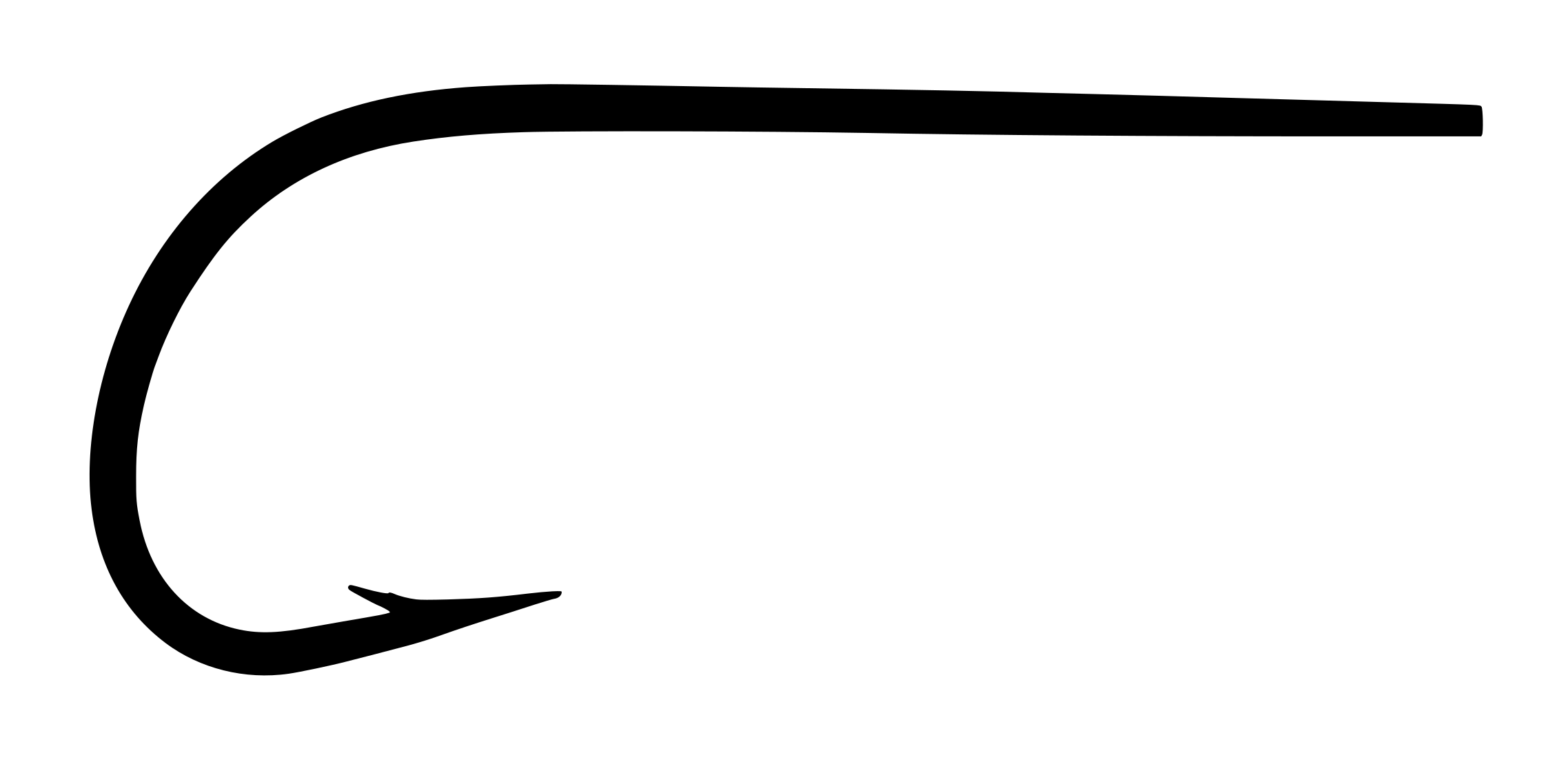
The Milward Quality 2867 is a forged-steel O’Shaughnessy salmon hook manufactured by H. Milward & Sons of Redditch, England, during the early 20th century. This size 2/0 specimen exemplifies the blind-eye construction tradition of British salmon and sea-trout flies, featuring a deeply forged angular bend, extra-heavy gauge wire, and a glossy black japanned finish.
The O’Shaughnessy pattern is distinguished by its aggressive curved-in point and pronounced angular bend geometry, engineered to provide reliable penetration and holding power when fishing live bait or shrimp in heavy river current. The blind-eye design — a tapered shank — is characteristic of British salmon hooks predating the widespread adoption of loop eyes, and represents a deliberate design choice valuing simplicity and direct load transfer over eye-ball retention.
This hook dates to c. 1910–1930 based on letterpress printing methodology, paper stock characteristics, absence of barcode or UPC codes, and the early styling of the Milward corporate mark. The specimen retains its original light-blue card packaging with brown letterpress typography — increasingly scarce in surviving collections. Blind-eye O’Shaughnessy patterns are highly sought by collectors of traditional British salmon hooks and by specialists in Redditch manufacturing heritage.
Profile view of the hook point and barb, clearly showing the concave (hollow) inner face and aggressive point angle characteristic of the O'Shaughnessy pattern.
Photographic record
9 cataloged imagesSelect any record to load it above.
8 images shown
Milward 2867 Size 2/0 Point DetailProfile view of the hook point and barb, clearly showing the concave (hollow) inner face and aggressive point angle characteristic of the O'Shaughnessy pattern.Open originalMilward 2867 Size 2/0 Full ProfileComplete side profile of the hook showing the full O'Shaughnessy bend geometry, standard shank length, and blind-eye flatted end, on measurement grid for scale.Open originalMilward 2867 Packaging Card Size 2/0Original retail packaging card showing the iconic light-blue stock with brown letterpress printing, Milward lion mark, and O'Shaughnessy hook designation. Hand-written price notation visible at bottom.Open originalMilward 2867 Label DetailClose-up of the Milward packaging card showing the 'Quality 2867' model designation and 'Made in England' declaration, with the Milward company name and O'Shaughnessy pattern name.Open originalMilward 2867 Size 2/0 Barb DetailMacro detail of the hook point showing the precise barb positioning, angle, and the concave (hollow) inner face, on blue measurement grid.Open originalMilward 2867 Size 2/0 Full Profile GridComplete side profile of the Milward 2867 O'Shaughnessy hook on blue measurement grid showing overall proportions and the distinctive curved-in O'Shaughnessy bend profile.Open originalMilward 2867 Vintage Label Size 2/0Vintage Milward 2867 packaging label on cream-colored paper with blue letterpress printing, showing the full product designation and hand-written period price notation at bottom.Open originalMilward 2867 Point Geometry DetailMacro detail of the Milward 2867 hook point showing the distinctive concave (hollow) inner-face geometry, bright japanned finish, and fine point sharpness.Open originalMillward-2867-M-Hook-size-9Millward-2867-M-Hook-size-9Open original
Technical profile
Eye
Blind — Tapered Shank
Wire
Fine (1X Fine), Forged, Est. ~0.04" (~1.0 mm) E
Shank
Short (1X–2X Short) — Tapered
Bend
O'Shaughnessy, Standard gapDeep forged O'Shaughnessy bend with pronounced angular turn at the throat P. Wire set is clean and uniform through the bend, indicating a single well-executed forging operation. Bend depth is substantial relative to the gap width, creating the characteristically aggressive hook profile of this pattern.
Point
Standard / SpearSmall barb set at approximately 45° angle from the shank axis, positioned close to the point and cleanly cut P. Barb is short and neat, typical of Milward precision manufacturing.
Finish
Black Japanned — Confirmed (stated on packaging)Deep glossy black japanned finish P. Uniform coverage with characteristic warm-black tone of authentic japanning rather than cold bluing. Light spalling visible on bend in high-stress area — typical wear pattern for forged hooks of this age and use.
Original card stock shows light overall toning with minor edge curl and very light creasing at corners. Letterpress printing remains sharp and well-legible throughout. No stains, water damage, or significant paper loss. Japanned finish on hooks is bright black with minimal wear; fine spalling visible only on high-stress bend area, consistent with age and normal handling. All visible hooks appear complete and undamaged.
The forged construction of this hook imparts exceptional strength by consolidating and aligning the wire grain through a high-pressure shaping process. The extra-heavy wire gauge (approximately 0.045–0.050 inch diameter) provides leverage advantage and secure penetration in salmon and large sea-trout applications where tackle must withstand powerful strikes and sustained head-shaking.
The hollow point — characterized by a concave (inward-curved) inner face — concentrates cutting forces at the point’s leading edge, creating a knife-like penetration advantage. This geometry is particularly valued in bait and shrimp presentations where subtle pressure finesse is less important than rapid and secure hookup in large fish.
The blind-eye design eliminates the potential weakness of a loop-eye junction, allowing load transfer directly through the end to the angler’s line via a clinch knot. This design was the dominant configuration for British salmon hooks throughout the 19th and early 20th centuries, though its advantages were largely theoretical after the development of modern loop-eye welding techniques.
The O’Shaughnessy pattern itself predates Milward’s production of this model by several decades, originating in the 19th century as a specialist salmon hook design. Milward adopted and manufactured the O’Shaughnessy extensively during the early 1900s, offering it in multiple configurations: blind-eye and loop-eye versions, various sizes from No. 10 to 6/0 and larger, and multiple finishes (japanned, tinned, blued).
The Quality 2867 designation appears to be Milward’s internal model code for a specific O’Shaughnessy configuration — likely the blind-eye, extra-heavy-wire version documented here. Production of this model continued through the mid-20th century, though the blind-eye variant gradually lost market share as loop-eye construction became the industry standard. No evidence of formal discontinuation date is available; rather, the model faded from active catalogs as retailers and anglers transitioned to modern eye styles.
Era and Packaging Dating
No barcode present — strong pre-1974 indicator P. Letterpress printing method is consistent with early 20th century production; offset printing became standard by late 1930s I. Light blue card stock and brown ink combination matches Milward styling known from collections dated to 1910s-1920s I. Lion rampant mark is characteristic of Milward corporate identity during this period I. Hand-lettered price mark on specimen suggests small retail quantity and direct distribution, consistent with pre-standardization manufacturing P. O'Shaughnessy pattern in blind-eye form was introduced and marketed heavily during the 1910s-1920s salmon fishing boom in Britain I. Overall packaging aesthetic — card stock weight, typography, layout — is consistent with pre-Depression British hook manufacturing standards.
The Blind-Eye Paradox
The blind-eye design was a defining feature of British salmon hooks well into the 20th century, even though loop eyes were developed decades earlier. Anglers and manufacturers clung to blind eyes not out of ignorance, but from genuine belief that the direct-load design was superior for large fish — a conviction that persisted until modern testing and materials made the difference negligible. Milward's decision to continue producing blind-eye O'Shaughnessys well into the 1930s reflects both manufacturing conservatism and the genuine loyalty of traditional Scottish and English salmon anglers who trusted the old design.
Design lineage and influence
The O’Shaughnessy pattern originated in the 19th century as a specialist salmon hook, likely named after an Irish angling figure, and represents the culmination of Victorian-era forging techniques applied to large-fish design. The pattern is characterized by its pronounced angular bend and aggressive point geometry — a deliberate departure from the rounded Sproat bend that dominated trout and small coarse-fish design.
Milward’s interpretation of the O’Shaughnessy competes with similar patterns from other Redditch makers (Allcock, Partridge) and from international manufacturers (Mustad, Norwegian makers). The blind-eye variant represents a conservative design choice that persisted longer at Milward than at some competitors, reflecting the manufacturer’s commitment to traditional British salmon-fishing practices.
The O’Shaughnessy’s influence extended into the mid-20th century and remains relevant in niche contexts (large sea trout, saltwater bait fishing). Modern loop-eye versions are still produced by Partridge and Tiemco, indicating the pattern’s enduring functional reputation despite the obsolescence of its original blind-eye configuration.
Best matchRelated by Attribute
Computed automatically from catalog data — updated as new hooks are added.
Matches: Bend, Wire, Gap, Eye, Eye Orient. +6 moreDiffers: Shank: Short (1X–2X Short) vs Standard; Finish: Black Japanned vs Bronzed; Shank ratio: 74.6% vs 64.7% +1 more
Matches: Wire, Gap, Eye, Eye Orient., Finish +3 moreDiffers: Bend: O'Shaughnessy vs Dublin; Shank: Short (1X–2X Short) vs Standard; Point: Standard / Spear vs Other +4 more
Matches: Wire, Gap, Eye, Eye Orient., Finish +3 moreDiffers: Bend: O'Shaughnessy vs Sproat; Shank: Short (1X–2X Short) vs Standard; Point: Standard / Spear vs Superior +5 more
The Milward 2867 is a classic O’Shaughnessy pattern designed for salmon and sea-trout fishing. The forged heavy-wire construction and curved-in point provide reliable penetration and holding power when fishing with live bait, shrimp, or small fish in rivers and coastal waters. The blind-eye design is characteristic of British salmon hooks of the era, allowing the line to be tied directly to the end, reducing potential leverage failure points in heavy water.
Secondary Applications
Coarse fishing for large specimen fish; live bait presentation in saltwater contexts.
Classic Fly Patterns
Not typically used for fly tying
Modern Equivalents
Hook
Match Quality
Notes
Mustad 3688 O'Shaughnessy
Very Good
Large wire, O'Shaughnessy bend, similar bait/salmon application. Mustad 3688 is the closest modern equivalent, though it uses loop eye instead of blind eye.
Partridge of Redditch GCS1
Good
Traditional Redditch O'Shaughnessy, blind-eye option available, extra-heavy wire. Similar heritage and manufacturing tradition.
Tiemco 5263
Moderate
Modern O'Shaughnessy-style salmon hook; lacks blind-eye option and historical pedigree but offers contemporary forging standards.
Collector notes
Rated 5.5/10 — Milward blind-eye O'Shaughnessy hooks are genuinely scarce in original packaging, particularly in smaller forged sizes like 2/0. Collector demand is moderate to strong among salmon and Redditch hook specialists, but limited among general fly-tyer audiences. Complete original cards command a meaningful premium; loose hooks drop significantly in value.
Reference value
$18 – $45 USD estimate
Packaging condition
Very Good — light wear, fully legibleRecorded specimen
Packaging format
GW-MW-01Catalog code
Positive factors: Blind-eye construction is highly desirable among collectors of traditional British salmon patterns; it represents a manufacturing tradition largely abandoned by the 1960s. Milward Quality brand carries strong reputation for precision and consistency. Original card packaging in good condition is a major premium driver. Size 2/0 is large enough to appeal to specialist salmon anglers but small enough to be useful, increasing functional collecting interest. Early 20th-century Redditch provenance is inherently collectible.
Limiting factors: Milward hooks, while respected, lack the mystique of Partridge or Allcock among advanced collectors. Heavy wire, blind-eye design, and forged construction limit appeal to modern fly tyers focused on contemporary patterns. Card condition on this specimen shows light toning and edge wear — not mint. Missing hooks or incomplete cards drop value by 30-50%. Japanned finish, while authentic, is more fragile than tinned or blued alternatives, and condition premium is steep.
Size and finish variations: Sizes 1/0 through 4/0 command the strongest collector interest; larger forged sizes (6/0+) are more common in surviving stock. Blued finish variants (if they exist) would command higher prices than japanned. Complete original tissue or envelope wrapper adds 20-30% premium.
Packaging
Light blue card stock with brown letterpress printing. Top reads 'Quality 2867 No. 2/0' in large type. Company mark (lion rampant) at left. Main text: 'H. MILWARD & SONS' / 'O'SHAUGHNESSY HOOKS' / 'Made in England.' Printed retailer code or lot number visible at bottom right. Card measures approximately 2.5" × 4.0" (63.5 × 101.6 mm). Paper stock is medium-weight card with even finish. No barcode. Letterpress impression crisp and well-registered.
Market Value Notes
Low ($18): Good condition — opened card, all or most hooks present (14+/15 typical), moderate packaging wear, hooks bright without corrosion.
High ($45): Excellent condition — sealed or near-sealed card, complete original count, minimal packaging wear, hooks show only light handling marks.
Premium factors: Original tissue or paper envelope intact; sealed or previously unopened card; sizes 2/0-4/0; Redditch Milward pedigree; early dating (pre-1920); display-quality packaging.
Platforms: eBay UK auctions, specialist tackle dealers, regional UK fishing heritage sales.
Confidence: E estimated — limited recent eBay sold data for blind-eye Milward in this size; estimate derived from comparable Redditch O'Shaughnessy hooks and adjusting for blind-eye premium and early dating.
Where to Find
eBay UK regional auctions; specialist fishing tackle dealers in Redditch and surrounding region; estate auctions in England; tackle fairs in Midlands and north country.
Collector's Identification Tips
Look for the distinctive ‘Iron Arm’ logo on the blue label—authentic Milward packaging from this era features crisp letterpress printing with gold/brown ink. The model number 2867 should be clearly marked as ‘Quality 2867’. Beware of reproduced labels, which typically show inferior printing quality and color registration.
Preservation
Storage and Preservation
Store in a cool, dry environment away from humidity and salt spray. Japanned finish develops a dark surface patina with age but is susceptible to rust if exposed to moisture; this patina is generally considered desirable by collectors and should not be polished away. Original card packaging should be stored flat or in an upright album format to prevent curling and creasing. Avoid exposure to direct sunlight, which can cause fading of the blue card stock and loss of sharpness in the letterpress printing.
A light coat of mineral oil or clock oil on the hooks themselves will slow oxidation without damaging the japanned finish. Do not submerge the card in water or apply liquid treatments; dry preservation only. If the card shows signs of moisture damage, place in a dry environment with silica gel nearby but not in direct contact.
Keep this hook separate from ferrous or copper components that might cause galvanic corrosion. The extra-heavy gauge and forged construction mean the hook itself is extremely durable, but the finish and original packaging require gentler care.
Marking Analysis
Handwritten Marks and Annotations
The specimen card displays a hand-written price notation at bottom right, written in dark blue or black ink in a neat early-20th-century penmanship style. The price appears to be in old British currency — likely shillings and pence notation (pre-1971 decimal system). The specific figures are partially obscured by wear and image angle, but the notation style is consistent with retail pricing practices in British tackle shops of the 1920s–1930s period.
The presence of hand-written pricing is significant: it indicates this was a retail stock item priced by the shop’s proprietor or supplier, not a factory-sealed wholesale unit. This implies the card was opened, handled by retail staff, and likely held in a tackle shop’s display stock before eventual purchase by the angler who preserved it. Hand-written prices are common on vintage British hook cards and actually add modest collector appeal, as they document the artifact’s retail history and period economic context.
The card displays the full corporate name ‘H. Milward & Sons’ in large capital letters, with the product designation ‘O’Shaughnessy Hooks’ in equivalently prominent type — indicating that O’Shaughnessy was a named, branded pattern, not merely a generic description. The phrase ‘Made in England’ appears in smaller type at bottom, a declaration that became increasingly common and market-significant during the early 20th century as imported hooks (particularly from Scandinavia and America) gained market share.
The word ‘Quality’ in the model designation ‘Quality 2867’ is not merely a descriptor but a formal product-line marker, indicating that Milward categorized this hook as part of their premium offering — distinct from standard or economy lines. This designation would have signaled to retailers and anglers that the hook represented Milward’s highest standards of inspection and finish. No explicit claims about point sharpness, finish durability, or strength appear on the card — typical of early-20th-century British packaging, which relied more on manufacturer reputation than on advertising copy.
The lion rampant mark (the Milward heraldic emblem) functions as both trademark and authentication feature, asserting the maker’s identity and implicitly claiming that counterfeiting or imitation was a recognized concern — another indicator of Milward’s market prominence.
Additional
Blind-Eye Construction and Historical Context
The blind-eye configuration on this hook deserves specific attention as it represents a manufacturing and design choice that was deliberate and intentional — not primitive or obsolete at the time of production. British salmon anglers of the early 20th century valued blind-eye construction for several reasoned (if ultimately non-critical) advantages: the elimination of any potential weakness at an eye-ball junction, the simplicity of the tapered spade design, and the cultural continuity with 19th-century tackle traditions.
Milward’s decision to continue offering blind-eye O’Shaughnessys well into the 1930s, even as loop eyes became standard in other patterns, reflects the manufacturer’s deep respect for its salmon-fishing customer base — many of whom were wealthy, tradition-bound, and disinclined to adopt ‘modern’ loop-eye designs they perceived as unnecessary novelties. This conservatism was commercially rational: Milward’s salmon market was stable and brand-loyal, and invested in reliable traditional patterns.
By the 1950s, blind-eye salmon hooks had become rare in new production, and by the 1970s they were largely historical curiosities. This hook represents the tail end of a 100+ year manufacturing tradition specific to British salmon fishing — a tradition that has now become itself the object of collector interest and scholarly study among fishing historians.
Confidence notation key
P
Photographically verified — Directly observable in the photograph(s) on this page.
V
Verified by documentation — Confirmed by manufacturer catalog, spec sheet, or published reference.
I
Inferred — A logical deduction from observable or documented evidence, not directly stated.
E
Estimated — An approximation based on visual comparison, proportional analysis, or limited data.
S
Speculative — A reasoned hypothesis that cannot be confirmed from available evidence.
Unnotated claims are the compiler’s synthesis; see Sources. All photographs on garrenwood.com are taken on a measurement grid where each square equals 1/10 inch (0.1″ / 2.54 mm).