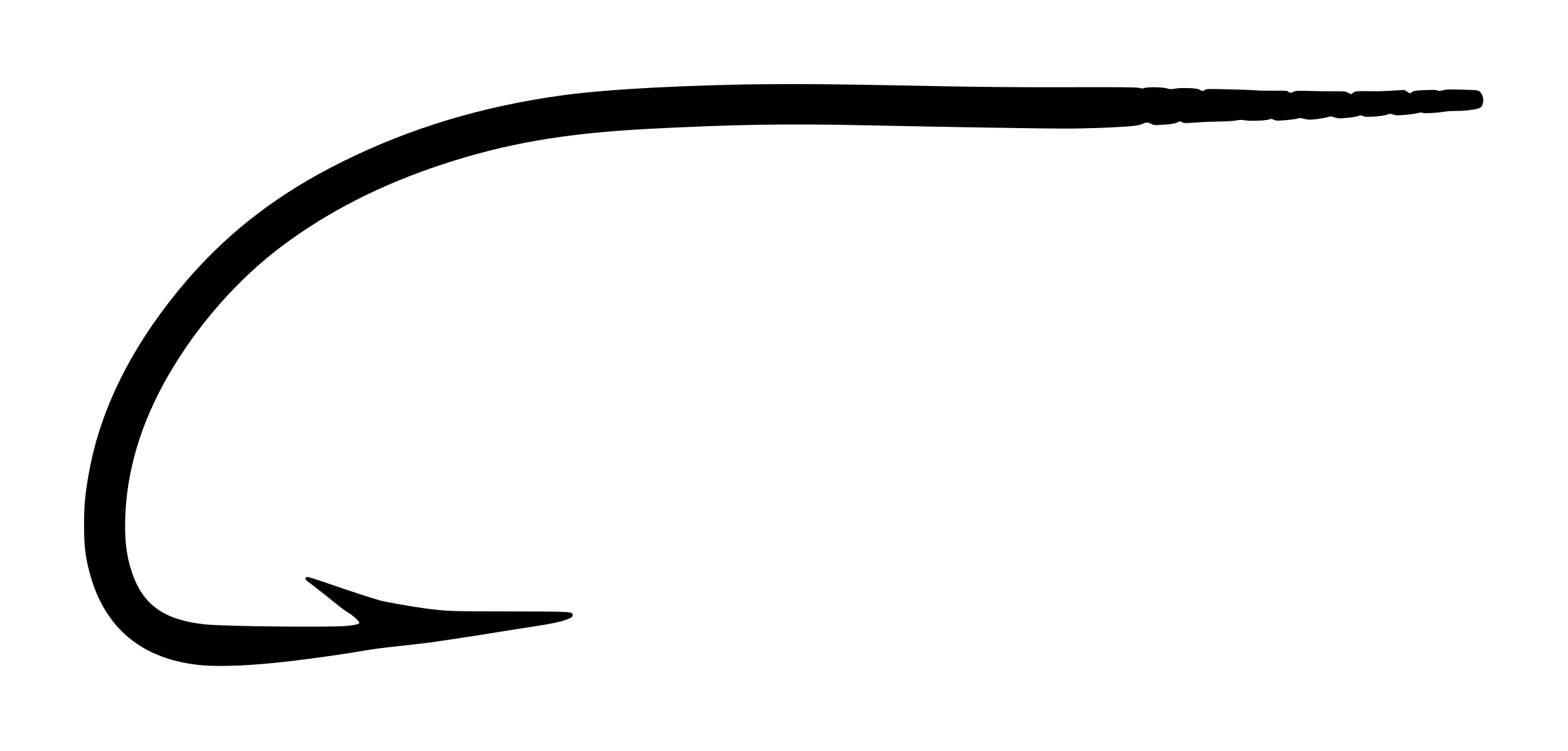
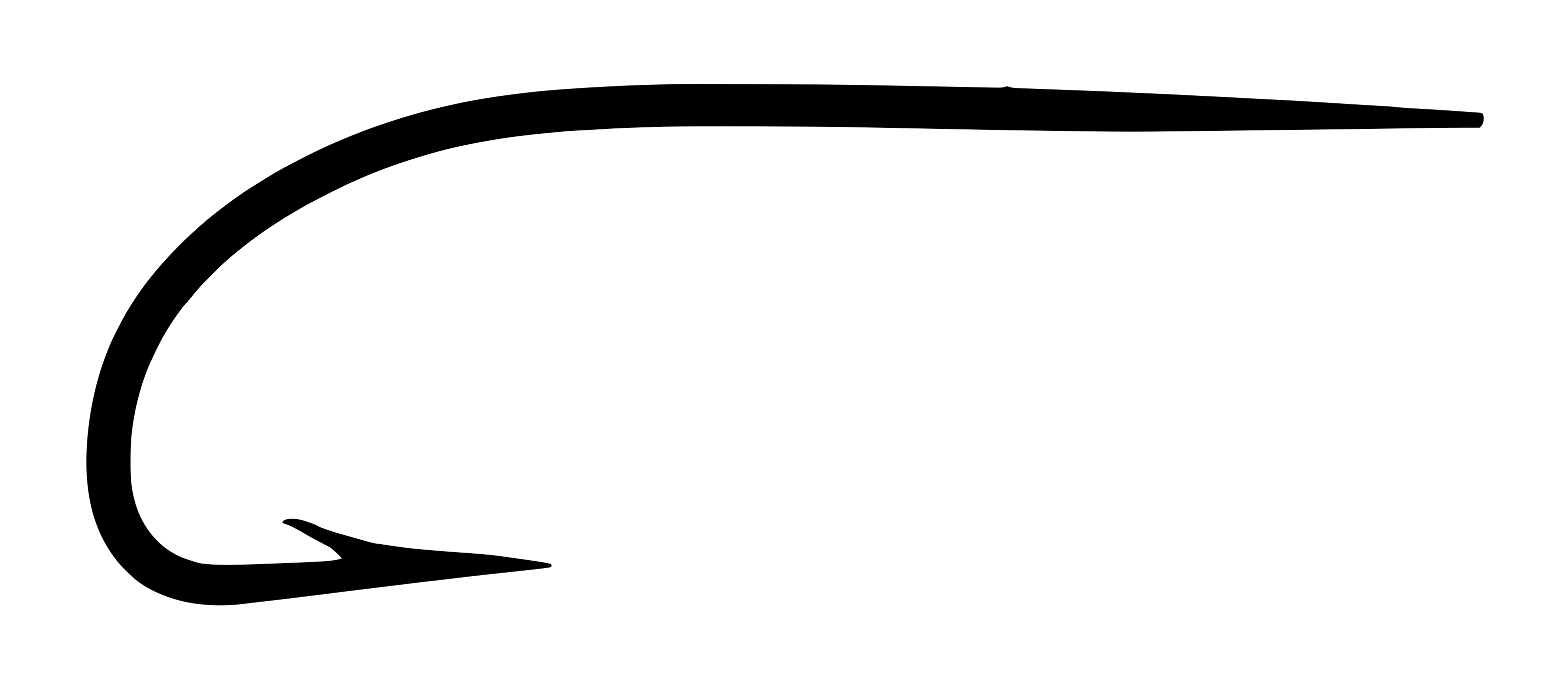
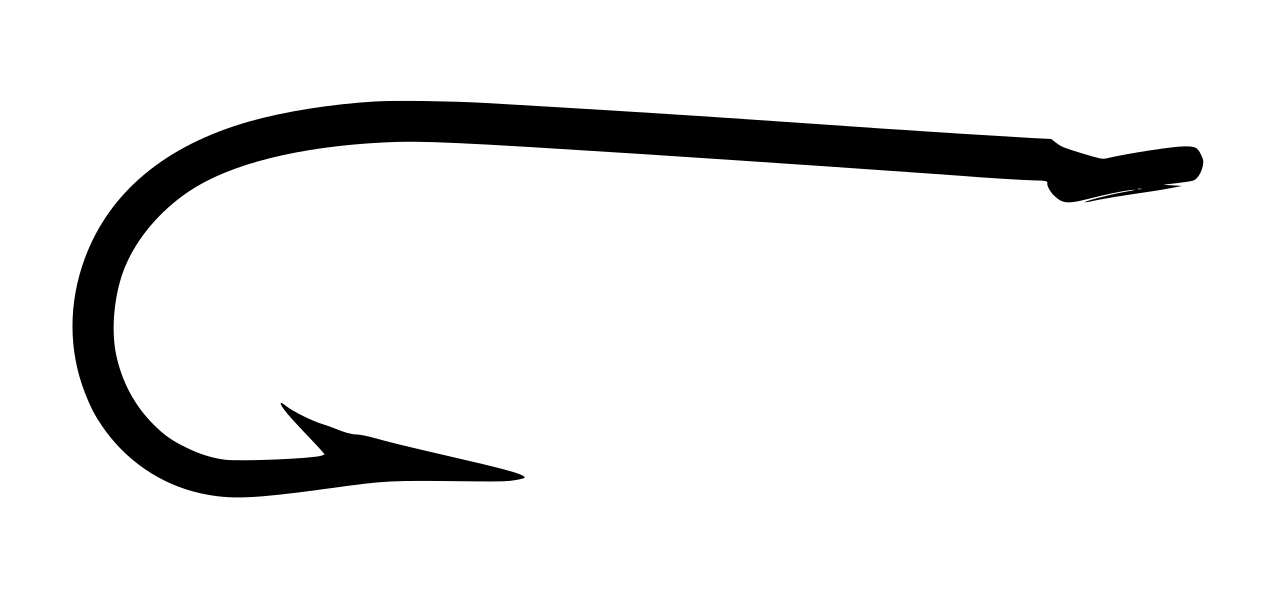
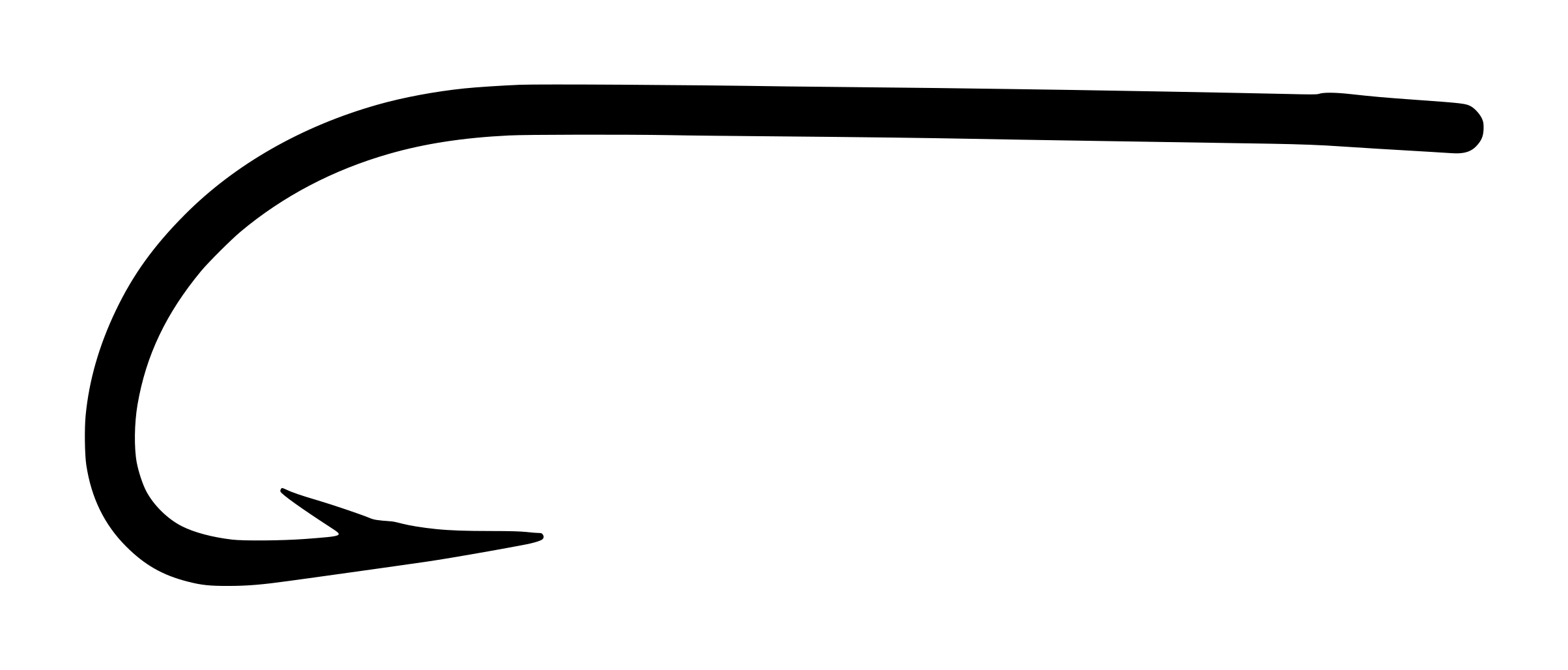
John James & Sons Limerick, No. 4 — Superfine Cast Steel, Japanned, Tapered Blind Eye. This is a classic Redditch-made salmon fly hook from the late Victorian or Edwardian era, likely 1880s–1930s. The hook exemplifies the traditional blind-eye Limerick design preferred by British salmon and sea trout fly tyers of that period. The distinctive tapered blind eye (not flatted or spaded) was designed specifically for gut loop attachment, a standard rigging method before modern eyed hooks became dominant.
The japanned (black lacquered) finish, hollow-pointed barb, and moderate wire gauge are all hallmarks of premium quality Redditch craftsmanship. John James & Sons was among the respected English hook makers, competing alongside Allcock, Partridge, and Sealey in the industrial heartland of hook production. The absence of a barcode and the letterpress label design with decorative border motifs confirm pre-1974 manufacture, almost certainly pre-1950.
This hook represents a functional fishing tool that saw actual use in salmon rivers, not a modern commemorative piece. The condition of the specimen hooks and original labeling makes this a valuable reference for collectors of British salmon fly tackle and historians of Redditch hook manufacturing traditions.
John-James-Limerick-Hook-Size-4
Photographic record
4 cataloged imagesSelect any record to load it above.
4 images shown
John-James-Limerick-Hook-Size-4John-James-Limerick-Hook-Size-4Open originalJohn-James-Limerick-Hook-Point-Size-4John-James-Limerick-Hook-Point-Size-4Open originalJohn-James-Limerick-Label-Size-4John-James-Limerick-Label-Size-4Open originalJohn-James-Limerick-Label-and-Hook-Size-4John-James-Limerick-Label-and-Hook-Size-4Open original
Technical profile
Eye
Blind — Tapered ShankTapered blind eye — the shank tapers to a smooth rounded point with no flattening or spade construction. Gut attached via loop tied around the taper P.
Wire
Standard, Round
Shank
2X Long — Tapered
Bend
Limerick, Standard gapAngular characteristic Limerick bend with pronounced squared-bottom geometry. Moderate depth relative to shank length. Even wire distribution throughout P.
Point
Hollow Point (concave inner face)Short, close-cut barb positioned in standard location on outside curve of bend P.
Finish
Black Japanned — Inferred (photographically likely)Glossy black lacquer coating with uniform opaque coverage characteristic of japanned finish. No metallic tone visible; wire texture fully obscured by thick lacquer layer P.
Hooks are bright with no oxidation or corrosion visible. Original Japanese lacquer finish intact on all specimen hooks shown. Card shows light surface toning and minor edge wear, consistent with century-old storage. Label remains legible with full text visible. No significant creasing or damage to card structure.
Hollow Point geometry: The concave inner face of a hollow point creates a knife-edge effect at the tip, maximizing penetration force and edge sharpness. This geometry is particularly valuable in salmon fishing where reliable hook-ups in hard mouth tissue are critical. The hollow point must be honed to maintain its edge; it requires more careful manufacturing than simpler point styles.
Tapered blind eye: Rather than flattened (spade) construction, this eye tapers smoothly to a rounded point. This design accommodates a gut loop tied around the taper—standard rigging for pre-modern salmon flies. The smooth taper distributes stress more evenly than a flatted spade and allows the angler to adjust taper tightness during rigging.
Wire gauge and Limerick bend: The standard wire gauge and angular Limerick bend provide the strength needed for large salmon while maintaining the geometric definition characteristic of Limerick patterns. Cast steel wire provided superior consistency and hardness compared to wrought iron, reducing breakage and maintaining edge sharpness.
This is one of few documented John James & Sons blind-eye Limerick examples on original packaging in the garrenwood.com catalog. The tapered (non-flattened) eye construction is notable; many Redditch makers of this era produced flatted spade-eye variants instead.
Own this hook? Help us measure it.
We have measurement for size 4. Know any others? Submit calipered measurements and we'll review and add them. Thank you!
Historical context
john_james
John James & Sons was a prominent hook manufacturer based in Redditch, England during the 19th and 20th centuries. Redditch had emerged by the mid-1800s as the global center of hook production, home to hundreds of small manufactories and specialized firms. John James & Sons competed alongside major names like S. Allcock & Co., Partridge of Redditch, H. Milward & Sons, and Edgar Sealey & Sons in a highly competitive market driven by innovations in wire drawing, forging techniques, and finishing processes.
The company emphasized quality materials and precision manufacturing. The ‘Superfine Cast Steel’ designation on their labels reflects the industry’s marketing focus on superior raw materials—cast steel provided better consistency and edge-holding properties than earlier wrought iron hooks. John James & Sons maintained production through the late 19th and early 20th centuries, adapting designs to meet evolving angler preferences while preserving traditional blind-eye patterns for salmon and sea trout fishing.
Series History
The John James & Sons Limerick line represents their interpretation of the classic Limerick bend, one of the most enduring hook designs in English fly fishing tradition. The Limerick bend—characterized by its angular, squared-bottom geometry—was developed in the 19th century and became the standard choice for salmon and sea trout wet flies throughout the British Isles.
John James & Sons offered the Limerick in their ‘Superfine Cast Steel’ quality grade, typically in a range of sizes suited to salmon and sea trout fishing. The ‘Hollow-Pointed’ designation indicates a concave inner face geometry that provides superior edge retention and penetration, a specification applied to premium salmon fly hooks. The tapered blind eye was the standard rigging method for these hooks before eyed hook designs became dominant in the mid-20th century.
This hook line was discontinued by mid-century as modern fishing evolved toward eyed hooks, threaded-on construction, and commercial fly production. Today, surviving examples on original packaging are scarce and represent both functional fishing history and evidence of Redditch manufacturing tradition.
Era and Packaging Dating
Packaging evidence: Green label with decorative circular border motif typical of late Victorian/Edwardian period. Typography shows serif letterpress style consistent with 1880s-1920s printing. 'Superfine Cast Steel' designation is characteristic of quality assertions from that era. No barcode present — strong pre-1974 indicator. Tapered blind eye with gut loop attachment is standard for pre-1950 British salmon fly hooks. Japanned finish was standard practice through 1930s. The overall packaging design, print method, and label stock are consistent with Redditch maker output from 1880-1930 window, likely closer to early 1900s based on label design sophistication.
Redditch's Hook Dynasty
Redditch, England became the world's hook capital in the 1800s partly because of local iron deposits and abundant skilled metalworkers displaced from the declining needle-making trade. At its peak in the 1920s, Redditch was producing over 60 million hooks per year, with more than 150 hook-making firms competing in the small market town. John James & Sons was one voice in this crowded landscape, yet each maker developed signature label designs, packaging aesthetics, and quality claims to differentiate their products. The green decorative label border on this card—purely a marketing choice—reflects the pride these craftsmen took in presentation. Today, collectors can trace the entire arc of that competitive era through surviving cardboard and labels.
Design lineage and influence
The Limerick bend has roots in 19th-century Irish and English salmon fly tradition. Its angular, squared-bottom geometry offers a good balance between the deep round bends of earlier patterns and the more open Aberdeen designs. By the time John James & Sons produced this hook, Limerick had become standardized across multiple manufacturers, though each maker applied their own quality grades and finish options.
The tapered blind eye on this hook reflects pre-1950 British salmon fly design philosophy. After World War II, eyed hooks gradually displaced blind-eye patterns as fly-tying industrialized and demand for ready-made flies grew. Partridge, Allcock, and other Redditch survivors adapted by introducing eyed versions, but John James & Sons appears not to have made this transition—the company’s output seems to have ceased or been absorbed by larger manufacturers by mid-century.
Best matchRelated by Attribute
Computed automatically from catalog data — updated as new hooks are added.
Matches: Bend, Gap, Eye, Eye Orient., Point +3 moreDiffers: Shank: 2X Long vs 1X Long; Wire: Standard vs Fine (1X Fine); Finish: Black Japanned vs Gold-Plated +1 more
Matches: Bend, Wire, Gap, Eye, Eye Orient. +3 moreDiffers: Shank: 2X Long vs 1X Long; Point: Hollow Point vs Standard / Spear; Finish: Black Japanned vs Bronzed +1 more
Matches: Wire, Gap, Eye, Eye Orient., Point +3 moreDiffers: Bend: Limerick vs Sproat; Shank: 2X Long vs 1X Long; Finish: Black Japanned vs Bronzed +1 more
Matches: Bend, Gap, Eye, Eye Orient., Finish +3 moreDiffers: Shank: 2X Long vs 1X Long; Wire: Standard vs Fine (1X Fine); Point: Hollow Point vs Standard / Spear +2 more
Designed as a blank hook for custom salmon and sea trout wet flies, particularly for British river traditions where the Limerick bend was the standard choice. The tapered blind eye accommodates a gut loop, the rigging standard before nylon and eyed hooks became dominant. Anglers would tie a fine loop of gut or horsehair around the tapered eye to attach the hook to their leader, a technique documented in fly-dressing manuals through the 1940s. The hollow point provides superior penetration in the hard mouth tissue of salmon and large sea trout, making it a functional choice for demanding river conditions.
Classic Fly Patterns
Not typically associated with specific named fly patterns; used as a blank for custom salmon and sea trout wet flies.
Similar use context (salmon/sea trout) but modern eyed construction and different bend
Tiemco TMC7999 or equivalent modern salmon fly hook
Moderate
Modern eyed equivalent for same fishing application; different manufacturing and geometry
Collector notes
Rated 6.5/10 — scarce original packaging with genuine pre-1950 manufacturing evidence and traditional tapered blind eye construction. Collector demand is moderate among Redditch specialists and British fly-fishing historians. Primary limiting factor is the absence of comprehensive size range documentation and market data.
Reference value
$18 – $55 USD estimate
Packaging condition
Very Good — light wear, fully legibleRecorded specimen
Packaging format
GW-JJ-01Catalog code
What makes this hook collectible: John James & Sons Limerick hooks on original packaging represent authentic Redditch craftsmanship from the golden age of British fly-fishing tackle. The tapered blind eye and hollow-pointed specification are engineering hallmarks of quality salmon fly hooks. Complete original cards with legible labels are increasingly scarce; most surviving examples are loose or damaged. This specimen retains its original japanned finish and label clarity, adding significant value to collectors of British angling heritage.
Primary limiting factors: John James & Sons was one of many Redditch makers producing similar Limerick designs; the hook itself is not unique in shape or function, limiting collector premium to packaging and condition rather than rarity of the design itself. Modern eyed hooks have completely supplanted blind-eye patterns in active use, so functional demand is zero. Market data for this specific maker is limited compared to Allcock, Partridge, or Mustad.
Desirable variants: Original cards with complete hook counts in Excellent condition command the highest premiums. Sizes within the standard salmon range (No. 2–No. 6) are more common than extremes. Unopened or sealed cards (very rare) would command 3–4× the value of open cards. Alternative finishes if available (bronzed, nickelled) would be more desirable than japanned for most collectors.
Condition factors affecting value: Intact label legibility is critical—faded or torn labels reduce value sharply. Missing hooks from the card typically reduce value by 30–50% depending on count. Original packaging (card and label) is essential; loose hooks alone fetch far less. Corrosion or rust on hooks significantly impacts value; this specimen’s bright finish is a major positive. Card edge wear and minor toning are acceptable and expected for age.
Packaging
Original sales card with green label mounted on cream/ivory card stock. Label shows decorative circular border of repeated ring motifs. Printed text in black serif letterpress: 'JOHN JAMES & SONS' at top, 'Superfine Cast Steel' as subheading, 'Hollow-Pointed' specification, 'LIMERICK' in large caps, 'Fish Hooks, No. 4' and 'TAPERED.' at bottom. Card dimensions approximately 2.5" × 3.0" (63 × 76 mm). Black paper backing visible. Label shows age-related patina and slight toning consistent with early 20th century storage. No barcode, no modern printing elements.
Market Value Notes
Low ($18): Good condition — opened card, one or two hooks missing, minor label wear, japanned finish intact<br />
High ($55): Excellent condition — complete card, all hooks present, label clear and legible, minimal packaging wear, bright japanned finish<br />
Premium factors: Original Redditch maker label with clear typography; pre-1930 dating evidence; tapered blind eye specification (less common than spade-eye variants); complete hook count; label legibility and card integrity<br />
Platforms: eBay UK (where Redditch tackle commands stronger demand), specialist British angling tackle dealers, online auctions<br />
Confidence: E estimated — market data for John James & Sons specific product is limited. Estimates derived from comparable Redditch maker cards (Allcock, Sealey) in similar era and condition. Blind-eye salmon fly hooks generally trade in $15–60 range depending on maker reputation, packaging condition, and size availability.
Where to Find
eBay UK (search 'John James Limerick hook'), British tackle dealer networks (Cotswold Angling, British Vintage Fly Tackle), tackle fairs in the Cotswolds and Redditch area, online auctions specializing in angling antiques. Blind-eye hooks are less common than eyed versions, so active searching required.
Collector's Identification Tips
Identify John James & Sons Limerick hooks by: (1) Label text reading ‘JOHN JAMES & SONS’ at top with decorative circular border; (2) ‘Superfine Cast Steel’ designation; (3) ‘LIMERICK’ prominently displayed; (4) ‘Hollow-Pointed’ specification printed; (5) ‘TAPERED.’ at bottom of label; (6) Japanned (glossy black) finish; (7) Tapered blind eye (not flattened/spaded); (8) Angular Limerick bend geometry; (9) Cream/ivory card stock with green label, typical of late Victorian/Edwardian Redditch makers; (10) No barcode or modern printing.
Preservation
Storage and Preservation
Store the original card in a cool, dry environment away from direct sunlight and moisture. Japanned (lacquered) finishes can develop patina in humid conditions, which collectors often find desirable as evidence of age, but excessive humidity may cause adhesion loss or coating cracking over time.
Keep the card in its original state—do not attempt to clean the label or remove hooks unless absolutely necessary for inspection. If the card shows signs of moisture damage, place it in an archival-quality storage box with acid-free tissue paper and silica gel packets to control humidity. Avoid displaying near radiators, heating vents, or in direct sunlight, as these accelerate deterioration of label color and paper stock.
If the card is incomplete or showing fragility, consider having it photographed professionally for documentation before condition deteriorates further. Original packaging is the primary value driver for this type of hook; loose hooks without the card have drastically lower collectibility and value.
Primary Source
Packaging Label Analysis
Source: Visual analysis of original label on John James & Sons Limerick No. 4 card
Text and Typography: The label reads ‘JOHN JAMES & SONS / Superfine Cast Steel / Hollow-Pointed / LIMERICK / Fish Hooks, No. 4 / TAPERED.’ The serif typeface is characteristic of letterpress printing, not offset lithography. Font weight and spacing suggest a mid-1800s to early 1900s type face, consistent with the decorative border design.
Decorative Border: The circular ring motif border is characteristic of Victorian and Edwardian label design. This style was expensive to produce letterpress-style and is rarely seen after the 1920s, suggesting this specimen dates to the 1880s–1920s window.
Material and Color: The cream/ivory card stock with green label shows age-consistent patina. The green ink has a slightly faded tone, typical of aniline dyes used in early-20th-century printing. No modern inks, foil stamping, or color process printing is visible.
Specifications and Claims: ‘Superfine Cast Steel’ was a quality assertion emphasizing superior raw material. ‘Hollow-Pointed’ and ‘TAPERED.’ are functional specifications—marketing language confirming to fly tyers that these were premium salmon hooks suitable for gut loop rigging. No mention of size range, no quantity notation, and no retail price visible on the label.
Marking Analysis
Handwritten Marks and Annotations
No handwritten marks, stamps, or annotations visible on the card or label in the provided images. The label is entirely printed. Any writing that may have been present has either been removed or is not visible in the photograph.
Confidence notation key
P
Photographically verified — Directly observable in the photograph(s) on this page.
V
Verified by documentation — Confirmed by manufacturer catalog, spec sheet, or published reference.
I
Inferred — A logical deduction from observable or documented evidence, not directly stated.
E
Estimated — An approximation based on visual comparison, proportional analysis, or limited data.
S
Speculative — A reasoned hypothesis that cannot be confirmed from available evidence.
Claims with no notation are confirmed by multiple independent sources. All photographs on garrenwood.com are taken on a measurement grid where each square equals 1/10 inch (0.1″ / 2.54 mm).