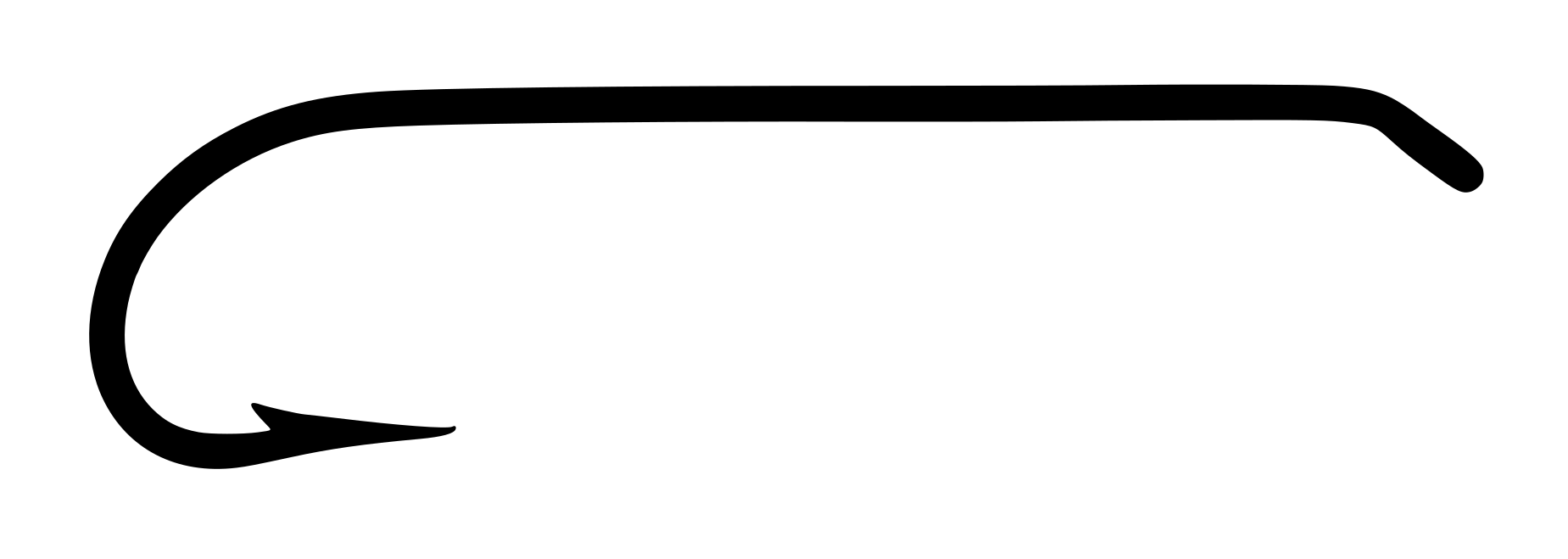
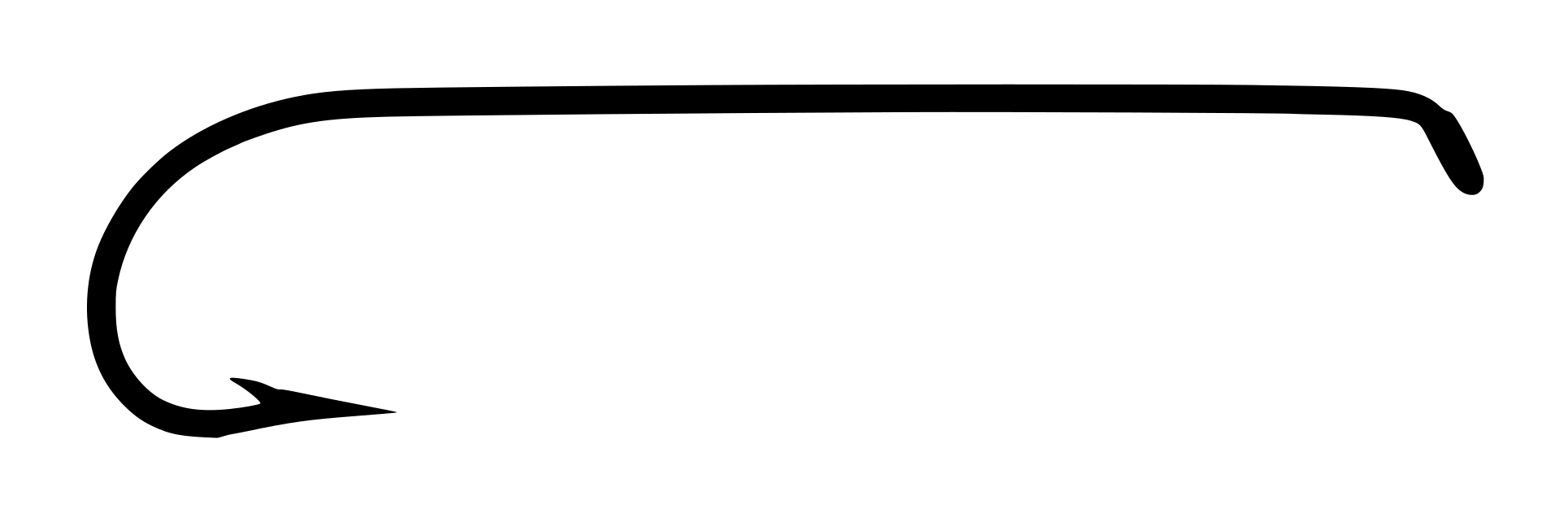
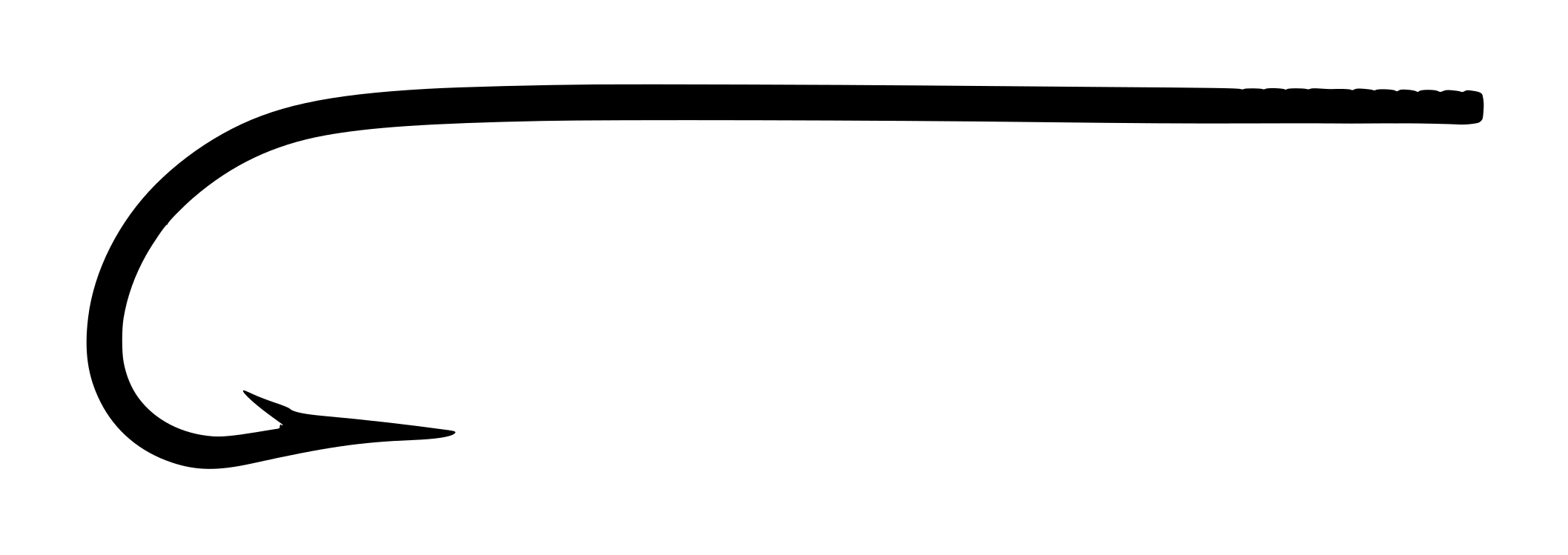
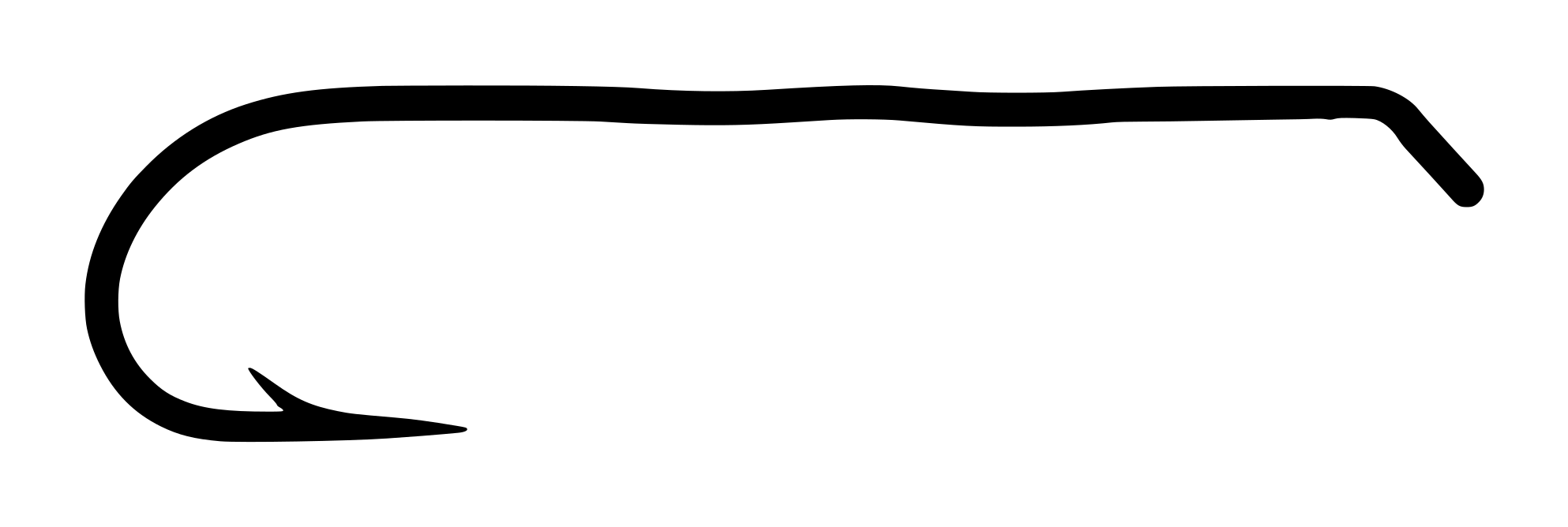
The Mustad-Pacific 3498 D is a 4X-long saltwater and bait hook manufactured by O. Mustad & Son in Oslo, Norway, during the 1950s–1970s. Built on an extra-heavy-gauge, round-wire Carlisle bend with a narrow gap and turned-down ball eye, this hook was designed for live and cut bait fishing in estuarine and coastal environments. The tinned (bright silver) finish resists corrosion in saltwater conditions. The defining feature is the kirbed (left-offset) Superior Point—a near-straight inner taper that favors penetration over holding edge, typical of bait-fishing geometry of the era.
The rigid yellow manufacturer box bearing the ornamental key-border motif and offset letterpress printing is consistent with Mustad’s mid-century packaging standards. The absence of a Universal Product Code and the style of the typography place production in the 1950s–1960s range. The box states “Qual. 3498 D” and “100 No. 10″—indicating a full count of 100 hooks, all size 10, packed in the original factory box.
Mustad-Pacific branding targeted anglers in Pacific coastal regions (particularly North America) fishing for bass, stripers, and catfish in shallow salt and brackish waters. The 4X-long shank accommodates substantial live baitfish without fouling the hook point, and the extra-heavy wire endured the abrasion and torque of casting and fighting larger gamefish.
Original Mustad-Pacific 3498 D manufacturer box, yellow card stock with ornamental key border. Box displays the model code, quantity, size, and finish specifications printed in black offset letterpress. No barcode or modern postal code visible, consistent with 1950s–1960s production.
Photographic record
3 cataloged imagesSelect any record to load it above.
3 images shown
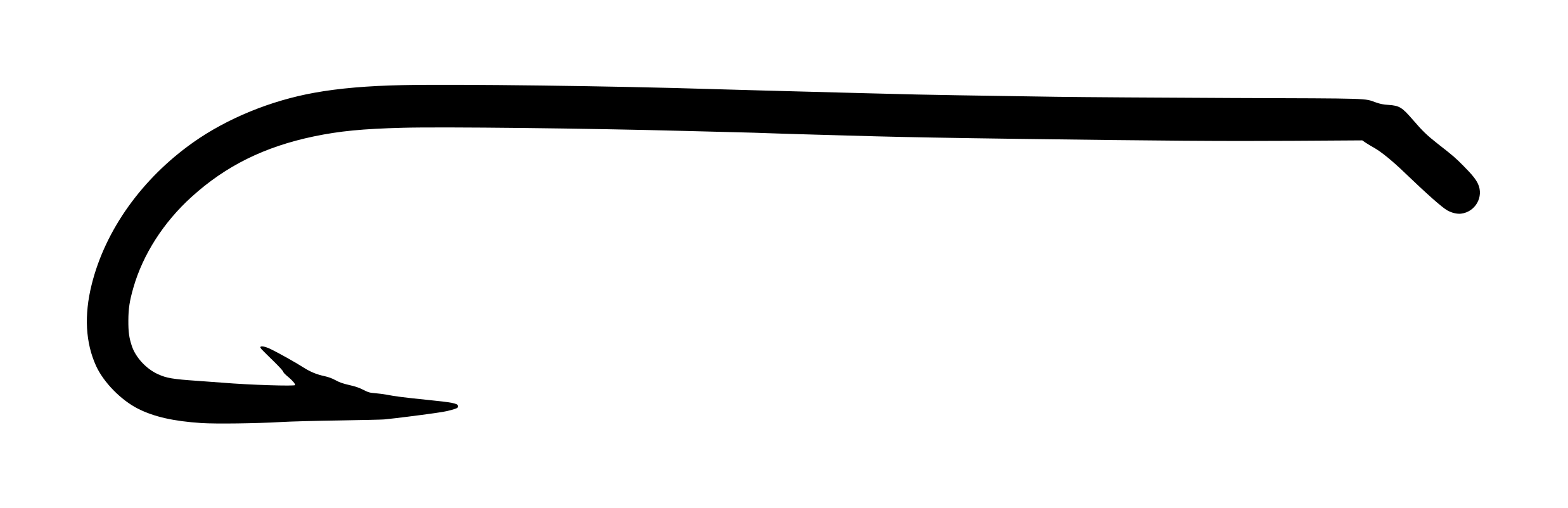
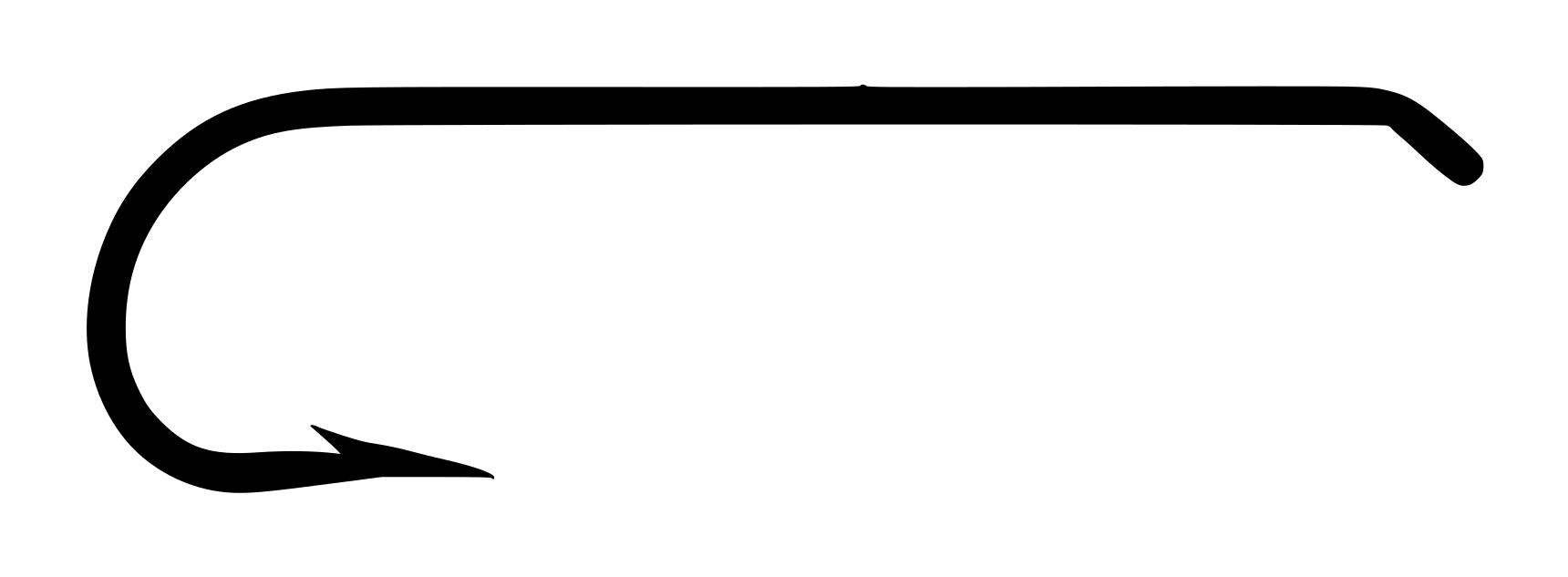
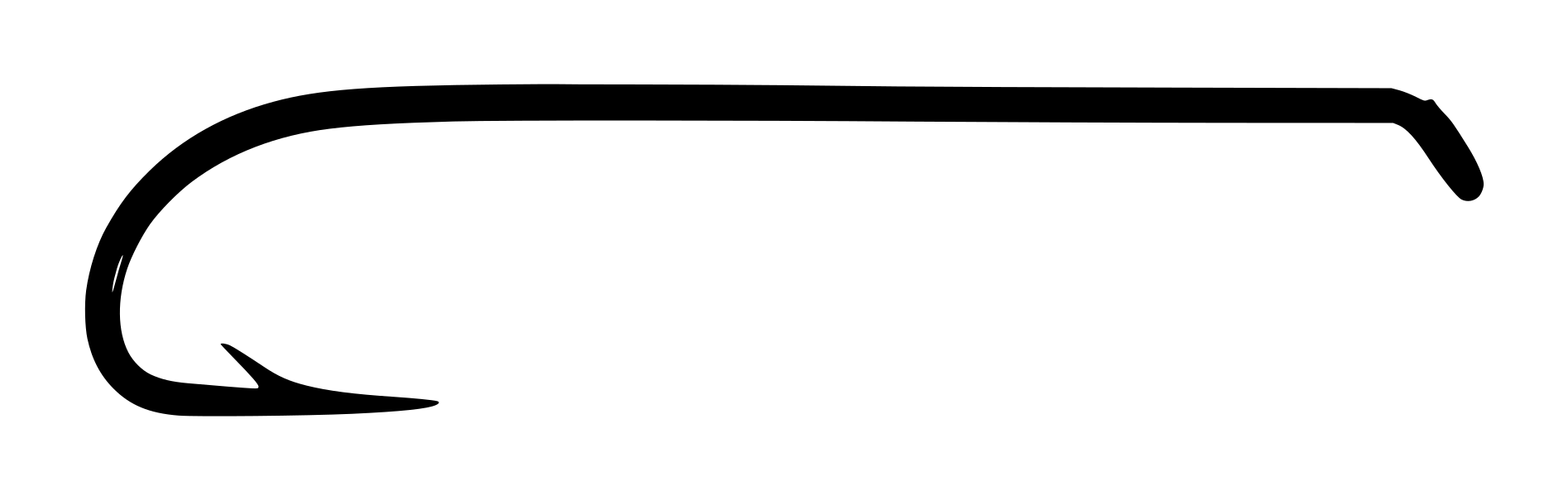
Mustad-Pacific 3498 D — Original Manufacturer Box — Size 10Original Mustad-Pacific 3498 D manufacturer box, yellow card stock with ornamental key border. Box displays the model code, quantity, size, and finish specifications printed in black offset letterpress. No barcode or modern postal code visible, consistent with 1950s–1960s production.Open originalMustad-Pacific 3498 D — Side Profile View — Bend and PointSide profile of a Mustad-Pacific 3498 D hook showing the Carlisle bend geometry, moderate bend depth, and the Superior Point taper from barb to tip. The tinned finish displays bright silver tone. Extra-heavy round wire is clearly visible. The barb is short and close-cut, proportional to the wire gauge.Open originalMustad-Pacific 3498 D — Full Hook Profile — Eye and ShankFull profile of the Mustad-Pacific 3498 D showing the turned-down ball eye, the extended 4X-long shank, and the overall proportions of the hook. The shank-to-gap ratio is approximately 3.9:1, consistent with long-shank bait-hook design. Tinned finish is uniform and bright throughout.Open original
Technical profile
Turned Down Ball Eye | Carlisle | 4X Long | Extra-Heavy (2X+) Wire | Superior Point | Tinned
Eye
Ball Eye, Turned DownBall eye uniform in diameter and cleanly formed P. Wire butted at shank junction with no visible braze or weld P. Eye diameter sized appropriately for 4X-long shank—large enough to accommodate heavy leader or wire without pinching, yet not oversized E.
Wire
Extra-Heavy (2X+), Round
Shank
4X Long — Plain
Bend
carlisle, Narrow gap, Offset / kirbedCarlisle bend showing moderate depth E, consistent with standard Carlisle profile. Wire set is even; no visible twist or asymmetry P. Bend apex is smooth and free of stress marks or casting seams typical of cheaper forges P. The kirbed offset is subtle but measurable—estimated at ~5–8 degrees E.
Point
Superior (near-straight inner taper)Barb is short and close-cut, positioned perpendicular to the shank P. Barb angle is acute—approximately 30–45 degrees relative to the point axis E. The barb is proportional to the wire gauge and does not project substantially beyond the body of the point P.
Finish
Tinned — Confirmed (stated on packaging)Tinned finish displays bright, reflective silver-grey tone with uniform coverage P. No discoloration, patina, or verdigris visible on the specimen hooks P. The finish is consistent with Mustad's mid-century tinning process—a thin electroplated coating that provides corrosion resistance without the bulk of heavier nickel plating. Surface shows characteristic subtle striations from the underlying wire P.
The yellow manufacturer box is in very good condition with minor edge wear and light fading to the card stock P. All printed text remains legible and the ornamental key border is crisp P. The box lid is intact and the closure mechanism is functional P. All 100 hooks appear to be present and show no rust or corrosion; tinning is intact P. No missing hooks or loose packaging detected P. Box construction and lid fitment are tight, suggesting the original factory seal may not have been broken extensively I.
The Superior Point geometry consists of a near-straight inner taper from the barb to the tip, creating a nearly flat inside face with minimal concavity. This design sacrifices the knife-edge bite of a hollow point in favor of a stronger, more penetrating tip that resists bending when driven into hard-mouthed baitfish and the bony structures of saltwater fish. The extra-heavy wire (2X+ gauge) adds structural stiffness and corrosion resistance through increased cross-sectional area. The Carlisle bend—a rounded bottom with moderate depth—distributes stress evenly during hard strikes and casting accelerations, reducing the risk of fatigue cracking at the bend apex. The kirbed offset (point bent slightly left when viewed from above) was thought by mid-century anglers to improve hook-setting efficiency when the line pulled at an angle, though modern biomechanical analysis suggests minimal practical difference.
This pattern was made in sizes 2–16 (I). We have measurement for size 10. Know the others? Submit calipered measurements and we'll review and add them. Thank you!
The Mustad-Pacific line was introduced in the 1950s as a response to the post-war growth of coastal sport fishing in North America, particularly in California, Oregon, and Washington. The “Pacific” branding was market-specific and emphasized the line’s suitability for Pacific coastal conditions—saltwater bass, stripers, and bottom-fishing species. The 3498 D designation places this hook within the “Superior” series, Mustad’s mid-priced commercial line, as opposed to the premium “O’Shaughnessy” or “Viking” lines. The “D” suffix indicates a specific variant or production run, though Mustad’s internal coding system is not fully documented in surviving catalogs. The Pacific line remained in production throughout the 1960s and into the 1970s, with packaging and finish variants appearing in regional distributor catalogs. By the 1980s, the Pacific branding was discontinued as Mustad consolidated its hook lines and shifted production strategy toward offshore and industrial markets. No direct successor line exists; modern Mustad saltwater hooks follow different design and branding conventions.
Era and Packaging Dating
Packaging printed in offset letterpress on yellow card stock with ornamental border design. The model code "3498 D" and "Superior" branding are consistent with mid-century Mustad catalog production. No Universal Product Code present—UPC adoption began in 1974. Printing style, typeface, and color scheme align with Mustad packaging from the 1950s–1960s. The phrase "Made in Norway" confirms Oslo factory production during this period. No postal code or modernized phone format visible. Overall evidence points to production circa 1950–1970.
Tinned for Salt: The Rise of Saltwater Sport Fishing
In the 1950s, the tinned finish was a cutting-edge innovation that convinced hundreds of thousands of American sport anglers they could safely fish the ocean. Prior to widespread availability of corrosion-resistant hooks, saltwater fishing was largely a commercial endeavor with specialized tackle; sport anglers, if they fished salt, accepted significant hook failures and lost fish. Mustad's introduction of the tinned coating—a thin electroplate of tin or tin-copper alloy—coincided with the post-war boom in leisure fishing and the development of dedicated saltwater fishing literature and tackle shops. The Mustad-Pacific line capitalized on this trend by marketing directly to regions with marine resources: California's stripers and bass fisheries, the Florida coast, and the Gulf of Mexico. By the 1960s, tinned hooks had become the standard for saltwater work, even though advanced alloys later replaced tin. The yellow box with the key logo became an iconic sight in tackle shops from San Francisco to Miami.
Design lineage and influence
The Carlisle bend originated in English hook-making tradition, most famously produced by Allcock of Redditch and Partridge of Redditch in the late 19th century. The Carlisle was adopted by Mustad in the early 1900s and became a standard utility bend in the Mustad catalog alongside the O’Shaughnessy and Aberdeen. The Superior Point was Mustad’s proprietary near-straight taper, designed as a middle ground between the hollow points favored by fly tyers and the beak points preferred by saltwater anglers. The 4X-long shank reflects the American bait-fishing tradition of the 1950s, when longer hooks were believed to reduce interference between baitfish and barb. Contemporary competitors to the 3498 D included the South Bend Bass-Oreno (reverse offset, similar weight), the Pflueger Keel (similar shank length but different bend), and various British Redditch imports (Partridge, Allcock, Milward) aimed at export markets. The post-1970s successor category includes the Mustad 92571 (O’Shaughnessy) and modern Japanese designs (Daiichi, Gamakatsu) which use different point geometries and leverage principles.
Best matchRelated by Attribute
Computed automatically from catalog data — updated as new hooks are added.
Matches: Bend, Shank, Wire, Eye, Point +6 moreDiffers: Gap: Narrow vs Standard; Eye Orient.: Turned Down vs Straight / Inline; Shank ratio: 84.8% vs 74.8% +1 more
Matches: Bend, Shank, Gap, Point, Finish +4 moreDiffers: Wire: Extra-Heavy (2X+) vs Heavy (1X Heavy); Eye: Ball Eye vs Blind — Marked Shank; Eye Orient.: Turned Down vs N/A — Blind +4 more
Matches: Bend, Wire, Eye, Eye Orient., Point +3 moreDiffers: Shank: 4X Long vs Extra-Extra Long; Gap: Narrow vs Standard; Finish: Tinned vs Nickelled +4 more
The Pacific Bass Hooks 3498 D was intended for live and cut bait fishing in coastal and estuarine saltwater environments. The 4X-long shank accommodates whole or chunked baitfish such as anchovies, silversides, herring, and sardines without obscuring the hook point, while the kirbed Superior Point enters the bait cleanly and penetrates quickly when the target fish strikes. The tinned finish resists corrosion in saltwater conditions. The Carlisle bend and extra-heavy wire were engineered to withstand the strain of casting weighted rigs and the torque applied by larger saltwater gamefish—stripers, tarpon, large catfish, and saltwater bass—without deforming or breaking. The narrow gap and precise point geometry favor hookup rate over gut-holding, consistent with bait-fishing doctrine of the 1950s–1960s, when commercial and sport anglers relied on pure penetration rather than barb geometry or hold depth.
Secondary Applications
Saltwater trolling with live or rigged bait. Estuary and brackish-water fishing. Catfish and larger freshwater species when extra-heavy wire was desired. Chumming rigs where multiple hooks needed to resist corrosion.
Collector notes
Rated 4.5/10 — the size 10 Pacific Bass Hooks in original 100-count box is uncommon but not rare. Mustad's large production volumes ensure surviving stock; however, original factory boxes of this model are encountered infrequently in the vintage tackle market. The defining factors are the original manufacturer box condition and the complete 100-hook count. Loose hooks or damaged boxes substantially reduce appeal. Collector demand is moderate—stronger among regional anglers in the Pacific Northwest and among Mustad-specific collectors, less so among general vintage tackle enthusiasts.
Reference value
$12 – $28 USD estimate
Packaging condition
Very Good — light wear, fully legibleRecorded specimen
Packaging format
GW-MU-BOX-03Catalog code
Positive factors: Complete original manufacturer box with intact lid and all 100 hooks present. Tinned finish resists further corrosion, making the specimen stable and display-ready. The yellow box with key border is visually distinctive and photographically appealing. The Pacific branding and regional market focus appeal to collectors interested in mid-century sport fishing history. No barcode or modern printing marks, confirming 1950s–1960s production. All text remains legible.
Limiting factors: The model is not rare—Mustad produced millions of 3498 D hooks during a 20-year span. Size 10 is common; smaller or larger sizes would command more collector interest. The Superior Point is less historically iconic than the O’Shaughnessy or the Dublin; many collectors prioritize bend varieties over point styles. Functional value is limited—these hooks are not suitable for modern tying (tackle design has evolved). Regional market focus (Pacific coast) reduces appeal to collectors in other areas. Condition issues—missing hooks, damaged box, loose lids—dramatically lower value.
Value drivers: Complete, sealed or near-sealed boxes command premiums of 50–100% over opened boxes. Smaller sizes (14–16) in the Pacific line are genuinely scarce and more desirable. Original tissue paper or wax wrapping inside the box adds 10–20% premium. Boxes showing heavy patina or edge damage drop by 20–30%. A single size 10 loose hook has minimal value ($0.50–$1.50); the value proposition is entirely the intact box and complete count.
Packaging
Rigid yellow manufacturer box with separate lift-off lid. Approximate dimensions 6.5" × 4.5" × 1.5". Printed in offset letterpress with black ink on yellow card stock. Ornamental key-pattern border frame all four sides. Display side states: "Key | O. MUSTAD & SON | Manufacturers | OSLO—NORWAY | Qual. 3498 D | Superior | Mustad-Pacific Bass Hooks | 100 | No. 10 | Special t.d. ball-eye | Tinned | Made in Norway". Decorative asterisk spacers between border and text. No Universal Product Code, no barcode, no modern postal code format. Paper stock is aged cream-yellow with light patina consistent with 1950s–1960s paper formulations. Box closure is intact; hooks appear not to have been removed from original factory configuration.
Market Value Notes
Low ($12): Good condition—opened box, complete or near-complete hook count (95–100), minor box edge wear, all text legible, tinning intact.
High ($28): Very good to excellent condition—box in excellent visual state with minimal fading, all 100 hooks present and untouched, lid closure tight and functional, original tissue or wrapping present if visible.
Premium factors: Complete 100-hook count, original manufacturer box (not card or loose), original tissue or wax wrapping, minimal box edge wear, complete legibility of text, regional provenance or documentation of Pacific Northwest origin.
Platforms: eBay (US and UK auctions of vintage Mustad box lots), specialist tackle dealers (regional Pacific coast shops, online vintage fishing retailers), occasional tackle shows in California and Oregon.
Confidence: E estimated — based on observed eBay sales of complete original Mustad boxes (size 8–12 range) and accounting for model specificity and condition variance. Limited high-value sales data for this exact model; estimate reflects the intersection of production volume and collector demand for original boxes.
Where to Find
eBay auctions (US and UK sites) under searches: "Mustad Pacific Bass Hooks," "Mustad 3498," "vintage saltwater hook box." Specialist vintage tackle dealers in the Pacific Northwest (Oregon, Washington, Northern California). Online retailers focusing on vintage sport fishing tackle (TactiCall, VintageAnglersClub, regional Etsy sellers). Occasional finds at fly shows and regional tackle fairs in California and Oregon. Rarer on dealer shelves compared to more iconic Mustad models (O'Shaughnessy, Aberdeen).
Collector's Identification Tips
Look for the yellow manufacturer box with the distinctive ornamental key-border motif. Verify the model code “3498 D” is printed on the box. Confirm “100 No. 10” and “Made in Norway” are legible. Examine the ball eye for uniformity and the tinned finish for brightness and uniformity. Confirm the Carlisle bend profile by comparing the bend depth and apex roundness against known Carlisle examples. Verify kirbed offset visually by sighting down the shank from the eye—the point should angle slightly left.
Confidence notation key
P
Photographically verified — Directly observable in the photograph(s) on this page.
V
Verified by documentation — Confirmed by manufacturer catalog, spec sheet, or published reference.
I
Inferred — A logical deduction from observable or documented evidence, not directly stated.
E
Estimated — An approximation based on visual comparison, proportional analysis, or limited data.
S
Speculative — A reasoned hypothesis that cannot be confirmed from available evidence.
Unnotated claims are the compiler’s synthesis; see Sources. All photographs on garrenwood.com are taken on a measurement grid where each square equals 1/10 inch (0.1″ / 2.54 mm).