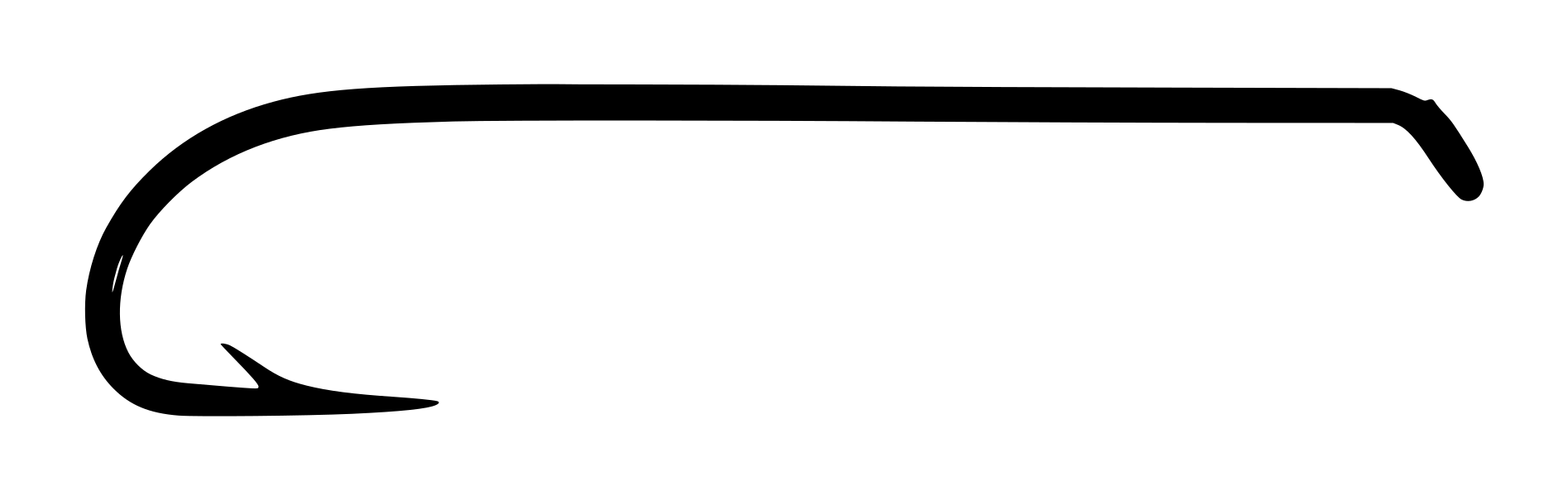
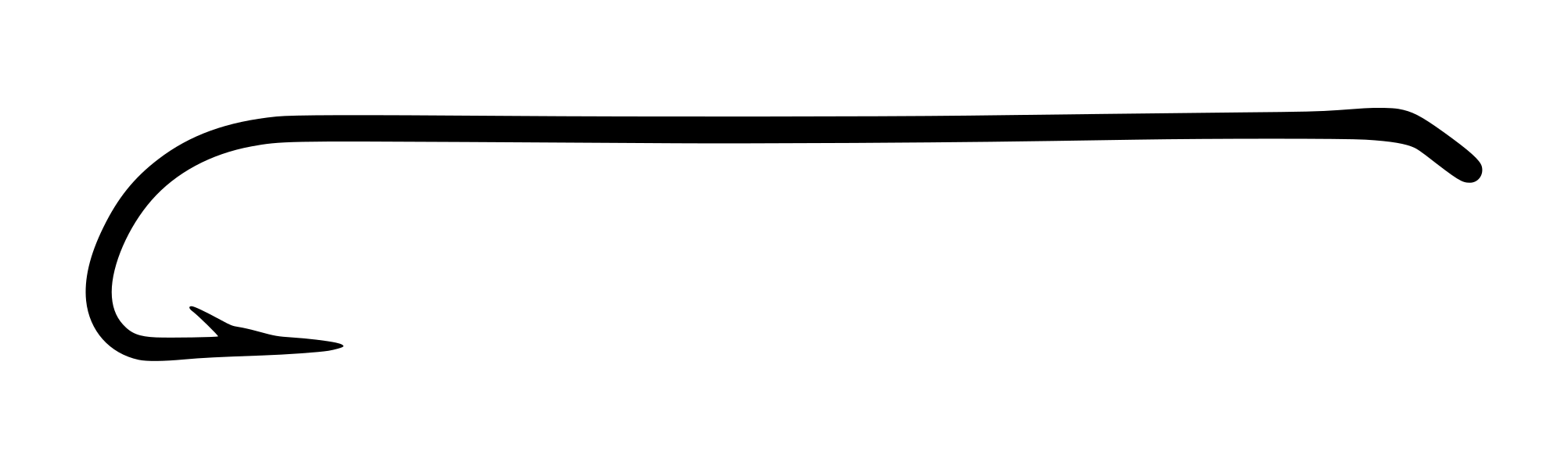
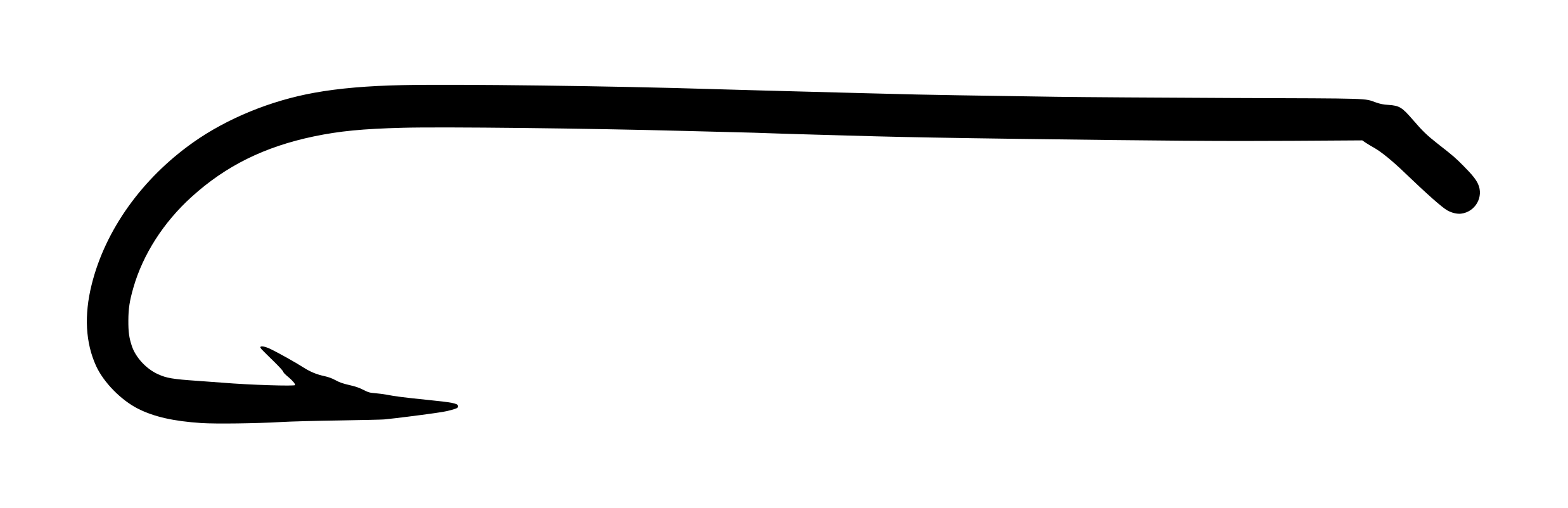
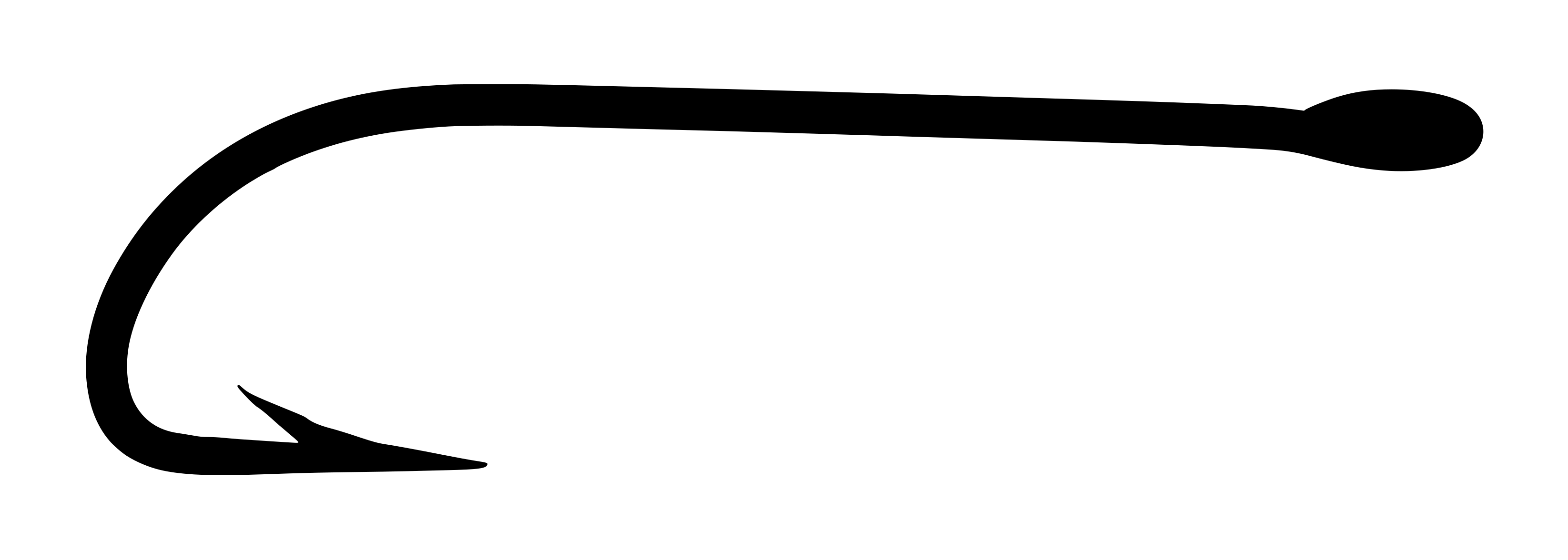
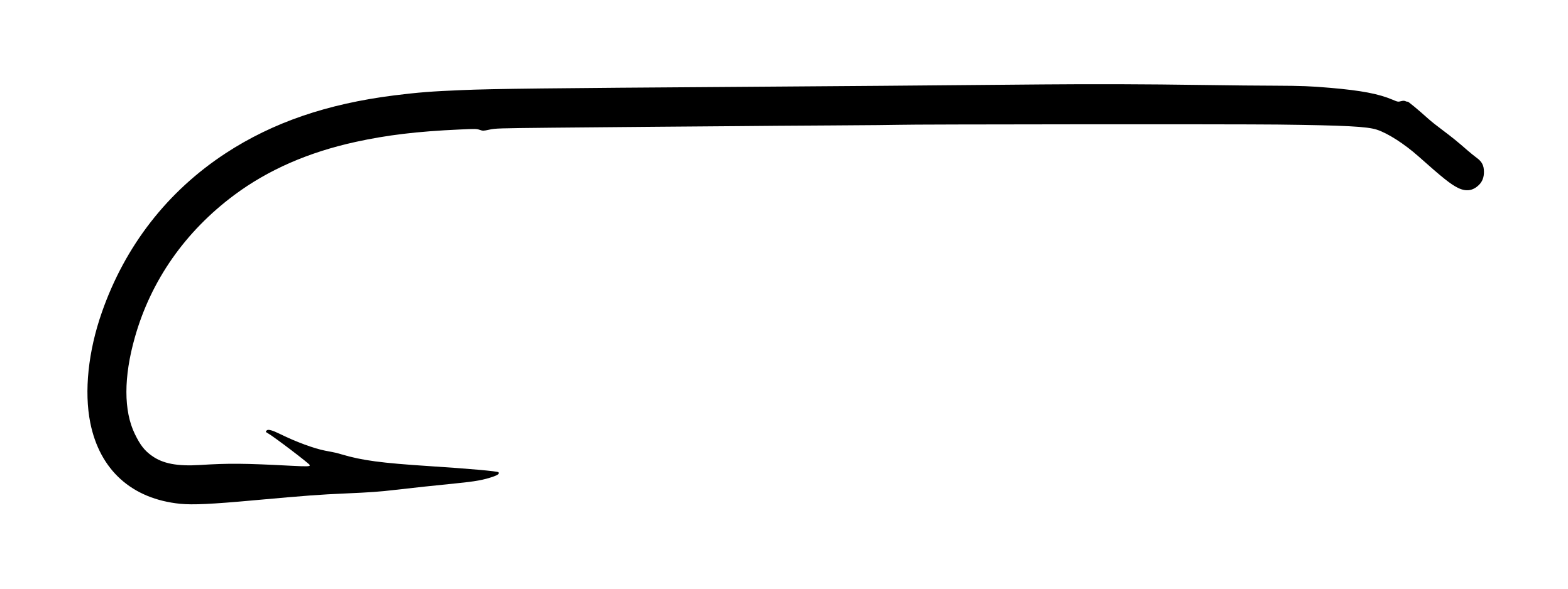
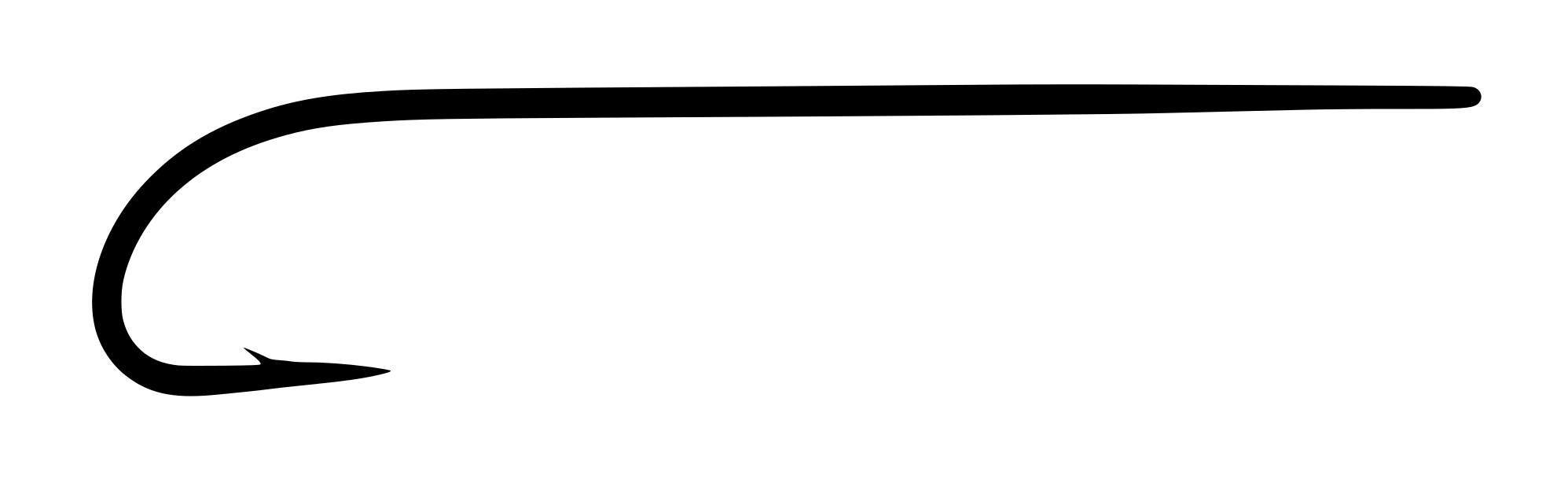
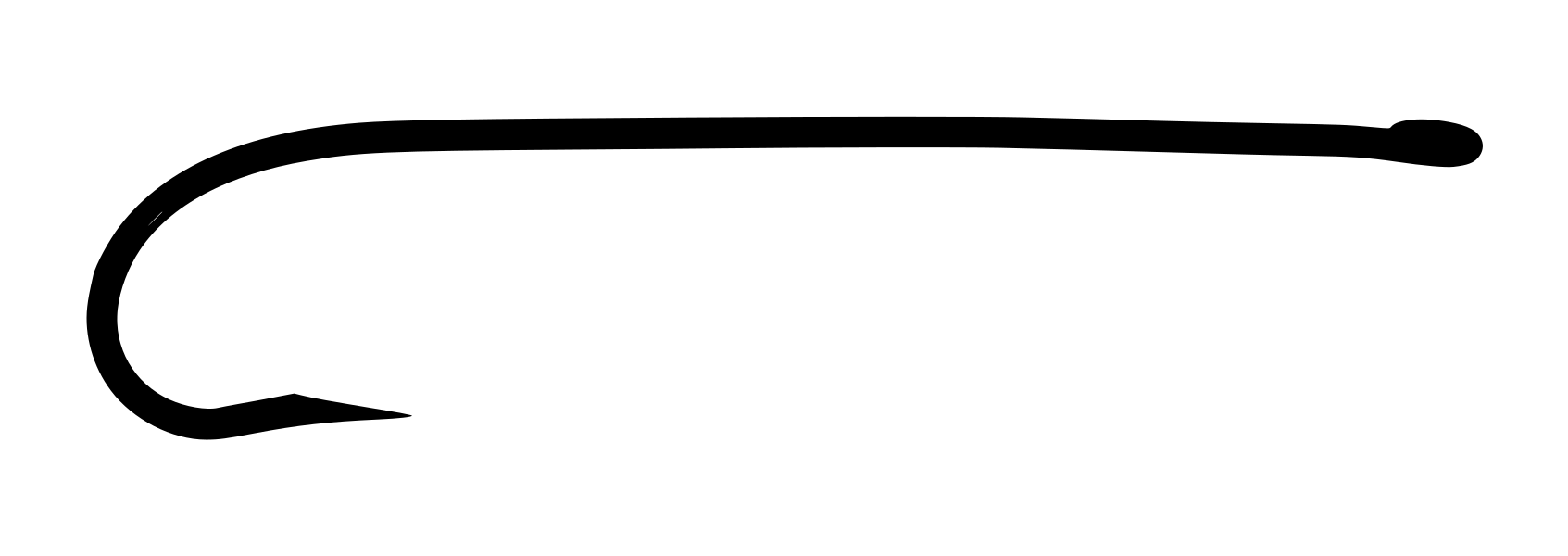
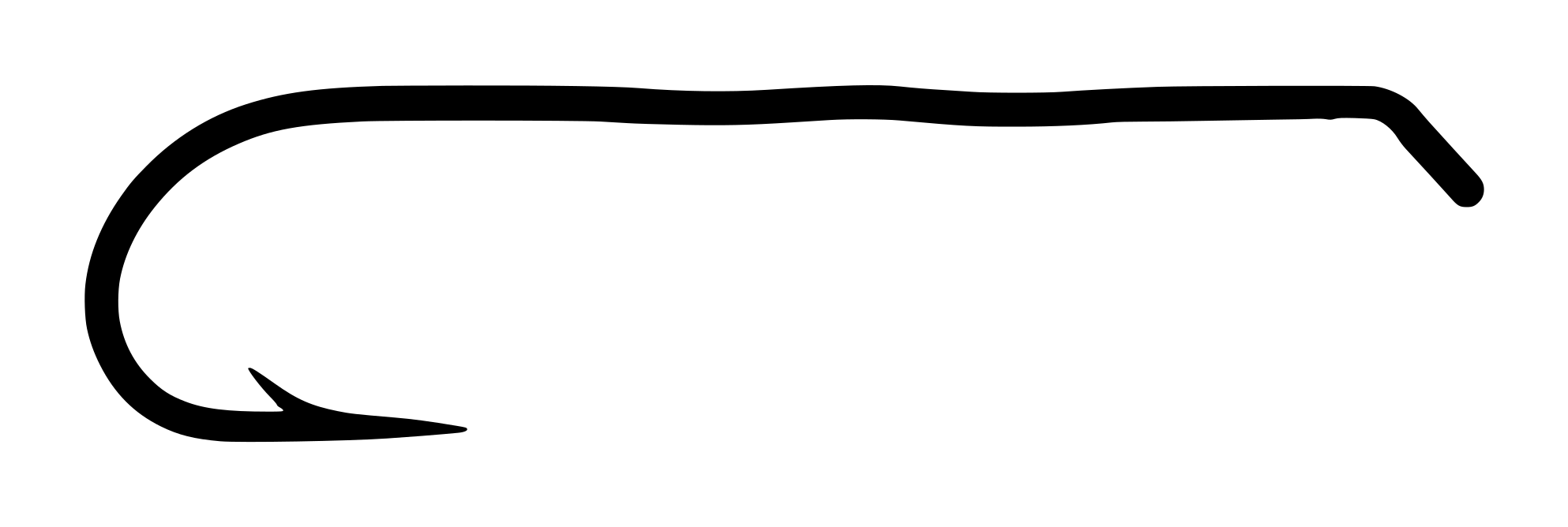
Mustad-Limerick Hooks, model 36862, is an extra-long, extra-heavy forged streamer hook manufactured by O. Mustad & Søn in Gjøvik, Norway. The specimen is size No. 8 in bronzed finish with tapered eye, turned down, hollow point, and straight (non-kirbed) offset. This is a working streamer hook of the interwar period, designed for large fly tying.
The hook is housed in an original rigid manufacturer box bearing Mustad’s trademark key and ornamental border design, printed in warm brown ink on cream cardboard. The box label explicitly states “Forged, t.d. tapered eye, bronzed, 1/2 inch longer than regular,” confirming the construction specifications. The container held 100 hooks at size No. 8.
Era evidence places this example firmly in the 1920s-1940 period: the absence of barcoding, ornamental label design, Oslo address format, and cream box stock all point to interwar or early wartime production. The extra-long shank (1/2 inch longer than standard Limerick) and extra-heavy wire reflect Mustad’s industrial capability in forging heavy streamer hooks for Atlantic salmon and large sea trout flies.
Collecting significance: complete original boxes are substantially rarer than carded hooks and command a premium. The documented No. 8 size in extra-long/extra-heavy configuration is less common than standard-shank variants. The bronzed finish and hollow point construction are consistent with Mustad’s quality standards of the period. Hook and box condition are both very good, making this a reference specimen for Mustad interwar production.
Top of the original Mustad manufacturer box showing the ornamental printed label with trademark key, specifications, and Oslo address. The warm brown ink and cream cardboard are characteristic of interwar packaging design.
Photographic record
3 cataloged imagesSelect any record to load it above.
3 images shown
Mustad 36862 Box Lid Original Label c.1920-1940Top of the original Mustad manufacturer box showing the ornamental printed label with trademark key, specifications, and Oslo address. The warm brown ink and cream cardboard are characteristic of interwar packaging design.Open originalMustad 36862 No. 8 Profile View Bronzed FinishProfile view of a single No. 8 Mustad-Limerick hook showing the tapered eye turned down, elongated shank, and the angular Limerick bend. Bronzed finish is evident in the warm brown tone of the wire. Photographed on measurement grid for scale.Open originalMustad 36862 No. 8 Bend and Point Detail BronzedDetailed side view of the bend and point of a No. 8 Mustad-Limerick hook, showing the angular Limerick bend geometry, the concave inner face characteristic of the hollow point, and the barb. The bronzed finish and forged wire structure are clearly visible.Open original
Technical profile
Turned Down Tapered Eye | Limerick | Extra-Extra Long | Extra-Heavy (2X+) Wire | Hollow Point | Bronzed
Eye
Tapered Eye, Turned Down
Wire
Extra-Heavy (2X+), Forged
Shank
Extra-Extra Long (XXL) — Plain
Bend
Limerick, Narrow gap
Point
Hollow Point (concave inner face)
Finish
Bronzed — Confirmed (stated on packaging)Box exterior shows uniform age patina and light dust accumulation. Lid retains all printing legibility with minor fading to brown ink. Corners and edges show light crushing and wear consistent with storage and handling. No breaks or separations to box structure. Single visible pencil annotation on interior (purple/lavender marking, obscured in detail but consistent with inventory or collector marking). Hooks photographed are in bright bronzed finish with intact barbs and no corrosion. No visible damage to eye or point.
The hollow point is a Mustad standard design characterized by a concave inner face, creating a knife-edge effect at the point tip. This geometry provides rapid penetration upon hook-set and is well-suited to streamer fishing where the fly must turn quickly in the mouth of a large fish. The hollow point is most effective on hard-mouthed species like salmon and sea trout.
The extra-heavy (2X+) forged wire provides strength and leverage necessary for holding large flies and resisting deformation under pressure from heavy fish. Forging — the process of heating and hammering the wire into shape — aligns the steel grain structure and increases tensile strength compared to unhardened wire. This is particularly important in a hook carrying a large, wind-resistant fly body.
The extra-long shank (1/2 inch longer than standard) allows extended fly bodies, particularly valuable for imitating baitfish or large nymphs. The tapered eye reduces bulk at the head of the fly, a concern when the shank itself is substantial. The narrow gap (relative to the length of the shank) concentrates the bending moment and ensures a firm, secure bite—desirable for salmon and sea trout that must be fought on relatively light tippets by the standards of that era.
The bronzed finish is a warm brown oxide coating applied through heat and chemical treatment. Bronzing reduces glare in sunlit water and is traditional for trout and salmon hooks. It also provides a degree of corrosion resistance, though inferior to modern protective coatings.
Size & scale lab
Known manufactured size range:
No. 8 (documented on package)
This pattern was made in sizes No. 8 (documented on package). We have measurement for size 8. Know the others? Submit calipered measurements and we'll review and add them. Thank you!
Historical context
mustad
O. Mustad & Søn was established in Gjøvik, Norway, as a hook and fishing tackle manufacturer in the 1870s. By the early twentieth century, Mustad had become one of the dominant global hook manufacturers, competing directly with the established English makers of Redditch. The company built its reputation on industrial forging techniques, precision grinding, and consistent quality across large production runs.
Mustad maintained centralized manufacture at the Gjøvik facility, which allowed economies of scale unavailable to smaller craft makers. The company supplied hooks under its own brand and also as OEM product for retailers, mail-order catalogs, and other distributors throughout Europe and North America. By the 1920s-1930s, Mustad’s product range included specialized patterns for salmon, sea trout, bait fishing, and fly tying, with variations in wire gauge, shank length, eye type, and point geometry.
The interwar period (1920s-1930s) represents Mustad’s expansion into the American market, where the company gained significant distribution through sporting goods wholesalers and mail-order firms. Production capacity was scaled to support large orders, and Mustad became known for reliable, economical hooks that performed well for commercial and amateur tyers alike. The company’s emphasis on forged construction and bronzed finish became signature elements of its brand identity during this era.
Series History
The Mustad-Limerick is a long-standing streamer and saltwater hook pattern in Mustad’s catalog, with roots in the classic Limerick bend design. The Limerick bend — characterized by its angular, moderately deep architecture — was adopted widely across the industry for streamer and salmon fishing. Mustad’s version was offered in multiple shank lengths and wire gauges to accommodate different fly sizes and materials.
This particular variant (model 36862) is explicitly marketed as an extra-long shank, 1/2 inch longer than standard Limerick, in extra-heavy (2X+) forged wire. The tapered eye and bronzed finish were standard specifications for Mustad’s quality streamer lines during the 1920s-1940s period. Size No. 8 is a working size for medium-to-large streamer flies, consistent with Atlantic salmon, sea trout, and large brown trout patterns of the era.
The series remained in production through the mid-twentieth century, though specific packaging and labeling evolved. By the 1950s-1960s, Mustad had standardized many of its boxes and moved toward more economical carded formats for smaller production runs. The rigidly boxed format seen here is characteristic of interwar to early post-war production (c. 1920-1945), when premium hooks were often packaged in durable containers to suggest quality and durability.
Era and Packaging Dating
No barcode visible — pre-1974 indicator. Ornamental floral border design and gold ink printing are consistent with 1920s-1930s Mustad packaging aesthetics. Oslo address (not yet split to Oslo-Norway full form common in 1950s) and printed manufacturing text suggest interwar to early WWII period. Box construction with cream cardboard and offset printing technique consistent with 1920s-1940s manufacturers. Absence of modern postal code formats or phone number format confirms pre-1945 design. Quantity designation on label (100 No. 8) matches documented Mustad production scales of that era. Collector marking suggests this was from an established collection, consistent with vintage tackle acquisition practices post-1960s.
Standardization as Marketing
Mustad's claim that this hook is "1/2 inch longer than regular" refers to comparison with the standard Limerick model in the same size. The company understood that consistency of messaging—explicitly stating the differential—reassured professional tyers that they were purchasing a specified variant, not a standard hook mislabeled. This transparency in specification was a Mustad marketing advantage over competitors whose catalogs were sometimes opaque about exact shank lengths. By the 1930s, Mustad had built a reputation for reliable, standardized hooks that could be ordered with confidence from mail-order catalogs and tackle wholesalers who had never seen the factory. The box itself—rigid, branded, with ornamental printing—was as much an advertisement of quality as the hooks inside.
Design lineage and influence
The Limerick bend itself has roots in nineteenth-century English hook design, where a relatively angular, moderately deep bend was favored for strength and efficient penetration. English makers like Allcock and Redditch craft producers offered Limerick patterns; Mustad adopted and refined the design within its industrial forging system by the early twentieth century.
Mustad’s extra-long variant represents the company’s response to demand from commercial tyers and large-fly practitioners. Competitors like Pflueger (USA) and Allcock (England) offered similar extended-shank streamer hooks, but Mustad’s industrial advantage allowed it to deliver them at lower cost and in larger volume. The forged construction set Mustad’s version apart from lighter wire alternatives and made it attractive to professionals who needed durability over a long season.
The tapered eye became increasingly standard in the 1920s-1930s as fly tyers moved away from heavier ball eyes and sought to reduce bulk where possible. This hook represents a mature design philosophy for its era—not innovative, but well-executed and economical to manufacture at scale.
Best matchRelated by Attribute
Computed automatically from catalog data — updated as new hooks are added.
Matches: Bend, Wire, Gap, Point, Finish +2 moreDiffers: Shank: Extra-Extra Long vs 4X Long; Eye: Tapered Eye vs Ball Eye; Eye Orient.: Turned Down vs Straight / Inline +2 more
Matches: Bend, Eye, Eye Orient., Point, Finish +2 moreDiffers: Shank: Extra-Extra Long vs 4X Long; Wire: Extra-Heavy (2X+) vs Heavy (1X Heavy); Gap: Narrow vs Standard +2 more
The Mustad-Limerick No. 8 extra-long is intended for streamer flies tied for Atlantic salmon, sea trout, and large brown trout. The extra-heavy wire and substantial shank support large bulky flies—buck-tail streamers, feathered lures, and woolly patterns—that must cast smoothly and survive the shock of take from fast fish. The long shank allows room for substantial body construction; the narrow gap ensures a secure hook-set despite the fly’s bulk and water resistance.
This hook was part of Mustad’s commercial offering to fly dressers, mail-order tyers, and sporting goods retailers during the interwar period. Atlantic salmon fishing in Norway, Scotland, Ireland, and eastern North America relied on streamer patterns, and hooks of this caliber were essential to the trade. The size No. 8 is a bridge size—larger than typical trout streamers but smaller than traditional salmon double irons, making it suitable for both large brown trout on tapered leaders and for small-to-medium salmon flies on heavier tackle.
Classic Fly Patterns
Not typically associated with named classical patterns; used as a blank for custom streamer dressing in buck-tail, feathered lure, and woolly fly styles of the 1920s-1940s period.
Modern Equivalents
Hook
Match Quality
Notes
Mustad 36890
Very Good
Modern Mustad Limerick in comparable size range; lacks extra-long shank variant
Tiemco 200R
Good
Contemporary extra-long streamer hook with tapered eye; different bend family (Sproat); similar shank length and wire gauge
Collector notes
Rated 5.5/10. Mustad hooks from this era are produced in high volume, keeping rarity limited. However, complete original rigid boxes are substantially scarcer than loose hooks or carded equivalents, and this example's condition and documentation add collecting interest. Size No. 8 in extra-long/extra-heavy configuration is less common than standard Limerick variants in smaller sizes. Collector demand is moderate among Mustad specialists and vintage streamer enthusiasts, but the hook remains beneath the rarity threshold of pre-war English craft makers.
Reference value
$12 – $35 USD estimate
Packaging condition
Good — moderate wear, legibleRecorded specimen
Packaging format
mustad_box_early_c1920sCatalog code
Positive factors: Complete original rigid manufacturer box with intact label and printing. Documented size (No. 8) and model code (36862) on packaging. Clean, bright hook examples with no corrosion. Extra-long shank variant is less common in surviving stock than standard lengths. Interwar production (c. 1920-1940) places this squarely in the vintage tackle market. Tapered eye and hollow point are recognized quality specifications. Bronzed finish is stable and ages well, adding patina rather than deteriorating. Box construction and ornamental label design are attractive to collectors of Mustad ephemera and interwar sporting goods packaging.
Limiting factors: Mustad was a high-volume industrial manufacturer; surviving hooks and boxes are not rare in absolute terms. Size No. 8 streamer hooks remain functional for modern fly tying, reducing pure collector premium. Rigid boxes from this era are less photographed and documented in online sales than later carded formats, making comparable valuation difficult. The hook itself is a working pattern, not a specialized or limited production variant. Contemporary Mustad catalogs were distributed widely, reducing scarcity of documentation. Many examples have been dispersed or discarded, but examples continue to appear regularly in vintage tackle lots.
Condition factors affecting value: Box integrity is the primary value driver. A box with intact lid, legible printing, and secure corners commands a substantial premium over loose hooks. Hook count (full 100) should be verified. Absence of box or damaged lid reduces value by 50-75%. Individual hook condition matters only if there is corrosion, deformation, or barb damage. The presence of original tissue or paper wrapper (if any) adds 10-15% to value. Collector markings or annotations (as visible here) do not significantly affect market value but may indicate provenance interest.
Packaging
Rigid manufacturer box with separate lid. Pale cream/off-white cardboard with printed label on top surface. Label printed in warm brown/gold ink with ornamental floral border design. Box size approximately 5 × 3 × 1 inches. Text reads: Key trademark (drawn key symbol) O. Mustad & Søn Manufacturers Oslo-Norway Qual. 36862 Hollow Point Mustad-Limerick Hooks FORGED, t.d. tapered eye, bronzed, 1/2 inch longer than regular 100 No. 8 Made in Norway. Quantity marking indicates 100 hooks per box. Original tissue or paper wrapper not visible. Box shows light age toning and surface wear consistent with c. 1920s-1940s production and storage.
Market Value Notes
Low ($12): Good condition — opened box with minor wear, lid intact, all or most hooks present, printing legible<br />
High ($35): Excellent condition — sealed or near-sealed box, complete hook count (100), minimal wear, label fresh<br />
Premium factors: Complete original rigid box (2-3x carded equivalent value); extra-long shank variant; Interwar dating and Oslo address; tapered eye and forged construction; size No. 8 less common than smaller streamers<br />
Platforms: eBay.com and eBay.co.uk vintage tackle sections; specialized tackle dealers; occasional tackle auctions<br />
Confidence: E estimated — limited comparable sales data for this specific model in boxed format; values based on interwar Mustad hook pricing patterns and box rarity premium
Where to Find
eBay vintage fishing tackle (search: Mustad 36862, Mustad Limerick extra long, vintage streamer hooks). Specialized dealers carrying interwar fly-fishing tackle. Regional tackle and sports memorabilia auctions. Antique sporting goods shops in areas with strong fly-fishing heritage (Pacific Northwest, New England, United Kingdom). Online vintage tackle forums and Facebook vintage fishing groups occasionally feature complete Mustad boxes. Rarer to find complete than individual hooks or incomplete packages.
Collector's Identification Tips
Check packaging for model number 36862 and the phrase “1/2 inch longer than regular.” Verify the Mustad key trademark and Oslo address (not Oslo-Norway expanded form, which is later). Examine box construction—rigid boxes with cream cardboard and ornamental borders are pre-1945. Size No. 8 is marked by hand-written numeral (often in pencil) inside the box. The bronzed finish should photograph with a warm brown tone under natural light, not cool grey. Tapered eyes are visibly narrower than ball eyes and taper smoothly toward the shank. Confirm hook count—100 per box—by physical count or packaging statement.
Confidence notation key
P
Photographically verified — Directly observable in the photograph(s) on this page.
V
Verified by documentation — Confirmed by manufacturer catalog, spec sheet, or published reference.
I
Inferred — A logical deduction from observable or documented evidence, not directly stated.
E
Estimated — An approximation based on visual comparison, proportional analysis, or limited data.
S
Speculative — A reasoned hypothesis that cannot be confirmed from available evidence.
Claims with no notation are confirmed by multiple independent sources. All photographs on garrenwood.com are taken on a measurement grid where each square equals 1/10 inch (0.1″ / 2.54 mm).