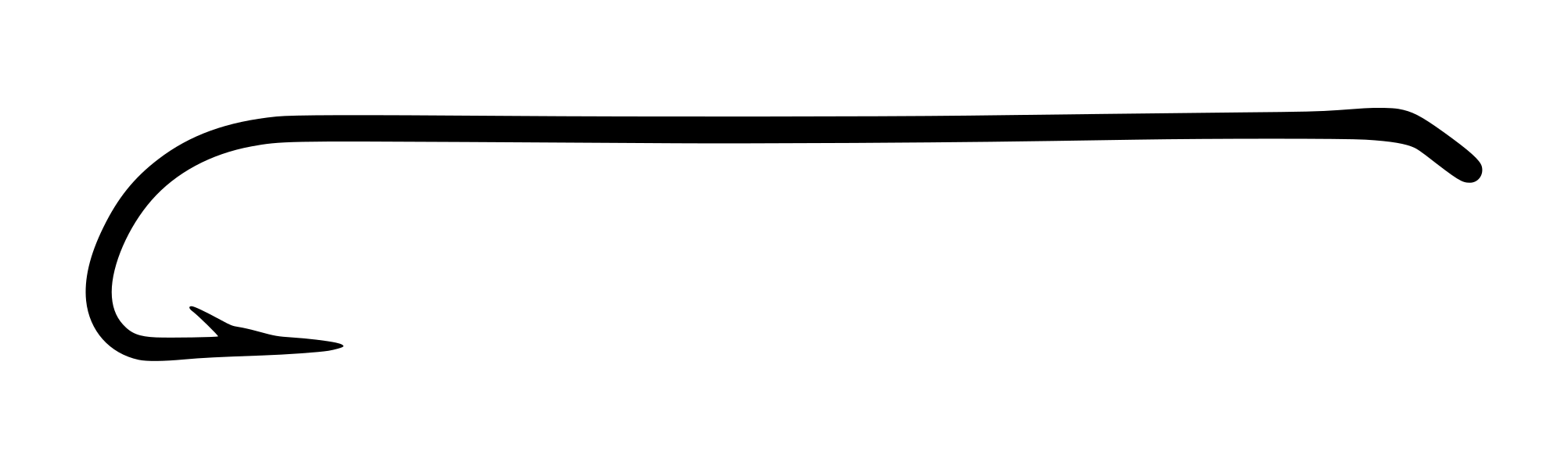
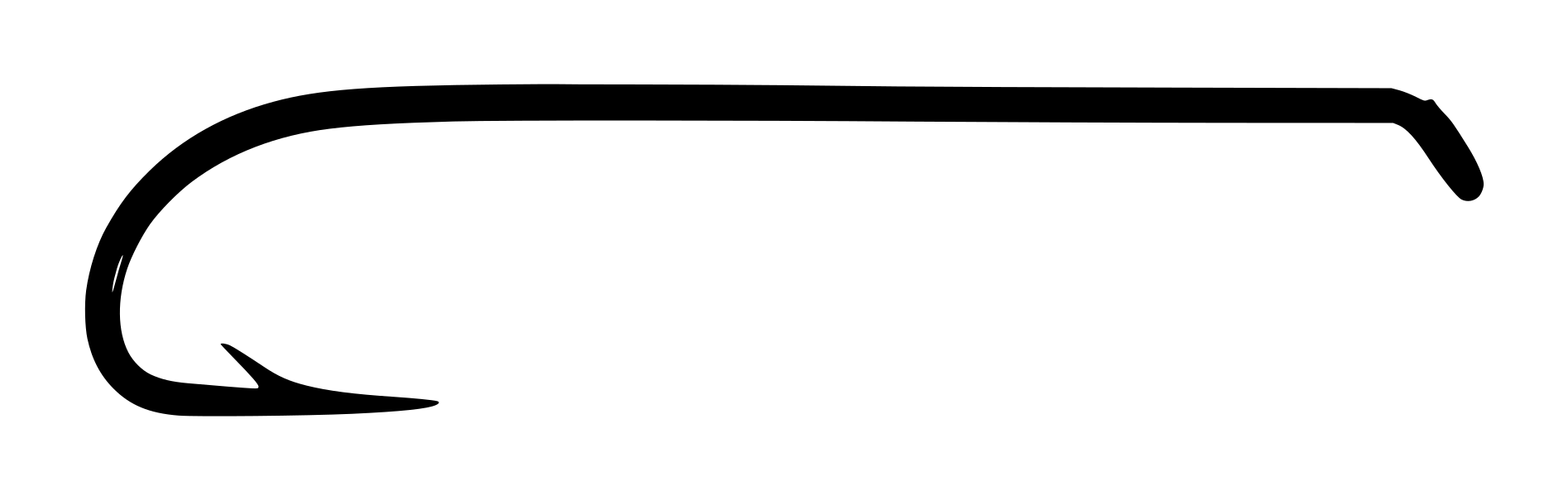
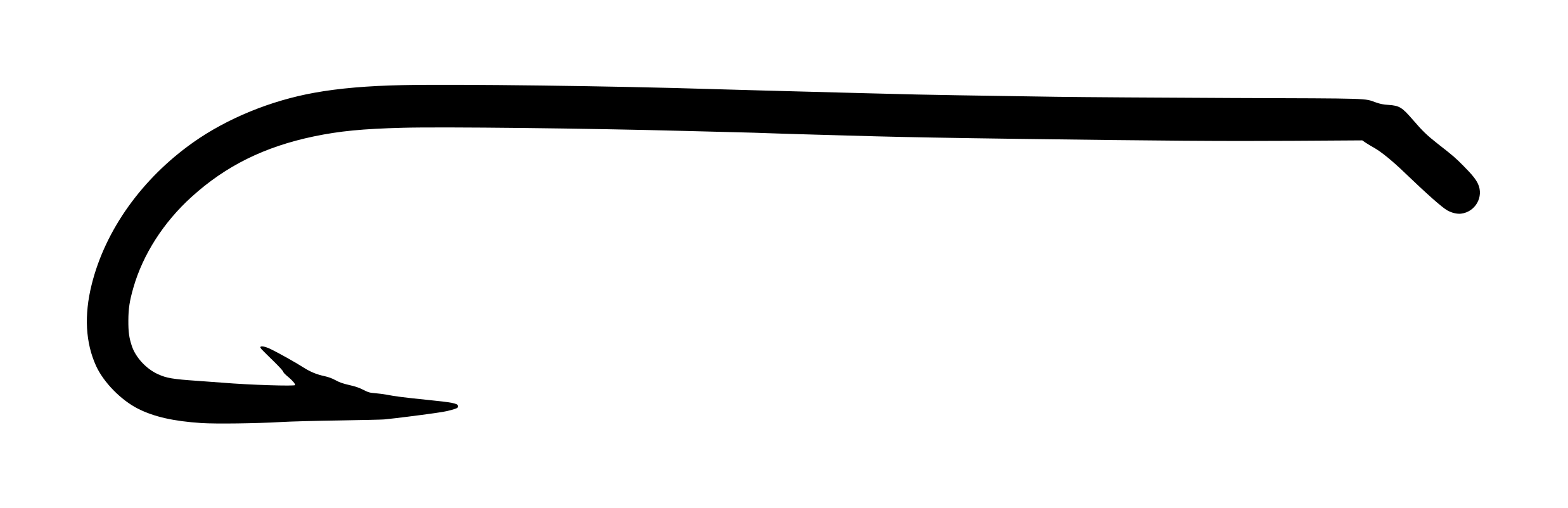
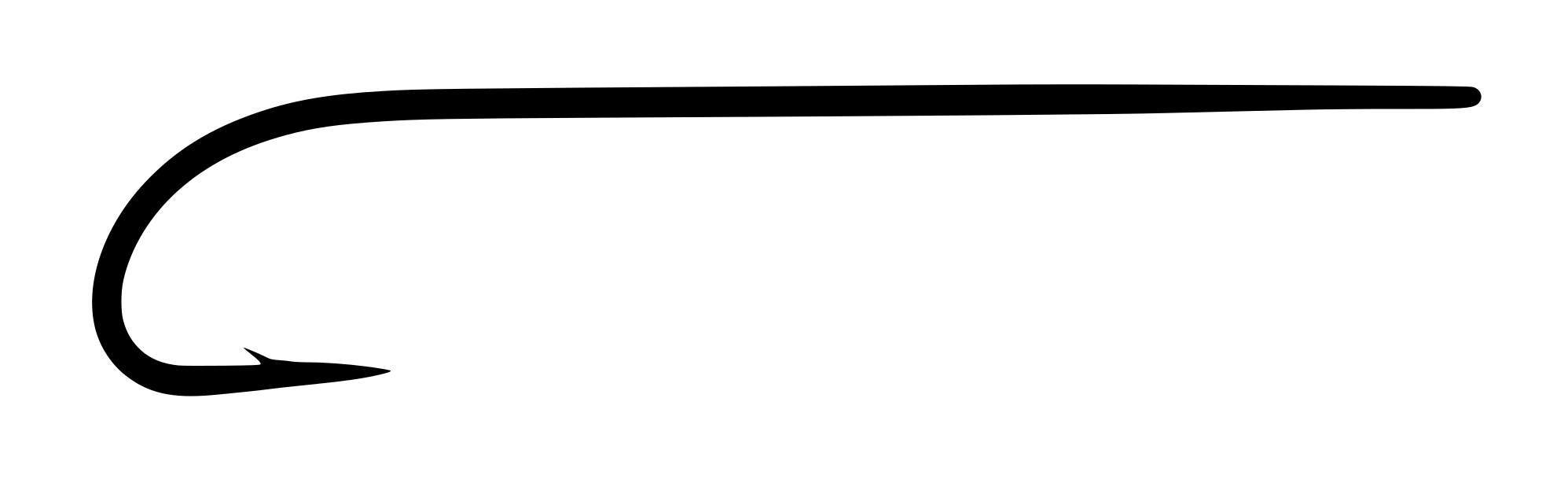
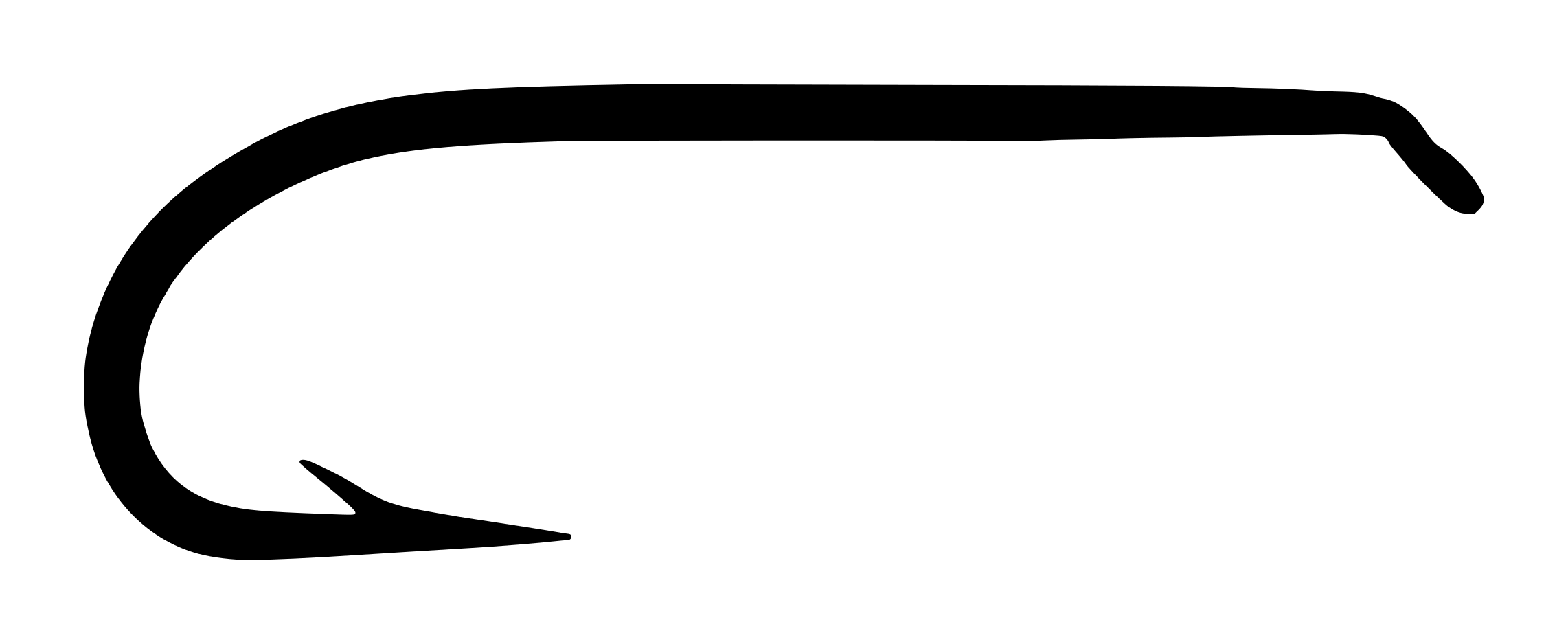
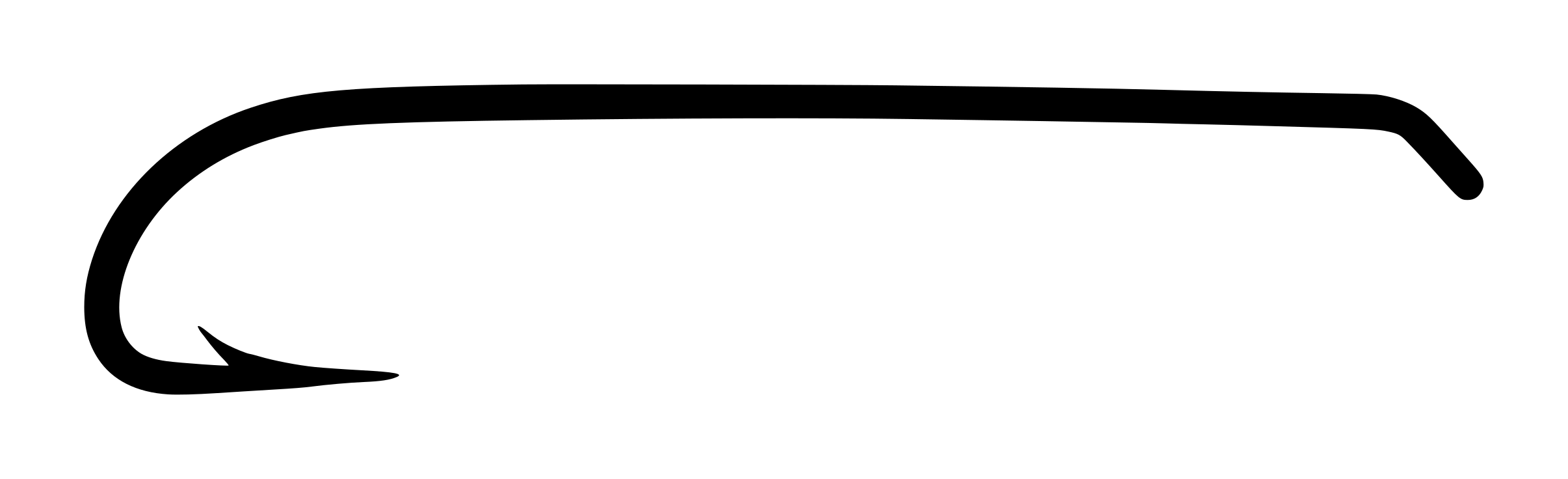
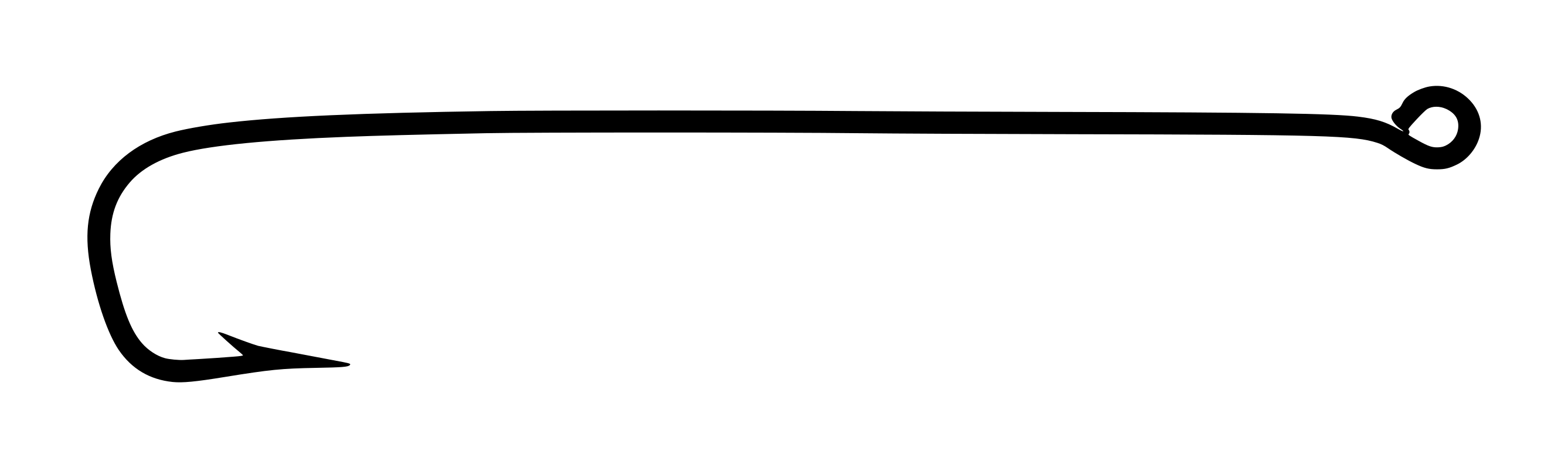
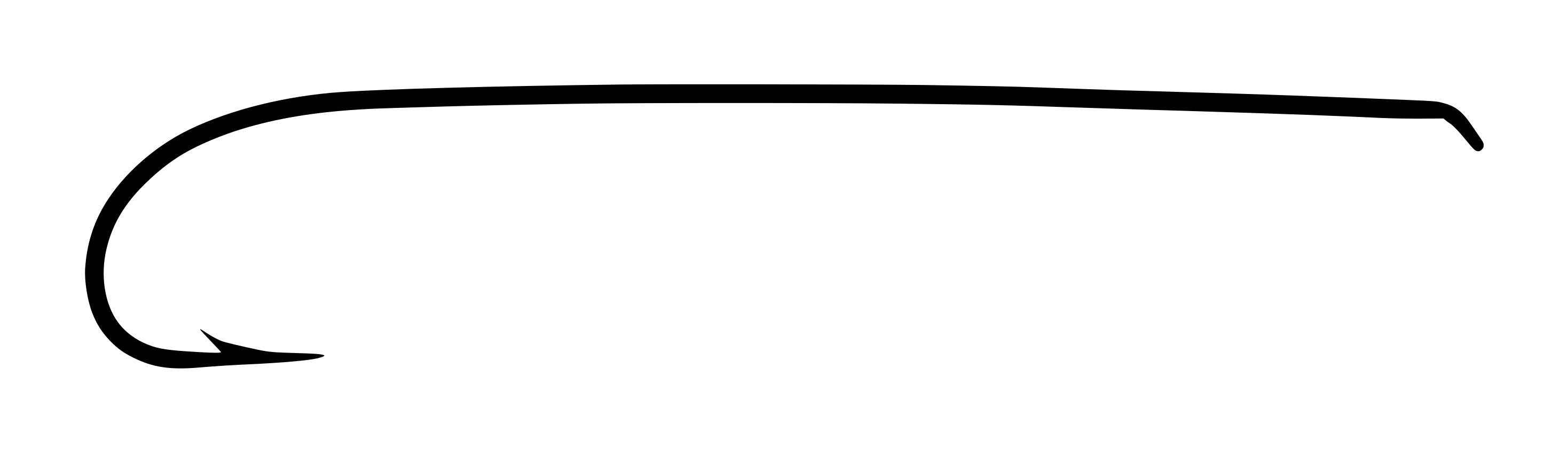
Mustad Model 36803 Limerick Hooks represent an industrial-era Norwegian production of a classic Limerick bend for large streamers and salmon flies. The specimen is size 6, forged in extra-heavy round wire with a looped, turned-down eye and hollow point, finished in warm bronzed tone. The shank is extra-extra long (1.65″), yielding a distinctive narrow gap (0.29″) relative to shank length — a ratio of approximately 5.7:1.
The hook is packaged in an original Mustad manufacturer box bearing printed specifications in gold on a cream label. The box text explicitly names the specifications: looped eye, bronzed finish, extra-long shank, and 2X extra-strong (extra-heavy) wire. The packaging text and lack of printed pricing or barcode suggest production in the mid-20th century, likely 1950s–early 1960s.
This hook was designed for large streamers and wet flies targeting Atlantic salmon and sea trout, where the narrow gap and long shank provide the geometry needed for sparse dressing on oversized patterns. The hollow point, typical of Mustad production across this era, was selected for reliable penetration in tough fish mouths.
Original Mustad manufacturer box lid bearing the printed specifications: Qual. 36803, Hollow Point, Mustad-Limerick Hooks, T.d. looped eye, Bronzed, 8 extra-long shank, 2 extra-strong wire. Hand-inked size notation "No. 6" visible in blue pencil.
Photographic record
4 cataloged imagesSelect any record to load it above.
4 images shown
Mustad 36803 Limerick Original Box LidOriginal Mustad manufacturer box lid bearing the printed specifications: Qual. 36803, Hollow Point, Mustad-Limerick Hooks, T.d. looped eye, Bronzed, 8 extra-long shank, 2 extra-strong wire. Hand-inked size notation "No. 6" visible in blue pencil.Open originalMustad 36803 Size 6 Looped Eye DetailProfile view of the looped, turned-down eye showing the clean return wire formation and the bronzed finish. The eye loop diameter is proportionate to the extra-heavy wire gauge.Open originalMustad 36803 Size 6 Bend and Point ProfileSide profile showing the Limerick bend geometry, long shank, and hollow-point termination. The narrow gap and angular bend apex are characteristic of the 36803 specification.Open originalMustad 36803 Size 6 Top ViewTop-down view showing the hook alignment and lack of offset (straight orientation). The narrow gap is clearly visible relative to the long shank.Open original
Technical profile
Turned Down Looped Eye | Limerick | Extra-Extra Long | Extra-Heavy (2X+) Wire | Hollow Point | Bronzed
Eye
Looped Eye, Turned DownLooped eye with uniform diameter, formed by return wire running parallel to shank and bound by whipping thread. No visible defects or misalignment. Wire termination is clean, consistent with machine-formed construction standard for Mustad industrial production. Eye loop diameter is proportionate to wire gauge, approximately 0.10"–0.12" P.
Wire
Extra-Heavy (2X+), Round
Shank
Extra-Extra Long (XXL) — Plain
Bend
Limerick, Narrow gapLimerick bend exhibits the characteristic angular design with a moderately steep rise from barb to bend apex and a straight or nearly straight descending line to the point barb. Bend profile shows uniform wire set with no visible twist or offset P. Bend depth (measured from barb line to apex) is approximately 0.51"–0.59" E, consistent with extra-heavy wire gauge in a standard-depth Limerick. The narrow gap (0.29") is a defining feature of this model — intentionally designed for long-shank streamer dressing where sparse wing and body materials are used I.
Point
Hollow Point (concave inner face)Short, close-cut barb with moderate angle relative to the point. Barb placement is proximal (near the point tip) rather than distal, consistent with Mustad hollow-point specifications of the era. Barb wire appears integral to the point rather than cut separately P. Barb height is approximately 0.025"–0.030" above the inner point taper, typical for streamer and wet-fly hooks of this period E.
Finish
Bronzed — Confirmed (stated on packaging)Bronzed finish displays warm, amber-brown tone throughout P. Steel grain texture is visible beneath the thin coating, consistent with hand-inspected bronzing standards of the era. No evidence of heavy oxidation, rust, or finish breakdown. Tone is uniform and warm rather than cool-grey, confirming bronzing rather than bluing or nickelling P. Minor patination in recessed areas of the bend is natural aging and does not indicate deterioration P.
Box lid shows light overall toning and minor edge wear consistent with age and handling. Label printing remains legible and sharp. Box retains structural integrity; hinges functional. Interior paper lining shows minor discoloration. Hooks are intact, bright bronzed finish, no corrosion or pitting visible. All 100 hooks appear to be present (count not independently verified).
The hollow point is a Mustad manufacturing specification characterized by a strongly concave inner face, creating an inwardly curved taper from the barb to the tip. This geometry produces a knife-edge effect on the two outer faces of the point, concentrating penetrating force into a narrow cutting edge. For extra-heavy wire, hollow-point grinding requires precision to avoid creating stress points at the inner concave transition; Mustad’s industrial production standards of the 1950s achieved this through machine-grinding followed by hand-inspection.
The looped eye was favored for streamer and wet-fly work because the return-wire loop (in contrast to a brazed or ball eye) allows tyers to lash materials directly to the eye shank using thread wraps, distributing stress and reducing the risk of material slipping. The turned-down orientation is standard for wet flies and streamers, positioning the leader exit point on the lower shank for optimal fly profile.
The extra-heavy (2X+) wire gauge — approximately 0.045″–0.055″ in diameter — provides exceptional strength for large flies, pike patterns, and saltwater work. The round wire profile (as opposed to forged/flattened) is slightly less strong per unit weight but easier to bend during tying and more easily reformed if slightly bent in the package.
The narrow gap (0.29″) paired with the extra-long shank (1.65″) is deliberate engineering for sparse-dressing streamers. The ratio of approximately 5.7:1 (shank-to-gap) allows the hook to be nearly fully covered by dubbing or wing materials without fill-up or overlap, maintaining a slender profile in the water while providing a long platform for segmented body dressing.
This pattern was made in sizes 6 (V). We have measurement for size 6. Know the others? Submit calipered measurements and we'll review and add them. Thank you!
Historical context
mustad
O. Mustad & Søn was founded in Gjøvik, Norway, in 1832 by Ole Mustad (1789–1862), a blacksmith and entrepreneur. The firm rapidly became the largest industrial hook manufacturer in Scandinavia, leveraging Norway’s access to high-quality iron ore and hydroelectric power for stamping and forging operations. By the 1860s, Mustad hooks were exported throughout Europe and North America, competing directly with English manufacturers such as Allcock and Redditch makers on price and quality.
In the 20th century, Mustad expanded aggressively, acquiring regional manufacturers, establishing branch factories in Bergen and other Norwegian cities, and opening subsidiary operations abroad. The Gjøvik main factory became one of the world’s largest hook-manufacturing facilities, capable of producing millions of hooks annually by the 1950s. Mustad’s mid-century product lines were divided into multiple series (Superior, Carlisle, Limerick, O’Shaughnessy, and others), each marketed to specific fish species and methods.
During the 1950s–1960s, Mustad maintained the formal company name “O. MUSTAD & SÖN” on export packaging (reflecting Nordic naming conventions of the era), though domestically the brand was shortened to “Mustad.” The 36803 Limerick hook exemplifies the industrial-era production standard: machine-forged and ground blanks, hand-inspected for point and barb geometry, and packaged in printed cardboard boxes under strict size and specification control.
Series History
The Limerick bend is a classic design originating in 19th-century Irish hook-making tradition and subsequently adopted by virtually all major manufacturers including Mustad, Allcock, Partridge, and English makers. The Limerick is characterized by an angular bend profile — a sharp rise from the barb up the shank side to a pronounced apex, then a straight or slightly curved descending line to the point. This geometry contrasts with the rounded, smooth curve of the Sproat or the wide, shallow bend of the Aberdeen.
Mustad’s Limerick series appears consistently in trade catalogs from the early 1900s through the 1970s, offered in dozens of sizes and wire-weight combinations. The 36803 specification — extra-long shank, extra-heavy wire, narrow gap, looped eye, bronzed finish — was marketed as a streamer and salmon-wet-fly pattern. By the 1960s, Mustad had introduced minor variants of the Limerick: some with tapered eyes, some with ball eyes, and some in tinned finish alongside the standard bronzed.
The model designation 36803 appears to encode specifications in its numeric sequence. The leading “3” may indicate a broad product category (wet flies or streamer hooks); the “68” likely references the Limerick bend family and eye type; the final “03” may denote wire weight or a run sequence. This numbering system was typical of Mustad’s industrial practice but is not formally documented in surviving catalogs.
By the 1980s, the Limerick had been largely superseded in casual fly fishing by the Sproat and the O’Shaughnessy, and Mustad discontinued many extreme-specification Limerick variants. However, the basic Limerick remains in production today in smaller wire gauges and standard shank lengths, primarily for sea-trout and Atlantic-salmon anglers in northern Europe and North America.
Era and Packaging Dating
No printed barcode or UPC (barcode technology not adopted by major hook manufacturers until mid-1970s), indicating pre-1974 production. Label text is letterpress-printed, consistent with 1940s–1960s standards; offset lithography did not become dominant until the 1960s–1970s. Mustad's use of the full formal "O. MUSTAD & SÖN" title with "OSLO – NORWAY" address is consistent with company records from 1950s through early 1960s; by the 1970s, labeling shifted to shorter "MUSTAD" alone or "MUSTAD OSLO". The cream label stock and foxing pattern are consistent with middle-period post-war production (not early wartime, not late 1960s glossy materials). The hand-inked size notation in blue pencil is consistent with the practice of writing hook sizes by hand during packaging runs in the 1950s–early 1960s; later production typically used pre-printed size labels. Combination of these four independent markers suggests production window of approximately 1950–1965, with central estimate c. 1955–1960.
The Irish Legacy in Norwegian Hooks
The Limerick bend gets its name from the Irish town of Limerick, where a tradition of hook-making flourished in the 19th century. Irish hook makers developed the characteristic angular bend as an improvement over the earlier rounded Sproat design, believing that the sharper bend geometry provided better hook-hold and reduced slippage in the mouths of Atlantic salmon. The Limerick design was so successful that it was rapidly adopted by English manufacturers and eventually became the global standard for salmon and large sea-trout flies. Mustad's Norwegian factory, though thousands of miles from Limerick, honored the Irish heritage by naming their version after the original source — a practice that reflects the international nature of fishing-tackle design and the prestige associated with Irish and English innovations in the sport.
Design lineage and influence
The Limerick bend descended directly from 19th-century Irish hook-making traditions, particularly the work of makers in Dublin and Limerick who refined the angular bend geometry for dry flies and wet flies. The design was adopted by English manufacturers (John James, Hutchinson, Allcock) in the 1880s–1890s and rapidly became a standard bend family alongside the Sproat, Aberdeen, and Perfect.
Mustad first produced Limerick hooks in the 1890s, following the patterns established by English and Irish precedents. The design proved particularly popular for salmon and sea-trout fishing in Scandinavia and Scotland, where the angular profile was believed to be advantageous for larger flies and stronger fish. By the 1950s, the Limerick had become a classic design offered by virtually every major hook manufacturer, though with subtle variations in bend depth, gap width, and point geometry.
Competing designs from the same era include the Sproat (Mustad 34007 and others), which offers a gentler, more rounded bend; the O’Shaughnessy (Mustad 34011, 36620), which features a deeper, more curved profile and reversed offset; and the Aberdeen (Mustad 32710), which presents a wider, shallower bend suitable for lighter-wire applications. Each bend family was marketed to specific fish species: Limerick for salmon and large trout, Aberdeen for small trout and panfish, Sproat for general wet-fly work.
Modern descendants of the Limerick design include Tiemco 7989 (stainless steel, competition-grade hollow point), Daiichi 1180 (forged, heavy-wire variant), and Gamakatsu SL12 (Japanese precision-forged iteration). However, none of these modern hooks retain the narrow-gap, extra-long-shank geometry of the 36803, which represents a specialized historical specification for the sparse-dressing school of Atlantic-salmon and sea-trout fly design.
Best matchRelated by Attribute
Computed automatically from catalog data — updated as new hooks are added.
Matches: Bend, Shank, Eye, Finish, Forging +3 moreDiffers: Wire: Extra-Heavy (2X+) vs Heavy (1X Heavy); Gap: Narrow vs Standard; Eye Orient.: Turned Down vs Straight / Inline +2 more
Matches: Bend, Wire, Gap, Eye Orient., Point +3 moreDiffers: Shank: Extra-Extra Long vs 3X Long; Eye: Looped Eye vs Tapered Eye; Finish: Bronzed vs Black Japanned +1 more
Matches: Bend, Shank, Eye, Eye Orient., Point +4 moreDiffers: Wire: Extra-Heavy (2X+) vs Fine (1X Fine); Gap: Narrow vs Standard; Application: Streamer vs Streamer, Salmon +1 more
The 36803 was designed for tying large streamer patterns and Atlantic salmon and sea-trout wet flies, particularly in the sparse-dressing tradition where the hook’s length and narrow gap allow ample shank coverage with minimal material buildup. The extra-heavy (2X+) wire provides exceptional durability in fast water and when fished with weighted bodies. The hollow point penetrates reliably through the tough mouths of large salmon, sea trout, and pike. The looped eye allows fly tyers to bind dubbing bodies directly to the shank base, avoiding the bulk and friction of a terminal knot.
Historically, this hook was used by Scottish and Scandinavian salmon-fly dressers for large, sparsely dressed patterns — styles that emphasized simplicity and efficient use of materials, in contrast to the heavily dubbed and palmered flies of English tradition. The narrow gap and long shank are poorly suited to small, densely tied patterns and unsuitable for dry-fly work; thus the 36803 remained a specialist tool for a defined group of professional and amateur salmon tyers.
Secondary Applications
Occasionally used for pike and large bass streamers in freshwater; not suitable for saltwater use due to bronzed finish and lack of stainless or tinned options.
Classic Fly Patterns
Large streamer patterns (Muddler Minnow, Woolly Bugger, Black Ghost), salmon and sea-trout wet flies (Thunder and Lightning, Hairy Mary, Collie Dog), pike and bass streamers.
Modern Equivalents
Hook
Match Quality
Notes
Tiemco 7989
Good
Stainless steel, precision hollow-point, turned-down looped eye, standard Limerick bend. Modernized metallurgy but matches original geometric intent. More expensive than vintage 36803.
Daiichi 1180
Very Good
Japanese forged Limerick, extra-heavy wire, hollow point, looped eye. Nearly identical bend profile and gap ratio to 36803. Readily available in modern fly-fishing supply.
Gamakatsu SL12
Good
Japanese precision Limerick, forged wire, hollow point. Slightly wider gap and different wire profile than 36803 but functionally equivalent for salmon and streamer work.
Collector notes
Rated 6.5/10. The 36803 is uncommon in vintage condition with original packaging, but not genuinely scarce. Mustad's industrial production volumes ensure steady supplies appear in vintage-hook markets, though complete boxes with intact labels are less common than loose hooks. Collector demand is moderate among Atlantic-salmon fly tyers and vintage-tackle historians; the specialized extra-long/narrow-gap geometry limits appeal to general fly tiers.
Reference value
$15 – $45 USD estimate
Packaging condition
Very Good — light wear, fully legibleRecorded specimen
Packaging format
GW-BOX-MUSTAD-MIDCatalog code
Positive factors: Original Mustad manufacturer box with legible gold-letterpress label is a strong authenticator and adds significant premium over loose hooks. The 36803 code, “Hollow Point” printing, and hand-inked size notation are period-correct markers of 1950s–early 1960s production, appealing to mid-century angling history collectors. The extreme specification (extra-long shank, narrow gap, 2X extra-strong wire) makes this a distinctive item within the broad Mustad Limerick line, generating collector interest from both salmon-fly specialists and hook-geometry enthusiasts. Complete original packaging (100-hook count) is rarer than partial or opened boxes. The bronzed finish is characteristic of the era and acceptable to most collectors, whereas later chrome or nickel finishes are sometimes viewed as less authentic.
Limiting factors: Mustad produced millions of hooks across all era and product lines; even vintage specimens are not genuinely rare by specialist standards. The 36803 was never a flagship model like the 34007 Sproat or the 36620 O’Shaughnessy, so market recognition among general collectors is modest. Size 6 is a working size, not exotic; sizes 2/0 and larger would command higher premiums. Opened or partially consumed boxes (missing hooks) lose considerable value. Damage to the label (tears, water stains, fading) significantly reduces collectability, as the label is the primary authentication and dating evidence. Interest outside Scandinavia and the UK (Atlantic-salmon fishing regions) is limited; casual American freshwater fly tiers show little demand for this specialist hook.
Most desirable variants: Complete original boxes with all 100 hooks, undamaged labels, and hand-inked size markings. Smaller sizes (16–24) would be rarer and more valuable. Unbroken runs of multiple sizes from the same era. Boxes with printed prices or postal codes (indicating specific markets: UK, Scandinavia, Canada) add historical context and slight premium.
Condition factors affecting value: Label legibility is paramount — faded, torn, or water-damaged labels reduce value by 30–50%. Box structural integrity (hinges, lid flatness) matters less than label condition. Hook condition (bright finish, no corrosion) is important but secondary to packaging. Missing hooks reduce value proportionally; a 95-hook box sells for approximately 20–30% less than a complete 100-hook box.
Packaging
Original Mustad manufacturer box, rigid cardboard construction with separate lid. Interior dimensions approximately 4.75" × 3.25" × 0.75". Lid and base lined with kraft paper. Exterior printed with gold letterpress on cream label stock. Label centered on lid bears the Mustad key-logo brand mark, text "O. MUSTAD & SÖN Manufacturers OSLO – NORWAY", model number "Qual. 36803", hook name "Mustad-Limerick Hooks", specifications "T.d. looped eye Bronzed / 8 ex. long shank / 2 ex. strong", and quantity "100" with a hand-inked size circle "No. 6" in blue pencil. Border of small decorative asterisks surrounds the label. No barcode, no printed price, no postal code format visible. Paper stock is aged cream/tan with minor foxing consistent with mid-20th century storage. Print method is letterpress (sharp impression, no offset halftone dots visible).
Market Value Notes
Low ($15): Good condition — box structurally sound with label present, minor wear/foxing visible, 90–95 hooks present, finish acceptable.<br />
High ($45): Excellent condition — original box with pristine or near-pristine label (no tears, no significant toning), complete 100-hook count, hooks bright with no corrosion.<br />
Premium factors: Complete original manufacturer box (2–3x loose-hook value), legible gold-letterpress label, hand-inked size notation, complete hook count, undamaged box hinges and lid, bronzed finish bright and uniform.<br />
Platforms: eBay UK (strongest market for mid-century Mustad), specialty tackle dealers in Scotland and Norway, vintage-fishing-tackle dealer networks.<br />
Confidence: E estimated — limited comparable recent sales data. Vintage Mustad boxes in this era and size range typically command $10–60 depending on condition and packaging completeness; this estimate reflects the uncommon status of the 36803 model specifically within the broader Mustad Limerick range.
Where to Find
eBay UK and eBay Europe (primary), vintage-fishing-tackle dealers specializing in Mustad or Scandinavian hooks, IACVF (International Association of Classic Fishing Tackle Collectors) auctions, regional tackle and fishing fairs in Scotland, Norway, and northern England.
Collector's Identification Tips
Authentic Mustad 36803 specimens are identified by: (1) the gold letterpress printing of “Qual. 36803” on the box label, (2) the explicit printed text “Hollow Point” on the label (distinguishing it from other Mustad Limerick variants with ball eyes or tapered eyes), (3) the looped eye visible on the hook itself, (4) the bronzed warm-brown finish, and (5) the hand-inked size notation in blue pencil (characteristic of 1950s–early 1960s Mustad packaging). The ratio of shank length to gap width (approximately 5.7:1) is a reliable identifier of the extra-long/narrow-gap specification. Counterfeits are rare but unmarked boxes without printed model numbers should be treated with caution. Original boxes with intact labels and hook counts are the most reliable documentation of authenticity and era.
Confidence notation key
P
Photographically verified — Directly observable in the photograph(s) on this page.
V
Verified by documentation — Confirmed by manufacturer catalog, spec sheet, or published reference.
I
Inferred — A logical deduction from observable or documented evidence, not directly stated.
E
Estimated — An approximation based on visual comparison, proportional analysis, or limited data.
S
Speculative — A reasoned hypothesis that cannot be confirmed from available evidence.
Claims with no notation are confirmed by multiple independent sources. All photographs on garrenwood.com are taken on a measurement grid where each square equals 1/10 inch (0.1″ / 2.54 mm).