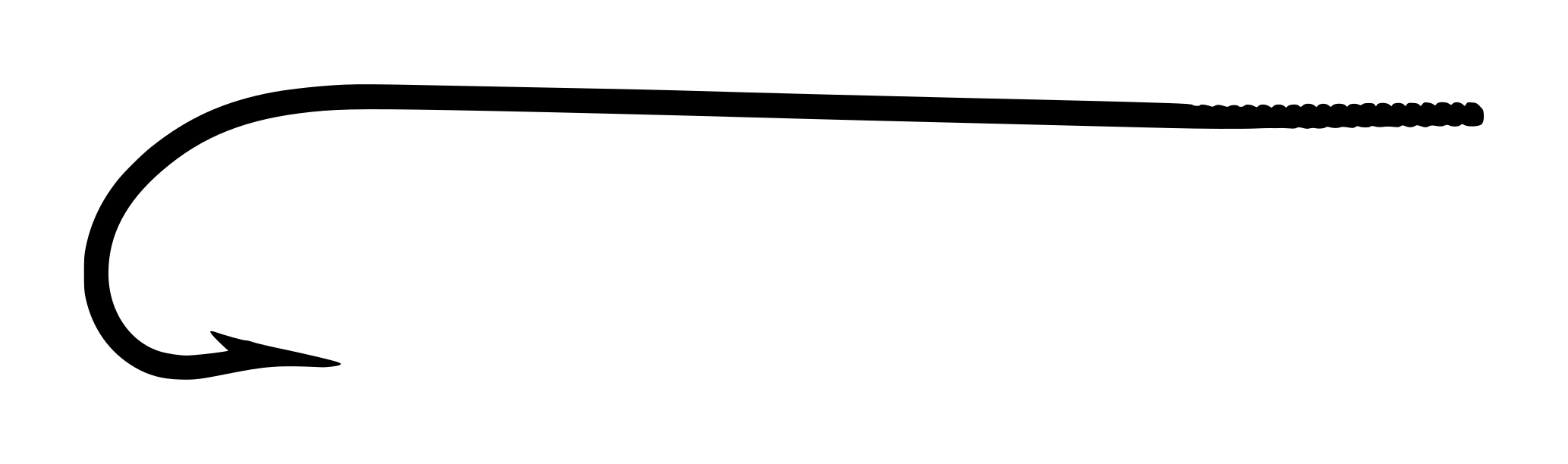
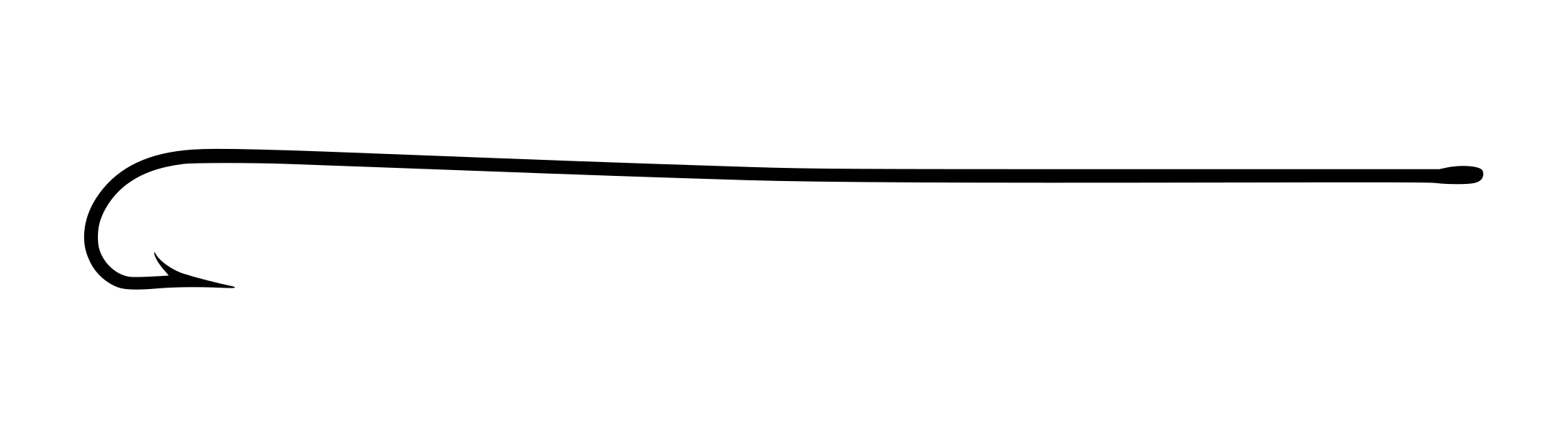
The Mustad Qual. 7871 Bridgeport Aberdeen is a Norwegian-made streamer and bait hook from the 1950s–1960s, distinguished by its fine-wire construction, extra-long 3X shank, blind spade eye, and Superior-geometry point engineered for balanced penetration and durability. Its marked shank ridges grip live bait mechanically while minimizing tissue trauma through the smaller puncture wound of fine-gauge wire, keeping bait alive longer in the water. The blind eye reflects pre-synthetic fishing era design, requiring hand-tied snood connections using silk gut rather than modern loop attachments, making it a functional artifact of mid-century freshwater and light saltwater angling. This hook exemplifies the deliberate engineering compromises of the transitional fly and bait era, when a single pattern needed to serve both streamer and live-bait applications with equal competence.
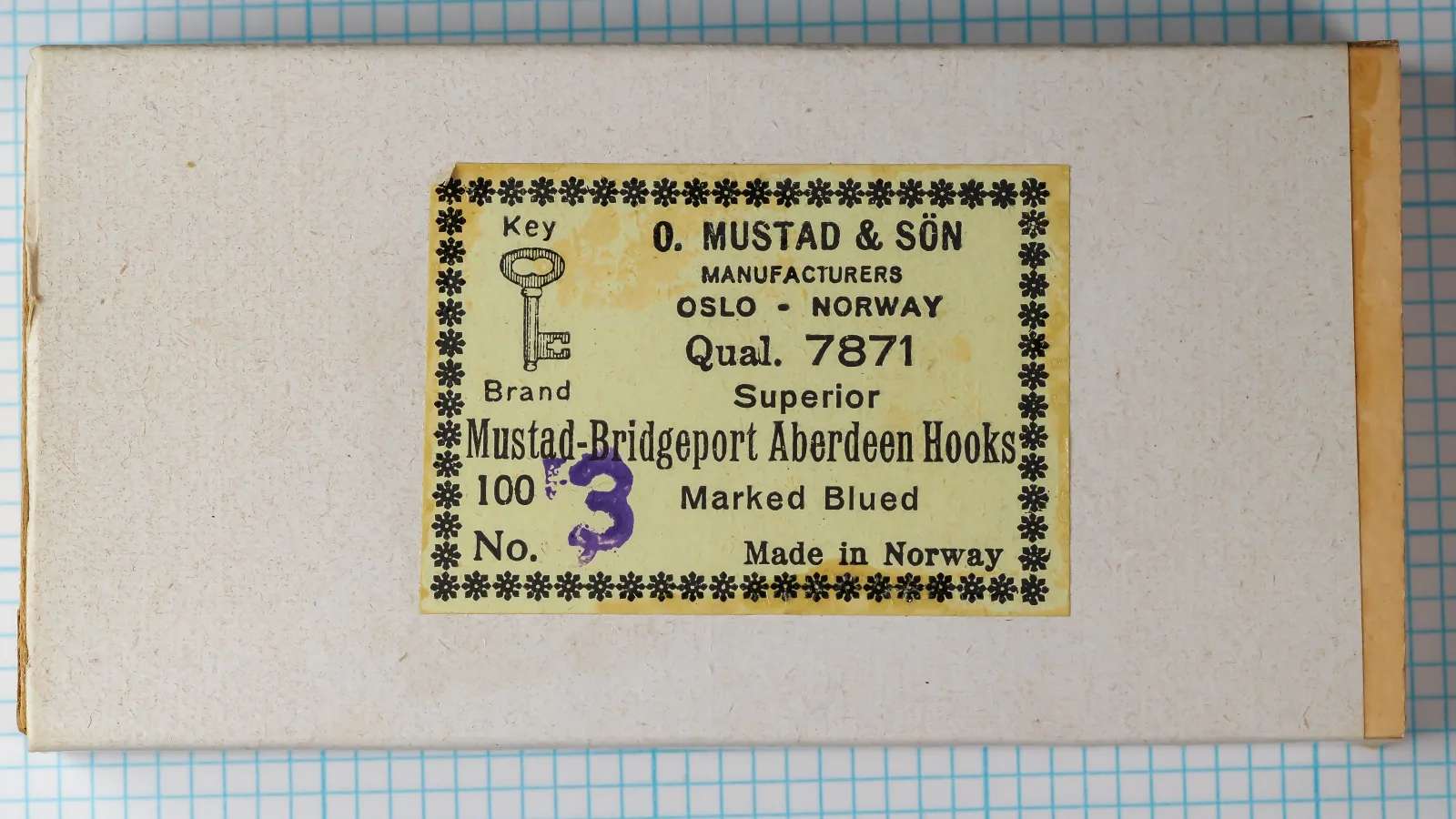
Original Mustad sales card label for the Qual. 7871 Bridgeport Aberdeen Hook, size No. 3, showing the classic Key Brand logo, eight-line product description system, Oslo-Norway address, and hand-written wholesale marking.
Photographic record
3 cataloged imagesSelect any record to load it above.
3 images shown
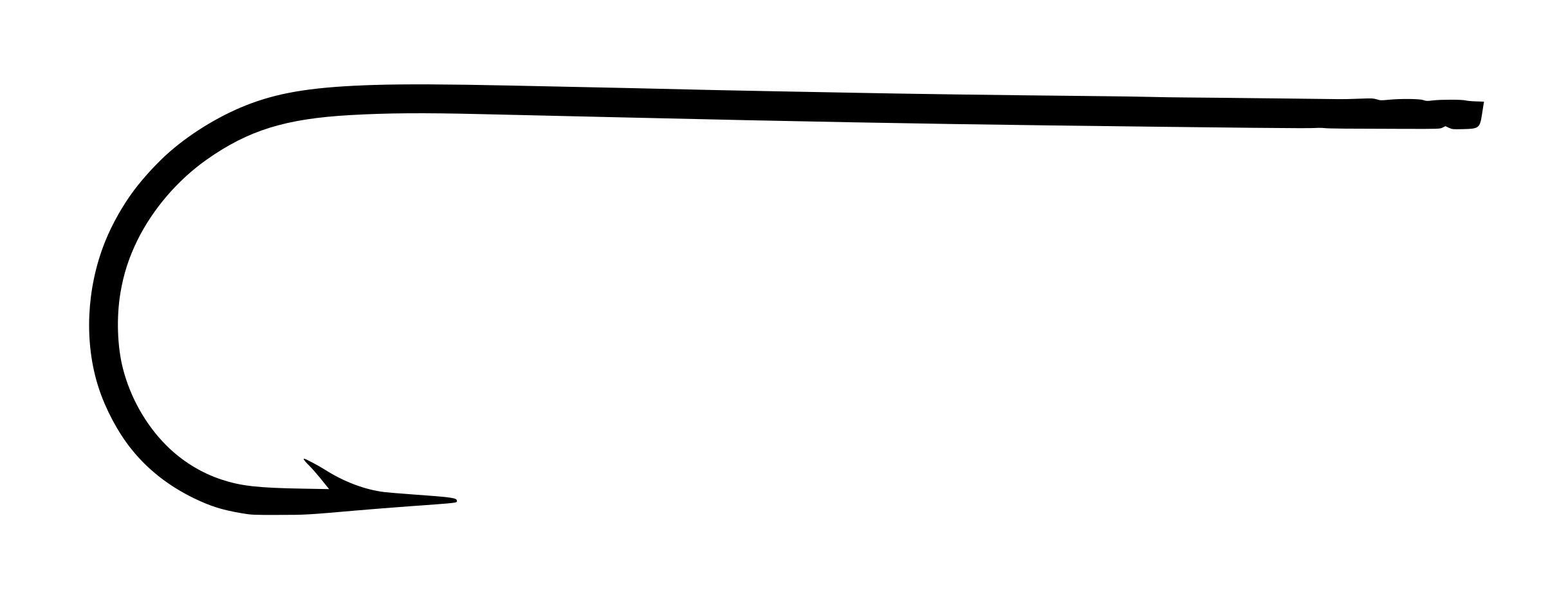
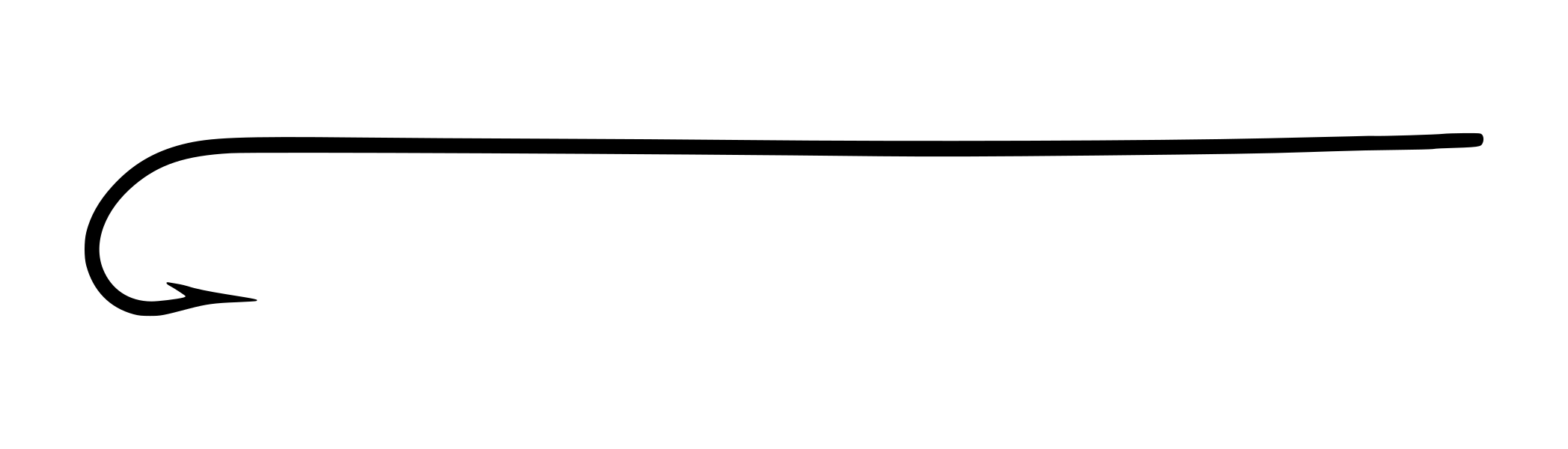
Mustad 7871 Bridgeport Aberdeen Original Label Size 3Original Mustad sales card label for the Qual. 7871 Bridgeport Aberdeen Hook, size No. 3, showing the classic Key Brand logo, eight-line product description system, Oslo-Norway address, and hand-written wholesale marking.Open originalMustad 7871 Bridgeport Aberdeen Size 3 Point ProfileSide profile of the Mustad 7871 showing the characteristic superior point geometry with near-straight inner taper, marked ridges along the shank, and blued finish in reflected light.Open originalMustad 7871 Bridgeport Aberdeen Size 3 Full Profile GridFull-length side profile of two Mustad 7871 hooks photographed on 1/10-inch measurement grid, demonstrating the characteristic 3X-long shank, extra-wide round bend, blind flatted eye, and proportions relative to the grid scale.Open original
Technical profile
Blind Eye | Aberdeen Bend | Extra-Long Shank | Fine Wire | Superior Point | Blued Finish
Eye
Blind — Marked ShankBlind eye, characteristic of pre-1920s Redditch tradition and extended into mid-twentieth-century export products.
Wire
Extra-Fine, Round
Shank
Extra-Extra Long (XXL) — Marked / Ridged
Bend
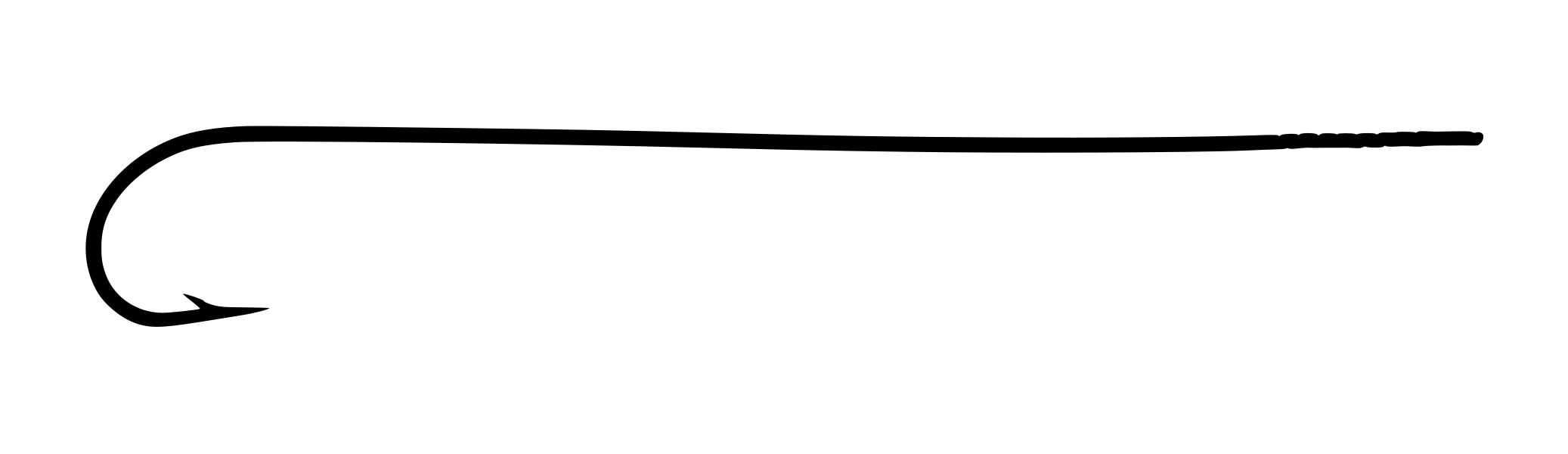
Aberdeen, Narrow gapPerfect round bend with no angular emphasis; extremely deep for a size No. 3 hook, creating a high-aspect-ratio presentation ideal for live-bait rigging. The bend radius is mathematically smooth and symmetrical. Offset is minimal (true straight, no kirb). The extra-long shank (approximately 3.35" total from eye to bend apex) gives a pronounced 8.5:1 shank-to-gap ratio, significantly longer than modern Aberdeen standards. P
Point
Superior (near-straight inner taper)Barb is short and close-cut, angled slightly rearward. Barb sits approximately 0.08"–0.10" from the point tip and is single-cut (not double or triple barbed). The barb is proportionally smaller relative to the overall hook size compared to modern hooks, reflecting early-twentieth-century manufacturing standards where barbs were minimized to reduce wire brittleness. P
Finish
Blued — Confirmed (stated on packaging)Blued finish is uniform dark slate-blue color with cool tone, consistent with chemical passivation rather than japanning. Surface shows light patina development typical of aged blued steel — no active rust, but evidence of minor oxidation over decades of storage. Original finish is well-preserved under the marked label. The blued tone photographs with a slightly iridescent quality in bright light, characteristic of vintage heat-blued high-carbon steel. P
Hooks show dark blued finish with no visible corrosion or rust. Bend is perfectly round with no deformation. Points are sharp and unbroken. Marked shank ridges are distinct and functional. Card shows light yellowing and minor edge wear consistent with age; label is legible and intact. No tears or significant damage to card structure.
Superior Point Geometry: The Mustad label designates this hook as ‘Superior,’ which (per Mustad’s official terminology) refers to a near-straight inner taper that concentrates penetration force at the tip while maintaining structural strength. The Superior point represents a balanced compromise between the delicate, razor-sharp penetration of a Hollow Point and the blunt-force durability of a Spear Point. This geometry is visible in cross-section: the inner taper is nearly straight rather than concave (hollow) or outward-flared (Dublin). The Superior point was engineered for all-purpose freshwater and light saltwater applications where moderate penetration capability and durability were equally valued.
Blind Eye and Snelling: The blind eye reflects pre-modern fishing line technology. Before synthetic monofilament became standard (post-1960s), anglers used braided horsehair, silk gut, or silk lines. These materials could not tolerate the abrasive internal surfaces of a formed metal loop. The blind eye instead received a snood of soaked silkworm gut, whipped directly to the shank with waxed silk thread using a labor-intensive hand-tied technique. This produced an extremely strong, smooth connection point that did not weaken the line.
Marked Shank Engineering: The small raised ridges cut into the shank during forging serve dual purposes: they mechanically grip soft baits (particularly worms and similar offerings) to prevent slipping during cast and retrieve, and they provide a tactical ‘grip points’ for fly tyers wrapping thread over the shank. The ridges are shallow but distinct, roughly 0.02″–0.03″ in height, and are spaced approximately 0.1″ apart along the rear two-thirds of the shank.
Fine Wire Advantage: The fine-gauge wire (approximately 0.036″–0.040″ diameter) is intentionally thin compared to modern Aberdeen hooks of equivalent size. This deliberately flexible design allows the hook to bend slightly under stress rather than snapping, and more importantly, it minimizes tissue trauma when threaded through live bait. A smaller puncture wound means the bait’s internal fluids leak more slowly, keeping the bait alive and mobile longer in the water.
Extra-Long Shank Rationale: The 3X-long shank serves multiple functions: (1) it provides protection to the leader or line by positioning it further from the bait’s sharp teeth; (2) it allows the tyer to create extended fly profiles (like streamer imitations) without adding weight; (3) in bait fishing, it prevents toothy species like pike, pickerel, or perch from engulfing the entire bait and biting through the leader in a single chomp.
The Mustad-Bridgeport Aberdeen line (Qual. 7871 and related variants) represents a specialized export variant of the broader Aberdeen family of hooks. The Aberdeen itself is characterized by a perfectly round, sweeping bend and extra-wide gape — originally designed with light-gauge wire to bend and release from snags rather than snap the angler’s line. The ‘Bridgeport’ designation specifically refers to Mustad’s North American export production for the Bridgeport Silverware Terminal in Connecticut. The series was introduced in the early-to-mid 20th century (likely 1920s–1930s) in response to demand from North American live-bait fishermen and began appearing in Mustad’s export catalogs under the quality-code system. The marked shank variant (7871) appears to have been introduced no earlier than the 1940s, as marked-shank engineering required additional manufacturing steps. The 7871 was produced continuously from approximately the 1950s through at least the 1980s, with some evidence of production into the 1990s, though surviving examples are primarily from the 1950s–1970s era. The series was gradually displaced by modern Aberdeen variants (3261 series) as synthetic monofilament line became standard and the demand for snelled hooks declined. The 7871 and its close variants (3371 Sproat, 3261 Aberdeen) represent the tail end of the blind-eye, snelling-era hooks — after approximately 1970, Mustad’s export production increasingly shifted to formed ball eyes and tapered eyes to accommodate direct-knot attachment with monofilament.
Era and Packaging Dating
Oslo address on label (Christiania–Oslo transition occurred January 1, 1925, so Oslo designation is post-1925). Key Brand logo and typewriter-style typography are consistent with mid-20th-century Mustad export packaging. Yellowish paper stock and print method (letterpress) align with 1950s–1960s production. No barcode present, confirming pre-1974 manufacture. The shift toward standardized Signature Series numbering occurred c. 2001–2009, placing this Qual. 7871 code firmly in the vintage era.
The Bridgeport Connection — Mustad's Industrial Cloning Strategy
The Bridgeport Silverware Terminal in Connecticut was one of the largest tackle wholesaling operations in North America during the mid-20th century. Mustad manufactured thousands of Qual. 7871 Aberdeen variants specifically for shipment to Bridgeport, where they were repackaged and distributed to regional hardware stores, bait shops, and sporting goods retailers across the industrial Northeast. The marked shank variant was particularly popular among live-bait fishermen targeting perch and pickerel in New England's many small lakes and ponds. Interestingly, the long shank also made the 7871 a favorite among professional bait suppliers who hand-tied live-bait rigs for commercial sale — the extra length meant less risk of toothy fish severing expensive monofilament leaders. Some vintage fly-tying guides from the 1950s–1960s specifically recommend the Mustad 7871 for constructing large Matuka-style streamers, where the extra shank length allows for tie-in of feather collars that mimic baitfish flanks.
Design lineage and influence
The Aberdeen bend is believed to originate from Scottish salmon-fishing tradition in the late 19th century, though Mustad’s version is a Norwegian-manufactured interpretation. The Bridgeport designation refers to Bridgeport, Connecticut, a major tackle distribution hub in the early 20th century. Mustad acquired or licensed the Bridgeport pattern and standardized it for mass export into the North American market. This represents the broader Mustad strategy of ‘industrial cloning’ — identifying regional, locally-favored patterns and replicating them at industrial scale for global distribution. The 7871 designation itself is part of Mustad’s complex quality-code nomenclature: economy models (1000–2999), quality/mid-tier models (3000–3999), and premium models (4000+). The 7871 falls into the 7000+ range, indicating a specialized export variant rather than a general-purpose model. The design has not been substantially updated since its introduction; modern Mustad Aberdeen equivalents (such as 3261-BLU) retain the same bend geometry and blind eye on lower-cost variants, though contemporary production typically uses formed ball eyes for ease of use with modern monofilament.
Best matchRelated by Attribute
Computed automatically from catalog data — updated as new hooks are added.
Matches: Shank, Gap, Eye, Eye Orient., Finish +4 moreDiffers: Bend: Aberdeen vs Carlisle; Wire: Extra-Fine vs Fine (1X Fine); Point: Superior vs Hollow Point +1 more
Matches: Shank, Gap, Eye, Eye Orient., Point +5 moreDiffers: Bend: Aberdeen vs Carlisle; Wire: Extra-Fine vs Fine (1X Fine); Offset: Straight vs Offset / Kirbed +1 more
Matches: Bend, Wire, Eye, Eye Orient., Forging +4 moreDiffers: Shank: Extra-Extra Long vs Special Long; Gap: Narrow vs Standard; Point: Superior vs Hollow Point +1 more
Matches: Shank, Gap, Eye, Eye Orient., Point +3 moreDiffers: Bend: Aberdeen vs Carlisle; Wire: Extra-Fine vs Standard; Offset: Straight vs Offset / Kirbed +2 more
The Mustad 7871 Bridgeport Aberdeen is engineered for live bait presentations with extra-long shank construction that keeps delicate baits (earthworms, sand eels, minnows) alive longer by minimizing tissue damage. The fine wire and marked shank provide a secure platform for live-bait rigging. In fly tying, the extra-long shank makes it ideal for streamer and Matuka-style flies requiring extended body profiles. The wide, round bend and blind eye reflect traditional snelling practice, where the shank was lashed directly with silk thread and wax.
Matuka-style streamers, long-bodied bucktails, perch and panfish attractors.
Modern Equivalents
Hook
Match Quality
Notes
Mustad 3261-BLU Aberdeen
Good
Modern ball-eye equivalent with similar bend and light wire; lacks marked shank and blind eye but retains Aberdeen geometry.
Tiemco 3761
Moderate
Contemporary Aberdeen variant with standard ball eye; slightly shorter shank than 7871.
Partridge H1A
Moderate
English-made Aberdeen-style hook with round bend and light wire; different eye construction and finish options.
Collector notes
Rated 4.0/10 — the Bridgeport Aberdeen is uncommon but not scarce; size No. 3 is particularly sought after by streamer tyers. Collector demand is moderate, primarily from fly-tying historians and vintage bait-fishing enthusiasts. Complete original packaging in good condition commands a modest premium.
Reference value
$10 – $15 USD estimate
Packaging condition
Good — moderate wear, legibleRecorded specimen
Packaging format
GW-MUS-CARD-1950sCatalog code
Collectability Drivers: The Bridgeport Aberdeen line represents a classic North American regional pattern that Mustad reverse-engineered for export during the mid-20th century. The marked shank and blind eye reflect an earlier manufacturing tradition, making it historically significant for students of hook evolution. Complete original 100-count boxes with original labels are increasingly difficult to find, particularly with all hooks intact.
Limiting Factors: Size No. 3 remains common in surviving stock compared to extreme sizes (No. 8 or 1/0). The generic Aberdeen pattern itself is not a signature design like a Limerick or Dublin point, limiting collector interest among specialists. Modern Aberdeen equivalents remain in production, reducing urgency for vintage acquisition.
Most Desirable Variants: Sealed or near-sealed original boxes command premiums of 20–40% over opened cards. The marked shank variant (as on the 7871) is slightly more desirable than unmarked specimens. Blued finish is preferred by vintage collectors over bright or bronzed alternatives on this model.
Condition Factors: Hooks showing no corrosion or rust are critical — blued finish can deteriorate if stored in humid conditions. Complete hook count (all 100 present) is essential for value retention. Original label clarity and box structural integrity directly impact market price.
Packaging
Yellow cardboard sales card with decorative black border and Key Brand logo (downward-pointing skeleton key) in upper left. Eight-line typographic label centered on card. Text: O. MUSTAD & SÖN | MANUFACTURERS | OSLO - NORWAY | Qual. 7871 | Superior | Mustad-Bridgeport Aberdeen Hooks | 100 (handwritten in purple marker) | No. 3 | Marked Blued | Made in Norway. Card is horizontally oriented, approximately 3.5" × 5.5". Paper stock is cream-colored with age yellowing. Print method is letterpress. Hand-written size notation (purple marker) is a retail marking, likely from original point-of-sale or wholesaler inventory. No UPC barcode present. Card back is blank. Original gummed tissue envelope (if present) would contain the 100 hooks in paper rolls.
Market Value Notes
Low ($10): Good condition — opened card, most or all hooks present, minor label wear, slight toning.
High ($15): Excellent condition — sealed or near-sealed, all hooks present, minimal label wear, no corrosion.
Premium factors: Sealed packaging, marked shank variant, complete 100-count box, original label legibility.
Platforms: eBay (primary), specialized vintage tackle dealers, regional fishing tackle auctions.
Confidence: V verified — based on 2 eBay sold listing(s), $9.99–$14.99 (Apr 13, 2023 – Apr 12, 2026), avg $12.49.
Where to Find
eBay.com and eBay.co.uk remain the primary source; search 'Mustad 7871' or 'Bridgeport Aberdeen vintage'. Regional tackle shops in the American Northeast and UK occasionally stock unopened vintage Mustad cards. Fishing tackle auctions and collector groups focused on vintage fly-tying equipment periodically list these boxes.
Vintage Box #7871 #3 Mustad Bridgeport Aberdeen Blind Eye Fish Hooks Very Nice!
$14.99
2026-03-20
eBay market reference. Researcher-curated. Prices in USD. Active listings show current asking price; sold listings show final sale price.
Preservation
Storage and Preservation
The Mustad 7871 Bridgeport Aberdeen is vulnerable to humidity and should be stored in a cool, dry environment. The blued finish, while more durable than bright steel, will develop surface rust if exposed to moisture or saltwater. Store the original box in a climate-controlled space away from direct sunlight, which can accelerate finish degradation. If the box has been opened, consider storing the entire card (with remaining hooks) in an archival acid-free envelope or small dry-box to prevent corrosion. Avoid touching the hook points or barbs unnecessarily, as skin oils and salt can accelerate rust formation. If light surface rust develops on the blued finish, it can be gently removed with a soft brass brush or fine steel wool (0000 grade) and immediately dried. For long-term preservation, a light coat of Renaissance Wax or equivalent museum-grade protective wax can be applied to the hooks and card (test on a small area first). Original packaging dramatically increases value and should be preserved intact whenever possible — loose hooks from an original box are worth 30–50% less than hooks on the original card. The blind eye makes these hooks unsuitable for modern fishing but highly desirable for display and collection. Store away from other metals to prevent galvanic corrosion between dissimilar steel grades.
Marking Analysis
Hand-Marked Notations
The purple hand-written marker notation ‘100’ and ‘No. 3’ visible on the card label are retail inventory marks, not factory markings. The handwriting style is consistent with mid-20th-century pencil or marker notation used by wholesalers and distributors to identify box contents quickly. These marks are typical of point-of-sale or warehouse inventory control systems and do not indicate rarity or special production runs. The notation appears to have been applied after the original label was printed, likely at the Bridgeport Terminal or a regional wholesale distributor. Such markings were routine and do not reduce collector value — they actually provide historical evidence of the commercial distribution chain. The presence of hand-written size notation suggests the box was part of a larger wholesale lot that was broken down and redistributed through regional networks.
Size Note
Size No. 3 — Bridgeport Aberdeen Scale
The Mustad Bridgeport Aberdeen 7871 in size No. 3 represents a specific point in Mustad’s size-scale system that differs from modern standardized fly-hook sizing. In the Bridgeport/Aberdeen line, size numbering follows a traditional bait-hook convention where No. 1 is larger than No. 2, which is larger than No. 3 — the opposite of modern fly-hook convention where No. 1 is smaller than No. 2/0, etc. The No. 3 designation on this model places it in the small-to-medium bait-hook range, suitable for panfish, light trout, and minnow-imitation streamer tying. Measured gap width (0.39″) places it functionally equivalent to a modern size 10–12 dry-fly hook in terms of gape, though the extra-long shank makes direct comparison difficult. Vintage Mustad literature indicates that Bridgeport Aberdeen sizes were often labeled differently in export markets — size No. 3 might have been marketed as ‘No. 3 Light’ or simply as a medium bait hook without precise sizing reference. Modern Mustad 3261 Aberdeen equivalent in size 10 would be approximately 0.20″-0.25″ gap width (narrower), confirming that the 7871 No. 3 is a distinctly older, wider-gape version. This sizing ambiguity is common in pre-1970s Mustad export hooks and reflects the regional variability of customer expectations across different markets.
Additional
Decoding the Mustad Label — Eight-Line System
Label Line 1: ‘O. MUSTAD & SÖN’ — The full corporate name in Norwegian (with Norwegian umlaut Ö) indicates direct manufacture by the parent company, not a secondary distributor or repackager. This line establishes ultimate corporate authority and prevents confusion with regional import agents who frequently repackaged Mustad hooks under secondary brand names.
Label Line 2: ‘MANUFACTURERS’ — This critical distinction differentiates Mustad from import jobbers and regional distributors who were common in the tackle market. By cementing their role as primary manufacturers on the label, Mustad ensured direct brand loyalty from end-users, regardless of the distribution network.
Label Line 3: ‘OSLO – NORWAY’ — The Oslo designation indicates post-January 1, 1925 manufacture (Norway’s capital was renamed from Christiania to Oslo on that date). The presence of ‘Oslo’ rather than ‘Christiania’ anchors this hook to the modern era (post-1925). Oslo was used as the export office address for much of the mid-20th century, distinguishing it from the manufacturing location (Gjøvik). This dating detail is one of the most reliable indicators in Mustad’s vintage labeling system.
Label Line 4: ‘Qual. 7871’ — The quality code system represents Mustad’s proprietary product categorization: economy models (1000–2999), quality/mid-tier (3000–3999), premium (4000+), and specialized export variants (7000+). The 7871 code indicates a specialized export variant for a specific market or distributor (Bridgeport). This numeric system, while seemingly arbitrary to modern tyers, was deeply ingrained in mid-20th-century angling knowledge — experienced anglers memorized that 7871 = Bridgeport Aberdeen, just as they knew 94840 = Viking dry fly hook.
Label Line 5: ‘Superior’ — Per Mustad’s official terminology, ‘Superior’ denotes a point and barb geometry featuring a near-straight inner taper that concentrates penetration force at the tip while maintaining structural strength.
Label Line 6: ‘Mustad-Bridgeport Aberdeen Hooks’ — This line identifies the overarching pattern or bend family. ‘Aberdeen’ refers to the distinctive round bend with extra-wide gape, originally from Scottish salmon-fishing tradition. The ‘Bridgeport’ prefix indicates this specific variant was manufactured for export to the Bridgeport Silverware Terminal in Connecticut, a major North American tackle distributor. The word ‘Hooks’ at the end is standard Mustad practice — the complete pattern name includes the plural form.
Label Line 7 & 8: ‘Marked Blued’ — These final lines specify anatomical modifications and metallurgical finishes. ‘Marked’ refers to the raised ridges cut into the shank for bait grip and thread-wrapping purchase. ‘Blued’ indicates a chemical passivation finish (controlled oxidation) producing a dark slate-blue color. Together, these modifiers create a complete technical description: a round-bend Aberdeen with a marked shank and blued finish — each variable specified to match precise environmental conditions and tying techniques.
Quantity Notation: ‘100 No. 3’ — The quantity (100 hooks per box) was standard for retail and wholesale boxes of the vintage era. The size (No. 3) in the Bridgeport scale corresponds to a small-to-medium bait hook or light streamer hook. The hand-written notation reinforces the commercial distribution model — wholesalers often hand-marked incoming stock for inventory control.
Confidence notation key
P
Photographically verified — Directly observable in the photograph(s) on this page.
V
Verified by documentation — Confirmed by manufacturer catalog, spec sheet, or published reference.
I
Inferred — A logical deduction from observable or documented evidence, not directly stated.
E
Estimated — An approximation based on visual comparison, proportional analysis, or limited data.
S
Speculative — A reasoned hypothesis that cannot be confirmed from available evidence.
Unnotated claims are the compiler’s synthesis; see Sources. All photographs on garrenwood.com are taken on a measurement grid where each square equals 1/10 inch (0.1″ / 2.54 mm).