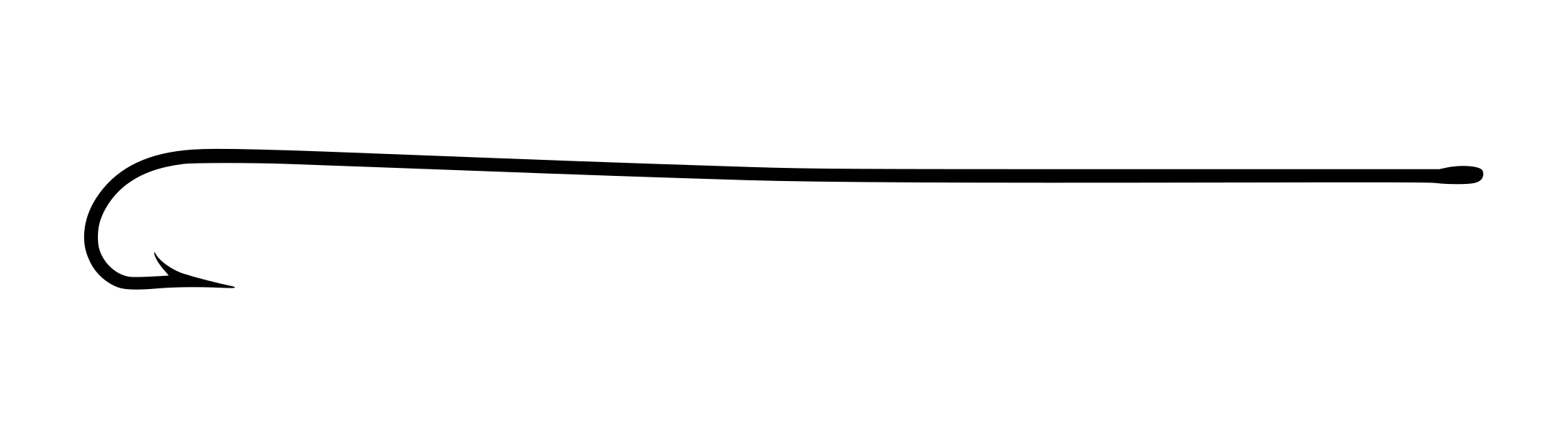
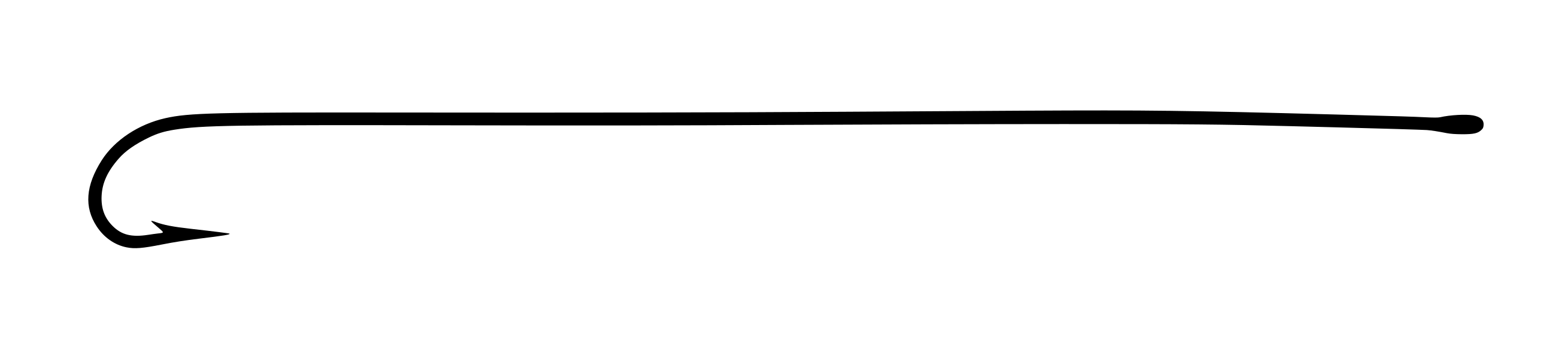
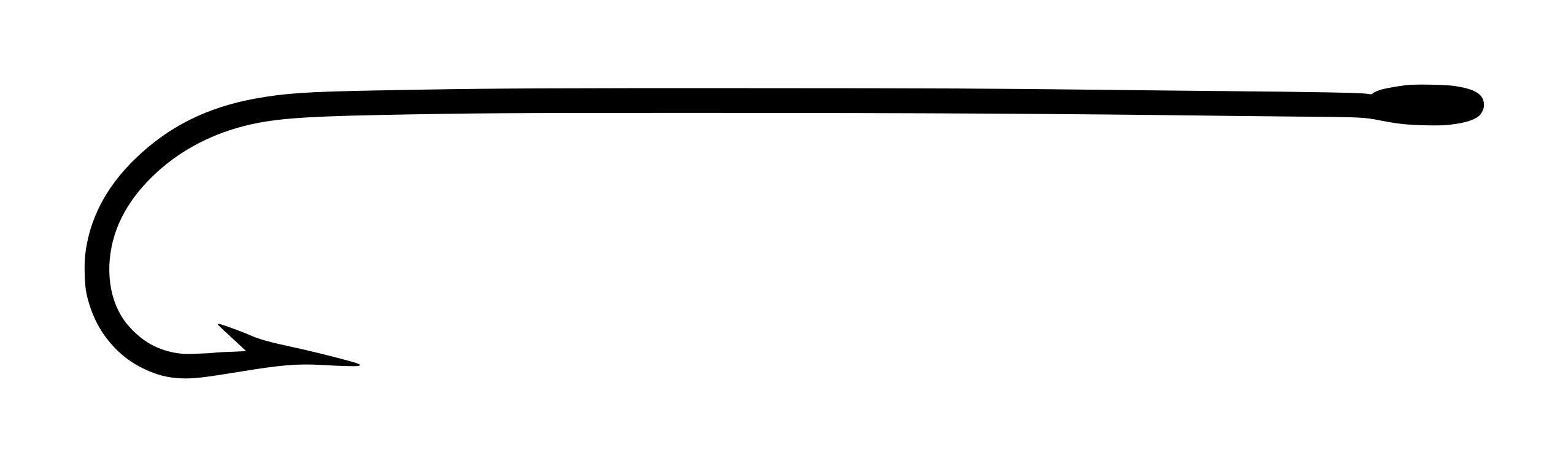
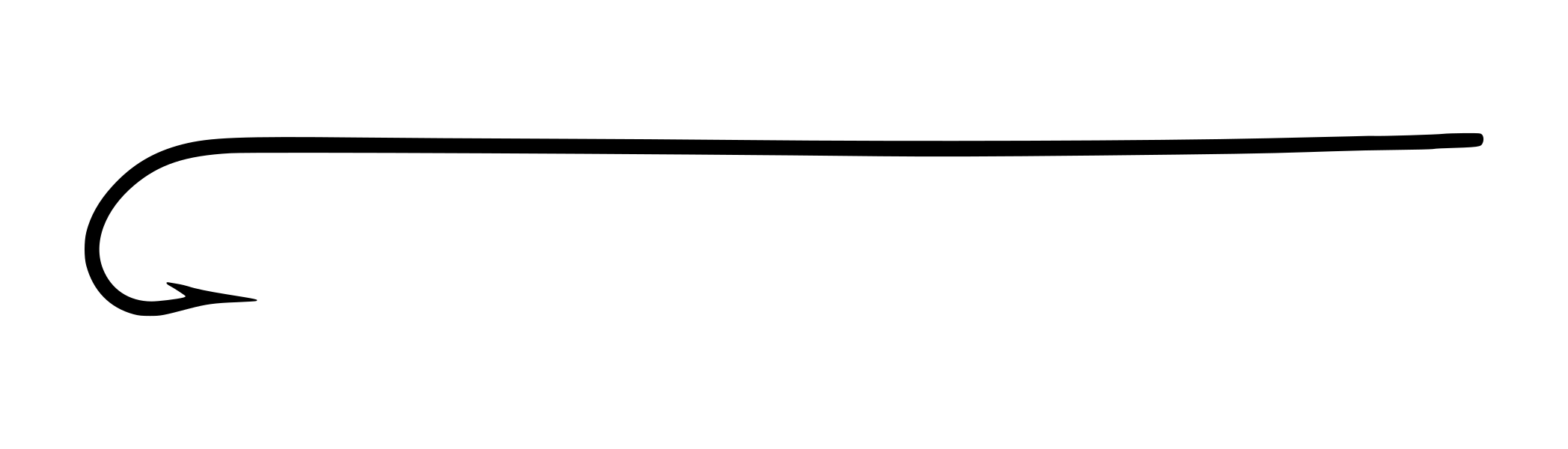
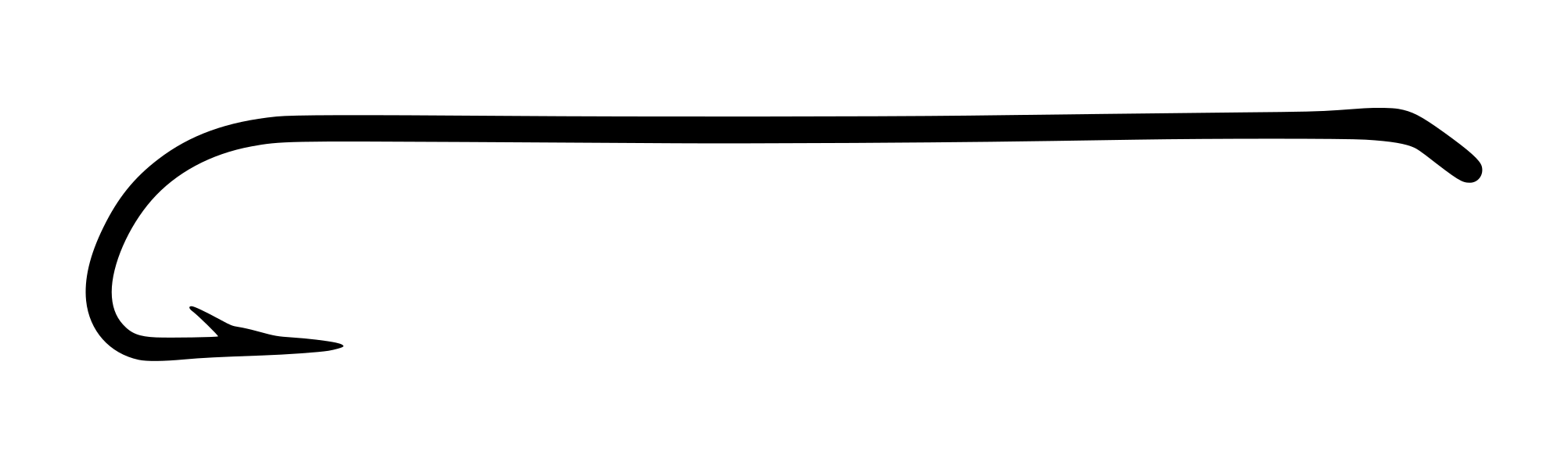
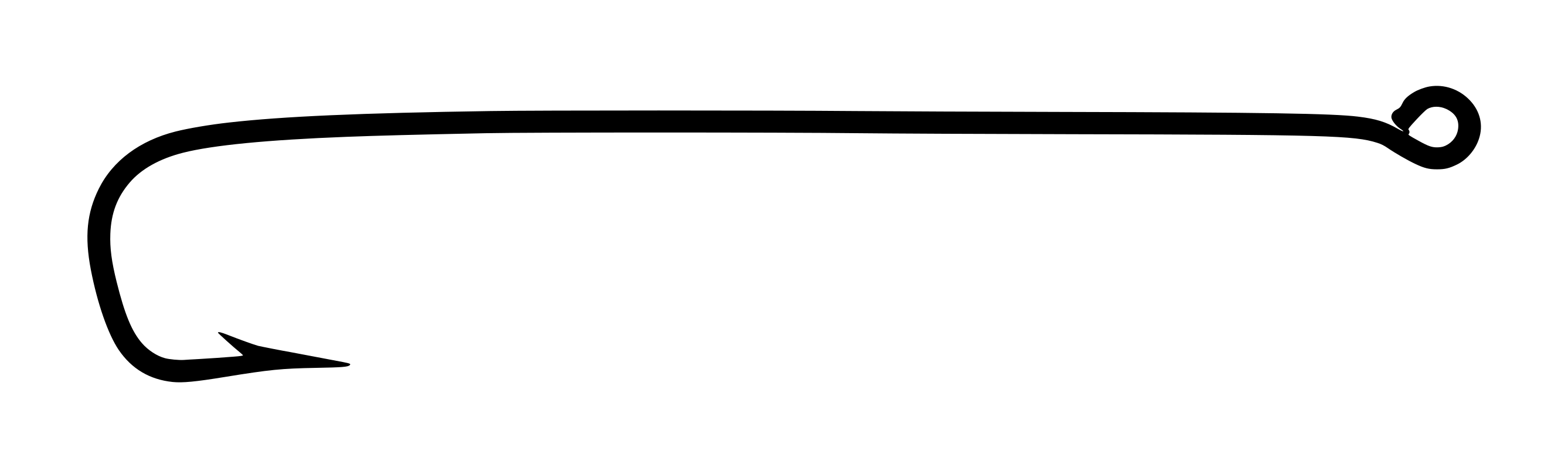
The Mustad 3576E is an industrial saltwater bait hook produced by O. Mustad & Son (U.S.A.) Inc. at their Auburn, New York facility during the 1960s–1970s. The hook features a Carlisle bend—a rounded profile suited to live-bait presentations—combined with a tinned (bright silver) finish, a straight-mounted ball eye, and a hollow point geometry that prioritizes cutting penetration in scaled gamefish. The extra-extra-long shank and narrow gap are characteristic of utility saltwater bait hooks designed for striped bass, bluefish, and coastal saltwater species. This reference documents a complete original manufacturer’s box of 100 hooks, a format that reflects Mustad’s industrial distribution to tackle retailers and fishing camps during the mid-century saltwater boom.
Close-up of the Mustad 3576E showing the concave hollow point geometry and rounded Carlisle bend profile, size 4 tinned finish, on 1/10-inch measurement grid for scale.
Photographic record
3 cataloged imagesSelect any record to load it above.
3 images shown
Mustad 3576E Size 4 — Hollow Point DetailClose-up of the Mustad 3576E showing the concave hollow point geometry and rounded Carlisle bend profile, size 4 tinned finish, on 1/10-inch measurement grid for scale.Open originalMustad 3576E Size 4 — Full Hook ProfileFull length profile of the Mustad 3576E showing the extra-extra-long shank, straight-mounted ball eye, and proportions relative to the measurement grid, size 4 tinned.Open originalMustad 3576E Original Box LabelManufacturer box lid showing the original Mustad label with model number 3576E, Auburn, N.Y. address, and handwritten annotations for quality number, size, and pack code, c. 1960–1975.Open original
Technical profile
Straight / Inline Ball Eye | Carlisle | Extra-Extra Long | Hollow Point | Tinned
Eye
Ball Eye, Straight / InlineBall eye is uniformly formed with clean closure—the return wire butts against the shank without overlap. Eye diameter is proportional to the shank gauge; hole size is appropriate for standard leader/line attachment P. Straight-mounted orientation maintains the hook point in the vertical plane, typical of saltwater utility hooks where the inline eye reduces leverage against the shank P.
Wire
Standard, Round
Shank
Extra-Extra Long (XXL) — Plain
Bend
carlisle, Narrow gapCarlisle bend profile is a smooth, rounded arch from eye to barb, lacking the angular apex of a Limerick or the asymmetry of an O'Shaughnessy. Bend appears symmetrical and evenly formed P. Depth-to-width ratio consistent with the Carlisle family—a utility bend rather than a specialized shape. Wire maintains consistent tension through the curve; no kinks or irregularities evident P.
Point
Hollow Point (concave inner face)Barb visible as short, close-cut projection from the inner bend, typical of Mustad industrial hooks. Standard penetrating barb set approximately 0.10" above the point E. No unusual barb geometry; barb angle and placement consistent with 1960s–1970s Mustad production standards P.
Finish
Tinned — Confirmed (stated on packaging)Tinned finish displays a bright, cool silver-grey tone characteristic of electrolytic tin plating P. The finish is uniform across all examined hooks, with no patina or oxidation visible, indicating either light use or stable storage conditions P. Tinning was Mustad's standard marine finish before stainless alternatives. The bright tone (warmer than nickel, cooler than bronze) is confirmed by the photograph's color temperature and the label's stated finish designation V.
Specimen box in good condition. Lid and base cardstock show light toning and surface wear consistent with storage. Label printing crisp and legible. No significant damage to box structure. All 100 hooks remain in situ in original tissue wrapping. Tinned finish on hooks bright with no visible corrosion. Specimen represents complete, functional box as originally shipped.
The hollow point—a concave inward taper forming a cutting edge—was Mustad’s standard for saltwater and bait hooks. Unlike the Superior point (near-straight taper), the hollow point creates a sharpness that prioritizes penetration into bony or scaled mouths without requiring hand-honing. The extra-extra-long shank (approximately 3.36″ on size 4) accommodates larger live baits—herring, mackerel, bunker—and reduces leverage strain when setting hooks in heavy fish. The narrow gap (approximately 0.28″) relative to the shank length creates a high shank-to-gap ratio (~11.3 : 1), concentrating holding power in the bottom of the hook where the barb does the work. Standard-gauge round wire provides adequate strength without the bulk of extra-heavy wire, balancing durability against bait action. Tinning (bright silver electroplate) reflects light underwater, appeals to predatory species, and resists saltwater corrosion better than bronzed finishes, though inferior to later stainless steels.
This pattern was made in sizes 2-16 (I). We have measurement for size 4. Know the others? Submit calipered measurements and we'll review and add them. Thank you!
Historical context
mustad
O. Mustad & Son, founded in Gjøvik, Norway, in 1832, became a global industrial fishhook manufacturer by the early 20th century. By the 1950s, Mustad had established manufacturing and distribution centers worldwide, including a major United States facility in Auburn, New York. The Auburn plant, operational from the 1950s through the 1980s, served North American bait and commercial fishing markets with high-volume, cost-effective hook production. The 3576E, like most Mustad industrial hooks of this era, reflects Norwegian manufacturing discipline applied to American market demands: functional design, consistent quality, and aggressive pricing. Mustad’s “Quality” line occupied the middle tier of their domestic catalog—above economy models but below premium craft lines—making it the default choice for commercial and retail tackle shops. The company’s vertically integrated production, from wire drawing through finishing and packaging, enabled rapid scaling and consistent output of thousands of hooks weekly.
Series History
The Mustad 3500-series designated saltwater bait and utility hooks. The 3576 appears to have been introduced in the 1950s–1960s as part of this broad family. The “E” suffix likely indicates a packaging or finish variant within the 3576 line (tin-finished, as opposed to bronzed or blued variants). By the 1960s, the 3576E occupied a specific niche: extra-long shank, narrow gap, tinned finish, available in sizes ranging from approximately 2 to 16 (though larger sizes 1/0–8/0 were more common in commercial use). The hook remained in the Mustad catalog through the 1970s and possibly into the 1980s, though it was gradually displaced by stainless-steel alternatives and the proliferation of specialized saltwater designs (Aberdeen-derived long-shanks, Tarpon hooks, Beak designs). No documented designer is credited; the 3576E represents anonymous industrial engineering by the Mustad design and manufacturing team.
Era and Packaging Dating
Auburn, New York address on label (Mustad USA facility operational 1950s-1970s). No barcode visible (pre-1974 strong indicator). Offset printing in blue on tan cardstock with rounded corners, typical of mid-century commercial packaging. Handwritten quality number and pack code annotations suggest internal inventory control practice common in 1960s-early 1970s box labels. ZIP code 13021 format (implemented 1963). Label design and paper stock consistent with Mustad domestic production c. 1960-1975.
The Auburn Saltwater Boom
When Mustad established its Auburn facility in the 1950s, it coincided with the post-war recreational fishing explosion along the Northeast coast. Striped bass and bluefish had rebounded, and tackle shops from Cape Cod to the Jersey Shore suddenly needed hooks in volume. Mustad's Auburn plant, running multiple shifts, could produce thousands of tinned saltwater hooks weekly—far outpacing the craft workshops of Redditch or older Norwegian forges. A single box of 3576E hooks, sold for pennies per unit, represented industrial efficiency that would have astonished 19th-century hook makers. By the 1970s, as stainless steel became affordable, even Mustad's own tinned hooks fell out of favor. Yet millions of these hooks sat in tackle boxes, garage shelves, and long-closed bait shops. They still catch fish, and complete original boxes—now mere artifacts of mid-century American fishing—have become inadvertent time capsules of a specific moment in saltwater angling.
Design lineage and influence
The Carlisle bend profile traces to mid-19th-century British traditions, adopted by Mustad during their industrial expansion in the early 20th century. By the 1960s, the Carlisle had become a workhorse saltwater profile—less specialized than the O’Shaughnessy yet more refined than the Aberdeen. Mustad’s 3500-series designation grouped utility saltwater hooks, with the 3576E carving a narrow niche in the long-shank, narrow-gap space. The tinned finish was the marine standard before stainless steel became common post-1980s. This hook did not define or reshape saltwater practice; rather, it embodied the practical, no-frills approach to bait fishing that characterized mid-century coastal tackle.
Best matchRelated by Attribute
Computed automatically from catalog data — updated as new hooks are added.
Matches: Bend, Shank, Eye, Eye Orient., Finish +5 moreDiffers: Wire: Standard vs Fine (1X Fine); Gap: Narrow vs Standard; Point: Hollow Point vs Superior
Matches: Bend, Shank, Eye, Eye Orient., Forging +3 moreDiffers: Wire: Standard vs Heavy (1X Heavy); Gap: Narrow vs Standard; Point: Hollow Point vs Superior +1 more
Designed for saltwater bait fishing. The extra-extra-long shank and narrow gap accommodate live baitfish presentations, particularly for striped bass, bluefish, and other coastal gamefish. The straight-eye alignment and tinned finish suit marine environments where corrosion resistance is essential. The hollow point geometry creates a cutting edge for penetration against scaled fish mouths.
Collector notes
Rated 3.5/10. Common in standard saltwater sizes (2/0-4/0) but size 4 is less typical. Mustad industrial production volumes limit rarity; however, complete original boxes (versus loose hooks or cards) command a meaningful premium. Collector demand is casual unless box condition is exceptional.
Reference value
$8 – $18 USD estimate
Packaging condition
Good — moderate wear, legibleRecorded specimen
Packaging format
box-100-labelCatalog code
Positive factors: Complete original box with all 100 hooks intact. Bright tinned finish with no corrosion. Clean label legibility. Mustad Quality line has modest specialist appeal among saltwater tackle historians.
Limiting factors: Industrial-era Mustad production was high-volume; hooks remain relatively common in the secondhand market. Size 4 is a utility size, not a collector premium size like 2/0 or 8/0. No special rarity codes or limited-edition markings. Straightforward bait hook with no fly-tying association.
Desirable variants: Larger sizes (1/0–8/0) command higher value. Boxes in excellent condition with minimal label wear are preferred over good condition. Earlier production runs with different label designs (pre-1968) may show slightly higher collector interest.
Condition factors: Box integrity is the primary value driver. Lid separation, heavy toning, or label loss reduce value significantly. Missing hooks reduce value 10–20% per hook (in a 100-count box, 1–2 missing is acceptable, but 5+ is material). Bright tinned finish is expected and does not affect value.
Packaging
Rigid manufacturer box, kraft cardboard with separate lid. Dimensions approximately 6" × 4" × 0.75". Tan/cream cardstock. Gummed label affixed to lid face. Label printed in offset blue and black on tan paper with rounded corners. Reads: "O. MUSTAD & SON (U.S.A.) INC. / AUBURN, N.Y. 13021 / [Model 3576E, handwritten] / QUALITY NO. / [13, handwritten] / SIZE / [4, handwritten] / PACK CODE / [100, handwritten] / NO. OF PACKS / NO. OF HOOKS". Interior lined with original tan tissue wrapping. All 100 hooks secure within tissue. Box shows light yellowing and minor creasing consistent with age storage; label adhesion intact.
Market Value Notes
Low ($8): Good condition box, minor label wear, all hooks present, intact but not showroom; High ($18): Excellent condition box, minimal label toning, complete inventory, sharp label printing, tight lid closure. Premium factors: Original box format (2-3× card equivalent), complete 100-count inventory, minimal toning, label legibility, functional condition of hooks. Platforms: eBay (US/UK), COBL (Cooper's Old Bait Line), vintage tackle dealers. Confidence: E estimated from comparable Mustad industrial boxes, limited specific market data for 3576E, saltwater size 4.
Where to Find
eBay US (search: Mustad 3576E box), eBay UK (Mustad vintage boxes), tackle dealer listings (Northeast US regional dealers specializing in saltwater tackle), occasional general estate lots containing mixed Mustad stock.
Collector's Identification Tips
Model number 3576E is printed on the lid label in black ink. “Quality” designation appears in the original Mustad product line taxonomy on the label. Size marking (handwritten “4” on the specimen) and pack code (handwritten “100”) are internal inventory notations. The combination of box format, rounded label corners, Auburn address, and offset printing are diagnostic of Mustad domestic production c. 1960–1975. The straight-mounted ball eye and narrow gap distinguish the 3576E from wider-gapped O’Shaughnessy (1/0 and heavier) or Aberdeen variants. Compare against other Mustad 3500-series boxes; the 3576E’s proportions are distinctly extra-long in the shank.
Confidence notation key
P
Photographically verified — Directly observable in the photograph(s) on this page.
V
Verified by documentation — Confirmed by manufacturer catalog, spec sheet, or published reference.
I
Inferred — A logical deduction from observable or documented evidence, not directly stated.
E
Estimated — An approximation based on visual comparison, proportional analysis, or limited data.
S
Speculative — A reasoned hypothesis that cannot be confirmed from available evidence.
Claims with no notation are confirmed by multiple independent sources. All photographs on garrenwood.com are taken on a measurement grid where each square equals 1/10 inch (0.1″ / 2.54 mm).