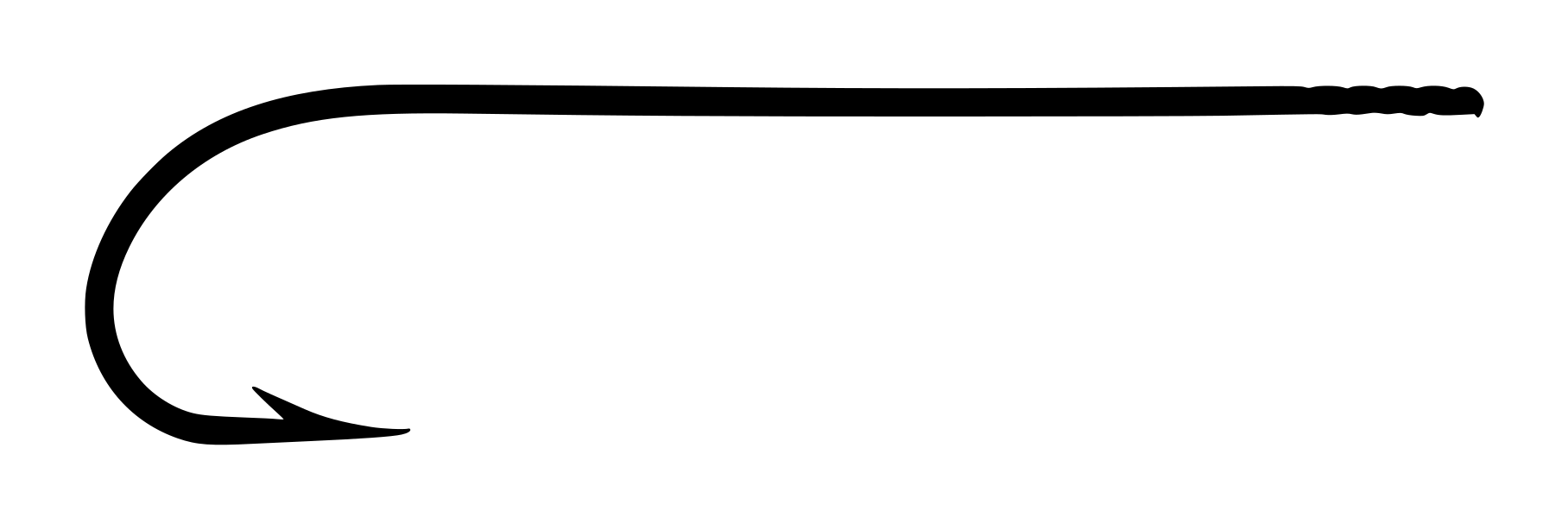
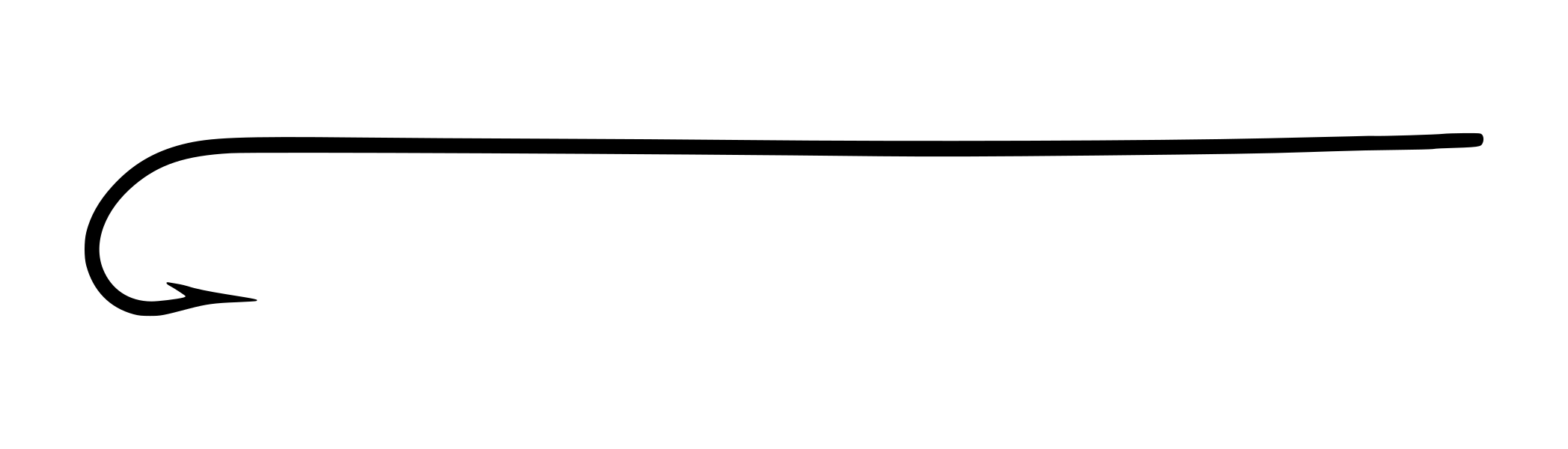
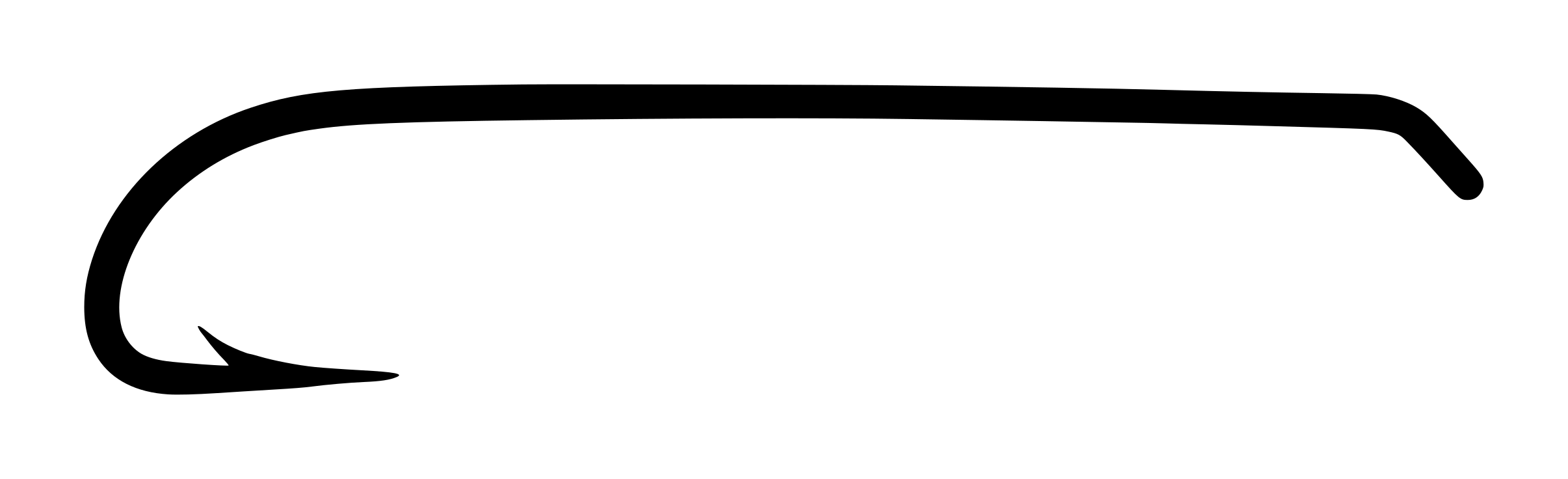
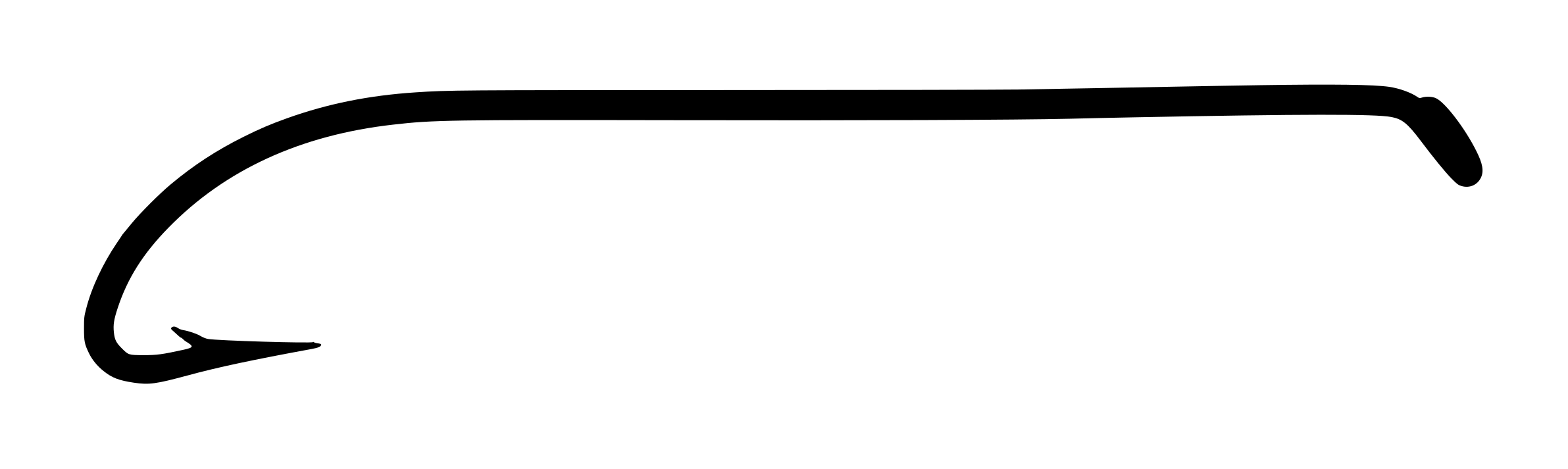
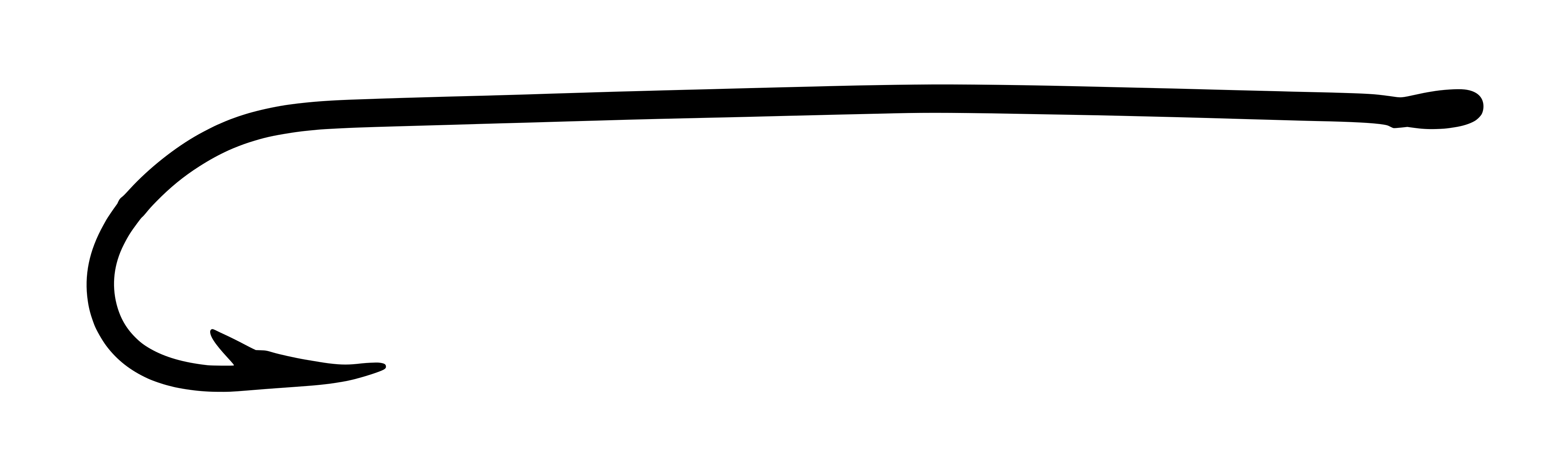
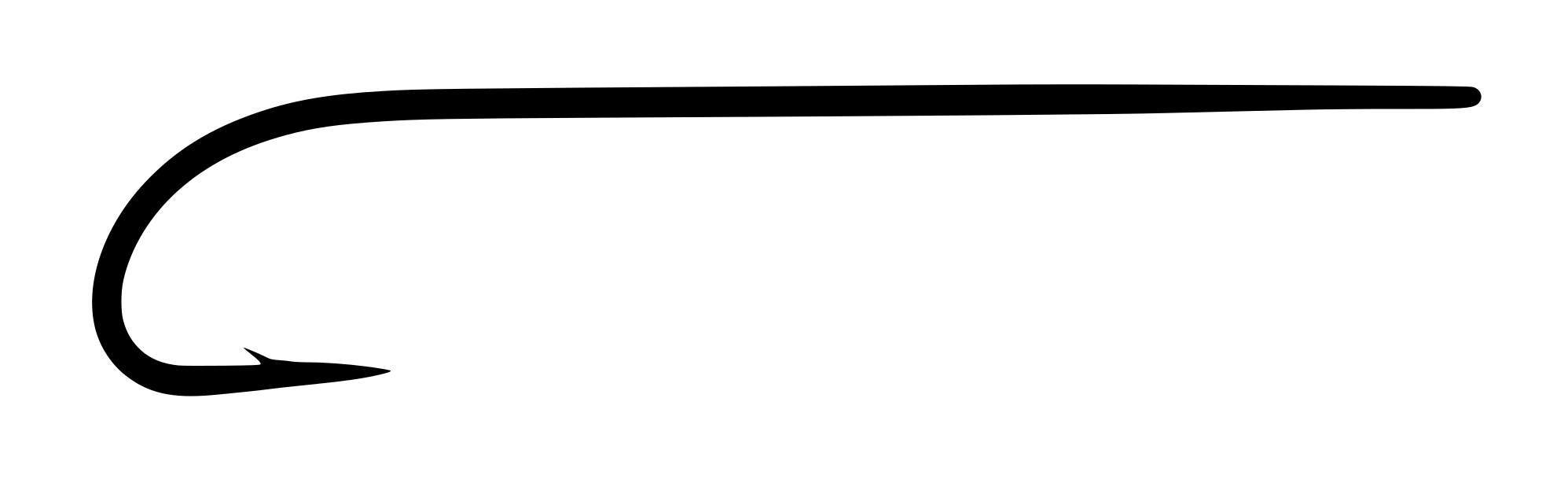
The Mustad 3203 is a heavy-wire bait hook featuring a distinctive blind eye construction and marked shank for superior bait retention. This Norwegian-made pattern exemplifies Mustad’s commitment to strength and functionality in saltwater applications P.
The superior point style provides excellent penetration while the sproat bend offers optimal fish-holding geometry. The tinned finish provides corrosion resistance essential for saltwater use P. Dating to the 1960s-1970s period, this pattern represents the transition era when traditional blind eye construction was giving way to more modern eye types E.
For collectors, the 3203 offers insight into Mustad’s specialized bait hook designs and the practical considerations that drove their engineering decisions. The marked shank feature makes this pattern particularly interesting from a functional design perspective I.
Close-up detail of the Mustad 3203's superior point style showing the nearly straight inner taper and substantial barb construction.
Photographic record
9 cataloged imagesSelect any record to load it above.
8 images shown
Mustad 3203 Superior Point Detail Size 5/0Close-up detail of the Mustad 3203's superior point style showing the nearly straight inner taper and substantial barb construction.Open originalMustad 3203 Full Profile Size 5/0 Marked ShankComplete side profile of the Mustad 3203 showing the sproat bend, marked shank ridges, and blind eye construction.Open originalMustad 3203 Research Documentation Size 5/0Research documentation showing two Mustad 3203 hooks with handwritten identification label on white card stock.Open originalMustad 3203 Size 9 Sproat Tinned Hook ProfileMustad 3203 sproat bend hook in size 9, tinned finish. The barbed point and rounded eye are visible in profile against an orange background.Open originalMustad 3203 Superior Tinned Key Card LabelOriginal key card label from O. Mustad & Son identifying the 3203 as Superior quality, marked tinned, made in Norway. Package contained 100 hooks.Open originalMustad Sproat Bend Size Range Reference CardMustad reference card displaying sproat bend hooks across sizes 8-13, with size 9 comparison marked in blue. Shows both 3202 (blue) and 3203 (tinned) variants.Open originalMustad 3203 Original Box LabelOriginal cardboard box label for Mustad Superior Carlisle hooks, model 3203, marked tinned finish. Box indicates Oslo, Norway manufacture and contains 100 hooks, size No. 5.Open originalMustad 3203 Carlisle Hook ProfileProfile view of tinned 3203 Carlisle hook showing the characteristic long shank and open bend typical of the Carlisle family.Open originalMustad 3203 Hook Front ViewFront view displaying the eye design and overall proportions of the tinned 3203 Carlisle hook.Open original
Technical profile
Blind Blind — marked | Carlisle | 3X long | Fine Wire | Superior Point | Tinned
Eye
Blind — Marked Shank
Wire
Fine (1X Fine), Round, Est. ~0.050"-0.055" (~1.3-1.4 mm) E
Shank
3X Long — Marked / Ridged
Bend
carlisle, Standard gap, Offset / kirbedClassic sproat profile with rounded bottom section, optimized for fish holding P
Point
Superior (near-straight inner taper)Substantial barb with moderate sweep angle, positioned for secure fish holding without excessive tissue damage P
Finish
Tinned — Confirmed (stated on packaging)Bright tinned finish with excellent corrosion resistance, typical of Mustad's saltwater-oriented patterns P
Hooks show bright tinned finish with no corrosion. Card shows light handling but remains intact.
The blind eye construction eliminates the potential weak point of a formed eye loop, instead relying on a marked shank. This provides maximum strength for heavy fighting fish. The marked shank features raised ridges that grip bait securely, preventing slippage during casting and fishing.
The superior point style offers a nearly straight inner taper, providing excellent penetration characteristics while maintaining point strength. Combined with the heavy wire gauge, this creates a hook capable of handling large saltwater species with confidence.
We have measurements for sizes 5/0, 5. Know any others? Submit calipered measurements and we'll review and add them. Thank you!
Historical context
mustad
O. Mustad & Son was founded in 1832 by Ole Mustad in Gjøvik, Norway, growing from a small nail factory into the world’s largest fishhook manufacturer. By the mid-20th century, Mustad’s Gjøvik factory was producing billions of hooks annually, with their products distributed globally through an extensive network of fishing tackle dealers.
The company’s success was built on industrial-scale production methods combined with Norwegian precision engineering. Mustad’s catalog during the 1960s-1970s included hundreds of patterns designed for every conceivable fishing application, from delicate trout flies to heavy-duty offshore hooks like the 3203.
Series History
The 3203 appears to have been a specialized pattern within Mustad’s bait hook offerings, likely introduced during the 1950s-1960s period when saltwater fishing was experiencing significant growth. The blind eye construction was traditional for heavy-duty applications, providing maximum strength at the critical eye-to-shank junction.
This pattern represents Mustad’s attention to functional details like the marked shank, which was specifically engineered to grip soft baits more effectively than smooth shanks. The 3203 would have competed with similar patterns from other manufacturers but benefited from Mustad’s superior distribution network and consistent quality control.
Era and Packaging Dating
Simple handwritten label on plain white card indicates mid-to-late 20th century specimen storage or research documentation. Lack of printed packaging suggests either bare hook storage or academic/research context typical of 1960s-1970s period.
Norwegian Innovation
The marked shank feature on hooks like the 3203 was originally developed for salmon fishing in Norway's fjords, where strong currents demanded exceptional bait security. Mustad's engineers discovered that the raised ridges not only held bait better but also created turbulence that made the bait appear more lifelike to fish.
Design lineage and influence
The 3203 follows traditional British blind eye patterns but incorporates Mustad’s Norwegian engineering refinements. The marked shank feature reflects mid-20th century innovations in bait retention technology, likely influenced by American developments in bass fishing hooks.
This pattern would have competed directly with similar offerings from Partridge, Allcock, and other European manufacturers, but Mustad’s industrial production methods allowed for consistent quality at competitive pricing.
Best matchRelated by Attribute
Computed automatically from catalog data — updated as new hooks are added.
Matches: Bend, Gap, Eye, Eye Orient., Point +5 moreDiffers: Shank: 3X Long vs Extra-Extra Long; Wire: Fine (1X Fine) vs Standard; Finish: Tinned vs Bronzed
Matches: Bend, Wire, Eye, Eye Orient., Point +5 moreDiffers: Shank: 3X Long vs Extra-Extra Long; Gap: Standard vs Narrow; Finish: Tinned vs Blued +1 more
Matches: Bend, Eye, Eye Orient., Forging, Offset +2 moreDiffers: Shank: 3X Long vs 4X Long; Wire: Fine (1X Fine) vs Standard; Gap: Standard vs Narrow +3 more
Matches: Bend, Eye, Eye Orient., Point, Forging +3 moreDiffers: Shank: 3X Long vs Extra-Extra Long; Wire: Fine (1X Fine) vs Standard; Gap: Standard vs Narrow +2 more
Matches: Bend, Gap, Eye, Eye Orient., Point +4 moreDiffers: Shank: 3X Long vs 4X Long; Wire: Fine (1X Fine) vs Extra-Fine; Finish: Tinned vs Blued +2 more
The Mustad 3203 is a heavy-duty bait hook designed for saltwater fishing applications. The marked shank provides excellent bait retention, while the blind eye construction offers maximum strength for large fish. This pattern was particularly popular for bottom fishing and offshore applications where hook strength and bait security were paramount P.
Secondary Applications
Large freshwater species, specimen carp fishing, heavy tackle applications
Classic Fly Patterns
Not typically used for fly tying
Modern Equivalents
Hook
Match Quality
Notes
Mustad 92553
Good
Modern equivalent with similar bend and shank marking, but features ringed eye
Owner SSW
Moderate
Japanese alternative with comparable strength and bait-holding features
Collector notes
Uncommon Mustad pattern with some collector interest due to the blind eye construction and marked shank features.
Reference value
$8 – $15 USD estimate
Packaging condition
Good — moderate wear, legibleRecorded specimen
The 3203 represents an interesting period in Mustad’s catalog when blind eye hooks were still commonly produced alongside more modern eye constructions. The marked shank feature adds to its appeal among collectors of specialized bait hooks. However, the pattern lacks the rarity or historical significance to command premium prices. Most examples are found in working condition rather than mint packaging, limiting top-tier collectability.
Packaging
Simple white card with handwritten notation 'Mustad 3203 5/0' in blue ink. Card appears to be modern documentation or storage label rather than original retail packaging.
Market Value Notes
Individual hooks in good condition. Premium for mint examples or original packaging if found.
Store these tinned hooks in a dry environment to maintain the bright finish. The heavy wire gauge makes them less susceptible to corrosion than lighter hooks, but proper storage extends their lifespan significantly. Keep the documentation card with the hooks, as handwritten specimens like this provide valuable context for collectors.
Avoid storing in tackle boxes with dissimilar metals to prevent galvanic corrosion. A light coating of fishing reel oil can provide additional protection in humid environments. The marked shank texture should be kept clean to maintain optimal bait-gripping performance.
Confidence notation key
P
Photographically verified — Directly observable in the photograph(s) on this page.
V
Verified by documentation — Confirmed by manufacturer catalog, spec sheet, or published reference.
I
Inferred — A logical deduction from observable or documented evidence, not directly stated.
E
Estimated — An approximation based on visual comparison, proportional analysis, or limited data.
S
Speculative — A reasoned hypothesis that cannot be confirmed from available evidence.
Claims with no notation are confirmed by multiple independent sources. All photographs on garrenwood.com are taken on a measurement grid where each square equals 1/10 inch (0.1″ / 2.54 mm).