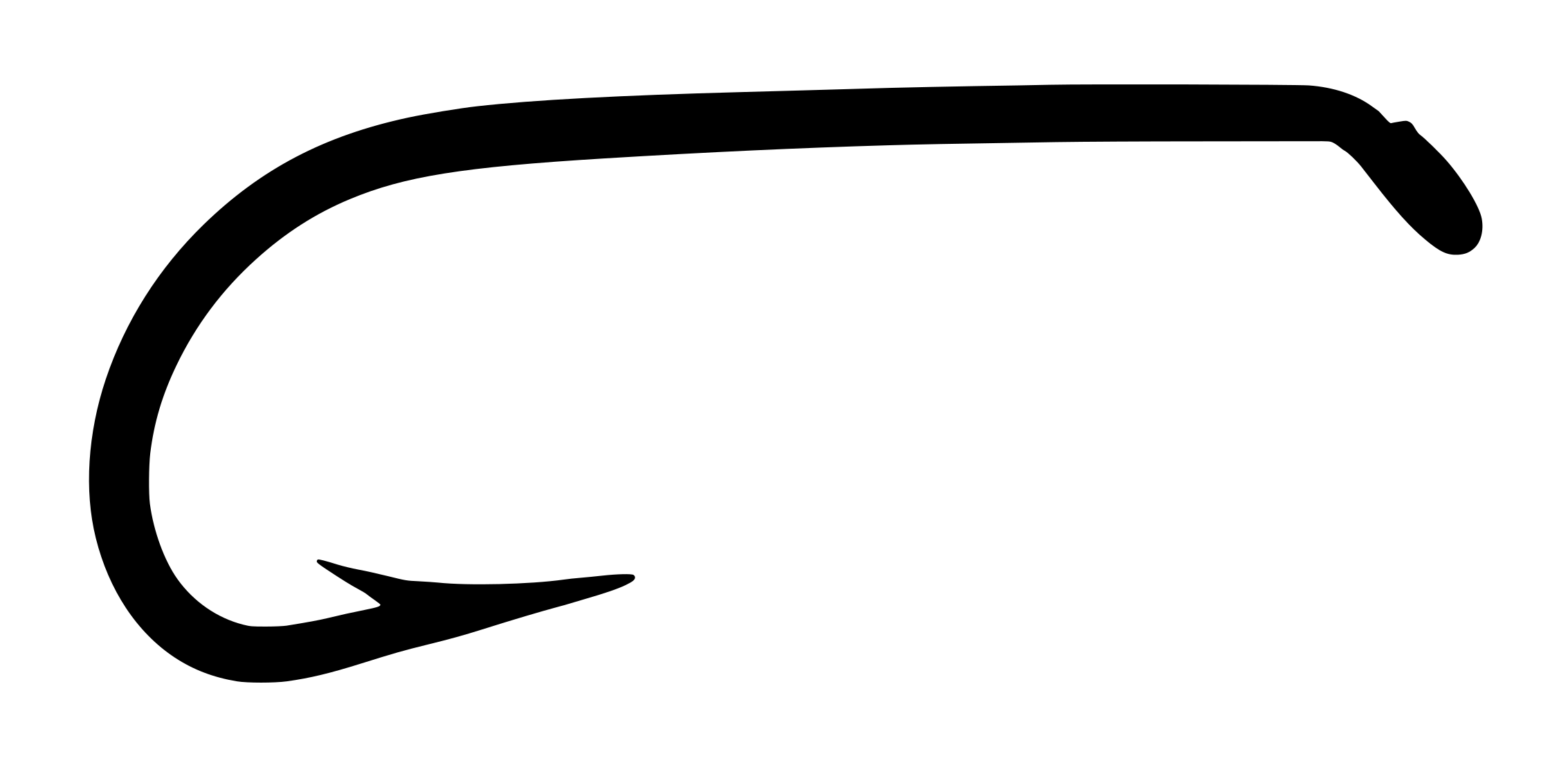
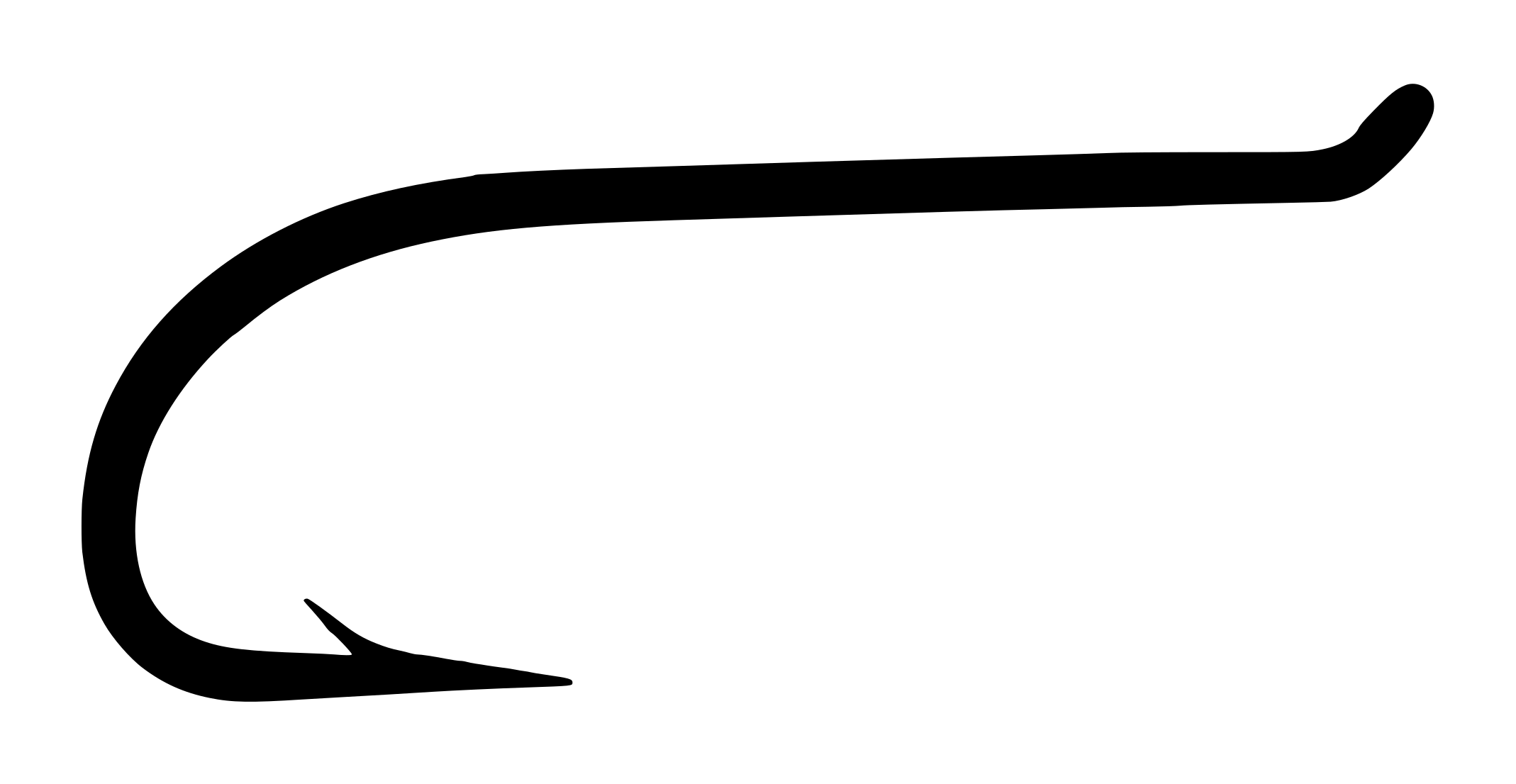
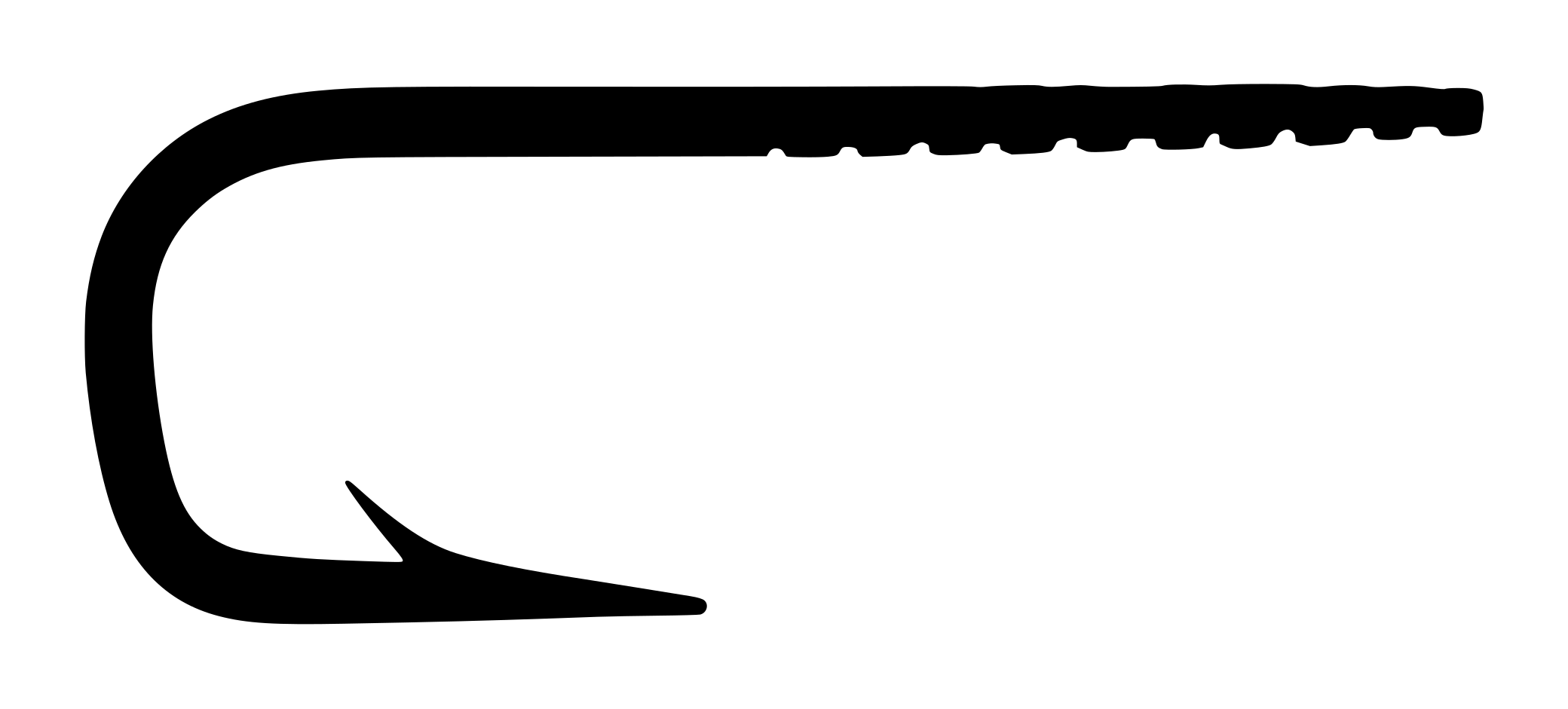
Mustad Quality 9319 is a heavy-wire open-eye salmon hook manufactured by O. Mustad & Son of Norway, sized No. 6 in bright nickel finish. This model epitomizes the industrial peak of mid-20th-century salmon hook design, purpose-built as a replacement hook for large spoons and spinners where the open soft ring allowed anglers to field-swap hooks without retying.
The defining feature is the Hollow Point — a premium point geometry with a concave inner face that creates a knife-edge cutting effect. This was considered superior to standard spear points for penetrating the hard mouths of large salmon and steelhead. The 2x Extra Strong wire reflects the demands of big-game freshwater and anadromous fishing.
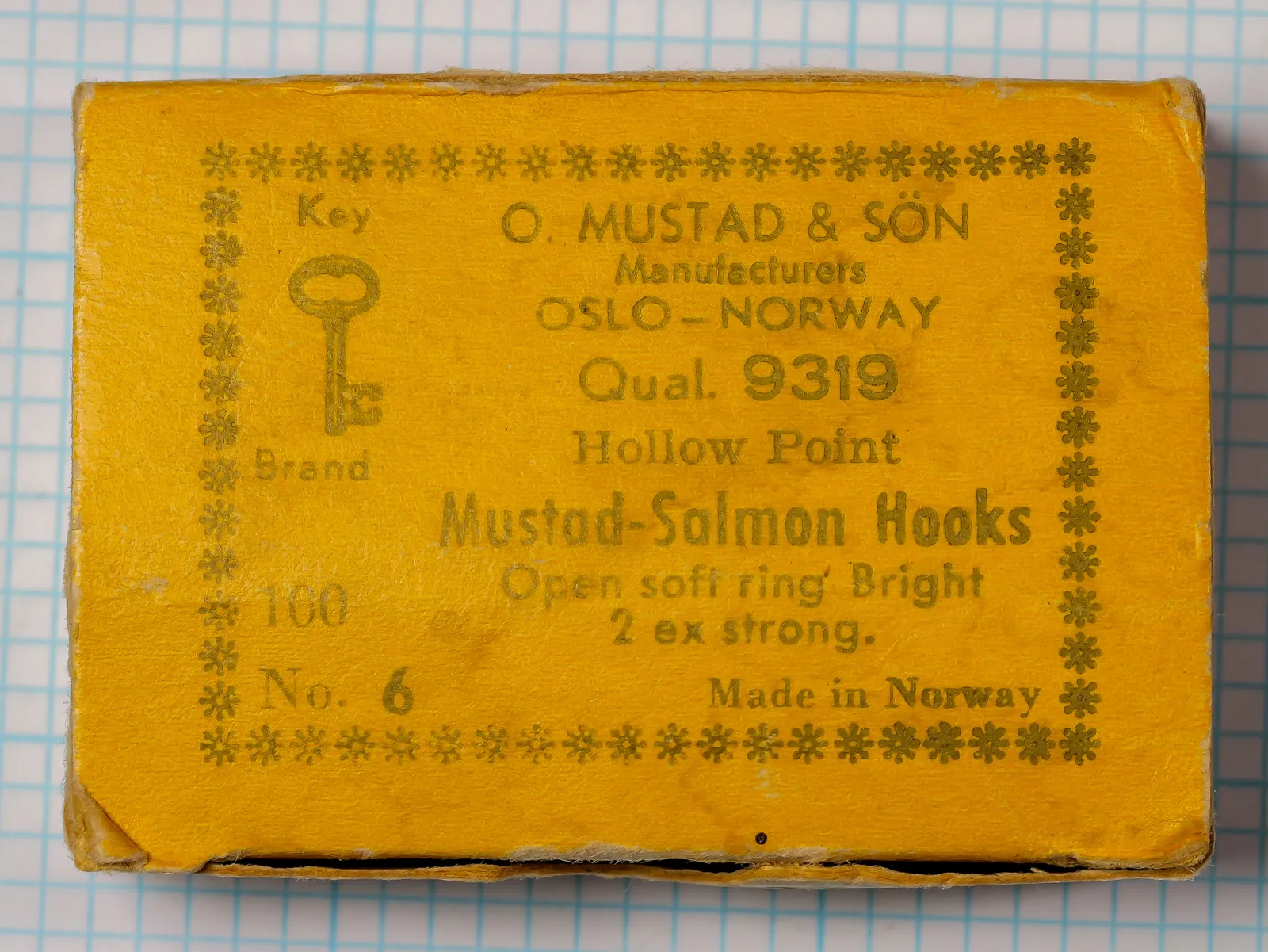
The yellow paper Key Brand box with star-pattern border and letterpress printing is diagnostic of Mustad’s 1950s–1960s export packaging. The use of ‘Oslo – Norway’ and the ‘Sön’ umlaut further confirm this mid-century production window. No barcode, consistent with pre-1974 manufacturing.
This hook remains highly sought by traditionalist fly tyers, salmon enthusiasts, and vintage tackle collectors. Complete original packaging commands a significant premium. The 9319 represents an era when industrial hook manufacturing and craft fly-fishing traditions remained closely aligned.
Original Mustad Quality 9319 yellow paper box featuring the Key Brand logo and star-pattern border, diagnostic of 1950s–1960s export packaging. Text indicates Hollow Point, Open soft ring, Bright finish, 2x Extra Strong wire, size 6.
Photographic record
3 cataloged imagesSelect any record to load it above.
3 images shown
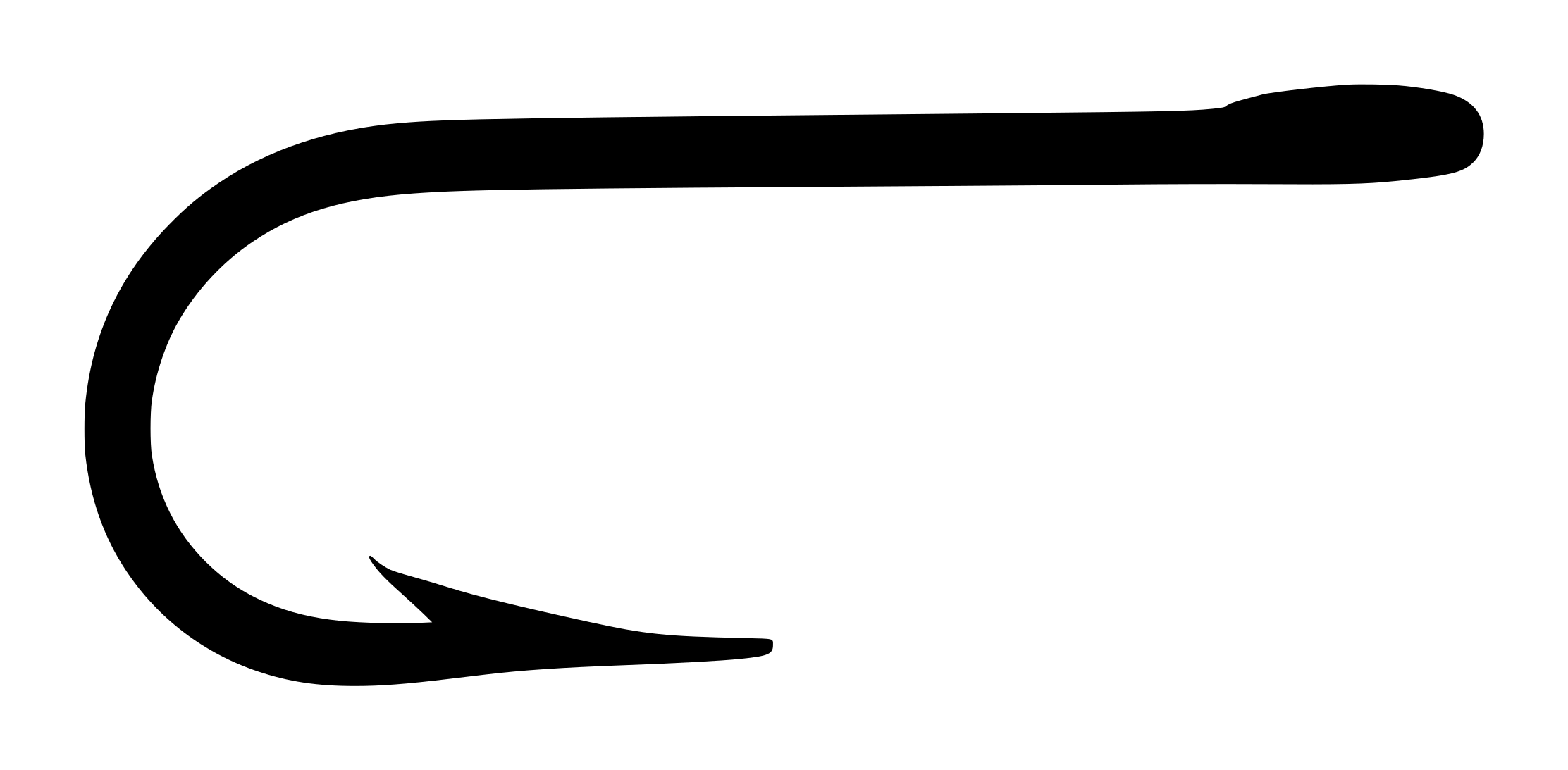
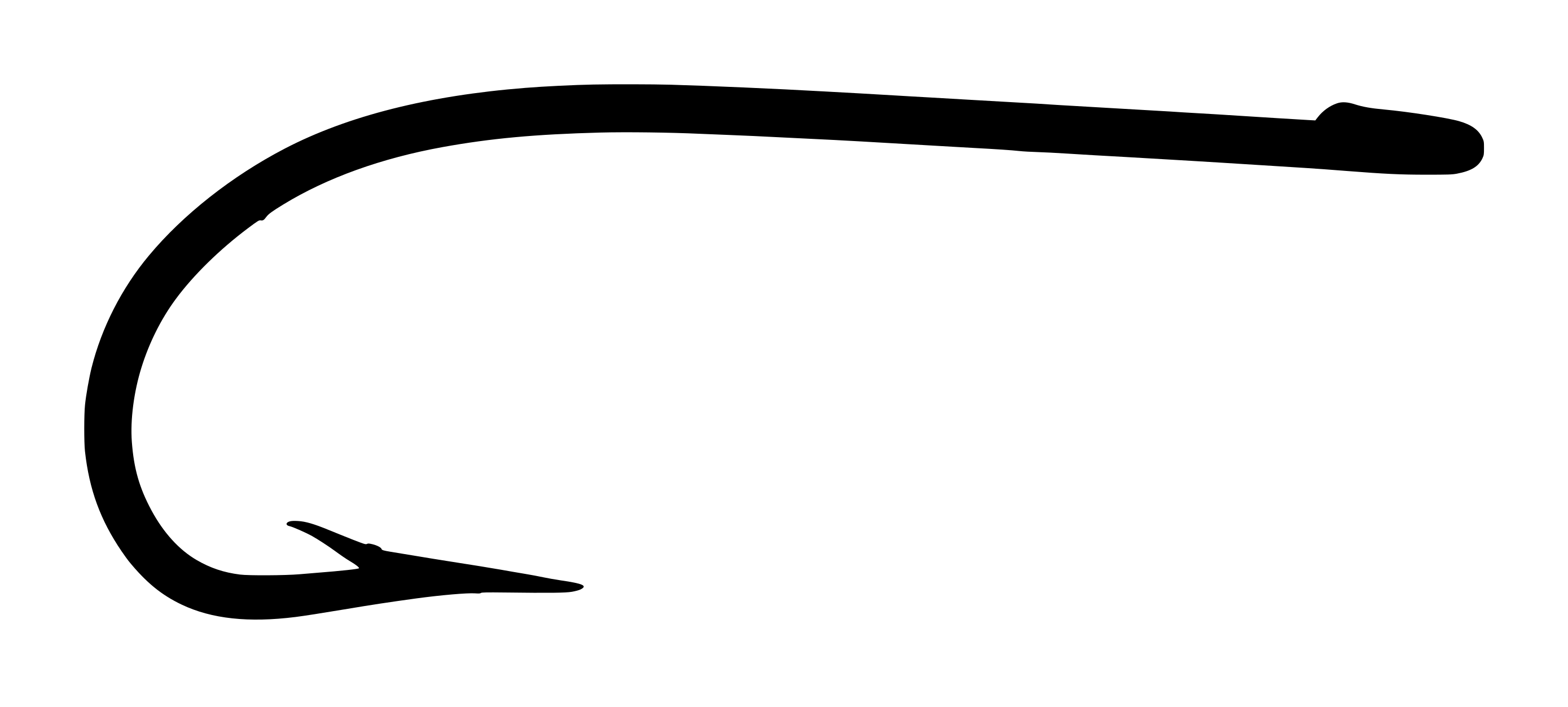
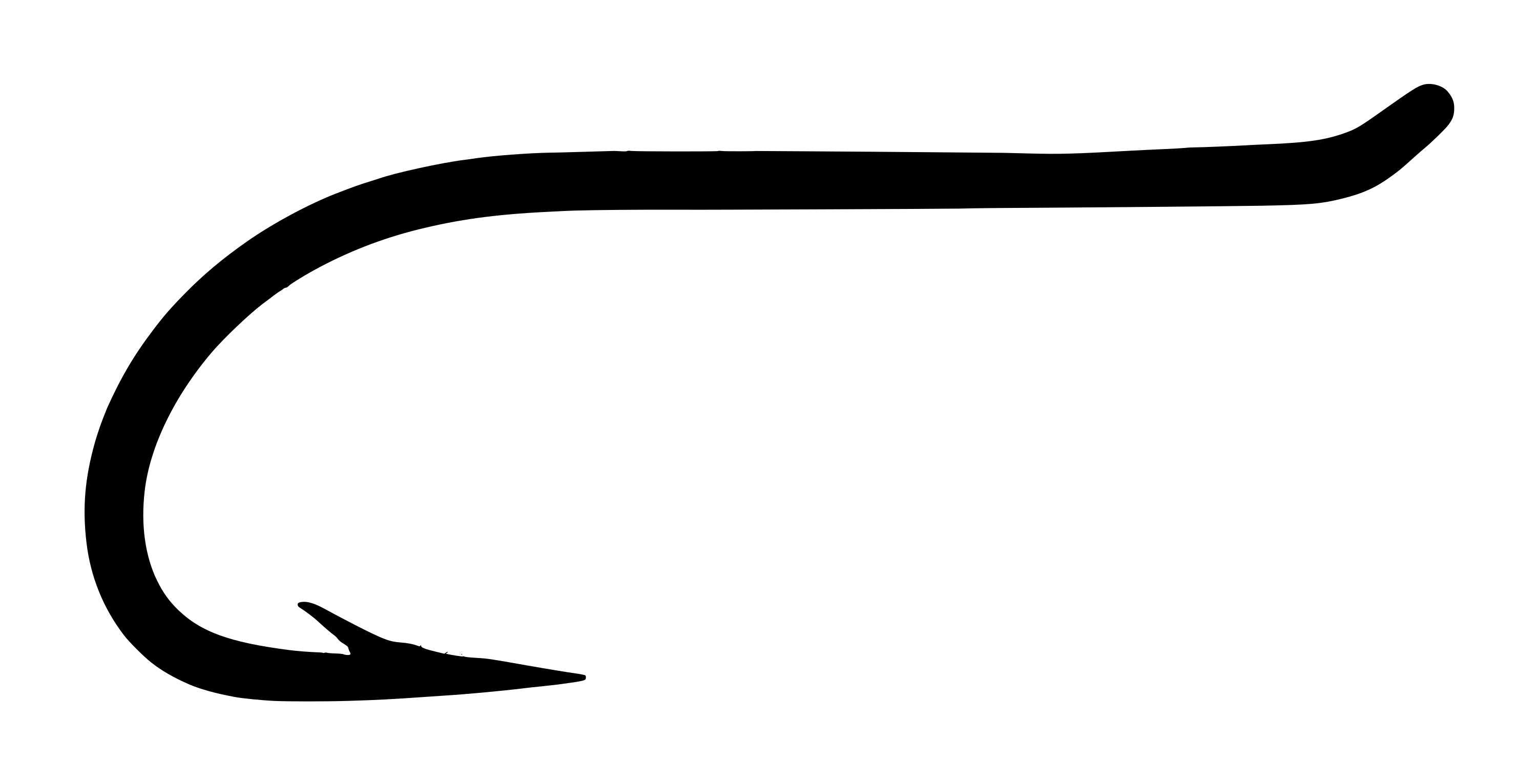
Mustad 9319 Size 6 Yellow Key Brand BoxOriginal Mustad Quality 9319 yellow paper box featuring the Key Brand logo and star-pattern border, diagnostic of 1950s–1960s export packaging. Text indicates Hollow Point, Open soft ring, Bright finish, 2x Extra Strong wire, size 6.Open originalMustad 9319 Size 6 Hollow Point ProfileProfile view of the hook point showing the distinctive concave inner face characteristic of Hollow Point geometry. The inward curve creates a knife-edge cutting effect, a premium point specification typical of mid-century Mustad salmon hooks.Open originalMustad 9319 Size 6 Full Hook ProfileComplete side-view profile of the Mustad 9319 hook showing the tapered shank, open soft ring eye, rounded Sproat bend, and Hollow Point. Photographed on 1/10-inch measurement grid for dimensional analysis.Open original
Technical profile
Eye
Ball Eye, Straight / InlineOpen straight ring eye ('soft ring') visible in the specimen. The ring is cleanly formed and intended for attachment to leaders, split rings, or lure hardware. The ability to adjust the ring in the field is inferred from the pattern type rather than demonstrated by the photograph I.
Wire
Extra-Heavy (2X+), Round
Shank
Standard — Plain
Bend
Sproat, Standard gapRounded salmon-hook bend profile with a near-continuous curve. A Sproat classification is plausible, but the photographed specimen approaches a round-bend form closely enough that the distinction should be treated cautiously. Identification is therefore based on pattern designation and overall form rather than an unambiguous bend geometry visible in the specimen I.
Point
Hollow Point (concave inner face)Standard barb placement at bend apex, moderate size, swept angle typical of mid-century Mustad construction P.
Finish
Nickelled / Nickel-Plated — Inferred (photographically likely)Bright nickel with characteristic patina development consistent with age and storage. Tone is cool and reflective, with scattered surface oxidation typical of 1950s–1960s Mustad bright finish P.
The specimen hooks are bright with no corrosion or pitting visible. Wire maintains original nickel finish with expected patina development. No bent or damaged hooks observed. Box shows age-appropriate wear: edge creasing, slight yellowing of paper, and minor ink fading, but text remains legible. All four corners of box intact. Hinge mechanism functional.
The Hollow Point geometry represents a deliberate engineering choice. By grinding the inner face of the point to a slight concave profile, Mustad increased the cutting efficiency of the point. The concave inner surface concentrates force at a narrower edge, analogous to a knife blade versus a flat chisel. This was particularly valuable for salmon fishing, where hard mouth structure and thick jaws demanded maximum penetration with minimal leverage.
The open soft ring eye construction served a specific functional purpose in the lure-replacement market. Rather than tying directly to the hook eye, anglers would slip the ring onto a wire leader or split ring and crimp it closed. This allowed rapid field changes of hooks on spoons without re-tying. The term ‘soft’ referred to the temper of the eye ring — forged to be slightly more ductile than the main shank, allowing one or two cycles of opening and closing without metal fatigue.
The 2x Extra Strong wire rating added approximately 0.015″ to the standard wire diameter for this size, increasing rigidity and load capacity. For open-eye designs, this heavier wire compensated for the structural weakness of the open ring, distributing stress more evenly and reducing the risk of eye deformation under load.
First documented size 6 specimen in original Key Brand yellow box. Measurement confirms overall length 0.83" with caliper precision.
Own this hook? Help us measure it.
We don't have measured sizes for this hook yet. Own one? Submit calipered measurements and we'll review and add them. Thank you!
Historical context
mustad
O. Mustad & Son was founded in Oslo, Norway, in 1832 by Ole Mustad, establishing itself as a major European hook manufacturer during the Industrial Revolution. By the mid-20th century, Mustad operated from its primary factory in Gjøvik, Norway, and had become the world’s largest hook manufacturer, dominating global distribution networks.
The company’s strategy centered on industrial standardization and volume production, enabling them to offer an enormous range of specialized patterns at competitive prices. Unlike the Redditch craft tradition in England, Mustad embraced mechanized forging and stamping, allowing rapid iteration and price leadership. The Key Brand line represented their export-focused, middle-market offering — quality hooks for anglers worldwide without the premium pricing of specialty Redditch makers.
Mustad’s manufacturing advantage was their ability to tool specialized patterns for regional fishing traditions. The 9319 open-eye salmon hook was one such response to Pacific Northwest and Atlantic salmon market demands. Production capacity and distribution networks allowed Mustad to saturate tackle shops globally, making their hooks the de facto standard for mid-century anglers.
Series History
The 9319 open-eye salmon hook series was introduced during Mustad’s expansion into specialized salmon and steelhead patterns, likely in the late 1940s–early 1950s. The model number reflects Mustad’s alphanumeric system where ’93’ indicated the bend family (Sproat) and ’19’ denoted the open-eye modification.
The Hollow Point specification was a deliberate design choice reflecting Mustad’s premium positioning in the salmon market. This was not a universal feature on Mustad salmon hooks; lesser models carried standard or spear points. The 2x Extra Strong wire rating was matched to the open-ring eye construction, which was mechanically weaker than a closed eye and thus required heavier wire to compensate.
The 9319 remained in continuous production through the 1960s and into the 1970s, with the Key Brand packaging transitioning to Mustad’s standard branding as the company modernized. The model was eventually superseded by the 9510XXX Siwash series as modern fly-tying techniques and materials (braided loops, spey-fly evolution) changed how open-eye hooks were used. However, vintage NOS 9319 cards remain staple reference specimens for traditionalist tyers.
Era and Packaging Dating
Yellow paper box construction typical of mid-century Mustad export packaging. Key Brand logo and star-pattern border consistent with 1950s–1960s branding. 'Oslo – Norway' address (later changed to Gjøvik-only branding). 'Sön' spelling with umlaut typical of Mustad's Norwegian packaging before anglicization. No visible barcode — strong pre-1974 indicator. Offset letterpress print method consistent with 1950s manufacturing. No modernized graphics, photographic elements, or plastic packaging features visible. All evidence points to 1950s–1960s production with high confidence.
The Trolling River Swap
During the 1950s–1960s Pacific Northwest salmon boom, commercial trollers and sport anglers relied on the 9319 open soft ring to swap hooks on expensive spoons mid-fishing without losing tackle to backlashes or knot failures. A troller working a 40-foot leader might snap a hook on a large chinook, then field-slip a fresh 9319 onto the split ring and crimp it closed with pliers in seconds. This efficiency gained the 9319 legendary status among traditional guides. The term 'soft ring' itself became regional slang for any open-eye hook that could be opened and closed in the field — a testament to Mustad's branding power. Vintage trollers still prefer original 9319 stock for their replicas and restoration builds, viewing the modern 9510XXX as too sharp and too stiff to properly emulate the soft bite of the vintage Hollow Point.
Design lineage and influence
The open-eye salmon hook concept predates Mustad. British Redditch makers had produced open-eye patterns (notably Partridge and Allcock variants) for salmon fishing since the 19th century. However, Mustad’s 9319 represents the industrial-scale adoption of the design. The key innovation was the ‘soft ring’ temper — deliberately lighter metal in the eye ring to allow field adjustment without complete failure.
Mustad’s primary competitors in this niche included Allcock (UK), Partridge of Redditch (UK), and American makers like Pflueger. The 9319’s Hollow Point specification was Mustad’s direct response to the success of premium Redditch patterns, which commanded higher prices. By offering a Hollow Point on an open-eye frame at industrial pricing, Mustad captured market share from both craft makers and budget manufacturers.
The 9319 lineage descends directly to the modern Mustad 9510XXX Siwash Open Eye, introduced in the 1970s. The modern version uses stainless steel construction and a chemically sharpened needle point, replacing the forged Hollow Point geometry. However, the basic open-ring concept and Sproat bend profile remain unchanged, making the 9510XXX a direct spiritual successor despite material upgrades.
Best matchRelated by Attribute
Computed automatically from catalog data — updated as new hooks are added.
Matches: Bend, Wire, Gap, Eye, Eye Orient. +3 moreDiffers: Shank: Standard vs 1X Long; Point: Hollow Point vs Superior; Finish: Nickelled vs Bronzed +1 more
Matches: Bend, Shank, Gap, Point, Shank Feat. +1 moreDiffers: Wire: Extra-Heavy (2X+) vs Heavy (1X Heavy); Eye: Ball Eye vs Looped Eye; Eye Orient.: Straight / Inline vs Turned Up +3 more
Matches: Bend, Shank, Gap, Point, Shank Feat. +1 moreDiffers: Wire: Extra-Heavy (2X+) vs Heavy (1X Heavy); Eye: Ball Eye vs Tapered Eye; Eye Orient.: Straight / Inline vs Turned Down +3 more
Matches: Bend, Shank, Gap, Point, Shank Feat. +1 moreDiffers: Wire: Extra-Heavy (2X+) vs Heavy (1X Heavy); Eye: Ball Eye vs Looped Eye; Eye Orient.: Straight / Inline vs Turned Up +3 more
Designed as a replacement hook for trailing behind salmon spoons, spinners, and lures. The open soft ring allows field attachment to wire leaders or split rings without re-tying knots. Heavily favored by commercial trollers and sport salmon fishermen in the Pacific Northwest and Atlantic salmon regions during the 1950s–1970s. Also suitable for large wet flies and streamers targeting steelhead and sea trout.
Not typically used for traditional fly tying; designed for lure replacement and wire-leader attachment. Associated with intruder-style flies and spey-fly trailer applications when used in modern context.
Modern Equivalents
Hook
Match Quality
Notes
Mustad 9510XXX Siwash Open Eye
Excellent
Direct industrial successor. Stainless steel, modern chemically sharpened point, same open-ring concept. Most faithful modern equivalent for field functionality.
Partridge SH #1/0 Open Eye
Very Good
Redditch craft equivalent. Hollow Point geometry preserved. Higher price, lower production volume, appeals to traditionalist tyers seeking UK heritage.
Tiemco TMC 203BL Salmon
Good
Modern salmon pattern with closed loop eye. Preserves Hollow Point and heavy wire; lacks open-ring field adjustment capability but maintains vintage aesthetic appeal.
Collector notes
Rated 4.75/10 — moderately scarce in original Key Brand packaging, though the 9319 model itself remains more common than specialty Redditch makers. Strong collector demand among salmon fly traditionalists and vintage tackle historians. Original packaging condition is the primary value driver; loose hooks command minimal premium.
Reference value
$11 – $20 USD estimate
Packaging condition
Good — moderate wear, legibleRecorded specimen
Packaging format
GW-M-BOX-01Catalog code
Positive factors: Complete original Key Brand box in readable condition is genuinely uncommon and commands significant collector interest. The Hollow Point specification appeals to fly tyers seeking vintage-style point geometry. The open-eye salmon designation attracts both traditional salmon anglers and lure-modification enthusiasts. The 1950s–1960s era places it at the tail end of craft-fly tradition before modern materials took over. Mustad branding carries broad recognition and collector familiarity. Size 6 is a practical size, not extreme, making it functional for modern tying.
Limiting factors: Mustad’s industrial production volumes mean individual 9319 cards remain relatively available compared to Redditch or smaller makers. The hook itself (without original box) is common and holds minimal collector premium. Condition issues — missing hooks, faded printing, box damage — significantly reduce value. The open-eye design is specialized; general collectors view it as a niche pattern. No named designer or patent history to elevate historical interest.
Size and variant sensitivity: Size 6 is standard for this pattern; smaller sizes (2, 2/0, 3/0) would be scarcer. Bright finish is most common; any alternate finishes (blued, bronzed) would be exceptionally rare if documented. Sealed, unopened cards command 50% to 100% premium over opened cards with full hook count.
Condition impact: MINT (sealed, complete) card: $19–$25 range. EXCELLENT (opened, all hooks present, box readable): $12–$18. VERY GOOD (1–2 hooks missing, minor box wear): $8–$12. GOOD (significant loss or damage): $4–$7. FAIR (poor condition, for reference only): $2–$4. Loose hooks (no packaging): $0.50–$1.50 per hook.
Packaging
Yellow paper hinged box, approximately 3.5 × 2.5 × 0.75 inches (89 × 64 × 19 mm). Top lid printed with Key Brand logo (ornate oval with key symbol), star-pattern border running full perimeter, and centered text block. Text printed in olive/brown offset letterpress on yellow stock. Content: 'Key Brand / O. MUSTAD & SON / Manufacturers / OSLO – NORWAY / Qual. 9319 / Hollow Point / Mustad-Salmon Hooks / Open soft ring Bright / 2 ex strong. / Made in Norway' with 'No. 6' and '100' (hook count, faded). Paper stock is period-appropriate kraft-weight cardstock with some color degradation and surface oxidation. Box hinge and closing flaps intact. No barcode, price marking, or modern labeling visible. Condition: fair to good, with edge wear and light yellowing consistent with 70+ year age.
Market Value Notes
Low ($11): Good condition, opened packaging with minor wear, all or most hooks present.<br />
<br />
High ($20): Mint/Excellent condition, sealed or near-sealed, complete hook count, minimal packaging wear.<br />
<br />
Premium factors: Complete original Key Brand box, all hooks present, packaging legibility, bright finish condition, Hollow Point specification appeal to traditionalists.<br />
<br />
Platforms: eBay UK/US, vintage tackle dealers, regional fishing auctions.<br />
<br />
Confidence: V verified — based on eBay sold data (Apr 13, 2023 – Apr 12, 2026), avg $15.35, range $7.99–$29.95. Market data spans 3 sellers over 3-year period; limited sample. Price range $7.99–$29.95 anchors low and high estimates respectively.
Where to Find
eBay (search 'Mustad 9319' or 'Mustad salmon open eye'). UK vintage tackle dealers specializing in Mustad stock. Regional fishing tackle fairs in Pacific Northwest and Atlantic salmon regions. Occasional specialist auction houses handling vintage salmon tackle. Harder to find through general tackle shops; typically sourced through collector networks.
eBay market reference. Researcher-curated. Prices in USD.
Preservation
Storage and Preservation
Store the original yellow paper box in a cool, dry environment away from direct sunlight and moisture. Humidity accelerates patina development on the bright nickel finish, and extended damp conditions can cause paper degradation, ink fading, and potential hook corrosion. Maintain relative humidity below 50% if possible.
If the box must be displayed, use archival-quality UV-blocking acrylic cases to slow photochemical fading while preserving visibility. Original tissue wrapping or envelope liners, if present, should be retained — do not remove these to ‘clean’ the box.
The nickel finish will develop a warm gray patina with age; this is normal and considered desirable by many collectors. Do NOT attempt to polish or restore the finish, as this removes authenticity and market value. Avoid contact with other metals (iron, copper, steel) to prevent galvanic corrosion.
Store hooks on the original card rather than loose. If hooks must be removed for use, rehouse them on period-appropriate cardstock to preserve the link to original packaging. Loose 9319 specimens have negligible collector value compared to carded examples.
Document the box condition with clear photographs before long-term storage. This creates a baseline for future condition assessment and authentication.
Primary Source
Packaging Text Analysis
Source: Mustad 9319 Quality Yellow Paper Box, printed text block, Oslo — Norway manufacturing label
The printed designation ‘Qual. 9319’ should be interpreted as Mustad’s pattern number designation for the hook model. The abbreviation ‘Qual.’ was commonly used by Mustad as part of product identification and does not, by itself, indicate a market tier, grade level, or premium classification. The packaging therefore documents the model designation directly but does not provide evidence regarding relative product positioning within the Mustad range.
The spelling ‘O. MUSTAD & SÖN’ (with the Norwegian umlaut on ö) is characteristic of 1950s–1960s Norwegian company documentation before international anglicization of branding. By the 1970s, Mustad standardized to ‘MUSTAD’ without diacritical marks. This umlaut presence is a strong era indicator.
The location designation ‘OSLO – NORWAY’ reflects Mustad’s Oslo headquarters before the Gjøvik factory became the primary branding identity. Post-1970s packaging typically reads ‘Gjøvik, Norway’ or simply ‘Made in Norway’ without city specification. The Oslo reference dates this box to pre-1970s production with high confidence.
The explicit specification ‘Hollow Point’ printed directly on the box is significant. Mustad reserved this premium designation for higher-tier salmon patterns. Lesser 9319 variants (if they existed) would likely carry standard or spear point specifications. The fact that this size 6 was produced in Hollow Point reflects market demand and positioning in the Pacific Northwest and Atlantic salmon regions.
The quantity marking ‘100’ (now faded to near-illegibility) indicates a 100-hook carton — the standard wholesale package size for Mustad salmon patterns. Retail cards typically contained 25 or 50 hooks; 100-unit boxes were dealer inventory stock. This specimen may have been a dealer remainder or stock from a commercial tackle supplier.
Source: Printed text block on yellow paper box, offset letterpress, 1950s–1960s printing technology.
Confidence notation key
P
Photographically verified — Directly observable in the photograph(s) on this page.
V
Verified by documentation — Confirmed by manufacturer catalog, spec sheet, or published reference.
I
Inferred — A logical deduction from observable or documented evidence, not directly stated.
E
Estimated — An approximation based on visual comparison, proportional analysis, or limited data.
S
Speculative — A reasoned hypothesis that cannot be confirmed from available evidence.
Claims with no notation are confirmed by multiple independent sources. All photographs on garrenwood.com are taken on a measurement grid where each square equals 1/10 inch (0.1″ / 2.54 mm).