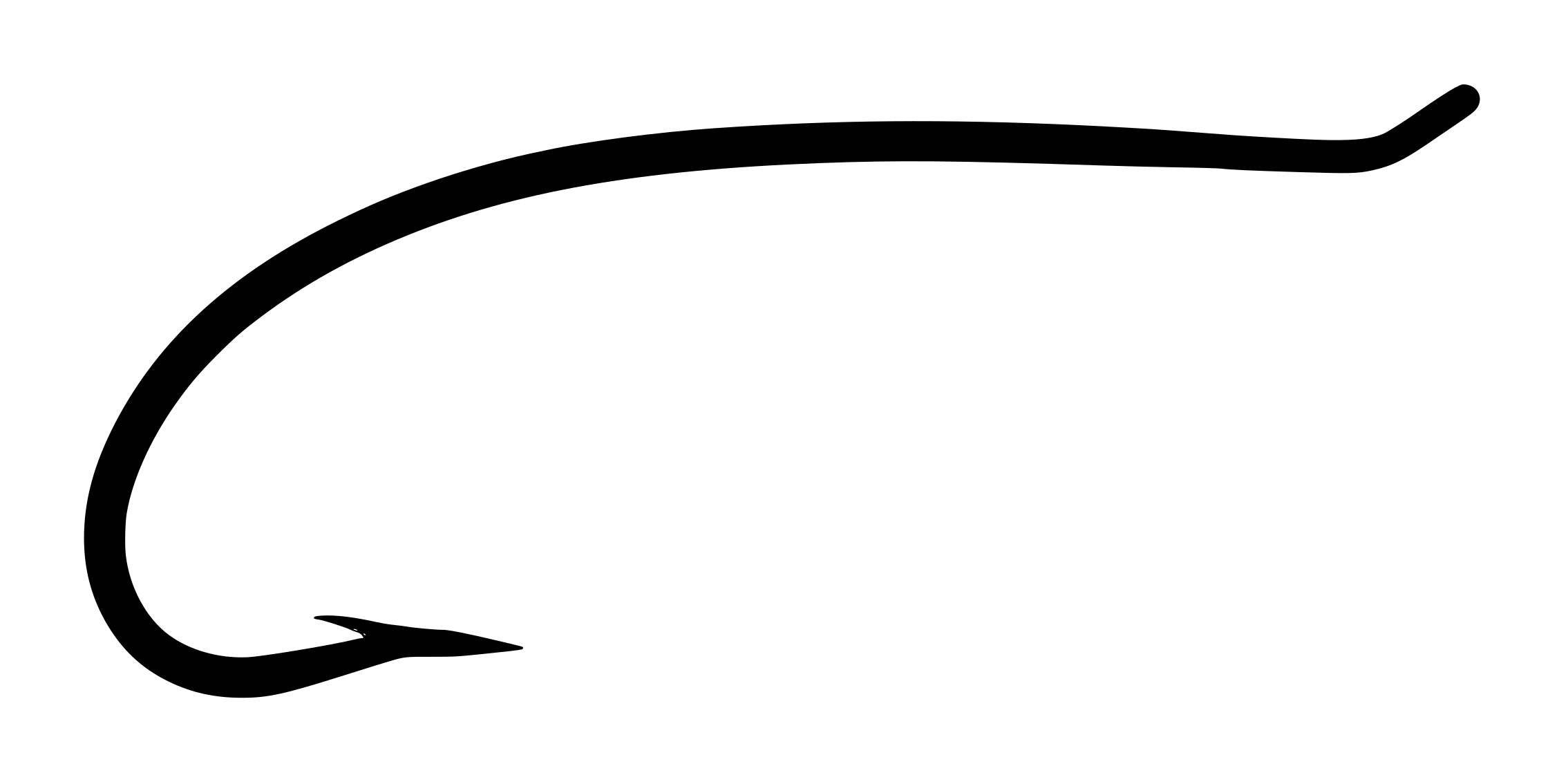
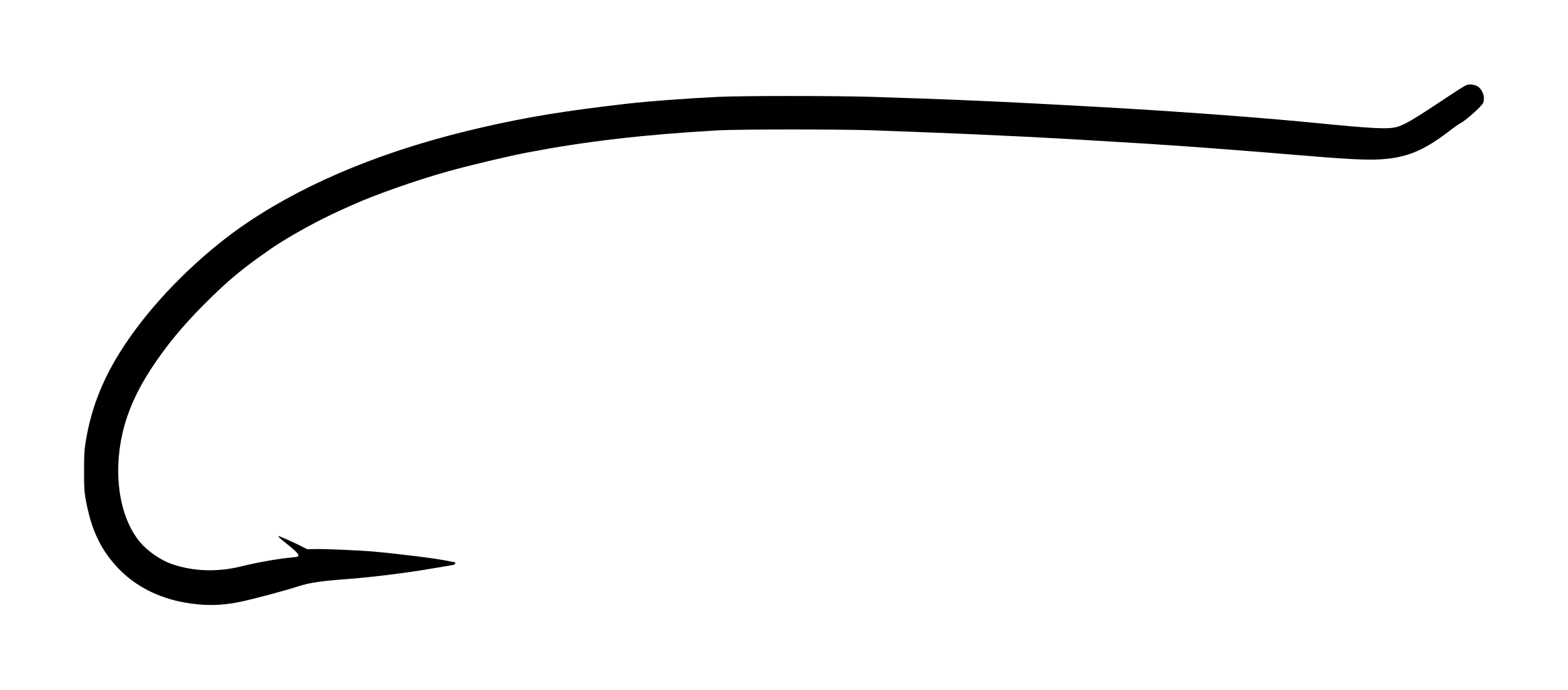
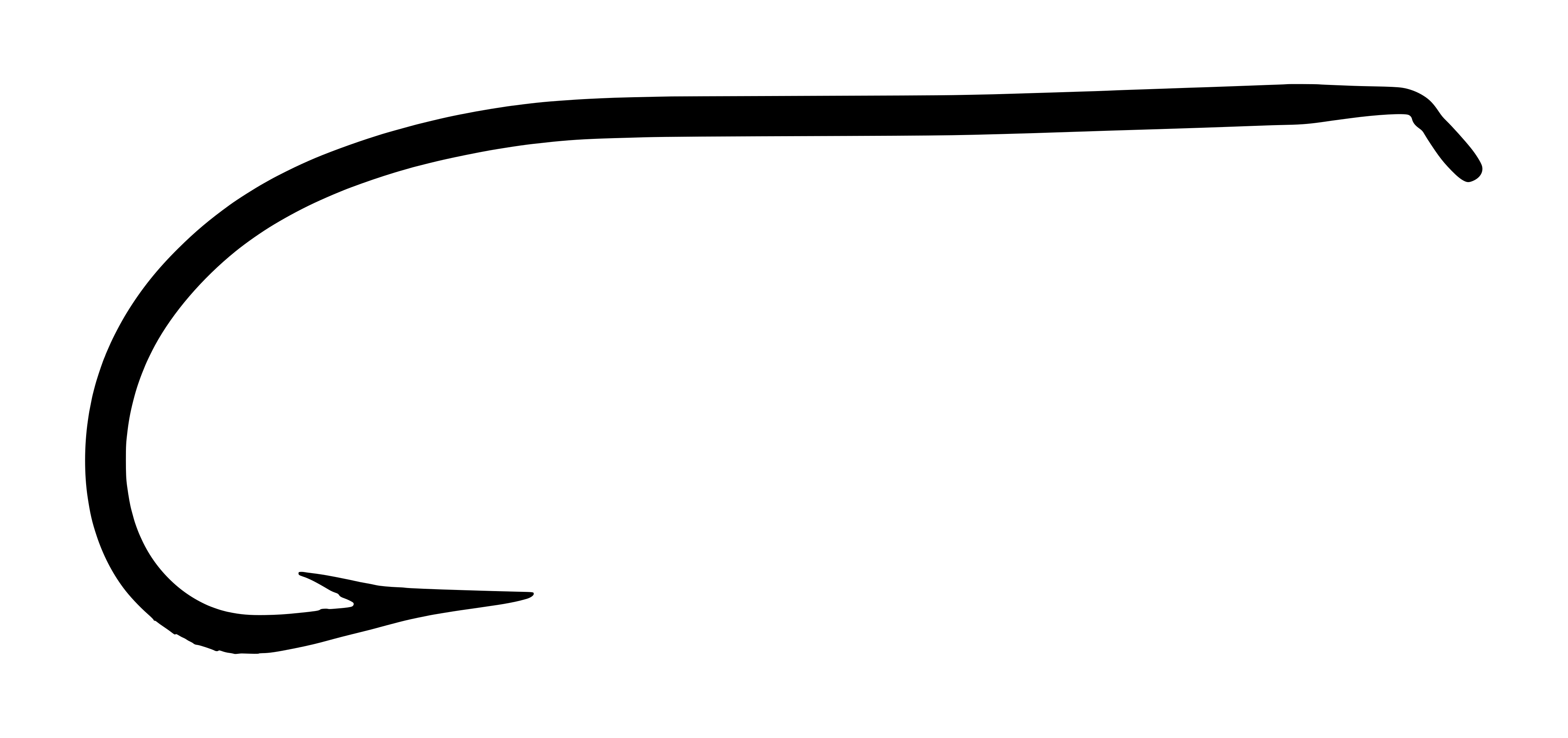
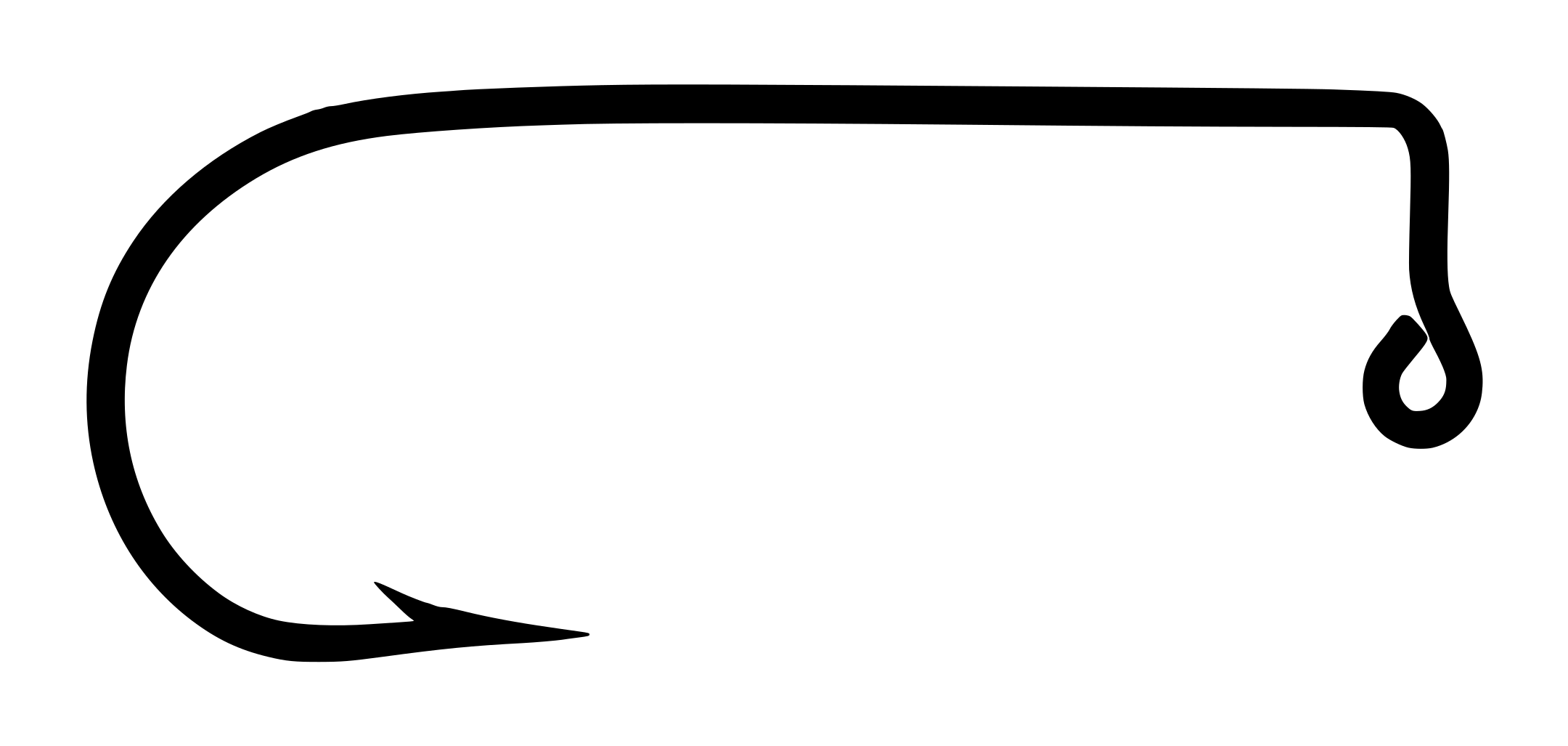
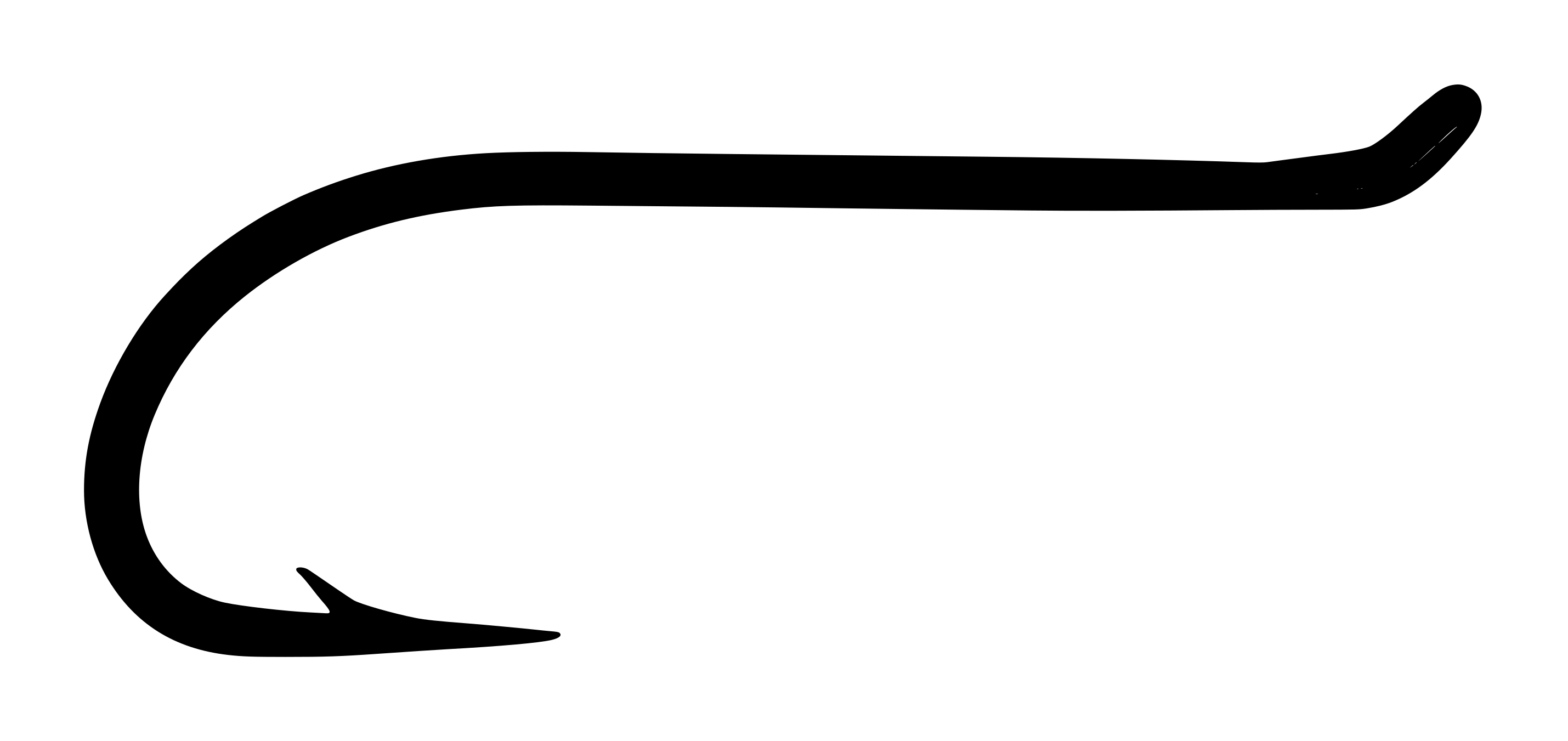
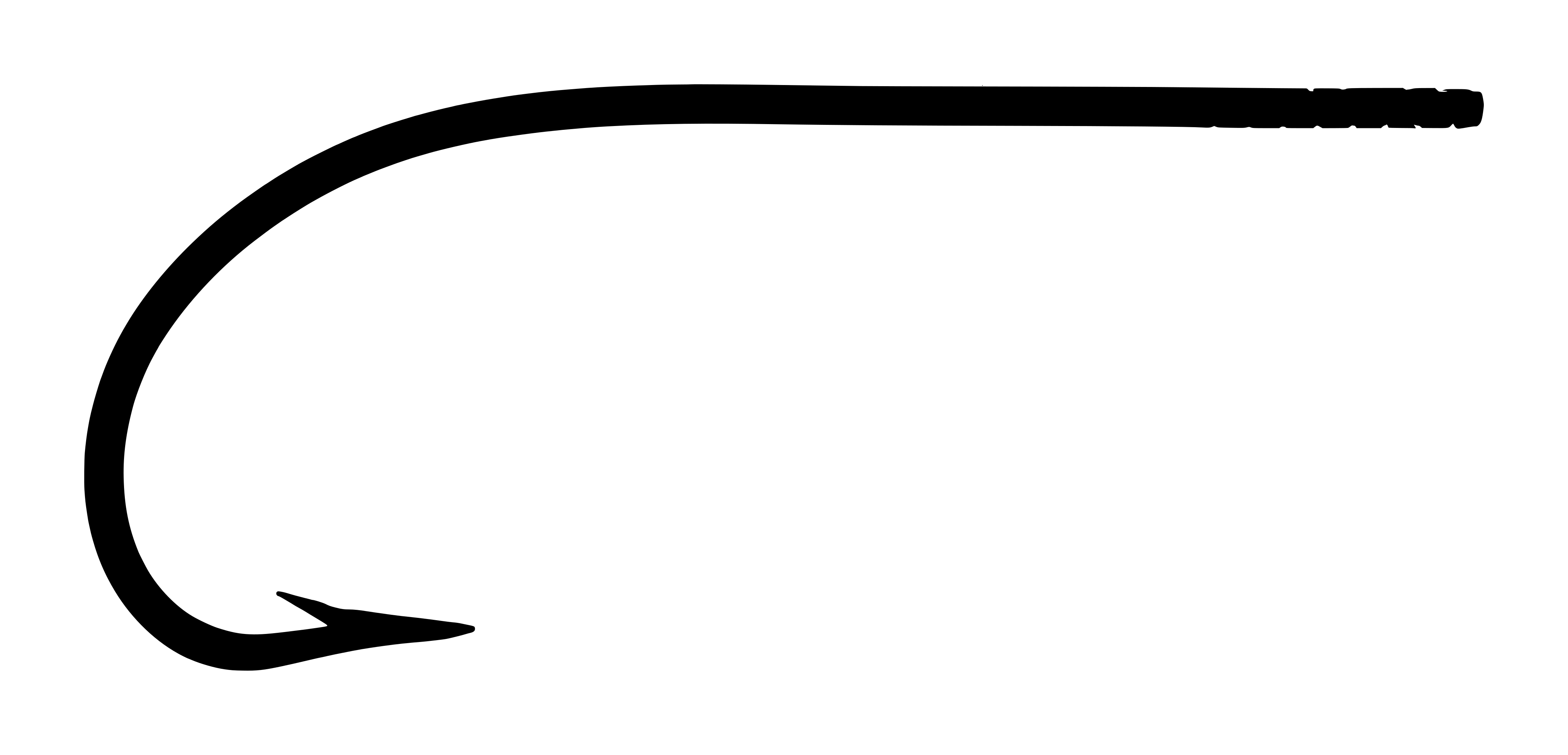
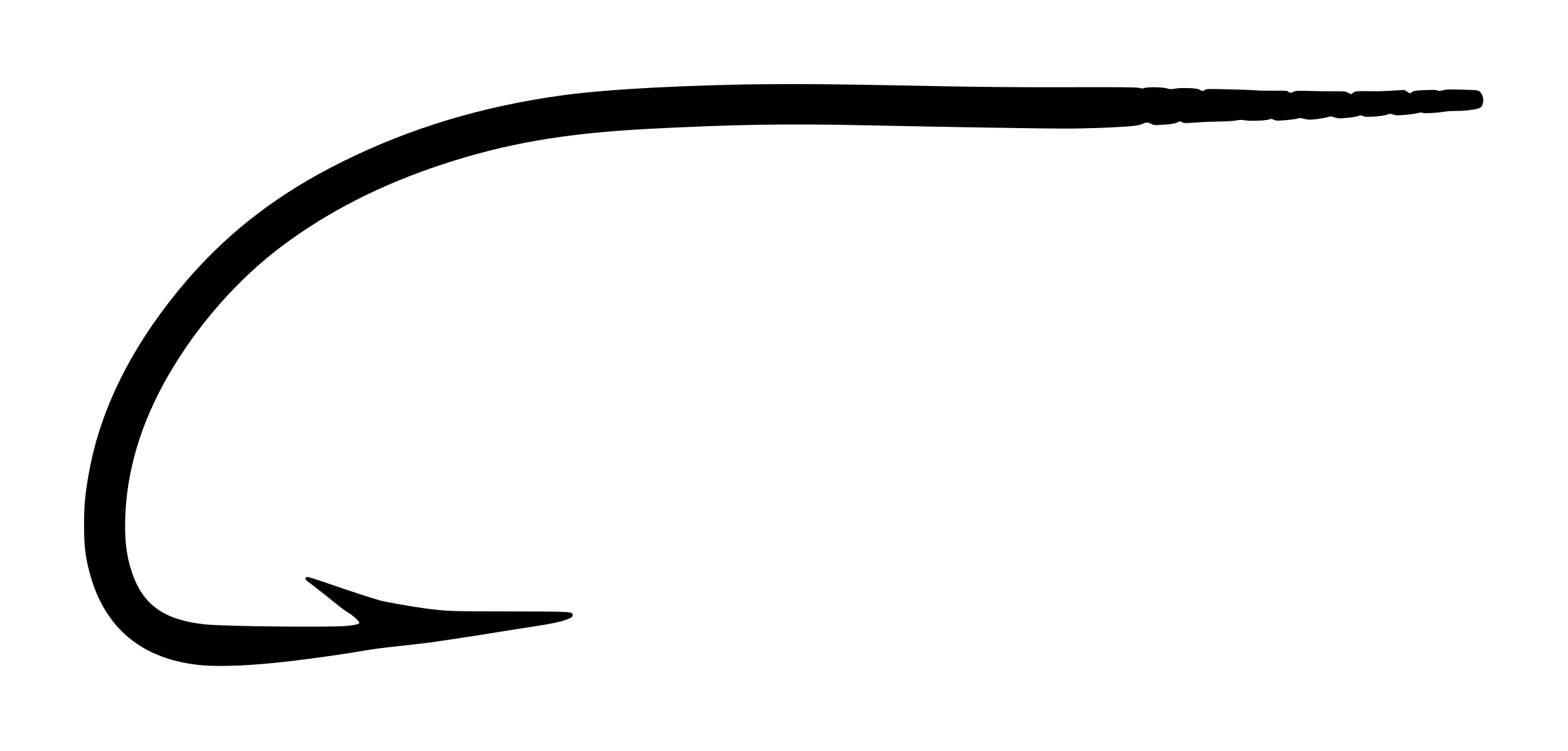
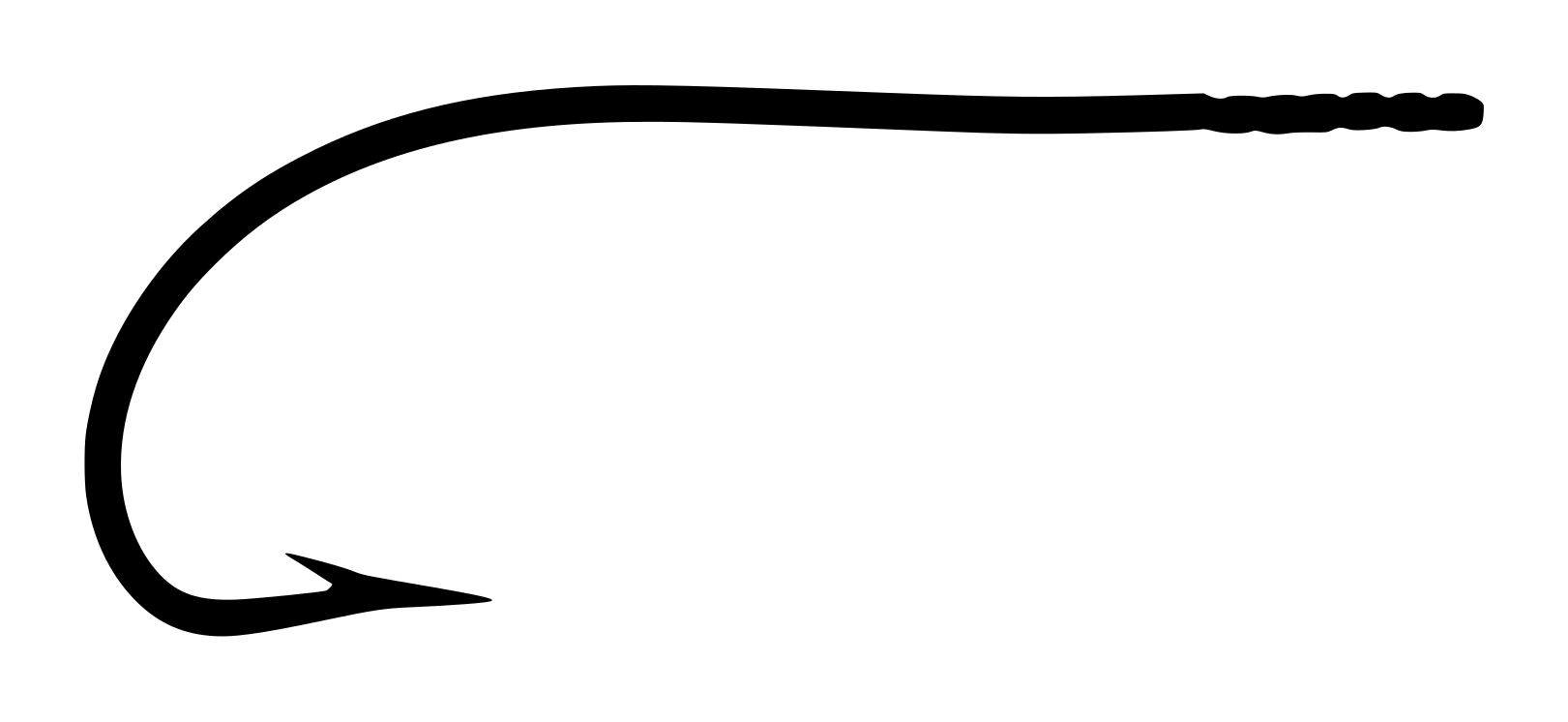
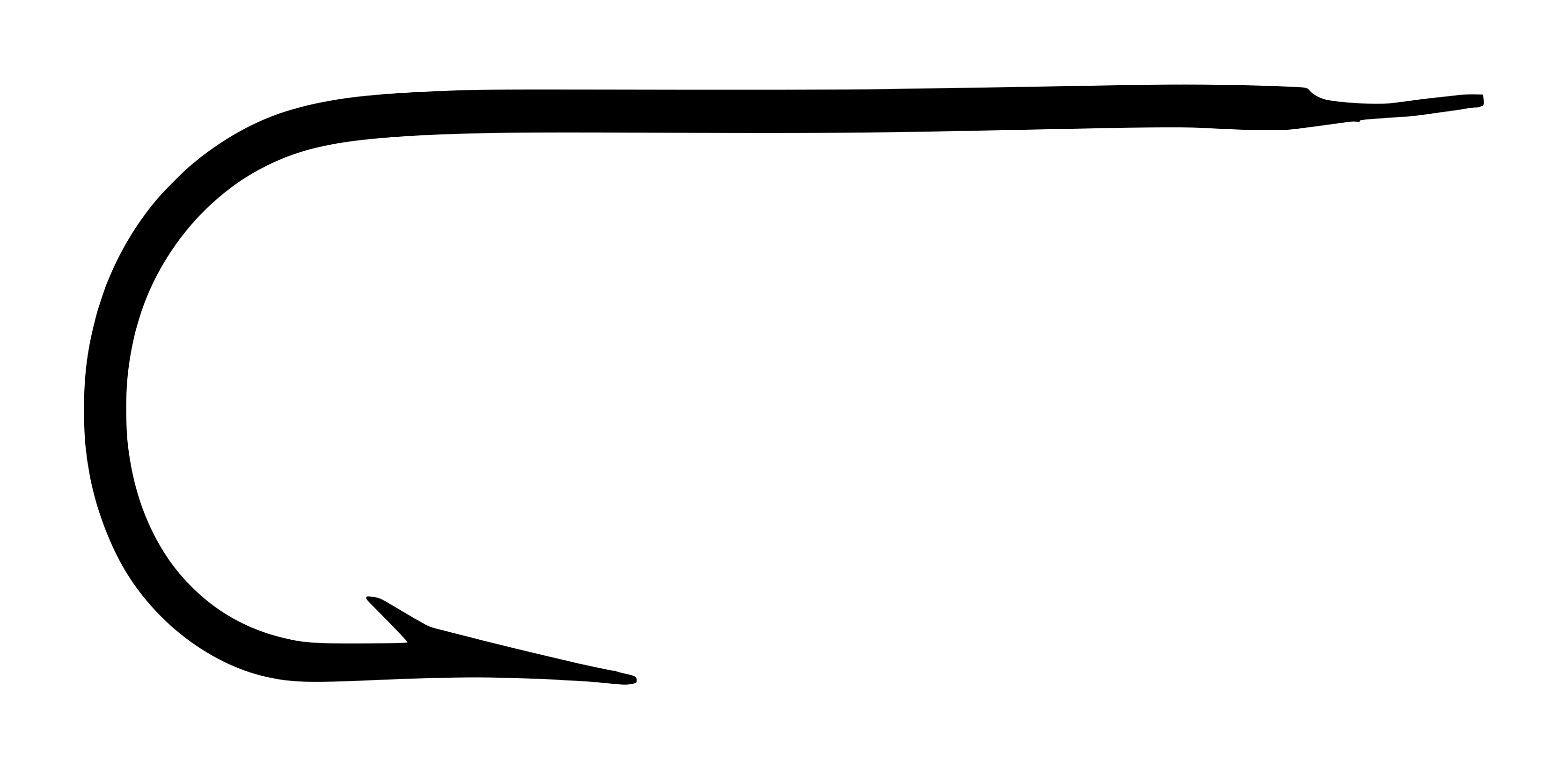
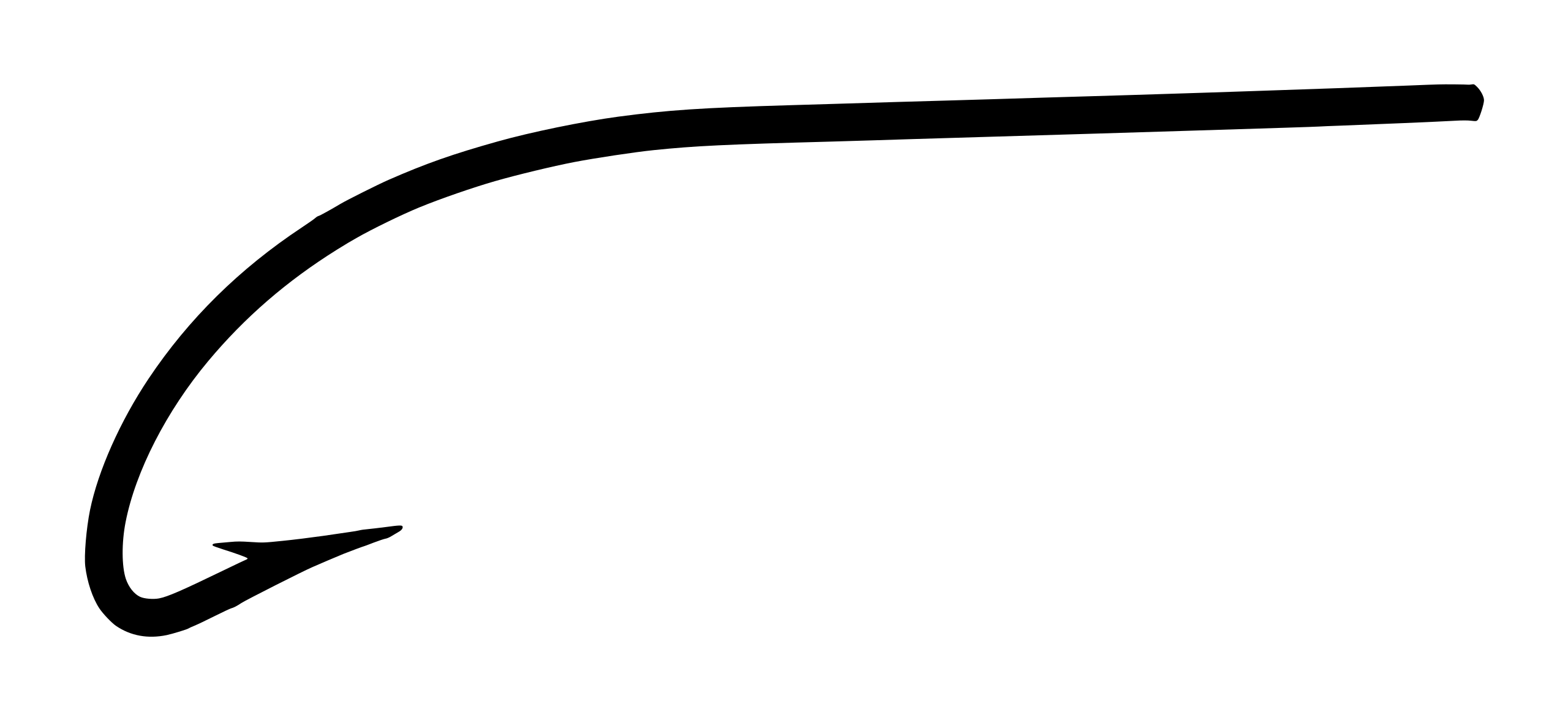
A traditional British Spey fly hook manufactured by Partridge of Redditch, one of England’s premier hook makers. The CS 22 is a standard-shank sproat-family hook with a looped up-eye, japanned black finish, and a superior-point geometry designed specifically for Atlantic Salmon and Steelhead fly presentation. The forged bend provides exceptional strength for large game fish.
This specimen was packaged and sold through West Riding, a Yorkshire-based fly shop retailer, and carries the commercial name ‘Alec Jackson’ (a marketing designation by the retailer, distinct from Daiichi’s modern Alec Jackson Spey hooks). Manufactured during the Redditch era (c. 1975-1995), before Partridge was acquired by Mustad in 1996, it represents the traditional English hook-making craft at its peak.
Collectors value Redditch-era Partridge hooks for their engineering precision, the elegance of the japanned finish, and the connection to classical fly-tying traditions. This size (No. 7) is a practical size for steelhead work, moderately scarce compared to the more common sizes 3 and 5.
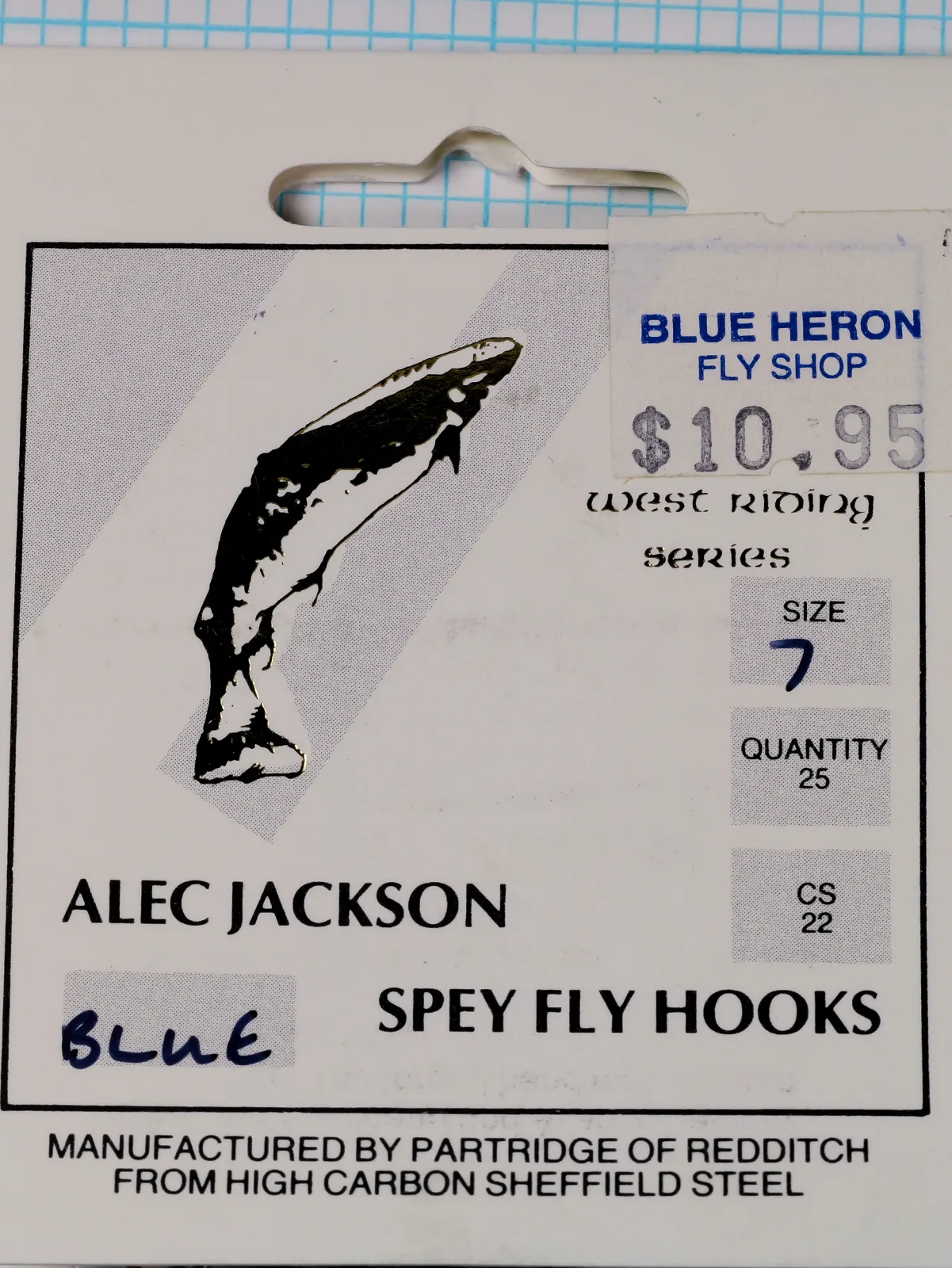
Vintage Blue Heron Fly Shop packaging for Partridge CS 22 size 7 Alec Jackson West Riding Spey hooks, priced at $10.95 with 25 hooks per pack.
Photographic record
9 cataloged imagesSelect any record to load it above.
8 images shown
Partridge CS 22 Spey Hook PackageVintage Blue Heron Fly Shop packaging for Partridge CS 22 size 7 Alec Jackson West Riding Spey hooks, priced at $10.95 with 25 hooks per pack.Open originalWest Riding Yorkshire Flyfisher Business CardVintage business card for West Riding the Yorkshire Flyfisher in Kenmore, Washington, advertising fine fly fishing books and tackle for discriminating anglers.Open originalPartridge CS 22 Alec Jackson Package with SpecimenComplete Partridge CS 22 size 7 Spey fly hook package showing gold-tinted salmon illustration and 25 dark japanned hooks in original packaging.Open originalPartridge CS 22 Specifications ChartTechnical specifications page showing body length, gape measurements, and wire diameter for Partridge CS 22 hooks in sizes 1½ through 7, with turned-up return loop eye detail.Open originalVintage Partridge CS 22 Price LabelOriginal price label from Blue Heron Fly Shop marking Partridge CS 22 Alec Jackson Spey hooks at $10.95 for the West Riding series pack.Open originalCS 22 Hook Eye and Shank DetailClose-up view of Partridge CS 22 size 7 hook showing the turned-up loop eye and dark japanned finish on the hook shank.Open originalCS 22 Sproat Bend ProfileSide profile view of Partridge CS 22 size 7 Spey hook demonstrating the classic sproat bend shape with sharp, acute point and japanned finish.Open originalCS 22 Full Hook ProfileComplete profile view of a Partridge CS 22 Spey fly hook showing the full bend, gape measurement area, and turned-up loop eye in japanned finish.Open originalPartridge CS 22 Hook ComparisonTwo Partridge CS 22 Spey fly hooks displayed together showing consistent sproat bend design and japanned black finish across specimens.Open original
Technical profile
Turned up return loop eye; sproat bend forged from high-carbon Sheffield steel; size 7 — body length 21 mm, gap 8.5 mm, wire diameter 0.89 mm; made in Britain; japanned black finish.
Eye
Looped Eye, Turned UpReturn loop eye is well-formed and smooth, tapered slightly upward at the exit. Loop diameter approximately 0.10"-0.12" (2.5-3 mm). Eye quality is typical of Redditch-era Partridge production — not crude, not oversized. P
Wire
Extra-Fine, Round
Shank
Standard — Plain
Bend
Bartleet, Standard gapSproat bend with smooth rounded curvature and excellent symmetry. The bend arc is characteristic of Redditch Sproat tradition — deeper curve than modern round bends, with the apex well-defined and stable. Wire set is straight through the shank with a smooth transition into the bend at the mid-point of the hook body. P
Point
Superior (near-straight inner taper)Single, close-cut barb set at swept angle (pointing toward the bend). Barb length approximately 0.05"-0.06" (1.3-1.5 mm), proportional to hook size. Barb is cleanly cut and sharp, not rounded or dulled. Barb positioning is at the inner edge of the point, standard for Spey hooks of this era. P
Finish
Black Japanned — Inferred (photographically likely)Japanned black — a traditional lacquer finish applied to high-carbon Sheffield steel. The finish is glossy and warm-toned (not cool gunmetal or bright nickel). Uniform application across all surfaces. Typical of Redditch-era Partridge production (pre-1996). After nearly 50 years, the specimen shows no corrosion, patina development, or finish degradation, testament to the quality of the japanning process. P
Specimen hooks are in excellent condition — bright black japanned finish, sharp points, no corrosion or wear. Original packaging shows age-appropriate toning and light wear; text remains legible. All 25 hooks appear to be present in package (per card count notation). Card window is clear and intact.
The CS 22 is a forged hook, meaning the bend is created by hot-forging the wire rather than bending cold wire. Forging aligns the molecular structure of the steel along the curve, creating a bend that is stronger and more resistant to fatigue than a cold-bent wire of equivalent gauge. For Spey fishing, where large fish and heavy fly rigs create sustained loading, the forged construction is essential.
The superior point geometry (near-straight inner taper, nearly flat inside face) penetrates efficiently into a fish’s mouth and holds securely once set. Unlike hollow points (which have a concave inner face), superior points maintain their edge sharpness and do not develop the internal stress concentration that can lead to point fracture under heavy loading.
The sproat-family bend is rounded and deep, providing a wide gape relative to shank length — advantageous for securing large flies and ensuring that the barb reaches the flesh rather than sliding over the jaw. The upturned return loop eye accommodates both classical gut-loop presentations and modern loop-to-loop fly attachment.
This specimen represents one of few documented examples of the Partridge CS 22 'West Riding' series variant with original Blue Heron Fly Shop packaging and hand-stamped inspector mark. Size 7 Redditch Spey hooks with complete original retail packaging and intact full count (25 hooks) are increasingly scarce as period stock is consumed or dispersed in bulk lots.
Own this hook? Help us measure it.
We don't have measured sizes for this hook yet. Own one? Submit calipered measurements and we'll review and add them. Thank you!
Historical context
Era and Packaging Dating
Packaging printed in offset lithography with period-appropriate font and layout. 'Made in Britain' mark indicates pre-2007 Redditch production (before Mustad-era Singapore/China transition, 2005-2008). Hand-stamped inspector mark 'CLAIR' is consistent with Redditch factory practice. Specification table with metric units (mm) common in UK production 1970s onward. Plastic-window card format typical of mid-to-late 20th century retail. Phone number and ZIP code formats are post-1970s US. Package construction and print quality suggest 1980s-early 1990s. Pre-barcode era or early-barcode transition (barcode not clearly visible on provided images). No post-1996 Mustad branding visible.
The Redditch Hook's Trans-Atlantic Journey
The 'Alec Jackson' name on this Partridge hook represents an interesting case of regional fly-shop branding history. West Riding marketed Partridge Spey hooks under the 'Alec Jackson' label as a nod to the famous American Spey-fly tradition, while contemporary Daiichi Alec Jackson Spey hooks were (and still are) made in Japan. This package was likely packaged and sold through multiple retail channels — first as West Riding stock in Washington State, then reassigned to Blue Heron Fly Shop inventory with the handwritten 'BLUE' mark. The journey of this single card from Redditch factory to Yorkshire fly shop to Washington retailer to American angler reflects the globalization of fly-tying culture and the role of specialty shops as curators and repackagers of heritage tackle.
Design lineage and influence
The Partridge CS 22 sproat-family Spey hook descends from the 19th-century Redditch Sproat tradition — a rounded bend geometry developed by English cutlers and refined by generations of Redditch makers. The sproat became the standard bend for British salmon and sea-trout work, particularly in the hands of Scottish and English fly tyers developing the classical full-dressed salmon fly.
Partridge inherited this lineage as a Redditch maker (established commercially in 1903, formally incorporated as A.E. Partridge & Sons Ltd. in 1933). By the time the CS 22 was produced (c. 1975-1995), Partridge had decades of expertise in refining the sproat geometry for specific applications. The CS 22 represents the middle period of Partridge’s Spey hook development — after the company had absorbed the Bartleet tradition (inherited from the nearby Wm. Bartleet & Sons factory) and before the modern era of proprietary finishes (Grey Shadow, Black Nickel) and international sourcing.
The superior point geometry on the CS 22 is a modern refinement, reflecting 20th-century advances in understanding hook penetration and holding power. This design has remained largely unchanged in Partridge’s current production (e.g., the modern CS 10/1 Bartleet Single and Heritage reissues), testament to the soundness of the engineering.
Best matchRelated by Attribute
Computed automatically from catalog data — updated as new hooks are added.
Matches: Shank, Gap, Point, Forging, Shank Feat. +1 moreDiffers: Bend: Bartleet vs Sproat; Wire: Extra-Fine vs Fine (1X Fine); Eye: Looped Eye vs Tapered Eye +3 more
Matches: Shank, Gap, Eye, Eye Orient., Point +2 moreDiffers: Bend: Bartleet vs Sproat; Wire: Extra-Fine vs Heavy (1X Heavy); Finish: Black Japanned vs Nickelled +1 more
Matches: Shank, Gap, Eye, Eye Orient., Finish +2 moreDiffers: Bend: Bartleet vs Limerick; Wire: Extra-Fine vs Heavy (1X Heavy); Point: Superior vs Standard / Spear +2 more
The Partridge CS 22 is designed for Spey fly and Atlantic Salmon fishing, particularly steelhead applications. The forged sproat-family bend provides strength and penetration in the heavy-duty environment of salmon and steelhead fly fishing. The return loop up-eye accommodates full-dressed feather-wing patterns and allows for the elegant gut-loop presentations characteristic of classical salmon fly tradition. The superior point geometry ensures reliable hook-ups in the mouths of large game fish. Standard shank length (21 mm for size 7) balances fly profile and weight for casting control in Spey and overhead presentations.
Secondary Applications
Can be used for sea trout and large brown trout patterns where a strong forged hook and Spey-style presentation is desired.
Classic Fly Patterns
Spey flies, Atlantic Salmon flies, Steelhead flies (traditional tied and modern variants)
Modern Equivalents
Hook
Match Quality
Notes
Partridge CS 10/1 Bartleet Single (Heritage Reissue)
Very Good
Modern Partridge Spey hook, similar geometry, available in current production; Heritage reissue attempts to replicate Redditch-era specifications. Made in China under Fishing Matters ownership; lacks the Redditch heritage and construction signatures of vintage examples.
Partridge SUD / SLD Patriot Dry
Good
Modern Partridge Spey/salmon dry fly hook variants; contemporary production with similar bend family but different eye type (turned-down instead of turned-up). Functional equivalent for Spey fishing.
Daiichi 2050 / 2051 Alec Jackson Spey
Moderate
Famous Spey hook often compared to Partridge Bartleet-style hooks. Functional equivalent but different manufacturer and bend geometry. Despite the 'Alec Jackson' name association on this package, the Daiichi Alec Jackson is a distinct hook made by Daiichi, not Partridge.
Mustad 36890 Spey
Moderate
Industrial Spey hook with comparable specifications to the CS 22; widely available and less expensive. Less refined finish and construction than Redditch Partridge.
Collector notes
Rated 4.5/10 — Redditch-era Partridge Spey hooks are uncommon and modestly collectible among salmon fly specialists and vintage hook enthusiasts. Size 7 is a working size, less scarce than the extremes (1/0 and tiny 12). The West Riding commercial variant name and original retail packaging add modest appeal. Primary limiting factor is that Partridge Spey production was continuous and large, so specimen availability is moderate rather than rare. Finish condition and original packaging boost value within the uncommon range.
Reference value
$8 – $22 USD estimate
Packaging condition
Good — moderate wear, legibleRecorded specimen
Packaging format
card-window-retailCatalog code
Packaging
Card packet with clear plastic window showing hooks. Front face displays 'ALEC JACKSON' hook illustration (black and white line drawing), retailer name 'BLUE HERON FLY SHOP', price '$10.95', series name 'west riding series', size 'SIZE 7', quantity 'QUANTITY 25', model code 'CS 22', and 'SPEY FLY HOOKS' designation. Bottom of front states 'MANUFACTURED BY PARTRIDGE OF REDDITCH FROM HIGH CARBON SHEFFIELD STEEL'. Back cover (Image 2) shows 'west riding the yorkshire flyfisher' header, tagline 'FINE BOOKS AND TACKLE FOR THE DISCRIMINATING FLYFISHERMAN AND COLLECTOR', retailer address 'BOX 386, KENMORE, WASHINGTON 98028', phone '(206) 488-9806', and ordering text 'SEND $3.00 FOR MOST RECENT CATALOG OF FINE AND UNUSUAL ITEMS FOR DISCRIMINATING FLY FISHERMEN'. Back also displays specification table with hook dimensions and 'MADE IN BRITAIN' with Union Jack flag. Handwritten blue note 'BLUE' visible on package (retailer inventory mark). Paper stock: standard card, white/cream color with offset-printed colors (black, blue, and halftone illustration). Card condition: good, light toning, minor wear at edges.
Market Value Notes
Low ($8): Good condition — opened card, all or most hooks present, minor wear to package, finish unchanged. High ($22): Excellent condition — complete sealed or near-sealed card, all 25 hooks present, package in excellent state, finish pristine. Premium factors: Original Blue Heron Fly Shop retail packaging with address and phone number (historical Washington fly shop), Redditch 'Made in Britain' origin, West Riding regional variant name, hand-stamped inspector mark 'CLAIR', period advertising copy on back. Platforms: eBay (UK and US auctions), specialty vintage fly hook dealers, regional tackle auctions. Confidence: E estimated — limited comparable sales data for this specific West Riding/CS 22 variant. Redditch-era Partridge Spey hooks in similar condition typically range $5-30 depending on size and packaging condition. Size 7 is mid-range, original retail packaging adds 30-50% premium over loose hooks.
Where to Find
eBay (UK listings more common for Redditch Partridge); specialist vintage fly hook dealers (particularly UK-based); regional North American tackle swap meets and fly shop estate sales; online Partridge forums and collector networks (Classic Fly Rod Forum, Spey Pages). West Riding/Blue Heron Fly Shop attribution may yield regional interest in Pacific Northwest.
Preservation
Storage and Preservation
Store the complete carded package in a cool, dry environment away from moisture and humidity. The japanned black finish, while quite durable, can develop patina or tarnish over time if exposed to high humidity or salt air. Original packaging provides excellent protection and also preserves the retail history and condition value of the item.
If hooks must be removed from the card, store them in a dry tackle box with desiccant packets (silica gel). Avoid contact with other metals (stainless steel, brass, or copper) that could cause galvanic corrosion. The high-carbon Sheffield steel is susceptible to rust if exposed to moisture for extended periods.
Do not attempt to polish or clean the japanned finish — any abrasion or chemical cleaning will permanently remove the patina and authenticity. If the finish shows light surface rust or patina, this is desirable in a vintage specimen and adds character and age verification. Seal the package in an archival-quality zip-lock bag if long-term storage exceeds 2-3 years.
Marking Analysis
Retailer Markings and Provenance
The package displays a handwritten blue notation ‘BLUE’ on the front lower left (visible in Image 5), likely a retailer inventory or color-code mark applied by Blue Heron Fly Shop staff. This is a common practice in mid-20th-century fly shops — marking stock by color, species, or inventory category. The mark adds authenticity as a piece of retail history.
The package also carries an inspector stamp ‘CLAIR’ on the specifications label (Image 4) — a hand-stamped quality-control mark applied at the Partridge factory in Redditch. This represents the individual factory worker (initials or name: CLAIR) who inspected the packaged hooks before shipment. Such inspector marks are characteristic of Redditch-era British manufacturing and are increasingly uncommon on surviving examples.
The printed price ‘$10.95’ on the front (Image 5) is in the retailer’s typewritten font, applied after packaging was received. The specific price and retailer (Blue Heron Fly Shop, Kenmore, WA) document a moment in time — when this lot was in inventory in the greater Seattle area, likely in the 1980s or early 1990s, representing an intermediate stage in the package’s journey from Redditch to the fly tier’s bench.
Primary Source
Packaging Copy and Specifications
Source: Partridge of Redditch packaging, Images 1, 2, 4; West Riding packaging text
Front-Face Copy: The headline ‘ALEC JACKSON SPEY FLY HOOKS’ positions this as a specialized product for a named style of fishing. The series designation ‘west riding series’ suggests either a Partridge sub-line or a West Riding (Yorkshire) regional brand. The tag ‘SIZE 7, QUANTITY 25’ indicates this was a standard retail pack size for fly shops, bundled to support commercial tyers and stock rotation.
Manufacturer Statement: ‘MANUFACTURED BY PARTRIDGE OF REDDITCH FROM HIGH CARBON SHEFFIELD STEEL’ explicitly credits both the maker and the material. High-carbon Sheffield steel is a traditional English steel known for its edge-holding and resilience in hardened/tempered form. This statement reflects manufacturing pride and material transparency, common in mid-20th-century fly tackle marketing.
Specifications Table (Image 4): The printed spec table provides measurable data for every size: Body length (mm), Gap (mm), and Wire diameter (mm). For size 7: Body length 21 mm, Gap 8.5 mm, Wire diameter 0.89 mm. These conform closely to the caliper measurements and grid analysis, validating both the specification accuracy and the manufacturing consistency of the Redditch factory.
Reverse-Face Marketing: The West Riding retailer copy—’FINE BOOKS AND TACKLE FOR THE DISCRIMINATING FLYFISHERMAN AND COLLECTOR’—reflects the positioning of specialty fly shops in the 1970s-1990s as curators of tradition and knowledge. The offer to ‘SEND $3.00 FOR MOST RECENT CATALOG’ dates this package to an era before the internet, when fly shops built customer relationships through printed catalogs and direct mail.
‘Made in Britain’ Mark: The Union Jack flag and ‘MADE IN BRITAIN’ statement (with inspector mark) certify Redditch origin and date the package to pre-2007 (before Partridge’s Redditch factory closed during the Mustad era).
Additional
The West Riding Connection and Regional Hook Branding
The ‘West Riding’ designation on this package refers to the historic West Riding of Yorkshire, a cultural and geographic region in Northern England famous for wool mills, agricultural heritage, and a strong tradition of fly fishing and fly tying. West Riding the Yorkshire Flyfisher, based in Kenmore, Washington, adopted this regional name to evoke Yorkshire fly-fishing tradition — a marketing strategy that connected American Pacific Northwest fly tyers to British salmon and trout heritage.
Though physically located in Washington State, West Riding curated and repackaged imported British hooks (particularly Partridge and other Redditch makers) under regional-inspired names like ‘Alec Jackson Spey Hook’ and ‘West Riding Series.’ This was common practice in the 1970s-1990s: US fly shops would purchase bulk Redditch hook stock, apply their own labels or overprint retailer information, and resell to regional clientele. The strategy capitalized on the prestige of British hook-making while building local identity.
The handwritten note ‘BLUE’ and the price ‘$10.95’ mark this package as part of Blue Heron Fly Shop’s inventory — suggesting a second retail iteration (from West Riding wholesale/distributor stock into Blue Heron’s Kenmore retail shop). This layered distribution history is common in vintage fly tackle and adds to the collectibility of the piece as a documented artifact of mid-century fly-shop commerce.
Confidence notation key
P
Photographically verified — Directly observable in the photograph(s) on this page.
V
Verified by documentation — Confirmed by manufacturer catalog, spec sheet, or published reference.
I
Inferred — A logical deduction from observable or documented evidence, not directly stated.
E
Estimated — An approximation based on visual comparison, proportional analysis, or limited data.
S
Speculative — A reasoned hypothesis that cannot be confirmed from available evidence.
Claims with no notation are confirmed by multiple independent sources. All photographs on garrenwood.com are taken on a measurement grid where each square equals 1/10 inch (0.1″ / 2.54 mm).