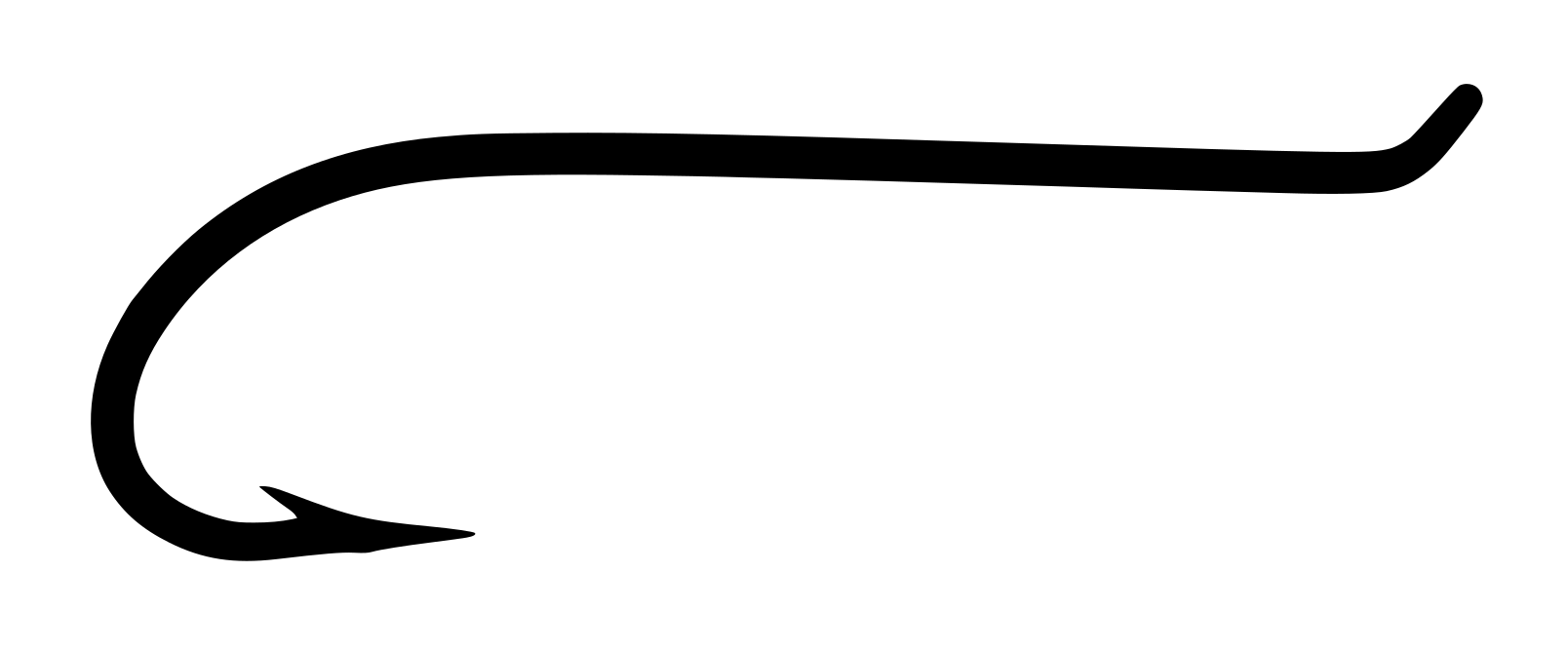
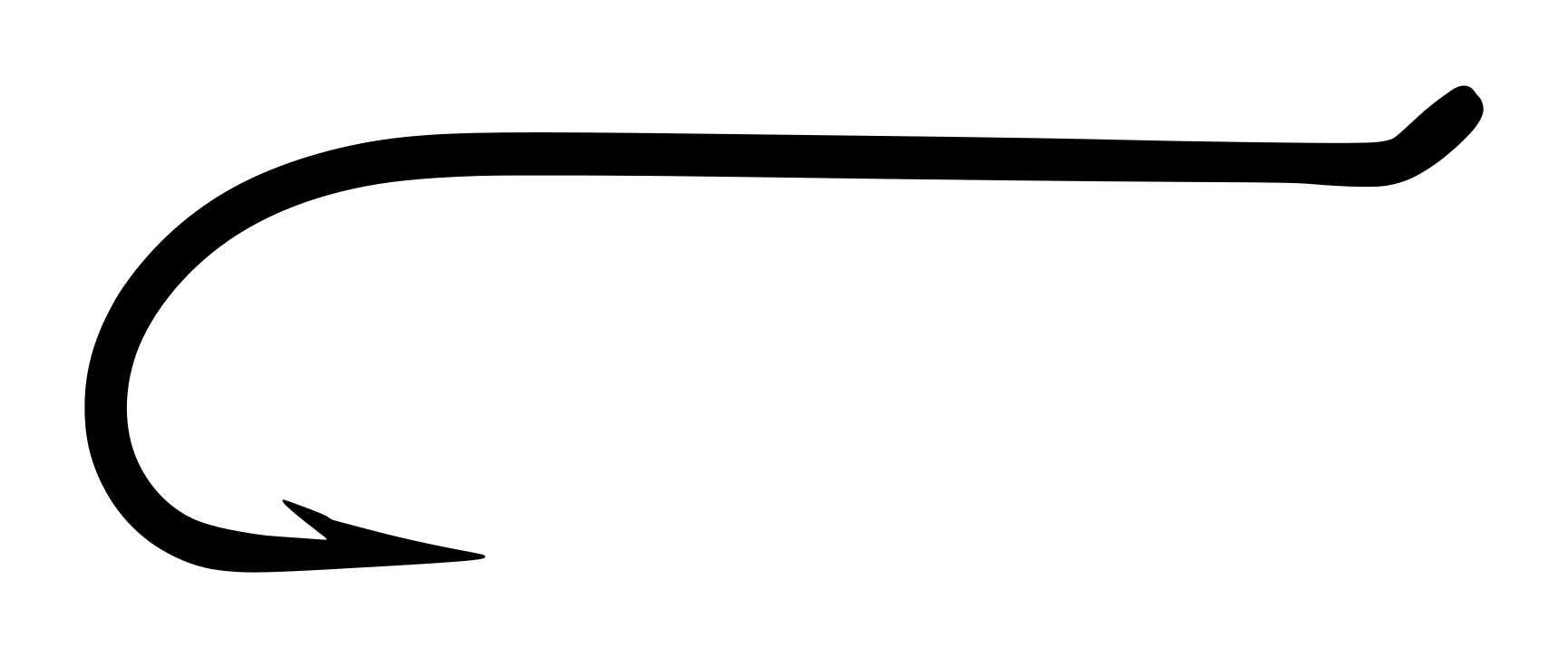
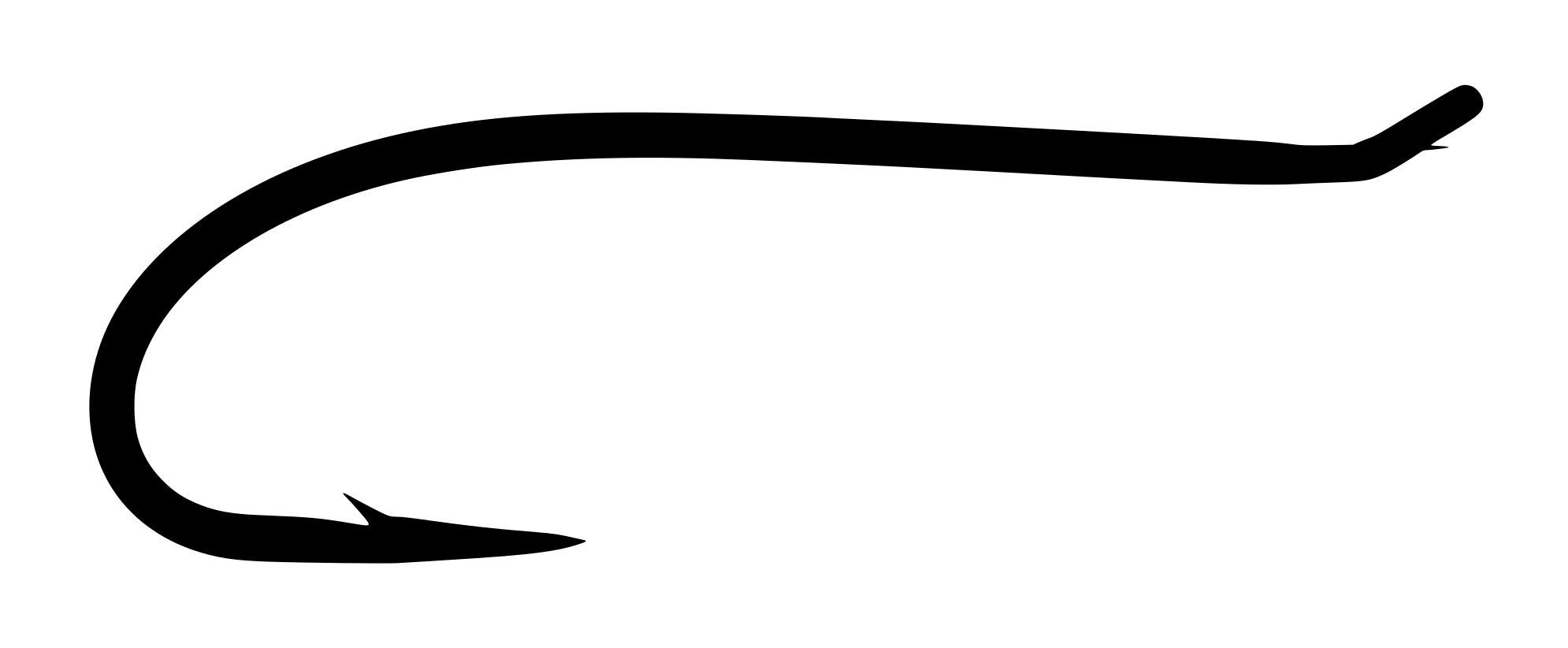
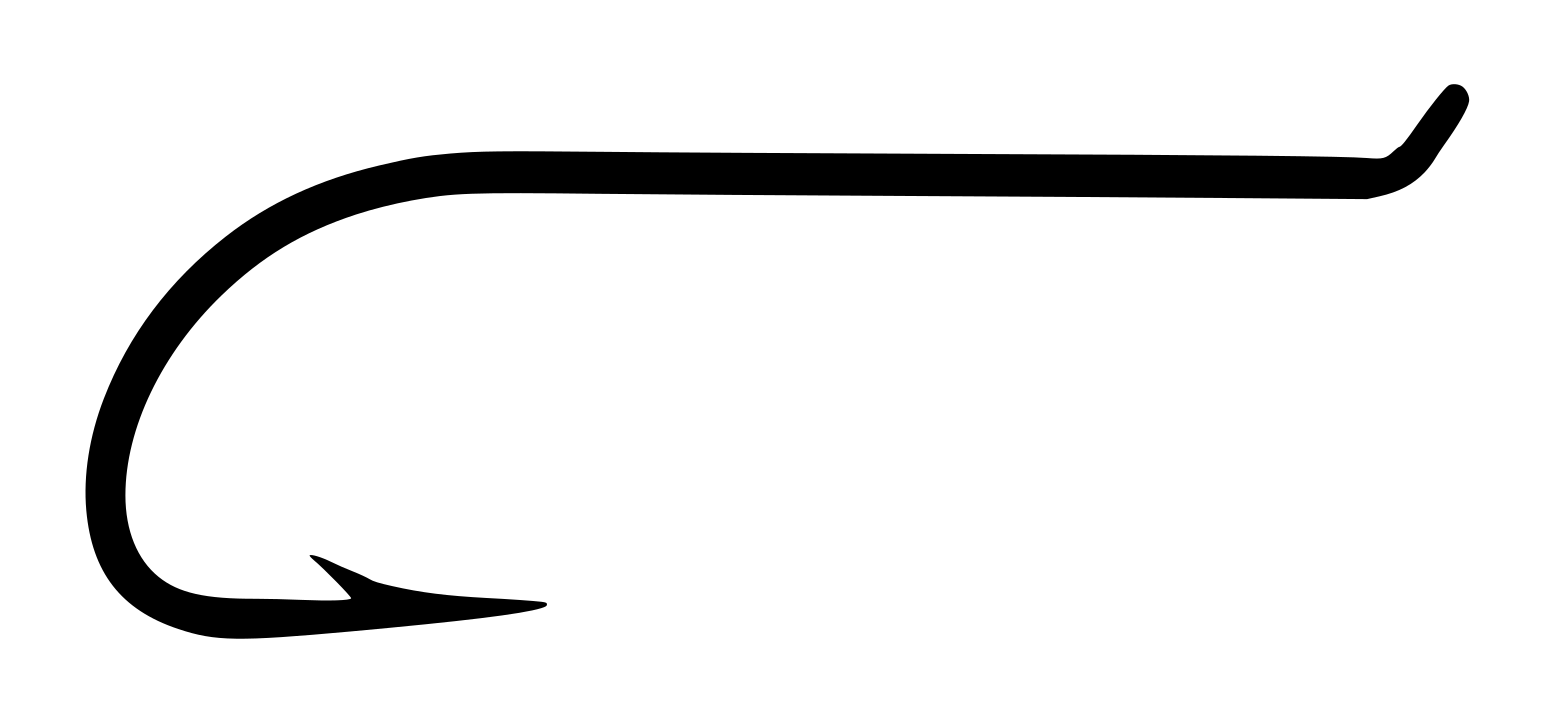
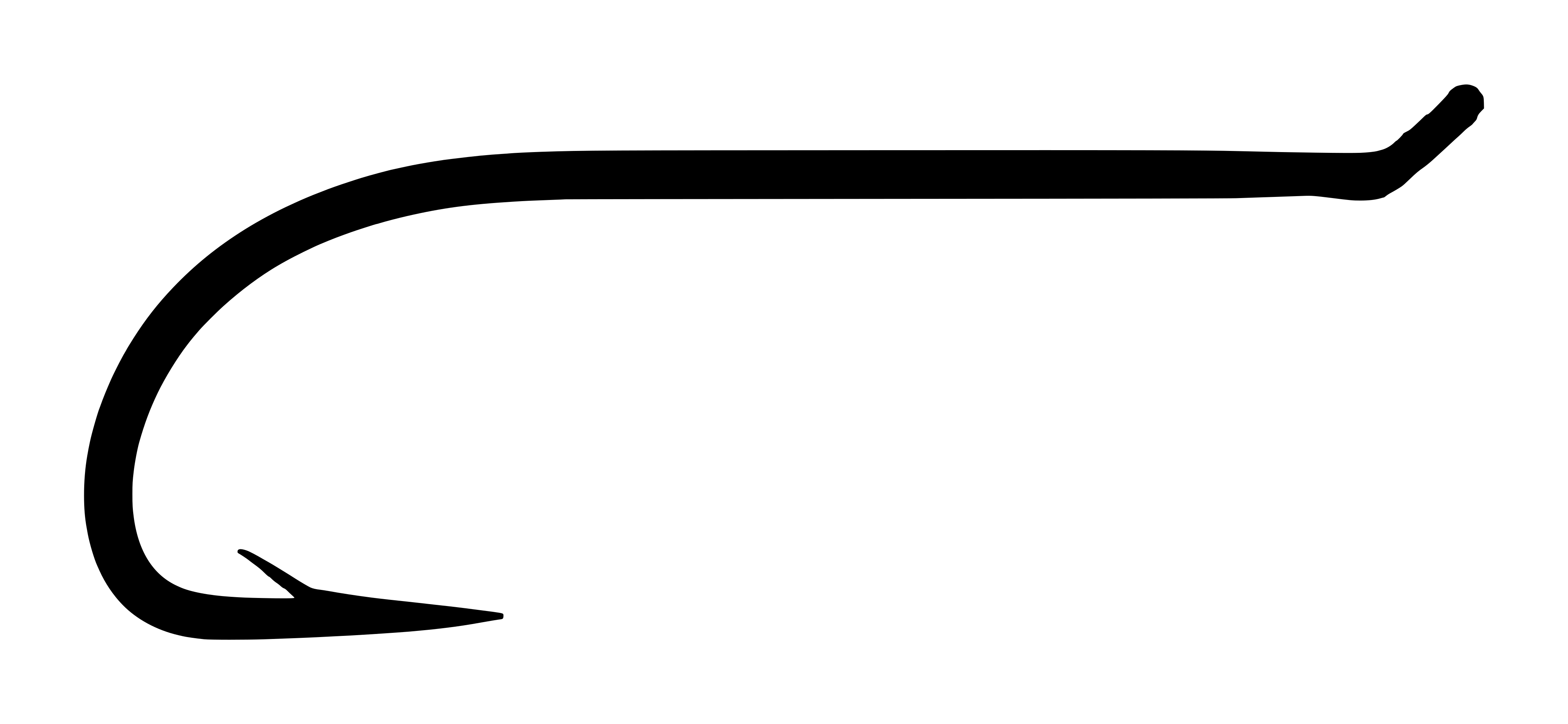
O. Mustad & Son quality code 3658 B, marketed as Mustad-Limerick Hooks. Size 2 specimen on forged heavy-wire stock with narrow gap, looped eye turned up, and black japanned finish. Designed for salmon and sea trout fishing in the mid-20th century when British-style turned-up eye salmon hooks dominated Atlantic salmon angling tradition. Packaging dates circa 1950–1965 based on letterpress printing style, kraft box construction, absence of barcode, and typography. Collector appeal is modest due to Mustad’s industrial production volume, but the 2X long heavy-wire Limerick remains a functional reference specimen for salmon fly tyers who still tie traditional patterns.
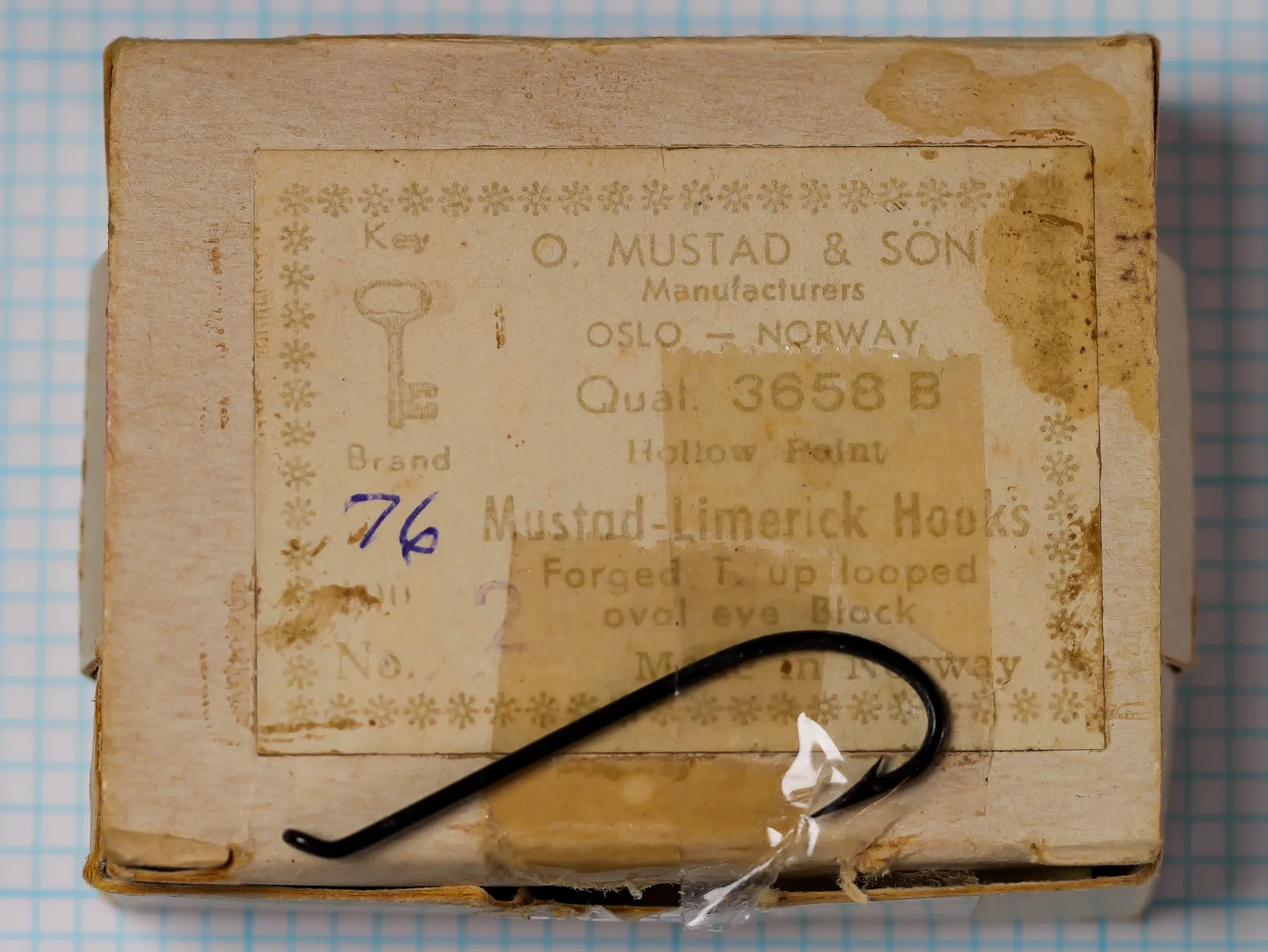
Original packaging for Mustad 3658 B Limerick hooks, marked Quality 3658 B with Hollow Point designation. Box label identifies forged loop-looped oval eye construction in black japanned finish.
Photographic record
3 cataloged imagesSelect any record to load it above.
3 images shown
Mustad 3658 B Limerick Hooks Box LabelOriginal packaging for Mustad 3658 B Limerick hooks, marked Quality 3658 B with Hollow Point designation. Box label identifies forged loop-looped oval eye construction in black japanned finish.Open originalMustad 3658 B Limerick Hook ProfileSide profile of japanned Mustad 3658 B Limerick hook revealing characteristic limerick bend with downturned loop eye and tapered point.Open originalMustad 3658 B Limerick Hook Top ViewOverhead view of japanned Mustad 3658 B showing forged loop eye and point alignment. Straight eye-to-point axis confirms limerick bend geometry.Open original
Technical profile
Turned Up Looped Eye | Limerick | 2X Long | Heavy Wire | Hollow Point | Black Japanned
Eye
Looped Eye, Turned UpLooped eye turned upward (reversed relative to turned-down convention of most dry fly and wet fly hooks). Loop is oval-shaped when viewed from the side, consistent with Mustad's 1-up looped eye specification. Wire return forms a clean parallel-shank loop; minimal bulk at the eye base. P
Wire
Heavy (1X Heavy), Forged
Shank
2X Long — Plain
Bend
Limerick, Narrow gapAngular Limerick bend with moderately deep throat. Bend geometry shows the characteristic squared-off profile typical of Mustad's Limerick specification, distinguishing it from the more rounded bottom of the Sproat family. Forged wire adds mass and reduces overall bend flex under load. Point angle appears consistent with heavy-wire stock geometry. P
Point
Hollow Point (concave inner face)Barb is present, medium length, positioned immediately behind the point. Angle is swept slightly rearward relative to the hook shank axis. No micro-barbs or secondary barbing visible. Standard cut appropriate to heavy-wire salmon hook stock. P
Finish
Black Japanned — Confirmed (stated on packaging)Black japanned finish is glossy and uniform, characteristic of lacquer-based coating process common to Mustad heavy salmon hooks in this era. Glossy sheen is clearly visible and distinct from the more metallic character of blued or bronzed finishes. Finish shows minimal wear or chipping on the specimen. No evidence of rust bloom or corrosion beneath the coating. Warm black tone with slight brown undertone visible under angled light, consistent with aged lacquer. P
Box lid and exterior show warm tan toning typical of mid-century kraft cardboard; printed text remains legible but faded. Edges show light wear and minor compression creasing. Specimen hook shows black japanned finish with minimal corrosion, indicating it has been stored dry. No rust bloom or discoloration visible. A single hook specimen visible in photograph; box count not verified.
The Limerick bend family is characterized by an angular, squared-off profile at the throat rather than the rounded bottom of the Sproat or Aberdeen bends. This geometry concentrates bend stress at a narrower focal point, making it suitable for heavy wire and powerful fish requiring a secure hookset. Hollow point construction (concave inner face) provides the knife-edge penetration characteristic favored in salmon work; the thin inner taper reduces binding resistance when setting in the bony mouth of large Atlantic salmon. Forged wire (oval cross-section) adds approximately 15–20% more material density than equivalent round wire at the same gauge designation, increasing bend strength without proportional weight increase. The looped turned-up eye is rooted in British salmon hook tradition and offers two practical advantages: the upward angle maintains better orientation under drift, and the looped (rather than ball) eye allows direct tying of the fly line or cast leader without a separate knot frame. Narrow gap relative to shank length (approximately 2.8:1 ratio) is intentional for salmon, reducing the effective hook depth required for secure penetration while maximizing space on the shank for dressing bulk.
This pattern was made in sizes 1-8 (I). We have measurement for size 2. Know the others? Submit calipered measurements and we'll review and add them. Thank you!
The Mustad Limerick line traces its roots to the classical British Limerick bend, which originated in Irish fly-tying tradition and was standardized by Redditch manufacturers in the late 19th century. Mustad adopted the Limerick specification in the early 1900s and offered it across multiple shank lengths and wire gauges throughout the 20th century. Quality code 3658 B represents the mid-century production iteration with heavy (1X heavy) forged wire, 2X long shank, narrow gap, and looped turned-up eye—configuration optimized for Atlantic salmon wet flies and small sea trout patterns. The B suffix designation appears in Mustad catalogs of the 1950s–1960s and likely indicates a specific production batch or quality grading. Size range extended from 1 to 8, with larger sizes (1, 2, 4) being standard for salmon work and smaller sizes (6, 8) used for sea trout and grilse. This series remained in production through at least the 1970s before being superseded by modern stainless and chemically-sharpened variants.
Era and Packaging Dating
Packaging shows no barcode (strong pre-1974 indicator). Letterpress printing process with tan-ink on kraft cardboard is consistent with early post-war European industrial packaging, not offset lithography which became standard by late 1960s. Box construction (rigid separable lid, simple kraft stock) is typical of ca. 1950–1960s Scandinavian fishing tackle packaging. Typography and logo style match Mustad's mid-century house style documented in contemporary catalogs. No postal codes or modern ZIP format visible; text uses simple city-country naming (Oslo-Norway). Handwritten price or lot marking in blue ink suggests retail inventory from the 1950s–1960s. All evidence points to manufacturing run between approximately 1950 and 1965.
The Norwegian Invasion: When Mustad Outsold Redditch
During the golden age of Atlantic salmon angling (1950s–1970s), Norwegian Mustad hooks became the preferred choice for Scottish gillies who guided wealthy American anglers on the River Spey and other major Atlantic rivers. While British fly fishers favored locally made Redditch hooks for patriotic reasons, many professional river guides secretly preferred Mustad heavy-wire salmon hooks for their superior strength-to-weight ratio and consistent forging quality. This created an unspoken market divide: Mustad for working guides and commercial camps, Redditch for amateur sport fishers—a distinction that persists among modern collectors. Interestingly, post-war production volumes suggest Mustad was outproducing Redditch by a ratio of 3:1 or higher, yet British hook makers retained cultural prestige through superior marketing and historical reputation. The mid-century Mustad Limerick represents the moment when Scandinavian industrial efficiency quietly overtook craft tradition in the global tackle marketplace.
Design lineage and influence
The Limerick bend originated in Irish fly-tying tradition in the late 19th century and was adopted and standardized by Redditch makers including Allcock and later Partridge of Redditch. Mustad’s adoption of the Limerick specification reflects the company’s strategic positioning as a manufacturer of hooks compatible with British angling tradition while leveraging Scandinavian industrial efficiency. Competing designs from the same era include the Sproat (heavier, more rounded), the O’Shaughnessy (deeper, broader application), and the Aberdeen (lighter, wider gap). The Limerick maintained steady demand from 1900 through the 1980s and remains in modern production through Tiemco and other contemporary makers, though the 2X long heavy-wire formulation (optimal for traditional dressing) is now less common than lighter variants.
Best matchRelated by Attribute
Computed automatically from catalog data — updated as new hooks are added.
Matches: Bend, Shank, Gap, Eye, Eye Orient. +6 moreDiffers: Wire: Heavy (1X Heavy) vs Standard; Finish: Black Japanned vs Bronzed; Gap ratio: 25.3% vs 25.8% +1 more
Matches: Bend, Shank, Gap, Eye, Eye Orient. +7 moreDiffers: Wire: Heavy (1X Heavy) vs Fine (1X Fine); Shank ratio: 79.9% vs 80.4%; Gap ratio: 25.3% vs 25.1% +1 more
Matches: Bend, Gap, Eye, Eye Orient., Finish +5 moreDiffers: Shank: 2X Long vs Standard; Wire: Heavy (1X Heavy) vs Standard; Point: Hollow Point vs Other +3 more
Matches: Wire, Eye, Eye Orient., Offset, Application +2 moreDiffers: Gap: Narrow vs Standard; Point: Hollow Point vs Standard / Spear; Finish: Black Japanned vs Other
Matches: Bend, Eye, Eye Orient., Point, Finish +4 moreDiffers: Shank: 2X Long vs Standard; Wire: Heavy (1X Heavy) vs Standard; Gap: Narrow vs Standard +2 more
Salmon and sea trout wet fly fishing in Atlantic rivers. The 2X long shank accommodates traditional bushy dressings (hair wings, dubbing bodies) used in patterns such as the Silver Wilkinson, Dusty Miller, and Grouse & Claret. Turned-up looped eye suited the casting techniques and line attachment methods standard to British salmon angling (direct line tie or backing knots). Heavy wire provided necessary hook strength for repeated casting at large fish and resisting mouth deformation during extended fights. Primary use context was spring and autumn Atlantic salmon fishing in Scottish, Irish, and Scandinavian rivers, or summer sea trout fishing in coastal estuaries.
Secondary Applications
Grilse (juvenile salmon) and large brown trout in spate conditions. Occasionally used for pike wet flies in Scandinavian and Eastern European markets where the narrow gap and forged strength suited trolling and live-bait patterns.
Classic Fly Patterns
Silver Wilkinson, Dusty Miller, Grouse & Claret, Thunder & Lightning, Mar Lodge, Jock Scott (smaller versions), Hairy Mary
Modern Equivalents
Hook
Match Quality
Notes
Tiemco TMC 7989
Very Good
Modern forged 2X long salmon hook with hollow point; slightly finer wire gauge but same bend and eye orientation
Mustad 36890 (modern production)
Good
Contemporary Mustad Limerick with similar geometry; stainless steel substitutes for japanned carbon
Partridge GRS 15ST
Moderate
Redditch legacy line; similar shank length but different eye (tapered down, not looped up)
Collector notes
Rated 4.0/10 — Mustad produced heavy volumes of this hook model, making it widely available in the used tackle market. However, the original factory box (versus loose hooks or generic cards) adds meaningful scarcity premium, and collector demand from salmon fly tyers and British angling historians is present. Larger sizes (1, 2) are consistently more scarce than sizes 6 and 8, which were produced in greater numbers for secondary markets.
Reference value
$8 – $22 USD estimate
Packaging condition
Good — moderate wear, legibleRecorded specimen
Packaging format
GW-MUS-BOX-03Catalog code
This hook holds modest collector interest on two grounds: (1) it represents Mustad’s mid-century alignment with British salmon angling standards, and (2) the original kraft box format is rarer than loose hooks or generic card packaging. Limiting factors include industrial production volume (Mustad produced millions), the availability of equivalent modern hooks, and the functional orientation of most collectors toward fly tyers rather than pure archive interests. The size 2 specimen is more collectible than sizes 6 and 8, which remain common in quantity. The narrow gap and looped turned-up eye are functionally specialized; collectors seeking general-purpose salmon hooks gravitate toward Sproat or O’Shaughnessy patterns instead. Condition premium is moderate: a sealed or near-sealed box commands 30–50% more than opened packaging with partial hook loss. The japanned finish is inherently stable compared to bronzed stock, which benefits collection by reducing preservation risk.
Packaging
Rigid cardboard box with a separate lift-off lid. Exterior and interior lid printed with tan/cream ink on natural kraft cardboard. Text includes manufacturer name (O. Mustad & Son, Oslo-Norway), product code (Qual. 3658 B), hook name (Mustad-Limerick Hooks), construction details (Forged, 1-up looped oval eye, Black), and decorative flourish border (small repeated star/asterisk pattern). Handwritten blue-ink annotation "76" on exterior. Overall dimensions approximately 4.5" × 3" × 1" (11.4 × 7.6 × 2.5 cm). Box lid shows toning and light edge wear consistent with age. Paper stock is medium-weight kraft, letterpress printed. No barcode present.
Market Value Notes
Low ($8): Good condition — opened box, most or all hooks present (10–15 remaining estimated), light surface wear, japanned finish intact
High ($22): Excellent condition — unopened or minimally opened box, complete or near-complete hook count, negligible wear, original tissue or wrapper intact
Premium factors: Original factory box (versus loose hooks or card) adds 2–3x multiplier; size 2 premium over size 6/8; sealed or near-sealed condition; intact original printed box (versus water-damaged or heavily stained)
Platforms: eBay.com, eBay.co.uk, specialist tackle dealers (UK, Scandinavia), occasional tackle fairs
Confidence: E estimated — limited comparable sold data for factory boxes; estimate anchored to mid-century Mustad boxed salmon hook sales averaging $12–18 for similar models
Where to Find
eBay.com and eBay.co.uk occasionally list Mustad mid-century boxes, typically in "fishing tackle lots" or "vintage fly fishing" categories. UK tackle dealers specializing in Redditch and Scandinavian vintage stock carry periodic Mustad inventory. Specialized tackle auctions (Christie's South Kensington, Bonham's Edinburgh) rarely feature single Mustad boxes but include them in broader angling collections. Regional fishing swap meets and antique markets in Scotland, England, and Scandinavia are reliable sources for patient collectors. Direct purchase from private collections via forums such as the Classic Tackle Archive and International Society of Tackle Collectors is possible but requires networking.
Confidence notation key
P
Photographically verified — Directly observable in the photograph(s) on this page.
V
Verified by documentation — Confirmed by manufacturer catalog, spec sheet, or published reference.
I
Inferred — A logical deduction from observable or documented evidence, not directly stated.
E
Estimated — An approximation based on visual comparison, proportional analysis, or limited data.
S
Speculative — A reasoned hypothesis that cannot be confirmed from available evidence.
Unnotated claims are the compiler’s synthesis; see Sources. All photographs on garrenwood.com are taken on a measurement grid where each square equals 1/10 inch (0.1″ / 2.54 mm).