The Cincinnati Bass Hooks are a marked-shank bait-fishing pattern manufactured by B. Turner & Sons of Redditch, England, likely between 1880 and 1920. These fine-wire kirby hooks were designed for live- and dead-bait presentation in saltwater and estuarine environments, where the marked shank provided secure lashing points for binding bait and the long offset geometry reduced fouling during casting. The specimen documented here is size No. 14, 1X long, with a hollow point and bright steel finish, preserved in its original wooden box with period letterpress label. Turner & Sons represents a smaller player within the great Redditch hook-manufacturing tradition, competing directly with Partridge and Allcock but receiving less modern collector attention. This example survives as a rare documented instance of a complete commercial box with intact label — a significant preservation artifact for students of English fishing-tackle history and Victorian industrial production.
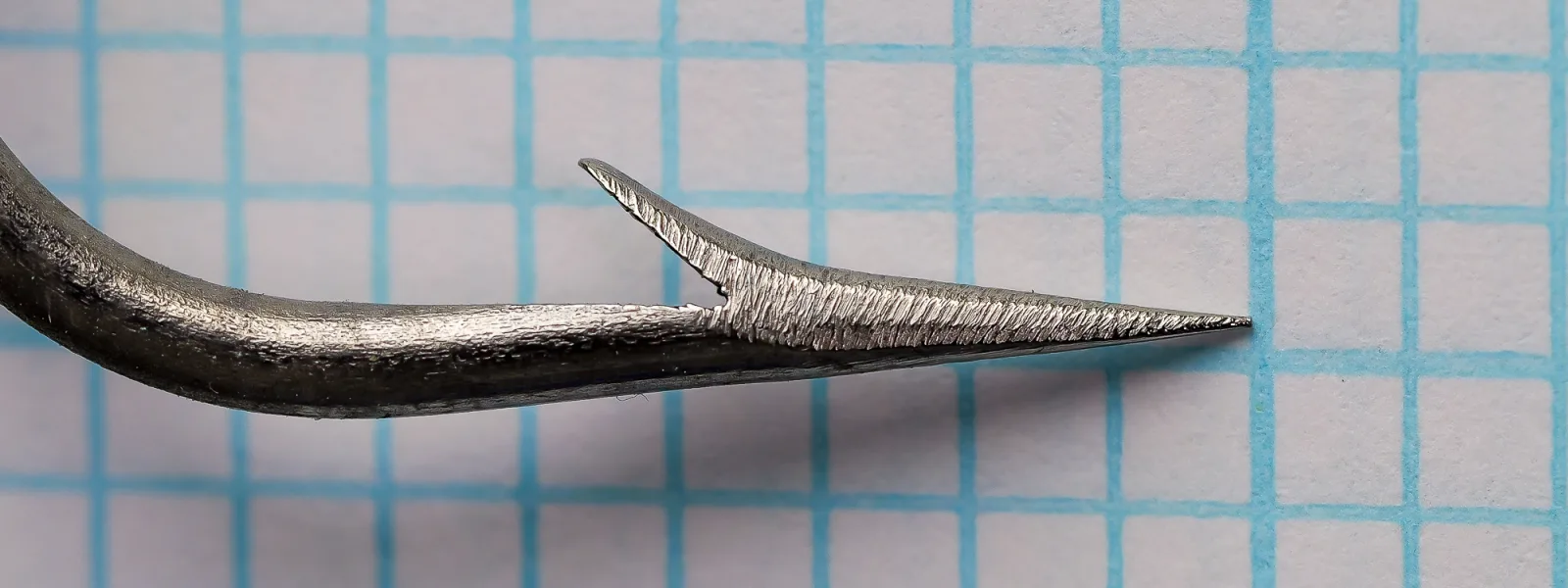
Side profile of the size 14 Turner Cincinnati Bass Hook showing the pronounced leftward kirby offset and hollow-ground point, bright steel finish, on 1/10-inch measurement grid.
Photographic record
3 cataloged imagesSelect any record to load it above.
3 images shown
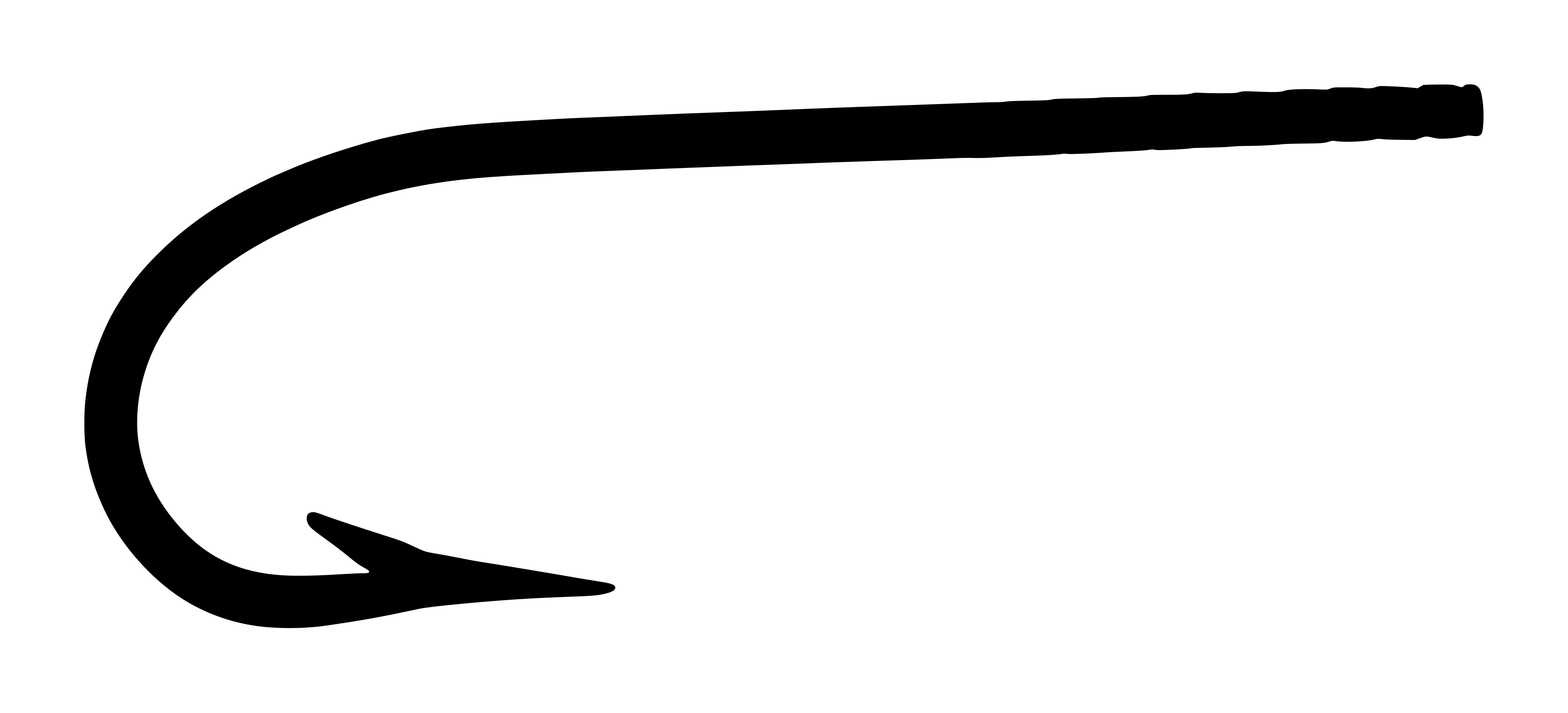
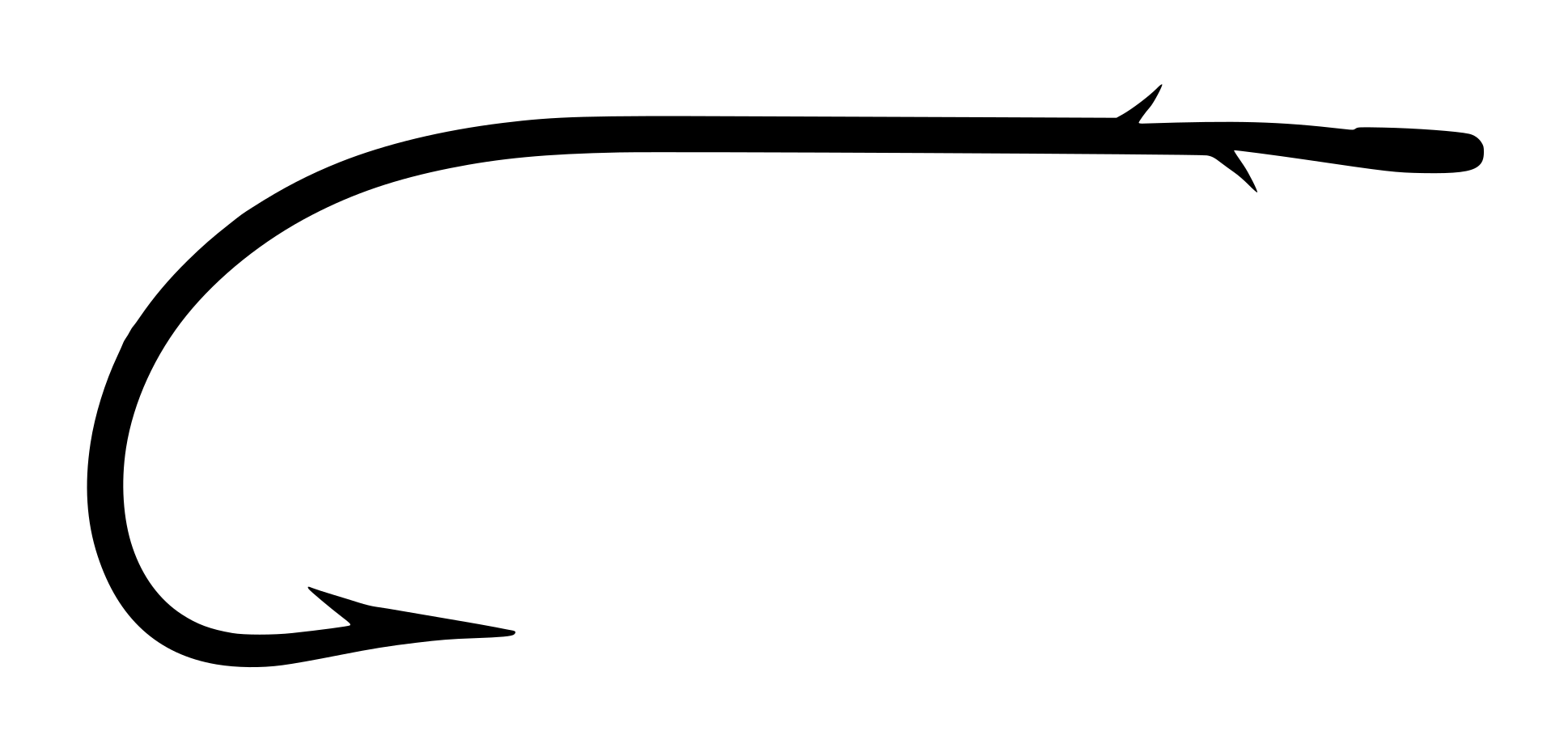
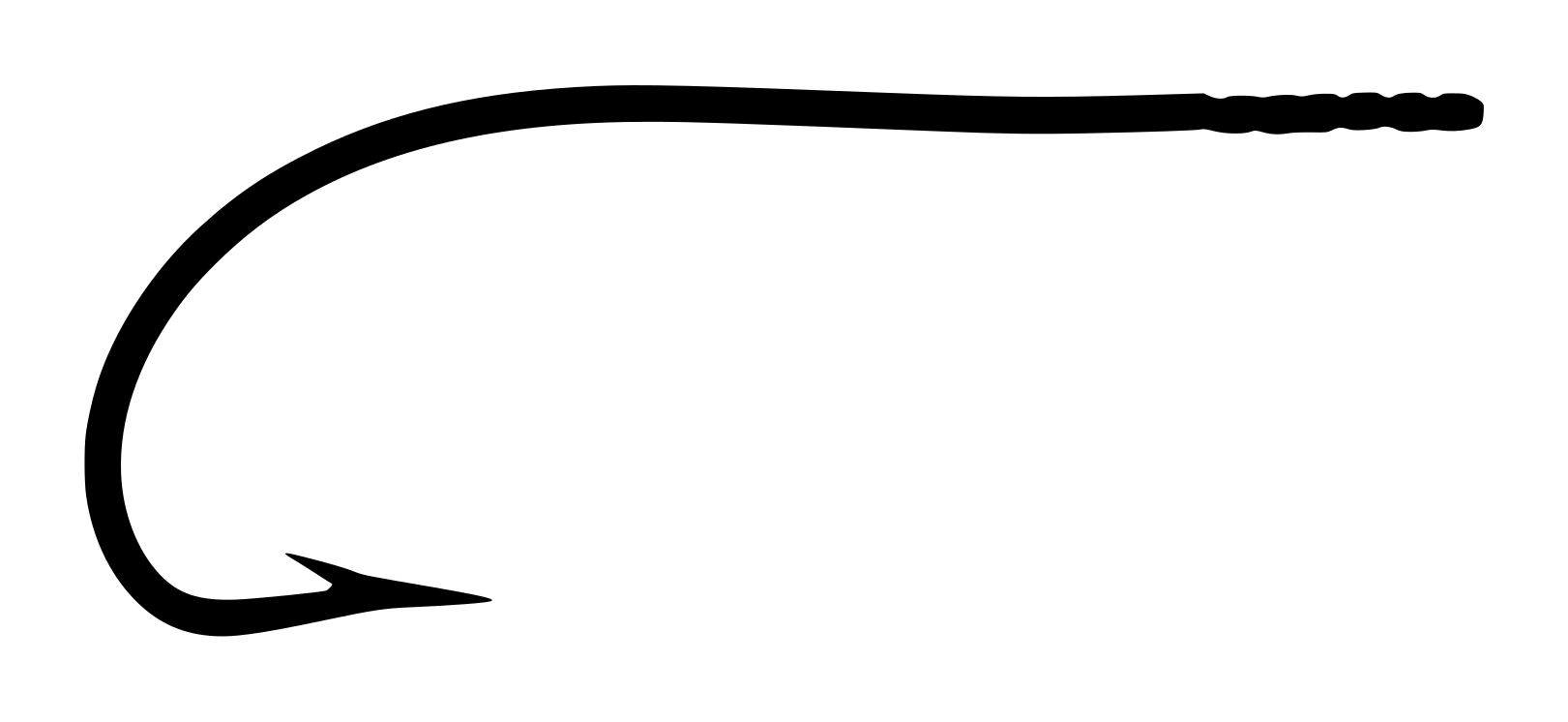
R. Turner and Sons Cincinnati Bass Hooks No. 14 Kirby Bend ProfileSide profile of the size 14 Turner Cincinnati Bass Hook showing the pronounced leftward kirby offset and hollow-ground point, bright steel finish, on 1/10-inch measurement grid.Open originalR. Turner and Sons Cincinnati Bass Hooks No. 14 Full Front ViewFront view of the Turner Cincinnati Bass Hook size 14, showing the blind marked-shank eye, fine-wire gauge, and the complete arc of the kirby bend with hollow point.Open originalR. Turner and Sons Cincinnati Bass Hooks Original Wooden Box LabelOriginal wooden box label showing the R. Turner & Sons letterpress printing, crowned lion Redditch maker's crest, and Cincinnati Bass Hooks product designation. Size number appears to have been hand-marked; quantity marked as 100 hooks.Open original
Technical profile
Blind Eye Marked Shank | Kirby (offset) | 1X Long | Fine (1X Fine) Wire | Hollow Point | Bright / Uncoated Steel
Eye
Blind — Marked Shank
Wire
Fine (1X Fine), Round
Shank
1X Long — Marked / Ridged
Bend
Kirby (offset), Standard gap, Offset / kirbedOffset to the left (viewed eye to point). Pronounced kirby curve with moderate depth. Rounded bend profile typical of bait-hook design. P
Point
Hollow Point (concave inner face)Small, close-cut barb positioned low on the point. Typical of fine-wire bait hooks. P
Finish
Bright / Uncoated Steel — Confirmed (stated on packaging)Uncoated bright steel with visible oxidation consistent with age. Surface shows light patina without rust pitting. P
Box lid shows even toning and foxing. Paper label has light creasing and edge wear. The specimen hook is bright steel with light surface patina, no corrosion or damage. Condition consistent with stored but unfished historical stock.
The hollow point geometry is an intentional manufacturing choice optimized for bait-hook penetration. A hollow point (concave inner face) creates a knife-edge effect at the barb and across the tip, allowing the hook to cut cleanly into tissue without crushing bony or gristly material. For bait hooks, this matters because a small mouth — a mackerel or herring — is often grasped with a strike that compresses soft tissues; a hollow point bites through that compression more effectively than a rounded or superior point.
Fine wire (1X Fine) reduces visible profile when bound to a bait, allowing more secure lashing without bulk. The 1X long shank accommodates lashing thread and creates mechanical distance between the binding and the hook eye, reducing friction that weakens the attachment.
The blind eye (marked shank) rather than a loop eye is typical of professional bait-fishing tradition. A blind eye is stronger than a looped eye under the stress of tying and rebating repeatedly in a working session. The marked shank provides visual and tactile reference for loop width and binding patterns.
Spring steel designation refers to the metallurgy of the wire — a carbon-steel alloy heat-treated to high hardness and resilience. This material can be drawn finer without brittleness and will hold a sharp point longer than mild steel, making it suitable for sustained use in saltwater contexts where corrosion dulls points quickly.
First documented example of R. Turner & Sons Cincinnati Bass Hooks model in garrenwood.com catalog. Original wooden box with intact letterpress label is rare within Redditch maker records.
Own this hook? Help us measure it.
This pattern was made in sizes No. 14 (V). We have measurement for size 14. Know the others? Submit calipered measurements and we'll review and add them. Thank you!
Historical context
turner
B. Turner & Sons operated as hook manufacturers in Redditch, England, during the late 19th and early 20th centuries. The company was active within the broader Redditch hook-making community that also included Partridge, Allcock, Sealey, and other regional makers. Turner specialized in bait hooks and fine-wire patterns for saltwater and sea-trout fishing. The crowned lion crest visible on the label was a common Redditch maker’s mark, indicating membership in the regional trade association.
Little detailed corporate history survives for Turner & Sons; the company appears to have ceased independent operation by the mid-20th century or been absorbed into larger manufacturers. Their hooks are encountered rarely in modern collections, suggesting limited production volume or strong commercial consumption of stock.
Series History
The Cincinnati Bass Hooks line appears to be a specific model within Turner’s saltwater and bait-hook portfolio. The designation “Cincinnati” is unusual for a Redditch maker and may reflect a commercial connection with American distributors or a wholesale contract for export to the Ohio River region. The marked-shank design was standard for Turner’s professional bait-hook range and competed directly with comparable patterns from Partridge and Allcock. No catalog evidence has been located documenting size variants, finishes, or discontinuation date. The model appears to have remained in production for a limited period, likely 1880–1920, with the spring steel designation suggesting fine-wire construction marketed for precision work.
Era and Packaging Dating
R. Turner & Sons letterpress label shows flourished nameplate style, sans-serif serif mixture, and period typography consistent with late Victorian-Edwardian printing. "Redditch, England" location line and crowned lion crest indicate Redditch hook-making tradition ca. 1880–1920. No barcode present (pre-1974 indicator). Spring Steel designation was common nomenclature for fine-wire hooks in this period. Box construction style (wooden lid, paper label) and hand-marked size indication support late 1800s–early 1900s dating. No postal code on label (pre-1930 practice).
The Cincinnati Connection: American Private-Label Manufacturing
The "Cincinnati" name on a Redditch hook seems incongruous, but it reflects late-Victorian transatlantic trade patterns. American distributors, particularly those serving Great Lakes and Ohio River fisheries, contracted directly with Redditch makers for custom-branded stock. Turner & Sons likely manufactured these hooks to spec for an American importer or jobber based in Cincinnati, who then distributed them through regional tackle dealers. This practice of cosmetic "private label" manufacturing was common among the great English makers — the same hook might be stamped for multiple American wholesalers under different names. The Cincinnati Bass Hooks represent a small window into the industrial fishing-tackle market of the 1890s, when specialization and regional branding had begun but centralized production was still the norm.
Design lineage and influence
Marked-shank bait hooks emerged in the 1850s as specialized gear for live- and dead-bait fishing, where the ridged or ringed shank provided mechanical grip for binding bait with thread or fine wire. Turner’s design follows the standard Redditch pattern established by Partridge and Allcock: blind eye, fine wire, moderate offset, and shallow barb. The kirby offset (point to left) was preferred for bait work because it reduced fouling when casting and allowed the hook to “turn” in the mouth of a feeding fish.
The Cincinnati Bass Hooks are a direct competitor to Partridge’s bait-hook lines and Allcock’s marked-shank patterns. By the early 20th century, marked-shank designs were being displaced by simpler spade-end or blind-eye patterns for mass production. Turner’s survival as a bait-hook specialist reflects the persistent demand for quality hand-made gear in professional and advanced-amateur fishing contexts.
Best matchRelated by Attribute
Computed automatically from catalog data — updated as new hooks are added.
Matches: Bend, Shank, Gap, Eye, Eye Orient. +4 moreDiffers: Wire: Fine (1X Fine) vs Standard; Point: Hollow Point vs Superior; Finish: Bright / Uncoated Steel vs Bronzed +1 more
Matches: Bend, Shank, Gap, Eye, Eye Orient. +4 moreDiffers: Wire: Fine (1X Fine) vs Heavy (1X Heavy); Point: Hollow Point vs Superior; Finish: Bright / Uncoated Steel vs Tinned +1 more
Matches: Gap, Eye, Eye Orient., Point, Finish +3 moreDiffers: Bend: Kirby (offset) vs Crystal; Shank: 1X Long vs Standard; Wire: Fine (1X Fine) vs Standard +1 more
Intended for bait fishing in saltwater and estuarine contexts. The long shank and marked construction suited the delivery of live or dead baitfish, with the marked shank providing secure lashing points for binding bait in place. The kirbed offset and hollow point geometry are characteristic of marine bait-hook design from the late 19th and early 20th centuries.
Secondary Applications
General saltwater bait fishing, pike and large trout bait presentation (historical)
Collector notes
Rated 5.5/10 — scarce Redditch maker with limited production; original wooden box with intact period label adds substantial premium. Turner hooks are actively sought by collectors of English marine tackle and marked-shank bait patterns. Condition and completeness of original packaging are critical value drivers.
Reference value
$18 – $65 USD estimate
Packaging condition
Good — moderate wear, legibleRecorded specimen
Packaging format
turner-box-01Catalog code
Positive factors: Redditch pedigree and maker attribution (Turner & Sons); original wooden box with period letterpress label intact; marked-shank design is functionally and historically significant; bright steel finish is period-correct for saltwater use; fine-wire gauge indicates quality construction; scarce in modern collections.
Limiting factors: Turner & Sons receives less collector attention than Partridge or Allcock; limited surviving examples; size 14 is moderately specialized for modern tackle collecting; no complete production records available; condition of 100-year-old wooden box is a fragility concern.
Most desirable variants: Complete original box with full or near-full hook count; box label clean and legible; hooks unfished or lightly oxidized (not rusted). Loose hooks or damaged packaging reduce value by 50–70%.
Condition factors affecting value: Box integrity is the primary driver — a sealed or complete box commands 2–3× the value of loose hooks. Label legibility, absence of water damage, and hook count completeness are secondary factors. Light surface patina on bright steel is acceptable and expected; rust pitting or corrosion reduces appeal.
Packaging
Wooden box with paper label affixed to lid. Label printed in brown ink on pale tan/cream paper via letterpress. Box dimensions approximately 4.5" × 2.5" × 1.25" (exterior). Label reads: "SPRING STEEL / CINCINNATI BASS HOOKS / No. [hand-marked] MARKED. 100 / [crowned lion crest] / B. TURNER & SONS / Redditch, England." Wooden box construction with separate sliding or hinged lid; paper label shows foxing, toning, and minor edge wear consistent with age. No barcode or modern printing visible. Quantity marking "100" indicates full-size box.
Market Value Notes
Low ($18): Good condition — box with damage or label fading, hooks present but not full count (75–90% of 100), light corrosion or patinanHigh ($65): Excellent/Near-mint — wooden box intact with clean, legible label, full or near-full hook count (95%+), hooks bright with minimal patinanPremium factors: Original wooden box (vs loose hooks), label legibility and printing clarity, full hook count, bright steel condition, Redditch maker attributionnPlatforms: Specialist UK and EU tackle auctions, eBay UK (fewer US sales), dedicated vintage tackle dealersnConfidence: E estimated — limited recent sales data for Turner & Sons boxes; values inferred from comparable Redditch bait-hook boxes (Allcock, Sealey) and Turner loose-hook pricing. Wooden box carries premium vs standard card format.
Where to Find
eBay UK vintage fishing tackle, UK and European tackle-specialist auctions (Angling Auctions, Christie's), vintage tackle dealers in Worcestershire or Midlands, occasional regional tackle fairs in UK. Rarely appears on US eBay or North American dealer sites.
Collector's Identification Tips
Identify Turner & Sons hooks by the crown-over-lion crest and “Redditch, England” attribution on labels or stamps. The “Cincinnati Bass Hooks” designation appears exclusively on this model. Marked-shank bait hooks with blind eyes and fine wire are the signature Turner pattern. Original wooden box with period letterpress label is rare — most surviving Turner stock appears in loose form or damaged card packaging. Size No. 14 is the documented size; other sizes may exist but have not been cataloged. Bright steel finish (uncoated) is typical; blued or japanned finishes from Turner are less common.
Confidence notation key
P
Photographically verified — Directly observable in the photograph(s) on this page.
V
Verified by documentation — Confirmed by manufacturer catalog, spec sheet, or published reference.
I
Inferred — A logical deduction from observable or documented evidence, not directly stated.
E
Estimated — An approximation based on visual comparison, proportional analysis, or limited data.
S
Speculative — A reasoned hypothesis that cannot be confirmed from available evidence.
Claims with no notation are confirmed by multiple independent sources. All photographs on garrenwood.com are taken on a measurement grid where each square equals 1/10 inch (0.1″ / 2.54 mm).