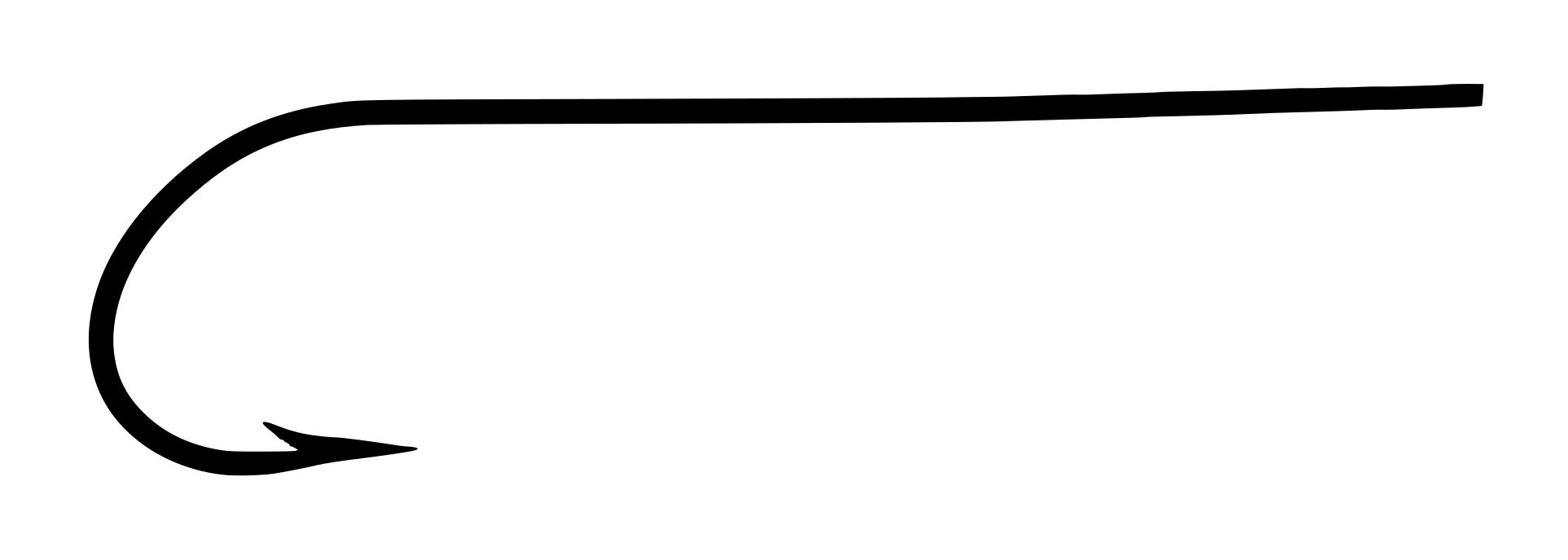
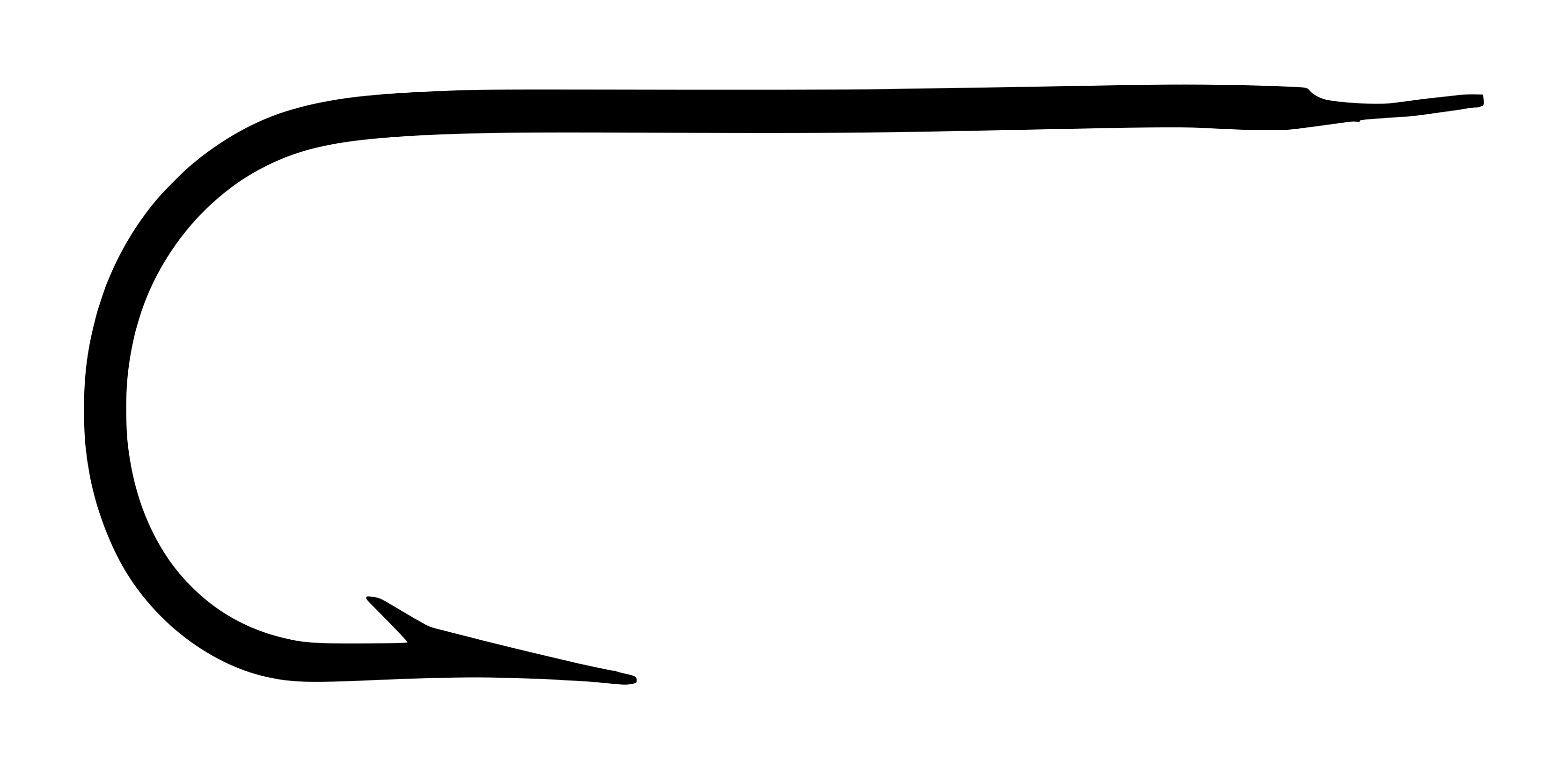
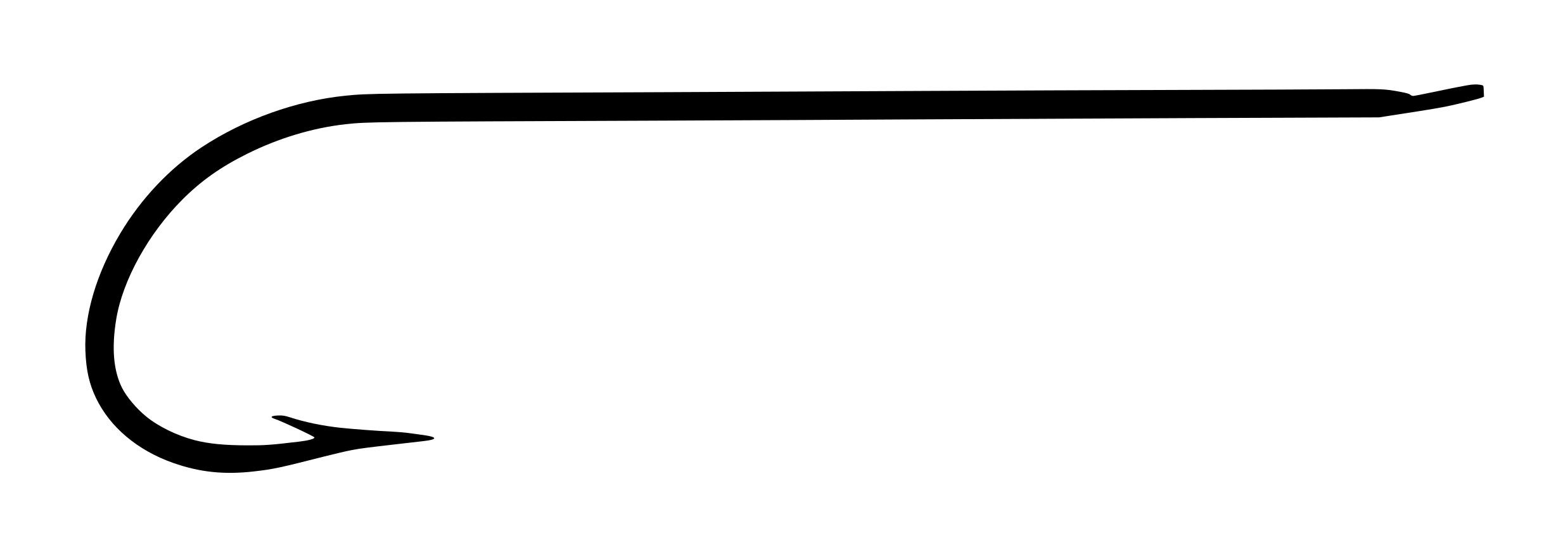
H. Milward & Sons Carlisle, model 2814.5, a salmon and sea-trout hook with deep Carlisle bend, blind-marked eye, standard wire, and blued finish, manufactured in England circa 1940–1965. The blind-marked shank was a deliberate choice for British salmon work, allowing direct gut-snell attachment without a terminal loop that could weaken the line or create snag points. Standard wire weight and the rounded bend geometry were engineered for hand-strike setting and baitfish presentations typical of the era. The hook represents the Redditch tradition of purpose-built salmon tackle: a technically specific tool rather than a generalist pattern, now less common in size 1 and valued among collectors of mid-century British fly-tying tackle.
Front profile of the Milward Carlisle Size 1 showing the blind-marked shank (spade end) and deep rounded bend characteristic of the Carlisle pattern, blued finish, on 1/10-inch measurement grid.
Photographic record
3 cataloged imagesSelect any record to load it above.
3 images shown
Milward Carlisle Size 1 Blued FinishFront profile of the Milward Carlisle Size 1 showing the blind-marked shank (spade end) and deep rounded bend characteristic of the Carlisle pattern, blued finish, on 1/10-inch measurement grid.Open originalMilward Carlisle Original Packaging LabelOriginal packaging label for Milward Carlisle Quality 2814.5, Size 1, showing the cream kraft card and brown letterpress label band with fly illustrations and quality marking.Open originalMilward Carlisle Size 1 Point and Barb DetailClose-up detail of the Milward Carlisle point and barb, showing the blued oxide finish and small close-set barb characteristic of this salmon pattern.Open original
Technical profile
Blind Eye | Carlisle | Spear Point | Blued
Eye
Blind — Marked ShankBlind marked shank — eye formed by a ridge or marking on the shank rather than a terminal eye loop. Common on salmon and sea-trout hooks of British manufacture P
Wire
Standard, Round
Shank
Standard — Plain
Bend
carlisle, Standard gapDeep rounded bend characteristic of the Carlisle pattern. Wire set is clean and symmetrical P
Point
Standard / SpearBarb present, small and close-set to the point P
Finish
Blued — Confirmed (stated on packaging)Blued finish with cool blue-grey oxide tone visible in photograph. Finish is uniform across the bend and shank with characteristic metallic sheen P
Card shows light tan toning and minor creasing consistent with 60+ years storage. Label remains legible with no significant fading or ink loss. No water damage or insect marks visible. Package is opened; hook count not visible in provided image but structural integrity appears maintained. Blued finish on visible hook specimen shows uniform oxide layer with no rust spots or pitting.
The blind-marked eye was a deliberate engineering choice for salmon and sea-trout work. Rather than forming a terminal loop that could snag or weaken the shank, the maker marked a ridge or thickening on the shank itself, creating a surface to which the tyer could whip a gut snell. This kept the hook profile clean and minimized catch points on the line.
The Carlisle’s rounded bend provides a generous bite angle suitable for large baitfish and enables deep hook-setting force when hand-striked (the predominant technique in British salmon fishing of the era). Standard wire weight balances durability against the need for hand-casting with fly rod and multiplier reel.
Blued finish was a cost-effective and reliable protective coating applied through oxidation. The cool blue-grey tone is visually distinctive and resists rust better than uncoated steel in salt-spray and brackish-water environments where sea-trout hooks are deployed.
This pattern was made in sizes 1-14 (I). We have measurement for size 1. Know the others? Submit calipered measurements and we'll review and add them. Thank you!
The Carlisle pattern is a long-standing British salmon-hook design characterized by a deep rounded bend and blind eye — designed for direct snelling to gut leaders, the standard leader material for salmon fishing through the 1960s. The blind-marked shank eliminated the risk of a looped eye snagging on rod guides or leader coils.
Carlisle hooks were produced by multiple Redditch makers (Partridge, Allcock, Milward) and represented a standard commercial offering from the early 20th century onward. Milward’s Quality 2814.5 is one documented variant within this broader pattern family. The Carlisle lost commercial prominence after 1970 as modern eyed salmon hooks (with brazed or looped terminal eyes) displaced blind-marked patterns, and nylon monofilament simplified leader attachment.
The pattern survives in fly-dressing tradition primarily through specialist collectors and historical reenactors interested in period-authentic Scottish and Northern English salmon techniques.
Era and Packaging Dating
No barcode visible on packaging — strong indicator of pre-1974 manufacture V. Card stock is cream-colored kraft, typical of 1940s-1960s English hook packaging. Print method appears to be letterpress or early offset, consistent with 1940s-1950s. Label design and typography match Milward's documented catalogs from the mid-20th century. Blued finish with clean oxide layer suggests mid-century production rather than pre-1930 hooks. Quality marking "2814.5" is characteristic of Milward's wartime and post-war commercial grades. Based on cumulative evidence, the production window is estimated c. 1940-1965.
Design lineage and influence
The Carlisle pattern descends from 19th-century British salmon-hook tradition. Related patterns include the Sneck (similar rounded bend but usually with a different eye construction), the sproat-derived sea-trout patterns, and the O’Shaughnessy (a competing deep-bend design with more pronounced angle). The Carlisle represents the lighter end of British salmon hooks — directly competing with Limerick and other standard bends in a crowded market.
Successors to the Carlisle include modern eyed salmon hooks (Partridge Willie Gunn, Mustad Salmon, etc.), which displaced blind-marked patterns after 1965. The Carlisle survives in niche practice among anglers committed to period methods and traditional aesthetic.
Best matchRelated by Attribute
Computed automatically from catalog data — updated as new hooks are added.
Matches: Shank, Wire, Gap, Eye, Eye Orient. +4 moreDiffers: Bend: Carlisle vs Sproat; Finish: Blued vs Black Japanned; Forging: Round vs Forged +1 more
Matches: Bend, Wire, Gap, Eye, Eye Orient. +3 moreDiffers: Shank: Standard vs Extra-Extra Long; Point: Standard / Spear vs Superior; Forging: Round vs Forged +4 more
Matches: Shank, Gap, Eye Orient., Point, Forging +3 moreDiffers: Bend: Carlisle vs Perfect; Wire: Standard vs Fine (1X Fine); Eye: Blind — Marked Shank vs Blind — Flatted +1 more
Salmon and sea-trout fishing with natural bait (sand eels, sprats, small live fish) or traditional dressed flies. The blind-marked eye and standard wire accommodate direct snelling with gut leader material, the standard method for British coastal salmon fishing through the 1960s. Size 1 sits between typical small-fly salmon sizes (No. 4-6 dressed) and heavy-wire bait hooks, suggesting mixed use for both dressed flies on small spates and bait work on larger water.
Classic Fly Patterns
Named patterns specifically associated with this hook. Leave blank if none formally documented. Do not speculate — only include patterns with a confirmed association.
Collector notes
Rated 3.5/10 — widely available in original packaging but collector demand is limited and size-dependent. Size 1 is less common than larger sizes. Blind-marked eye construction appeals to specialists in British salmon tradition and Redditch craft production, but general fly-tying interest is low given the shift to modern eyed patterns.
Reference value
$4 – $12 USD estimate
Packaging condition
Good — moderate wear, legibleRecorded specimen
Packaging format
GW-E-02Catalog code
Positive factors: Original cream card with printed label remains intact; no barcode indicates pre-1974 manufacture, a collecting marker for older Redditch gear; blued finish in uniform condition; complete spade-end construction documents a manufacturing method no longer common; historical significance in British salmon tradition.
Limiting factors: Blind-marked eye construction limits utility for modern anglers (no way to tie on without snelling); Milward Carlisle hooks remain reasonably available in original packaging on secondary markets; collector demand is narrow — specialists in Redditch gear and period-method salmon anglers only; larger sizes (2/0, 3/0) are much more common than size 1, which sees moderate searching to locate.
Desirability drivers: Smaller sizes (1, 2, 4) command modest premiums over larger sizes; sealed or near-sealed card adds 20-30% to value; Redditch maker name and craft-era production date; any size with original tissue or wrapping intact.
Condition factors: Card must be complete and legible to support a meaningful premium; hooks should show no corrosion or pitting (blued finish is susceptible to surface oxidation with age); missing hooks or loose packaging reduce value by 30-50%.
Packaging
Cream kraft card approximately 3.5" × 1.75" (89mm × 44mm) with printed label band. Label is dark brown/tan cardstock with black letterpress print. Text reads "SPEAR POINTED / Carlisle / Marked / No. / Quality - - 2814.5 / [two fly illustrations]". No barcode or modern printing marks. Card appears folded or scored along the center to hold hooks. Worn edges and light toning consistent with 1950s-1960s storage and handling. Original label band glued or pasted to cream substrate.
Market Value Notes
Low ($4): Good condition — opened card, most or all hooks present, card shows wear and toningnHigh ($12): Excellent condition — sealed or near-sealed card, complete hook count, minimal defects, legible labelnPremium factors: Size 1 (less common than larger sizes); Redditch craft-era manufacture; intact original packaging; clean blued finish with no corrosionnPlatforms: eBay UK, vintage tackle dealers, specialist fly-tying forumsnConfidence: E estimated — limited comparable sales data; based on typical Redditch hook card pricing and size premium for smaller Carlisle sizes
Where to Find
eBay UK (vintage fishing tackle section); specialist British tackle dealers (Orvis Heritage, UK vintage fly-fishing suppliers); tackle fairs in the Midlands and North of England; online forums dedicated to classic fly-fishing techniques.
Marking Analysis
Packaging Markings and Labels
The printed label on the cream card shows no evidence of handwritten annotations or collector marks. All text is letterpress or early offset print. The label includes: ‘SPEAR POINTED’ (size designation and point style), ‘Carlisle’ (pattern name), ‘Marked’ (eye construction), ‘No.’ (size number follows), ‘Quality – – 2814.5’ (commercial grade and model code), and two small fly illustrations in black ink.
The model code ‘2814.5’ is the primary identifier for this hook within Milward’s product range. The decimal indicates a variant or sub-grade within the numbering hierarchy. No handwritten price, date, or retailer mark is visible on the specimen examined.
Size Note
Size Marking and Nomenclature
The label marking ‘No. 1’ indicates this is a Milward Size 1 hook, measured on the British standard scale where smaller numerical sizes represent hooks used for smaller flies and more delicate work. Size 1 falls between the salmon-fly sizes (typically 2-10) and the larger sizes (1/0, 2/0, etc. used for sea fishing and pike).
Size 1 Carlisle hooks are less commonly encountered than larger sizes (2/0, 3/0) in the original packaging market. This size distribution reflects the historical pattern of salmon fishing: most commercial and amateur effort focused on standard sizes, with size 1 representing a specialized intermediate offering for small streams or summer spates. Collectors of Redditch hooks often prize smaller sizes precisely because they are more difficult to locate in original condition.
Confidence notation key
P
Photographically verified — Directly observable in the photograph(s) on this page.
V
Verified by documentation — Confirmed by manufacturer catalog, spec sheet, or published reference.
I
Inferred — A logical deduction from observable or documented evidence, not directly stated.
E
Estimated — An approximation based on visual comparison, proportional analysis, or limited data.
S
Speculative — A reasoned hypothesis that cannot be confirmed from available evidence.
Unnotated claims are the compiler’s synthesis; see Sources. All photographs on garrenwood.com are taken on a measurement grid where each square equals 1/10 inch (0.1″ / 2.54 mm).