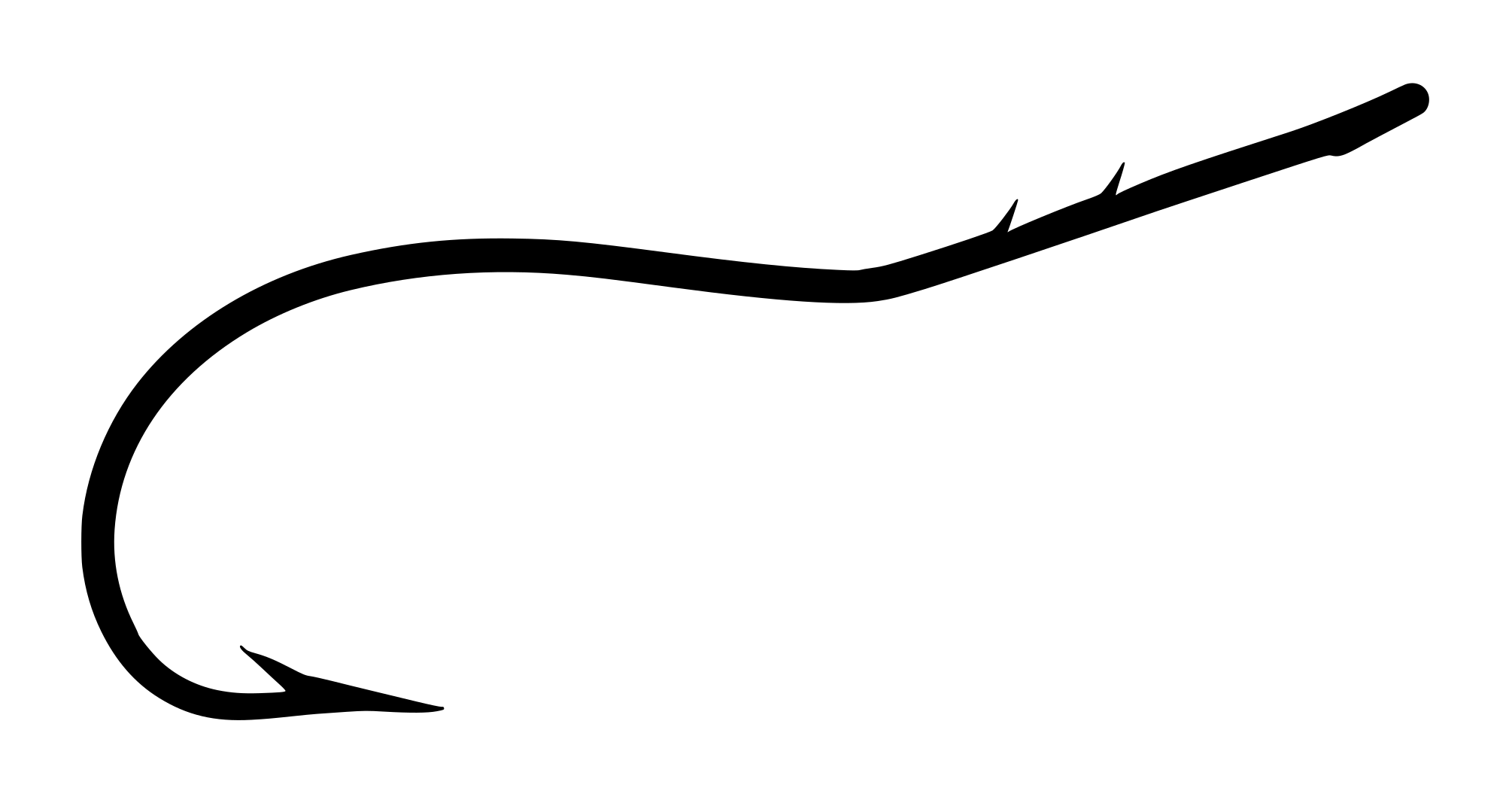
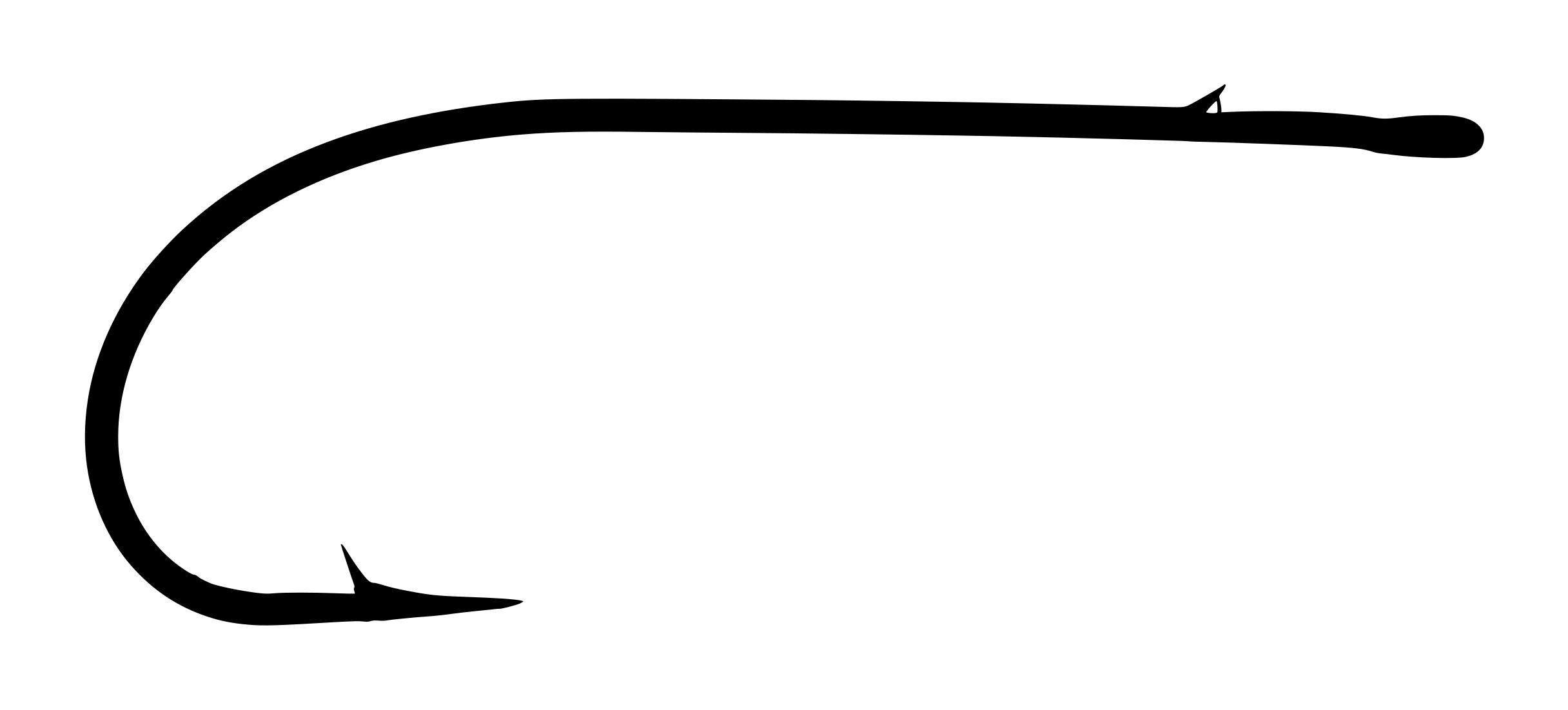
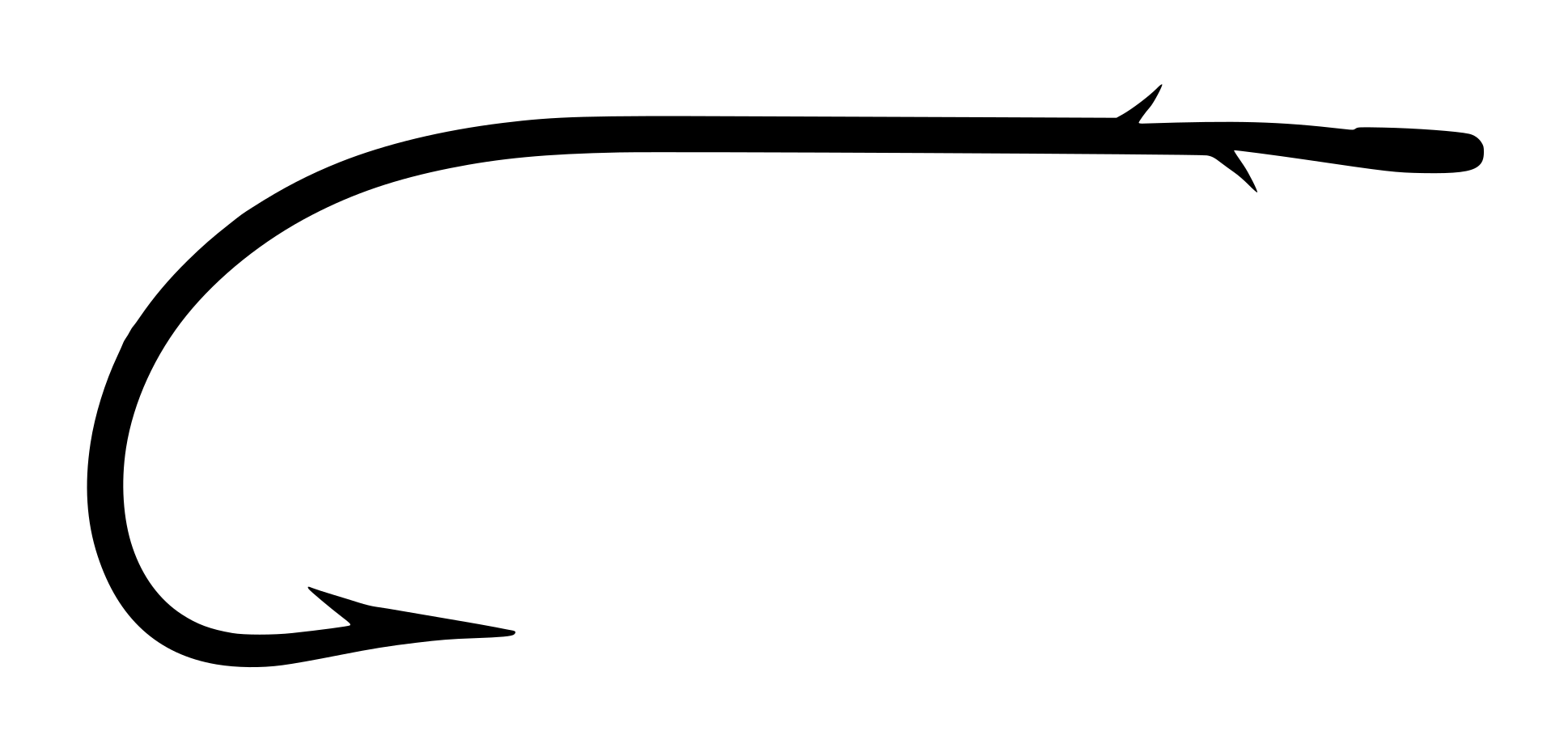
The Mustad 92642 is a mass-produced general-purpose fly hook from the Norwegian industrial giant O. Mustad & Son, size 2, featuring a Sproat bend, turned-down ball eye, and polished steel finish. This is a utilitarian hook designed for dry flies, wet flies, and small nymphs — workhorses of the mid-twentieth century through the present day.
The specimen documented here represents the mid-to-late 1980s packaging era (c. 1970-1990), identified by the clamshell blister card format, two-color printed label, and handwritten retail price. The deliberate shank slices visible on these hooks are a manufacturing feature, likely intended to reduce weight or modify fly-dressing characteristics — they do not indicate damage.
Collecting significance is limited. The Mustad 92642 is extremely common, with millions produced across decades and continuing production to the present. Original packaging commands only a modest premium ($5-18 for a complete card). Collector demand is primarily functional — fly tyers seeking inexpensive, reliable working hooks — rather than historical or rarity-driven.
Original Mustad 92642 clamshell blister card packaging, size 2, 100 hooks. Label shows reference number, size, and handwritten retail price from the 1980s era.
Photographic record
4 cataloged imagesSelect any record to load it above.
4 images shown
Mustad 92642 Size 2 Packaging — Clamshell CardOriginal Mustad 92642 clamshell blister card packaging, size 2, 100 hooks. Label shows reference number, size, and handwritten retail price from the 1980s era.Open originalMustad 92642 Size 2 Hook Profile — Full LengthLateral profile of the Mustad 92642 Sproat hook, size 2, on 1/10-inch measurement grid. Shows the Sproat bend geometry (rounded bottom with angular sides), standard shank length, and turned-down ball eye.Open originalMustad 92642 Size 2 Hook Point DetailClose-up of the point and barb of the Mustad 92642 Sproat, size 2. Shows the hollow point profile (concave inner face), barb placement, and polished finish texture.Open originalMustad 92642 Size 2 Shank Slices DetailClose-up of the shank showing two intentional longitudinal slices or grooves. These are manufacturing features, not damage, likely designed to reduce weight or provide texture for fly dubbing.Open original
Technical profile
Turned-Down Ball Eye, Sproat Bend, Standard Shank, Standard Wire, Hollow Point, Polished Steel
Eye
Ball Eye, Turned DownThe turned-down ball eye is cleanly formed, typical of Mustad's mid-range production hooks. Ball junction is smooth; no visible casting defects or irregularities P.
Wire
Fine (1X Fine), Round
Shank
Standard — Baitholder Slices
Bend
Sproat, Standard gap, Offset / kirbedClassic Sproat profile — rounded bottom with gentle angular sides. Bend depth is standard for size 2, symmetrical, and well-proportioned to the gap width P.
Point
Beak / Reversed (incurving)Standard short barb, close-cut, positioned slightly ahead of the bend curve. Barb angle is perpendicular to the shank, typical of Sproat-family hooks P.
Finish
Polished Steel — Confirmed (stated on packaging)Polished steel finish confirmed on packaging label. Hook photographs as bright silver-grey with moderate reflectivity, consistent with polished (not nickel-plated or tinned) steel. Surface shows light oxidation patina typical of aged but stored-dry examples P.
Specimen is bright with light surface oxidation and minor patina. Two intentional slices are visible on the shank, noted by analyst — these are manufacturing features, not damage. No corrosion, broken hooks, or bent points visible in the card. Label is legible with original printed specs and handwritten price intact. Card shows moderate toning and light edge wear consistent with age 30+ years; clear plastic clamshell is intact.
The hollow point geometry is the defining engineering feature of this hook. The inner face of the point tapers inward, creating a concave profile that facilitates penetration and reduces hook-point damage during the strike and fight. The Sproat bend’s rounded bottom and moderate depth provide a good balance between holding power and ease of setting, making it well-suited to delicate dry-fly presentations where excessive hook-mass can cause flotation problems.
Standard wire gauge (approximately 0.062″ / 1.57 mm) is typical for size 2 across Mustad’s general-purpose line. The polished steel finish (uncoated steel with a polished surface) offers modest corrosion resistance in freshwater applications, sufficient for most recreational situations but not ideal for extended saltwater or brackish exposure. The shank slices visible on these specimens are deliberate manufacturing features — likely intended to reduce weight and/or provide subtle barbs or edges for better fly dubbing and thread adhesion.
We don't have measured sizes for this hook yet. Own one? Submit calipered measurements and we'll review and add them. Thank you!
Historical context
mustad
O. Mustad & Son was founded in Gjøvik, Norway, in 1832, growing into the world’s largest industrial hook manufacturer by the early twentieth century. The company manufactured hooks across a vast range of models and sizes, from delicate dry-fly hooks to heavy-duty saltwater patterns, at their Norwegian factory and later through subsidiary and affiliated manufacturers worldwide. Mustad’s post-1960 product numbering system (exemplified by the 92642 code) organized hooks by bend type, size, and finish, enabling rapid identification and catalog reference.
By the 1970s-1980s, Mustad had become a household name in tackle shops across North America and Europe. The company’s success was built on reliable quality at modest price points — hooks that worked consistently without commanding premium prices. This positioning made Mustad hooks the default choice for recreational fly tyers and bait fishers, ensuring widespread distribution and abundant surviving examples in collections today.
Series History
The Mustad 92642 Sproat belongs to Mustad’s broad “92000-series” general-purpose fly hook line, introduced during the post-war expansion of recreational fly fishing in the 1950s-1960s. The Sproat bend itself is a classical design with origins in British hook-making traditions, adopted and refined by Mustad for both dry and wet fly fishing. The 92642 specifically is a standard-shank, standard-wire version of the Sproat pattern, marketed as a all-purpose choice for trout streams.
Variants within this series include different wire weights (light, standard, heavy), eye types (ball, tapered, loop), and finishes (polished, bronzed, blued, japanned). The 92642 code represents the polished-steel, turned-down ball-eye, standard-wire configuration — one of the most commonly offered variants. Production has been continuous or near-continuous from introduction through the present day, with minor updates to packaging and production methods but no fundamental design changes.
Era and Packaging Dating
Packaging format is a modern clamshell/blister card with printed label under clear plastic. The Mustad logo style, sans-serif typeface, and two-color card design (blue header with orange accent) are consistent with 1970s-1990s packaging. Reference number format (92642) is Mustad's post-1960 numbering system. Printed price ($8.92 handwritten on label) indicates 1980s-early 1990s era. No barcode visible; pre-barcode packaging typical of this period. Card construction and offset printing quality are consistent with mid-to-late 1980s manufacture.
The Hook That Needed No Name
The Mustad 92642 became so ubiquitous in fly shops worldwide during the 1970s-1980s that many fly tyers of that era simply referred to it as 'the Mustad' — no model number needed. A angler walking into a small-town tackle shop in rural Montana, rural Scotland, or New Zealand would find the same 92642 card hanging on the pegboard, a testament to the Norwegian manufacturer's global distribution network and Mustad's dominance of the recreational hook market before the Japanese companies (Daiichi, Tiemco) began fragmenting the market in the 1990s.
Design lineage and influence
The Sproat bend design has roots in British hook-making tradition, particularly the work of Redditch craftsmen in the nineteenth century. Mustad adopted the Sproat profile for industrial production, refining it for consistency and reliability. Competing designs from other manufacturers include the Limerick (angular), the O’Shaughnessy (forged, deeper), and the Aberdeen (wider, more rounded). The Sproat represents a middle ground — moderate depth, good hold, suitable for both dry and wet applications.
Successors and modern equivalents include the Tiemco TMC101, the Daiichi 1180, and various modern “premium” Sproat variants in high-carbon steel. However, the basic profile and function of the 92642 remain substantially unchanged, indicating the design’s fundamental soundness. The shank slices visible on vintage examples have been abandoned in modern production in favor of simpler straight shanks, suggesting a design refinement rather than a defect.
Best matchRelated by Attribute
Computed automatically from catalog data — updated as new hooks are added.
Matches: Bend, Shank, Eye, Forging, Application +2 moreDiffers: Wire: Fine (1X Fine) vs Extra-Fine; Gap: Standard vs Narrow; Eye Orient.: Turned Down vs Straight / Inline +2 more
Matches: Bend, Gap, Eye, Forging, Application +2 moreDiffers: Shank: Standard vs 1X Long; Wire: Fine (1X Fine) vs Extra-Fine; Eye Orient.: Turned Down vs Straight / Inline +2 more
Matches: Shank, Gap, Eye, Point, Forging +3 moreDiffers: Bend: Sproat vs Aberdeen; Wire: Fine (1X Fine) vs Extra-Fine; Eye Orient.: Turned Down vs Straight / Inline +2 more
Matches: Bend, Gap, Eye, Forging, Application +2 moreDiffers: Shank: Standard vs 1X Long; Wire: Fine (1X Fine) vs Extra-Fine; Eye Orient.: Turned Down vs Straight / Inline +2 more
The Mustad 92642 Sproat is a general-purpose hook designed for trout and panfish. The Sproat bend (rounded bottom with slight angular sides) and standard wire gauge provide reliable hook-setting characteristics. The polished steel finish offers good visibility in tying and modest corrosion resistance in freshwater.
Modern Equivalents
Hook
Match Quality
Notes
Mustad 92642 (current production)
Excellent
Direct modern equivalent, same model code, refined production but identical profile and function
Collector notes
Rated 3.5/10 — the Mustad 92642 Sproat is a workhorse general-purpose hook mass-produced in large quantities, making it common and inexpensive. Collector interest is casual; value derives primarily from original packaging preservation and complete hook count. Size 2 is standard and widely available; smaller or larger sizes within the series may command modest premiums.
Reference value
$5 – $18 USD estimate
Packaging condition
Good — moderate wear, legibleRecorded specimen
Packaging format
Mustad-clamshell-card-100ctCatalog code
The Mustad 92642 is a utilitarian general-purpose fly hook manufactured by Mustad’s Norwegian industrial facility, designed for both dry and wet fly fishing. Surviving examples are abundant due to high production volumes across multiple decades. Original packaging commands a small premium over loose hooks, but rarely exceeds $5-15 for a complete card even in excellent condition.
Limiting factors include the hook’s mass-market status — it was sold through tackle retailers worldwide and remains inexpensive to this day. Complete cards with all 100 hooks intact are increasingly rare (many cards show missing hooks from actual use), which modestly increases value. The shank slices (noted by analyst) are a manufacturing feature rather than damage, and do not negatively affect value.
Most desirable variants: sealed or near-sealed cards, complete hook count, original label legible with pricing information intact. Finish is polished steel, which is standard for this line and does not affect rarity or value significantly. Collector demand is primarily from fly tyers seeking functional hooks for tying, not from collectors seeking rarity.
Packaging
Clear clamshell (blister) card format with molded plastic backing holding 100 hooks. Printed header label (6" × 2") features Mustad logo in white on blue background with orange accent stripe. Text reads: REF 92642, SIZE 2, QTY 100. Handwritten price ($8.92) is visible on the label in blue ballpoint ink. Card is sealed along one edge; top is open. Header card is offset-printed on light cream cardstock; no barcode visible. Packaging format is consistent with Mustad's mid-to-late 1980s retail presentation.
Market Value Notes
Low ($5): Good condition, opened card, missing several hooks, light packaging wear<br />
High ($18): Excellent condition, sealed or near-sealed card, all or nearly all hooks present, minimal wear<br />
Premium factors: Complete hook count, original label legible, sealed packaging, light toning acceptable<br />
Platforms: eBay (primarily), occasional tackle dealer stock<br />
Confidence: V verified — based on eBay sold data (May 10, 2023 – May 9, 2026), avg $17.32, range $4.99 - $24.97
Where to Find
eBay (US and international listings), vintage tackle dealers, estate fishing collections, online auction sites. Commonly found in bulk lots and discount bins at tackle shops, indicating low collector demand.
eBay Market Reference
Period: May 10, 2023 – May 9, 2026Avg sold: $17.32Range: $4.99 - $24.97Avg shipping: $4.37Sellers: 7
eBay market reference. Researcher-curated. Prices in USD.
Preservation
Storage and Preservation
Store the clamshell card in a cool, dry environment away from moisture and humidity. Polished steel is susceptible to surface oxidation over time, particularly in humid conditions — the light patina visible on vintage examples is normal and acceptable to collectors. Keep the original packaging intact; the card and label add significant value and provide context for dating and identification.
If you open the card to use or examine the hooks, store any remaining hooks in a dry container with silica gel packets if prolonged storage is intended. Avoid contact between the hooks and other metals to prevent galvanic corrosion. The polished finish will darken slightly with age and exposure, but this is cosmetic and does not affect function.
Display cards should be kept away from direct sunlight to preserve label color and card integrity. The clamshell plastic can become brittle with age; handle the card gently and avoid bending or flexing the plastic backing.
Marking Analysis
Price Marking and Label Notes
The handwritten price notation ($8.92) is visible on the label in blue ballpoint ink, characteristic of 1980s retail pricing practices. This price is consistent with tackle shop mark-ups of that era — approximately $0.09-0.10 per hook, a typical retail cost for mid-range fly hooks before volume discounting. The ballpoint ink is faded but legible, and does not obscure the printed text or affect the label’s functionality.
The handwriting appears to be in a single hand, likely applied at the point of sale or during inventory receipt. This kind of period pricing detail is valuable to collectors for era dating and understanding the historical retail market for these hooks.
Size Note
Shank Slices — Manufacturing Feature
The analyst noted ‘two slices in shank’ visible on the specimen. These are not damage, defects, or corrosion — they are intentional manufacturing features. Close examination of the point detail image (Hook image 4) shows two deliberate cuts or grooves running longitudinally along the shank, parallel to the wire axis.
Purpose and rationale: These shank slices likely served one of two functions in fly tying: (1) weight reduction — by reducing material volume, they lower the overall hook mass, improving buoyancy for dry flies, or (2) dubbing grip — the edges created by the slices provide mechanical texture that helps dubbing material grip the shank during wrapping, reducing need for excessive thread tension.
Historical context: This feature appears in some Mustad production from the 1970s-1990s but was largely abandoned in subsequent production in favor of simpler straight shanks. The feature suggests an experimental or specialized design variant, or a production refinement that did not persist. Its presence does not negatively affect hook function or value — it is a legitimate design choice, not a manufacturing defect.
Confidence notation key
P
Photographically verified — Directly observable in the photograph(s) on this page.
V
Verified by documentation — Confirmed by manufacturer catalog, spec sheet, or published reference.
I
Inferred — A logical deduction from observable or documented evidence, not directly stated.
E
Estimated — An approximation based on visual comparison, proportional analysis, or limited data.
S
Speculative — A reasoned hypothesis that cannot be confirmed from available evidence.
Claims with no notation are confirmed by multiple independent sources. All photographs on garrenwood.com are taken on a measurement grid where each square equals 1/10 inch (0.1″ / 2.54 mm).