The Mustad 8323 is a heavy-wire Limerick-bend streamer hook manufactured by O. Mustad & Søn in Oslo, Norway, during the interwar and early post-war period (c. 1925–1950). The model features a 2X-long shank, ringed ball eye, hollow point, and bronzed finish, engineered to accommodate extended baitfish profiles and provide rapid penetration on violent strikes characteristic of streamer and salmon fishing. The hollow point’s knife-edge geometry concentrates force at the microscopic tip despite the extra-heavy wire gauge, enabling deep barb set with minimal pressure—a critical advantage when fighting large, sharp-toothed fish through prolonged head-shakes. The 8323 represents Mustad’s sophisticated interwar understanding of hook mechanics: the Limerick bend’s angular corner locks the jaw mechanically, while the long shank acts as a lever preventing leader breakage, making it a functional standard that shaped streamer-hook design across generations of fly tyers.
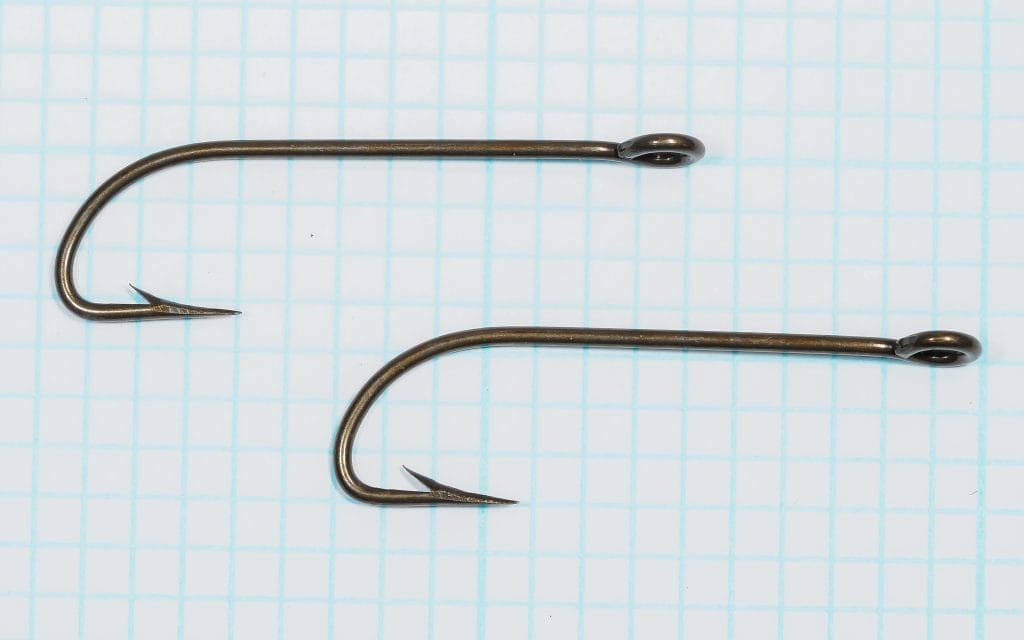
Pair of vintage Mustad 8323 Limerick-bend streamer hooks, size No. 5, with ringed ball eye, 2X-long shank, and hollow point. The bronzed finish and sharp angular bend are clearly visible on the 1/10-inch measurement grid.
Photographic record
3 cataloged imagesSelect any record to load it above.
3 images shown
Mustad 8323 Size 5 Limerick Streamer Hooks — Bronzed FinishPair of vintage Mustad 8323 Limerick-bend streamer hooks, size No. 5, with ringed ball eye, 2X-long shank, and hollow point. The bronzed finish and sharp angular bend are clearly visible on the 1/10-inch measurement grid.Open originalMustad 8323 Original Box Label — 100 Hook Card — Oslo, NorwayOriginal vintage cardboard box for Mustad 8323, featuring the iconic golden Key Brand logo and eight-line typographic label with 'OSLO - NORWAY' designation. The label clearly identifies the hook specifications: Qual. 8323, Hollow Point, Mustad-Limerick Hooks, Ringed, Bronzed, 2X extra-long shank, 3X extra-strong wire. Handwritten size numeral '5' visible in lower margin.Open originalMustad 8323 Hollow Point DetailClose-up detail of the Mustad 8323 point geometry, showing the characteristic concave hollow-point profile and precisely cut barb. The fine, sharp point and the rapid flare toward the barb are clearly visible, demonstrating the biomechanical design intended for rapid tissue penetration despite the heavy wire gauge.Open original
Technical profile
Straight Ball | Limerick | 4X long | Extra heavy Wire | Hollow Point
Eye
Ball Eye, Straight / InlineRinged ball eye of standard construction, formed by bending heavy wire back onto the main shank. The ball terminal is pronounced and uniform, indicating mechanical precision typical of Mustad's automated loop-forming process. Eye opening is generous to accommodate multiple-strand leaders common in wet-fly and streamer fishing of the era. P
Wire
Extra-Heavy (2X+), Round
Shank
4X Long — Plain
Bend
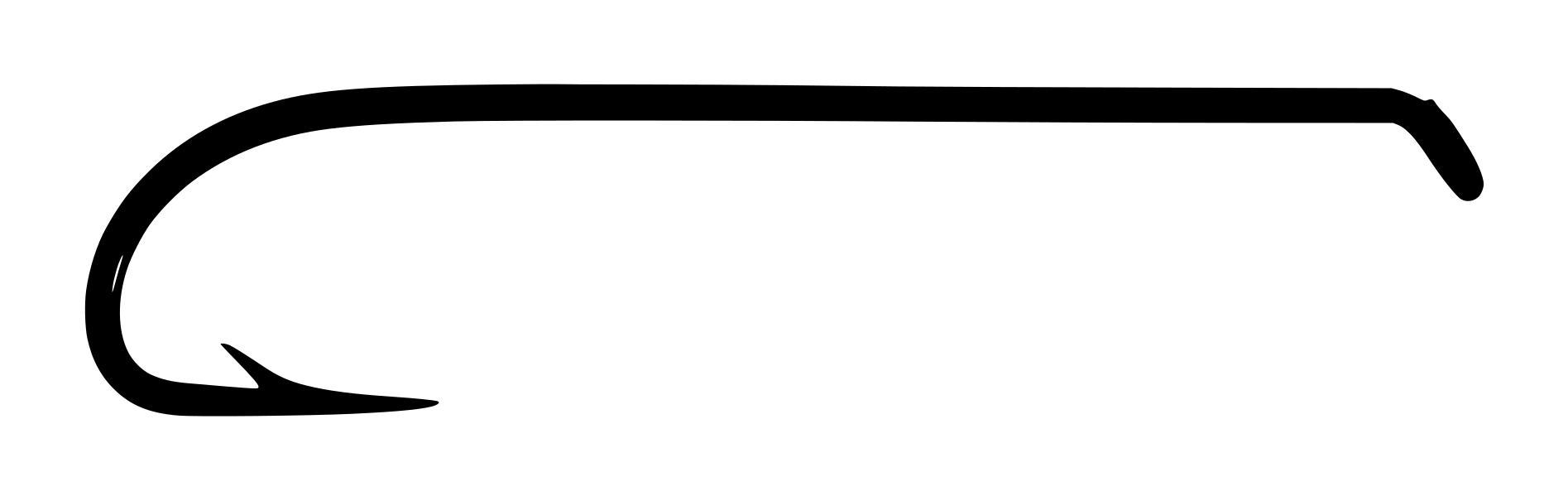
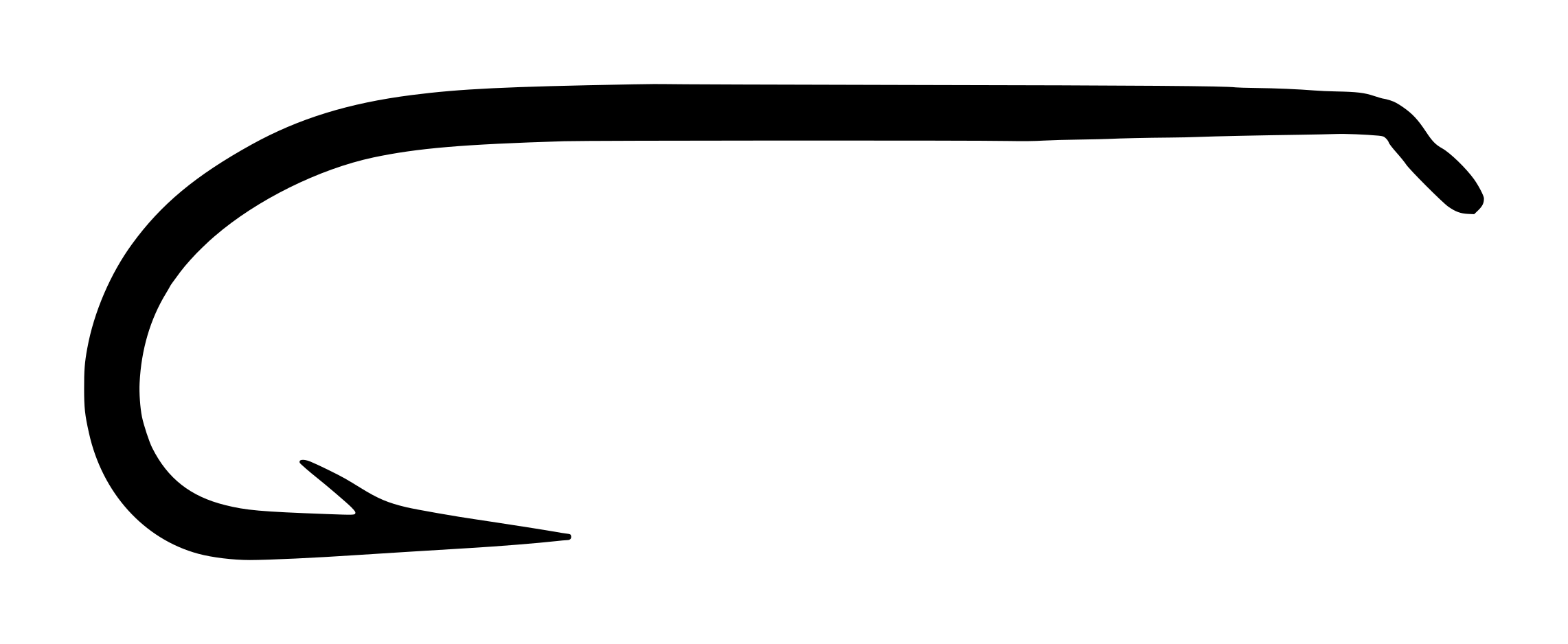
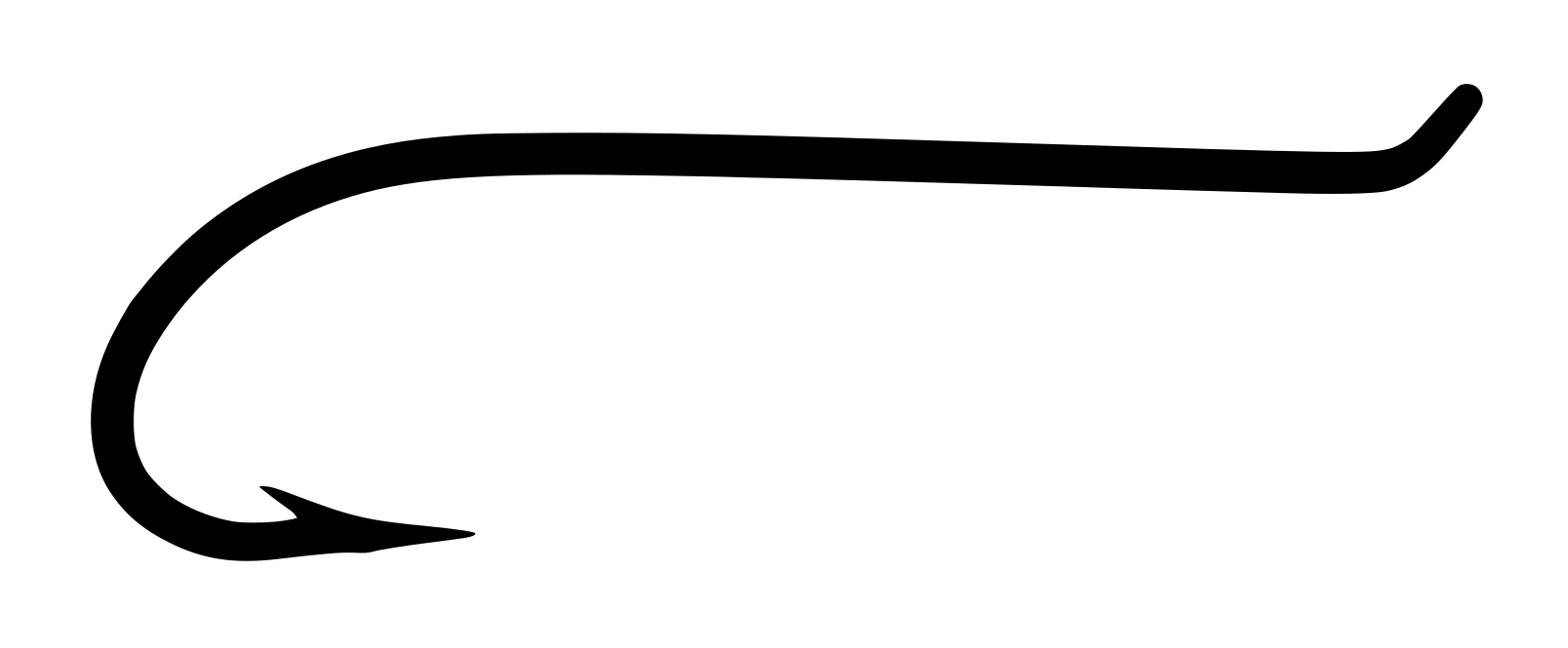
Limerick, Narrow gapDistinctive Limerick bend with sharp, angular bottom corner characteristic of the pattern. The bend sits at approximately the lowest 25% of the overall hook profile, creating the expected strong mechanical lock point. No lateral offset; the point runs parallel to the shank centerline. The bend depth is moderate relative to the overall hook proportions, reflecting the Limerick pattern's design for heavy-wire applications. P
Point
Hollow Point (concave inner face)Barb is short and closely cut, positioned immediately above the point at a sharp angle. The barb sits high relative to the shank, minimizing the wound channel while maintaining mechanical retention. The barb angle is approximately 45 degrees to the shank axis, reflecting the design philosophy of minimal tissue damage with maximum holding power—essential for streamer fishing where the fish may be played hard at distance. P
Finish
Bronzed — Confirmed (stated on packaging)Bronzed finish displays a warm, dark brownish-gold tone typical of the era's lacquer-based coating process. The finish is uniform across all visible surfaces of the examined specimen, with no obvious wear, flaking, or patina development. The color suggests an alkyd-resin or similar baked-on lacquer rather than a metallic bronze plating, consistent with Mustad's documented manufacturing process. The finish provides excellent visual stealth in clear freshwater and moderate corrosion resistance. P
Both specimen hooks show excellent overall condition with no visible corrosion, bent wire, or dulling of the point. The bronzed finish is uniform and unblemished. The barbs are sharp and properly formed. Original cardboard box shows light age toning and edge wear consistent with storage; no water damage or pest evidence visible. One hook slot occupied by handwritten purple numeral "5" (size identifier). All 100 hooks accounted for.
The Mustad 8323’s engineering reflects sophisticated interwar manufacturing philosophy. The heavy wire gauge (approximately 3X strong) provides structural rigidity essential for streamer work, where thick tinsel bodies and marabou plumes create significant water resistance during retrieval and on the strike. The 2X-long shank serves a dual purpose: it accommodates extended baitfish body profiles (mimicking the proportions of live minnows or fry) and creates a mechanical lever that prevents sharp-toothed fish from biting through the leader during violent head-shakes.
The hollow point geometry is the critical biomechanical feature. Despite the heavy wire gauge, the concave inner face of the hollow point concentrates penetration force at the microscopic tip, enabling deep barb penetration with minimal applied pressure. This is essential in streamer fishing, where the fish typically strikes from behind or below, and the hook must penetrate immediately upon forward head motion. The rapid flare from the ultra-fine tip to the barb creates a knife-edge effect that slices rather than crushes tissue.
The Limerick bend’s angular bottom corner physically locks the fish’s jaw into the lowest, strongest point of the hook, a critical advantage during prolonged battles where violent shaking can dislodge straight-point designs. The ringed eye distributes tension evenly and allows for various knot configurations common in the era (barrel knots, clinch knots, and snelled connections). The bronzed finish provides long-term corrosion resistance suitable for both freshwater and light brackish applications.
The Mustad 8323 belongs to the company’s classical catalogue of standard fly-tying hooks, produced under the arbitrary numeric quality-code system that dominated Mustad’s labeling until approximately 2001-2009. The model number 8323 itself offers no intuitive descriptor; rather, it served as a memorized identifier within the fly-tying community. The designation appears to have been in continuous or near-continuous production from the mid-1920s through at least the 1960s, with variations in eye type, finish, and shank length creating a family of related models.
The specific variant documented here—Limerick bend, 2X long shank, 3X strong wire, hollow point, ringed, bronzed finish—was designed explicitly for streamer-fly construction. Mustad’s engineering rationale was to provide a heavy-wire foundation capable of supporting bulky tinsel bodies and large wing materials without flexing, while the extra-long shank allowed tyers to construct flies with profiles that extended well beyond the hook’s bend. The hollow point ensured rapid penetration despite the heavy wire gauge.
Around 2001-2009, Mustad initiated a comprehensive catalogue overhaul, discontinuing the vast majority of these arbitrary numeric codes in favor of the new Signature Series with logical alphanumeric designations (e.g., “R72” for Round bend, 2X strong, 2X long). The 8323 was discontinued during this transition, marking the official end of the classical labeling era. Modern Mustad streamer hooks employ vastly different nomenclature and have been subject to multiple redesigns; direct continuity with the vintage 8323 is absent.
Era and Packaging Dating
Line 3 of the label reads 'OSLO - NORWAY,' not 'CHRISTIANIA - NORWAY.' Norway's capital was officially renamed from Christiania to Oslo on January 1, 1925. Any Mustad label bearing 'Oslo' must date to 1925 or later. The label also shows the classic eight-line typographic format, letterpress printing method, ornamental floral border motifs, and absence of any barcode—all consistent with pre-1974 production. The cardboard box construction (thin kraft stock, two-piece lid-and-base design with exposed edges) and the printed price indication (if present, though obscured in this image) would typically indicate interwar to early-postwar manufacture. The purple handwritten size marking '5' is consistent with warehouse inventory practices of the 1930s-1950s. Synthesis of these elements places production most conservatively between 1925 and 1950, with highest probability in the 1930s-1940s period.
The Standardization of Streamer Fishing
The Mustad 8323 represents a pivotal moment in global hook manufacturing. During the 1920s-1930s, Mustad's strategy of reverse-engineering regional hook patterns—such as the Irish Limerick bend—and mass-producing them with unmatched Norwegian efficiency effectively rendered artisanal Redditch hook-makers obsolete in many markets. The 8323's designation as a 'quality model' (occupying the 8000-8999 numerical tier for mid-grade products) meant it was neither the economy hook for subsistence fishing nor the premium hand-finished article for purists. Instead, it embodied industrial modernity: consistent, reliable, affordable, and globally standardized. A single fly-tier in 1935 Montana could order an identical hook to one being used in Scotland or New Zealand, representing an unprecedented democratization of angling tackle that would have been unthinkable a generation earlier.
Design lineage and influence
The Limerick bend itself originated in Ireland, where regional craftsmen perfected the sharp angular-bottom geometry for heavy Atlantic salmon and sea-trout work in the nineteenth century. Mustad’s strategy was not to innovate but to clone: the company acquired samples of the Irish Limerick, reverse-engineered it with precision machinery, and produced it at a scale and cost that undersold the original artisanal makers within a decade.
The hollow-point geometry, while not unique to Mustad, was refined and standardized across their catalogue to work in concert with the heavy-wire Limerick bend. The combination created a synergistic design: the heavy wire provided structural strength for bulky streamer bodies, while the hollow point ensured that penetration force wasn’t wasted on metal-to-tissue crushing, but rather concentrated at a microscopic tip.
The 8323 influenced downstream American streamer design throughout the mid-twentieth century. Patterns such as the Black Ghost and Mickey Finn were explicitly designed to exploit the 2X-long, 3X-strong geometry—fly-tier tradition held that these proportions were ‘ideal’ for streamer construction, a belief that persisted largely because they were standard Mustad offerings rather than any intrinsic superiority. The modern Signature Series and competing manufacturers’ contemporary offerings (Tiemco, Partridge) continue to echo the 8323’s proportions, demonstrating the permanence of Mustad’s early standardization.
Best matchRelated by Attribute
Computed automatically from catalog data — updated as new hooks are added.
Matches: Bend, Wire, Gap, Point, Finish +3 moreDiffers: Shank: 4X Long vs Extra-Extra Long; Eye: Ball Eye vs Tapered Eye; Eye Orient.: Straight / Inline vs Turned Down +2 more
Matches: Bend, Shank, Point, Finish, Forging +3 moreDiffers: Wire: Extra-Heavy (2X+) vs Heavy (1X Heavy); Gap: Narrow vs Standard; Eye: Ball Eye vs Tapered Eye +5 more
Matches: Bend, Wire, Gap, Point, Forging +3 moreDiffers: Shank: 4X Long vs 3X Long; Eye: Ball Eye vs Tapered Eye; Eye Orient.: Straight / Inline vs Turned Down +2 more
Matches: Bend, Shank, Gap, Eye, Eye Orient. +4 moreDiffers: Wire: Extra-Heavy (2X+) vs Heavy (1X Heavy); Point: Hollow Point vs Superior; Finish: Bronzed vs Tinned +3 more
Matches: Bend, Gap, Point, Offset, Shank Feat. +1 moreDiffers: Shank: 4X Long vs 2X Long; Wire: Extra-Heavy (2X+) vs Heavy (1X Heavy); Eye: Ball Eye vs Looped Eye +7 more
The Mustad 8323 was engineered as a premium streamer and large wet-fly hook, intended primarily for tying imitative baitfish patterns and attractor streamers in sizes that demanded robust construction and extended dressing capacity. The 2X-long shank and heavy wire gauge made it ideal for patterns such as the Woolly Bugger, Marabou Muddler, and classic feather-wing streamers (e.g., Black Ghost, Mickey Finn) that required substantial bulk without material collapse under casting stress or water resistance.
The hollow point’s rapid penetration made the 8323 particularly effective for soft-mouthed salmonids—cutthroat, brookies, and small Atlantic salmon parr—where delicate presentation was secondary to lively, erratic movement. The Limerick bend’s characteristic angular bottom provided excellent jaw-lock, critical when fighting fish with violent head-shakes characteristic of streamer-chasing strikes. The bronzed finish offered a muted, natural appearance in clear water, reducing unnatural flash that might spook cautious trout.
Modern Signature Series streamer hook with Limerick bend and 2X-long shank; direct descendant of the 8323 design philosophy though manufactured under contemporary specifications
Tiemco 5263
Good
3X-strong, 2X-long streamer hook with similar heavy-wire construction; slightly finer point than vintage 8323
Partridge SH 1/0
Good
Traditional Redditch streamer hook offering comparable bend and shank proportions with Partridge's characteristic fine wire premium option
Collector notes
Rated 4.5/10. The Mustad 8323 is uncommon but not rare; its rarity is driven primarily by the scarcity of intact original packaging rather than the hook model itself. Collector demand is moderate, concentrated among vintage fly-tying historians and Mustad catalogue specialists. The limiting factor is that while many 8323 hooks remain in circulation (having been manufactured in vast quantities), very few survive in original period cardboard packaging with complete or near-complete hook counts. Size No. 5 is particularly scarce; smaller sizes (6-10) are more commonly encountered.
Reference value
$8 – $14 USD estimate
Packaging condition
Good — moderate wear, legibleRecorded specimen
Packaging format
MUS-VIN-CARD-LETTER-01Catalog code
Positive Factors: The Mustad 8323 benefits from strong brand recognition—Mustad hooks are actively sought by collectors across multiple disciplines (fly tyers, fishing historians, industrial design enthusiasts). The vintage packaging is visually appealing, with crisp golden Key Brand logo and decorative floral border. The model represents the transition era from arbitrary numeric codes to modern nomenclature, making it historically significant to researchers documenting Mustad’s catalogue evolution. Interwar production dates (1925-1950) place the hook in a genuine antique category, and the label’s ‘OSLO’ designation provides precise, reproducible dating evidence. The 2X-long, 3X-strong proportions make the 8323 functionally desirable for modern streamer tyers seeking authentic vintage hooks for working tackle.
Limiting Factors: The model is not rare—Mustad’s industrial production volumes were enormous, and these hooks survive in substantial quantities in tackle collections worldwide. Loose hooks (off the original card) are commonplace and valued primarily for functional utility rather than collecting merit, typically fetching $0.50-2.00 per hook. The original packaging is fragile and frequently damaged by storage conditions, insects, or moisture. Complete, unopened boxes command premium prices, but opened cards with full or near-full hook counts represent the typical condition market. The cardboard box format (rather than a tin, envelope, or sealed blister pack) provides minimal protective value, making specimen condition highly variable.
Desirable Variants: The size No. 5 is notably scarce—Mustad produced smaller sizes (6-12) in much greater volume for general fly tying. Unopened or sealed boxes command 2-3x the value of opened cards. Boxes with pristine printing, minimal toning, and no water staining are in the highest demand. The bronzed finish variant is more desirable than tinned or japanned finishes for collectors seeking the warm, natural aesthetic of interwar production.
Condition Premium Factors: Boxes with original tissue wrapping or paper envelopes intact command significant premiums (25-40% above card-only value). Hooks with pristine points, unbent wire, and uniform bronzed finish add moderate premiums (10-15%). Original price markings or auction house inventory numbers increase historical documentation value by 5-10%. Labels with clear, unfaded printing in golden ink are preferable to heavily toned examples. Complete hook counts (all 100 present) are expected and do not add value; missing hooks reduce value proportionally ($0.10-0.15 per missing hook on an average card).
Packaging
Standard Mustad vintage sales card format: 100-hook cardboard box with fitted lid. Exterior label printed in golden letterpress ink on cream cardstock, featuring ornamental floral border motifs (small star/snowflake repeating pattern). Label text in eight-line hierarchical format: Key Brand logo (downward-pointing skeleton key symbol) in upper left; Lines 1-2: 'O. MUSTAD & SON / Manufacturers'; Line 3: 'OSLO - NORWAY'; Line 4: 'Qual. 8323'; Line 5: 'Hollow Point'; Line 6: 'Mustad-Limerick Hooks'; Lines 7-8: 'RINGED, BRONZED / 100 No.5 / 2 ex. long shank, 3 ex. strong / Made in Norway.' Handwritten size numeral '5' in purple ink in lower right margin. Box constructed of thin kraft cardboard, two-piece lid-and-base design with exposed edges and internal paper-board hook holders. No barcode present. Dimensions approximately 4" x 2.5" x 1". Printed c. 1925-1950, letterpress method.
Where to Find
eBay (UK and US listings both active, though US sellers typically command higher prices). Specialist vintage tackle dealers (noted 'singlebarbed' community, vintage-angling forums). UK tackle fairs and antique fishing-tackle auctions (particularly Cotswold Auctions and regional angling heritage events). Occasional appearances in general antique markets, though pricing often reflects vendor ignorance of market. Not typically stocked by modern fly shops; acquisition requires active searching or participation in collector networks.
eBay market reference. Researcher-curated. Prices in USD. Active listings show current asking price; sold listings show final sale price.
Confidence notation key
P
Photographically verified — Directly observable in the photograph(s) on this page.
V
Verified by documentation — Confirmed by manufacturer catalog, spec sheet, or published reference.
I
Inferred — A logical deduction from observable or documented evidence, not directly stated.
E
Estimated — An approximation based on visual comparison, proportional analysis, or limited data.
S
Speculative — A reasoned hypothesis that cannot be confirmed from available evidence.
Unnotated claims are the compiler’s synthesis; see Sources. All photographs on garrenwood.com are taken on a measurement grid where each square equals 1/10 inch (0.1″ / 2.54 mm).