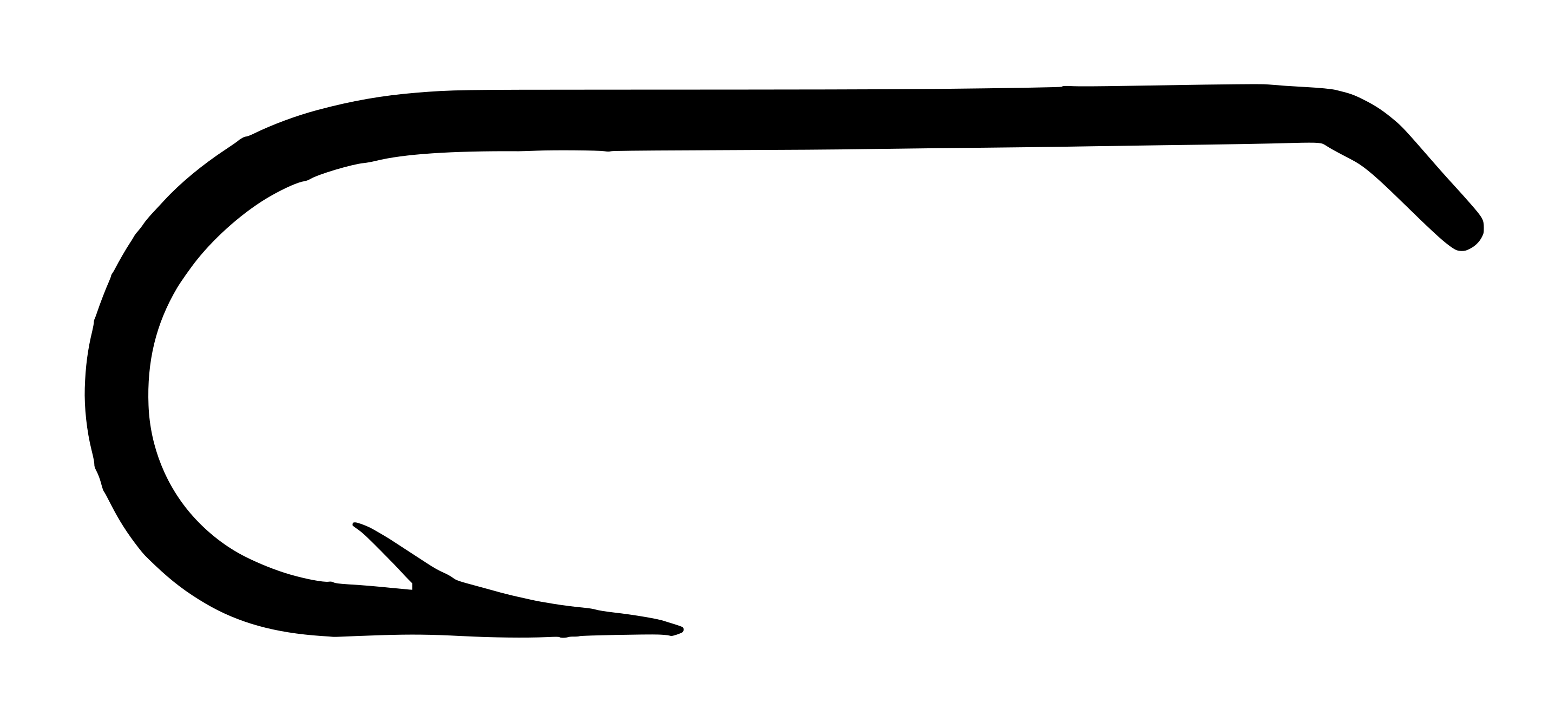
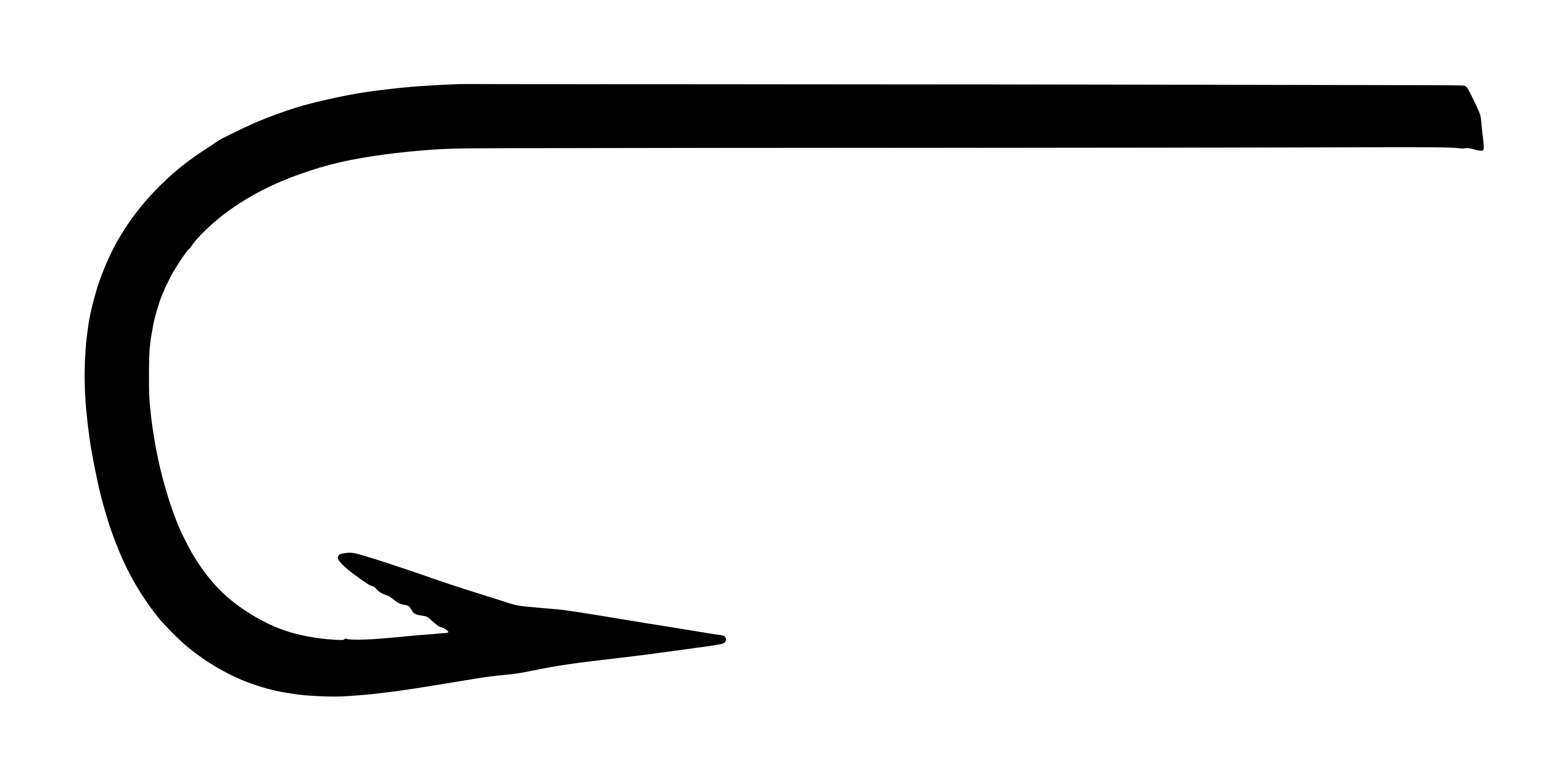
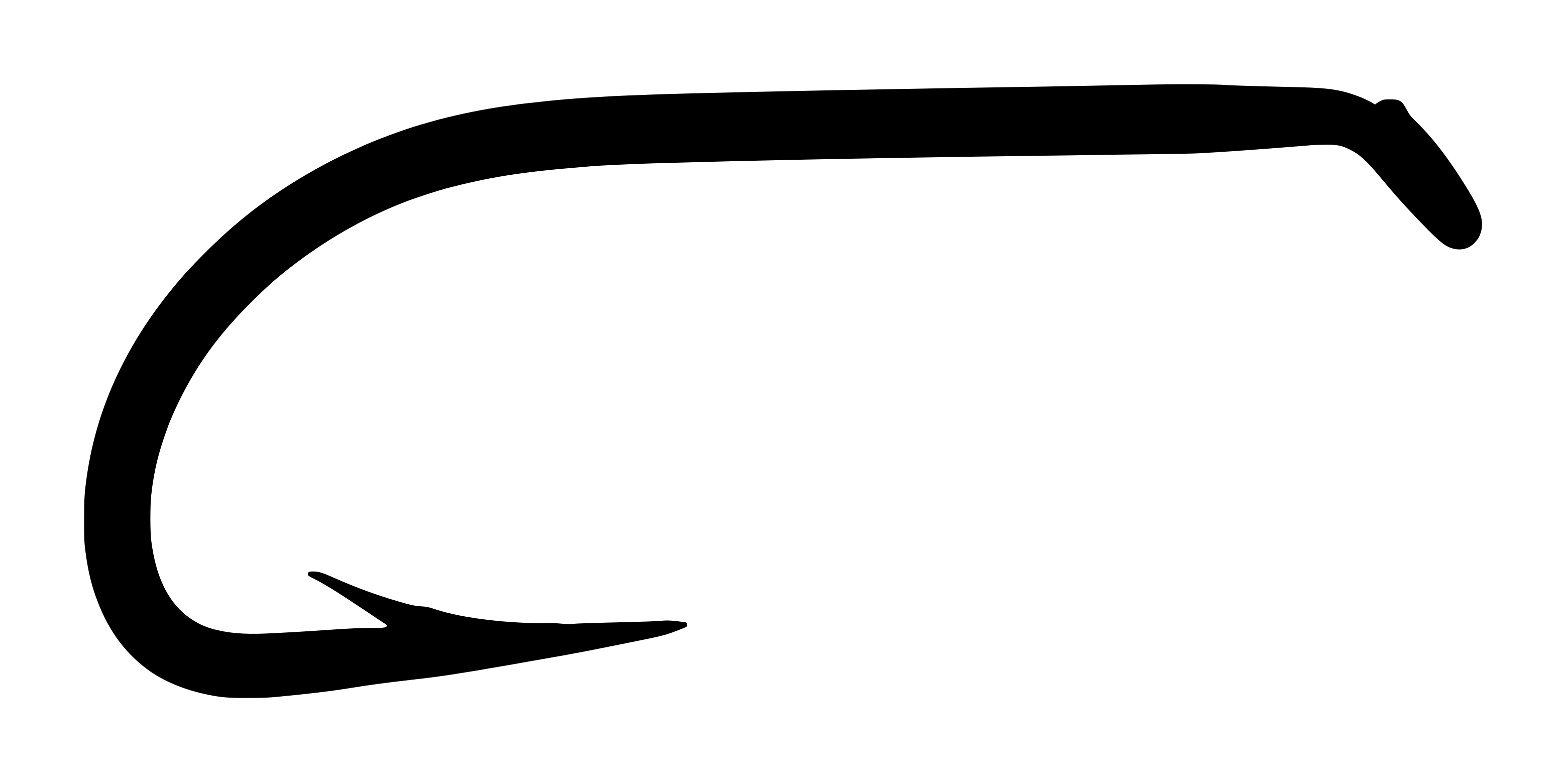
Allcocks W210 Sproat Hook — a classic Redditch-manufactured wet fly and salmon hook from the interwar to early post-war era (c. 1920-1950). Featuring a bronzed finish, turned-down tapered eye, and the iconic Sproat bend profile, the W210 represents the enduring British tradition of forged-wire fly hooks designed for freshwater and sea-trout fishing.
The specimen shown is from an original 100-hook sales card in bright green cardstock with red letterpress printing — a packaging format characteristic of 1930s-1950s British tackle. The card prominently advertises ‘RUSTPROOF’ construction, language reflecting mid-20th century marketing of corrosion resistance before modern stainless steel became standard. The ‘I.D.C.’ designation and Allcocks lion crest signal a quality-tier product within the manufacturer’s range.
Allcocks of Redditch was one of England’s most prolific and respected hook makers, and their Sproat patterns are foundational to classic fly-tying traditions. This particular model, in small sizes, is uncommon in original packaging — making it a notable piece for collectors of Redditch tackle and the broader history of English fly-fishing craft.
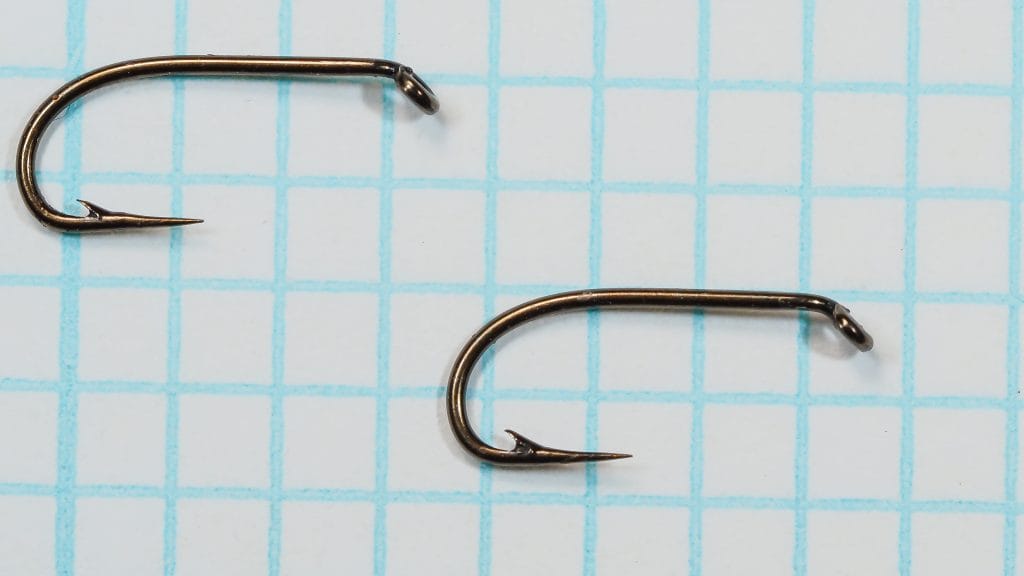
Two examples of the Allcocks W210 sproat bend hook in bronzed finish. The sproat profile shows characteristic inward curve and moderate gap.
Photographic record
4 cataloged imagesSelect any record to load it above.
4 images shown
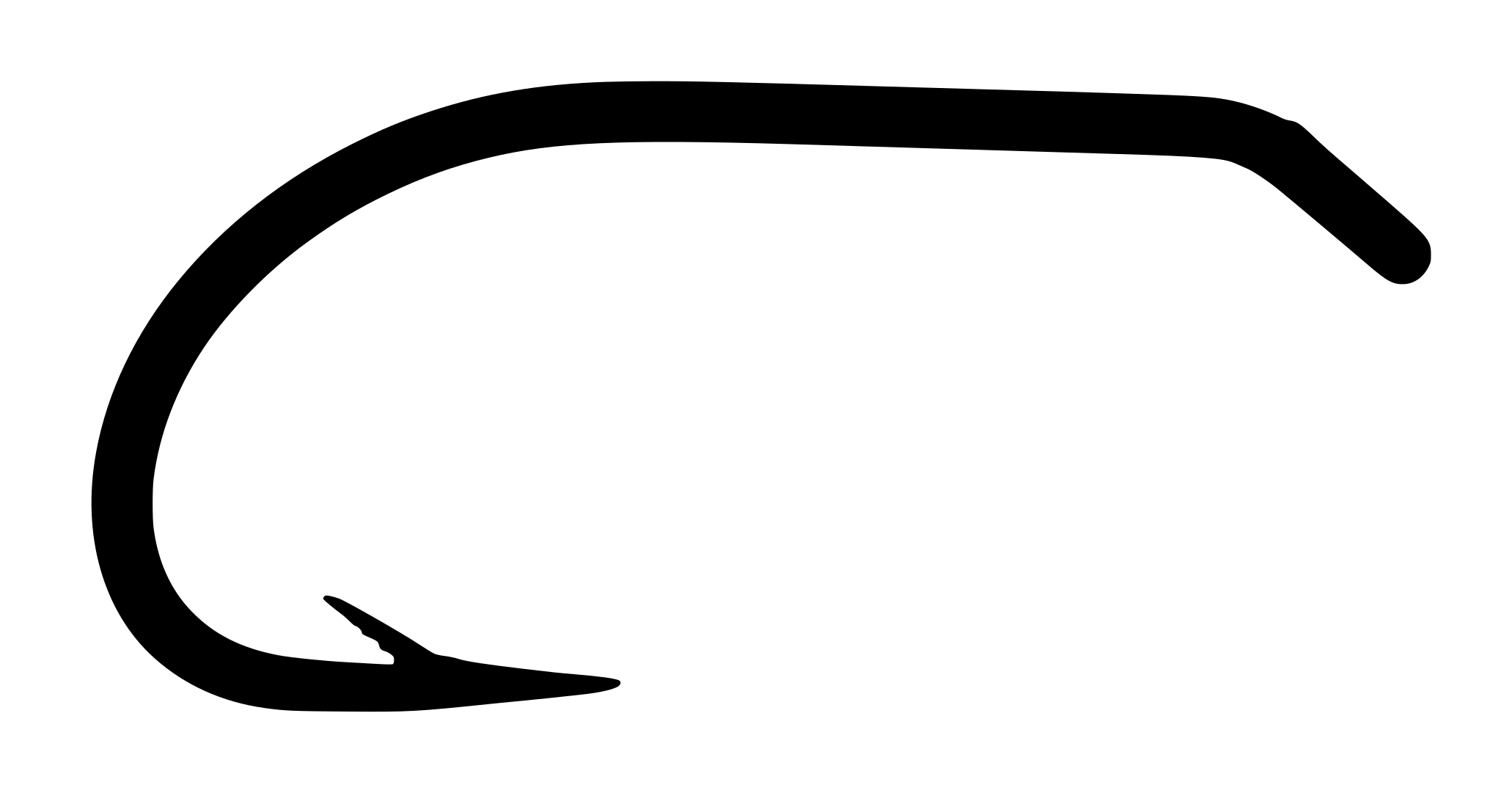
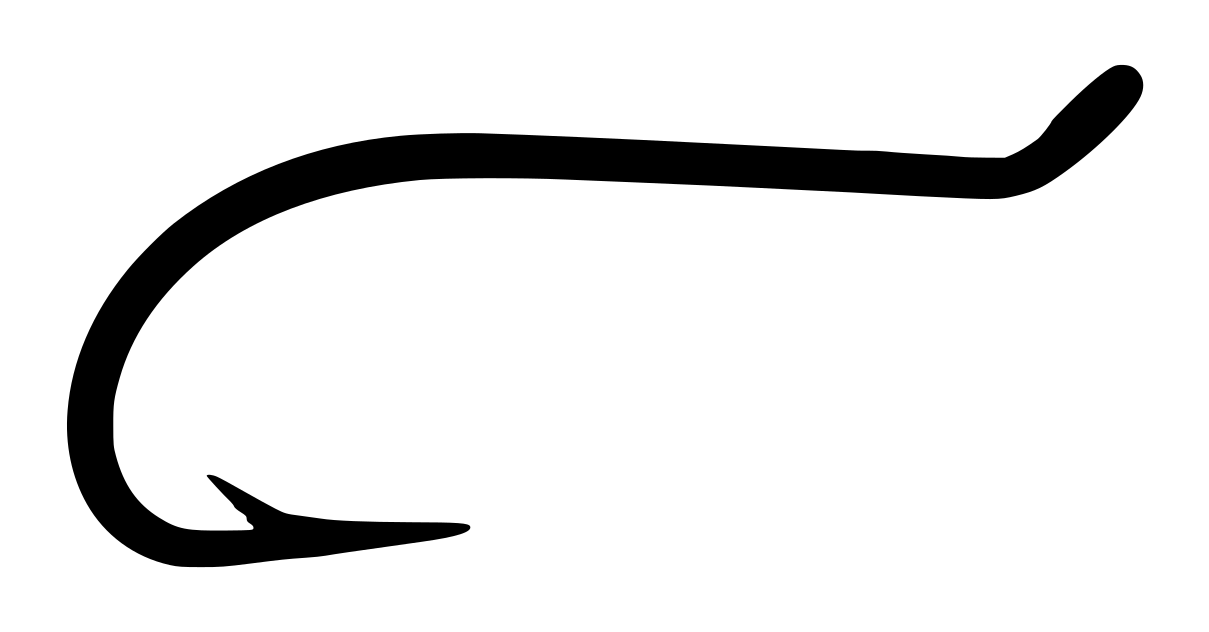
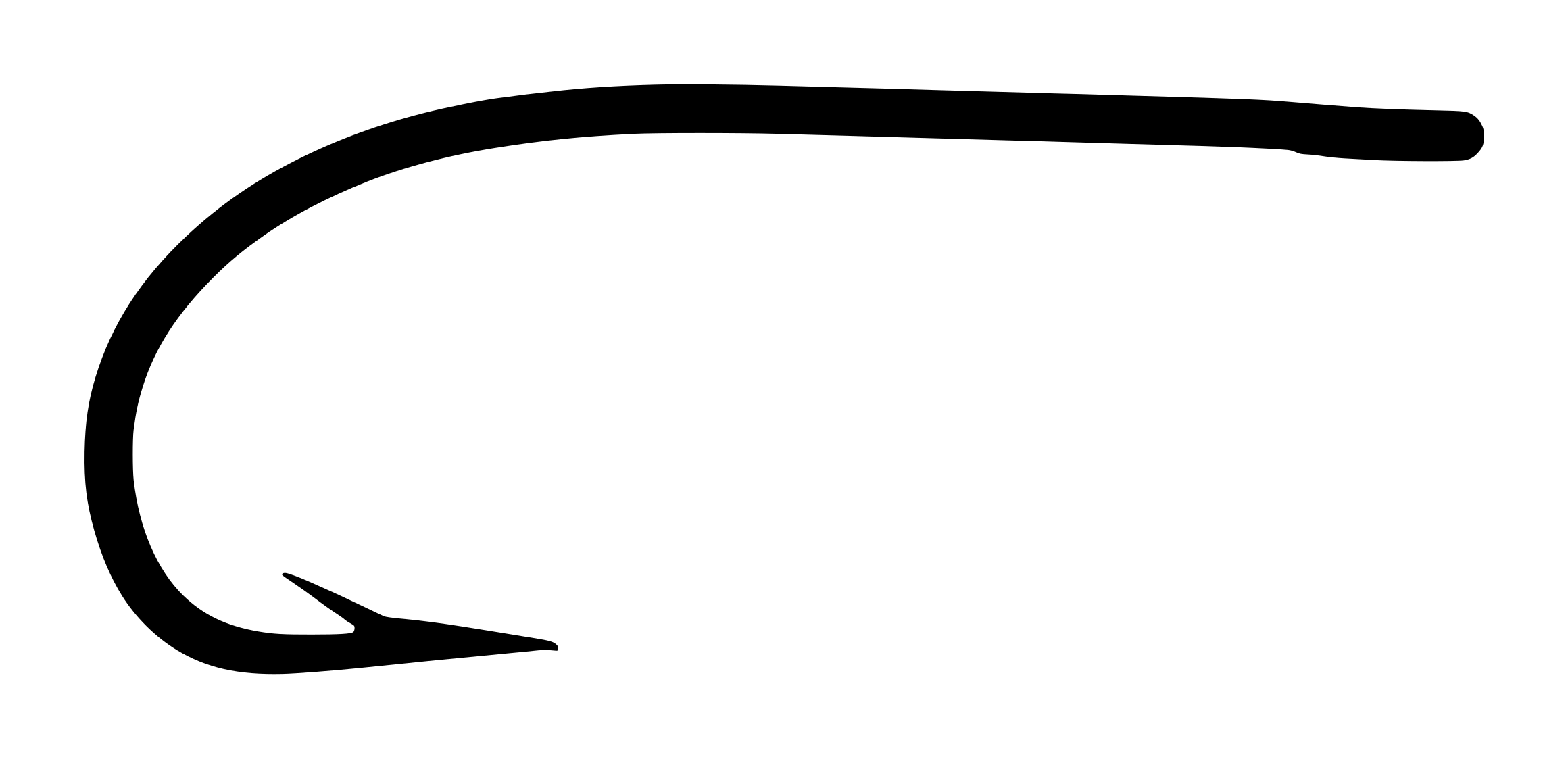
Allcocks W210 Sproat Hook PairTwo examples of the Allcocks W210 sproat bend hook in bronzed finish. The sproat profile shows characteristic inward curve and moderate gap.Open originalAllcocks W210 Box LabelOriginal packaging label for Allcocks W210 Sproat Hooks Rustproof, 100-hook box, made in Redditch, England.Open originalW210 Sproat Hooks Label DetailDetailed view of the Allcocks W210 box label, showing the stag logo, model designation, and 'Rustproof' marking.Open originalAllcocks W210 Sproat Hook ProfileSingle Allcocks W210 hook showing full sproat bend profile with straight eye and fine point.Open original
Technical profile
Eye
Tapered Eye, Turned Down
Wire
Standard, Round, Est. ~0.022"-0.025" (~0.56-0.64 mm)
Shank
Standard — Plain
Bend
Sproat, Standard gapSproat bend features a rounded bottom with moderate depth relative to shank length. Forged construction is evident from the wire set and the slight flattening visible in the bend profile P. Symmetrical curve; no offset present. Bend depth approximately 0.20"-0.28", consistent with a standard rather than deep Sproat.
Point
Superior (near-straight inner taper)Small, cleanly cut barb positioned close to the point. Barb angle is slightly swept rearward, typical of Sproat construction P. Barb height is standard (not oversized or diminished), consistent with mid-20th century Allcocks specifications.
Finish
Bronzed — Confirmed (stated on packaging)Bronzed finish confirmed by researcher physical examination V. Warm brown tone visible in photography under direct light; steel grain texture is perceptible beneath the coating, consistent with traditional bronzing rather than japanning or plating P. Finish is uniform across the hook; no evidence of wear or corrosion on specimen hooks.
Both specimen hooks shown are in excellent condition — bright, with no visible corrosion, pitting, or material loss. Original green card shows light age toning, consistent with storage in dry conditions over 70+ years; no major creasing, water staining, or ink fading present. Card structural integrity appears sound.
The W210 exhibits classic die-forged construction typical of Redditch craft-era manufacture. Each hook begins as a straight length of drawn wire, which is inserted into a pair of hardened steel dies. A powered press brings the dies together under enormous force, plastically deforming the wire into the Sproat bend geometry in a single blow. This ‘hot forging’ or ‘cold striking’ (depending on era and workshop temperature) creates internal grain alignment that adds strength without brittleness.
The tapered eye is hand-formed: a worker would insert each hook into a mandrel and use hand tools to draw and taper the eye loop, then wrap and fltten the end to create a neat turned-down configuration. This labor-intensive finishing step explains why Allcocks and other premium makers commanded higher prices than large industrial competitors like Mustad.
The superior point (near-straight inner taper) represents a design choice prioritizing hook-setting sharpness over holding power. Unlike hollow or beak points that curve or bend the barb inward, the superior point allows the hook to penetrate cleanly in a single direction — advantageous for soft-mouthed fish (salmon, sea-trout) and fly-line presentations where abrupt hooksets are rare. The point taper is consistent and begins near the barb, extending to an acute tip.
The bronzed finish was applied via hot immersion or spray coating, creating a thin oxide layer that resists corrosion without the opacity of japanning. This allows the underlying steel grain to remain faintly visible, contributing to the aesthetic valued by traditional anglers.
We have measurements for sizes 12, 14. Know any others? Submit calipered measurements and we'll review and add them. Thank you!
Historical context
allcock
Allcocks was established as a fishing tackle manufacturer in Redditch, England, during the 19th century, becoming one of the town’s most significant industrial enterprises. Redditch itself had emerged as the global center of hook manufacturing by the 1850s, with dozens of competing makers driving continuous innovation in design and production. Allcocks distinguished itself through consistent quality, extensive product line breadth, and aggressive catalog distribution — making their hooks accessible to anglers across the British Isles and colonial markets.
The company was known for meticulous forging standards and for marketing claims around rust resistance and durability. By the early 20th century, Allcocks had established a recognizable house style: the red and green cardstock packaging with the lion crest became iconic. The firm produced everything from trout hooks to sea-trout and salmon patterns, often naming them by geographical tradition (‘Limerick,’ ‘Sproat,’ ‘Aberdeen’) and assigning model codes like W210 for inventory management.
Allcocks maintained independent operation through the mid-20th century, competing directly with Partridge, Milward, and Edgar Sealey. The company eventually became part of larger consolidations in the British tackle industry, but their pre-war and interwar production remains highly sought by collectors. Their commitment to die-forged construction — each hook hand-finished by skilled workers — set a standard for quality that persisted even as manufacturing methods evolved.
Series History
The Sproat bend is one of the oldest and most enduring hook profiles in fly-fishing tradition, originating in Scotland and becoming standardized across British manufacturers by the late 19th century. Named after its designer (tradition credits it to a Scottish fly-tier), the Sproat’s defining characteristic is its rounded bottom — a gentle, symmetrical curve that contrasts with the more angular Limerick and the wider Aberdeen.
Allcocks’ W210 is a direct implementation of the Sproat standard, assigned a model code that suggests it was part of a numbered system — likely the ‘W’ series representing wet-fly hooks of standard construction. The ‘rustproof’ claim on the packaging indicates this model was marketed during a period (1920s-1940s) when corrosion resistance was becoming a competitive marketing feature, even though the finish remained traditional bronze rather than stainless or plated alloy.
The W210 appears to have remained in production across the interwar and post-war periods, though no definitive discontinuation date is known from available documentation. Size ranges likely included everything from No. 6 (large) down to No. 18 or 20 (very small), though smaller sizes like those shown here are now encountered less frequently — suggesting either lower initial production volume for small sizes or higher attrition rates among users (small hooks being more easily lost or bent beyond service).
Era and Packaging Dating
Green cardstock sales card with red letterpress printing — typical of British tackle packaging 1920s-1950s. No barcode present (barcode adoption post-1974). Lettering style and lion crest are consistent with Allcocks' Redditch period branding. The 'RUSTPROOF' claim on packaging is era-typical language from mid-20th century (post-1920 rust awareness, pre-modern stainless steel widespread adoption). Typography and ink saturation suggest 1920s-1940s production, though card stock condition suggests 1930s-1950s storage rather than immediate post-manufacture. Absence of price marking and postal code format (not visible) provides no conflicting evidence.
The Redditch Standard
The Sproat bend was named after a Scottish fly-tyer whose innovations with rounded-bottom hooks became so popular that Redditch manufacturers adopted the name as a standard profile category — much like 'Limerick' and 'Aberdeen.' By the 1920s, 'Sproat' was not a brand but a universal language among hook makers. Allcocks' W210 is essentially a Redditch conversation: a model code from an industrial manufacturer that encoded a fishing tradition refined over centuries of angler feedback. Today, the Sproat remains unchanged because there is simply no improvement to be made — a humbling reminder that some designs achieve a kind of perfection that defies modernization.
Design lineage and influence
The Sproat bend traces to 19th-century Scottish innovation, where fly-tyers sought a hook geometry between the wide-gapped Aberdeen and the angular Limerick. The rounded bottom reduced stress concentration in the bend, improving durability when playing large fish — a critical advantage in salmon and sea-trout fishing where a broken hook meant lost fish and lost flies.
By the time Allcocks began manufacturing Sproats (mid-to-late 1800s), the design had already become established. However, Allcocks’ contribution was industrial consistency: die-forging the Sproat to repeatable specifications, hand-finishing each hook, and marketing it as a quality standard. Competitors including Partridge, Milward, and Edgar Sealey produced their own Sproat variants, but all adhered to the same basic geometry.
The Sproat’s influence persisted into the late 20th century. Modern manufacturers including Tiemco and Partridge (now a Mustad subsidiary) continue offering Sproat-pattern hooks, though in bright or black finishes and with modern wire alloys. The W210’s simple, elegant engineering remains virtually unchanged — proof of the bend’s functional optimization and its deep roots in angling tradition.
Best matchRelated by Attribute
Computed automatically from catalog data — updated as new hooks are added.
Matches: Bend, Shank, Wire, Gap, Finish +3 moreDiffers: Eye: Tapered Eye vs Ball Eye; Eye Orient.: Turned Down vs Straight / Inline; Point: Superior vs Standard / Spear +1 more
Matches: Bend, Shank, Gap, Eye, Eye Orient. +4 moreDiffers: Wire: Standard vs Heavy (1X Heavy); Point: Superior vs Hollow Point; Application: Dry Fly, Wet Fly, Nymph vs Wet Fly, Nymph
The W210 Sproat is designed as a wet-fly hook for classic freshwater fishing — particularly salmon and sea-trout traditions in Scotland, England, and Ireland. The turned-down tapered eye facilitates secure knot attachment without harsh line bends, and the Sproat bend’s moderate depth and rounded geometry distribute hook stress effectively when playing larger fish on delicate leaders.
In practical use, the W210 would have been dressed with traditional wet-fly materials — fur dubbing bodies, soft hackles, and tail fibers — to create patterns intended for sinking through water column or skating the surface film. The small sizes shown here (estimated 14-16) are transitional: large enough for confident hand-manipulation but small enough for more delicate presentations in clear-water conditions or when targeting smaller sea-trout rather than salmon proper.
The bronzed finish provides subtle underwater visibility and is aesthetically consistent with traditional British fly-dressing, where hook color was considered part of the fly’s presentation — a darker, warmer tone believed to resemble natural insect materials or small baitfish.
Secondary Applications
Nymph patterns in small sizes; occasional use in spey casting setups where lighter wire and smaller profile were preferred.
Classic Fly Patterns
March Brown, Greenwells Glory, Partridge and Orange, Teal and Red, Black Pennell, Invicta
Modern Equivalents
Hook
Match Quality
Notes
Partridge L2A
Excellent
Partridge (Mustad subsidiary) continues the L2A in modern production — identical Sproat bend, available in standard and small sizes, bright and black finishes. Direct functional equivalent.
Tiemco 5262
Very Good
Sproat-pattern wet-fly hook with modern materials and finish options. Bend geometry is faithful to the classic Sproat; wire gauge and eye type differ from vintage W210 but serve the same angling purpose.
Mustad C49S
Good
Mustad's curved-shank Sproat variant. Similar bend family but modified shank geometry; available in large sizes but lacks the small-size options of the original W210.
Collector notes
Rated 4.5/10 — Allcocks sproat hooks in standard sizes remain common, but the W210 model in small sizes (14-16) is less frequently encountered. Collector demand is modest among Redditch specialists and classic wet-fly traditionalists. Complete original packaging in good condition adds meaningful premium.
Reference value
$12 – $28 USD estimate
Packaging format
GW-ALLCOCK-CARD-01Catalog code
The W210 occupies an interesting middle ground in collectability. As an Allcocks product from the Redditch manufacturing era, it carries historical prestige and appeals to collectors of British tackle and classic fly-tying traditions. However, Sproat bends are a well-established standard pattern, and Allcocks manufactured them in large volume — meaning specimens are not exceptionally rare.
What elevates this particular example is the original green cardstock packaging and the small size. Larger sizes (8-10) are relatively common; intermediate sizes (12-14) are uncommon; and the very small sizes (16-18) are genuinely scarce. The intact card with 100-hook count and original red letterpress printing is a significant asset.
Condition factors affecting value: (1) All or most hooks still on card — critical. Missing hooks reduce value by 20-40%. (2) Card structural integrity — creasing, water staining, or fading reduces premium. (3) Packaging completeness — presence of any original tissue or envelope wrapper adds 10-15%. (4) Finish uniformity — corrosion or patina loss on specimen hooks slightly reduces appeal to purists, though some collectors view patina as acceptable aging.
Most desirable variants: Small sizes (14-18) in complete original packaging, any finish variant (bronzed cards are most common; blued or japanned variants would command premium if found). Market focus: Redditch history specialists, classic salmon/sea-trout tradition collectors, and historical fly-tying communities.
Packaging
Sales card format. Green cardstock, approximately 3.25" × 2.5" (82 × 64 mm), with red letterpress border and text. Center features the Allcocks lion crest in red. Layout: Top left, model designation 'W 210'; top center, red lion crest; top right, 'Qty. 100'. Center block in red letterpress: 'MADE IN ENGLAND'. Large black sans-serif text reads 'ALLCOCKS'. Below: 'I.D.C.' (likely indicating quality specification). In red letterpress: 'SPROAT HOOKS' and 'RUSTPROOF'. Bottom line: 'ALLCOCKS - REDDITCH - ENGLAND' in black sans-serif. Card stock appears to be uncoated or lightly coated pulp, typical of interwar British manufacture. No barcode, no postal code visible. Original condition shows light toning consistent with age; no water damage or major creasing visible on specimens photographed.
Market Value Notes
Low ($12): Opened card, 85-95 hooks remaining, moderate card wear, bronzed finish intact<br />
High ($28): Sealed or near-sealed card, complete 100-hook count, minimal card wear or creasing, original tissue present if available<br />
Premium factors: Small size (14-16), complete count, intact original green cardstock packaging, clear red letterpress printing, original tissue wrapper, absence of corrosion or patina<br />
Platforms: eBay UK (primary), specialist tackle dealers, Redditch history auctions<br />
Confidence: E estimated — limited comparable sales data for W210 specifically; extrapolated from broader Allcocks sproat card values ($8-35 range depending on size and condition). Small-size premium inferred from scarcity patterns across manufacturers.
Where to Find
eBay UK (search 'Allcocks W210' or 'Allcocks sproat' + Redditch). Specialist British tackle dealers, particularly those focusing on Redditch manufacturers. Antique fishing tackle fairs in the Midlands. Periodic appearances at auction houses specializing in sporting heritage.
Preservation
Storage and Preservation
The W210’s bronzed finish is susceptible to patina development in humid conditions. Store the card in a cool, dry environment — ideally at 40-50% relative humidity and 65-70°F (18-21°C). Avoid basements and areas near windows where temperature and humidity fluctuate.
Keep the hooks on their original green cardstock rather than removing them to loose storage. The card serves as a protective envelope and contributes significantly to the collectibility and market value of the specimen. If the card is already separated, do not attempt to rebind or glue hooks; instead, store them in acid-free paper packets within an archival box.
Check periodically for any signs of corrosion, particularly around the eye and barb. Light surface patina (a warm, darker brown tone) is normal aging and generally acceptable to collectors; active corrosion (rust spots, pitting) should be cleaned gently with a soft, dry brush. Do not use harsh solvents or scrubbing, as these will remove the original finish and reduce collector value.
Avoid contact with other metals (steel, copper, brass) in storage, as galvanic reactions can accelerate corrosion. Keep the card away from direct sunlight, which will fade the red letterpress printing and yellow the cardstock paper. Archival boxing — acid-free paper and storage boxes — is ideal for long-term preservation if you plan to maintain this specimen as a reference collection piece.
Primary Source
Packaging Claims and Dating
Source: Allcocks W210 Sales Card, 'MADE IN ENGLAND' and 'RUSTPROOF' claims, Redditch, England
The W210 card bears the claim ‘RUSTPROOF’ in red letterpress — a keyword phrase that dates this packaging to the interwar and early post-war era (c. 1920-1950). During this period, ‘rustproof’ was a novel marketing assertion, reflecting early industrial awareness of corrosion problems among anglers who stored wet hooks in tackle bags and boxes. The term ‘rustproof’ did not mean stainless steel (which was not widely available in hook manufacturing until post-1960s) but rather referred to the durability of the bronzed coating and the inherent corrosion resistance of quality-forged high-carbon steel.
The use of ‘I.D.C.’ (likely ‘Improvement, Durability, Craftsmanship’ or a similar internal designation) suggests Allcocks employed a quality-tier labeling system to distinguish their standard wet-fly hooks from economy alternatives. This supports the W210’s positioning as a mid-to-premium product within Allcocks’ range.
The ‘MADE IN ENGLAND’ declaration and lion crest are markers of British imperial-era manufacturing pride. By the 1930s-1950s, this messaging served both domestic (patriotic) and export (quality assurance) purposes. The absence of a barcode and the presence of hand-stamped or printed packaging details (as opposed to machine-applied modern barcodes) confirm pre-1974 manufacture.
The card’s green color and red border were Allcocks’ house style — distinctive enough that collectors can often identify an unlabeled specimen by packaging color alone, even before reading the text. This consistency across product lines suggests a long production run for W210 within the green-card era (likely 1920s-1950s, with the possibility of 1950s-early 1960s extension).
Size Note
Size Documentation
The card itself does not explicitly state the hook size of this 100-hook package. Based on visual analysis of the specimen hooks against the 1/10-inch grid, the hooks measure approximately 0.80″-0.95″ overall (20-24 mm), consistent with size No. 14-16 in standard British nomenclature. However, without a stamped or printed size designation on the card, there remains uncertainty whether this card originally contained uniform size or a mixed assortment.
Allcocks’ convention appears to have been to mark size on the hooks themselves (usually stamped or impressed near the eye), but wear, patina, and photography resolution make such markings difficult to confirm in the images provided. The small, delicate proportions and the overall length suggest small trout hook sizing rather than salmon (which would typically measure 1.2″-1.6″ for a size 2/0 or 1/0).
To definitively establish the size, physical inspection of any stamped markings on the specimen hooks would be necessary, or measurement of multiple hooks from this card using precision calipers. For reference purposes on this entry, the estimated range 14-16 should be treated as E estimated until confirmed by direct inspection.
Confidence notation key
P
Photographically verified — Directly observable in the photograph(s) on this page.
V
Verified by documentation — Confirmed by manufacturer catalog, spec sheet, or published reference.
I
Inferred — A logical deduction from observable or documented evidence, not directly stated.
E
Estimated — An approximation based on visual comparison, proportional analysis, or limited data.
S
Speculative — A reasoned hypothesis that cannot be confirmed from available evidence.
Claims with no notation are confirmed by multiple independent sources. All photographs on garrenwood.com are taken on a measurement grid where each square equals 1/10 inch (0.1″ / 2.54 mm).