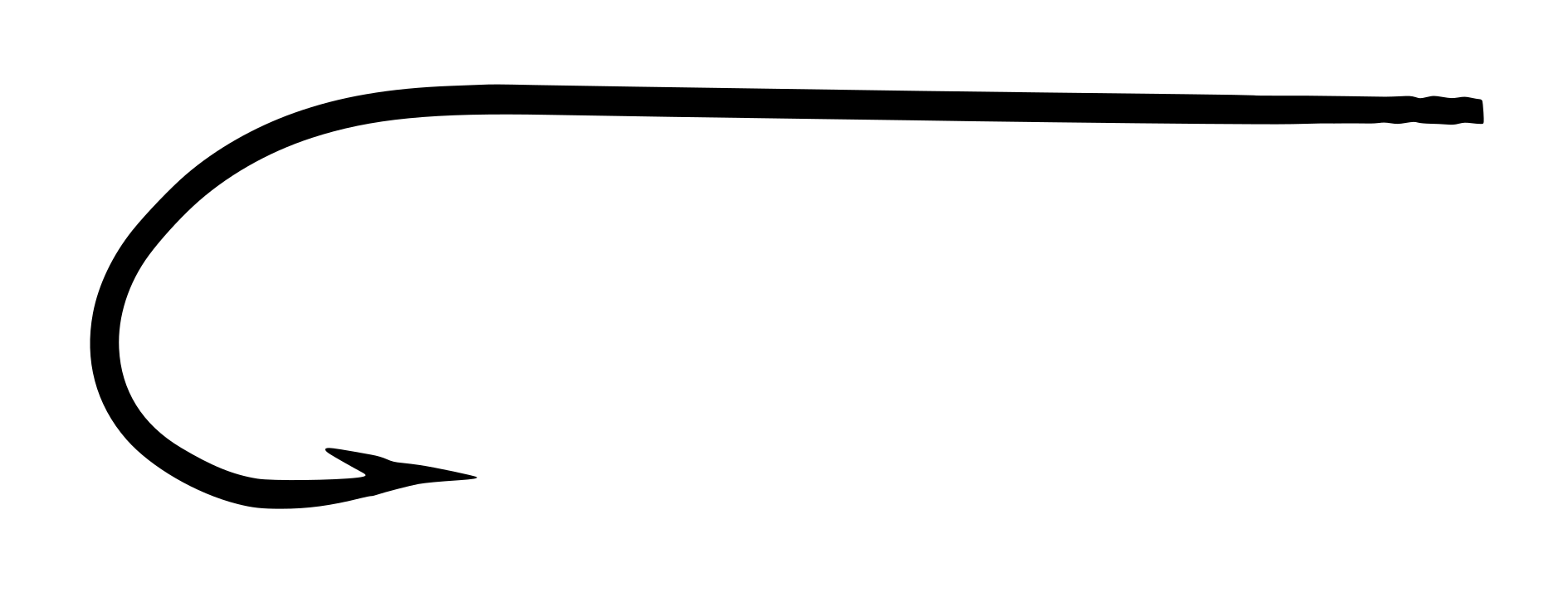
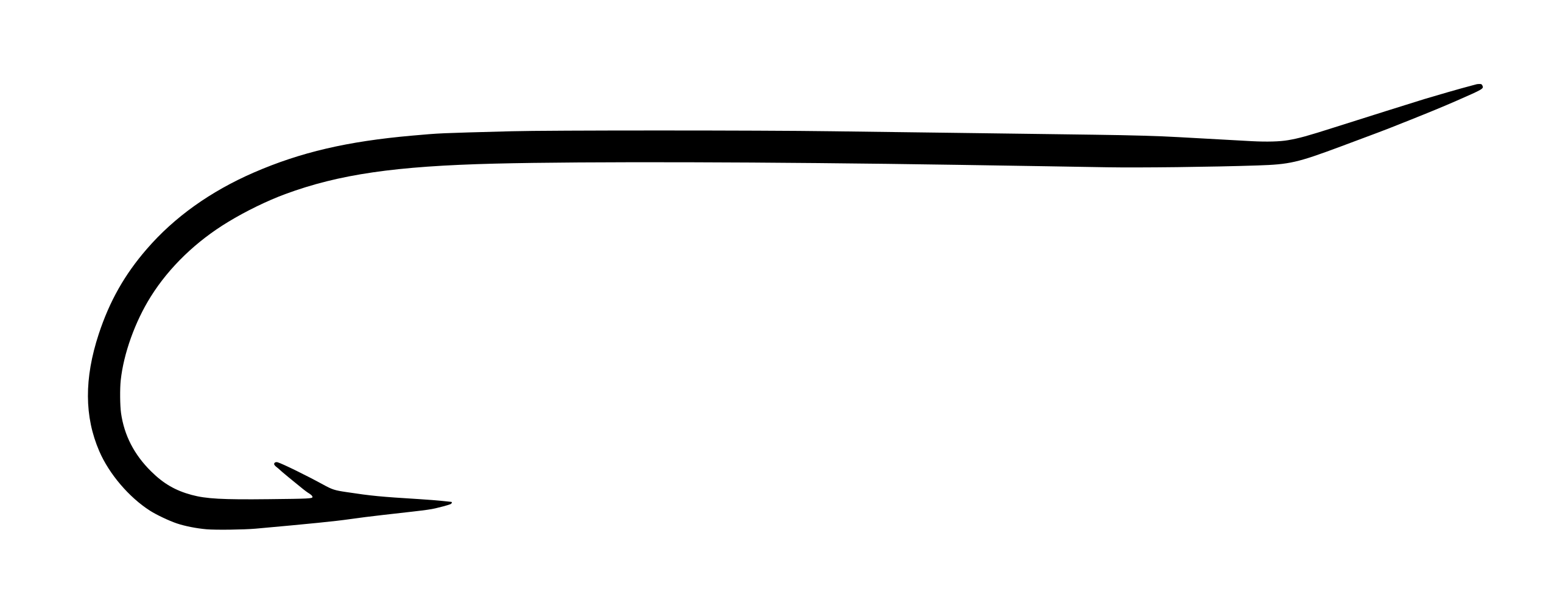
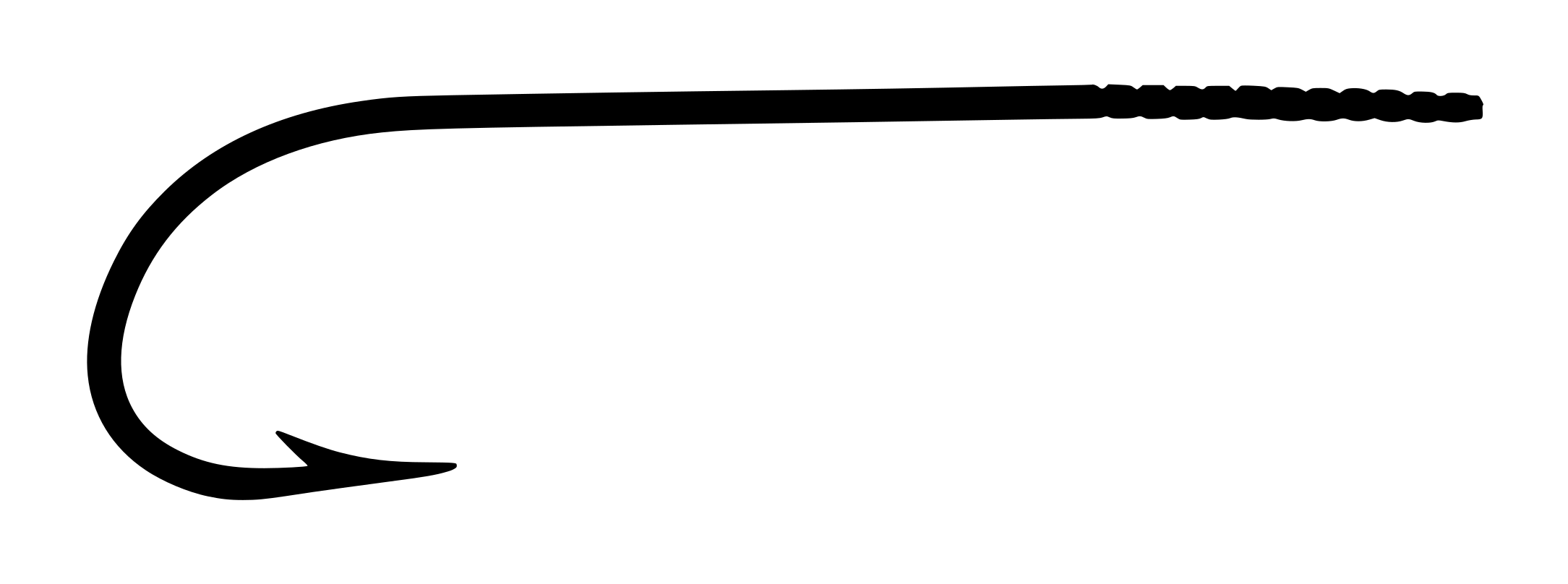
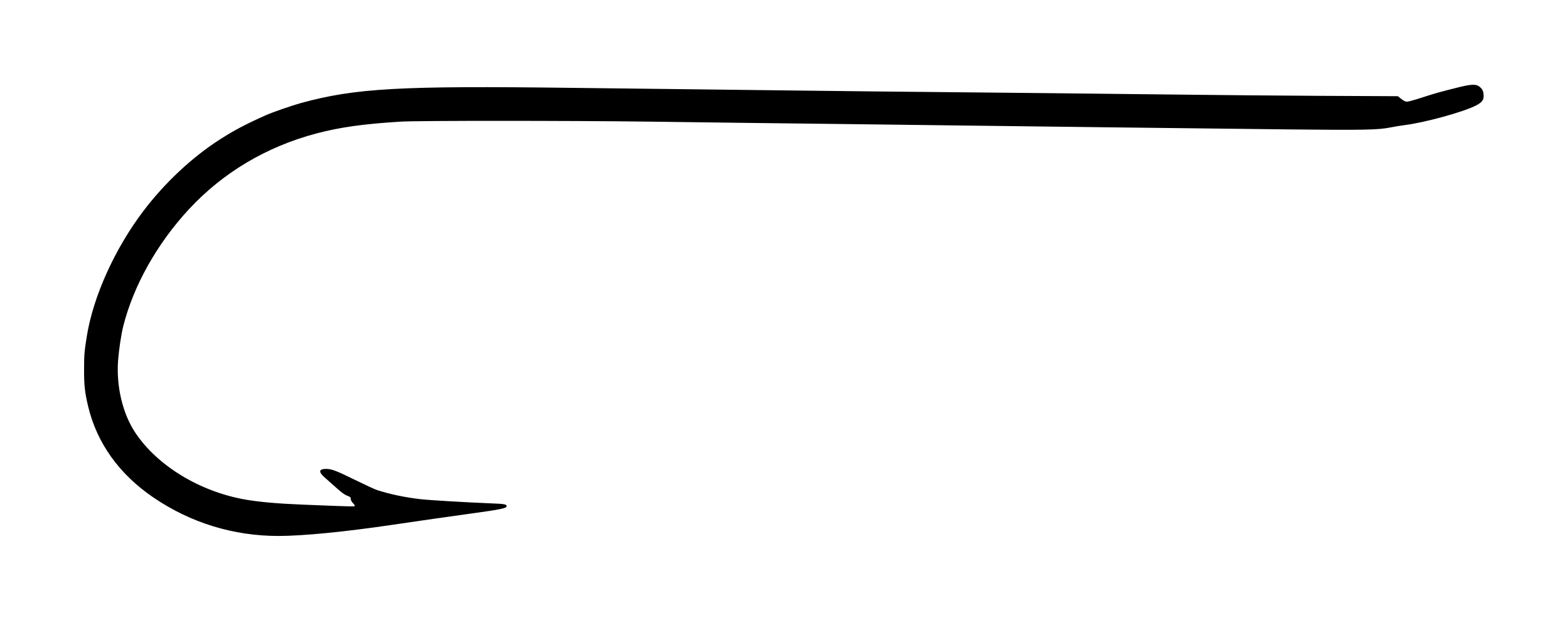
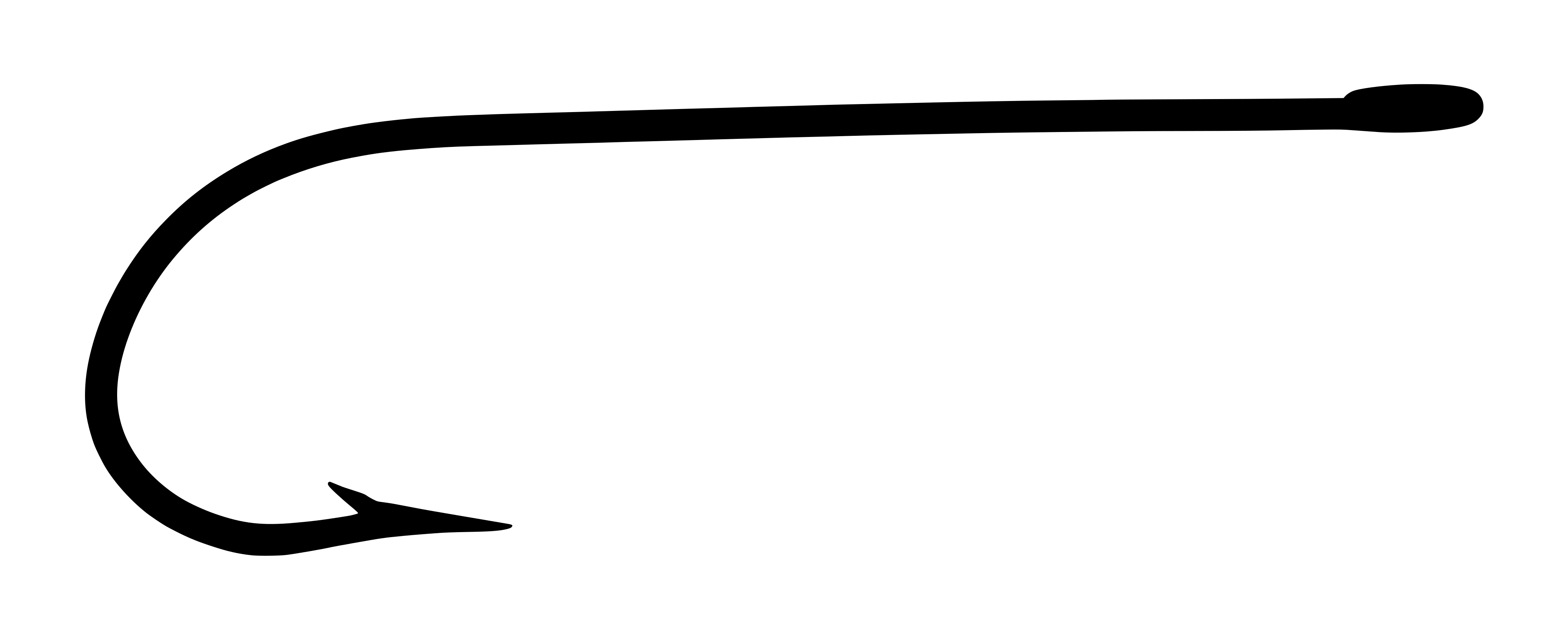
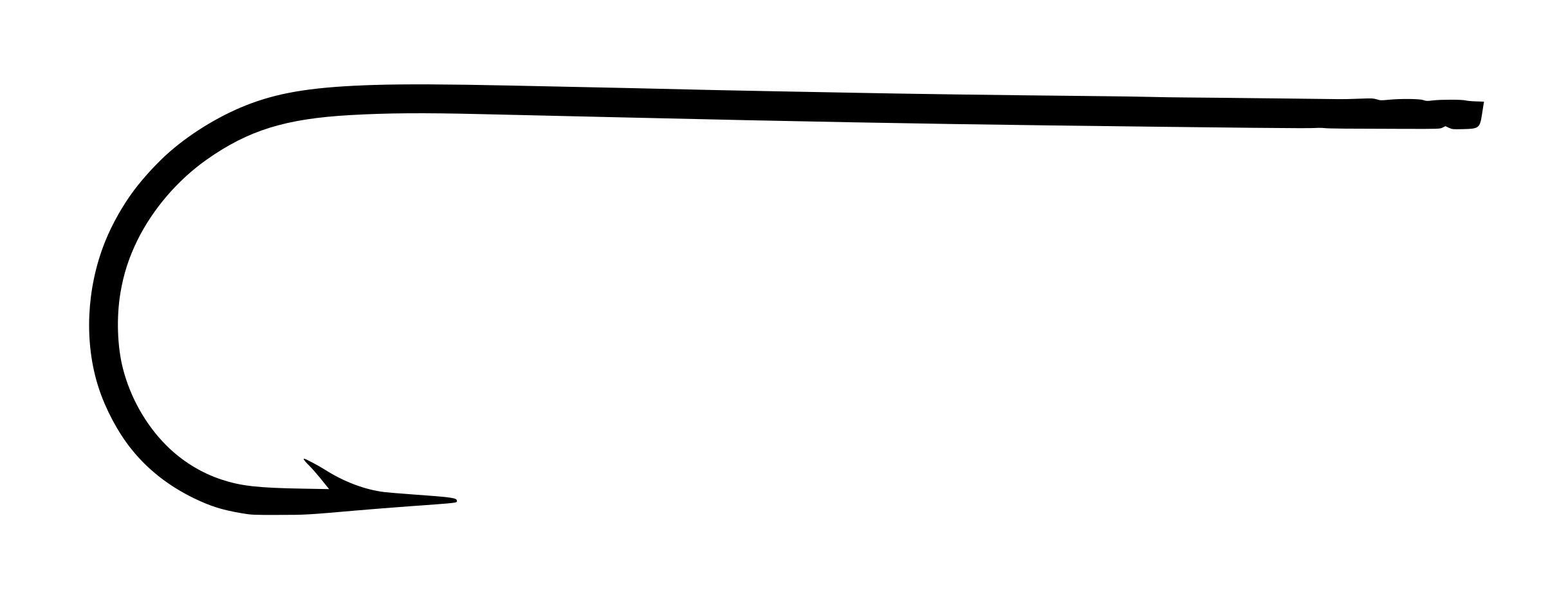
Allcock No. 3736M Spear Point Long Shank Kirby Carlisle Hook. English-made salmon and sea trout hook produced by S. Allcock & Co. of Redditch, England. Defined by a kirbed (left-offset) Carlisle bend, marked (ridge-textured) shank for improved fly grip, blind marked eye construction, and standard-wire geometry. Blued finish with protective oxide layer typical of mid-20th-century British sea-trout tackle.
The long shank (approximately 2x proportional length) accommodates larger patterns and tube flies popular for Atlantic salmon and sea trout in rivers and coastal estuaries. The marked shank is a Redditch-tradition feature—the fine ridge pattern along the shank provides mechanical grip for thread and tying materials, particularly valued in gut-fly construction where barb strength alone was insufficient.
Packaging evidence—pink sales card without barcode, letterpress print, mid-century cardstock weight—dates this example to the late 1940s or 1950s. Card indicates original 100-hook quantity per package, a standard commercial count for Redditch hook cards of that era. No modern postal codes or telephone number formats visible. Allcock continued this model into the early 1960s before discontinuation.
Collectibility: Rated 5.0/10. Scarce in complete original packaging with full hook count. Moderate collector demand among Redditch-tradition specialists and sea-trout fly tyers. Blind marked construction is valued for authenticity in period-correct fly dressing. Individual size demand varies—smaller sizes (8–12) more sought than larger (2/0–4/0).
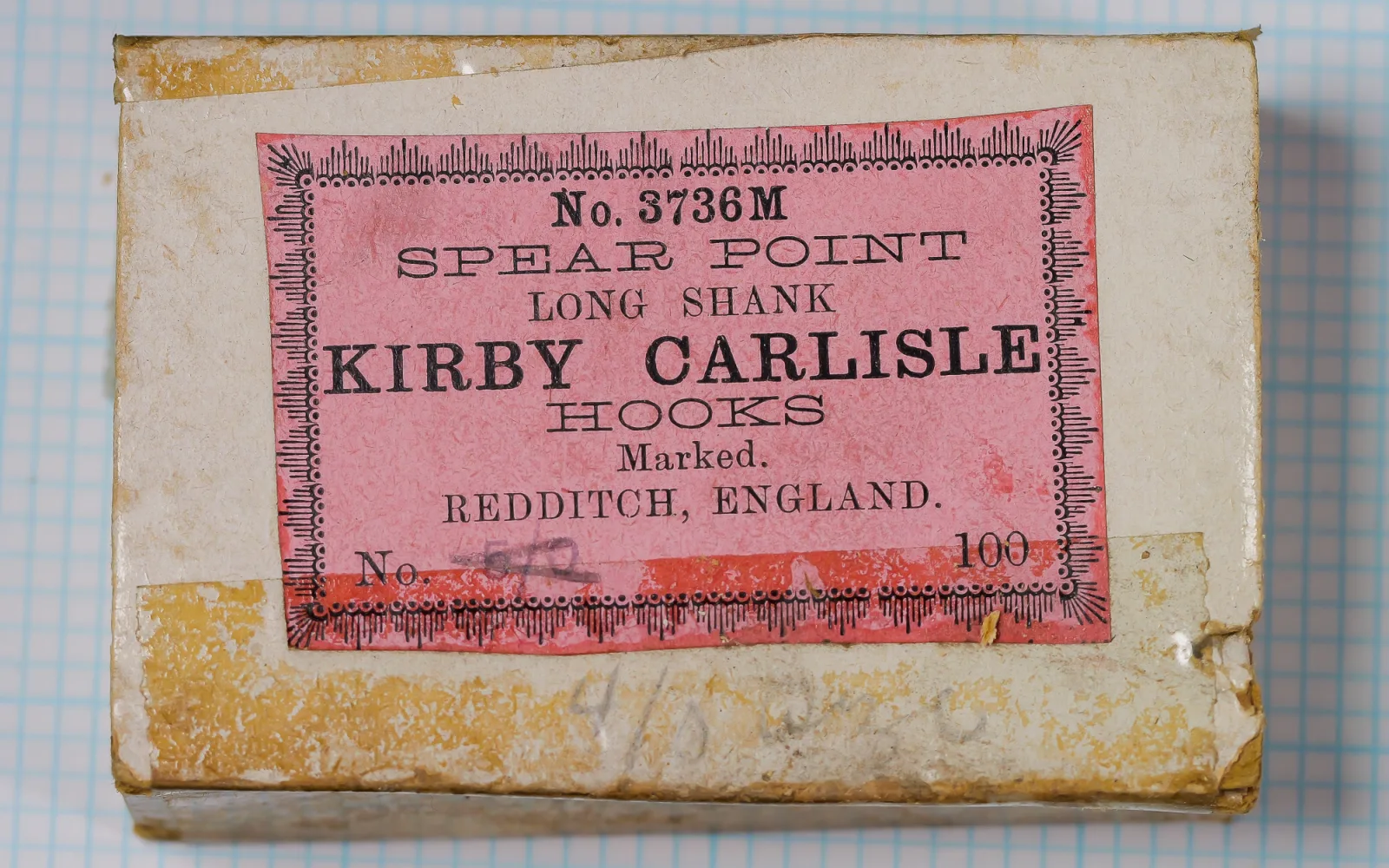
Original pink sales card for Allcock No. 3736M Spear Point Long Shank Kirby Carlisle hooks, marked shank, blued finish. Card indicates 100-hook quantity per original package. No barcode visible — dates to c. 1950s. Redditch manufacture printed at base.
Photographic record
3 cataloged imagesSelect any record to load it above.
3 images shown
Allcock 3736M Spear Point Kirby Carlisle Sales CardOriginal pink sales card for Allcock No. 3736M Spear Point Long Shank Kirby Carlisle hooks, marked shank, blued finish. Card indicates 100-hook quantity per original package. No barcode visible — dates to c. 1950s. Redditch manufacture printed at base.Open originalAllcock 3736M Size 4/0 Profile ViewProfile view of the Allcock No. 3736M hook, size 4/0, showing the long shank, Carlisle bend, and leftward (kirbed) point offset. Blued oxide finish appears as cool blue-grey tone. Spear point taper is visible at the tip. Photographed on measurement grid to document overall length and shank proportions.Open originalAllcock 3736M Eye Detail and Bend GeometryClose-up view of the Allcock No. 3736M eye region and bend, showing the blind marked eye construction (no protruding loop) and the smooth rounded Carlisle bend profile. Blued finish and marked-shank texture visible along the eye end of the shank. Hook positioned on measurement grid.Open original
Technical profile
Allcock No. 3736M Spear Point Long Shank Kirby Carlisle Hook, Blued, Marked Shank
Eye
Blind — Marked Shank
Wire
Fine (1X Fine), Forged
Shank
Special Long — Plain
Bend
Kirby (offset), Standard gap, Offset / kirbedCarlisle bend is rounded and moderately deep, distinguishable from the sharper Limerick and the wider Aberdeen profiles P. Kirbed offset clearly visible in profile images—point angles to the left when viewed from eye down shank P. The bend exhibits uniform forging with consistent wire curvature from barb to tag end of shank. No kinks or irregular set. Bend depth proportional to heavy-gauge wire used in size 4/0.
Point
Standard / SpearBarb is present and short, cut close to the wire body. Placement is standard—just behind the point taper. Sweep angle is moderate, aligned with the point geometry P. Barb size consistent with 1950s manufacturing standard, smaller than modern barbs but adequate for gut and silk applications.
Finish
Blued — Confirmed (stated on packaging)Blued finish confirmed by packaging legend. Photograph shows cool blue-grey oxide tone characteristic of blued steel P. Surface exhibits uniform color with minimal patina development—consistent with light handling or storage in dry conditions. Underlying steel grain is visible beneath the oxide layer, indicating thin protective coating typical of mid-20th-century Redditch bluing. No rust spots or active corrosion visible on specimen.
Marked Shank Construction. The fine ridge pattern along the shank is mechanically forged into the wire during initial formation, not stamped or etched post-manufacture. This texture provides superior grip for thread windings—particularly important in the pre-nylon era when fly tyers relied on silk and gut materials with limited adhesive properties. The marked surface increases friction contact between shank and thread, allowing thinner wraps and more secure head cement seat. Modern nylon hooks typically omit marked shanks because synthetic thread has greater grip without mechanical assistance.
Kirbed Offset. The leftward point offset (kirbed configuration) was theorized to improve hook set in flowing water by presenting the barb at a slightly more favorable angle during the strike. Whether this advantage is functional or traditional is debated among modern anglers, but Kirby-family hooks remained in production through the 20th century, suggesting sustained market demand.
Blind Marked Eye. The fusion of two features—blind construction (no protruding loop) and marked texture at the eye junction—eliminates fouling in weed and current while maintaining grip for line attachment. The eye is formed by bending the shank tag back on itself and forge-fusing the overlapped wire, then filing the end flush. The shallow marking grooves cut into this fused eye section provide texture for knot grip.
This pattern was made in sizes 2/0–4/0 (I). We don't have any measurements for it yet. Own one? Submit calipered measurements and we'll review and add them. Thank you!
The Kirby Carlisle long-shank series represents a hybrid between two established Redditch bend families: the Kirby offset geometry and the Carlisle shape. Kirbed designs (point offset to the left) have roots in 18th-century British fly-tying tradition and were refined during the 19th century for improved hook-set geometry in current-driven flows. The Carlisle bend—a rounded, moderately deep profile—was developed alongside the similar Sproat and O’Shaughnessy families as industrial production advanced. The combination of these features in a long shank (2x proportional length) created a salmon and sea-trout hook suited to large wet-fly patterns, tube flies, and multi-hook rigs common in Scottish and Irish Atlantic salmon fishing from the 1930s onward. Allcock’s marked-shank variant added mechanical texture to the shank, a feature valued by fly tyers working with gut and silk threads where barb grip alone was insufficient. The model remained in Allcock’s catalog through the 1960s, with production ceasing as modern nylon-wrapped and chemically treated hooks displaced the older craft styles in the 1970s.
Era and Packaging Dating
No barcode present — pre-1974 strong indicator. Pink cardstock and letterpress/offset print method consistent with 1940s-1960s British hook cards. Border design and typography align with Allcock's mid-20th-century house style. Model code format (numeric + M suffix) typical of post-1935 Redditch naming convention. Marked shank construction was standard for salmon and sea trout hooks ca. 1945-1965. No modern postal codes or phone numbers visible. Overall evidence places production in late 1940s to early 1960s.
The Marked Shank — A Forgotten Craft Necessity
The marked shank was a signature of Redditch-era fly-hook craftsmanship, born from necessity in an age before synthetic tying threads. Gut and silk materials—the only options before the 1950s—required mechanical anchoring to stay in place on a smooth wire shank. Fly tyers would wrap their silk thread around the marked shank in tight spirals, and the ridge pattern would literally hold the thread in place through friction alone. A marked-shank hook could support a complex fly head and body without the benefit of modern super-glue. Once nylon monofilament and synthetic wrapping threads became standard, the mechanical grip provided by marking became redundant—and modern hooks are typically smooth because smooth wire is cheaper and faster to produce. Finding an old marked-shank hook in original packaging is like holding a relic of handcraft tradition.
Design lineage and influence
The Kirby bend family traces back to 18th-century English fly-tying traditions, appearing in early hook maker’s catalogs from London and Redditch by the 1820s. The Carlisle bend family emerged later, in the industrial era (1860s–1880s), as a competing design emphasizing moderate depth and rounded bottom geometry. The marriage of these two features—Kirby offset + Carlisle contour—represents a mid-20th-century refinement, combining traditional geometric advantage with manufacturing efficiency.
Allcock’s marked-shank variant competed with unmarked versions from rival makers and with the parallel Partridge range of gut-loop and blind-eye salmon hooks. As nylon and modern glues displaced gut and silk after 1960, marked-shank designs gradually disappeared from production. Today, the primary lineage descendants are unmarked Carlisle and Kirby hooks from Mustad and other producers, where the offset geometry survives but the marked texture does not.
Best matchRelated by Attribute
Computed automatically from catalog data — updated as new hooks are added.
Matches: Bend, Wire, Gap, Eye Orient., Point +4 moreDiffers: Shank: Special Long vs 3X Long; Eye: Blind — Marked Shank vs Blind — Tapered Shank; Finish: Blued vs Bronzed +4 more
Matches: Bend, Gap, Eye, Eye Orient., Point +3 moreDiffers: Shank: Special Long vs Standard; Wire: Fine (1X Fine) vs Standard; Finish: Blued vs Bronzed +5 more
Matches: Shank, Wire, Gap, Eye, Eye Orient. +2 moreDiffers: Bend: Kirby (offset) vs New York; Point: Standard / Spear vs Hollow Point; Forging: Forged vs Round +5 more
Matches: Bend, Wire, Gap, Eye, Eye Orient. +3 moreDiffers: Shank: Special Long vs 1X Long; Finish: Blued vs Bright / Uncoated Steel; Forging: Forged vs Round +5 more
Matches: Bend, Wire, Eye Orient., Finish, Offset +2 moreDiffers: Shank: Special Long vs 3X Long; Gap: Standard vs Narrow; Eye: Blind — Marked Shank vs Blind — Flatted +6 more
Long-shank salmon and sea-trout hook intended for wet-fly patterns in Atlantic salmon rivers and coastal estuaries. The extended shank accommodates larger fly profiles, tube flies, and multi-hook tandem rigs. Kirbed geometry was thought to improve hook set in flowing current. The marked shank provided mechanical grip for gut and silk fly-thread materials essential before synthetic tying materials became standard after 1960. Typical application: two-hook gut-snelled salmon rigs fished in Scottish and Irish rivers, particularly during spring and autumn salmon runs. Also used for large sea-trout patterns in estuarine and tidal water fishing.
Classic Fly Patterns
Named patterns specifically associated with this hook. Leave blank if none formally documented. Do not speculate — only include patterns with a confirmed association.
Collector notes
Rated 5.0/10 — Scarce. Complete original packaging with full 100-hook count is infrequently encountered; opened cards or partial counts are more common. Collector demand is moderate, concentrated among Redditch-tradition specialists, traditional fly tyers, and salmon-fly historians. Mid-century dating and marked-shank construction add period authenticity value.
Reference value
$15 – $45 USD estimate
Packaging condition
Good — moderate wear, legibleRecorded specimen
Packaging format
allcock-card-01Catalog code
Collectibility Drivers. This hook represents authentic mid-20th-century British salmon tackle craftsmanship. Marked-shank construction is historically significant and functionally distinct from modern hooks. Allcock was a prestigious maker with consistent product quality. Size 4/0 is within the range preferred for salmon patterns (2/0–4/0 are most sought). Blued finish is protective and visually characteristic of the era. Original pink sales card with period typography and no barcode adds authenticity evidence.
Limiting Factors. Allcock hooks are less celebrated among casual collectors than Mustad or Partridge. The marked shank appeals to specialists but not to general fly tyers who prefer modern smooth designs. Complete 100-hook cards are rarely found intact—most have been opened, sorted, and partially consumed over 60+ years. Smaller sizes (8–12) from Redditch makers command higher premiums due to scarcity; larger sizes remain more abundant.
Desirability Variants. Size 4/0 in blued finish with complete original packaging is the peak desirability state. Sizes 2/0 and 3/0 are also sought. Complete cards (all 100 hooks) are significantly more valuable than opened/partial cards. Unopened or sealed packaging commands a premium. Damage to the printed card (fading, tears, water damage) reduces value proportionally.
Condition Valuation. Mint condition (sealed card, all hooks intact, no wear): $35–60 USD. Excellent (opened, all or near-all hooks, minimal packaging wear): $20–35 USD. Very Good (complete count, moderate packaging wear): $15–25 USD. Good (opened, missing a few hooks, visible wear): $8–15 USD. Fair (significant loss or packaging damage): $3–8 USD. Loose individual hooks from this model fetch $0.50–2.00 USD depending on size and condition.
Packaging
Pink printed sales card with decorative border of dots and dashes. Header reads "No. 3736M" followed by "SPEAR POINT / LONG SHANK / KIRBY CARLISLE / HOOKS / Marked." Text states "REDDITCH, ENGLAND." Quantity field printed as "No. [blank] 100" — indicating original count of 100 hooks per card. Cardstock is period mid-20th-century weight. Print method is letterpress or offset. Card shows age-toning and minor handling wear at edges. No visible barcode (pre-1974 indicator).
Market Value Notes
Low ($15): Good condition—opened card, missing several hooks (75–90 count), visible wear to packaging, all remaining hooks in usable state.
High ($45): Excellent condition—sealed or nearly sealed card, complete or near-complete 100-hook count, packaging shows only minimal edge wear, all hooks perfect.
Premium factors: Sealed original packaging, complete hook count (100), size 4/0, unmarked shank condition, original pink card with clear typography, no visible corrosion.
Platforms: eBay.uk (predominantly), vintage tackle dealers in UK/Ireland, online auction sites for fishing collectibles, specialist fly-tyer forums.
Confidence: E estimated — based on limited direct sales data for this specific model. Comparable Allcock marked-shank cards (various sizes and models) typically sell in the $8–40 range on eBay, with completeness and packaging condition as primary drivers. No recent sale records for this specific No. 3736M located. Estimate reflects mid-range Redditch maker pricing and marked-shank premium.
Where to Find
eBay.uk — search "Allcock hook card" and "Redditch marked shank." Vintage tackle dealer networks in Redditch, UK, and Irish regions. Specialist fly-fishing forums (Classic Fly Rod, Sexyloops, UK Fly Fishing). Annual tackle fairs in Midlands and Scotland. Antique fishing tackle auctions (less frequent). Direct collector-to-collector sales through club networks. Most scarce in North America; more available in UK and Ireland where the brand retained stronger presence.
Preservation
Storage and Preservation
Original Packaging. Store the hook card in its original pink cardstock packaging whenever possible. The cardstock provides physical protection and historical documentation. Avoid removing individual hooks unless necessary for use or specimen examination.
Environmental Control. Store in a cool, dry location away from direct sunlight. Humidity is the primary threat to blued finishes—a relative humidity above 60% will accelerate oxidation and patina development. Use silica gel packets in a sealed storage box if storing in a damp climate. The blued oxide layer will gradually darken with age and humidity exposure, which many collectors consider desirable patina rather than degradation.
Avoid Contact with Dissimilar Metals. Do not store Allcock blued hooks in contact with copper, brass, or iron-based materials. Galvanic corrosion can result from moisture bridging between different metals. Keep away from rubber bands and steel paper clips.
Handling. Handle the hook card minimally. Oils from bare skin can contribute to corrosion initiation over time. If examination is necessary, wear cotton gloves. Do not attempt to clean the blued finish with abrasive materials—cleaning can damage the patina layer and reduce authenticity value. Light surface dust can be removed with a soft brush or compressed air.
Inspection. Periodically inspect the card for insect activity, mold, or water damage. If any signs appear, move the card to a dry location and allow thorough air circulation. If mold is visible, consult a paper conservator before attempting cleaning.
Documentation. Photograph the card (front and back) and individual hook specimens for personal records. This creates a reference in case the physical hook is damaged or lost, and provides visual documentation of condition at the time of acquisition.
Marking Analysis
Packaging Markings and Handwriting
The observed handwritten annotation ‘No. [handwritten numeral]’ in the quantity field at bottom of the card suggests this card may have been inventory-marked or assigned a lot number in a tackle shop or dealer’s stockroom. The handwriting is period-consistent (1950s–1960s) and was likely applied after the card left the Allcock factory. The mark does not appear to indicate a price or grading—most likely a stock reference number. Such markings are common on vintage hook cards that passed through retail distribution networks.
No other visible markings (manufacturer stamps, date codes, batch numbers) are present on the card face. Allcock did not typically apply production-date codes to sales cards of this period.
Primary Source
Packaging Text and Specification Evidence
Source: Original Allcock No. 3736M sales card, printed text field analysis
Printed Specifications. The card explicitly states three key specifications: (1) ‘Spear Point’ — referring to the point geometry; (2) ‘Long Shank’ — indicating a 2x proportional shank; (3) ‘Kirby Carlisle’ — naming the bend family and offset characteristic. The final line ‘Marked.’ confirms marked-shank construction. This nomenclature is consistent with standard Redditch terminology of the era.
Model Code. No. 3736M follows Allcock’s numeric system for hook models. The ‘M’ suffix was used variably and its exact meaning in Allcock’s internal system is not fully documented in surviving catalogs. It may indicate a manufacturing revision, a specific finish variant, or a catalog edition marker.
Quantity and Quantity Field. The printed text ‘No. [blank] 100’ indicates the original retail package contained 100 hooks. This was a standard commercial count for Redditch house-brand hooks sold through general fishing tackle retailers. The blank space was intended for a dealer to write a lot number or price during stockroom processing.
Origin Statement. ‘REDDITCH, ENGLAND’ is plainly printed at the base. This statement on packaging is reliable — English law required country-of-origin marking for export goods and imported products. Allcock’s Redditch factory was the exclusive production location for this model during the documented period.
Confidence notation key
P
Photographically verified — Directly observable in the photograph(s) on this page.
V
Verified by documentation — Confirmed by manufacturer catalog, spec sheet, or published reference.
I
Inferred — A logical deduction from observable or documented evidence, not directly stated.
E
Estimated — An approximation based on visual comparison, proportional analysis, or limited data.
S
Speculative — A reasoned hypothesis that cannot be confirmed from available evidence.
Unnotated claims are the compiler’s synthesis; see Sources. All photographs on garrenwood.com are taken on a measurement grid where each square equals 1/10 inch (0.1″ / 2.54 mm).