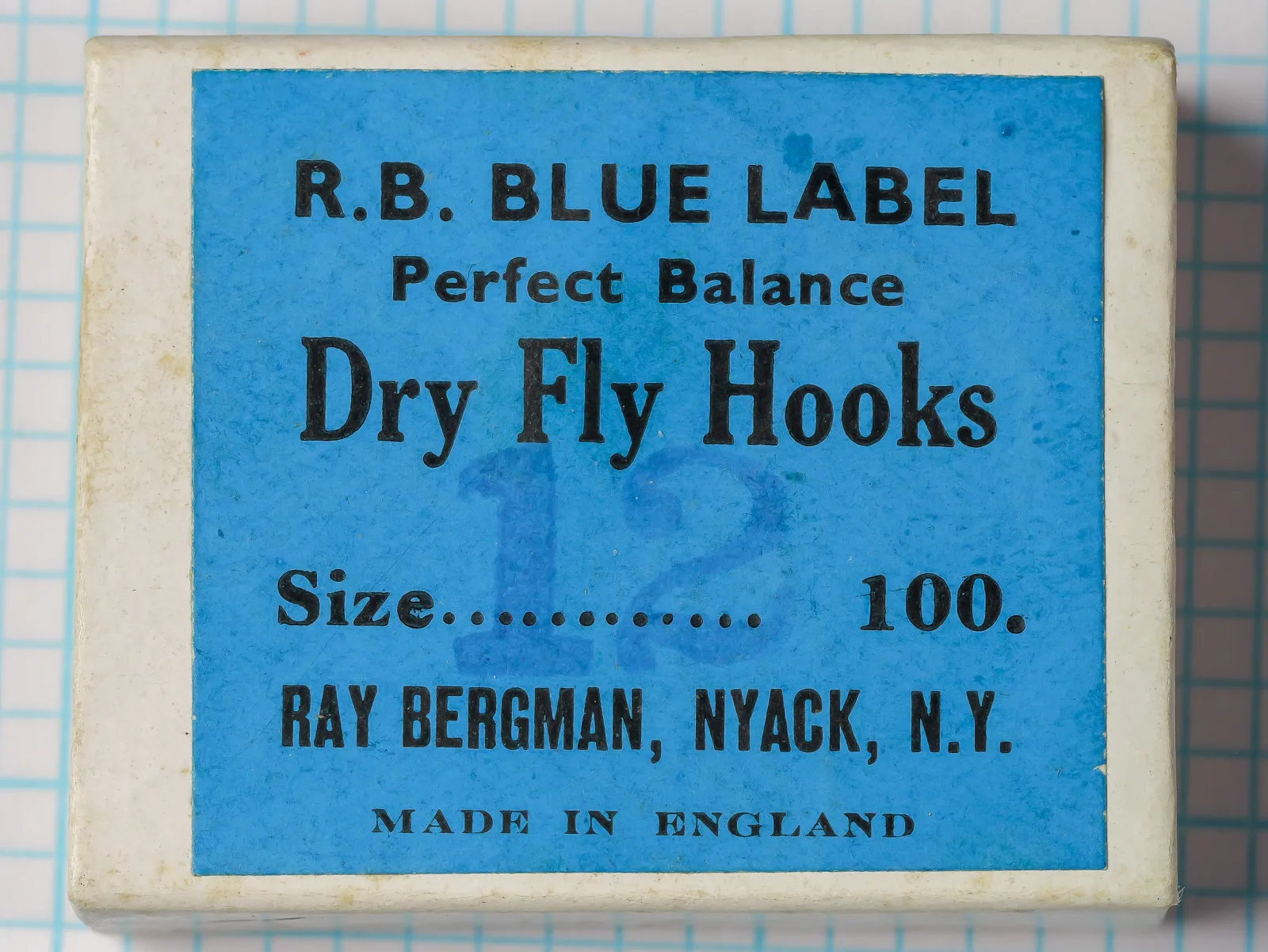
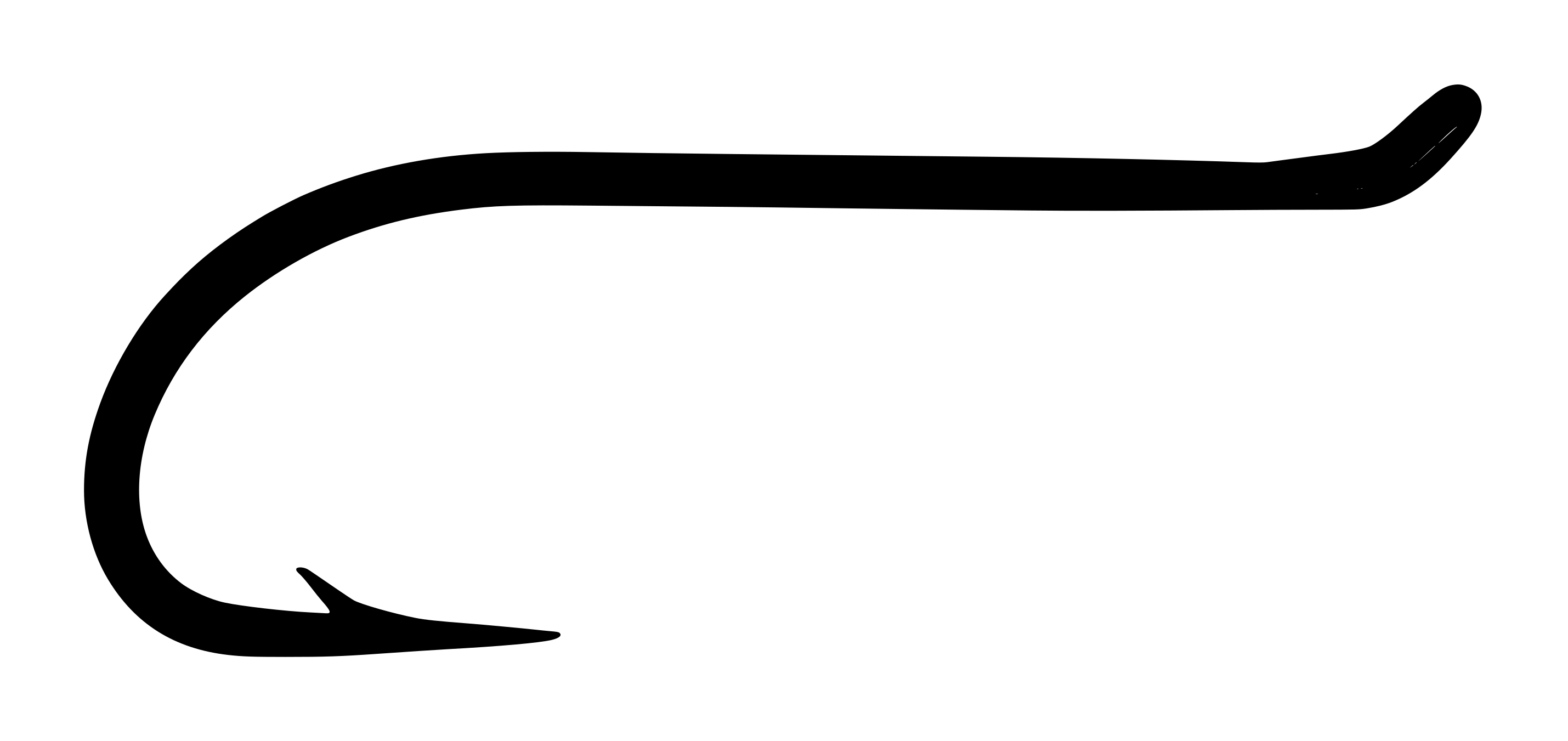
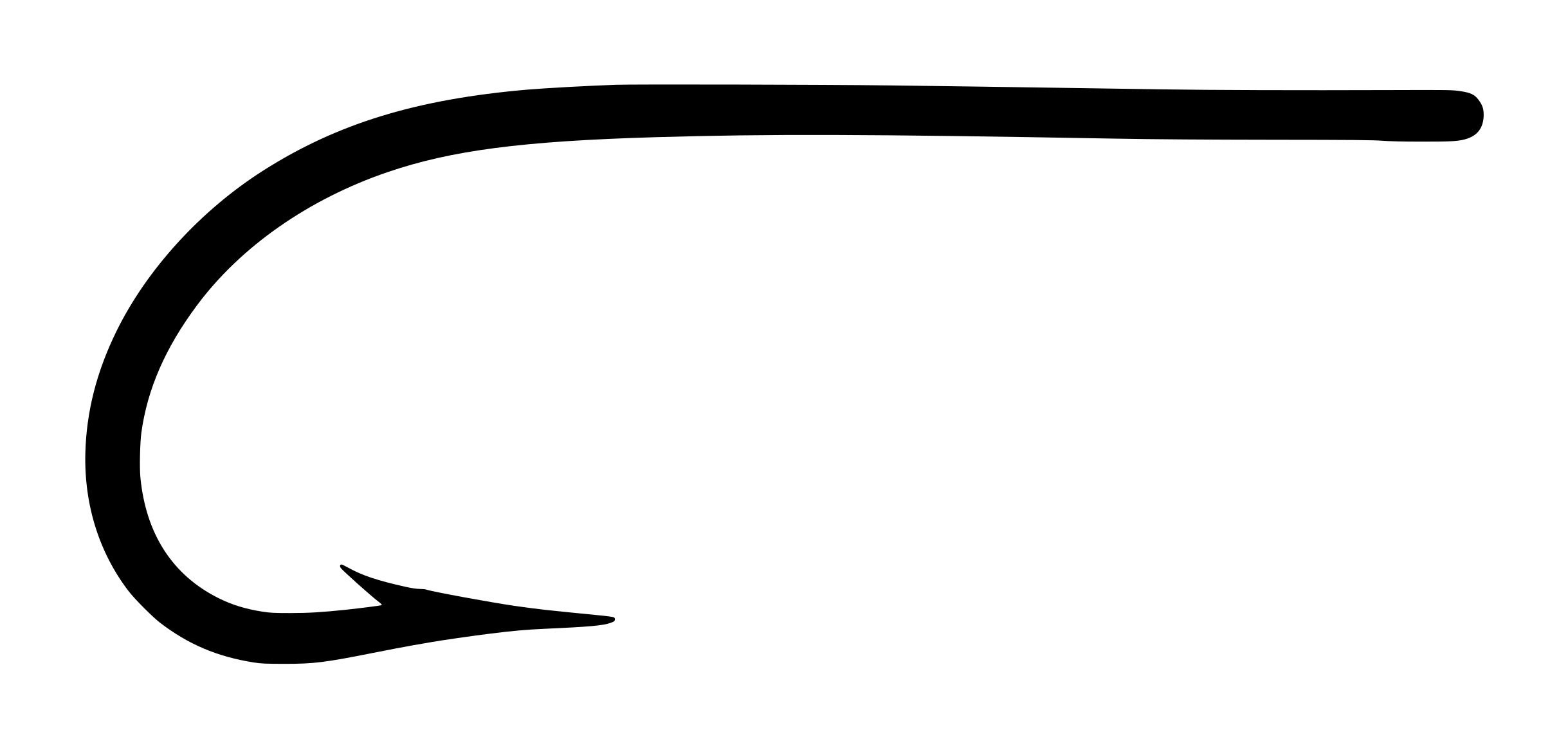
This is a Ray Bergman-branded R.B. Blue Label Perfect Balance dry fly hook, size 12, packaged in a small cardboard box marked “Made in England” and addressed to Ray Bergman, Nyack, N.Y. The hook carries a tapered, turned-down eye and a bronzed finish, confirmed by physical examination and caliper measurement.
The defining physical feature of this entry is the named-collaborator packaging: rather than a manufacturer’s trademark, the box foregrounds Bergman’s personal endorsement, a marketing pattern typical of mid-20th-century American angling tackle sourced from English hook makers. The absence of a barcode and the plain letterpress-style print layout are consistent with pre-1970s production, and the hand-marked blue size numeral over the printed Size line suggests a generic label stock filled in at packaging.
Physical measurements were confirmed by caliper: overall length 0.49 inches (12.45mm), shank length 0.40 inches (10.16mm), and gap width 0.18 inches (4.57mm), placing this specimen firmly within the standard dry fly hook proportions of its size class.
Collecting interest centers on the Bergman name recognition among American angling history collectors rather than on the hook’s manufacturing rarity alone, giving it a scarce-tier collectability rating driven by named-collaborator demand.
Original packaging for Bergman Perfect Balance dry fly hooks. Box label identifies size 12 with 100 hooks, distributed from Nyack, New York.
Photographic record
2 cataloged imagesSelect any record to load it above.
2 images shown
Bergman Blue Label Perfect Balance Box LabelOriginal packaging for Bergman Perfect Balance dry fly hooks. Box label identifies size 12 with 100 hooks, distributed from Nyack, New York.Open originalBergman Perfect Balance Hook Size 12Perfect Balance hook in bronzed finish. The bend exhibits the shallow, extended geometry characteristic of the perfect bend family for dry fly work.Open original
Technical profile
TDE | Perfect | Fine Wire | Spear Point | Bronzed
Eye
Tapered Eye, Turned DownTapered eye, turned down, confirmed by physical examination V. The taper is visible in the photograph tapering smoothly into the shank without a distinct ball formation P.
Wire
Fine (1X Fine), Forged
Shank
1X Long — Plain
Bend
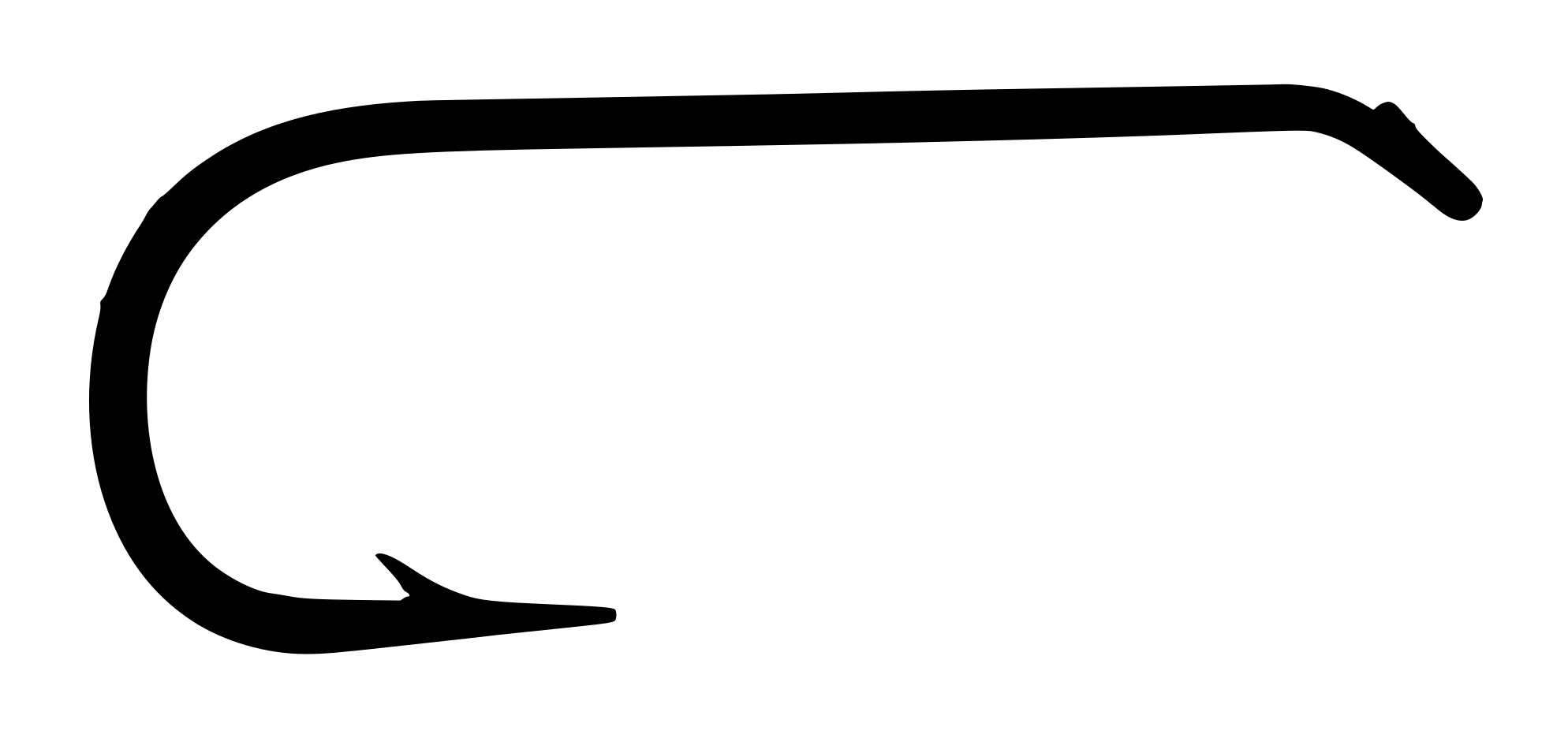
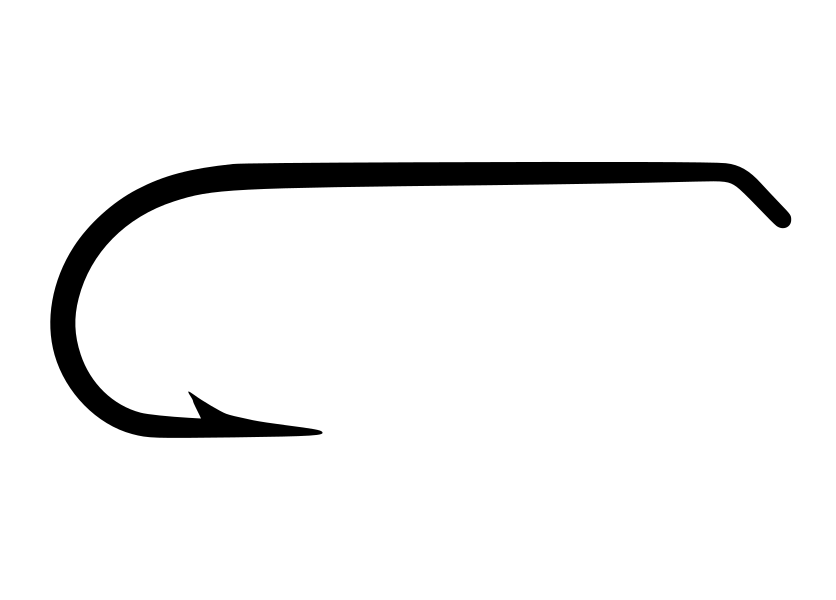
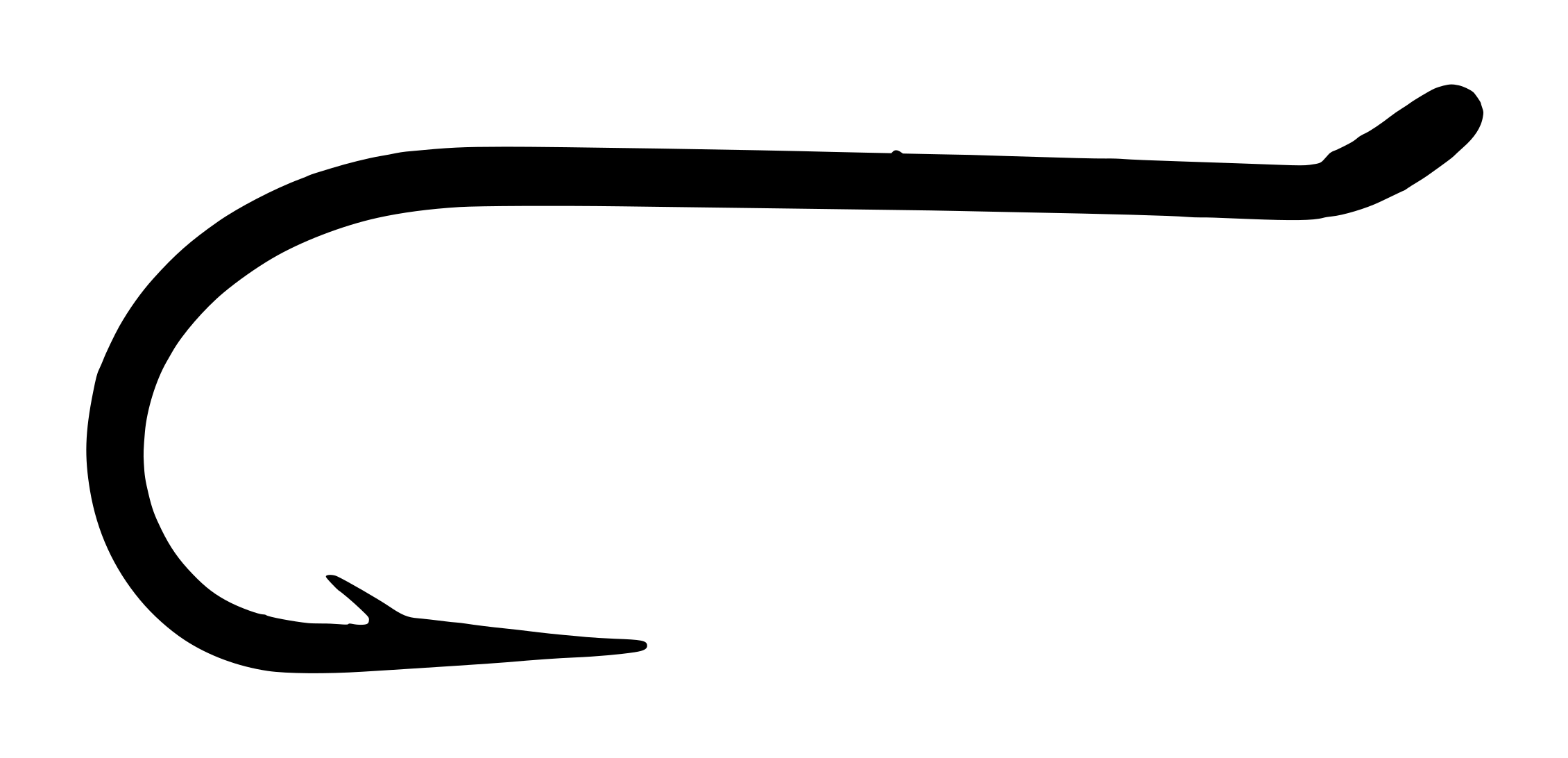
perfect, Standard gapBend shows a rounded, moderately deep curve consistent with a Perfect-style bend used on English dry fly hooks of the period I. Symmetrical with no visible offset in the bend itself P.
Point
Standard / SpearBarb is short and set close to the point, cut at a moderate angle typical of dry fly hooks intended to sit lightly in the fish's mouth without excessive tissue damage I.
Finish
Bronzed — Confirmed (stated on packaging)Confirmed bronzed finish V per researcher examination. Photograph shows a warm brown-amber tone with fine steel grain visible along the shank, consistent with a bronzed coating rather than blued or japanned finish P.
Box shows moderate surface soiling, corner wear, and a small ink or stain mark near the top right of the label P. The single hook photographed is bright at the point and shank with no visible corrosion or pitting P.
The turned-down tapered eye directs leader pull along the axis of the hook shank, a standard configuration for dry fly presentation intended to keep the fly riding upright on the water surface. The fine wire gauge keeps the hook light relative to its size, consistent with the flotation demands of a dry fly pattern. The standard-depth bend and moderate gap provide adequate hooking purchase without adding weight that would compromise buoyancy, the stated design intent implied by the “Perfect Balance” name printed on the box.
Size & scale lab
Known manufactured size range:
Likely offered across standard dry fly sizes, probably 10-18 S; only size 12 is documented on this box V.
This pattern was made in sizes Likely offered across standard dry fly sizes, probably 10-18 (S); only size 12 is documented on this box (V).. We have measurement for size 12. Know the others? Submit calipered measurements and we'll review and add them. Thank you!
Historical context
bergman
Ray Bergman (1878-1967) was an American angling writer, best known as the longtime fishing editor of Outdoor Life magazine and author of Trout (1938), a widely referenced mid-20th-century American book on trout fishing. He resided in Nyack, New York, the address printed on this box. Bergman was not himself a hook manufacturer; the R.B. Blue Label line represents a branding and distribution arrangement in which hooks, likely manufactured in England given the “Made in England” mark, were sold under his name to the American angling market. The specific English manufacturer supplying these hooks is not identified on the packaging S.
Series History
This box represents the R.B. Blue Label Perfect Balance series, a Ray Bergman-branded dry fly hook line distributed under his Nyack, New York address. No further catalog variants, size ranges, or dates of introduction or discontinuation are established by the available packaging evidence. The relationship of this line to other Bergman-endorsed tackle products, if any existed, is not documented here S.
Named Collaborator
Ray Bergman (1878-1967) was an American angling writer and longtime fishing editor for Outdoor Life magazine, best known for his 1938 book Trout, a widely read mid-century American reference on trout fishing methods and fly patterns. Bergman lived in Nyack, New York, the address printed on this packaging, and lent his name to hooks marketed to American fly tyers and dry fly anglers. His endorsement arrangements with English hook manufacturers were common practice for the period, allowing English-made hooks to be distributed and marketed directly under an American angling personality name. The specific manufacturing relationship behind the R.B. Blue Label mark is not established by the packaging alone S.
Era and Packaging Dating
The box carries no barcode, consistent with pre-1974 manufacture. The letterpress-style printing, the "Made in England" line, and the plain typographic layout without any zip code or area-code style phone number are consistent with a mid-20th-century production window. The hand-applied blue grease-pencil or crayon size marking ("12") over the printed "Size...." line indicates a small-batch or hand-finished packaging process typical of mid-century tackle jobbing rather than later automated retail packaging. Ray Bergman's active writing and endorsement career (Trout, 1938, and subsequent Outdoor Life tenure) places this branding within his working lifetime, roughly the 1940s-1950s I. No specific date is printed on the box; the era range is an estimate.
A Trout Author's Tackle Line
Ray Bergman was the longtime fishing editor of Outdoor Life magazine and author of Trout (1938), one of the most widely read American trout fishing books of the mid-20th century. Bergman lived in Nyack, New York, the same address printed on this hook box. Endorsement lines like the R.B. Blue Label allowed American anglers to buy English-manufactured hooks marketed under a trusted domestic author's name, a common commercial arrangement of the period connecting Redditch-area hook production with the American sporting goods market.
Design lineage and influence
The Perfect Balance name and general proportions are consistent with standard English-made dry fly hook patterns of the mid-20th century, likely sourced from a Redditch-area or similar English manufacturer for private branding under the Bergman name S. The bend and eye configuration follow conventional turned-down eye dry fly hook construction common across many English makers supplying the American market during this period.
Best matchRelated by Attribute
Computed automatically from catalog data — updated as new hooks are added.
Matches: Bend, Gap, Eye, Point, Finish +3 moreDiffers: Shank: 1X Long vs Standard; Wire: Fine (1X Fine) vs Standard; Eye Orient.: Turned Down vs Turned Up +2 more
Marketed as a dry fly hook for standard dry fly patterns fished on freshwater trout streams. The “Perfect Balance” name on the packaging suggests the maker’s intended selling point was a shank and wire proportion suited to floating flies, though no further engineering claim is printed on the box. The size 12 specimen documented here sits within the standard dry fly size range used for mayfly and caddis imitations of the period.
Classic Fly Patterns
Standard dry fly patterns of the mid-20th-century American tradition (e.g. Adams, Light Cahill, Quill Gordon type patterns); no specific named pattern is printed on the packaging.
Rated 9/10 — named-collaborator packaging tied to Ray Bergman, a recognized mid-century American angling author, drives collector interest well above a generic Redditch-made dry fly hook; scarcity of surviving intact boxes with legible labels is the primary limiting factor on higher-count acquisition, not on desirability.
Reference value
$25 – $55 USD estimate
Packaging condition
Good — moderate wear, legibleRecorded specimen
Packaging format
GW-RB-01Catalog code
The R.B. Blue Label box is collectible primarily because of its association with Ray Bergman, whose name and Nyack, New York address are printed directly on the label. Bergman-branded tackle occupies a specific niche among American angling history collectors distinct from generic English hook cards, and boxes bearing a named angling author’s endorsement generally command more interest than unbranded equivalents from the same manufacturing period.
The rating is limited by the fact that the manufacturing origin behind the Bergman name is not established, and by general uncertainty around production volume — Bergman-endorsed tackle was likely produced in the thousands rather than as a limited run, keeping this out of the higher rarity tiers. Condition of the printed label, particularly legibility of the “Ray Bergman, Nyack, N.Y.” line and the hand-marked size figure, is the primary value driver among surviving boxes. Complete, unopened boxes with full hook counts (100 per the printed count) are more desirable than opened or partial boxes, and clean size markings without smudging command a premium.
Packaging
Small rectangular cardboard box with cream-colored sides and a blue paper label pasted to the top face. Label printed in black serif and sans-serif type reading "R.B. BLUE LABEL / Perfect Balance / Dry Fly Hooks / Size.... 100. / RAY BERGMAN, NYACK, N.Y. / MADE IN ENGLAND". A handwritten or grease-pencil "12" in blue is superimposed over the printed "Size...." line to indicate hook size. No barcode, no zip code, no telephone number is printed. Box shows light soiling and edge wear consistent with age and handling.
Market Value Notes
Low ($25): Good condition, opened box with visible wear, contents uncounted or partial.<br />
High ($55): Excellent condition, box intact with legible label, full or near-full hook count, minimal soiling.<br />
Premium factors: legibility of the Ray Bergman name and address line, clean hand-marked size figure, box structural integrity, presence of original hooks inside.<br />
Platforms: eBay, vintage tackle specialty dealers and tackle collector forums.<br />
Confidence: E estimated — based on general market behavior for named-collaborator vintage American fly tackle boxes; no specific sold comparables available for this exact box.
Where to Find
eBay US listings under vintage fly hooks or Ray Bergman tackle; American vintage tackle collector forums and regional tackle collecting club shows; occasionally at estate sales of mid-century fly fishing memorabilia.
Collector's Identification Tips
Identify by the blue paper label reading R.B. Blue Label, Perfect Balance, Dry Fly Hooks, with the printed Ray Bergman, Nyack, N.Y. line. Confirm size by the hand-applied grease pencil or crayon numeral over the printed Size line rather than relying on the printed count of 100, which refers to quantity, not size. Genuine period examples show letterpress-style printing without a barcode or postal zip code.
Preservation
Storage and Preservation
Store the box flat in a stable, low-humidity environment away from direct sunlight to prevent further fading of the blue label and black print. Avoid handling the label surface directly, as the paper stock shows sensitivity to oils and moisture from repeated handling. Keep the box closed to protect the hooks inside from oxidation, and avoid stacking heavy items on top of the box given its lightweight cardboard construction. If the box is opened for inspection, handle hooks over a soft cloth surface to prevent point damage, and return them to the original compartment to preserve the as-issued count for collector value.
Marking Analysis
The Hand-Marked Size Numeral
The numeral 12 appears hand-applied in blue grease pencil or crayon directly over the printed Size…. line on the label P. This suggests the box was one of a stock of blank-size boxes printed in bulk, with the size filled in at the point of packaging or distribution rather than printed individually per size at the press. This practice was common among smaller tackle jobbers and endorsement-branded product lines during the mid-20th century, where a single generic label template served multiple hook sizes.
Primary Source
Reading the Bergman Endorsement Line
Source: R.B. Blue Label Perfect Balance box label, as photographed
The printed line RAY BERGMAN, NYACK, N.Y. functions as both an endorsement and a return address, tying the product directly to Bergman’s public identity as an angling author rather than to a manufacturing company name. No manufacturer name, English factory, or importer is printed on the box face, which is notable: the branding foregrounds the personality endorsement over any manufacturing credit. This marketing approach reflects a period practice of leveraging a recognized angling writer’s name as the primary point of consumer trust, with the underlying hook manufacturer left unstated.
Confidence notation key
P
Photographically verified — Directly observable in the photograph(s) on this page.
V
Verified by documentation — Confirmed by manufacturer catalog, spec sheet, or published reference.
I
Inferred — A logical deduction from observable or documented evidence, not directly stated.
E
Estimated — An approximation based on visual comparison, proportional analysis, or limited data.
S
Speculative — A reasoned hypothesis that cannot be confirmed from available evidence.
Claims with no notation are confirmed by multiple independent sources. All photographs on garrenwood.com are taken on a measurement grid where each square equals 1/10 inch (0.1″ / 2.54 mm).