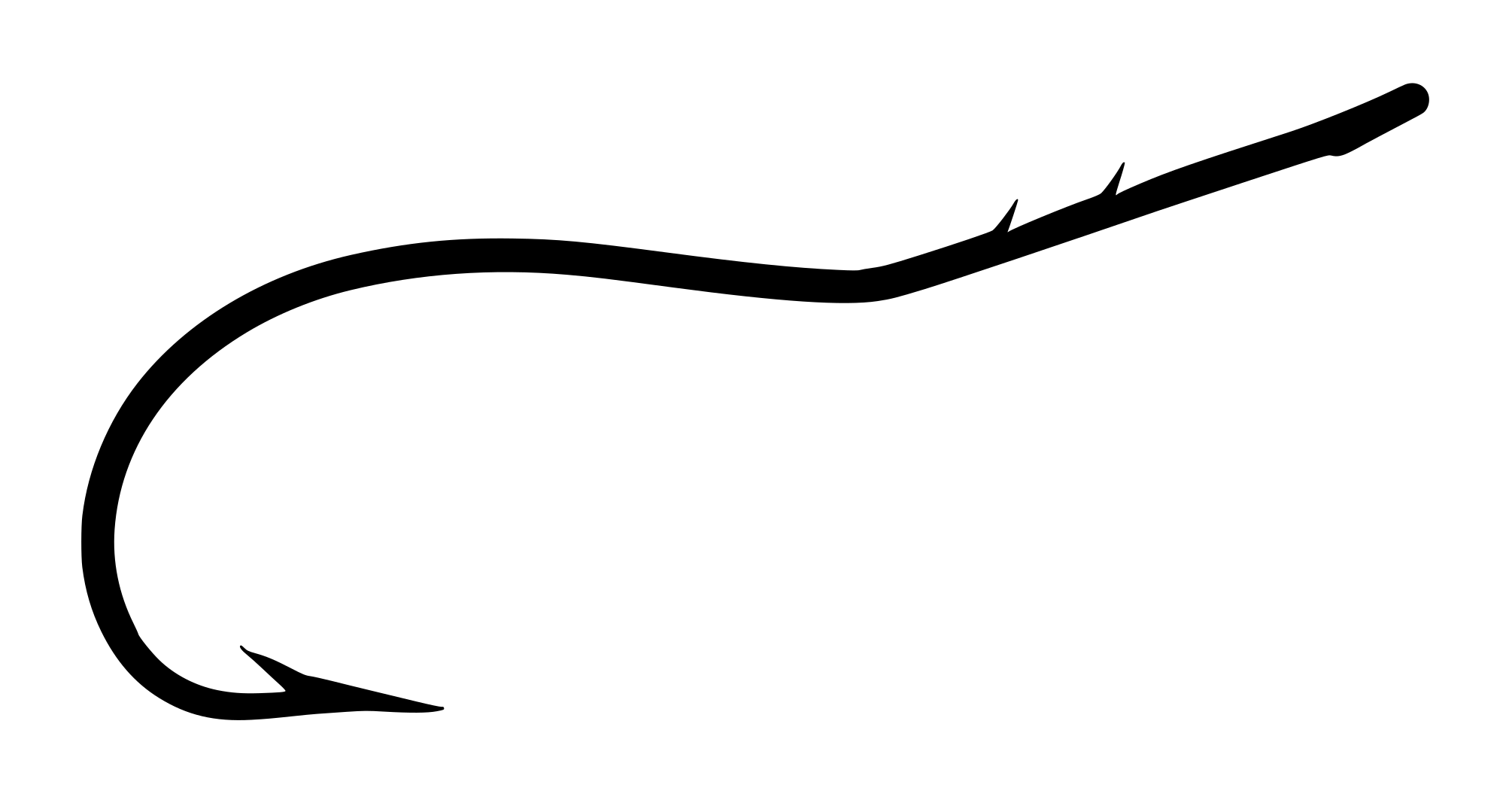
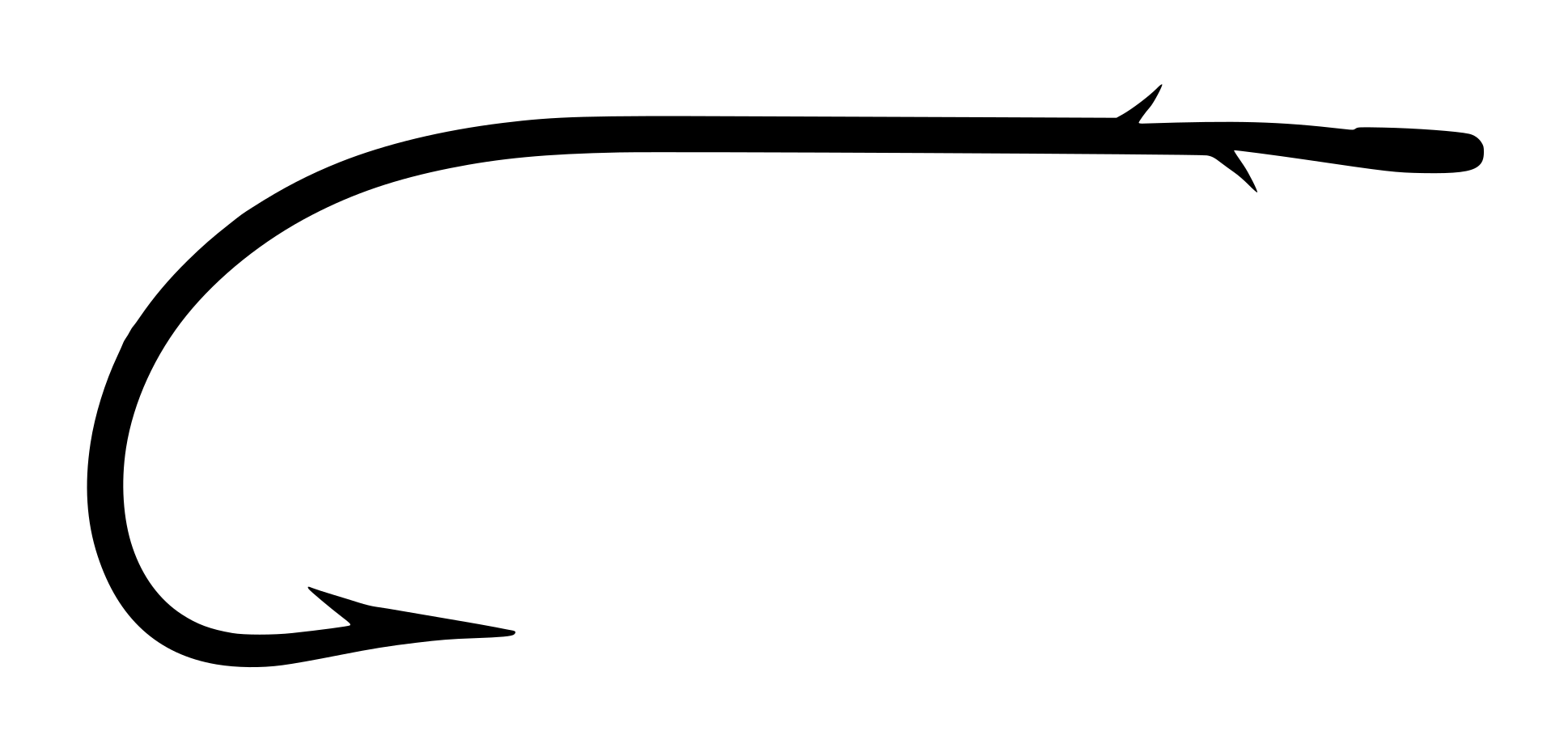
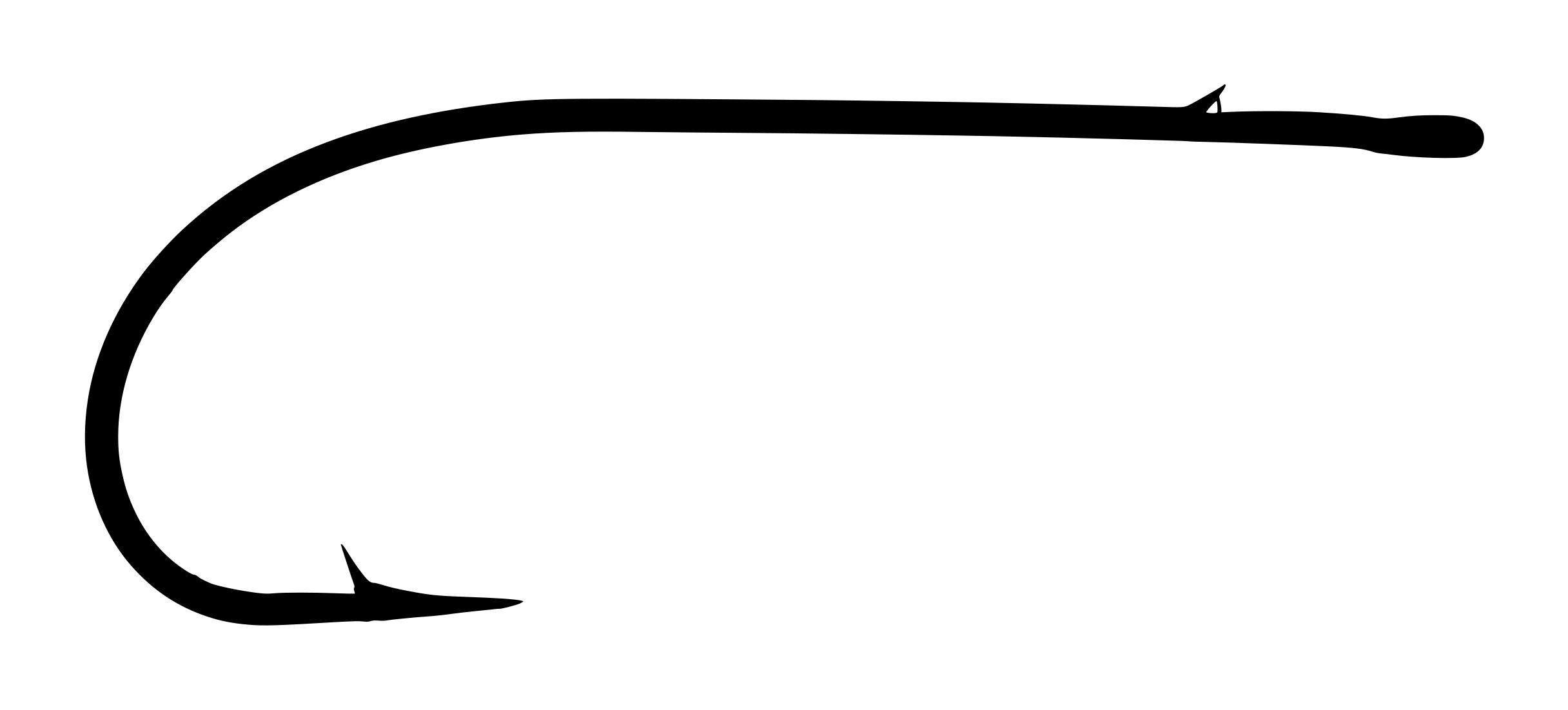
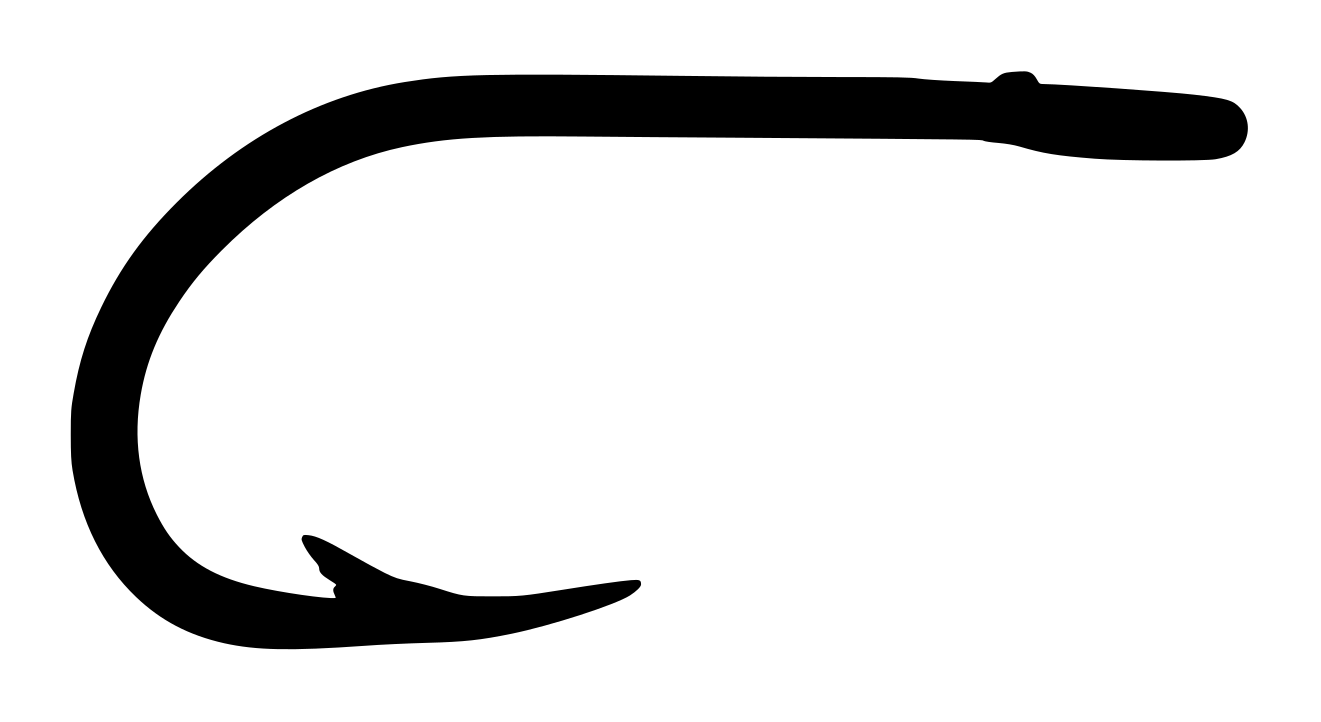
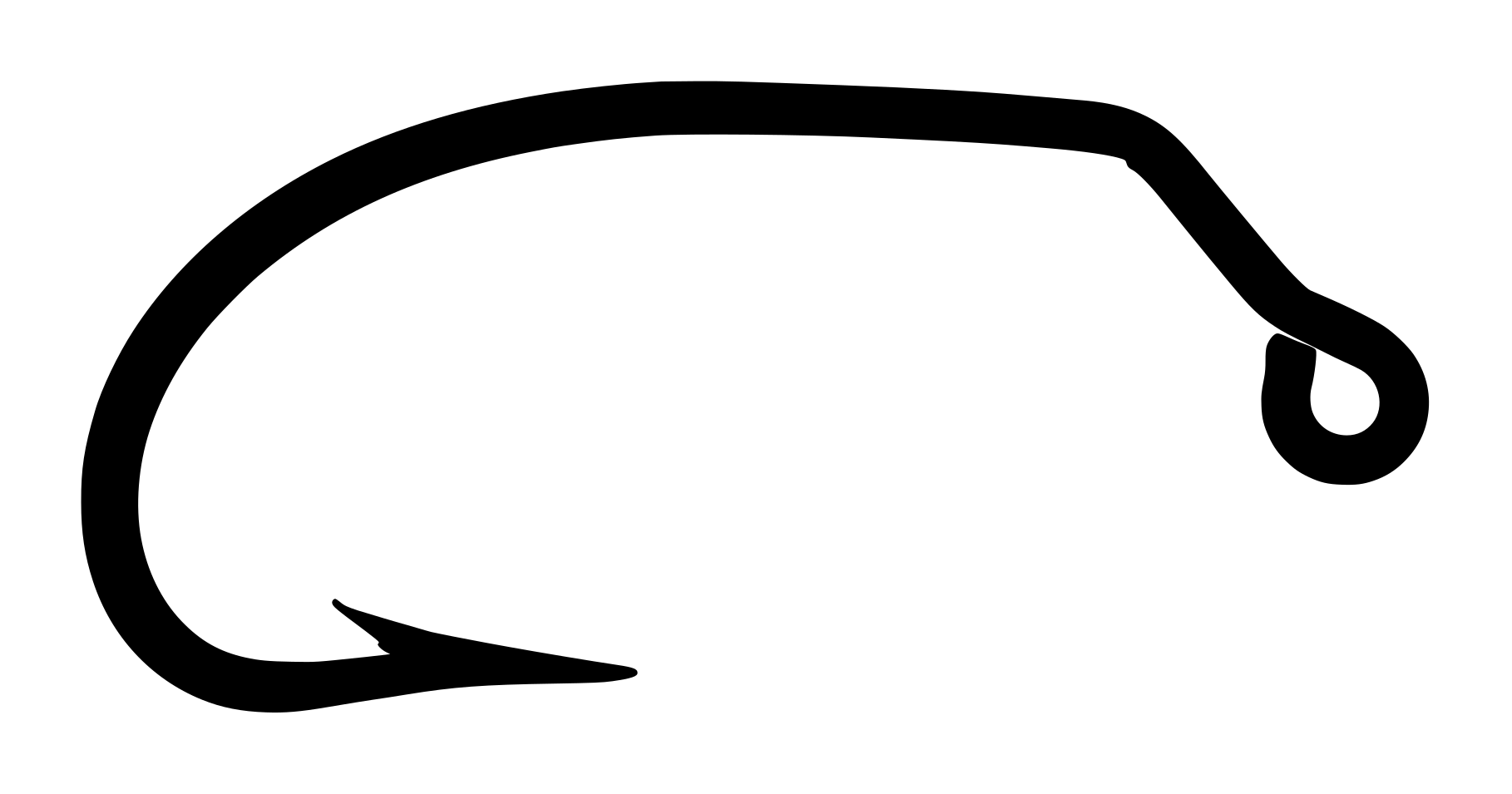
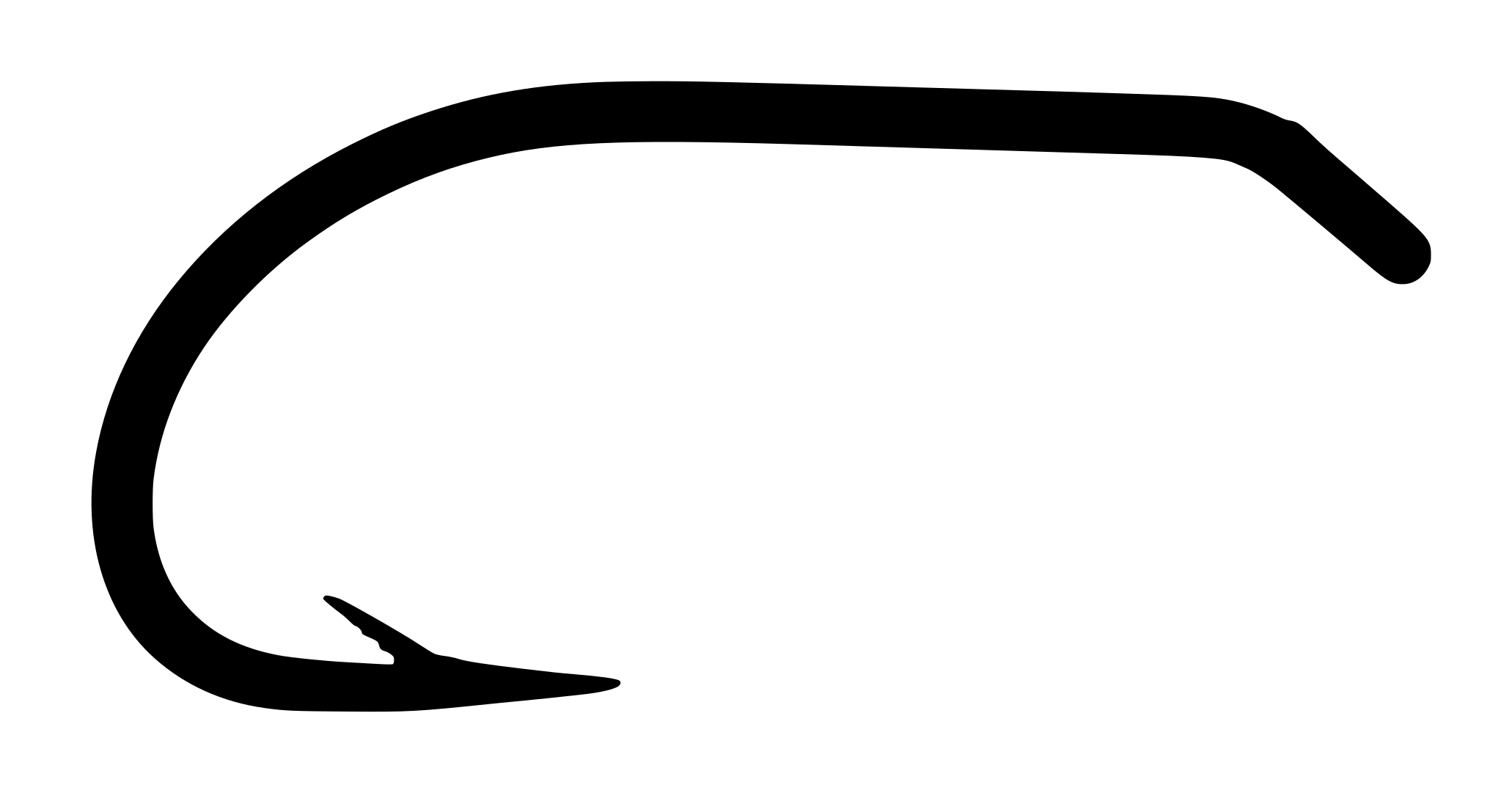
Mustad 33645, a worm hook manufactured in Norway circa 1950–1965. Sproat bend with extra-fine wire, narrow gap, straight ball eye, and superior point geometry, all bronzed. The extra-fine gauge and narrow gap were engineered to secure soft-plastic worms and grubs against slippage during casting and retrieval, reducing the mass of the hook while maintaining adequate tensile strength for panfish and small-mouth bass applications. Significant as a specialized design from the transition period when plastic baits began to displace live-bait and traditional methods in mid-century North American bass fishing.
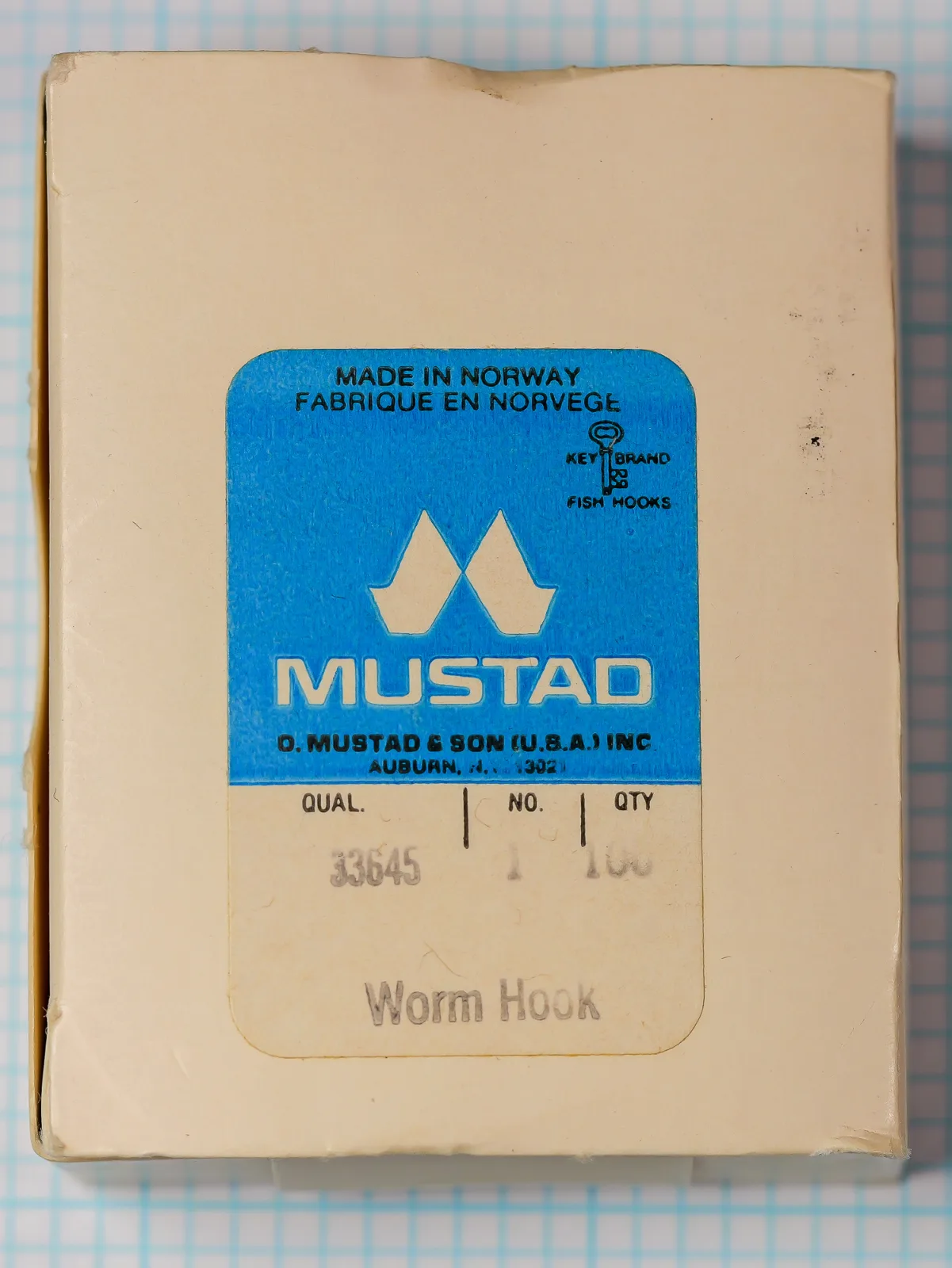
Original manufacturer box for the Mustad 33645 Worm Hook (size 4/0, 100-pack) showing the blue label panel with bilingual text, hand-written inventory entries, and KEY BRAND logo. Cream-colored box exterior with period offset litho printing.
Photographic record
5 cataloged imagesSelect any record to load it above.
5 images shown
Mustad 33645 Worm Hook Box ExteriorOriginal manufacturer box for the Mustad 33645 Worm Hook (size 4/0, 100-pack) showing the blue label panel with bilingual text, hand-written inventory entries, and KEY BRAND logo. Cream-colored box exterior with period offset litho printing.Open originalMustad 33645 Label Detail and Hand-Written EntriesClose-up of the red label panel showing printed specifications (\"Superior Mustad-Sproat Hooks, Ringed Bronzed With 2 slices in shank\"), company information, and hand-written inventory entries (QUAL. 33645, NO. 1, QTY 100). The KEY BRAND logo is clearly visible. Decorative border pattern around the label edges.Open originalMustad 33645 Size 4/0 Hook ProfileSide profile of a single size 4/0 Mustad 33645 Worm Hook showing the rounded Sproat bend, extra-fine wire gauge, and superior point geometry. Photograph taken on measurement grid for scale reference.Open originalMustad 33645 Overhead Profile and Eye DetailOverhead profile of the Mustad 33645 Worm Hook showing the straight eye orientation, ball eye construction, and the symmetry and depth of the Sproat bend. The narrow gap characteristic of worm hooks is evident from this angle on the measurement grid.Open originalMustad 33645 Front Profile and Point GeometryFront-view profile of the Mustad 33645 showing the superior point geometry (near-straight inner taper), barb placement, and the overall compact proportions of the narrow-gap design on the measurement grid.Open original
Technical profile
Straight / Inline Ball Eye | Sproat | Standard | Extra-Fine Wire | Superior Point | Bronzed
Eye
Ball Eye, Straight / InlineBall eye of uniform diameter, firmly formed and symmetrical P. Eye shows clean wire butting where the loop closes, typical of mid-century Mustad ball-eye construction P. Straight/inline orientation (no turndown or turnup) verified by direct measurement and visual inspection from hook profile image P. This eye type was standard for worm hooks and general bait-hook patterns of the period.
Wire
Extra-Fine, Round
Shank
Standard — Baitholder Slices
Bend
Sproat, Narrow gapSproat bend profile showing rounded bottom geometry, typical of the Sproat family P. Bend is moderately deep relative to the gap width, creating the narrow-gap characteristic that defines this design E. No visible offset to either side P. Bend symmetry is clean and balanced P. The proportions suggest a compact, efficient bend designed to maximize hook bite without increasing overall hook volume — consistent with worm-hook specifications.
Point
Superior (near-straight inner taper)Barb is present and moderately cut, positioned at a standard angle relative to the point P. Barb length is proportionate to the extra-fine wire gauge — shorter than barbs on standard or heavy-wire hooks, but fully functional P. No double barb or unusual barb configuration observed P.
Finish
Bronzed — Confirmed (stated on packaging)Bronzed finish confirmed by packaging label. Photographs show warm brown tone consistent with bronzing process P. Wire texture visible beneath the bronze coating. Specimen exhibits uniform finish with no significant wear or patina development on individual hooks, indicating minimal pre-sale handling and storage in a closed box environment P.
Manufacturer box in very good condition. Lid exhibits light patina and minor edge crease; label adhesion is sound. Paper stock shows age yellowing but no tears or significant delamination. Hooks inside are bright bronzed finish with no visible corrosion or rust. All 100 hooks present and in clean condition. Original tissue paper and box structure intact. A well-preserved example of mid-century production packaging.
The superior point geometry consists of a near-straight inner taper from the barb to the tip, creating a sharp but relatively flat inside face compared to the hollow-point design. This construction balances penetration efficiency with durability — the straighter line reduces bending stress during the hook set compared to deeply concave hollow points, making it practical for softer-mouthed bait-fishing applications and artificial-lure rigging where repeated strikes and micro-adjustments are common.
Extra-fine wire (approximately 0.045″–0.050″ diameter) reduces mass without sacrificing adequate tensile strength for the target species (panfish to small-mouth bass). The narrow gap ensures that soft plastics cannot slide over the bend during casting or during the retrieve — a failure mode that would render the lure ineffective. The straight eye allows minimal rotating motion, preserving lure action and eliminating the need for external hardware.
The rounded Sproat bend profile distributes stress more evenly across the curve than angular bend families, contributing to overall durability in repeated use. Two longitudinal slices cut into the shank (noted on original label) serve as a barb-holder feature — the sliced shank increases friction and grip on soft plastic, reducing worm slippage during active fishing.
This pattern was made in sizes 1-100 (V). We have measurement for size 4/0. Know the others? Submit calipered measurements and we'll review and add them. Thank you!
Historical context
mustad
O. Mustad & Son was founded in Oslo, Norway in 1877 by Ørn and Axel Mustad. The company established its primary manufacturing facility in Gjøvik, Norway, and became one of the world’s largest industrial hook producers by the early 20th century. Mustad expanded internationally, opening a US distribution office in Auburn, Alabama (listed as “1302” on period packaging) to serve North American fly and bait-fishing markets.
By the 1950s, Mustad was a global manufacturer supplying hooks for every major angling application — dry flies, wet flies, nymphs, streamers, salmon, sea trout, pike, and bait fishing. The Auburn facility served as both a warehouse and quality-control center for North American distribution, though actual manufacturing occurred in Norway and occasionally in other locations. The company’s production methods were highly industrialized, utilizing precision drop-forging and automatic winding to achieve consistent specifications at scale.
Mustad adopted various house brands and product line names to segment the market — the “Superior” brand line was one designation used for standard-quality production hooks in the mid-20th century. The company continued to dominate the commercial hook market through the late 20th century, eventually consolidating with other tackle manufacturers under various corporate structures.
Series History
The 33645 Worm Hook represents Mustad’s mid-century entry into the expanding soft-plastic-bait market. As artificial lures became commercially viable in the 1940s–1950s, particularly rubber worms and plastic grubs, dedicated hook designs emerged to match these applications. The worm hook category prioritized a narrow gap (to prevent the soft plastic from sliding over the bend), extra-fine wire (to reduce weight and improve lure castability), and a straight eye (for direct line attachment without rotating the lure).
Model 33645 belongs to Mustad’s general production line for North American bait and artificial-lure fishing. The “Superior” brand designation placed it in the mid-range price tier — higher than basic economy hooks but not premium-priced. This model was produced in a range of sizes (documented 1–100 on box) to serve both largemouth-bass and smaller-panfish applications.
The narrow-gap, extra-fine-wire geometry of the 33645 became a standard specification for worm-hook designs across multiple manufacturers during the 1950s–1960s. Mustad continued this line through at least the 1970s, though documentation of specific discontinuation dates is limited. The model represents a transitional moment in American angling history when hardware-store bait gave way to mass-manufactured plastics.
Era and Packaging Dating
No barcode present on packaging — strong indicator of pre-1974 production. Address lists "Auburn, AL 1302" — postal code format without ZIP code, consistent with 1950s-early 1960s pre-ZIP Code era (ZIP codes implemented July 1963). Bilingual French-English labeling suggests Canadian/international distribution, common for Mustad exports 1950–1970. Label printing method appears to be offset litho on coated stock, consistent with mid-1950s industrial packaging standards. KEY BRAND logo usage and style consistent with Mustad house branding ca. 1950–1965. Hand-written entries on cream label field (model code, quantity) indicate older manual inventory labeling practice. Crown logo design and label layout align with Mustad packaging evolution of the 1950s. No modern UPC or barcode codes present. Box construction method and paper stock weight consistent with pre-1970 manufacturing standards.
The Soft-Plastic Revolution
The commercial plastic worm was invented by Nick Crème in 1949, who poured melted plastic into molds in his garage and began selling them to tackle shops. By the mid-1950s, plastic worms had become a phenomenon in bass fishing, and major hook manufacturers scrambled to develop dedicated hook designs. The 33645 worm hook, with its narrow gap and extra-fine wire, was Mustad's answer to this market demand — a hook specifically engineered for a technology that barely existed when the company was founded. Within a decade, plastic worms outsold live-bait fishing supplies at many tackle retailers, fundamentally changing how Americans fished.
Design lineage and influence
The worm-hook category did not have significant historical precursors before the 1940s, as soft-plastic lures were a postwar innovation. Mustad’s approach — narrow gap, extra-fine wire, straight eye — quickly became the industry standard, adopted by Partridge of Redditch, Eagle Claw, and other manufacturers. The design logic was sound: reduce weight for lure action, narrow the gap to prevent plastic slippage, and use a straight eye to eliminate swivel hardware. Later refinements added keeper barbs and nose-rigging eyes, but the fundamental geometry established by models like the 33645 remains the foundation of modern worm hooks.
Best matchRelated by Attribute
Computed automatically from catalog data — updated as new hooks are added.
Matches: Bend, Wire, Eye, Eye Orient., Forging +4 moreDiffers: Shank: Standard vs 1X Long; Gap: Narrow vs Standard; Point: Superior vs Hollow Point +1 more
Matches: Bend, Shank, Eye, Forging, Application +2 moreDiffers: Wire: Extra-Fine vs Fine (1X Fine); Gap: Narrow vs Standard; Eye Orient.: Straight / Inline vs Turned Down +2 more
Matches: Bend, Wire, Eye, Eye Orient., Forging +3 moreDiffers: Shank: Standard vs 1X Long; Gap: Narrow vs Standard; Point: Superior vs Hollow Point +2 more
The Mustad 33645 worm hook was designed specifically for soft-plastic worms, grubs, and artificial-eel applications using spinning and casting rigs. The narrow gap prevents the soft plastic from riding up over the bend during the cast or retrieve, a critical geometric requirement for effective lure rigging. The extra-fine wire reduces the mass of the hook relative to standard constructions, preserving the action and castability of light lures — particularly important for panfish sizes and lighter bass applications.
The straight-eye configuration allows the angler to tie the line directly to the eye without additional swivels or connectors, simplifying tackle setup and reducing hardware bulk. This was the conventional rigging method for worm fishing in the 1950s–1960s before modern nose-rigging and keeper-hook techniques became standard.
Modern Equivalents
Hook
Match Quality
Notes
Mustad 3366 or 3366NPG
Good
Modern Mustad worm/soft-plastic hook — similar sproat bend and narrow gap, but standard-weight wire. Updated eye construction and packaging. Maintains the core geometry of the 33645.
Eagle Claw L2004 or L2009
Good
Eagle Claw worm hook with similar narrow gap and extra-fine wire. American production, different point geometry but comparable application.
Owner 5164 or 5165
Very Good
Japanese-made worm hook with superior point and narrow gap. Modern manufacturing and materials, closest functional equivalent to the 33645 in construction philosophy.
Collector notes
Rated 3.5/10 — A mid-range collectible with modest appeal. The intact original box of 100 adds meaningful value, but worm hooks lack the strong collector base that fly hooks command. Mid-century production date and pre-ZIP packaging are mild positive factors; the common size range (1–100) and utilitarian design limit scarcity premium. Complete original boxes are scarcer than individual cards, supporting a modest premium over loose hooks or opened packaging.
Reference value
$8 – $22 USD estimate
Packaging condition
Very Good — light wear, fully legibleRecorded specimen
Packaging format
GW-M-BOX-STD-001Catalog code
Positive Factors: This is a complete, unopened manufacturer box containing all 100 hooks — original box packaging is substantially scarcer than loose hooks or opened cards and commands a clear premium. Pre-1974 production (evidenced by lack of barcode and pre-ZIP address) appeals to mid-century tackle historians and Mustad specialists. The hand-written inventory labels and Auburn address make this useful for dating Mustad production practices. Bronzed finish and intact condition are reliable indicators of factory storage. The model represents the transitional moment when plastic worms became mainstream in American angling.
Limiting Factors: Worm hooks lack the collector enthusiasm that dry-fly and salmon-hook specialists maintain. Mustad production was enormous — even mid-century boxes are not exceptionally scarce. The size range (1–100) and application (utilitarian bait fishing) do not generate the same demand as specialty patterns. Most collectors prefer fly-tying hooks with named patterns or designer associations. Loose individual worm hooks are common and inexpensive, moderating the premium for complete boxes.
Desirable Variants: Smaller sizes within this range (25, 32, etc.) are slightly scarcer than larger sizes, which were produced in higher volume. Original boxes with legible hand-written entries are more desirable than those with smudged or faded labels. Sealed or nearly sealed boxes command a premium over opened examples. Boxes retaining original tissue paper and showing minimal label adhesion loss are in the highest demand.
Condition Impact: Box condition is the primary value driver — lid integrity, label legibility, and paper stock condition directly affect pricing. Hooks inside should show no rust or corrosion (the bronzed finish resists surface oxidation reasonably well). Missing hooks significantly reduce value; a box with fewer than 95 hooks present loses 30–50% of potential value. Original tissue paper and box materials should be retained rather than discarded.
Packaging
Rigid manufacturer box with separate lid. Cream/off-white exterior stock with blue label panel affixed to lid. Label features blue ground with Mustad crown logo in white, bilingual French-English text reading "MADE IN NORWAY / FABRIQUÉ EN NORVÈGE" and KEY BRAND logo. Company address printed as "O. MUSTAD & SON (U.S.A) INC / AUBURN, AL 1302" (address truncated on label). Lower portion of label in cream-colored field shows hand-written or stamped entries: QUAL. 33645, NO. 1, QTY 100 (handwritten entries with pipe separators). Hand-stamped or written text "Worm Hook" appears on cream field below. Lid shows light aging and edge wear. Box interior lined with tissue paper. Full original hook count of 100 confirmed.
Market Value Notes
Low ($8): Good condition — opened box, 90+ hooks present, label legible, minor box wear and lid crease<br />
High ($22): Excellent condition — sealed or nearly sealed, all 100 hooks present, label pristine, minimal exterior wear, original tissue intact<br />
Premium factors: Complete hook count, sealed/unopened status, label legibility, pre-ZIP era documentation, original tissue paper, box structural integrity, minimal corrosion on hooks<br />
Platforms: eBay (US and UK), specialist tackle dealers, occasional auction house lots<br />
Confidence: E estimated — worm hook values are limited in published data; estimates derived from comparable mid-century manufacturer boxes and bait-hook lots on eBay. Actual realized prices vary significantly by regional demand and buyer profile.
Where to Find
eBay (search "Mustad 33645 worm hook" or "vintage Mustad box bait hooks"). Specialist tackle dealers with vintage bait-fishing inventory. Occasional appearance at regional antique fishing tackle fairs and swap meets. Estate sales and tackle auctions occasionally feature unopened Mustad boxes from this era. UK eBay has moderate inventory of comparable pre-1970 Mustad lots. North American dealers tend to stock more mid-century production boxes than European sellers.
Collector's Identification Tips
Verify model code 33645 on the box label or original packaging. Check for hand-written or stamped “QUAL. 33645” entry on cream-colored label field. Confirm “Superior Mustad-Sproat Hooks” text printed on label. Confirm “Ringed Bronzed With 2 slices in shank” text — this wording is a defining descriptor of this model. Verify “Made in Norway” statement. Confirm KEY BRAND logo on label. Check for pre-ZIP Auburn, AL address (1302). No barcode should be present. Box should contain 100 hooks of consistent size and finish. Sproat bend with narrow gap and straight eye are confirmatory geometric signatures.
Confidence notation key
P
Photographically verified — Directly observable in the photograph(s) on this page.
V
Verified by documentation — Confirmed by manufacturer catalog, spec sheet, or published reference.
I
Inferred — A logical deduction from observable or documented evidence, not directly stated.
E
Estimated — An approximation based on visual comparison, proportional analysis, or limited data.
S
Speculative — A reasoned hypothesis that cannot be confirmed from available evidence.
Claims with no notation are confirmed by multiple independent sources. All photographs on garrenwood.com are taken on a measurement grid where each square equals 1/10 inch (0.1″ / 2.54 mm).