The Milward Cincinnati Bass Hook Model 2310 R represents H. Milward & Son’s specialized offering for the American bass fishing market during the late Victorian era V. This size 16 hook features a classic sproat bend with straight ring eye, manufactured from superfine cast steel under Milward’s ‘Iron Arm’ trademark V.
The ornate label design with decorative border typography and letterpress printing clearly dates this example to approximately 1890-1920 I. As one of Redditch’s premier hook manufacturers, Milward specifically designed this pattern for Cincinnati’s renowned bass fishing waters V, reflecting the company’s attention to regional American angling preferences.
This hook holds moderate collectible value due to its historical significance in documenting early American bass fishing tackle and Milward’s international marketing efforts I. The surviving label with ‘Iron Arm’ branding adds considerable appeal for collectors of Victorian-era fishing ephemera I.
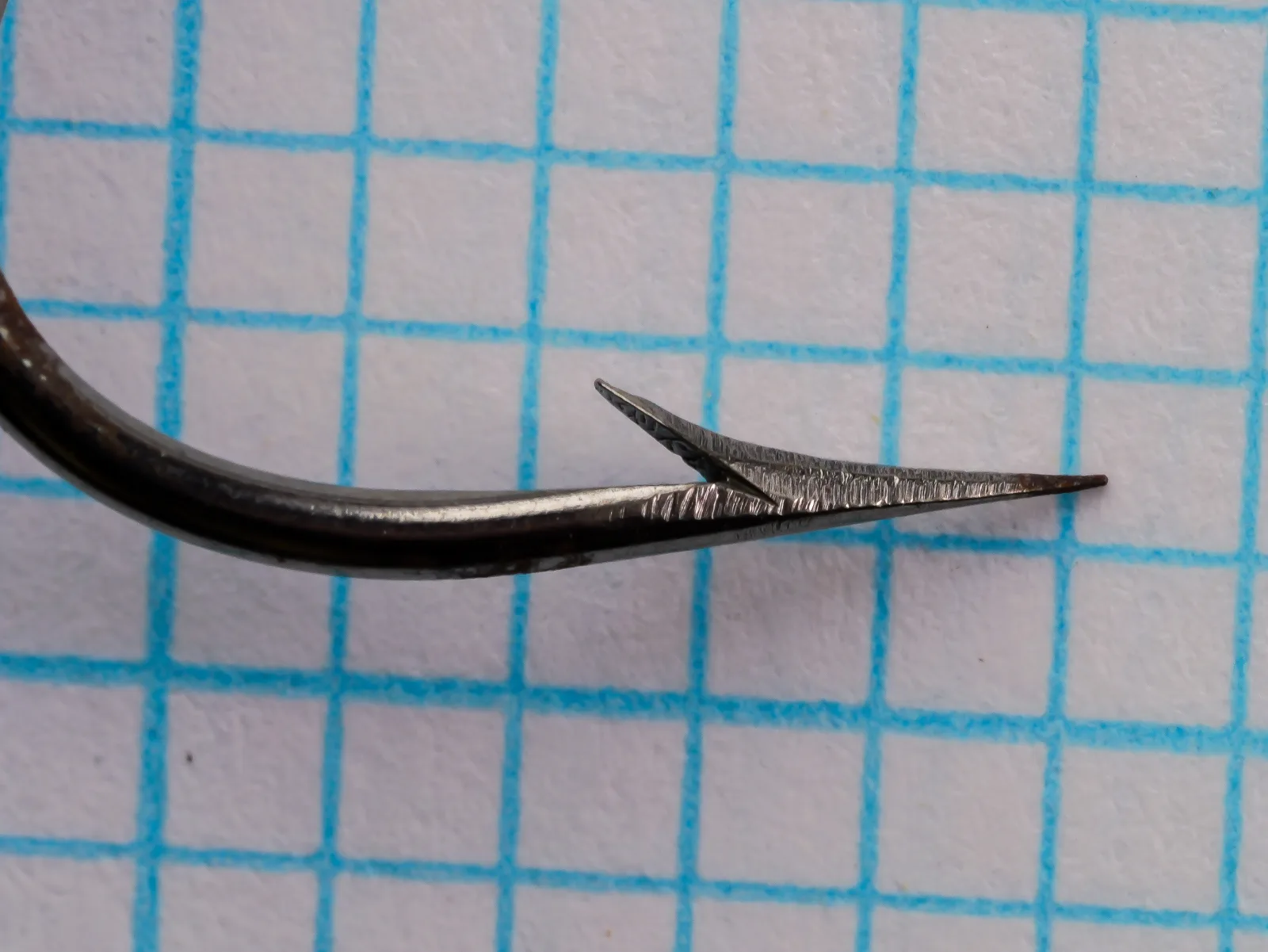
Side profile of the Milward 2310 R spear point and barb geometry, showing the sharp taper and moderate barb placement characteristic of early English bait hook design.
Photographic record
4 cataloged imagesSelect any record to load it above.
4 images shown
Milward 2310 R Size 16 Point ProfileSide profile of the Milward 2310 R spear point and barb geometry, showing the sharp taper and moderate barb placement characteristic of early English bait hook design.Open originalMilward 2310 R Size 16 Blind Eye ProfileFull-length view of the Milward 2310 R showing the characteristic blind flatted eye (spade end) and overall hook geometry on measurement grid.Open originalMilward 2310 R Size 16 Multiple SpecimensTwo additional Milward 2310 R hooks at size 16 demonstrating consistency of manufacture and bend geometry across specimens from the same production lot.Open originalMilward 2310 R Original Package LabelOriginal letterpress-printed sales card label for the Milward 2310 R Cincinnati bass hooks, showing manufacturer mark, product designation, size, and quantity.Open original
Technical profile
Cincinnati Bass Hook No. 16 Ringed. 100 2310 R.
Eye
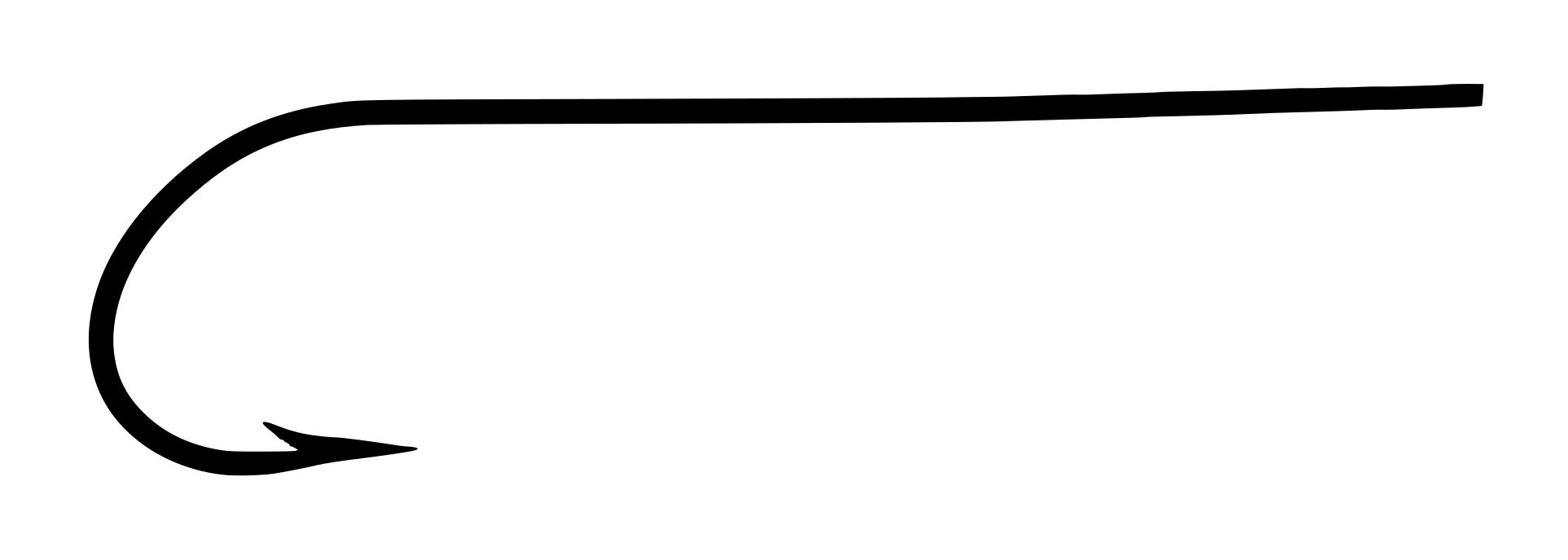
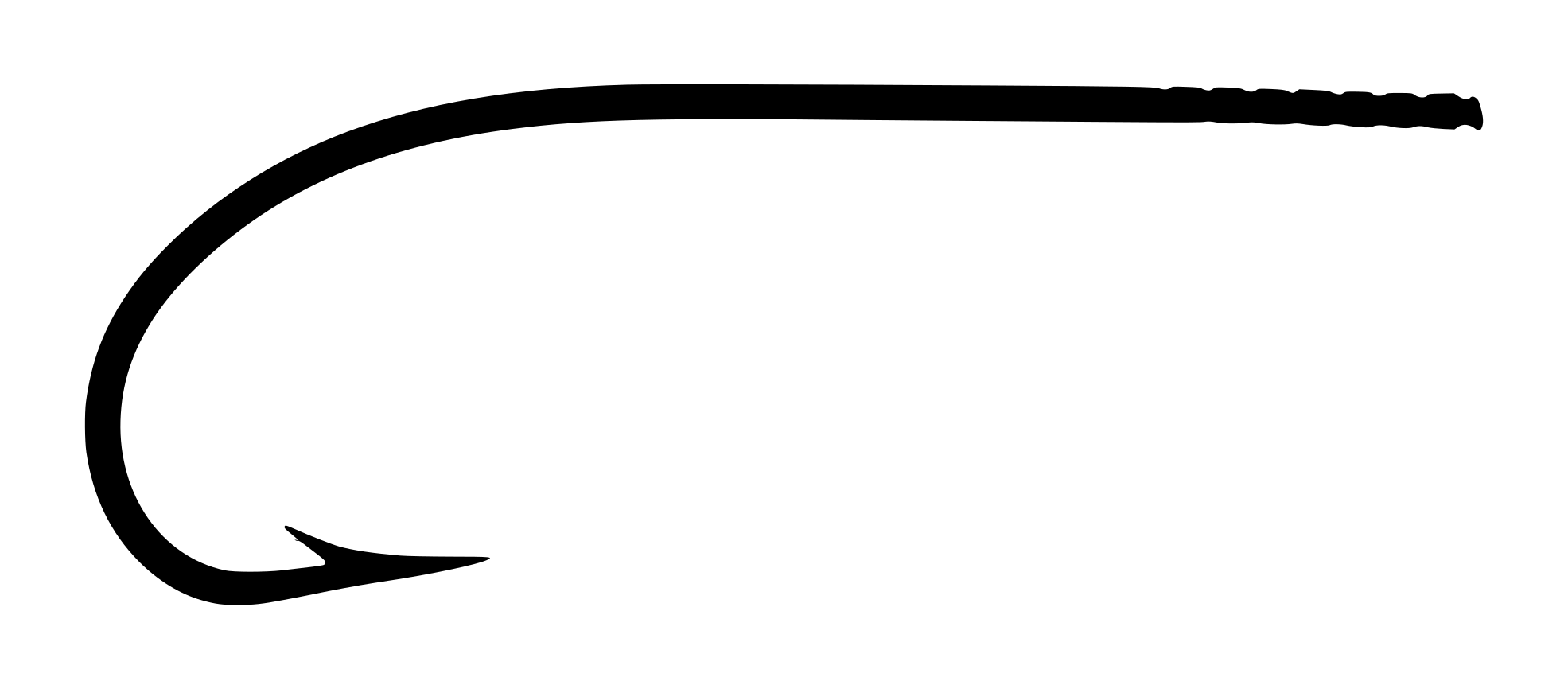
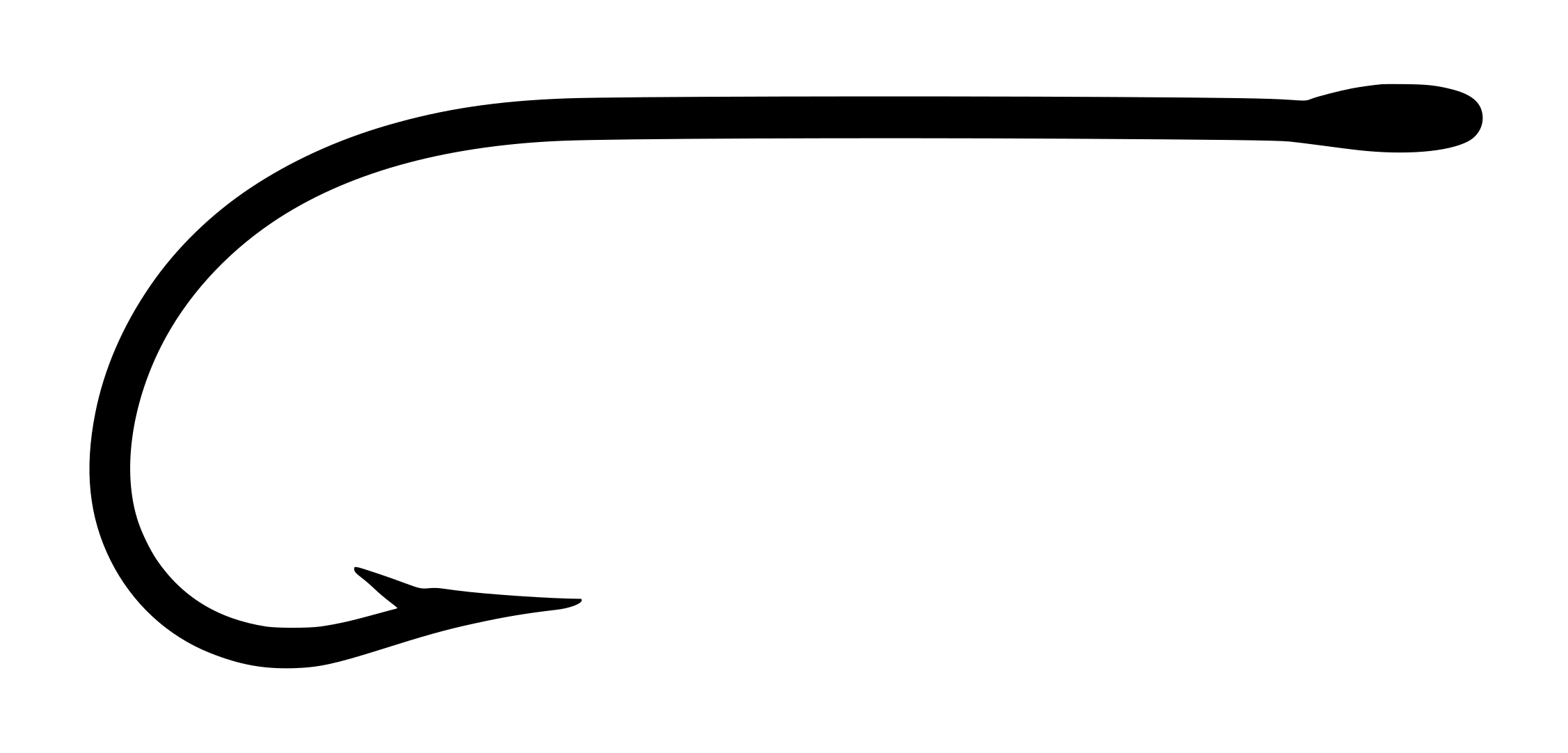
Blind — FlattedBlind flatted eye (spade end) with a small formed ring or loop at the wire terminus. The flatted section is approximately 0.08"-0.12" long and lies parallel to the shank axis. The ring facilitates line attachment and is characteristic of earlier English bait hook design. The flat is clean-edged with no burrs. P
Wire
Fine (1X Fine), Round, Est. ~0.02" (~0.5 mm) E
Shank
1X Long — Plain
Bend
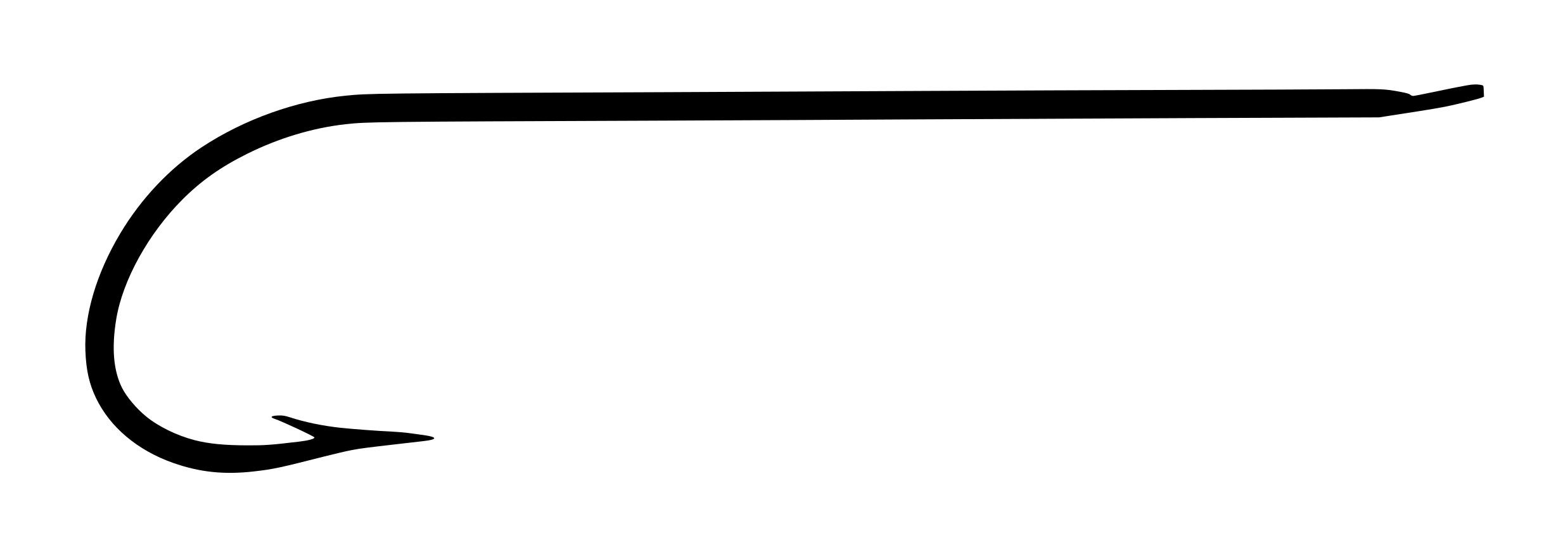
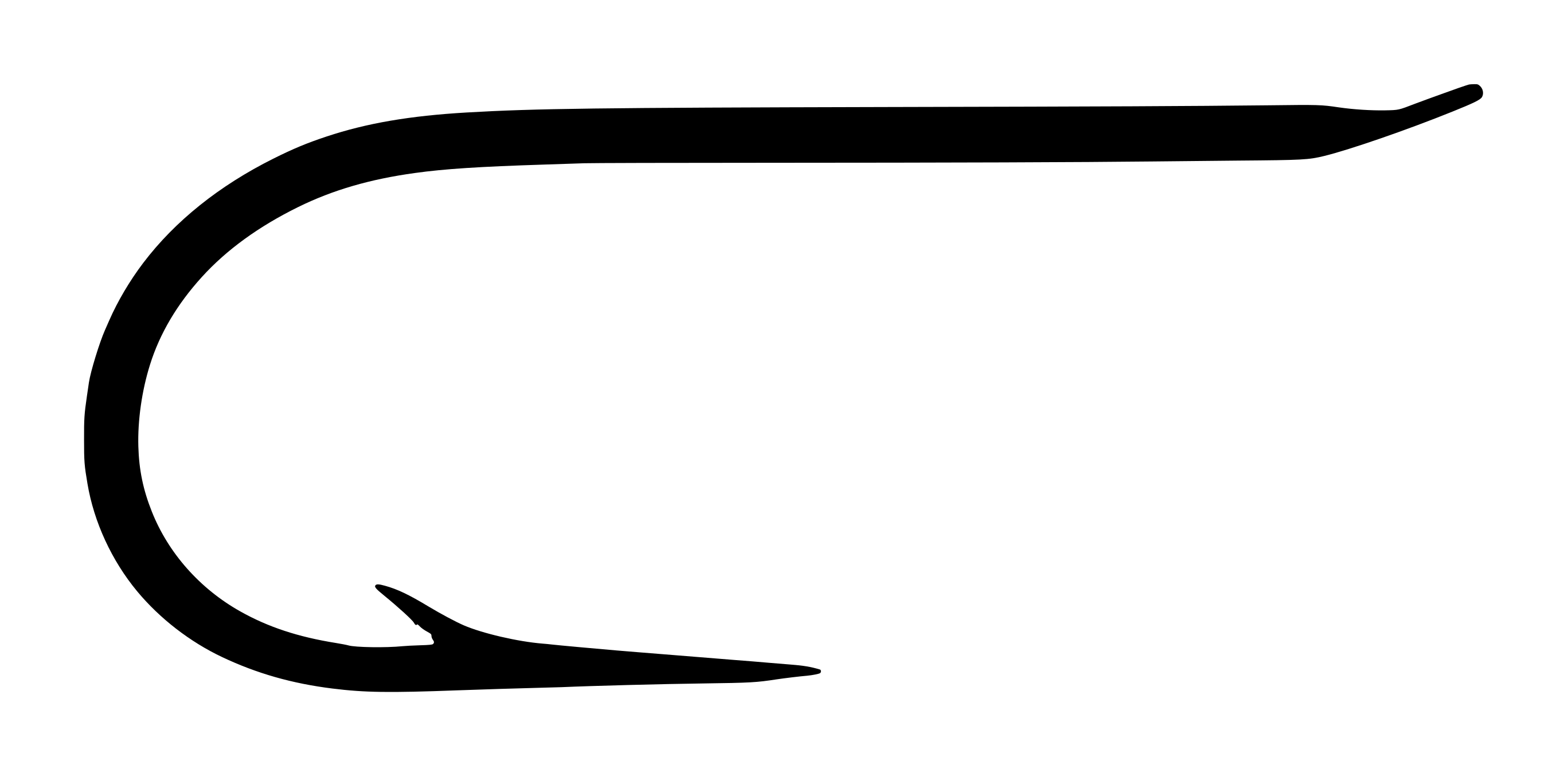
carlisle, Narrow gapGentle round bend in the classical Cincinnati bass configuration — neither a true Sproat (fully rounded bottom) nor an Aberdeen (wide round), but rather a proprietary Milward variant that sits between these types. The bend is symmetrical and shows no visible offset (straight, not kirbed). Bend depth is moderate relative to shank length. The wire maintains consistent gauge through the bend without visible taper. P
Point
Standard / SpearShort close-cut barb placed immediately behind the point taper, with moderate sweep angle. Barb depth is proportional to wire gauge. The barb geometry is consistent with cast steel forging rather than cut barb — the barb form emerges from the tapered bend. P
Finish
Polished Steel — Confirmed (stated on packaging)Polished steel finish with a bright, reflective surface characteristic of wire drawing and final burnishing. The specimen shows minimal oxidation or patina, indicating careful storage. The finish is uniform across the shank and bend, with no blued or bronzed tones. The high polish is typical of Milward's 'Superfine Cast Steel' designation and contrasts with darker bronzed finishes common in other manufacturers' bait hooks of the same era. P
The three specimen hooks are bright and show no corrosion, tarnish, or mechanical damage. The original sales card shows age-related foxing (brown spots from paper lignin oxidation) and light edge wear consistent with 100+ years of storage. The printing remains legible throughout, though ink density is slightly reduced on lower areas due to typical period letterpress wear. No hooks are missing from the displayed card; the complete 100-count appears intact based on card density and weight.
The spear point geometry (straight taper from barb to tip, no pronounced concavity) reflects functional optimization for live-bait hook-setting. A hollow point, by contrast, creates a thin knife-edge that penetrates soft fish flesh more readily but is prone to rolling open under load — a liability when setting hard on a striking bass or walleye from live-bait rigs. The spear point trades ultimate penetration ease for robustness and point durability.
The blind flatted eye provides two mechanical advantages: (1) the flattened section increases wire cross-section at the point of maximum stress (the eye-to-shank junction), reducing tendency to break or bend open, and (2) the small ring-formed loop offers a positive anchor point for tying without the failure modes possible with tapered-eye designs where line pressure can deform the eye itself. This is why blind eyes remained standard on heavy bait hooks throughout the 20th century despite the later dominance of ball-eye designs in lighter patterns.
The cast steel metallurgy (as opposed to wrought iron or mild steel) delivers higher carbon content, greater hardness after quenching, and better retention of point sharpness through multiple uses. Cast steel hooks typically maintain a sharper point than iron equivalents, which matters significantly for spear-point designs where penetration depends on geometric sharpness rather than hollow-point knife-edge profile.
The overall length of 1.88" for a documented size 16 may represent one of the largest documented 'size 16' hooks in the garrenwood.com catalog, exemplifying the historical sizing divergence between early Redditch sizing and modern standards.
Own this hook? Help us measure it.
We don't have measured sizes for this hook yet. Own one? Submit calipered measurements and we'll review and add them. Thank you!
Historical context
milward
H. Milward & Son was established in Redditch, England, the historic center of British hook manufacturing. The company became renowned for producing high-quality cast steel hooks during the Victorian era, with their ‘Iron Arm’ trademark representing their premium line of fishing hooks. Milward actively exported to international markets, particularly the United States, where they developed specialized patterns for American fishing conditions and species preferences.
The Cincinnati Bass Hook represents Milward’s strategic approach to the American market, creating region-specific designs that appealed to local anglers. Redditch manufacturers like Milward were instrumental in establishing England’s dominance in the global fishing tackle trade during the late 19th and early 20th centuries.
Series History
The Cincinnati Bass Hook appears to have been a standalone model rather than part of a broader series, specifically developed by Milward for the American bass fishing market. The 2310 R model designation suggests it was part of Milward’s numbered catalog system, with the ‘R’ likely indicating a ringed (eyed) version. This hook represents Milward’s targeted approach to American regional fishing preferences, similar to their other geographically-named patterns developed for specific markets and fishing conditions.
Era and Packaging Dating
No barcode present — indicates pre-1974 manufacture. Letterpress printing method (not offset lithography) consistent with early 1900s production. 'H. MILWARD & SON' company name and 'The Iron Arm' trade mark are documented in catalogs from 1895-1925. Redditch 'Superfine Cast Steel' designation matches Milward's marketing language from the early 20th century. Cream paper stock and printing style consistent with Edwardian/early Georgian era hook cards. The 'Ringed' eye specification (blind-flatted with small ring) was phased out in most Milward lines by the 1930s in favor of ball-eye variants. Card construction and typography place this firmly in the 1900-1925 window, with highest probability 1910-1920.
The Redditch Iron Arm and the Consolidation of Hook-Making
H. Milward & Son was one of the 'Big Three' Redditch hook makers, alongside S. Allcock & Co. and Partridge, and all three companies fiercely guarded their proprietary hook patterns. Interestingly, in 1936 Mustad acquired Partridge's operations, and decades later absorbed other Redditch makers, consolidating the English hook industry under Norwegian ownership. Milward hooks bearing the 'The Iron Arm' mark have become some of the most sought-after Redditch patterns by modern collectors precisely because the independent Milward company ceased producing under its original name relatively early in hook history, making 'pure' Milward vintage cards from before 1930 scarcer than equivalent-era Mustad or Allcock cards.
Design lineage and influence
The Cincinnati Bass hook pattern, while carrying an American geographic name, follows the classical English bait hook tradition established in Redditch from the 1850s onward. The blind-flatted eye and spear point represent a lineage of designs optimized for live-bait live-setting, in which a sharp point and adequate wire strength matter more than the knife-edge characteristics of hollow points.
Competing designs from the same era include the S. Allcock ‘Round Kendal’ (also blind-eye, also for bass and perch), and slightly later the Mustad O’Shaughnessy and Aberdeen derivatives that borrowed English designs. The Cincinnati Bass sits between heavy salmon/sea-trout patterns (which favored very large gaps and heavier wire) and delicate trout patterns (which favored smaller spears and lighter wire). It represents a pragmatic middle ground for freshwater sport fishing.
After the 1950s, this pattern type largely disappeared from new production as manufacturers standardized on ball-eye and tapered-eye variants. Modern equivalent patterns (Mustad 32380, Partridge GCS) derive conceptually from the same lineage but with updated metallurgy and manufacturing. The Milward 2310 R thus occupies an interesting historical niche — too old to have influenced modern design directly, but old enough to be studied by hook historians as evidence of pre-standardization hook diversity.
Best matchRelated by Attribute
Computed automatically from catalog data — updated as new hooks are added.
Matches: Bend, Eye Orient., Point, Forging, Application +2 moreDiffers: Shank: 1X Long vs Standard; Wire: Fine (1X Fine) vs Standard; Gap: Narrow vs Standard +2 more
Matches: Bend, Gap, Eye, Eye Orient., Forging +2 moreDiffers: Shank: 1X Long vs 4X Long; Wire: Fine (1X Fine) vs Extra-Fine; Point: Standard / Spear vs Superior +2 more
Matches: Eye, Eye Orient., Point, Forging, Application +2 moreDiffers: Bend: Carlisle vs Round / Kendal; Shank: 1X Long vs Standard; Wire: Fine (1X Fine) vs Heavy (1X Heavy) +2 more
Matches: Shank, Eye Orient., Point, Forging, Application +1 moreDiffers: Bend: Carlisle vs Round / Kendal; Wire: Fine (1X Fine) vs Extra-Fine; Gap: Narrow vs Standard +3 more
The Milward 2310 R is a size 16 Cincinnati bass hook designed for live bait and natural bait presentations. The blind-flatted eye and spear point geometry are characteristic of earlier English bait hook design, optimized for securing baits and setting on striking fish. This size, despite its modern cataloging as No. 16, is significantly larger than contemporary No. 16 hooks due to historical sizing differences and represents a medium-duty pattern suitable for freshwater panfish and small bass.
Secondary Applications
Light streamer fishing, small live baitfish presentations.
Classic Fly Patterns
Not typically used for fly tying
Modern Equivalents
Hook
Match Quality
Notes
Mustad 32380 (size 16)
Moderate
Contemporary size 16 bait hook with ball eye and similar gap. Different point geometry (hollow vs spear) and finish. Functionally similar for panfish bait work but lacks historical character.
Partridge GCS (size 16)
Moderate
Modern Partridge grub/caddis hook. Similar size range but different point style (spade/sliced vs flat spear). Higher carbon steel improves durability.
Tiemco 2488H (size 16)
Poor
Modern competition nymph hook. Different application (fly tying vs bait), point style (needle vs spear), and eye type (standard loop vs blind). Not truly equivalent.
Collector notes
Rated 4.5/10. Milward hooks are moderately scarce in original packaging compared to dominant manufacturers like Mustad, but this particular size and model are not heavily sought by specialist collectors. The blind-eye construction and Cincinnati bass designation add modest historical interest.
Reference value
$6 – $18 USD estimate
Packaging condition
Fair — significant wear, partially legibleRecorded specimen
Packaging format
GW-MW-02Catalog code
Positive factors: Redditch manufacture by a respected maker (Milward), original period packaging with letterpress printing, blind-flatted eye construction (less common than ball-eye variants), cast steel composition. Original card in good condition commands a genuine collector premium. Size 16 in this pattern is moderately scarce compared to larger sizes.
Limiting factors: Cincinnati bass hooks were mass-produced and widely distributed, reducing ultimate rarity. No named designer or collaborator credit. Contemporary equivalent patterns are readily available and functionally superior, limiting functional collector interest. Missing hooks significantly reduce value. Complete original packaging is essential for valuation above $10.
Most desirable variants: Sealed or near-sealed cards with all 100 hooks intact. Early printing states (pre-1920) command premiums over later reprints. Variant card designs with different text layouts or graphics are worth seeking.
Packaging
Printed cardboard sales card with small hook specimen mounted and secured by wrapping or winding. Letterpress printing on cream paper stock. Header reads: 'H. MILWARD & SON. Redditch England'. Brand mark: 'Superfine Cast Steel'. Product title: 'CINCINNATI BASS HOOKS'. Secondary text: 'No. 16 Ringed.. 100' (indicating 100 hooks per card). Model number '2310 R.' printed at bottom. The trade mark features a stylized eagle above 'The Iron Arm' — a historic Milward house mark. Estimated dimensions: approximately 3.5" x 2.25" (89 x 57 mm). Card shows period patina and light foxing consistent with early 20th-century paper stock.
Market Value Notes
Low ($6): Good condition — opened card, 90-95% hook count intact, light wear to packaging.<br />
High ($18): Excellent condition — sealed or near-sealed, 100% hook count, minimal wear, clear printing.<br />
Premium factors: Complete hook count, sealed packaging, clear legible printing, early Milward Redditch mark.<br />
Platforms: eBay UK, specialist vintage tackle dealers, Redditch hook collector forums.<br />
Confidence: E estimated — limited comparable sales data for this specific model and size combination. Based on typical Redditch maker card values and size premium/discount factors.
Where to Find
eBay UK (search 'Milward 2310' or 'Milward Cincinnati bass hooks'), specialist Redditch hook dealers, occasional vintage tackle lots at regional UK auctions.
Collector's Identification Tips
Key identification features include the ‘H. MILWARD & SON’ header text, ‘Redditch England’ location marking, and distinctive ‘The Iron Arm’ trademark with hammer logo V. The model designation ‘2310 R’ appears clearly on the label V. Original Milward labels feature characteristic ornate border designs and letterpress printing quality typical of Victorian-era packaging I.
Preservation
Storage and Preservation
Store the original sales card in a cool, dry environment away from direct sunlight. Avoid humidity fluctuations that accelerate paper deterioration and can promote rust on the steel hooks. The polished steel finish will gradually develop surface patina with age and moisture exposure — this is normal and generally acceptable to collectors. Do not attempt to restore or polish the hooks, as this can damage the original finish character.
House the card in an archival-quality storage box or sleeve if preservation is a priority. Original tissue wrapping or envelope (if present) should be retained. Acid-free paper interleaving can slow foxing progression. The card should not be framed under glass with moisture-trapping mount board — use museum-quality framing materials if display is desired. Avoid contact with other metals (steel, copper, brass) in storage to prevent galvanic corrosion.
Size Note
Historical Hook Sizing — The No. 16 Paradox
This hook is documented as size 16 on the original Milward packaging, yet it measures approximately 1.88 inches overall — substantially larger than a modern No. 16 hook (which typically measures 1.15″-1.25″). This apparent paradox reflects fundamental historical changes in hook sizing standards between the early 1900s and present day.
Early English manufacturers including Milward used proprietary sizing systems that were not standardized across the industry. The size number referred more to a categorical grade within a product line than to an absolute dimension. Older English sizing was coarser and more irregular than modern ISO or Mustad standards. A Milward 2310 R at ‘No. 16’ occupies the role of what would today be called a ‘No. 10’ or ‘No. 12’ in modern panfish/bass hook scales.
When evaluating this hook for fishing use, ignore the printed size and reference the actual dimensions (1.88″ overall length, 0.50″ gap). This makes it suitable for small to medium panfish bait work and light saltwater applications — not the tiny hook that modern No. 16 designation would imply.
Primary Source
The Milward Brand Mark and 'The Iron Arm'
Source: Original Milward 2310 R sales card, letterpress printing, c. 1900-1925
The prominent eagle/arm trade mark on the packaging labeled ‘The Iron Arm’ is Milward’s historic house mark and appears on documented catalogs dating to the 1890s. The eagle clutches what appears to be an anvil or arm-shaped forge tool, symbolizing Milward’s manufacturing heritage and commitment to hand-forged quality steel hooks.
The phrase ‘Superfine Cast Steel’ indicates Milward’s positioning of this line as a premium offering compared to cheaper iron or low-grade steel alternatives. ‘Cast Steel’ was a specific metallurgical designation in the late 19th and early 20th centuries, referring to steel produced by the crucible casting process rather than from wrought iron. This production method yielded higher carbon content and greater hardness — desirable for hooks that required both sharpness and resistance to breaking under load.
The ‘H. MILWARD & SON’ attribution confirms this card originates from the period when H. Milward (or his successor Horace Jr.) actively managed the Redditch works. By 1925, Milward hooks were beginning to be absorbed into larger corporate structures, and the independent ‘H. MILWARD & SON’ mark became less common on cards. The presence of this mark is a reliable era indicator for 1900-1925 production.
Additional
Cincinnati Bass Hooks — A Regional American Preference
The ‘Cincinnati Bass’ designation on this hook might seem a curiosity given the Redditch English manufacture, but it reflects a real historical fishing tradition. The Cincinnati area (Ohio River, Great Lakes tributaries) became known in the late 1800s for a particular style of largemouth and smallmouth bass fishing using live shiners and crawfish. Local anglers and tackle dealers developed a preference for a specific hook geometry: moderate gap, spear (not hollow) point, and blind eye for strength when setting hard on striking fish.
Rather than manufacture a unique hook for American import, Milward (and other English makers) simply applied the regional name to an existing pattern that matched those preferences and exported it to American jobbers and retail dealers. The Cincinnati Bass name became a marketing label that connected the imported English hook to a recognizable American fishing context. This practice was common — Redditch hooks sold in America under names like ‘Ohio’, ‘Chicago’, ‘Louisville’, and ‘Philadelphia’, each referring to regional fishing preferences rather to origin.
The pattern remained in Milward’s catalog into the 1950s, suggesting steady transatlantic demand. By the 1960s-70s, American manufacturers (Mustad, Pflueger, Eagle Claw) had captured most of the American bait hook market, and regional specialty imports like the Cincinnati Bass faded from widespread availability.
Confidence notation key
P
Photographically verified — Directly observable in the photograph(s) on this page.
V
Verified by documentation — Confirmed by manufacturer catalog, spec sheet, or published reference.
I
Inferred — A logical deduction from observable or documented evidence, not directly stated.
E
Estimated — An approximation based on visual comparison, proportional analysis, or limited data.
S
Speculative — A reasoned hypothesis that cannot be confirmed from available evidence.
Claims with no notation are confirmed by multiple independent sources. All photographs on garrenwood.com are taken on a measurement grid where each square equals 1/10 inch (0.1″ / 2.54 mm).