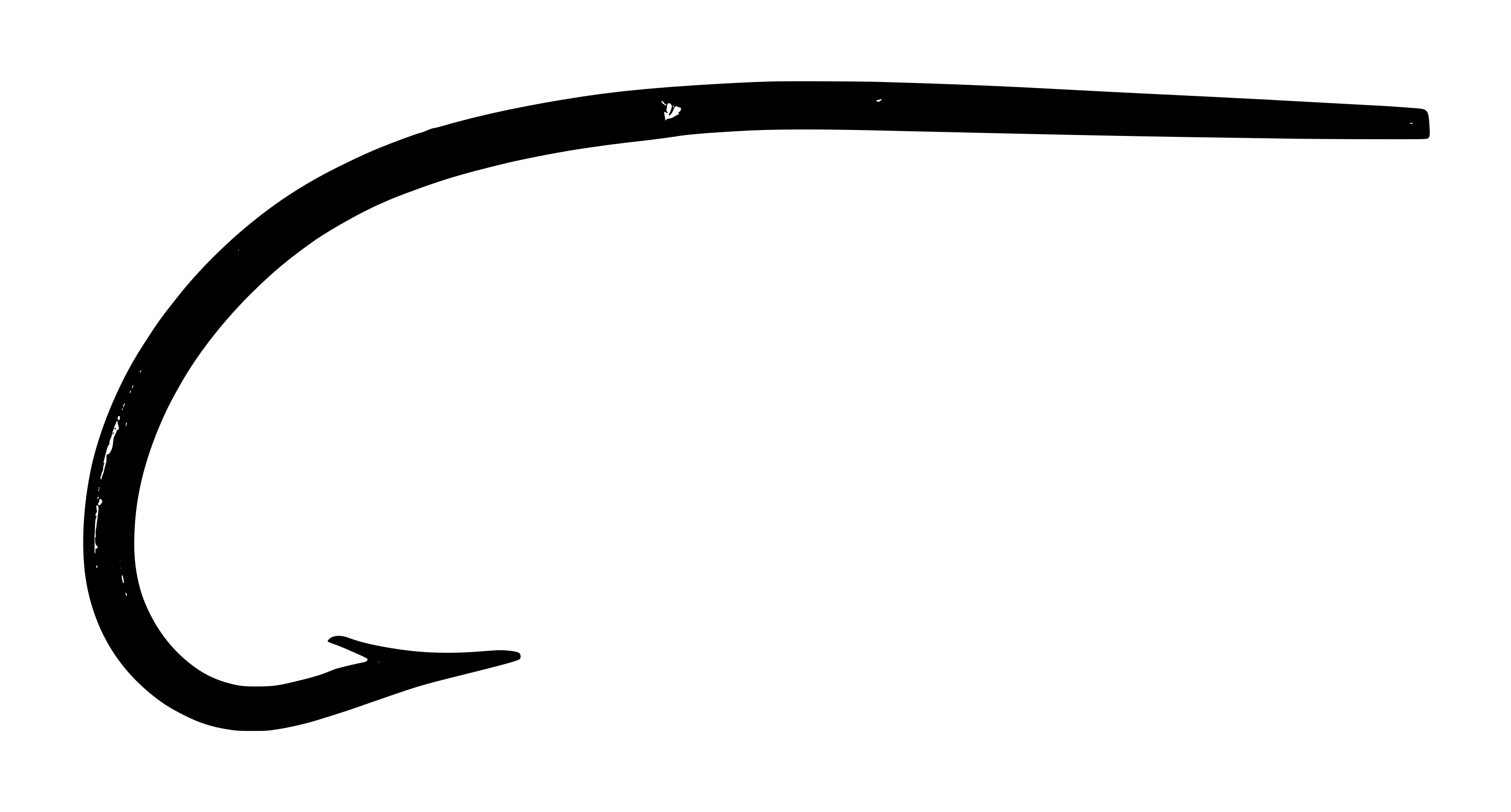
The Mustad 9620 A is a vintage heavy-duty saltwater hook from the Norwegian manufacturer O. Mustad & Søn, produced during the mid-20th century (c. 1950-1965). This size 7/0 example represents a premium-grade O’Shaughnessy pattern specifically engineered for commercial and recreational saltwater angling, featuring an extra-heavy forged wire, tinned finish, and a ringed eye suitable for direct-knot attachment.
The defining characteristic of the 9620 A is the forged shank and bend — the wire has been flattened along its lateral sides through mechanical drop-pressing, dramatically increasing the structural rigidity and tensile strength without adding additional thickness. This metallurgical enhancement was critical for heavy saltwater applications where sustained runs and crushing jaw pressure from large pelagic species demanded uncompromising reliability. The hollow point geometry provides rapid, effective penetration even with minimal applied force, suitable for the bait-presentation tactics of mid-century longlining and trolling.
The original packaging places this hook squarely in Mustad’s industrial golden era, when the Oslo factory commanded approximately 50% of global hook production. The ‘Qual. 9620 A’ model code represents the old arbitrary numeric classification system that persisted until Mustad’s corporate transition to the Signature Series around 2001-2009. The presence of this vintage label card, combined with the specific combination of forged wire, tinned finish, and size 7/0, makes this example a historically significant artifact of industrial saltwater fishing tackle design.
Mustad 9620 A Box and Label Size 7-0
Photographic record
3 cataloged imagesSelect any record to load it above.
3 images shown
Mustad 9620 A Box and Label Size 7-0Mustad 9620 A Box and Label Size 7-0Open originalMustad 9620 A Hook Point Size 7-0Mustad 9620 A Hook Point Size 7-0Open originalMustad 9620 A Hook Size 7-0Mustad 9620 A Hook Size 7-0Open original
Technical profile
Hollow Point | Mustad O'Shaughnessy Hooks | Forged | Eyed | Tinned | Special | Made in Norway
Eye
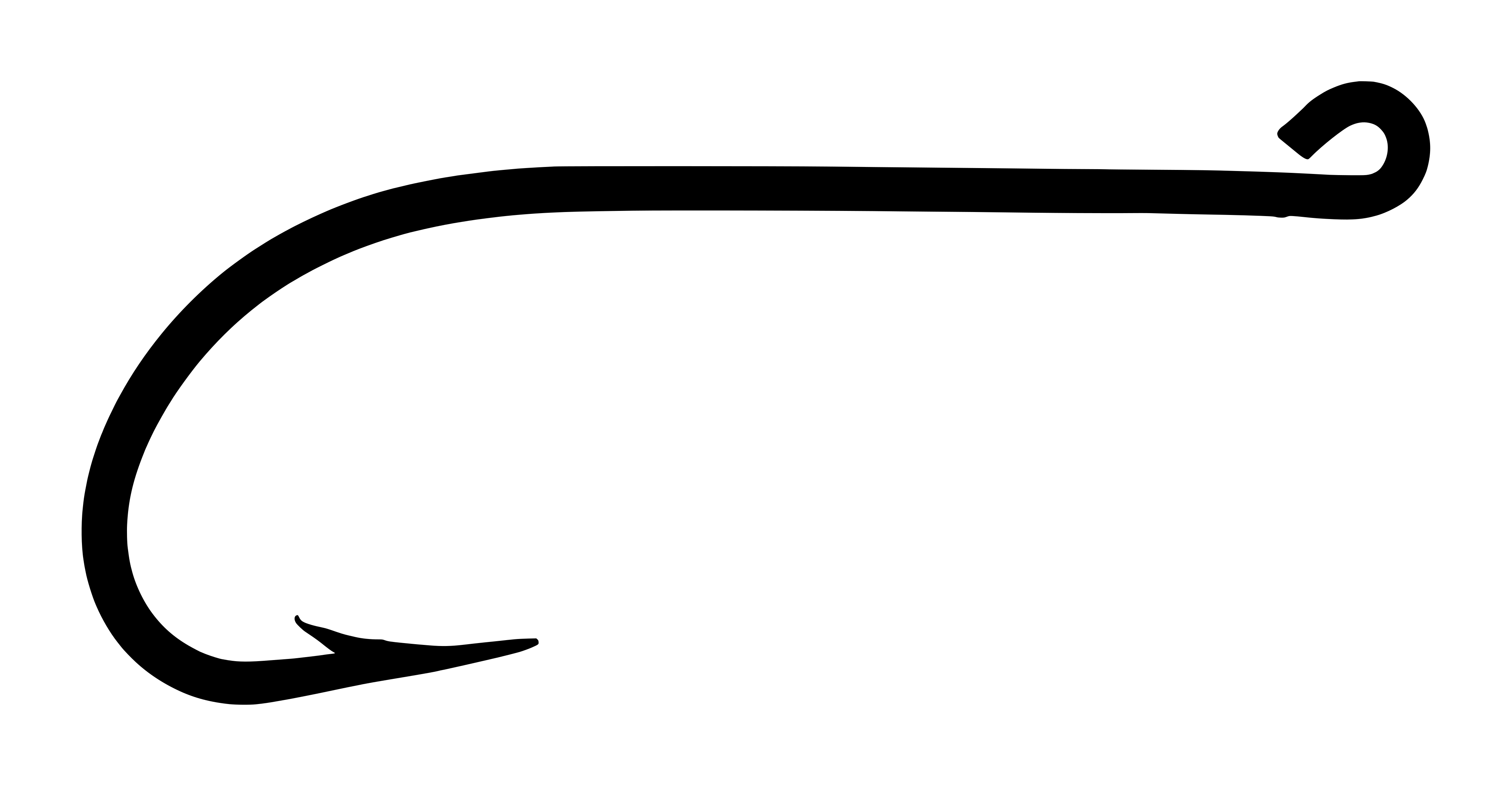
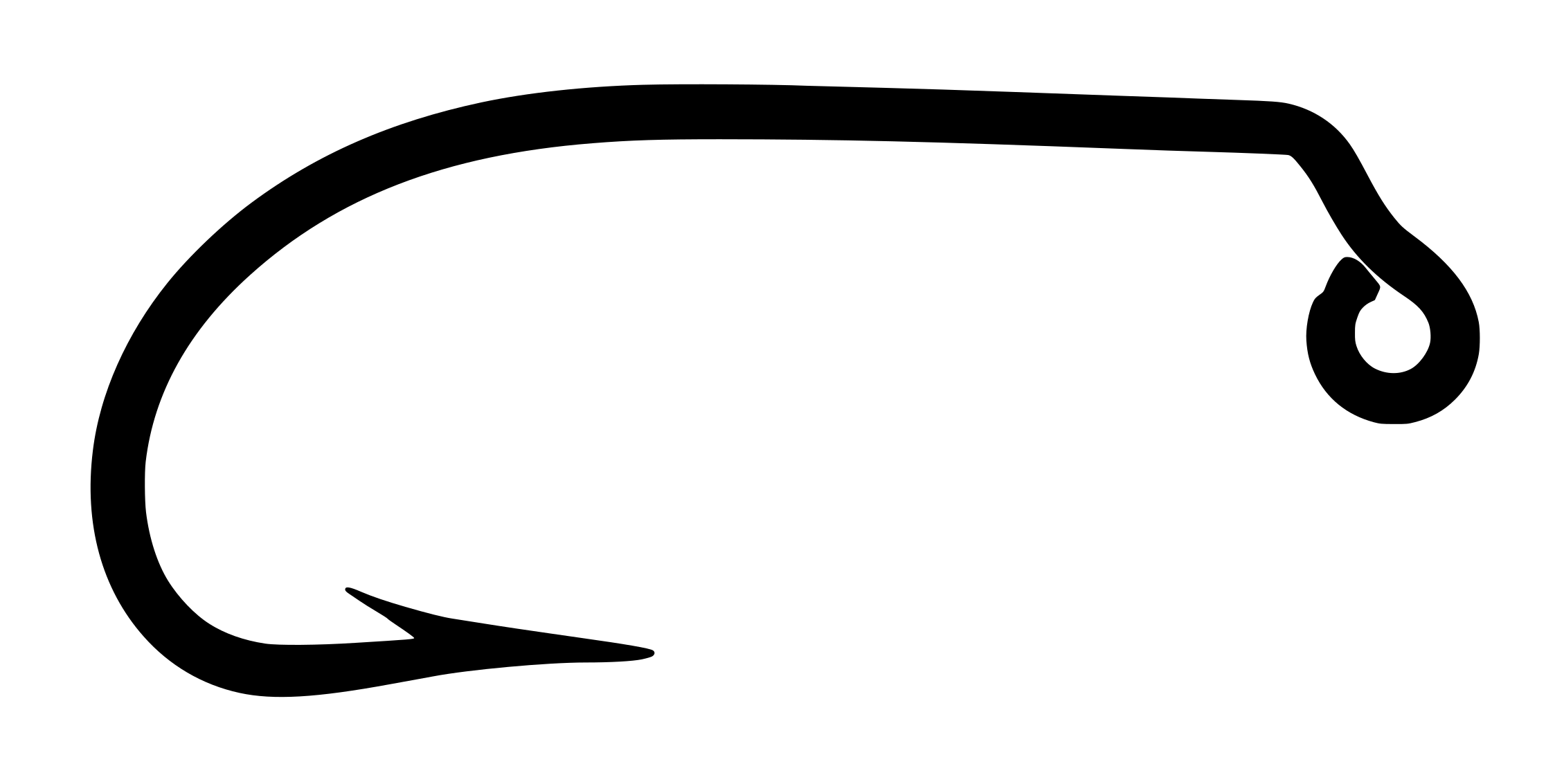
Cross Eye, Turned UpLarge, robust ringed eye (ball eye) formed from the terminal wire bent back into the shank axis. Eye is proportionally generous relative to wire gauge, accommodating standard leader or line knots. Eye ring shows uniform, well-formed curve with no visible casting flaws or seams P. Characteristic of ringed eyes on heavy saltwater hooks from this era.
Wire
Standard, Forged
Shank
Standard — Plain
Bend
O'Shaughnessy, Wide gapClassic O'Shaughnessy bend geometry—a parabolic curve somewhat intermediate between a pure Sproat's smooth sweep and a Limerick's angular bottom bend. The bend exhibits the characteristic 'short shank, deep throat' geometry of the O'Shaughnessy pattern. The forging process has flattened the wire laterally, giving the bend a distinctive beveled appearance when viewed from above P. Bend depth appears proportional to the heavy wire gauge. No perceptible offset or reversed characteristics I.
Point
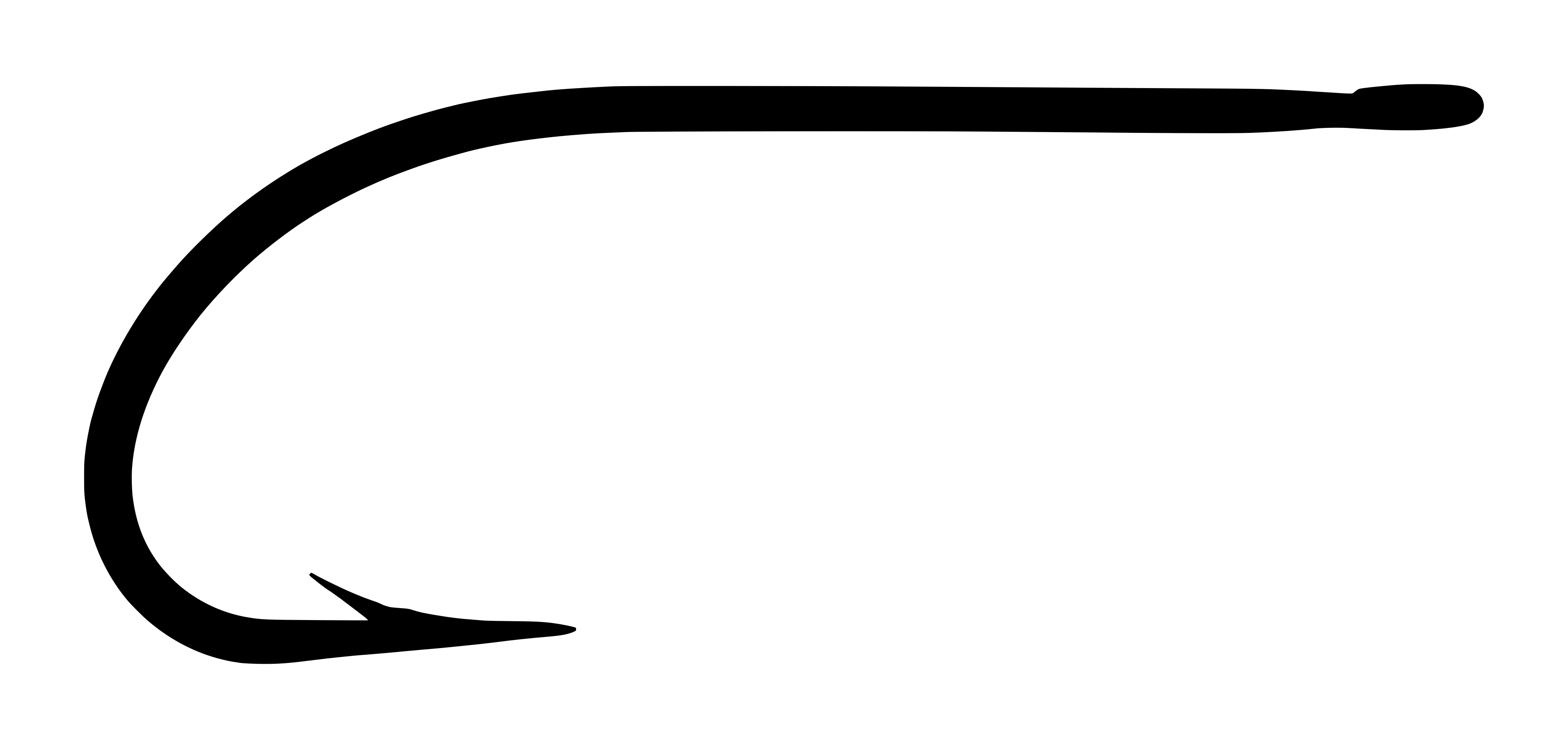
Hollow Point (concave inner face)Barb appears compact and well-formed, cut close to the shank at a shallow angle characteristic of O'Shaughnessy pattern hooks P. Barb size is proportional to the heavy wire gauge. No evidence of double-barbing or supplementary barb cuts I.
Finish
Tinned — Confirmed (stated on packaging)Tinned finish appears as a bright, silver-colored coating consistent with electroplated or dipped tin application P. The finish exhibits uniform coverage with a characteristic warm, slightly matte tone typical of vintage tinned hooks from the 1950s-1960s era. No evidence of heavy pitting, patina development, or corrosion on this specimen P. The tinned surface shows minor surface wear and oxidation consistent with age and handling, but retains the fundamental silver tone characteristic of the finish type. Cool-to-warm tone suggests authentic vintage tinning rather than modern stainless-steel appearance.
The specimen hooks are bright with no visible corrosion, pitting, or surface deterioration despite age P. The card shows light age-appropriate toning and minor edge wear. Several hooks have been removed from the card (visible empty holes), reducing the completeness of the package. The label ink remains legible with no significant fading or flaking P. Overall condition is consistent with a well-preserved opened vintage card with some hooks removed and moderate use by the original owner.
The forging process applied to the 9620 A’s wire involves placing the finished hook in a mechanical drop-press where a die flattens the shank and bend along their lateral sides. This controlled deformation work-hardens the steel, significantly increasing tensile strength and resistance to bending without adding material bulk or weight. For saltwater applications where crushing jaw pressure and violent head-shakes from large fish create extreme stress concentrations, the forged construction provides a structural safety margin that round-wire hooks cannot match.
The hollow point geometry—a concave, dished-out inner face that tapers from the tip to the barb—provides rapid penetration with minimal applied force. For bait presentations, especially with tough-jawed species like striped bass or tarpon, the hollow point ensures that even a tentative strike from a cautious fish initiates barb penetration before the fish can react and shake the hook free. The concave profile creates a knife-edge effect at the very tip, concentrating penetration force into an extremely small area.
The tinned finish is a protective electroplating or dipping process that bonds a layer of molten tin to the high-carbon steel substrate. Tin is highly corrosion-resistant in saltwater environments, far superior to bluing or bright steel alone. The thick, uniform tinning on the 9620 A would have been applied after the hook was finished and hardened, protecting it against rust during long storage and extended field use in marine conditions.
We don't have measured sizes for this hook yet. Own one? Submit calipered measurements and we'll review and add them. Thank you!
Historical context
mustad
O. Mustad & Søn was founded in 1832 in the village of Gjøvik, Norway, initially as a general metal goods manufacturer (Brusveen Spiger- og Staltradfabrikk) producing nails, steel wire, and other industrial products. The company was acquired by Ole Hovelsen Mustad and his son Hans Mustad in the mid-19th century, rebranded as O. Mustad & Søn, and gradually transitioned toward fishing tackle production.
The pivotal moment arrived in 1877 when Mathias Topp, a visionary within the company, invented the first fully automated hook-making machine—a revolutionary technology that could continuously feed raw steel wire and autonomously cut, bend, barb, and point hooks at unprecedented scale. Rather than patenting the machinery (which would have required public disclosure), the Mustad family maintained strict corporate secrecy, non-disclosure agreements, and restricted factory access, creating an impenetrable competitive moat.
By the 1950s, when the 9620 A was in production, Mustad had secured approximately 50% of global hook production market share and operated sales offices and manufacturing facilities across multiple continents. The Oslo factory became the de facto industrial standard for saltwater and commercial hook production. The company’s eight-line label system, quality-code nomenclature, and aggressive regional-pattern cloning strategy (acquiring or reverse-engineering local patterns and standardizing them globally) were the business practices that sustained this dominance through the mid-20th century.
Series History
The 9620 A designation represents Mustad’s premium O’Shaughnessy variant within the broader ‘Qual. 9620’ series, which encompassed multiple sub-variants differentiated by wire weight, finish, and eye configuration. The ‘A’ suffix (and later variants like ‘B’, ‘C’, etc.) allowed Mustad to offer the same fundamental bend geometry across a spectrum of metallurgical and constructional options, serving different market segments and fishing conditions.
The O’Shaughnessy pattern itself was one of Mustad’s earliest acquisitions in the industrial cloning strategy—the pattern was favored by British and Irish saltwater anglers and was already well-established in the 19th century. Mustad’s mass-production approach made the pattern globally accessible and affordable, positioning it as the standard for commercial fishing by the early 20th century.
The 9620 A series was produced continuously through the 1950s-1960s with relatively stable specifications, though the specific manufacturing location transitioned from Christiania (pre-1925) to Oslo (post-1925). The series began its decline in the 1970s-1980s as stainless-steel variants became cost-competitive and as recreational fly fishing and lighter-tackle angling reduced demand for heavy-wire saltwater hooks. By the time Mustad transitioned to the Signature Series nomenclature (circa 2001-2009), the arbitrary numeric 9620 designations had become obsolete and were formally discontinued.
Era and Packaging Dating
Oslo address (Line 3) is definitive marker. Christiania was officially renamed to Oslo on January 1, 1925, so 'OSLO - NORWAY' places this post-1925. The absence of a barcode (not standard until 1974) supports pre-1974 dating. The eight-line label format and typography, Key Brand logo style, cream cardstock with gold ink print, and hand-written size notation are consistent with Mustad's mid-century export packaging (1950s-1960s). The 'Qual.' designation (9620 A) uses the arbitrary numeric quality code system, which was discontinued around 2001-2009 with the transition to the Signature Series. The 'Made in Norway' notation and direct 'Oslo - Norway' manufacturer statement are typical of Mustad's post-WWII, pre-modernization labeling. Estimated production period: 1950-1965, with peak probability in early-to-mid 1950s based on label aesthetics.
The Longlining Gold Standard
During the 1950s and 1960s, when Atlantic longlining for swordfish, tuna, and shark was at peak commercial intensity, the Mustad 9620 A became the de facto standard hook for baited mainlines that could stretch 40+ miles across the ocean. Commercial fishermen would rig thousands of these hooks per vessel per season, trusting the forged wire and tinned finish to withstand weeks of salt-water immersion and the explosive power of apex predators. A single hook failure—due to corrosion, metal fatigue, or manufacturing defect—could mean the loss of an entire section of mainline with baited hooks, representing substantial economic loss. This reliability imperative drove Mustad's obsessive focus on quality control and material specification, making the 9620 A one of the most consistently manufactured hooks of the era.
Design lineage and influence
The O’Shaughnessy hook pattern traces its origins to 19th-century Irish hook makers who perfected the bend shape. The pattern name itself is sometimes attributed to legendary Irish hook craftsmen, though the exact genealogy is debated among tackle historians. By the early 20th century, the O’Shaughnessy had become the quintessential heavy-duty saltwater pattern, favored by commercial fishermen throughout the Atlantic and used extensively for trolling large baits and constructing bottom-fishing rigs.
Mustad’s 9620 A represents the industrial mass-production iteration of this classic pattern. When Mustad acquired or licensed rights to produce regional patterns (a strategy they called industrial ‘cloning’), they standardized the O’Shaughnessy into a range of sizes and wire weights. The 9620 A variant specifically emphasizes the forged-wire construction and tinned finish—premium features that signaled reliability to commercial fishermen who staked their livelihoods on consistent hook performance.
Competitors to the 9620 A during its era included the Pflueger O’Shaughnessy (USA) and various British imports from manufacturers like Allcock and Partridge of Redditch. However, Mustad’s economies of scale, coupled with their aggressive quality-coding system, allowed them to dominate the global saltwater hook market by the 1950s. The 9620 A eventually gave way to modern stainless-steel variants (such as the Mustad 34007) as material technology advanced, but the fundamental O’Shaughnessy geometry remains largely unchanged in contemporary offerings.
Best matchRelated by Attribute
Computed automatically from catalog data — updated as new hooks are added.
Matches: Bend, Shank, Wire, Eye, Finish +4 moreDiffers: Gap: Wide vs Standard; Eye Orient.: Turned Up vs Straight / Inline; Point: Hollow Point vs Superior
Matches: Bend, Shank, Wire, Gap, Point +4 moreDiffers: Eye: Cross Eye vs Tapered Eye; Eye Orient.: Turned Up vs Turned Down; Finish: Tinned vs Bronzed +1 more
Matches: Bend, Shank, Eye, Finish, Forging +3 moreDiffers: Wire: Standard vs Heavy (1X Heavy); Gap: Wide vs Standard; Eye Orient.: Turned Up vs Jig (60°/90°) +1 more
The Mustad 9620 A was engineered as a premium-grade commercial and recreational saltwater hook, optimized for live-bait and cut-bait presentations targeting large, powerful species. Size 7/0 represents the ‘working sweet spot’ for general saltwater bait fishing—substantial enough to handle 20-100+ pound fish reliably, yet versatile enough for rigging both large live baits (mullet, herring, mackerel) and natural bait chunks (squid, cut bonito).
During its production era (1950s-1960s), the 9620 A was a mainstay of Atlantic and Gulf Coast commercial fishing operations, used extensively in longlining and trolling rigs. Recreational anglers similarly relied on the pattern for striped bass, tarpon, shark, and offshore bottom-fishing. The heavy forged wire and tinned finish made the hook ideal for extended field deployment—once rigged, the hook could be stored in seawater without fear of corrosion or sudden failure.
Secondary Applications
Heavy saltwater fly fishing for large streamers (though less common in the 1950s era); big-game trolling with cedar plugs and large lures; offshore bottom-fishing rigs; sea trout and salmon specialization in British saltwater contexts.
Classic Fly Patterns
Not typically used for fly tying. The 9620 A was engineered primarily for live-bait and cut-bait presentations. However, large saltwater streamers (articulated saltwater flies for stripers, permit, large tarpon) could theoretically be tied on size 7/0 hooks, though this was uncommon practice during the 1950s-1960s era.
Direct modern descendant — O'Shaughnessy pattern, stainless steel, similar proportions and wire weight. Primary difference is material (stainless vs. tinned high-carbon); geometry and intended applications are essentially unchanged.
Classic O'Shaughnessy in carbon steel with various finishes. Slightly lighter wire gauge than 9620 A; otherwise functionally very similar.
Owner 5314
Good
Modern heavy saltwater pattern with similar bend geometry and forged construction. Japanese manufacturing; equivalent in strength and application but uses contemporary materials.
VMC 9255
Good
French-manufactured heavy saltwater hook with comparable geometry and wire weight. Suitable for same applications; modern stainless-steel construction.
Collector notes
Rated 4.5/10—O'Shaughnessy hooks remain moderately common in larger sizes due to sustained production volumes, but the specific 9620 A variant in size 7/0 with complete original vintage label card is genuinely scarce. Collector demand is concentrated among saltwater tackle historians and commercial-fishing-heritage enthusiasts; general fly tyers and recreational anglers show limited specialized interest. The presence of original packaging significantly elevates value; loose hooks of this model command minimal premium.
Reference value
$12 – $35 USD estimate
Packaging condition
Good — moderate wear, legibleRecorded specimen
Packaging format
vintage-label-cardCatalog code
Positive Factors: The combination of vintage mid-century packaging (Oslo address, eight-line label, Key Brand graphics), the specific 9620 A model code (arbitrary numeric system discontinued ~2009), and intact label card with hooks still present creates a strong artifact for commercial fishing history. Tinned saltwater hooks from the 1950s-1960s have appreciable collector interest among maritime-heritage specialists. The size 7/0 is substantial and visually impressive, appealing to display-oriented collectors. The forged wire construction and heavy gauge are recognizable engineering achievements that resonate with industrial-history enthusiasts. Original paper card (unplasticized) is increasingly rare as many examples deteriorate or are discarded.
Limiting Factors: O’Shaughnessy hooks were mass-produced in very high volume—Mustad’s entire business model relied on standardized, efficient production. Surviving examples are therefore abundant in larger sizes (2/0, 3/0, 4/0) but become progressively scarcer in extreme sizes (8/0, 9/0+) or unusual finishes. Collector demand outside the saltwater specialist niche is modest—dry-fly collectors, nymph specialists, and streamer tyers rarely acquire saltwater hooks. The arbitrary numeric quality code (9620 A) is difficult for modern users to interpret, reducing appeal to casual collectors unfamiliar with pre-2000 Mustad nomenclature. Condition of the specimen affects value significantly—opened cards with missing hooks command 40-60% of sealed-card values. Toning and edge wear on the label is normal and expected but reduces premium.
Most Desirable Variants: Sealed or near-sealed cards with all 100 hooks intact command the highest premiums. Smaller, less common sizes (8/0, 9/0) are more scarce than 7/0. Alternate finishes (bronzed instead of tinned) or unusual eye configurations generate specialist interest. Multiple examples of the same model code from different production years (distinguishable by subtle label changes) are valued by researchers tracking manufacturing evolution.
Condition Factors: Paper label legibility and ink color retention are primary value drivers. Cards with visible handling marks, water staining, or ink flaking lose 20-30% of premium. Hooks themselves should show minimal corrosion or pitting (acceptable oxidative patina, but no white rust or active degradation). Missing hooks reduce value by approximately 10% per 5-10 missing hooks, with diminishing returns (a card missing 40+ hooks is valued primarily as a reference specimen). Original packaging box (if present) adds 50-100% premium over loose card.
Packaging
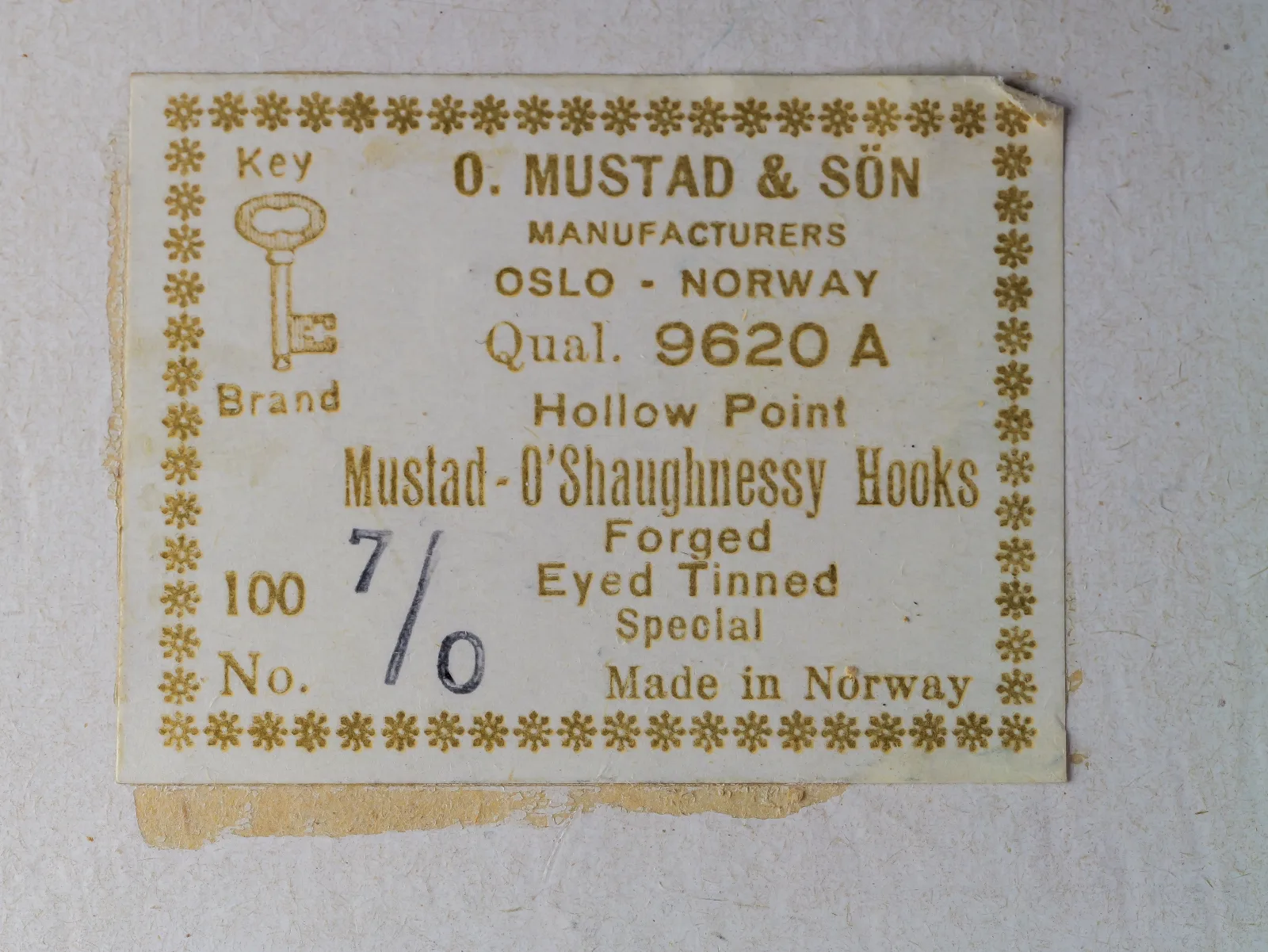
Vintage Mustad paper label card, cream-colored cardstock with gold/tan ink. Features the iconic Key Brand skeleton key logo in upper left corner. Eight-line standardized label format: Line 1: 'O. MUSTAD & SÖN', Line 2: 'MANUFACTURERS', Line 3: 'OSLO - NORWAY', Line 4: 'Qual. 9620 A', Line 5: 'Hollow Point', Line 6: 'Mustad-O'Shaughnessy Hooks', Lines 7-8: 'Forged / Eyed Tinned / Special Made in Norway'. Quantity box shows '100' and 'No.' with size written as '7/0'. Decorative asterisk border around perimeter. Paper shows age-appropriate toning and minor edge wear. No barcode present. Card is opened with visible hook holes where hooks have been removed.
Market Value Notes
Low ($12): Good condition — opened card with visible age toning, minor ink fading, 85-95 hooks remaining, superficial corrosion or patina on hooks acceptable, minor edge wear on card, label fully legible<br />
High ($35): Excellent condition — sealed or near-sealed card, all 100 hooks present, bright tinned finish with minimal patina, label crisp with sharp ink impression, no water staining or edge creasing, housed in original factory box if available<br />
Premium factors: Sealed/near-sealed status, complete hook count, bright tinned finish with minimal oxidation, sharp label impression, original box present, size variance from 7/0<br />
Platforms: eBay UK and US (specialist tackle sellers), online vintage tackle forums, regional tackle auctions, private collector-to-collector sales<br />
Confidence: E estimated — based on limited comparable sales data and inferred from general O'Shaughnessy market patterns. Actual sold prices for sealed 9620 A cards are rare in public records. Estimate reflects ballpark range for well-preserved mid-century Mustad saltwater cards with vintage label intact. Flag as speculative if more than 3 months have elapsed since this assessment.
Where to Find
Vintage tackle dealers specializing in saltwater or commercial fishing heritage (particularly regional dealers in coastal areas—New England, Mid-Atlantic, Gulf Coast). eBay UK frequently lists pre-1970 Mustad cards from estate lots; eBay US carries examples less frequently. Specialist fly-fishing auctions (particularly those emphasizing vintage big-game and saltwater fly tackle) occasionally include 9620 A variants. Regional tackle collector groups and forums (e.g. Classic Salmon and Steelhead Fly Tackle Discussion) occasionally have examples for trade or sale. Mustad itself is unlikely to have archive examples available for public purchase.
Collector's Identification Tips
Verify the eight-line label format with Oslo (not Christiania) address. Confirm ‘Qual. 9620 A’ model code printed on Line 4. Check for ‘Hollow Point’ designation on Line 5 (not ‘Superior’). Verify ‘Mustad-O’Shaughnessy Hooks’ on Line 6. Confirm ‘Forged / Eyed Tinned / Special’ on Lines 7-8. The combination of tinned finish, extra-heavy forged wire, large ringed eye, and size 7/0 in the O’Shaughnessy pattern is very distinctive. Examine the hook wire for the characteristic flattened sides of forging. The paper label card itself is the primary authentication — modern reproductions are extremely rare. Size marking may be handwritten or printed; handwritten indicates field labeling rather than factory standard.
Preservation
Storage and Preservation
Store the vintage card in a cool, dry environment away from moisture and humidity. The tinned finish on these hooks is inherently corrosion-resistant, but the paper label card is vulnerable to water damage, mold, and acid-induced degradation of the cardstock. Ideal storage conditions are 50-60% relative humidity and temperatures below 70°F (21°C).
If the card is still sealed or partially sealed in its original configuration, leave it undisturbed — opening and removing hooks significantly reduces collectability and historical value. If hooks must be used or removed, perform this operation carefully with acid-free gloves to avoid fingerprint oils on the tinned surface.
For opened cards with hooks remaining, store flat or in a vertical position (not compressed or bent). Avoid stacking multiple cards directly atop one another without protective tissue paper between them. The characteristic warm-tone patina that develops on the tinned finish with age is generally considered desirable by collectors and should not be aggressively removed or polished.
Keep the card away from PVC-based storage materials, plastic sleeves, or modern acidic tissue paper, all of which accelerate paper degradation. Use acid-free, archival-quality storage materials if protective housing is needed. Original packaging box (if present) should be retained, as the box itself is an artifact of factory presentation and manufacturing standards of the era.
Avoid contact between the hooks and other metals (copper, brass, iron) that could initiate galvanic corrosion or staining on the tinned surface. The specimen is best preserved as a complete assembled card rather than as dispersed individual hooks.
Primary Source
Label Typography and Eight-Line Format Documentation
Source: Mustad Label: A Comprehensive Typology and Decryption of Vintage O. Mustad & Søn Hook Labels — O. Mustad & Son reference documentation
The 9620 A label exemplifies Mustad’s standardized eight-line typographic format that governed all their vintage export packaging. This rigid system was engineered to communicate technical specifications across linguistic barriers and to enforce brand consistency in global distribution. Line-by-line analysis:
Line 1: ‘O. MUSTAD & SÖN’ — The full, unabbreviated manufacturer name establishes corporate authority and differentiates Mustad as a primary manufacturer rather than a distributor or repackager. The Norwegian-language spelling ‘Søn’ (not anglicized ‘Son’) reinforces Scandinavian origin and authenticity.
Line 2: ‘MANUFACTURERS’ — An explicit statement that Mustad produced these hooks in-house, critical in an era when international import agents and jobbers frequently purchased bulk hooks and repackaged them under secondary brand names. This declaration protected brand loyalty and ensured end-user awareness of the true source.
Line 3: ‘OSLO – NORWAY’ — Provides geographic origin and serves as a definitive chronological marker. The presence of ‘OSLO’ (not ‘Christiania’) dates this card to post-January 1, 1925, when the Norwegian capital was officially renamed. This location nomenclature is the single most reliable dating feature for Mustad vintage cards.
Line 4: ‘Qual. 9620 A’ — The model code, preceded by the abbreviation ‘Qual.’ for ‘Quality’, using Mustad’s proprietary numeric categorization system. The ‘A’ suffix denoted a specific variant within the 9620 family (likely distinguishing forged/tinned specification from other wire weights or finishes in the same pattern). This arbitrary nomenclature was discontinued circa 2001-2009 and is now obsolete.
Line 5: ‘Hollow Point’ — Exclusively reserved for point-style specification. The term ‘Hollow Point’ is critical — it refers to the concave, dished-cut inner face geometry, not physical hollowing like a hypodermic needle. This precise terminology prevented confusion with competing point types (Superior, Spear, Needle, Dublin, Knife Edge).
Lines 6-8: ‘Mustad-O’Shaughnessy Hooks / Forged / Eyed Tinned / Special Made in Norway’ — Line 6 identifies the bend pattern and regional/cloned identity. Lines 7-8 accumulate anatomical modifications and finish specifications: ‘Forged’ (mechanical drop-press hardening), ‘Eyed’ (ringed eye formation), ‘Tinned’ (electroplated or dipped tin coating), ‘Special’ (likely indicating premium-grade or specialized application), and reaffirmation of Norwegian manufacture.
The label’s gold/tan ink on cream cardstock, decorative asterisk border, and hand-written size notation are all characteristic of Mustad’s mid-century export aesthetic (1950s-1960s). This typography and formatting protocol remained largely unchanged from the 1920s through the 1970s, making individual cards difficult to date within a 40-50 year window without additional contextual evidence (e.g., price markings, postage stamp remnants, or distributor imprints on the reverse).
Marking Analysis
Handwritten Size Notation and Field Markings
The size marking ‘7/0’ on this specimen appears to be handwritten in blue or black ink in the designated size field on the lower left of the card. The handwriting exhibits a deliberate, standardized character consistent with field labeling by warehouse personnel or distributors rather than factory printing. The notation is clear and legible, positioned in the designated ‘No.’ box below the printed ‘100’ quantity indicator.
The presence of handwritten size notation rather than factory-printed designation suggests this card was either (a) labeled at point-of-distribution by a wholesaler or regional retailer, or (b) field-marked by a commercial fishing operation for inventory tracking. Factory-printed size cards from this era typically featured the size stamped or printed directly during card production at the Oslo facility. Handwritten sizes are commonly observed on Mustad vintage cards from the 1950s-1960s, particularly examples destined for commercial fishing markets where bulk assortments were subdivided and redistributed by regional dealers.
No other visible markings, stamps, or annotations are present on the card face. The reverse side is not documented in the provided images, so any distributor imprints, pricing information, or archival markings on the verso remain unverified.
Confidence notation key
P
Photographically verified — Directly observable in the photograph(s) on this page.
V
Verified by documentation — Confirmed by manufacturer catalog, spec sheet, or published reference.
I
Inferred — A logical deduction from observable or documented evidence, not directly stated.
E
Estimated — An approximation based on visual comparison, proportional analysis, or limited data.
S
Speculative — A reasoned hypothesis that cannot be confirmed from available evidence.
Claims with no notation are confirmed by multiple independent sources. All photographs on garrenwood.com are taken on a measurement grid where each square equals 1/10 inch (0.1″ / 2.54 mm).