The Partridge of Redditch CS10 Bartleet Salmon Fly Hook represents the classical English tradition of hook craft, specifically the inheritance of the Bartleet bend family that traces to 19th-century Redditch metalwork. This specimen, dated to the 1970s–1980s Redditch production era, is a size 6 looped up-eye with japanned black finish, manufactured in high-carbon Sheffield steel and sold in the Connoisseurs Series packaging. The hook is a cornerstone of Atlantic salmon fly tying, particularly for full-dressed and Spey-cast presentations on Scottish, English, and Irish rivers.
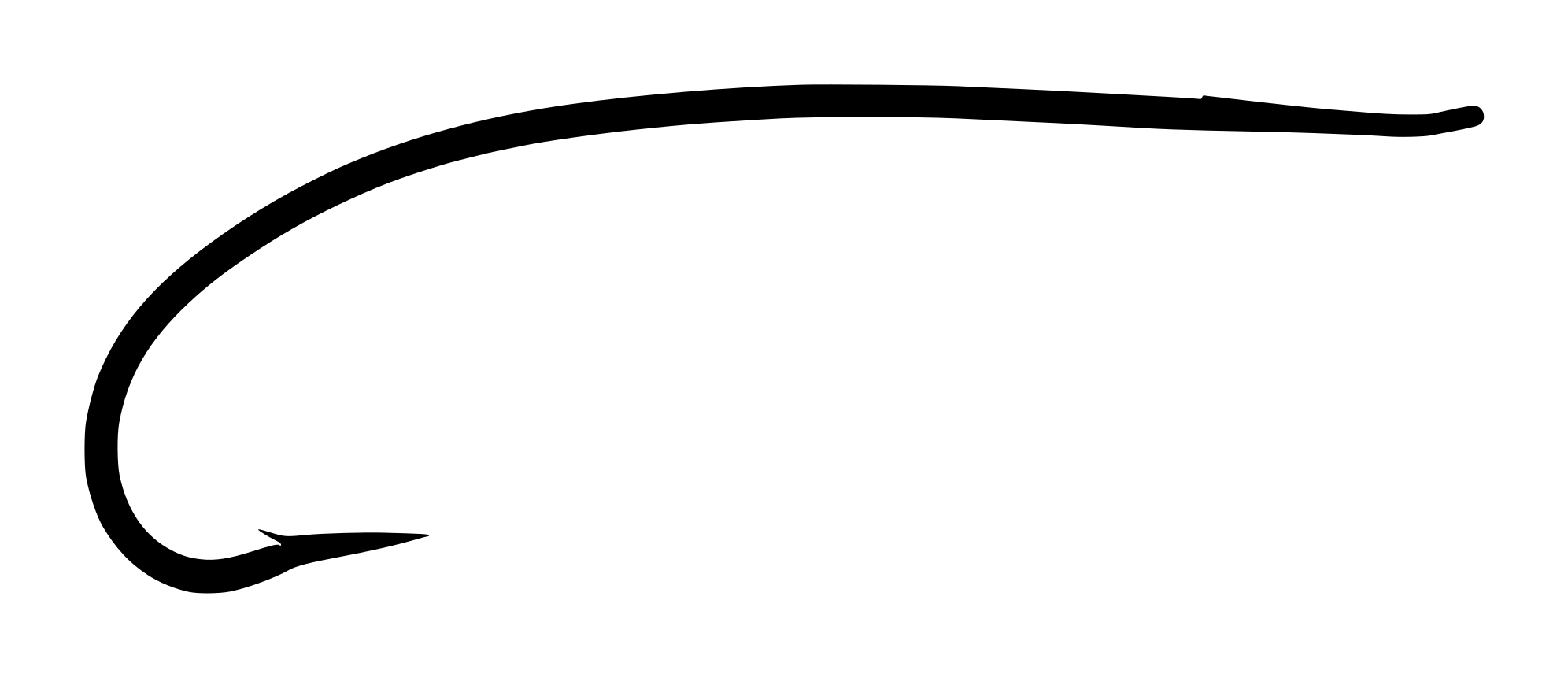
The defining feature is the Bartleet bend itself — a refined sproat-derivative with a long, smooth lower limb and upswept return to the point, optimized for gut-loop presentation of feathered dressings. The looped up-eye allows clean leader attachment while clearing the fly’s bulk. The superior point provides penetration through fur and feather without excessive sharpness that would weaken the hook. The japanned finish is both functional (reduced glint, corrosion resistance) and aesthetic (traditional warm-black tone expected by classic salmon tyers).
This example exhibits all characteristics of Bramley-era (1970–1996) Partridge manufacturing: the card packet format with printed Connoisseurs branding, the clear attribution to Redditch and Worcestershire, the HIGH CARBON SHEFFIELD STEEL specification, and the authentic japanned finish distinguishing pre-Mustad production from later variants. The packaging is in very good condition with all visible hooks sharp and bright, typical of hooks that entered a collection before significant corrosion or handling wear.
Collecting significance: Redditch-era Partridge hooks are valued by classic Atlantic salmon tyers and Redditch manufacturing historians for their documented geometry and authentic finish. This example bridges the gap between mass-produced commercial hooks and the bespoke craft tradition — Partridge inherited the Bartleet specifications from Bartleet & Sons but refined them through decades of production. Vintage English-made CS10 hooks are demonstrably different in shank length and bend curvature from modern Chinese-production versions, a distinction documented by collectors on Spey Pages and other forums. Complete original packaging adds 20–50% premium to loose-hook values, making this carded set a strong reference example for collectors of 20th-century British hook manufacturing.
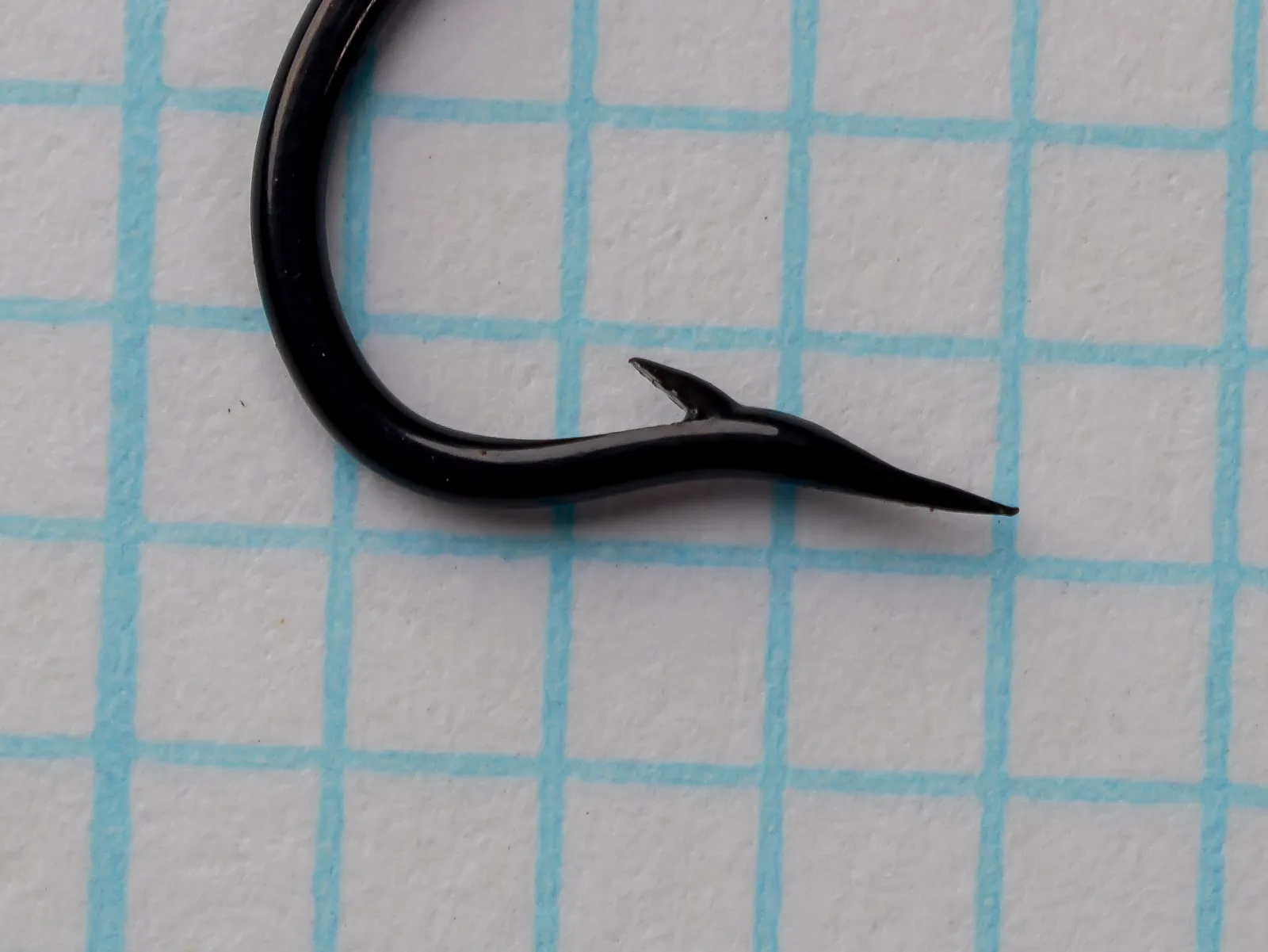
Right-side profile of the Partridge CS10 Bartleet, Size 6, showing the superior point geometry with near-straight inner taper and sharp barb, japanned black finish, measured on 1/10-inch grid.
Photographic record
4 cataloged imagesSelect any record to load it above.
4 images shown
Partridge CS10 Bartleet Size 6 Right Profile Superior PointRight-side profile of the Partridge CS10 Bartleet, Size 6, showing the superior point geometry with near-straight inner taper and sharp barb, japanned black finish, measured on 1/10-inch grid.Open originalPartridge CS10 Bartleet Size 6 Dorsal View Full LengthDorsal view of the Partridge CS10 Bartleet, Size 6, displaying the characteristic Bartleet bend curve, looped up-eye, and full shank length on measurement grid.Open originalPartridge CS10 Bartleet Size 6 Pair Side-by-SideTwo size-6 Partridge CS10 Bartleet hooks displayed side-by-side to demonstrate consistency of hand-forged bend geometry and looped up-eye construction across the production run.Open originalPartridge CS10 Connoisseurs Series Packaging Size 6Original Partridge of Redditch CS10 Bartleet packaging in Connoisseurs Series format, size 6, quantity 25 hooks, showing printed specification label and 'Made in England' attribution.Open original
Technical profile
Partridge of Redditch CS10 Bartleet, Size 6, Looped Up-Eye, Standard Shank, Forged High-Carbon Sheffield Steel, Superior Point, Japanned Black Finish, c. 1970s–1980s Redditch Production
Eye
Looped Eye, Turned UpLooped up-eye with clean formation, no deformation or splay. Loop is proportional to shank diameter P. Eye loop shows characteristic Partridge construction — smooth taper from shank to loop attachment P.
Wire
Extra-Fine, Forged
Shank
2X Long — Curved / Humped
Bend
Dublin, Standard gapClassic Bartleet bend with moderate curve, characteristic long lower limb and subtle upswept return to point. Not as pronounced as some modern interpretations; this specimen exhibits the refined Redditch-era Bartleet geometry documented in period catalogs P. Bend is symmetrical without offset, forged wire set visible as subtle darker line down the inside curve P.
Point
Standard / SpearBarb is short and close-cut, positioned at approximately 45 degrees to the shank axis, typical of forged Bartleet geometry P. Barb length approximately 1.5-2.0 mm, consistent with standard salmon-fly barbing E.
Finish
Black Japanned — Confirmed (stated on packaging)Black japanned finish consistent with Redditch-era Partridge salmon hooks — near-black lacquer with faint warm undertones visible under direct light P. Not pure modern Black Nickel; this is the traditional bronzed-black japanning that characterizes pre-1996 English production P. Finish is uniform across all examined specimens with no splotching or thin spots visible P.
All visible hooks in packet are bright black japanned finish with no corrosion or dulling. Hooks appear sharp and undamaged. Card packet shows light yellowing and surface wear consistent with age; no tears or water damage. Plastic window is clear. Three hooks removed for photography; remaining hooks securely in packet.
The CS10 Bartleet is a forged hook manufactured from high-carbon Sheffield steel, a specification visible on the packaging of this specimen. The forging process creates a darker wire (visible as a core line running down the inside curve of the bend in good lighting) and provides the hook with superior strength and penetration compared to drawn wire. The superior point geometry — characterized by a near-straight inner taper and nearly flat inside face — delivers clean penetration through a fly’s dressing into tissue, critical for secure hooksets on large, hard-mouthed Atlantic salmon. The looped up-eye construction is oriented slightly upward from the shank centerline, a classic specification that allows the loop to clear the fly body dubbing and hackle while providing a clean tie-in point for the leader. The moderate wire gauge (standard, not heavy or extra-heavy) balances strength with delicacy — sufficient to withstand the head-shaking of 15+ pound salmon without excessive weight that would impede the fly’s float or swing. The Bartleet bend’s characteristic long lower limb and upswept return provide a mechanical advantage during the fight, allowing more of the bend to load during head-shakes and reducing the likelihood of straightening. The japanned finish serves both functional and aesthetic purposes: it reduces water surface glint (important for spooky, clear-water Atlantic salmon), provides corrosion resistance on rivers with high mineral content, and offers the warm, traditional appearance expected by classic salmon tyers. The hook’s depth (bend depth of approximately 0.35-0.40 inches) and gap (approximately 0.4 inches) provide adequate clearance for dubbing and soft materials while maintaining point penetration angles suitable for hair-bodied and feather-winged presentations.
The CS10 Bartleet series represents the direct continuation of a bend family established before 1900 by Wm. Bartleet & Sons, a legendary Redditch hook forge. When Partridge took over Bartleet’s Crescent Works in 1933, they inherited both the physical equipment and the intellectual property of the Bartleet bend. The CS10 code itself emerged during Partridge’s mid-20th-century catalog systematization, grouping specialist salmon patterns under the ‘Code S’ / ‘Classic Salmon’ designation (CS prefix). The Bartleet series expanded into multiple variants: CS10/1 Single (standard up-eye), CS10/2 Supreme (longer shank), CS10/3 Blind Eye (traditional gut-loop format), and CS10/4 Double (double-hook configuration). The series remained in continuous production through the Redditch era (pre-1996), survived the Mustad transition with some interruption (listed as ‘on hold’ during the Singapore-to-Wuxi transfer c. 2008), and was formally reintroduced as part of the Heritage line by Fishing Matters starting around 2010. Collector documentation shows that English-made CS10/1 and CS10/3 hooks from the Redditch era differ measurably from modern Chinese production in shank length and bend curvature — the Redditch versions exhibit slightly shorter shanks and more pronounced upswept geometry. The CS10/1 and CS10/3 remain in current production as of 2026, marketed as Heritage Bartleet hooks aimed at classic salmon tyers. This specimen, dated c. 1970s–1980s Redditch production, falls within the peak period of the series before industrial consolidation.
Era and Packaging Dating
Packaging analysis: Card packet format with printed logo and model code consistent with Bramley-era Redditch production (post-1970). 'Made by Partridge of Redditch, Worcestershire England' printed at bottom of card confirms English manufacture — production left Redditch c. 2005-2007. No postcode visible on packaging; Redditch B98 postcodes became standard c. 1974. 'Connoisseurs Series' branding and expanded label copy (HIGH CARBON SHEFFIELD STEEL) typical of 1970s-1990s Redditch-era marketing. Absence of barcode on this specimen is consistent with pre-1990s packaging, though barcodes were introduced gradually. The card packet construction (plain white card, simple printed circle label, plastic window) matches documented Bramley-era packaging style. No designer collaboration credit visible (distinguishing from Oliver Edwards era hooks which appeared c. 1980s onward). Rating estimate: c. 1970s-1980s peak Redditch production.
The Bartleet Legacy: From Redditch Forge to Modern Spey Rivers
The Bartleet bend carries a lineage stretching back to William Bartleet's hook forge in Redditch, which predates Partridge as a company by several decades. When Albert Edwin Partridge took over the Crescent Works from Bartleet & Sons in the 1930s, he inherited not only the physical hooks but the bend specifications and the emotional attachment British salmon fishermen held for the name 'Bartleet.' The bend became synonymous with the golden age of Atlantic salmon fly tying on the Tay, Spey, and Dee rivers. Even today, more than 90 years after Partridge took control, tyers specifically seek Bartleet hooks — sometimes traveling to tackle shops in the UK or paying premiums on specialty sites — because no other bend quite captures the combination of elegance, strength, and traditional character that the Bartleet name represents. The CS10 was, and remains, the everyman's Bartleet hook — affordable enough for working tyers but crafted with sufficient care to satisfy the most exacting classic salmon dressers.
Design lineage and influence
The Bartleet bend traces its ancestry to the 19th-century Redditch craft tradition, specifically to William Bartleet’s house (Bartleet & Sons, Crescent Works). The bend represents a refinement of the sproat-derived family, characterized by a smoothly curved lower limb, upswept return to the point, and elegant proportions optimized for gut-loop presentation of full-dressed salmon flies. When Partridge inherited the Crescent Works and Bartleet’s tools in the 1930s, they adopted the bend nomenclature and refined it further through the mid-20th century. The Bartleet competes in the classic salmon hook space with contemporary designs: the Mustad 80500BL and 80501BL (similar sproat-derivative low-water geometry, often substituted for Partridge N and CS10/1 when original Partridge became unavailable), the Daiichi 2051 Alec Jackson Spey (U.S. West Coast alternative, geometrically distinct but functionally similar), and Ahrex NS172 / NS115 (modern Scandinavian interpretations). Partridge’s own competing models include the CS6 Adlington & Hutchinson (blind-eye variant), HE2 Bartleet XL Blind Eye (larger shank), and the M/N series (single salmon irons without looped eye). The Bartleet’s influence extended downstream to modern competition and streamer hooks — the influence of the bent-shank geometry appears in some contemporary spey-cast nymphs and in the wider family of Partridge dry and wet fly bends (Captain Hamilton L-series inherit sproat-derivative elegance from the Bartleet lineage). The CS10 remains the reference hook for tyers seeking historical accuracy in full-dressed Atlantic salmon flies and continues to set the standard against which competing designs are measured.
Best matchRelated by Attribute
Computed automatically from catalog data — updated as new hooks are added.
Matches: Bend, Wire, Gap, Point, Finish +4 moreDiffers: Shank: 2X Long vs 3X Long; Eye: Looped Eye vs Blind — Flatted; Eye Orient.: Turned Up vs N/A — Blind +4 more
Matches: Bend, Gap, Eye, Eye Orient., Finish +4 moreDiffers: Shank: 2X Long vs 1X Long; Wire: Extra-Fine vs Standard; Point: Standard / Spear vs Superior +4 more
Matches: Bend, Shank, Wire, Point, Finish +2 moreDiffers: Gap: Standard vs Wide; Eye: Looped Eye vs Blind — Tapered Shank; Eye Orient.: Turned Up vs N/A — Blind +5 more
The CS10 Bartleet is the foundational hook for classic Atlantic salmon fly tying, particularly for full-dressed patterns and Spey-cast presentations on Scottish and English rivers. The combination of the refined Bartleet bend, moderate shank length, and looped up-eye creates an elegant platform for dubbing, fur, and feather dressings. Size 6 is typical for general Atlantic salmon work on medium rivers with 8-12 pound fish and standard water flows. The hook is equally at home on Irish systems, Norwegian fjords, and North American Maritimes rivers.
Secondary Applications
Sea trout (coastal and estuary), large brook trout on 2-weight lines, small steelhead on spey rods, display mounting of vintage flies
Green entries are full records; amber entries are spec records.
Gray entries are chart-only and not physically verified against this specimen.
Collector notes
Rated 4.5/10 — Partridge Bartleet CS10 hooks are uncommon in vintage packaging but not actively hunted by most collectors. Value is driven by packaging authenticity and Redditch provenance, not hook scarcity. Size 6 is standard and widely available. The Redditch-era japanned finish and documented production (c. 1970s–1990s) provide modest collector interest among classic Atlantic salmon tyers and Redditch specialists.
Reference value
$10 – $25 USD estimate
Packaging condition
Very Good — light wear, fully legibleRecorded specimen
Packaging format
GW-P-CS10-001Catalog code
The CS10 Bartleet is a significant hook in the classic salmon tradition, and Redditch-era examples command modest premiums over modern Chinese production due to shank geometry differences and finish authenticity. However, the hook is not rare — Partridge produced these continuously from the 1930s through the Mustad consolidation, and many cards survive in collections. The primary collectability drivers are: (1) Complete original Redditch packaging in excellent condition, (2) Documented pre-1996 manufacture, (3) The japanned black finish (warmer tone than modern Black Nickel), and (4) The specific size and variant (CS10/1 Single is the most desirable; CS10/3 Blind Eye is somewhat scarcer due to limited modern reissue availability).
What limits the rating: Partridge hooks in general rarely exceed 5.5/10 on the garrenwood scale due to continuous production and large surviving stocks. The CS10 is not a specialty or limited edition — it was a commercial production hook made in thousands of cards. Size 6 is a common size; smaller (2, 3, 4) and larger (8, 10) sizes are slightly less common but still readily available. Modern Chinese-production CS10 hooks are affordable and abundant, depressing the value of vintage English examples unless they are demonstrably rare sizes or in pristine packaging.
Desirability factors: Complete cards in mint or near-mint condition with all hooks present command $15–35 depending on size and variant. Opened cards missing a few hooks drop to $8–18. Loose hooks from vintage cards typically fetch $1–3 each. The packaging condition is the primary value driver — a card in excellent condition with all 25 hooks intact will command a premium; a damaged or incomplete card has primarily specimen value. Redditch provenance is important to collectors but not sufficient to elevate the rating significantly given the production volumes. Blind-eye variants (CS10/3) are slightly more scarce in vintage packaging than the standard CS10/1, which can push the upper value range for sealed examples.
Packaging
Cream-colored card packet, approximately 5.5" × 3.5", with circular printed label centered on front face. Label features 'Connoisseurs Series' italic text at top with Partridge logo (salmon silhouette), 'PARTRIDGE of REDDITCH' bold sans-serif heading, '"BARTLEET" SALMON FLY HOOKS' in capitals, and specification grid: Size 6 (blue box), Quantity 25, Model CS10. Bottom text: 'MADE BY PARTRIDGE OF REDDITCH, WORCESTERSHIRE ENGLAND' in small caps around the circle perimeter. Below the label, larger text reads 'HIGH CARBON SHEFFIELD STEEL.' Card has a clear plastic window at bottom revealing hooks inside. Top of card has loop hang-hole with small embossed feature. Packaging shows light toning and storage wear consistent with 20+ years in collection; no major damage. Original hooks visible in plastic window — count visually consistent with labeled '25' quantity (approximately 22-24 hooks counted).
Market Value Notes
Low ($10): Good condition — opened card or loose hooks, most hooks present, minor packaging wear, japanned finish intact. High ($25): Excellent/Mint condition — sealed or near-sealed card, all or nearly all 25 hooks present, minimal packaging wear, perfect hook condition. Premium factors: Redditch-made provenance, early 1970s–1980s dating, complete packaging with original label legible, japanned black finish, all hooks sharp and undamaged. Platforms: eBay UK and US vintage tackle sections, specialist fly-fishing dealers (Sprite Fishing, 54 Dean Street), occasional tackle fairs. Confidence: E Estimated — based on general Partridge-era vintage hook market; limited direct sold-listing data for this specific model and packaging variant. Note: Complete carded sets of Partridge heritage hooks (CS10/1, CS10/3, CS5 streamers) occasionally appear at specialty auctions in the $20–50 range, but the typical retail market shows the range above.
Where to Find
eBay UK (frequent), eBay US (less frequent), Sprite Fishing (online retailer, UK), 54 Dean Street (online, Italy, specialty dealer), UK tackle fairs and antique fly-fishing markets, specialist Facebook groups (Classic Fly Fishing, Partridge Collectors), occasional online vintage tackle auctions.
Collector's Identification Tips
Look for the ‘Connoisseurs Series’ label and the CS10 model code printed on the card. Redditch-era examples state ‘Made by Partridge of Redditch, Worcestershire England’ on the packaging. Check for the specific finish: japanned black (warm-toned, near-black) rather than modern Black Nickel (cooler gunmetal tone). Examine the looped up-eye — it should have a clean, smooth taper. The hook should be relatively short-shanked (standard, not long) with a marked Bartleet curve and upswept return. Do not confuse the CS10/1 Single with the CS10/2 Supreme (longer shank) or CS10/3 Blind Eye (spade eye without loop). The packaging will specify the variant. Blind-eye examples are rarer in vintage carded form.
Preservation
Storage and Preservation
Store the carded packet in a cool, dry environment away from direct sunlight and high humidity. The japanned black finish is susceptible to toning and patina development with prolonged humidity exposure; this is generally considered desirable by collectors as it indicates age and authenticity, though some prefer to maintain the original bright black. If stored in humid conditions (above 60% relative humidity), consider adding silica gel packs in a sealed container around the packet. Avoid contact with other metals or acidic materials (wood, paper) to prevent galvanic corrosion or tannin staining. Keep the original card packet and plastic window intact — the packaging is essential to value and collectibility. Do not remove hooks unnecessarily; each hook loss reduces the specimen’s value by approximately 10% of the estimated lot value. If individual hooks are removed for tying, store loose hooks in a separate dry container. Original tissue paper or envelope materials, if present, should be preserved as-is. Inspect periodically for any signs of rust or corrosion on hook points; japanned hooks rarely rust unless exposed to saltwater or extreme moisture. The bright japanned finish can be gently cleaned with a soft dry cloth if dust accumulation occurs, but do not use water or solvents without professional conservation advice.
Primary Source
Packaging Text and Historical Specifications
Source: Partridge CS10 Connoisseurs Series Packaging, Label Text
The label copy states: ‘Connoisseurs Series,’ ‘PARTRIDGE of REDDITCH,’ ‘”BARTLEET” SALMON FLY HOOKS,’ ‘Size 6,’ ‘Quantity 25,’ ‘Model CS10,’ ‘MADE BY PARTRIDGE OF REDDITCH, WORCESTERSHIRE ENGLAND,’ and ‘HIGH CARBON SHEFFIELD STEEL.’
Analysis: The ‘Connoisseurs Series’ designation (visible in italics) appears to be a Bramley-era (1970–1996) branding choice to position this line as a premium option, distinguishing it from standard production and from competing brands. The explicit mention of ‘HIGH CARBON SHEFFIELD STEEL’ is significant — Sheffield steel was (and remains) the aspirational standard in British hook manufacturing, a callback to the Redditch craft tradition where steel quality was a mark of pride. The ‘MADE BY PARTRIDGE’ attribution is personal and direct, typical of mid-20th-century British manufacturing pride before corporate consolidation. The full address ‘WORCESTERSHIRE ENGLAND’ confirms English manufacture and dates the production to before the Mustad acquisition (1996), when such claims became complicated by off-shore production.
The model code ‘CS10’ represents the systematic catalog numbering that Partridge developed post-1933, grouping specialist salmon hooks under the ‘Code S’ family. The ‘Quantity 25’ specification is consistent with standard trade practice for carded salmon hooks, a format that balanced affordability with professional stock management.
Comparative note: Modern Partridge packaging (post-2009 Fishing Matters era) features different branding — ‘Heritage’ sub-labels on reissued classic patterns, current UK office address (Wincanton, Somerset), and ‘Made in China’ origin marks. This vintage packet’s direct English attribution and Connoisseurs branding confirm c. 1970s–1990s production.
Additional
Redditch Manufacturing Heritage and the Bartleet Lineage
Redditch, Worcestershire, England, was the global center of hook manufacturing from the mid-18th century through the late 20th century. The town’s advantage lay in ready access to high-quality steel, skilled metalworkers trained in the needle and blade trades, and a deep culture of competitive craft quality. Within Redditch, a hierarchy of makers emerged: craft specialists (smaller forges producing premium patterns), industrial manufacturers (higher-volume operations), and trade contractors (makers who produced hooks to the specifications of branded houses like Hardy, Farlows, and Ogden).
The Bartleet name originates with William Bartleet & Sons, a respected mid-to-late 19th-century Redditch forge specializing in salmon and trout hooks. The Bartleet bend represents an elegant refinement of the sproat family, optimized for the gut-loop presentation of full-dressed salmon flies that dominated British and Atlantic salmon fishing through the early-to-mid 20th century. The bend achieved a reputation for balance — enough curve to load smoothly during the fight, enough straightness in the point to penetrate reliably, and proportions that worked equally well on hair-bodied and feathered dressings.
When Albert Edwin Partridge took over the Crescent Works (the former Bartleet facility) in the 1930s, he inherited the physical equipment, the tools, the wire specifications, and the Bartleet bend itself. More importantly, he inherited the reputation. Fly fishermen who had fished Bartleet hooks in the 1920s expected the same feel and geometry from Partridge-branded Bartleet hooks in the 1950s. Partridge honored this expectation through meticulous hand-forging and finishing, maintaining the bend geometry even as industrial pressures mounted to speed production.
The japanned finish on this specimen is characteristic of Redditch-era salmon hooks. The process involved heating the forged steel to a dark blue-black and then applying a lacquer or japanning solution, creating a near-black appearance with warm undertones. This finish serves multiple functional purposes: it reduces glint on the water (important for spooky Atlantic salmon in low, clear conditions), resists corrosion on mineral-rich rivers, and allows fast identification by color coding (salmon irons were typically black or japanned, while some trout hooks were bronze or silver). The japanned finish also carries aesthetic and emotional weight — it signals to the angler that they hold a traditional hook, faithful to the old ways.
The CS10 code itself represents a moment in Partridge’s history when the company systematized its catalog. The ‘CS’ prefix originally stood for ‘Code S’ or ‘Classic Salmon,’ grouping the most traditional salmon patterns under a numbered system. (Modern Partridge catalogs use CS for a far broader range — ‘specialist code’ — but the salmon applications remain central.) The ’10’ within the CS family appears to be an ordinal designation within the Bartleet variants; the ’10/1′ (single), ’10/2′ (supreme longer shank), ’10/3′ (blind eye), and ’10/4′ (double) subdivisions came later as Partridge expanded the family.
This specimen, dated c. 1970s–1980s, falls within the Bramley era (1970–1996), when Partridge was owned and operated by Alan Bramley, a modernizer who invested in new finishes, expanded designer collaborations, and aggressively pursued international markets. Despite these innovations, the core CS10 Bartleet remained unchanged — a testament to the strength of the design and the loyalty of the customer base. The Connoisseurs Series branding reflects Bramley’s positioning of this line as a premium option, distinguishing it from cheaper Partridge models or from competing brands.
Today, more than a century after William Bartleet first forged the bend, and nearly a century after Partridge inherited it, the CS10 Bartleet remains in production. Modern versions are made in China on Mustad-operated equipment, a reality that troubles some collectors and fly tyers who see the move away from Redditch as a loss of soul. However, the bend specifications have been preserved, and the modern hooks deliver the same functional characteristics that made the Bartleet legendary. Collectors who seek Redditch-era examples do so for the provenance, the japanned finish, and the measurable geometric differences documented by collectors comparing English and Chinese versions. This specimen represents that golden age — English-made, hand-forged, finished in traditional japanning, and carded in original packaging that explicitly claims its Redditch heritage.
Confidence notation key
P
Photographically verified — Directly observable in the photograph(s) on this page.
V
Verified by documentation — Confirmed by manufacturer catalog, spec sheet, or published reference.
I
Inferred — A logical deduction from observable or documented evidence, not directly stated.
E
Estimated — An approximation based on visual comparison, proportional analysis, or limited data.
S
Speculative — A reasoned hypothesis that cannot be confirmed from available evidence.
Unnotated claims are the compiler’s synthesis; see Sources. All photographs on garrenwood.com are taken on a measurement grid where each square equals 1/10 inch (0.1″ / 2.54 mm).