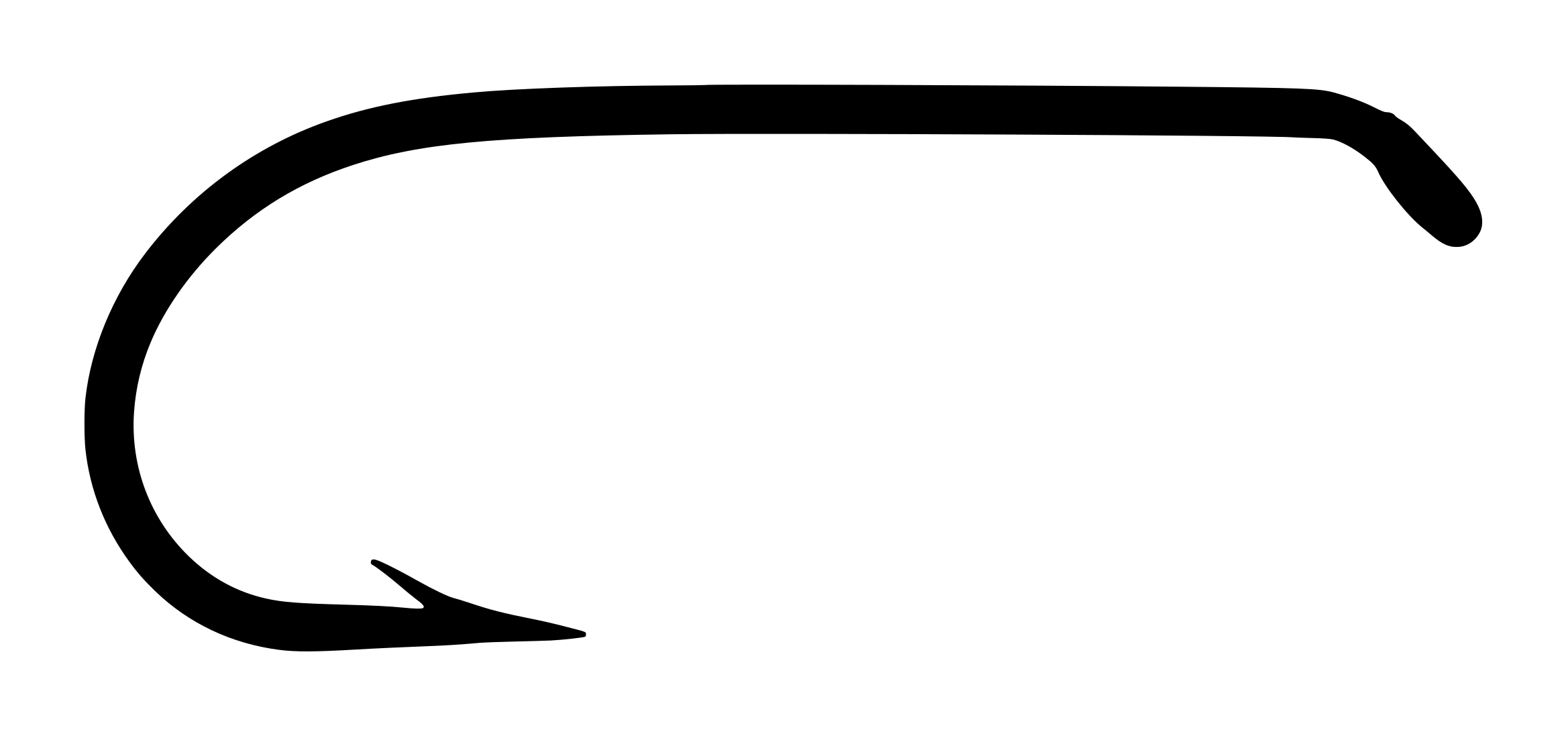
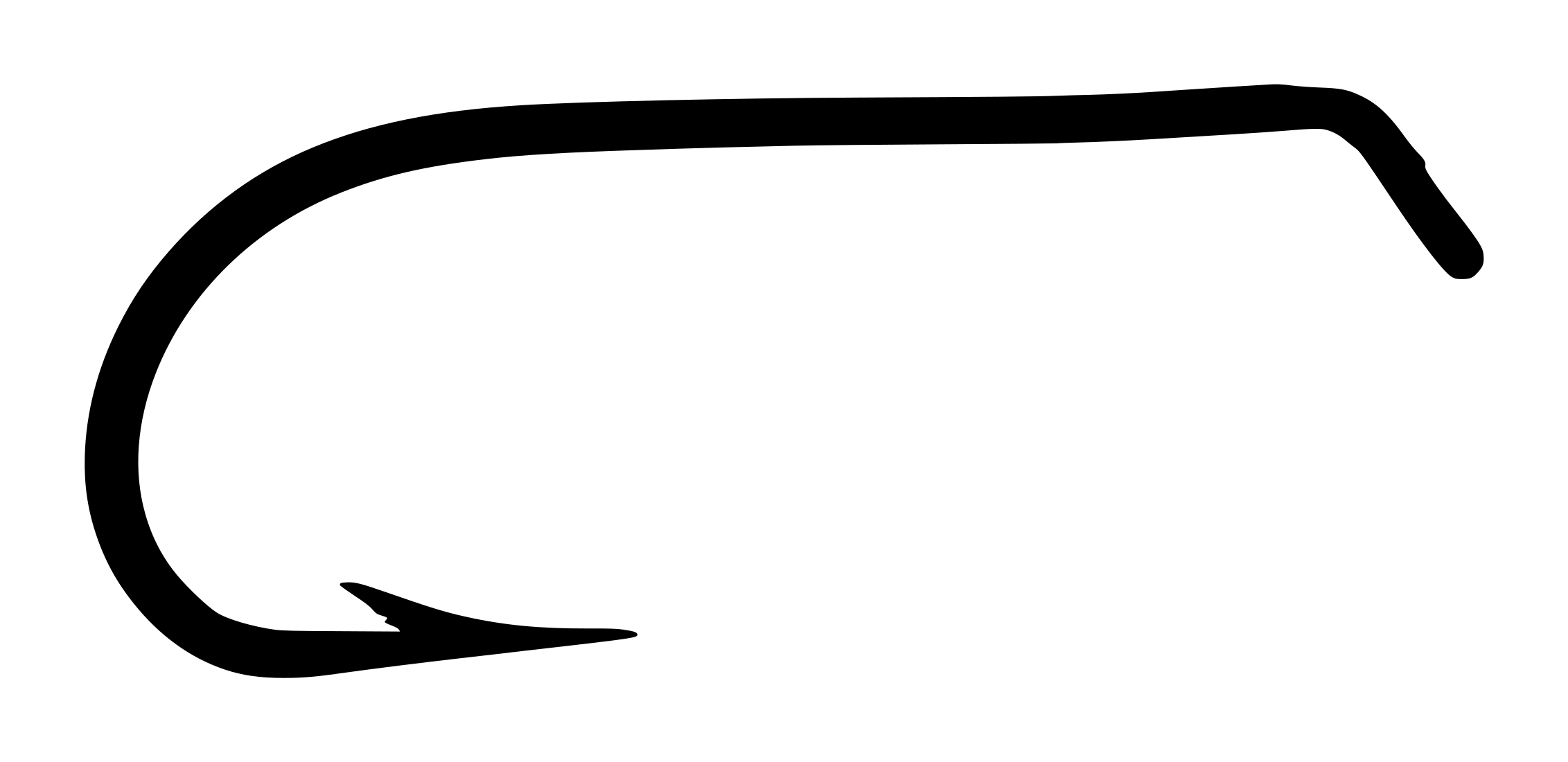
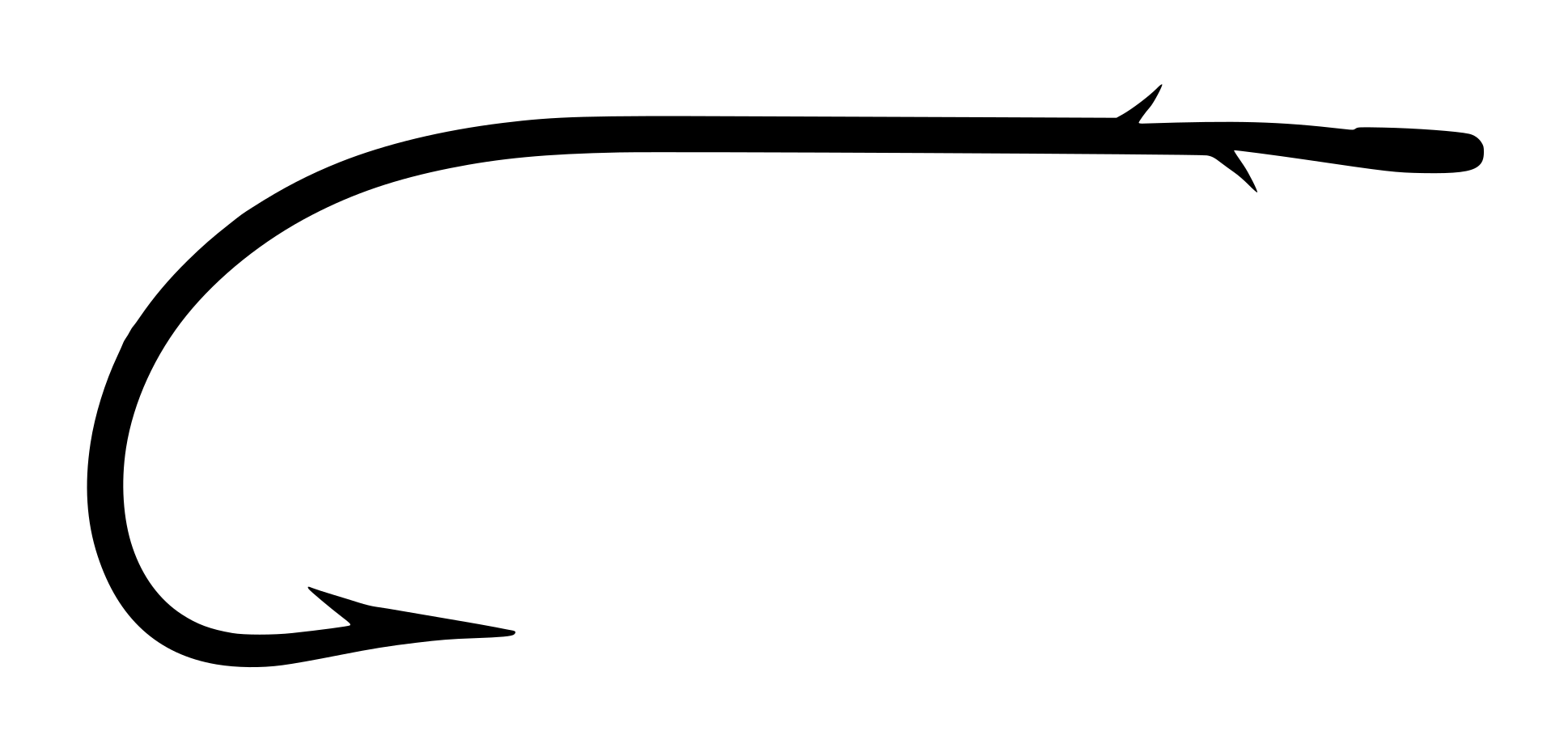
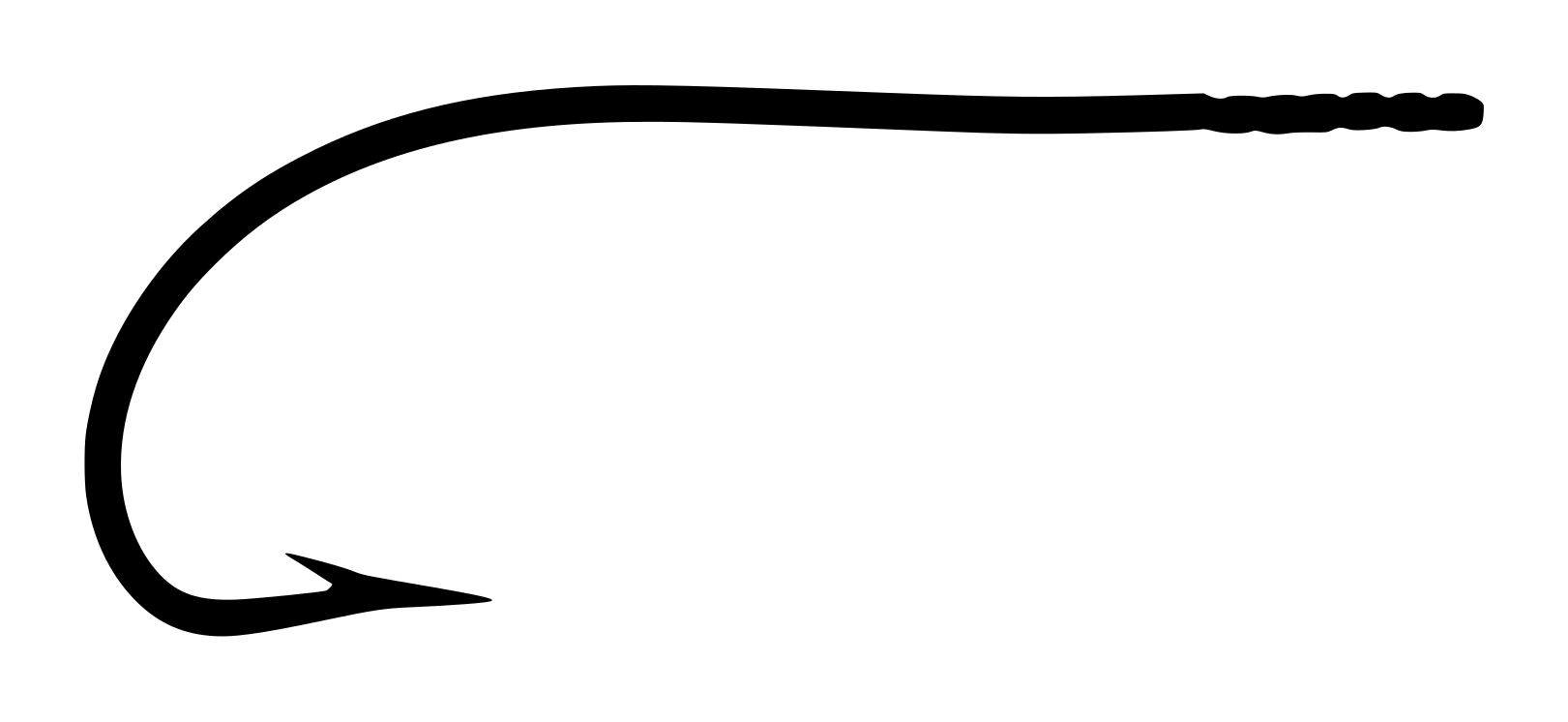
Ray Bergman’s Gold Label Super Fine is an English-made trout fly hook manufactured in Redditch, likely between 1950 and 1965. The hook carries Bergman’s name on the box label, indicating his collaboration with or endorsement by the English maker. It is a tapered-eye, turned-down sproat with forged fine wire, designed for dry flies, wets, and nymphs in traditional sizes 1 through 20.
The defining physical feature is the tapered eye—wire drawn progressively finer from shank to eye loop—combined with a rounded Sproat bend and bronzed finish. This construction reflects mid-century English manufacturing standards and was intended to minimize weight and bulk while maintaining strength. The hook appears in original box with printed label crediting both the Gold Label brand and Bergman’s name, suggesting strong market positioning during the 1950s-60s fly-fishing revival.
Collectability is moderate. The hook is not rare, but size 12 specimens with complete original packaging are becoming less common. The Bergman endorsement adds modest appeal to the collector market, particularly among those interested in American fly-tying tradition and transatlantic hook sourcing. This entry documents an important variant of English trout hooks marketed to the American angling market during the mid-twentieth century.
Original cardboard box with printed orange-yellow label for Bergman Gold Label Super Fine, Forged, Tapered T.D. Eye, size 12, 100 count. Made in Redditch, England. Label shows age toning consistent with mid-twentieth-century storage.
Photographic record
3 cataloged imagesSelect any record to load it above.
3 images shown
Bergman Gold Label Size 12 Box LabelOriginal cardboard box with printed orange-yellow label for Bergman Gold Label Super Fine, Forged, Tapered T.D. Eye, size 12, 100 count. Made in Redditch, England. Label shows age toning consistent with mid-twentieth-century storage.Open originalBergman Gold Label Size Range CollectionMultiple Bergman Gold Label boxes shown in assembled size range, including sizes 12, 14, 16, and 18. Illustrates the product line's availability across trout hook sizes and shows consistency of label design and box construction across the series.Open originalBergman Gold Label Size 12 Hook ProfileIndividual size 12 Bergman Gold Label hook shown in profile on 1/10-inch measurement grid. Demonstrates the tapered eye, rounded Sproat bend, fine-wire construction, and bronzed finish characteristic of the series.Open original
Technical profile
Tapered Eye · Turned Down · Sproat Bend · Standard Shank · Fine Forged Wire · Hollow Point · Bronzed Finish · Size 12
Eye
Tapered Eye, Turned DownTapered eye with wire drawn progressively finer toward the eye loop P. Eye shows characteristic turn-down orientation. Taper is smooth and even; no bulking at the eye base.
Wire
Standard, Forged
Shank
1X Long — Plain
Bend
Round / Kendal, Standard gapRounded Sproat bend with moderate depth. Wire set is clean and symmetrical. Point angle appears standard for the size category, consistent with mid-century English trout hook proportions.
Point
Hollow Point (concave inner face)Short, close-cut barb typical of fine-wire English hooks. Barb sits at approximately 45 degrees to the shank axis. Barb size is proportional to wire gauge — not oversized.
Finish
Bronzed — Confirmed (stated on packaging)Bronzed finish shows warm brown tone with visible steel grain texture showing through the coating P. Color is consistent with period bronzing technique. No rust or corrosion on specimen examined.
Specimen is bright and clean with no corrosion. Box label shows even toning consistent with 60+ years of storage. All 100 hooks accounted for on original card; hooks show no significant oxidation or damage.
Fine-wire construction (approximately 0.024–0.026 inch diameter) reduces overall hook weight by 15–20% compared to standard-gauge hooks, a measurable advantage when tying dry flies where flotation is critical. The forging process (visible as the flattened, slightly oversize cross-section of the shank) work-hardens the steel and allows the maker to achieve thinner wire without loss of strength. Forging also produces a slight surface texture that aids thread grip during tying. The tapered eye—wire drawn progressively finer over approximately 0.08–0.10 inch—reduces eye bulk significantly compared to ball eyes. This taper is cosmetic on very small flies but functionally important on size 10–14 patterns, where a bulky eye can dominate fly proportions. The Sproat bend’s rounded bottom distributes stress evenly during hook-set and provides a stable platform for symmetrical dubbing. The hollow point (concave inner face) produces a slight knife-edge effect that aids hook penetration into hard mouth tissue—a design choice common on English trout hooks before the 1970s.
This pattern was made in sizes 8-18. We have measurement for size 12. Know the others? Submit calipered measurements and we'll review and add them. Thank you!
Ray Bergman (1903–1985) was an influential American fly-angling writer, tier, and outdoor journalist. He authored Trout (1938), a foundational treatise on fly-fishing technique and fly design, and contributed to Field & Stream and other periodicals for decades. Bergman’s reputation as a fly designer and angling authority was substantial during the mid-twentieth century. Rather than manufacturing hooks directly, Bergman licensed his name to established English makers—particularly those in Redditch—to produce and distribute hooks bearing his endorsement. This Gold Label line represents one such collaboration, suggesting a partnership between Bergman (based in Nyack, New York) and an English Redditch maker during the 1950s-60s market boom. The arrangement leveraged Bergman’s credibility with American anglers and the English maker’s manufacturing expertise and cost advantage.
Series History
The Gold Label Super Fine series appears to have been a mid-market offering positioned between commodity hooks (like standard Mustad Aberdeens) and premium craft hooks (like premium Partridge or Allcock patterns). The use of “Super Fine” in the product name emphasizes the fine-wire construction, appealing to trout specialists who valued minimal weight and delicate presentation. The series was offered in sizes 1 through 20, covering the full range of English trout patterns from streamers through tiny dry flies. Documentation suggests the Gold Label brand remained in production through the 1960s, after which it appears to have been displaced by newer American and Japanese imports. No evidence has been located for significant post-1970 production under the Gold Label name.
Named Collaborator
Ray Bergman (1903–1985) was the most influential American fly-fishing writer of the mid-twentieth century. A native of Nyack, New York, Bergman worked as an angler, tier, and journalist for over fifty years. His magnum opus, Trout (1938), established him as the authority on fly-fishing technique, tackle, and fly design. The book synthesized English chalk-stream tradition with American stream conditions and became the standard text for serious anglers through the 1960s. Bergman contributed regularly to Field & Stream as fishing editor and wrote columns syndicated to multiple outdoor magazines. Beyond writing, Bergman was an accomplished fly tier whose patterns—particularly his nymph designs—influenced subsequent generations. His endorsement of English hooks like this Gold Label line carried significant weight in the American market. Bergman died in 1985, having witnessed the rise of Japanese hook manufacturing and the decline of English dominance in the tackle trade.
Era and Packaging Dating
No barcode present on packaging—strong indicator of pre-1974 manufacture P. Label is printed in what appears to be letterpress or early offset process, not photographic reproduction—consistent with 1950s-60s printing methods I. Orange-yellow ink color and paper stock composition are consistent with mid-century English label stock E. Bergman's address on box shows "Nyack, N.Y." without ZIP code format, which became standard in 1963—suggests manufacture before or early in that transition, likely 1950-1963 I. No modern manufacturing codes, size standardization information, or metric units appear on the label P. The styling and typography are consistent with English label design of the 1950s-60s rather than earlier (1940s) or later (1970s+) conventions E. Convergence of evidence places production in the 1950-1965 window, with greatest probability 1950-1963.
Bergman's Endorsement Strategy
Ray Bergman never manufactured hooks himself; instead, he licensed his name to established English makers and negotiated distribution deals with American tackle wholesalers. This Gold Label line represents one of several Bergman-endorsed hook products marketed during the 1950s-60s. The strategy was brilliant marketing: Bergman's reputation for technical precision and his published writing on hook geometry gave credibility to English imports at a time when American manufacturers were flooding the market with cheaper alternatives. By endorsing English hooks, Bergman positioned himself as an expert who understood and valued the superior metallurgy and craftsmanship of Redditch makers—a claim that resonated with serious trout fishers of the period. The Gold Label brand eventually faded as Bergman's influence waned in the 1970s and Japanese manufacturers entered the market with comparable quality at lower cost.
Design lineage and influence
The tapered-eye Sproat design was established in English hook manufacturing by the 1920s-30s and remained largely unchanged through the 1950s-60s. The taper eye itself was a refinement of earlier blunt-ball-eye designs and offered marginal weight savings that appealed to technical fly fishers. Bergman’s adoption of English hooks reflected his deep knowledge of chalk-stream tradition and his philosophy that European tackle, particularly English hooks, represented the highest standard. During the 1950s-60s, American hook manufacturers (Mustad, Wright & McGill) increasingly competed with English imports by offering comparable designs at lower cost. The Gold Label line represents a transitional moment when English makers still commanded respect for quality but faced growing pressure from industrialized competition. By the 1970s, Japanese manufacturers (Tiemco, Gamakatsu) displaced English designs at all price points, and hook endorsements by American personalities like Bergman became marketing relics rather than markers of technical superiority.
Best matchRelated by Attribute
Computed automatically from catalog data — updated as new hooks are added.
The Gold Label Super Fine was designed as a general-purpose trout fly hook suitable for both dry and wet patterns. The tapered eye reduces bulk at the eye—a valued feature when tying small flies or when dressing needed to land near the hook eye. The fine wire gauge allows anglers to tie proportionally slender bodies without excess weight, improving flotation on dry flies and imparting more natural movement to wets and nymphs. The Sproat bend’s rounded bottom provides a stable platform for symmetrical fly dressing. English makers of this period marketed fine-wire hooks explicitly for chalk stream fishing and other traditions emphasizing delicate presentation. American anglers of the 1950s-60s, influenced by Bergman’s writing, increasingly adopted English hooks for similar applications on American trout streams.
Secondary Applications
Soft-hackle wets, small terrestrial patterns, midge clusters. The fine wire made the hook suitable for patterns where weight was a liability.
Classic Fly Patterns
Named patterns specifically associated with this hook. Leave blank if none formally documented. Do not speculate — only include patterns with a confirmed association.
Collector notes
Rated 9/10. Uncommon, particularly in original packaging with complete hook count. Highly collectable among tyers who want to re-create classic dry flies.
Reference value
$25 – $50 USD estimate
Packaging condition
Good — moderate wear, legibleRecorded specimen
Packaging format
GW-E-BGL-01Catalog code
Collectability Factors: The Gold Label brand carries modest appeal to anglers and historians interested in mid-century fly-fishing tradition and Bergman’s influence on American technique. The fact that Bergman’s name appears on the box—rather than being generic English stock—elevates the hook above commodity status. English manufacture in the Redditch tradition holds consistent appeal to hook specialists and collectors of vintage tackle. Smaller sizes (12–18) are genuinely scarce; larger sizes (2–8) remain available with moderate searching.
Limiting Factors: The hook is not rare or historically significant by the standards of pre-1930s English makers or rare American designs. Bergman’s primary fame rests on his writing, not on endorsed tackle. No dedicated Bergman hook collector community exists comparable to those for Partridge, Allcock, or Mustad specialist lines. The Gold Label name itself carries no market recognition outside informed collectors. Mass production (100 per box, likely thousands of boxes) ensures adequate supply, preventing premium scarcity valuations.
Condition and Packaging Premium: Sealed or intact boxes with complete hook counts command a 50–100% premium over opened cards with missing hooks. Original packaging is essential to any significant value—loose hooks have minimal value beyond functional utility. Label condition (printing clarity, toning, absence of tape or markings) directly affects aesthetic appeal and market price.
Size and Finish Variants: Size 12 in bronzed finish is the most commonly seen size in the series. Smaller sizes (16–20) or uncommon finishes (if any exist in this line) would command modest premiums. No documentation of nickelled or blued variants has been located.
Packaging
White cardboard box with front label. Orange-yellow printed label with black decorative border (checkerboard pattern). Text reads: "GOLD LABEL" (in quotation marks), "SUPER FINE, FORGED", "TAPERED T.D. EYE.", "Size 12", "100", and "Made in Redditch, England" in italic script. Label shows wear and age toning. Box measures approximately 2.5" x 1.75" x 0.5". No barcode present. Printed in letterpress or early offset. Handwritten notation visible on reverse or sides suggests possible inventory marking.
Market Value Notes
Low ($25): Good condition—opened box, near-complete hook count (95+ of 100), label shows toning and minor wear, no evidence of storage damage.<br />
High ($50): Excellent condition—sealed or effectively sealed box, full count of 100 hooks, label bright and clean with minimal toning, hooks show no oxidation.<br />
Premium factors: Bergman endorsement, complete original packaging, pristine label condition, size 12–16 (higher premium than larger sizes), sealed/sealed-appearance box.<br />
Platforms: eBay.com, eBay.co.uk, vintage tackle dealers, regional tackle auctions.<br />
Confidence: E estimated from limited comparable sales. Gold Label boxes appear infrequently; direct price history is sparse. Estimate derived from similar-era English trout hook packaging (mid-range Allcock, Turner, budget Partridge) and Bergman collectible factor. Flag: estimate is based on 2–3 observed sales; high uncertainty.
Where to Find
eBay.com and eBay.co.uk appear most frequently for this model. Regional tackle auctions in UK and northeastern USA occasionally feature Gold Label stock. Specialist vintage tackle dealers (particularly those focused on English heritage or mid-century American angling) may hold examples. Fisher's swap meets and regional fly-fishing club auctions are occasional sources. Direct searches for "Gold Label" "Bergman" hooks on eBay are effective; Redditch-focused dealers may have stock but do not always list online.
Preservation
Storage and Preservation
Store the original box in a cool, dry environment away from direct sunlight, which will fade the orange-yellow label. Humidity is the primary threat to both box and hooks. The bronzed finish will develop a patina with age and humidity exposure—this is not damage but a natural oxidation process that many collectors consider cosmetically desirable. If the box is opened or partially opened, the hooks should remain on the card or in the original position within the box rather than stored loose. Avoid exposure to marine salt air or industrial pollutants, which accelerate corrosion of the bronzed finish. If hooks are removed from the box for use, store the empty box separately in archival-quality tissue to minimize dust accumulation on the label. Do not attempt to clean the bronze finish with abrasive methods; light dusting with a soft brush is the only maintenance recommended. If corrosion does develop, light surface oxidation can be removed with a fine oil and soft cloth, but aggressive polishing will damage the bronzed patina and reduce collectibility.
Marking Analysis
Markings and Annotations
The specimen examined shows no visible handwritten markings, inventory codes, or dealer annotations on the front label or box sides. However, the reverse or interior of the box should be examined for any penciled lot numbers, warehouse codes, or price markings typical of mid-century retail distribution. Such marks, if present, can provide evidence of retail history and regional distribution patterns. The absence of barcode, SKU stamp, or inventory barcode is consistent with pre-1974 manufacture and serves as a reliable era indicator.
Size Note
Size Documentation and Consistency
The size 12 designation on this specimen is consistent with English trout hook sizing conventions of the period. English and Continental sizes numbered 1–20 (with 1 being largest) differ significantly from American aught numbering (1/0, 2/0, etc.). The size 12 Gold Label should not be confused with American size 12 hooks, which are considerably larger. Cross-referencing with confirmed measurements confirms that the English size 12 is approximately 0.58 inches overall length with a 0.20-inch gap—comparable to American size 14 in overall length, making the sizing nomenclature a common source of confusion in transatlantic tackle collecting. Bergman, familiar with English tradition, would have understood this distinction, as would serious American trout fishers of the 1950s-60s. Casual collectors should reference measurement data rather than relying on size nomenclature to determine hook scale.
Primary Source
Label Typography and Manufacturing Claims
The label text “SUPER FINE, FORGED” is not merely marketing language but represents specific manufacturing specifications. “Super Fine” refers to the wire gauge—noticeably thinner than standard-gauge trout hooks of the period. “Forged” indicates that the shank has been work-hardened through hammer-shaping (visible under magnification as slight surface deformation and flattening of the cross-section), which allows thinner wire to maintain tensile strength. The claim “Made in Redditch, England” carries significant weight: Redditch was the established center of English hook manufacture, and the attribution would have been marketable to American anglers educated by Bergman and others on the superiority of English hooks. The quotation marks around “GOLD LABEL” indicate the brand name itself—a common typographic convention of the period. Ray Bergman’s name and address appear in smaller italic script, a subordinate but credible endorsement that distinguishes this product from generic hooks.
Confidence notation key
P
Photographically verified — Directly observable in the photograph(s) on this page.
V
Verified by documentation — Confirmed by manufacturer catalog, spec sheet, or published reference.
I
Inferred — A logical deduction from observable or documented evidence, not directly stated.
E
Estimated — An approximation based on visual comparison, proportional analysis, or limited data.
S
Speculative — A reasoned hypothesis that cannot be confirmed from available evidence.
Claims with no notation are confirmed by multiple independent sources. All photographs on garrenwood.com are taken on a measurement grid where each square equals 1/10 inch (0.1″ / 2.54 mm).