Selected size
4
Catalog record
- Overall Length
- 42.6 mm V
- Shank Length
- 32.8 mm V
- Bend Depth
- 8.5 mm V
- Wire Diameter
- 0.9 mm V
- Confidence
- V Catalog record only
 Garren WoodFishing Hook Reference

Save this hook to your account to build a list you can come back to.
Edgar Sealey & Sons Ltd. of Redditch produced the S 1034 as their interpretation of the classic Pennell’s Limerick pattern with turned-down eye configuration. This hook represents the English needle-making tradition applied to angling hardware, manufactured during the interwar period when Redditch dominated global fishhook production.
The defining characteristic is the pronounced Limerick bend geometry—an angular, squared-off bend profile that drops vertically before transitioning to the point section. This geometric precision, combined with the turned-down tapered eye, created a hook favored for traditional wet fly patterns and general trout fishing applications.
As a product of Edgar Sealey, a respected but smaller Redditch manufacturer, these hooks represent the broader ecosystem of English hook makers beyond the dominant Allcock name, offering collectors insight into the diversity of Redditch’s industrial output during its golden age.

8 cataloged imagesSelect any record to load it above.
8 images shown
Turned-Down Tapered Eye | Limerick | Standard Shank | Standard Wire | Standard Point | Bronzed
The Limerick bend represents a geometric approach to hook design, utilizing angular transitions rather than smooth curves to achieve specific performance characteristics. The vertical drop section provides excellent hooking leverage while the squared transition to the point creates a wide, effective gape relative to overall hook size.
The turned-down tapered eye enhances the hook’s effectiveness with traditional wet fly patterns, allowing the fly to ride at the proper angle when retrieved through the water column. The standard wire gauge balances strength with penetration characteristics suitable for typical trout fishing applications.
Physical measurement with calipers
Grid-derived from photograph (1/10" grid)
We have measurements for sizes 4, 14. Know any others? Submit calipered measurements and we'll review and add them. Thank you!
Edgar Sealey & Sons Ltd. operated as one of Redditch’s smaller but respected fishhook manufacturers during the town’s dominance of the global angling hardware trade. Founded in the Victorian era, the company represented the typical Redditch model of specialized needle-making expertise applied to fishhook production.
While overshadowed by industry giants like Allcock & Co., Sealey maintained a reputation for quality craftsmanship and served both domestic and export markets. The company’s octopus trademark and “Highest Quality” branding reflected their positioning as a premium manufacturer within the competitive Redditch ecosystem.
Sealey’s production continued through the interwar period, contributing to Redditch’s role as the world’s primary source of fishhooks until post-war industrial changes shifted production patterns globally.
No barcode present P — consistent with pre-1974 production. Typography and box design reflect interwar period styling I. The company name format 'Edgar Sealey & Sons, Ltd.' with comma suggests earlier 20th century business registration format I. Paper stock and printing method appear consistent with letterpress or early offset lithography typical of 1920s-1940s packaging E.
The Pennell's Limerick pattern was named after H. Cholmondeley-Pennell, a Victorian angling author who advocated for this specific bend geometry in his influential fishing treatises. Pennell argued that the angular Limerick bend provided superior hooking characteristics compared to round bends, leading to widespread adoption of the pattern by English hook manufacturers.
| Silhouette | Hook Model | Match | Analysis | Compare |
|---|---|---|---|---|
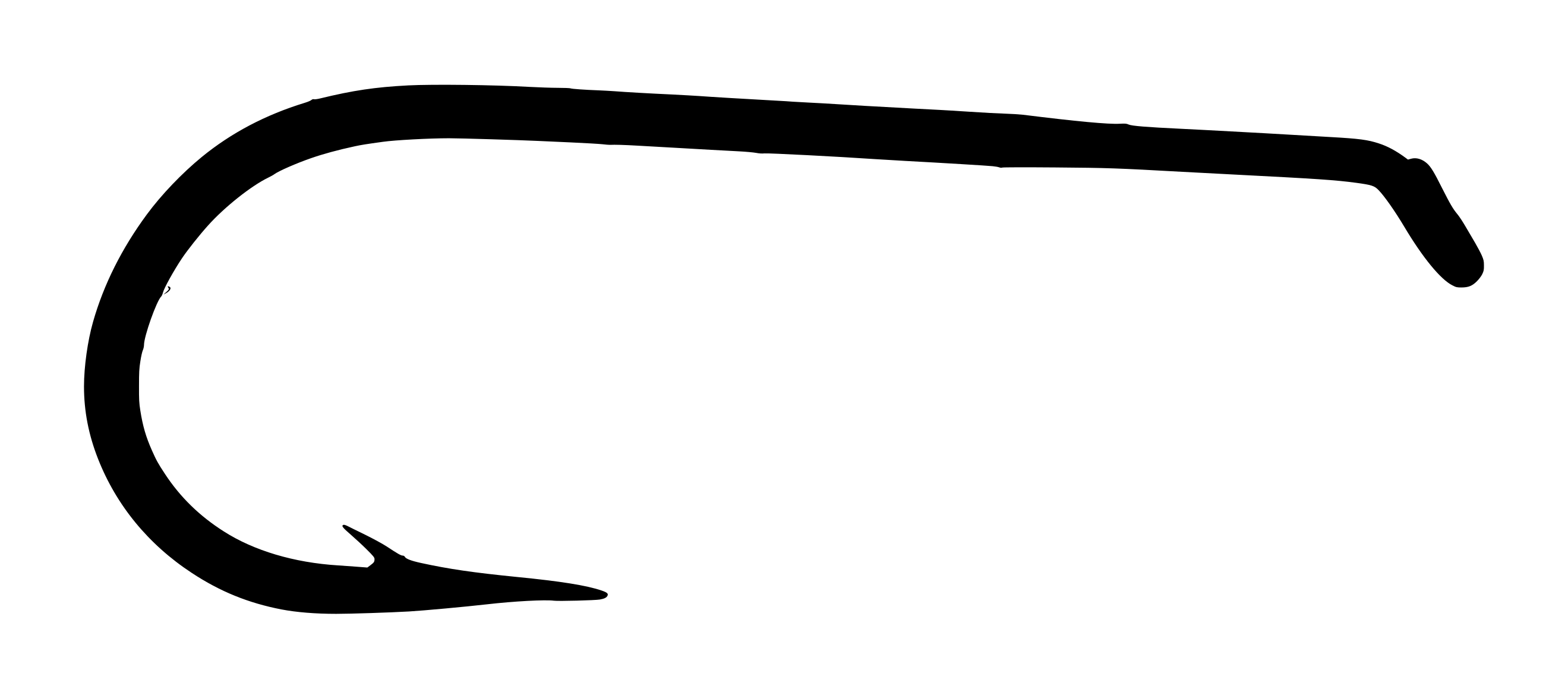
|
W173 No. 8 — W173 TDE Tapered Eye | 81% | Compare | |

|
3101 No. 2 — 3101 Limerick Hook | 79% | Compare | |

|
K14ST No. 16 — K14ST Nymph/Emerger | 77% | Compare | |
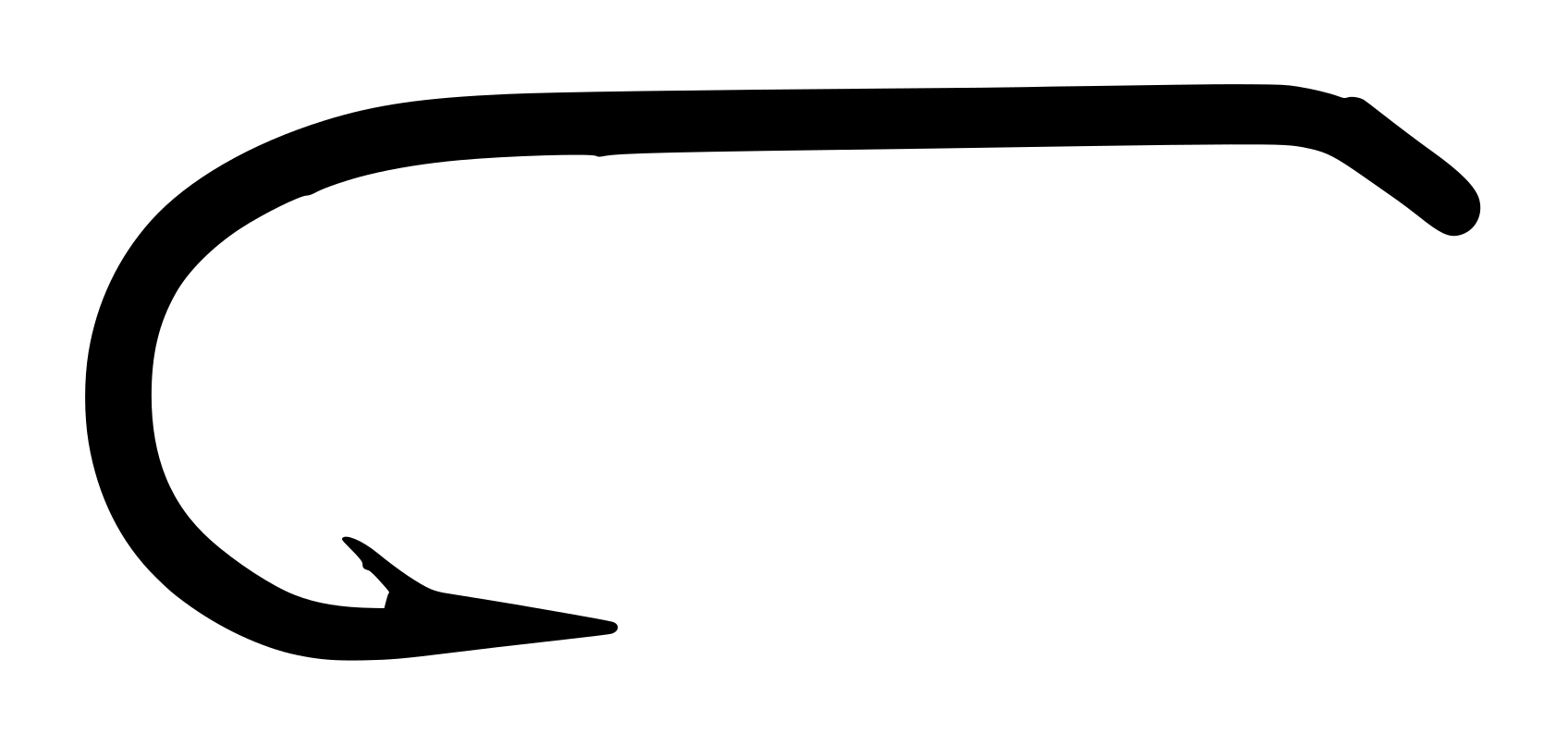
|
Nyack TDE — Nyack TDE (Down Tapered Eye) | 76% | Compare | |

|
J1A No. 12 — Partridge J1A | 74% | Compare |
| Silhouette | Hook Model | Match | Compare |
|---|---|---|---|

|
7948 A No. 6 — Mustad 7948 A | 99% | Compare |

|
S 220 No. 20 — S 220 Tapered T.D.E. Model Perfect | 98% | Compare |
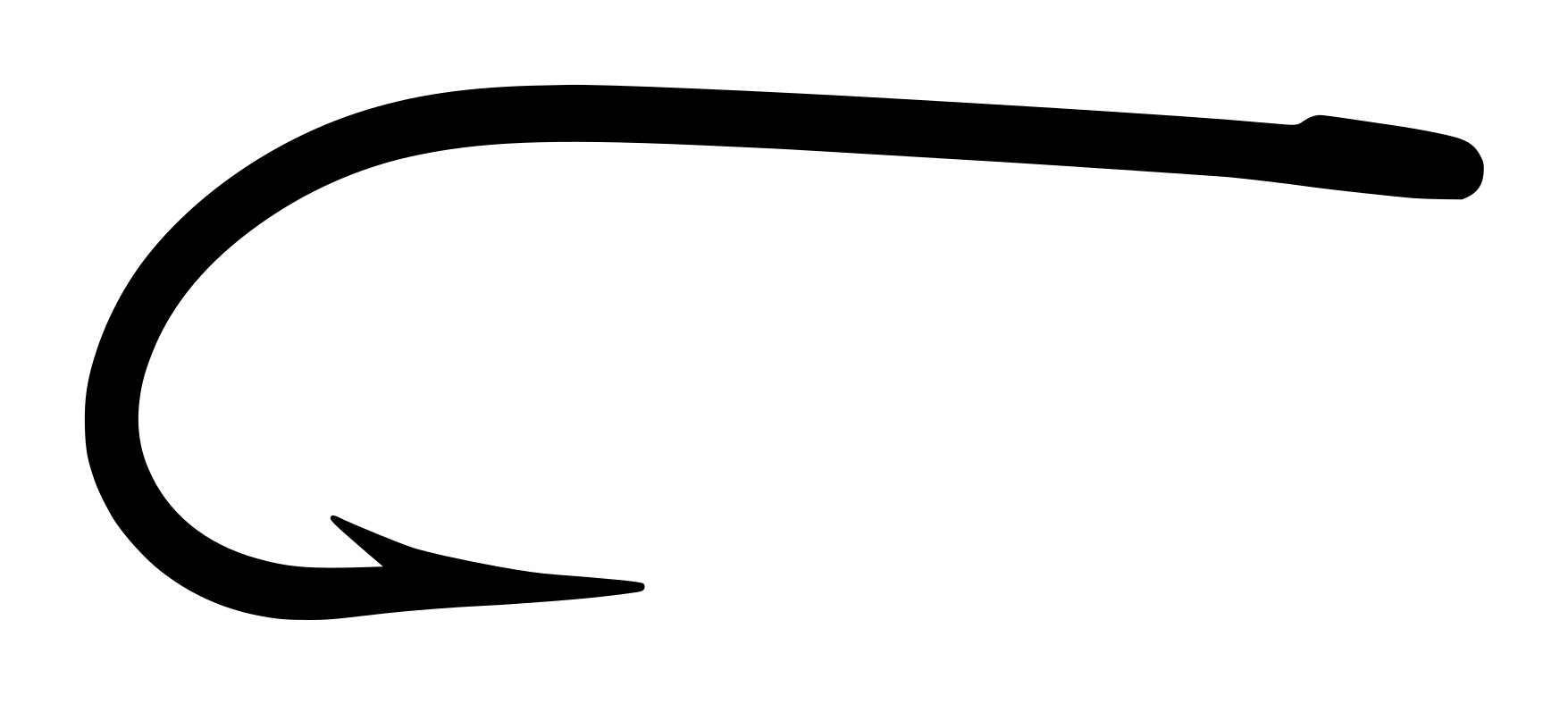
|
4211 No. true — Kendal Kirby Hooks | 98% | Compare |

|
4211 C No. 6 — Mustad 4211 C — Kendal Kirby | 98% | Compare |
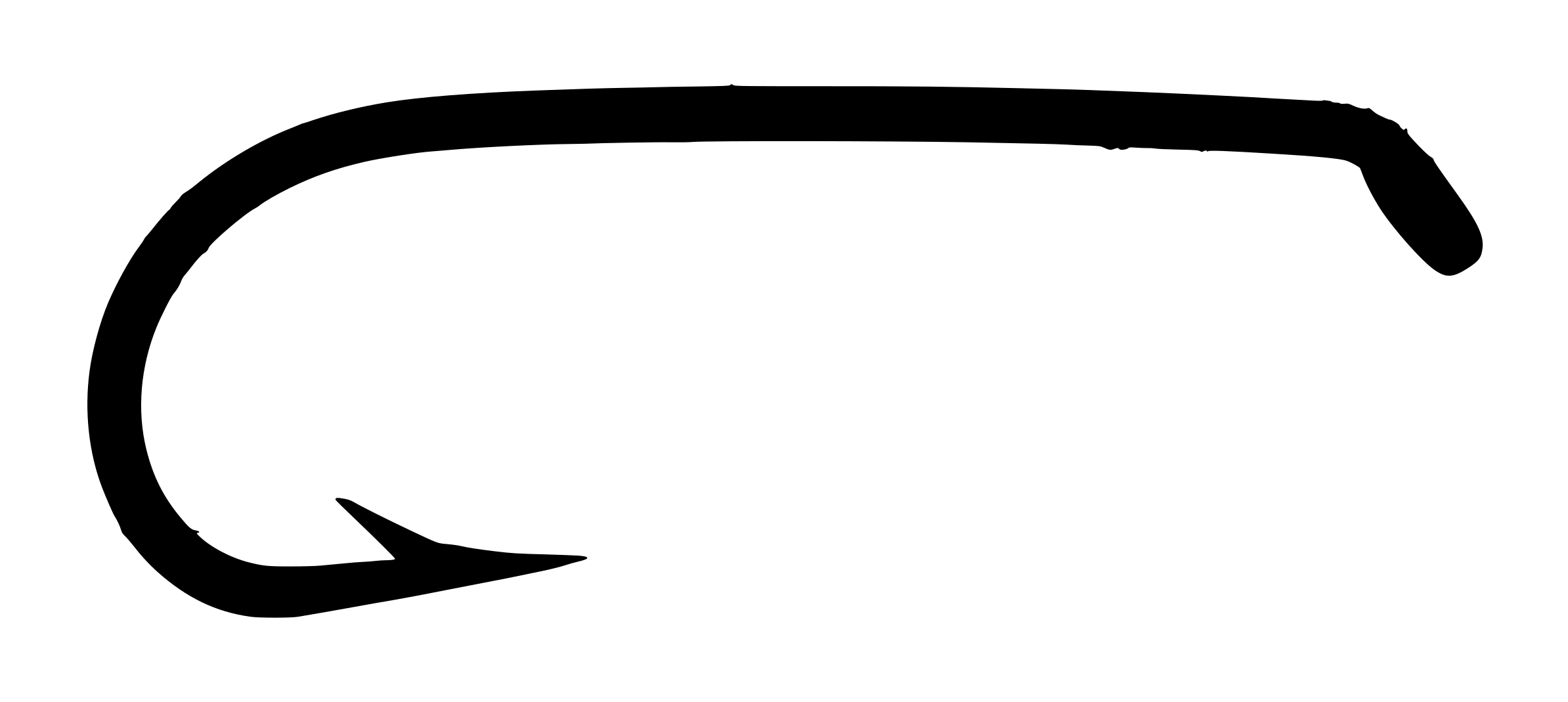
|
Nyack Extra Stout — Nyack Extra Stout | 97% | Compare |
The Pennell’s Limerick with turned-down eye was designed primarily for traditional wet fly fishing applications. The angular bend geometry and eye configuration made it particularly effective for classic British wet fly patterns such as Butcher, Alexandra, and Teal & Red variations.
The hook’s proportions suited the presentation requirements of traditional wet fly techniques, where the fly needed to sink quickly and maintain proper attitude during the retrieve. The Limerick bend’s wide gape provided excellent hooking reliability for trout and grayling in British chalk streams and northern rivers.
Named patterns specifically associated with this hook. Leave blank if none formally documented. Do not speculate — only include patterns with a confirmed association.
Strong historical interest due to Redditch provenance and complete original packaging, though limited by the manufacturer's smaller market presence.
Positive factors include the hook’s representation of Redditch’s golden age, complete original packaging with intact typography and branding, and the historical significance of the Pennell’s Limerick pattern in Victorian angling literature. The Edgar Sealey name, while lesser-known than Allcock, represents the diversity of Redditch’s manufacturing ecosystem.
Limiting factors include the manufacturer’s smaller market presence compared to dominant Redditch firms, making these hooks less recognized among casual collectors. The hook pattern, while historically significant, lacks association with specific famous fly patterns or angling personalities that drive premium collecting interest.
Small rectangular cardboard box, approximately 2.5" x 1.5" x 0.5". Cream-colored card stock with green and black printing. Features octopus trademark logo in circle on left side, company name and location prominently displayed. Decorative checkered border pattern around perimeter. Typography appears to be letterpress or early offset lithography. Box shows 'SNUFF' marking in purple ink on exterior.
Complete boxed examples command premium over loose hooks. Redditch provenance and intact packaging drive collector interest beyond pure fishing utility.
English angling auctions, vintage tackle shows, estate sales in traditional fishing regions. Occasionally appears on eBay UK with proper Redditch attribution.
Key identification features include the distinctive octopus trademark logo on the packaging and the precise geometric execution of the Limerick bend. Sealey hooks typically show excellent wire consistency and finish quality reflecting Redditch manufacturing standards.
The company name format ‘Edgar Sealey & Sons, Ltd.’ with comma distinguishes these from later packaging variations. Original boxes feature the characteristic green and black color scheme with decorative border elements typical of interwar Redditch packaging design.
| P | Photographically verified — Directly observable in the photograph(s) on this page. |
| V | Verified by documentation — Confirmed by manufacturer catalog, spec sheet, or published reference. |
| I | Inferred — A logical deduction from observable or documented evidence, not directly stated. |
| E | Estimated — An approximation based on visual comparison, proportional analysis, or limited data. |
| S | Speculative — A reasoned hypothesis that cannot be confirmed from available evidence. |
Claims with no notation are confirmed by multiple independent sources. All photographs on garrenwood.com are taken on a measurement grid where each square equals 1/10 inch (0.1″ / 2.54 mm).
Your cart is empty.