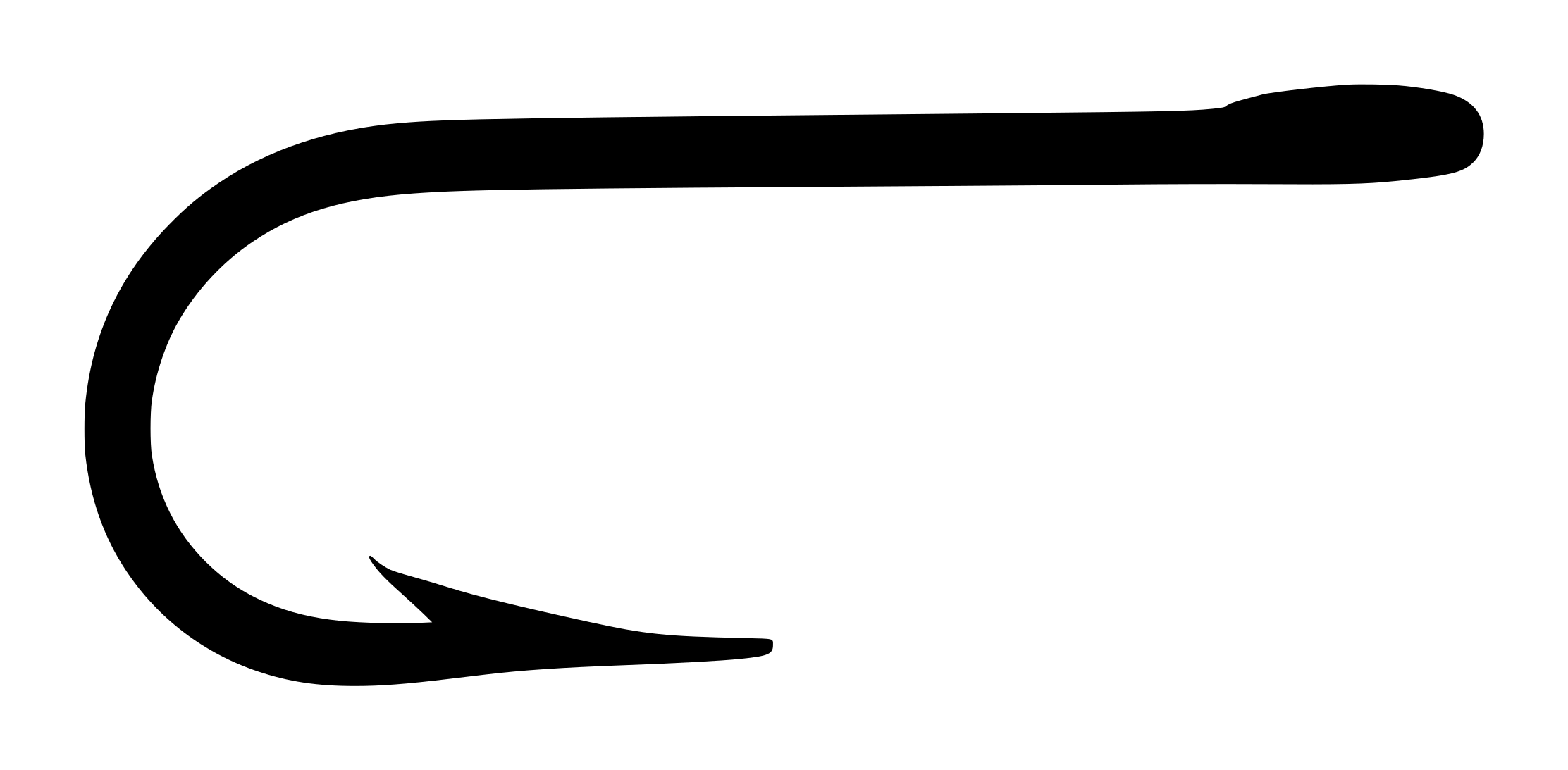
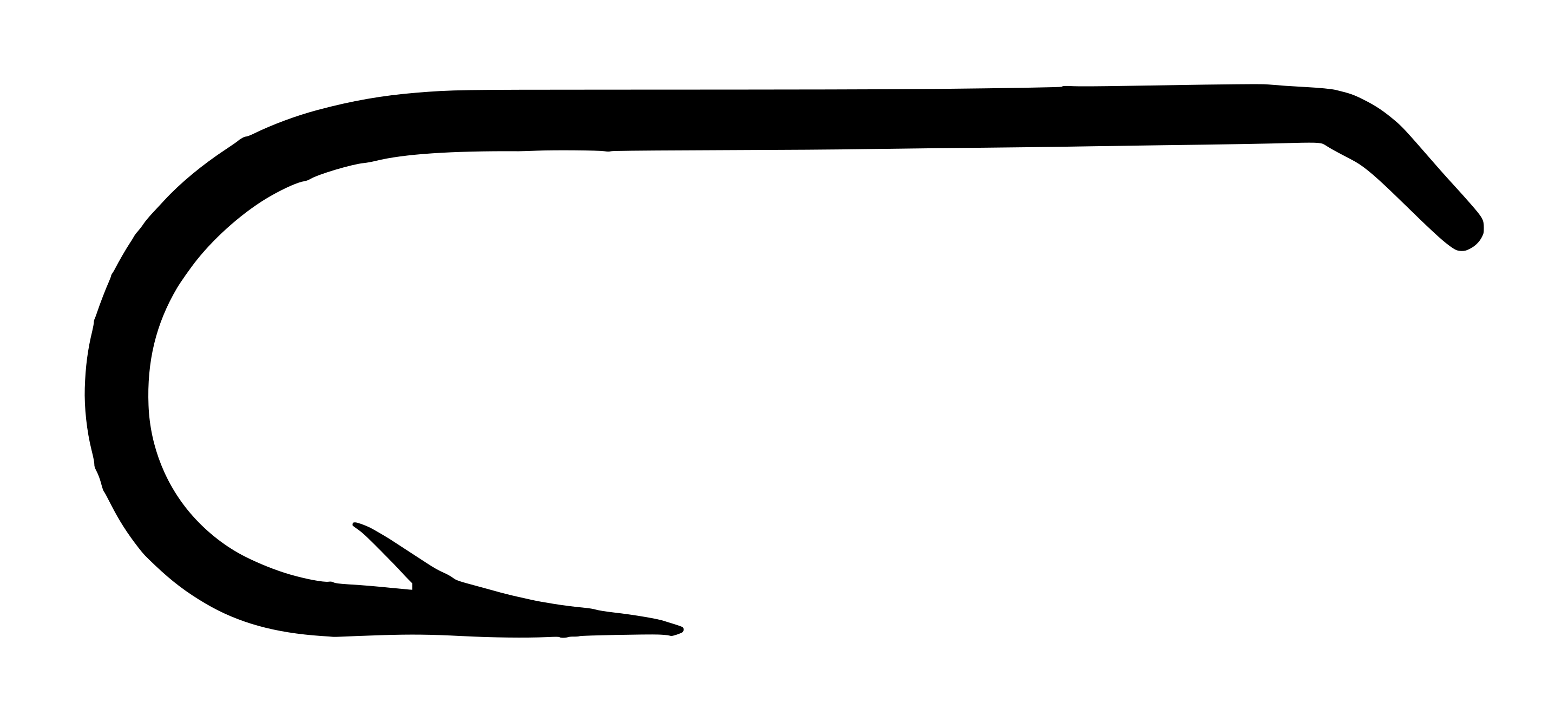
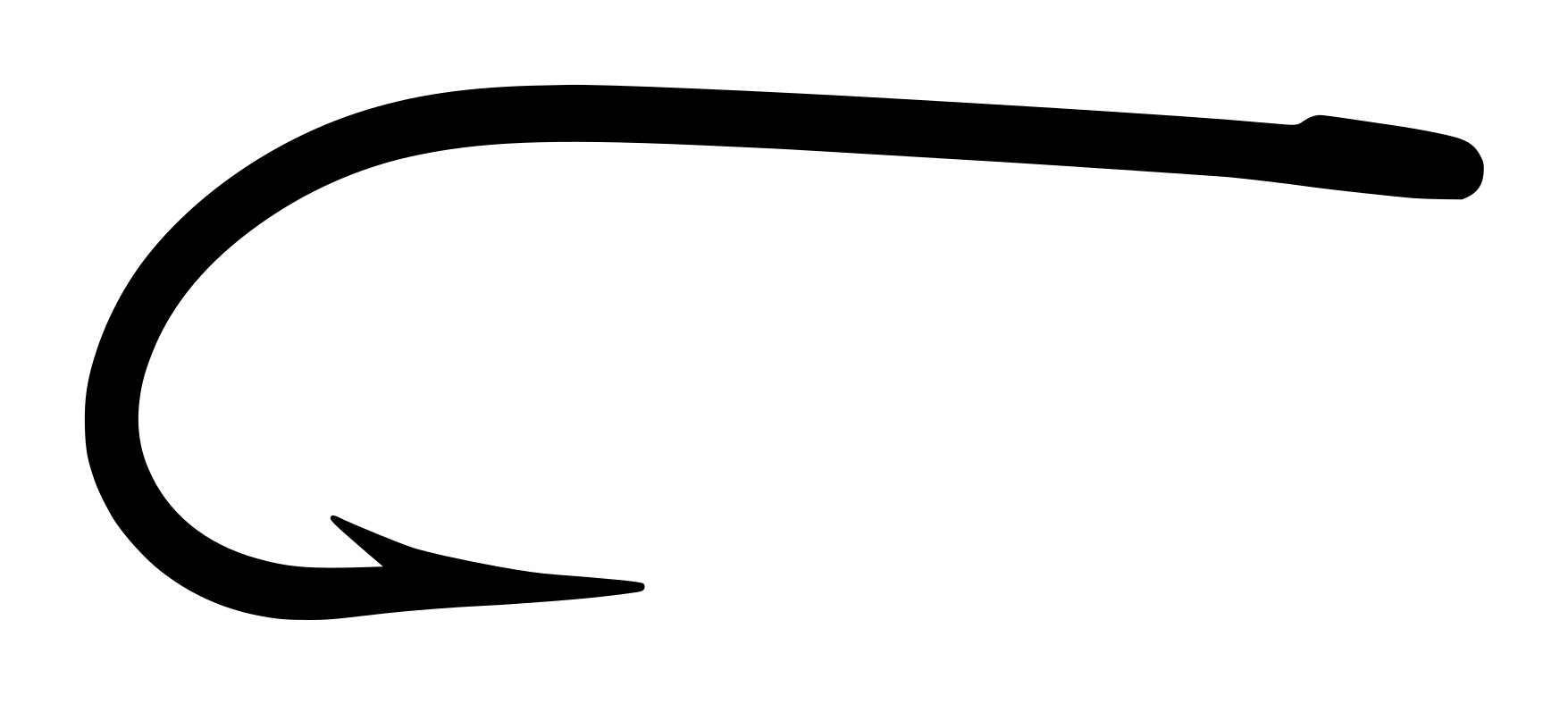
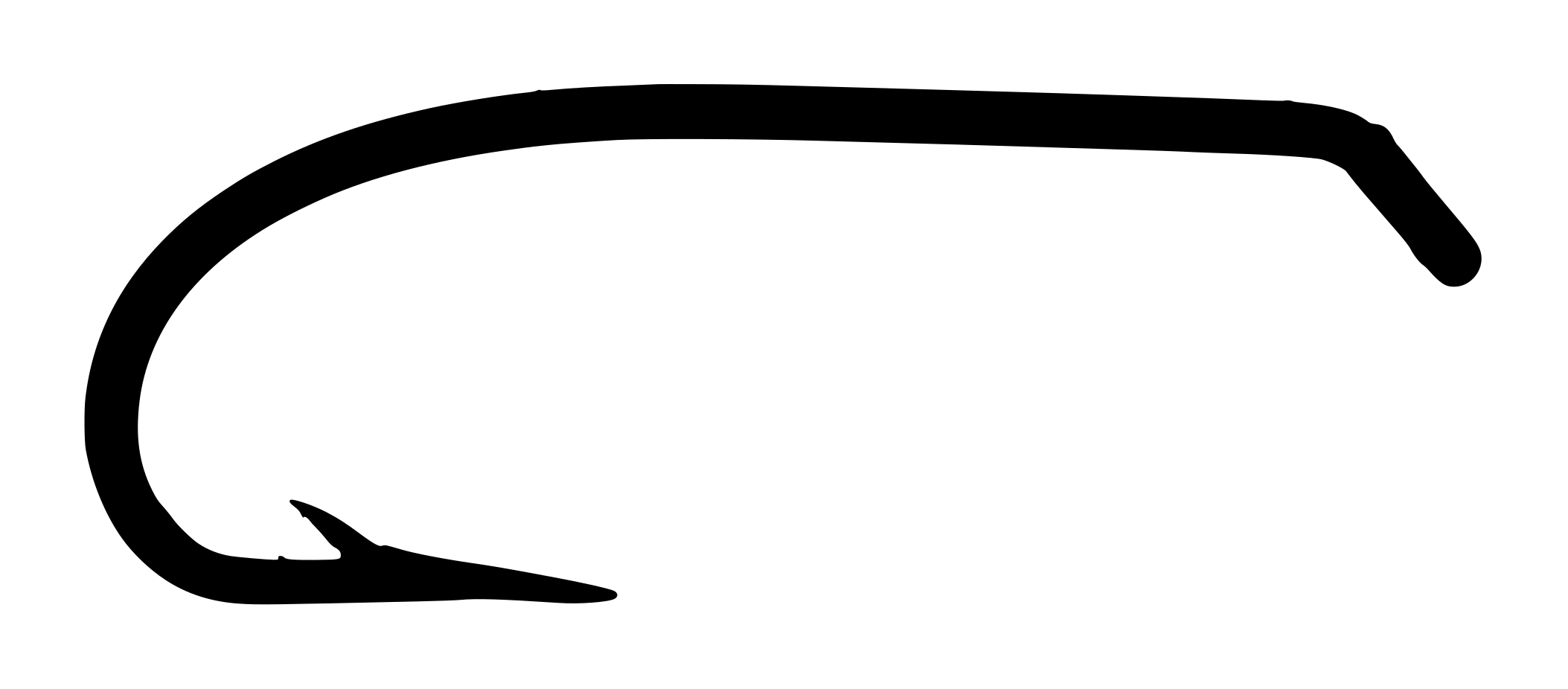
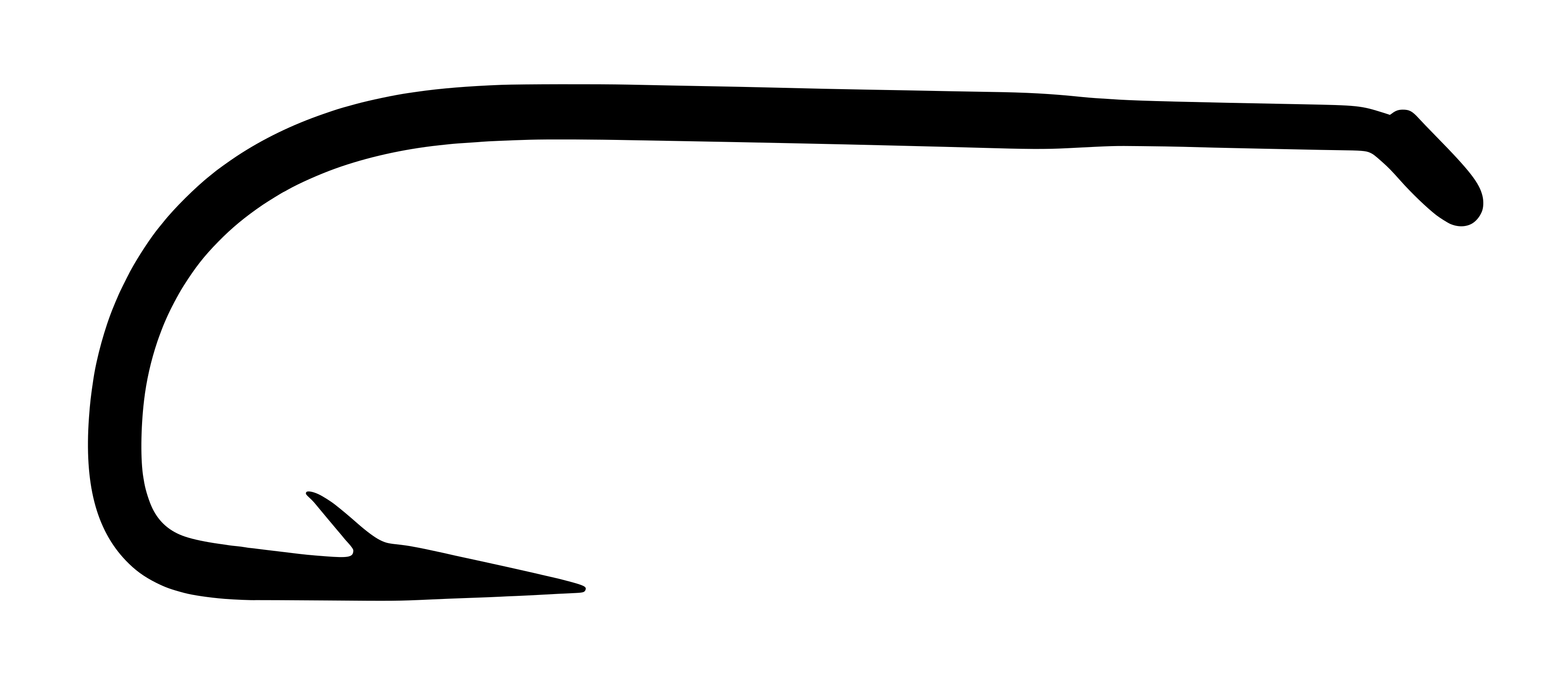
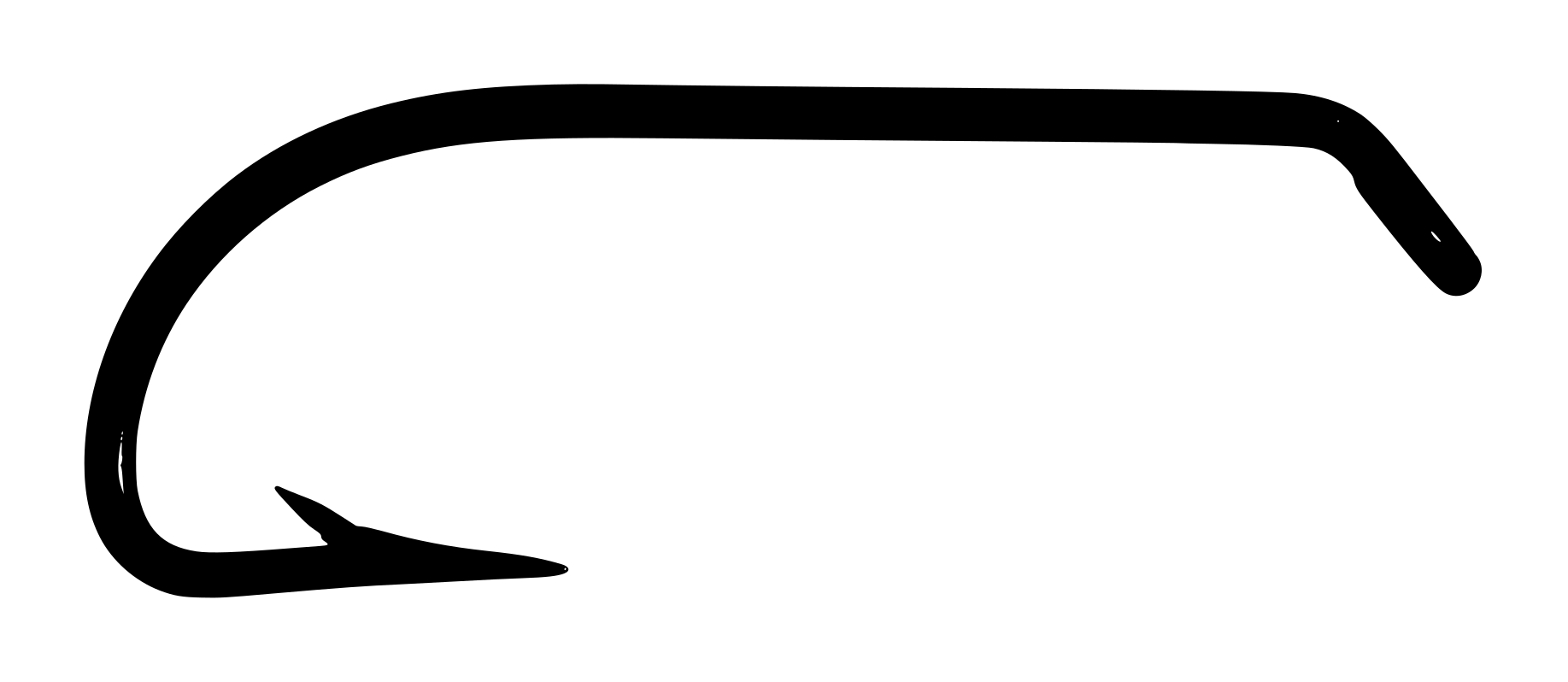
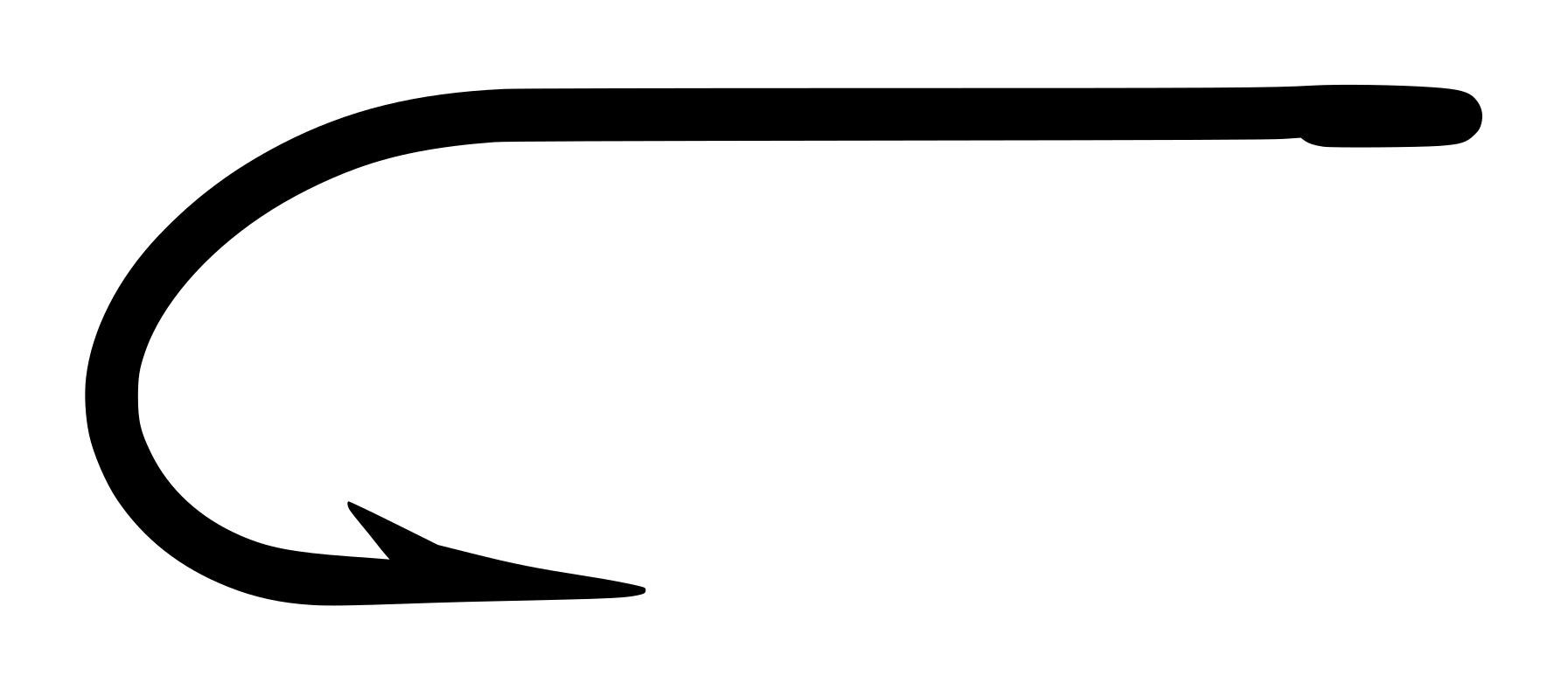
The Nyack Red Label Extra Stout was an English-made wet-fly hook sold through Ray Bergman’s angling business in Nyack, New York. Catalog 21-53 documents the model as a hollow-point, regular-shank, turned-down-eye hook with a non-tapered eye, supplied 100 hooks per box V. The catalog lists selected sizes from 4/0 through 18, including the photographed size 8.
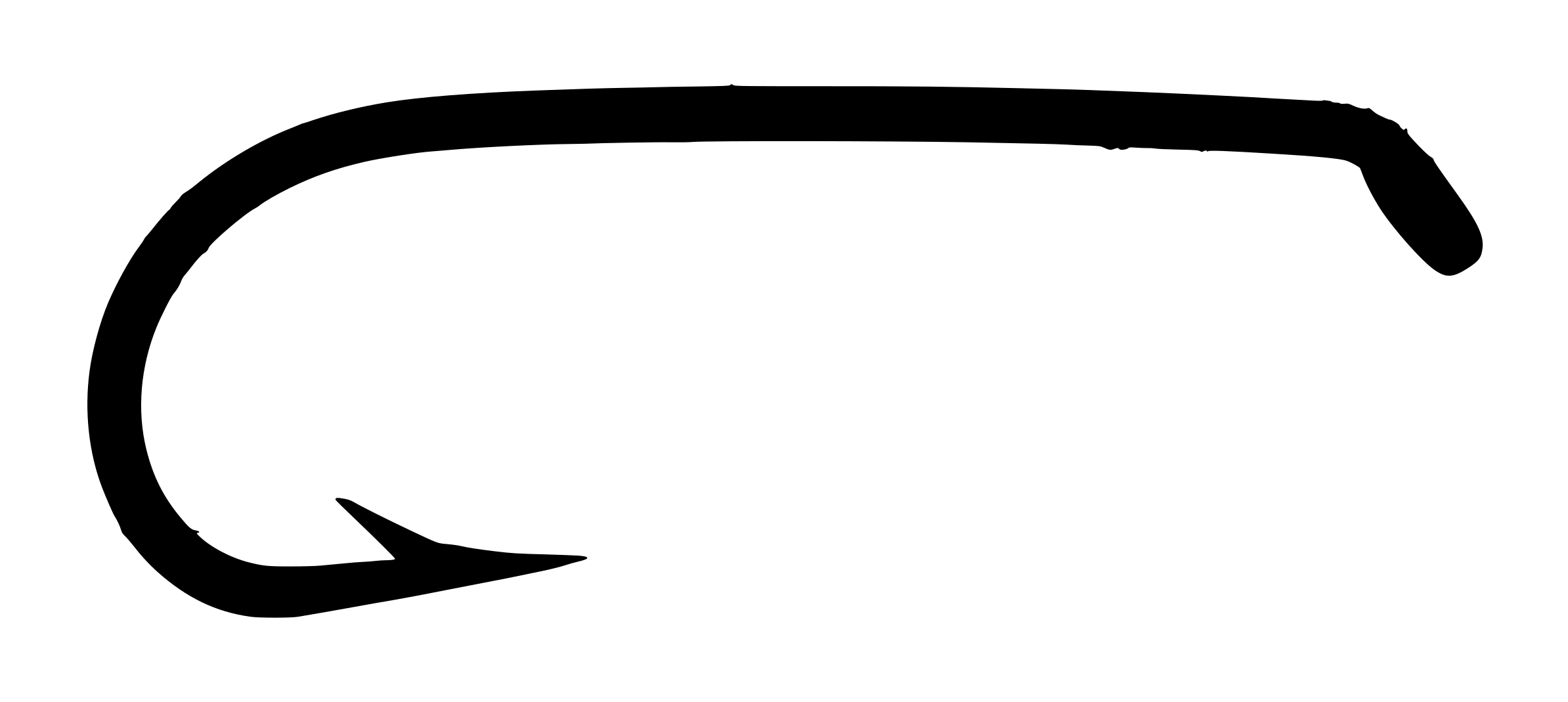
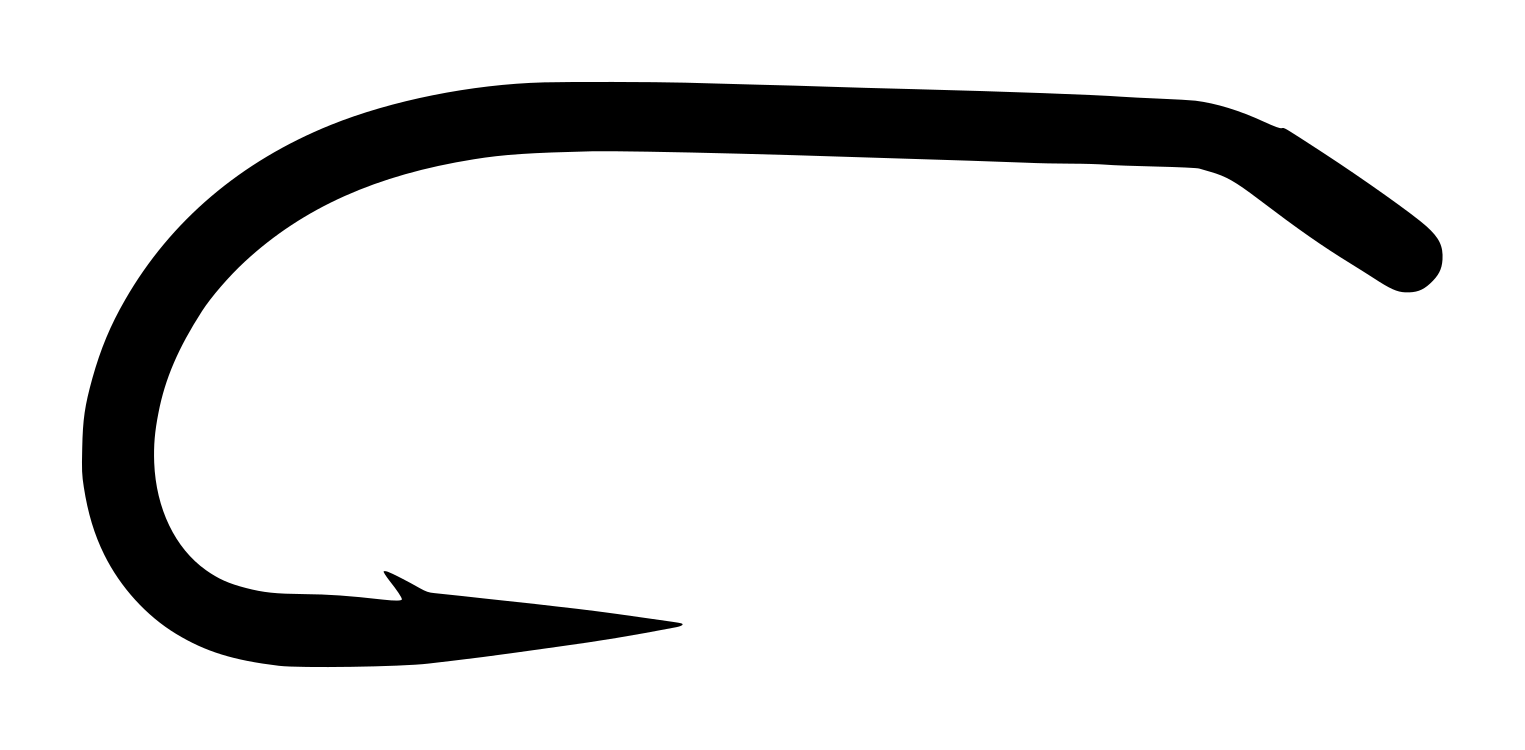
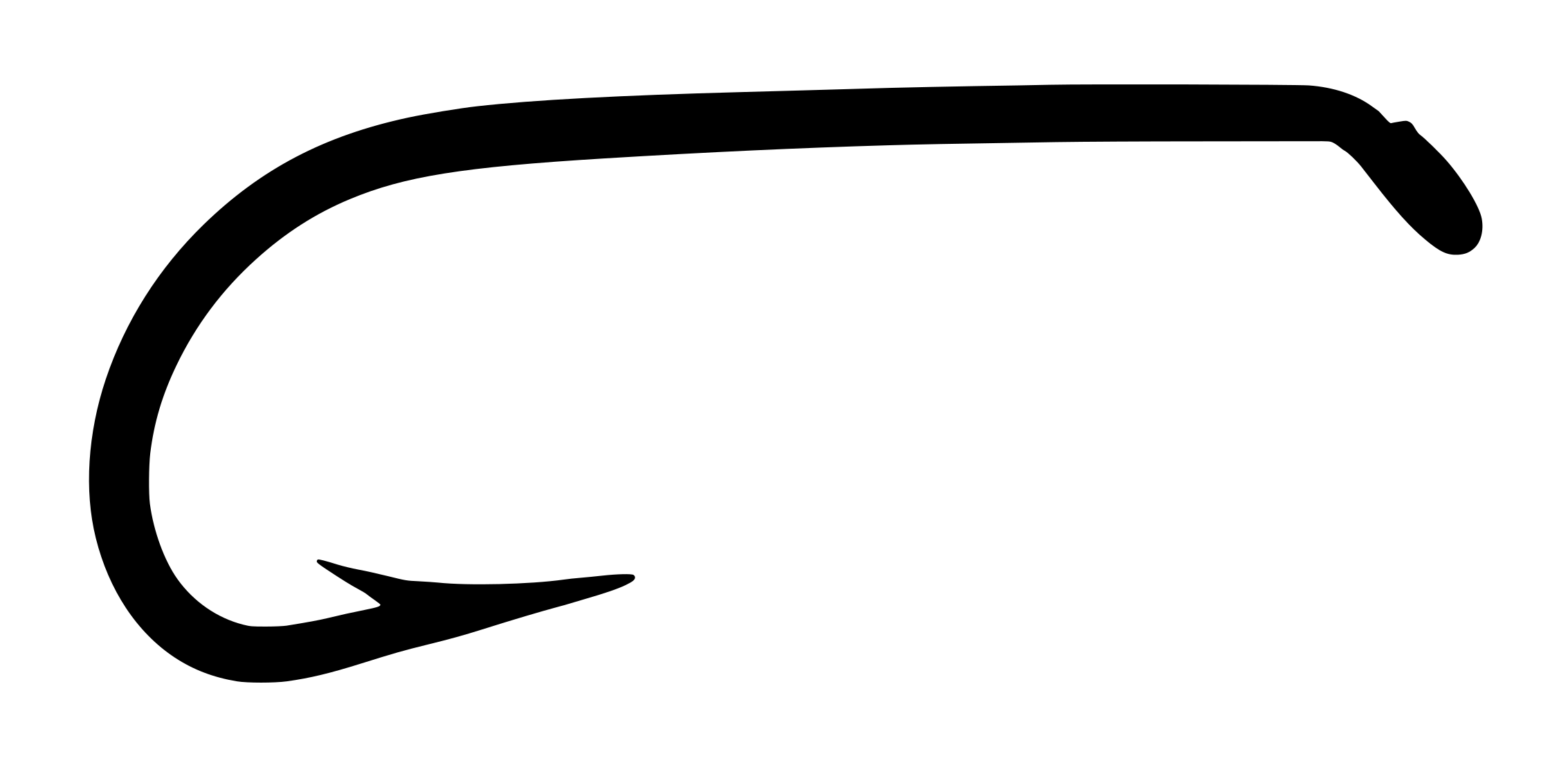
The specimen shown has a formed turned-down ball eye, extra-stout wire, a standard shank, and a rounded bend consistent with the Sproat family P. The warm metallic finish is visually consistent with bronzing but is not named on the package or in the catalog I. Grid-derived dimensions are approximate and should be marked E, not presented as physical-caliper measurements.
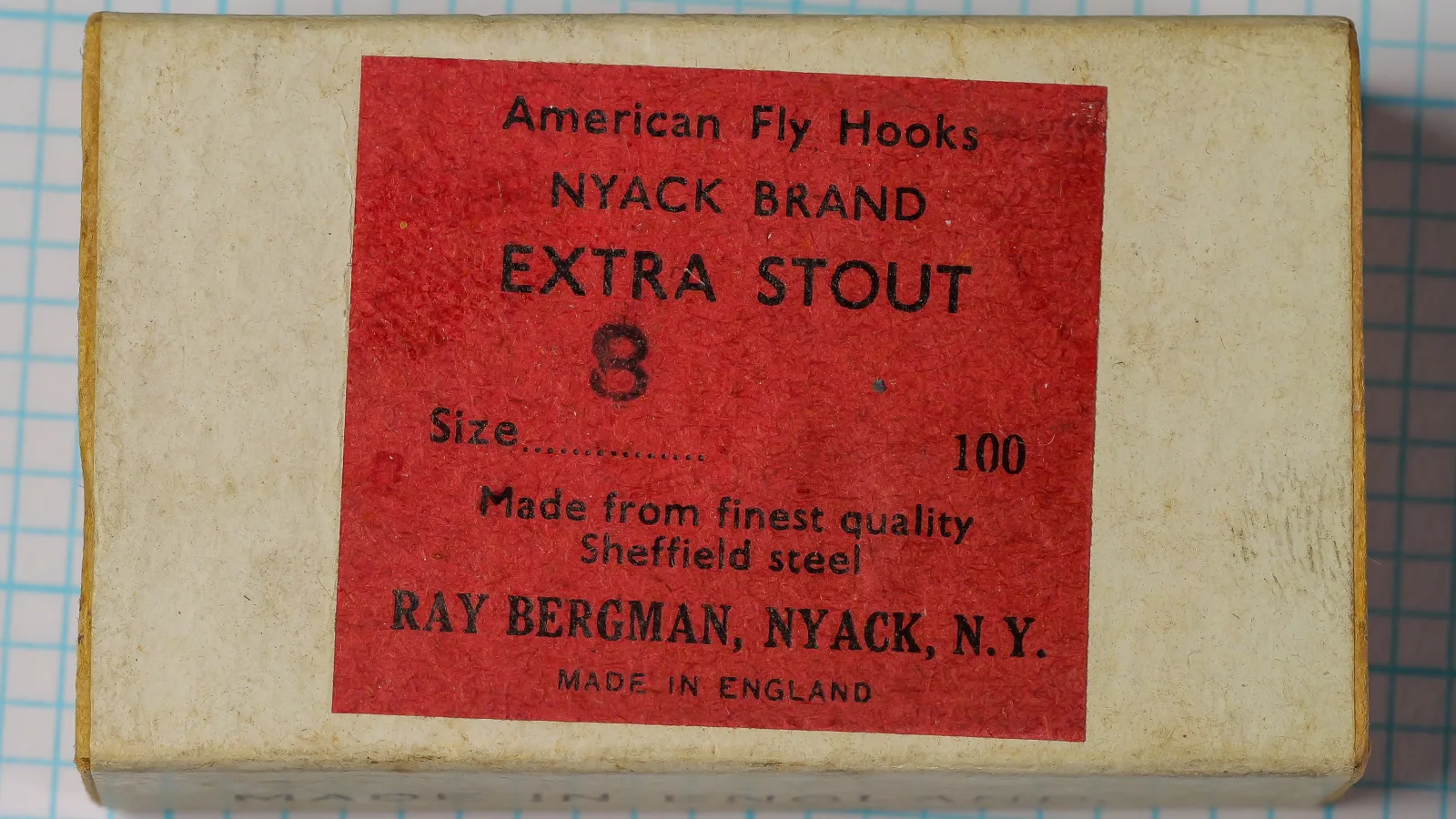
The cream cardboard box and red label are original period packaging P. The printed “100” records the original package quantity; because the box interior is not photographed, the current number and condition of the remaining hooks are unknown.
Original packaging label for Bergman Nyack Extra Stout size 8 hooks. Box contains 100 hooks made from Sheffield steel.
Photographic record
2 cataloged imagesSelect any record to load it above.
2 images shown
Bergman Nyack Extra Stout Size 8 Box LabelOriginal packaging label for Bergman Nyack Extra Stout size 8 hooks. Box contains 100 hooks made from Sheffield steel.Open originalBergman Nyack Extra Stout Size 8 HookBergman Nyack Extra Stout size 8 in bronzed finish. Sproat bend with rounded profile and moderate depth.Open original
Technical profile
TDE | Sproat | Extra heavy Wire | Hollow Point | Bronzed
Eye
Ball Eye, Turned DownFormed ball eye turned down from the shank axis P. Catalog 21-53 describes the model as regular-shank T.D.E. and specifically states that the eye is not tapered V. The photograph does not establish the eye-forming process or independently demonstrate manufacturing quality.
Wire
Extra-Heavy (2X+), Forged
Shank
Standard — Plain
Bend
Sproat, Standard gapThe photographed profile is consistent with a Sproat bend, with a gradual transition from the shank into a rounded bend and a returning point leg P. No obvious lateral offset or reversal is visible in this single view P. Catalog 21-53 confirms a regular shank and turned-down eye but does not name the bend family for the Red Label Extra Stout.
Point
Hollow Point (concave inner face)Short, close-cut barb positioned immediately behind the point taper P. The visible concave inner point face is consistent with the catalog's Hollow Point specification V.
Finish
Bronzed — Confirmed (stated on packaging)The photographed hook has a warm brown-to-olive metallic surface consistent with a bronzed finish I. The box and catalog do not state a finish, and image lighting, white balance, age darkening, and localized oxidation prevent documentary confirmation. Visible metallic texture argues against a thick glossy japanned coating.
The photographed box exterior shows age toning, light edge wear, and a legible red label P. The photographed hook shows no major deformation or obvious active orange rust in the visible side view, although localized darkening and surface irregularities are present P. The box interior and remaining contents are not photographed, so the presence and condition of all 100 hooks cannot be verified.
Catalog 21-53 identifies the R. B. Brand range as hollow point and the Red Label Extra Stout as a regular-shank, turned-down-eye wet-fly hook with a non-tapered eye V. The photographed point shows the concave inner profile expected of a hollow point, while the overall bend is consistent with a Sproat form P.
The wire appears laterally faceted or compressed in the photograph, which may indicate forging I, but the production process is not stated in the catalog and cannot be proved from one side view. The approximately 0.032-inch wire diameter is a grid- or SVG-derived estimate E. Extra-stout wire ordinarily implies greater resistance to bending than finer wire of the same material and heat treatment I, but no load testing or metallurgical data are available for this specimen. Claims about quantified penetration force, stress distribution, hook-setting performance, or resistance to straightening should therefore be omitted.
Size & scale lab
Known manufactured size range:
4/0, 3/0, 2/0, 1/0, 1½, 1, 2, 4, 6, 8, 10, 12, 14, 16 and 18 V
This pattern was made in sizes 4/0, 3/0, 2/0, 1/0, 1½, 1, 2, 4, 6, 8, 10, 12, 14, 16 and 18 (V). We have measurement for size 8. Know the others? Submit calipered measurements and we'll review and add them. Thank you!
The photographed box identifies “RAY BERGMAN, NYACK, N.Y.” and “MADE IN ENGLAND” P. Bergman was the American brand owner, retailer, and distributor; the label does not identify the English factory.
A published examination of a 1939 Bergman catalog states that Nyack Brand hooks were made for Bergman in Redditch, England V. Other specialist sources attribute Bergman’s hook line to the “Martinez Company.” This probably refers to Martinez & Bird Ltd., a documented Redditch fish-hook manufacturer, but the present package does not independently establish that connection I. The entry should therefore describe Martinez & Bird as the likely contract maker rather than either calling the factory wholly unattributed or presenting the attribution as certain.
The label’s statement “Made from finest quality Sheffield steel” is photographically verified marketing language P. It supports an English-steel association but does not identify the steel grade, supplier, heat treatment, hardness, or tested mechanical properties.
Series History
Nyack Brand was Ray Bergman’s house line of fly-tying hooks, sold through his mail-order tackle business in Nyack, New York. A published account based on Bergman’s 1939 catalog documents the Nyack hook line by that year, while Retail Catalog 21-53 directly documents the Red Label Extra Stout pattern V.
Catalog 21-53 places the Extra Stout under “WET FLY HOOKS” and describes it as “For wet fly—Regular Shank T.D.E.” with a non-tapered eye. The catalog states that R. B. Brand hooks were hollow point and packed 100 per box. Listed Extra Stout sizes are 4/0, 3/0, 2/0, 1/0, 1½, 1, 2, 4, 6, 8, 10, 12, 14, 16, and 18 V.
The catalog distinguishes red-, blue-, yellow-, and gold-label hook groups, showing that Nyack was a structured house-brand range rather than a single short experimental run. Production and sale appear to have ended around Bergman’s retirement from his editorial and mail-order activities in approximately 1959–1960 I.
Named Collaborator
Ray Bergman (1891–1967) was an American angling writer, fly tyer, retailer, and one of the most influential popularizers of fly fishing in the mid-20th-century United States. Born and based in Nyack, New York, he served as angling editor of Outdoor Life from the mid-1930s until his retirement around 1959–1960.
His best-known book, Trout, first appeared in 1938 and brought together extensive instruction on wet flies, dry flies, nymphs, tackle, and fly tying. Its visual presentation was collaborative: Dr. Edgar Burke painted the full-color fly plates, Charles S. Krug supplied fly-tying photographs, and Ivin Sickles produced line diagrams V.
Bergman and his wife, Grace, also operated a mail-order tackle business from Nyack. Surviving catalogs show that the business sold rods, flies, leaders, tying materials, and several color-coded groups of Nyack Brand hooks. The documentary record establishes Bergman as the brand owner and retailer; it does not yet demonstrate that he personally engineered the Extra Stout hook’s bend, point, or wire specifications.
Era and Packaging Dating
Ray Bergman Retail Catalog 21-53 documents the exact NYACK RED LABEL EXTRA STOUT pattern as a wet-fly hook V. The catalog number appears to indicate 1953, although that interpretation remains inferred rather than explicitly dated on the surviving cover I. Bergman retired from Outdoor Life and his mail-order business around 1959–1960, providing a reasonable approximate end date I. Absence of a barcode, label toning, paper color, and apparent printing method are only broad supporting indicators and should not be used as the principal dating evidence.
The Collaborative Artwork of Trout
Ray Bergman's Trout became notable for its extensive visual documentation, but the published credits identify Dr. Edgar Burke as the painter of the full-color fly plates, Charles S. Krug as the photographer of the fly-tying sequences, and Ivin Sickles as the creator of the line diagrams. The available bibliographic record does not support the claim that Bergman produced more than 400 underwater pencil drawings in a custom aquarium.
Design lineage and influence
The photographed bend is consistent with the Sproat family: the shank flows into a gradual, rounded bend and the point leg returns toward the shank without the pronounced angular corners associated with a Limerick form P. Eye orientation is a separate attribute and does not define a Sproat bend. Catalog 21-53 confirms a regular shank and turned-down, non-tapered eye but does not identify the Red Label Extra Stout bend by name V.
“Extra Stout,” hollow point, regular shank, and turned-down eye are documented model specifications. They should not be presented as design innovations created by Bergman unless correspondence, drawings, patents, or catalog language establishing his direct design role is found. The model is best understood as an English wet-fly hook selected and marketed within Bergman’s Nyack house range.
Best matchRelated by Attribute
Computed automatically from catalog data — updated as new hooks are added.
Matches: Bend, Shank, Wire, Eye, Eye Orient. +4 moreDiffers: Gap: Standard vs Wide; Point: Hollow Point vs Standard / Spear; Application: Wet Fly vs Wet Fly, Nymph
Matches: Wire, Gap, Eye Orient., Point, Finish +3 moreDiffers: Bend: Sproat vs Round / Kendal; Shank: Standard vs 1X Long; Eye: Ball Eye vs Tapered Eye +1 more
Ray Bergman Retail Catalog 21-53 lists the Nyack Red Label Extra Stout under “WET FLY HOOKS” and describes it as “For wet fly—Regular Shank T.D.E.” V. The size 8 specimen should therefore be classified primarily as a wet-fly hook rather than as a general dry-fly, nymph, and wet-fly pattern.
The extra-stout wire could also accommodate weighted nymphs, compact streamers, and other subsurface dressings I, but those are plausible secondary uses rather than documented model-specific applications. Specific associations with stonefly nymphs, Hare’s Ear patterns, or soft hackles should be framed as modern tying suggestions unless a Bergman catalog or publication explicitly recommends them.
Secondary Applications
Weighted nymphs and compact streamers are plausible secondary uses I, but Catalog 21-53 documents this model specifically as a wet-fly hook.
Classic Fly Patterns
Traditional wet flies (V). Weighted nymphs and small streamers may be presented as plausible modern uses (I), but specific named patterns are not documented for this model.
Collector notes
Rated 5.5/10 E — Nyack Brand hooks have meaningful appeal because of their association with Ray Bergman, English manufacture, distinctive red-label packaging, and documented place in Bergman's mail-order tackle line. The photographed box exterior is attractive and legible, but the current hook count and interior condition are not documented. The scarcity rating and value range should remain provisional until additional comparable sales and an interior count are available.
Reference value
$18 – $42 USD estimate
Packaging condition
Very Good — light wear, fully legibleRecorded specimen
Packaging format
GW-SCA-001Catalog code
Positive Factors: Ray Bergman is an important name in American angling history, and Nyack Brand packaging directly connects the object to his mail-order tackle business. The cream box and red label are visually distinctive, substantially intact, and legible P. Catalog 21-53 provides unusually useful documentation for the model, including its wet-fly application, construction language, original quantity, and manufactured sizes V. English manufacture and the likely Redditch connection add interest for collectors of British export hooks.
Limiting Factors: The Sproat-like bend and wet-fly format are not intrinsically rare. Only the box exterior and one hook are photographed; the remaining hook count, interior packaging, and condition of the other hooks are unknown. The actual factory attribution remains inferred, and no evidence reviewed demonstrates that Bergman personally designed the hook. Assertions that particular sizes are scarcer, that production was extremely limited, or that demand exceeds supply require additional sales or inventory evidence E.
Condition and Value: The photographed exterior appears presentable, with normal toning and edge wear P. A verified complete box would be more desirable than a partial example, but completeness must be documented before applying a premium. The 5.5/10 rating and $18–$42 value range should remain explicitly estimated pending direct Extra Stout sold comparisons, an interior count, and inspection for corrosion.
Packaging
Cream/tan cardboard box with an affixed red printed-paper label. Visible text reads: "American Fly Hooks / NYACK BRAND / EXTRA STOUT / 8 / Size.......... / 100 / Made from finest quality Sheffield steel / RAY BERGMAN, NYACK, N.Y. / MADE IN ENGLAND" P. The label identifies size 8, a nominal original quantity of 100, Sheffield-steel marketing, Ray Bergman as the Nyack seller or brand owner, and English manufacture. The precise printing method and date cannot be confirmed from the photograph alone E.
Market Value Notes
Estimated range: $18–$42 E, retained provisionally rather than treated as a demonstrated market range.<br />
<br />
The photographed box exterior does not verify that all 100 hooks remain, so valuation must be conditioned on an interior count and inspection. A June 2026 sale of a different Nyack red-label model—size 18, 2X Fine, used—realized $9.50 and is only a broad brand-level comparison. A dealer has also documented a complete size 14 Extra Stout box, but no visible sold price was available.<br />
<br />
Premium factors: legible original red-label box, verified complete contents, minimal corrosion, and documented provenance.<br />
<br />
Deductions: missing hooks, active corrosion, damaged box, faded or detached label, or replacement contents.<br />
<br />
Confidence: E Estimated from sparse and non-identical comparisons.
Where to Find
Nyack hooks appear occasionally on eBay under "vintage fly hooks" or "English fly hooks" search terms; most listings are on the UK eBay site, reflecting English manufacture and collector base. Specialized vintage tackle dealers and fly-fishing history websites occasionally list Bergman-brand items. Tackle auctions in northeastern United States (particularly New York area, given Bergman's Hudson River/Nyack base) may feature these hooks. Directly searching "Ray Bergman" or "Nyack fly hooks" yields sparse results; most finds are opportunistic discoveries within larger vintage tackle lots.
Preservation
Storage and Preservation
Store the card in a cool, dry environment away from direct sunlight and humidity. The bronzed finish is stable but will continue to develop warm patina over time with moisture exposure — this is considered desirable by collectors. Do not remove hooks from the original card; keep them carded for display and storage. The red label is susceptible to fading if exposed to strong light; store the box spine-out in a bookshelf or display case rather than flat and exposed. Avoid contact with other metals or acidic materials (wood, newspaper) that could initiate corrosion. If the box must be handled for photography or inspection, wear cotton gloves to prevent skin oils from transferring to the label or hooks. Original cardboard boxes are prone to brittleness with age — handle gently to prevent creasing or tearing. Do not attempt to clean the hooks or label; patina and aging are integral to value and authenticity. If the box develops any mold or mildew smell, move it to a drier environment immediately and avoid enclosed storage (such as sealed plastic boxes) which can trap moisture.
Primary Source
Packaging Text Analysis: Sheffield Steel and Marketing Strategy
The red label explicitly states “Made from finest quality Sheffield steel” — a deliberate appeal to American anglers’ perception of English manufacturing superiority during the 1940s–1950s. Sheffield, Yorkshire was renowned for high-grade steel production, and the invocation of Sheffield quality was a standard marketing tactic in American tackle catalogs of this era. The claim is plausible: Redditch hook manufacturers regularly sourced premium steel from Sheffield suppliers. However, the attribution is marketing language rather than a manufacturing specification. Many Redditch hooks used Sheffield steel, but not all Redditch products advertised the fact as prominently.
The label credits “RAY BERGMAN, NYACK, N.Y.” as the responsible party (distributor or brand owner), not the manufacturer. This is standard practice for American-imported hooks: the brand owner’s address appears, but the actual manufacturer (likely a Redditch firm operating under contract) is not identified. This lack of transparency about the actual Redditch manufacturer limits historical traceability today.
The size range “Size 8” and quantity “100” are printed clearly, confirming this as a full-size-range product line (2–16 noted in standard printing). The “Extra Stout” designation is handset or custom letterpress, suggesting the label may have been produced with variable size/quantity fields for different card batches — a cost-saving measure for small production runs.
Source: Red label, Nyack Extra Stout cardboard box, American Fly Hooks series, c. 1945–1960.
Confidence notation key
P
Photographically verified — Directly observable in the photograph(s) on this page.
V
Verified by documentation — Confirmed by manufacturer catalog, spec sheet, or published reference.
I
Inferred — A logical deduction from observable or documented evidence, not directly stated.
E
Estimated — An approximation based on visual comparison, proportional analysis, or limited data.
S
Speculative — A reasoned hypothesis that cannot be confirmed from available evidence.
Claims with no notation are confirmed by multiple independent sources. All photographs on garrenwood.com are taken on a measurement grid where each square equals 1/10 inch (0.1″ / 2.54 mm).